
Tomato plants are voracious growers, but they’re magnets for fungal diseases. From early blight spotting the lower leaves to a sudden collapse from late blight, one wrong weather pattern can undo months of careful watering and staking. Choosing the right spray is the difference between a full harvest basket and a bed of rotting stems.
I’m Mohammad Maruf — the founder and writer behind Drink4Good. I’ve spent hundreds of hours studying disease progression patterns in solanaceous crops and comparing the label rates, active ingredient concentrations, and rain-fastness claims of every major fungicide brand sold for home gardens.
This guide breaks down the five most effective formulations for controlling fungal pathogens on tomatoes, from broad-spectrum copper soaps to systemic biological inoculants. Here is the definitive fungicide for tomatoes buying guide to protect your plants without guesswork.
How To Choose The Best Fungicide For Tomatoes
The most effective choice depends on whether you see symptoms, your local humidity level, and whether you prefer synthetic, mineral, or biological active ingredients. Not all fungicides work the same way: some form a protective barrier on leaf surfaces, while others colonize the root zone to outcompete pathogens.
Contact vs. Systemic Action
Contact fungicides like copper-based sprays cover leaf surfaces and stop spores from germinating. They must be reapplied after rain and new growth. Systemic fungicides (like biological bacillus strains) are taken up by the plant or colonize the root system, providing longer-lasting internal protection against soil-borne diseases like fusarium and root rot.
Formulation: Ready-to-Use vs. Concentrate
Ready-to-use (RTU) sprays are convenient for small garden beds and container tomatoes — you simply trigger the nozzle and spray. Concentrates require measuring and mixing but offer better value for larger plots and allow you to adjust the dilution based on the disease pressure you observe.
Quick Comparison
On smaller screens, swipe sideways to see the full table.
| Model | Category | Best For | Key Spec | Amazon |
|---|---|---|---|---|
| Fertilome Liquid Systemic II | Systemic | Lawn & tree disease control | 32 oz RTU | Amazon |
| Southern Ag Garden Friendly Biological | Biological | Root drench for blight prevention | 16 oz concentrate | Amazon |
| Monterey Liqui-Cop | Copper | General fruit tree fungal protection | 8 oz concentrate | Amazon |
| Neudorff Copper Soap Spray | Copper Soap | Ready-to-use broad spectrum | 32 oz RTU | Amazon |
| Bonide Captain Jack’s Neem Max | Neem Oil | Multi-purpose insect & fungal control | 16 oz hose-end | Amazon |
In‑Depth Reviews
1. Fertilome Liquid Systemic Fungicide II RTS

Fertilome’s Liquid Systemic Fungicide II stands apart because it moves through the plant’s vascular system rather than just sitting on the leaf surface. This means new growth that emerges after application is protected, and the active ingredient works from the inside out against diseases like take-all patch, brown patch, and dollar spot — though it also has utility on ornamentals and lawns near tomato beds.
The ready-to-use 32-ounce spray bottle requires no measuring or mixing, which is ideal for quick perimeter treatments around the garden. Users report visible recovery from fire blight on trees and yellowing leaves on live oaks after just one or two spray sessions. The systemic nature reduces the need for frequent reapplication compared to contact-only products.
Keep in mind that this formulation is labeled primarily for lawns, trees, and ornamentals, not directly for edibles like tomatoes. It works well for cleaning up fungal pressure in the surrounding environment, but for direct application on tomato fruit and foliage, a food-crop-labeled fungicide is the safer route.
Why it’s great
- Systemic protection reaches new growth between applications
- Ready-to-use bottle is simple to deploy without a sprayer
- Fast results on leaf yellowing and fire blight symptoms
Good to know
- Not labeled for direct use on edible tomato plants
- On the premium end compared to basic copper sprays
2. Southern Ag Garden Friendly Biological Fungicide

This biological fungicide uses a concentrated strain of Bacillus subtilis, a beneficial bacterium that colonizes the root zone and outcompetes pathogenic fungi like those that cause early blight, fusarium wilt, and root rot. Unlike copper or synthetic chemicals, it doesn’t kill beneficial soil life — it enriches the microbiome, making it a sustainable choice for organic growers.
Gardeners apply it as a soil drench before transplanting and periodically through the season, and they report noticeably less blight on lower leaves and healthier root systems even in high-humidity regions like the Florida Panhandle. One reviewer noted it saved water propagations from stem rot, and others use it as a cost-effective alternative to Hydroguard for hydroponic tomato starts.
The 16-ounce concentrate goes a long way because only a tiny amount is needed per gallon of water. The main downside is physical: the bottle’s spout design can dribble when pouring, so using a measuring syringe or funnel avoids waste. It works best as a preventative tool applied before symptoms appear.
Why it’s great
- Biological mode of action is safe for organic gardening
- Prevents blight from the root zone upward
- Very concentrated — a little goes a long way
Good to know
- Bottle opening can dribble during measuring
- Requires prevention mindset — ineffective on advanced infections
3. Monterey Liqui-Cop Copper Fungicide
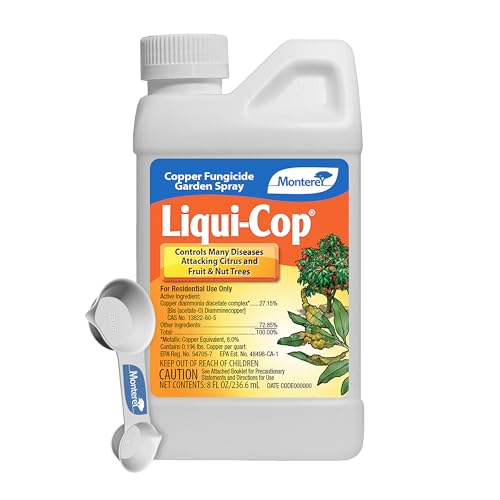
Monterey Liqui-Cop uses copper octanoate (copper soap) in a gel-based formulation that sticks to leaves and stems far better than standard liquid copper sprays. Once dry, it forms a rain-fast protective layer that doesn’t wash off easily, and users report it controls rust on peach leaves and general fungal issues on garden vegetables with just a few applications per season.
The 8-ounce concentrate must be mixed with water and applied with a sprayer. Because copper is a preventative, not a cure, the key is to apply it before spores have a chance to germinate or at the very first sign of spotting. Gardeners who follow the label rates see excellent control of anthracnose, downy mildew, and early blight on tomato plants throughout the growing season.
One caveat: over-application or use during high heat can cause leaf burn, especially on tender tomato foliage. The included measuring spoon helps get the dilution right. The small bottle size is ideal for a small to medium garden, but large plots may need multiple bottles to keep up with weekly spray schedules.
Why it’s great
- Gel formulation resists wash-off after rain
- Broad-spectrum control of common tomato diseases
- Comes with a measuring spoon for accurate mixing
Good to know
- Can burn leaves if applied in direct hot sun
- Small 8-oz bottle doesn’t cover large gardens
4. Neudorff Copper Soap Fungicide Spray

Neudorff’s Copper Soap Fungicide is a ready-to-use spray that skips the measuring and mixing step entirely. It’s labeled for use on edibles including tomatoes, potatoes, roses, and fruit trees, controlling powdery mildew, black spot, rust, and late blight. The copper soap decomposes into soluble copper and fatty acids that plants and microbes can actually use, which is a nice ecological bonus.
The OMRI-listed organic status makes it a go-to for certified organic growers who need a fast, no-fuss solution. Users spray every 7 to 10 days when conditions favor disease, and report noticeable improvement on gardenias, roses, and tomato foliage after just two treatments. The blue dye in the formula is a handy visual tracer that shows exactly where you have sprayed.
Some caution is warranted: one reviewer noted that it burned hosta leaves, and copper sensitivity varies between plant species. On tomatoes, it performs reliably if applied during cooler parts of the day. The 32-ounce RTU bottle is convenient but yields fewer applications per bottle than a concentrate of the same price.
Why it’s great
- Ready-to-use with no measuring or mixing required
- OMRI listed for organic gardening on edibles
- Blue dye helps track coverage on leaves
Good to know
- May burn sensitive plants like hostas if overapplied
- Less economical per application than a concentrate
5. Bonide Captain Jack’s Neem Max
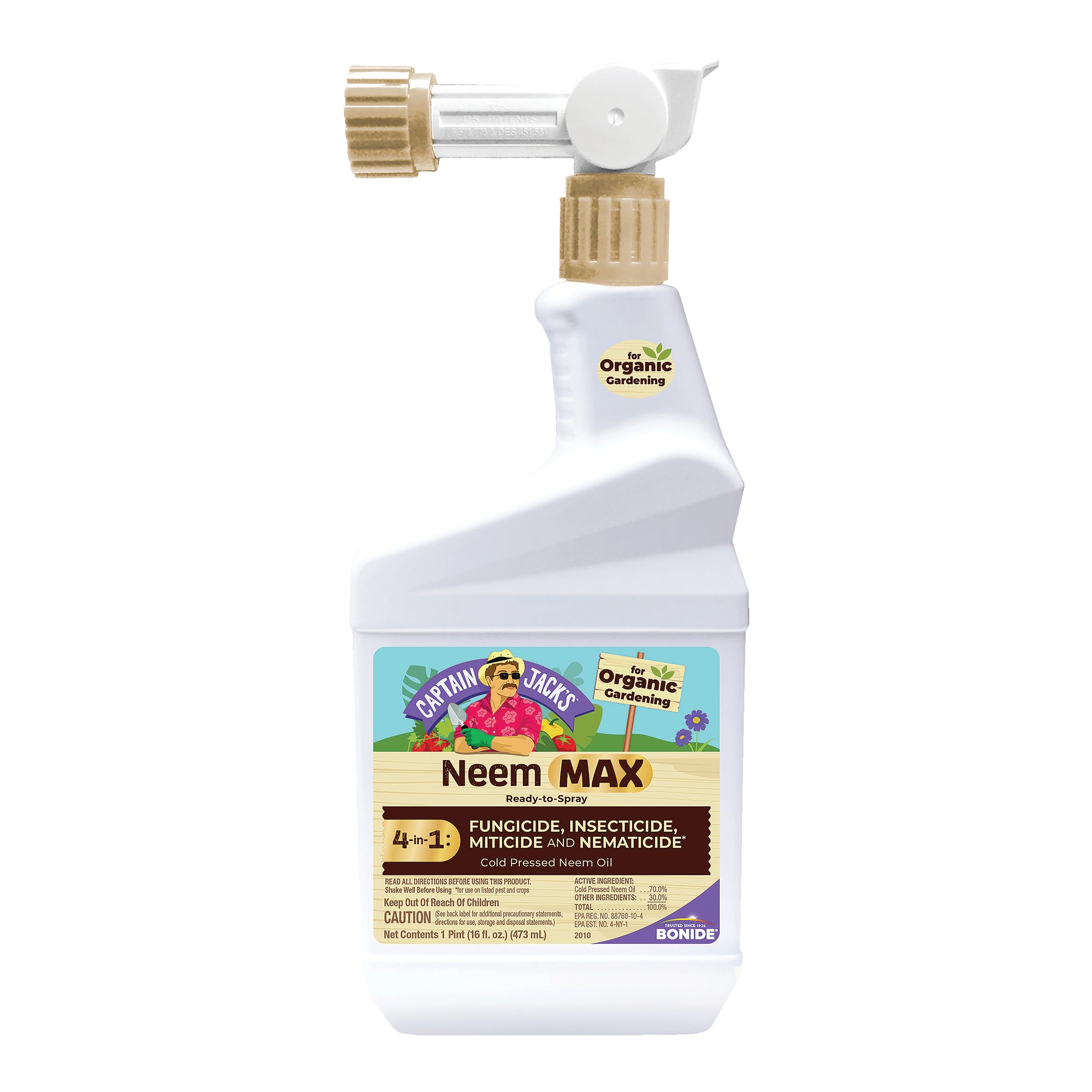
Neem Max uses cold-pressed neem oil as a 4-in-1 treatment — insecticide, fungicide, miticide, and nematicide — which makes it a powerhouse for gardeners battling multiple problems at once. The 16-ounce container connects directly to a garden hose for easy mixing, making it simple to cover tall tomato cages and sprawling plants without breaking out a pump sprayer.
Users have had success suppressing Japanese beetles on apple trees, controlling mold in flower beds, and tackling aphids and mites on vegetables. On tomatoes, the neem oil coats leaves and stems, smothering fungal spores while repelling soft-bodied pests. It works well both as a preventative and at the first sign of powdery mildew.
The main drawback is the viscosity of neem oil: the aspiration tube may struggle to draw the thick concentrate smoothly, and a few customers reported leaky caps or bottles arriving only partly full. Shaking the bottle well and inverting it to let gravity feed the tube are practical workarounds. This product is solid for integrated pest management, but is a contact spray, so reapply after rain.
Why it’s great
- Hose-end design simplifies large-area spraying
- Controls both fungal disease and insect pests
- Approved for organic gardening
Good to know
- Thick oil may clog or struggle to aspirate
- Packaging quality issues with leaks reported
FAQ
Can I use a copper fungicide on tomato fruit?
What is the difference between early blight and late blight treatment?
How often should I spray fungicide on tomato plants?
Final Thoughts: The Verdict
For most users, the fungicide for tomatoes winner is the Monterey Liqui-Cop because its rain-fast gel formulation provides reliable, broad-spectrum protection against the most common tomato diseases without requiring complex mixing or spraying equipment. If you want a biological approach that builds soil health and prevents blight from the roots up, grab the Southern Ag Garden Friendly Biological Fungicide. And for a multi-purpose solution that handles both fungal disease and insect pests in one hose-end spray, nothing beats the Bonide Captain Jack’s Neem Max.