
A fungo bat isn’t a standard game bat. It’s a specialized tool built for coaches, built for precision placement, and built to survive thousands of reps without destroying your arm. The right one makes hitting grounders, line drives, and fly balls effortless. The wrong one leaves you gripping too tight and fighting vibration.
I’m Mohammad Maruf — the founder and writer behind Drink4Good. I’ve spent years analyzing the hardware specs that separate a coach’s daily workhorse from a one-season throwaway, from wood grain density and aluminum alloy grades to grip tack and barrel whip.
Whether you’re coaching a travel team or running a high school infield session, this breakdown of the best fungo bat for softball will help you match your swing style to the right material, length, and weight without wasting money on the wrong build.
How To Choose The Best Fungo Bat For Softball
A fungo bat feels different than a game bat. You don’t swing for maximum exit velocity — you swing for placement. The goal is effortless control. Here’s what separates a flat-track trainer from a genuine coaching tool.
Length and Weight Balance
Fungo bats run long and light. Most range from 35 to 37 inches with a drop weight near -13 to -15. That extra length creates barrel whip, letting you reach out and place the ball exactly where you aim. A 35-inch fungo is the sweet spot for infield grounders; a 37-inch extends your reach for outfield fly balls. If the bat feels stiff or unbalanced in your hands, you’re fighting the design — not using it.
Wood vs Aluminum Construction
Aluminum fungos (like the Easton F4 or Marucci Aluminum) resist denting and weather. They deliver consistent pop even when you hit off the end of the barrel. Wood fungos, especially those made with maple or Japanese magnolia, offer a softer hand feel and less sting, but they require careful barrel contact. A wood fungo can crack if you consistently hit off the sweet spot — but many coaches prefer the feedback and balance that wood provides. For longevity, aluminum wins. For feel, wood wins.
Grip and Anti-Vibration Features
You’ll hit hundreds of reps in a single practice. A slick or hard grip will blister your hands within two buckets. Look for a soft-touch, perforated, or high-tack grip that stays secure even when your hands sweat. Anti-vibration knobs like Marucci’s AV2 system reduce the sting you feel in your palms — a critical feature if you’re coaching multiple sessions back to back. A standard medical-tape grip (common on entry-level fungos) is the first thing you’ll replace.
Quick Comparison
On smaller screens, swipe sideways to see the full table.
| Model | Category | Best For | Key Spec | Amazon |
|---|---|---|---|---|
| Rawlings Maple Fungo 37″ | Premium Wood | Outfield fly balls, high school & college coaches | 37″ maple, 2.25″ barrel | Amazon |
| SSK Z9 Professional Edge Comp | Premium Wood | Versatile infield/outfield, MLB-level feel | Magnolia + maple barrel, 35″ | Amazon |
| Marucci Aluminum Fungo | Premium Aluminum | All-day coaching, minimal hand sting | AV2 anti-vibration knob, 35″ | Amazon |
| Easton F4 Aluminum Fungo | Mid-range Aluminum | Youth & travel ball coaches, durability | 35″ x 22 oz, pro tapered grip | Amazon |
| Louisville Slugger K100 Fungo | Budget Wood | Entry-level coaches, little league practices | 36″ wood, traditional knob | Amazon |
| GKK Aluminum Swing Trainer | Budget Aluminum | Youth hand-eye coordination, lightweight training | 30″ x 12 oz, ultra-light alloy | Amazon |
| Louisville Slugger Genuine MIX | Budget Wood | Casual use, soft toss or wooden bat batting practice | 34″ mixed turning wood | Amazon |
In‑Depth Reviews
1. Rawlings Maple Fungo Training Bat 37″

Rawlings built this fungo for the coach who spends entire practices in the outfield. The 37-inch length and cupped barrel design keep the overall weight manageable — roughly 1.3 pounds — while the 2.25-inch barrel diameter gives you a generous sweet spot that forgives off-center contact. It’s dense maple, not pine, which means it takes hundreds of reps without the splitting that cheaper wood bats show by mid-season.
The balance leans slightly barrel-heavy, which actually helps when you’re trying to extend your arms and hit deep outfield flies. Reviewers note that the grip holds up well through a season, and the finish resists chipping even when used daily in pre-game warmups. The 34-inch version exists for infield work, but the 37-inch is the standout for coaches who need maximum whip reach.
One trade-off: it’s noticeably heavier than an aluminum fungo of the same length. If you’re on the smaller side or prefer an ultralight feel, you may find your forearms tiring after a full bucket. Choking up helps, but it’s a dense stick — built to last, not built to feel weightless.
Why it’s great
- Dense maple construction resists cracking through a full season
- Large 2.25″ barrel provides a forgiving sweet spot
- Cupped design reduces swing weight despite the length
Good to know
- Heavier than aluminum fungos — forearm fatigue after a bucket
- 37″ length less ideal for infield grounders unless you choke up
2. SSK Z9 Professional Edge Comp Wood Fungo 35″

SSK uses a hybrid construction that’s rare in the fungo market: a lightweight Japanese magnolia obovata handle fused with a hard maple barrel. The result is a bat that feels noticeably springy in your hands — the magnolia absorbs vibration, while the maple barrel delivers the pop. At 35 inches, it’s the most versatile length for coaches who switch between infield and outfield drills in the same session.
The handcrafted build means the grain density is inspected by hand, and the 60-day warranty covers manufacturing defects. Coaches at the collegiate and professional level gravitate toward SSK because the weight distribution stays consistent across multiple units — you don’t get a “heavy” one and a “light” one from the same model line. The finish on the barrel is durable enough to survive daily use, and the barrel whip at 35 inches is tight without feeling stiff.
The catch: some reviewers report that SSK bats can arrive with a visible seam where the two wood types meet, and one review noted the bat was actually a glued two-piece rather than a solid wood construction. That experience appears to be rare, but it’s worth inspecting the barrel before you start hitting. For most coaches, the balance and feedback are unmatched in this price tier.
Why it’s great
- Hybrid magnolia/maple construction reduces hand sting
- 35″ length is the most versatile for infield and outfield
- Used by MLB and college coaches — proven build
Good to know
- Some units may have a visible glue seam between woods
- Not a solid one-piece wood bat; hybrid design
3. Marucci Sports Aluminum Fungo 35″/22 oz

Marucci’s aluminum fungo is the anti-fatigue solution for coaches who run back-to-back practices. The one-piece 7050 aircraft-grade alloy barrel is stiff but not harsh, and the second-generation AV2 anti-vibration knob actively dampens the sting that normally travels from the barrel into your palms. After a full afternoon of hitting grounders, your hands won’t feel beaten up — which is the entire point of a fungo.
The micro-perforated soft-touch grip is tacky from day one and doesn’t turn slick when your palms sweat. Reviewers consistently mention that the grip lasts longer than the medical-tape standard on cheaper aluminum bats. The 35-inch, 22-ounce weight is light enough to feel whippy, but the barrel has enough mass to produce hot ground balls and line drives without you having to swing hard. The metal construction also weathers rain and humidity without any risk of splitting.
Wood loyalists will note that the barrel lacks the feedback feel of a maple fungo — you get less vibration, but you also lose some sense of where on the barrel you made contact. The aluminum barrel also rings audibly, which some coaches find distracting in a quiet practice environment. If feel matters more than durability, wood is still the answer. If durability matters most, this is your bat.
Why it’s great
- AV2 anti-vibration knob drastically reduces hand sting
- Soft-touch grip lasts longer than standard tape grips
- Weather-resistant one-piece aluminum — no splitting
Good to know
- Lacks the tactile feedback of a wood barrel
- Rings loudly on contact, noticeable in quiet fields
4. Easton F4 Aluminum Fungo 35″/22 oz
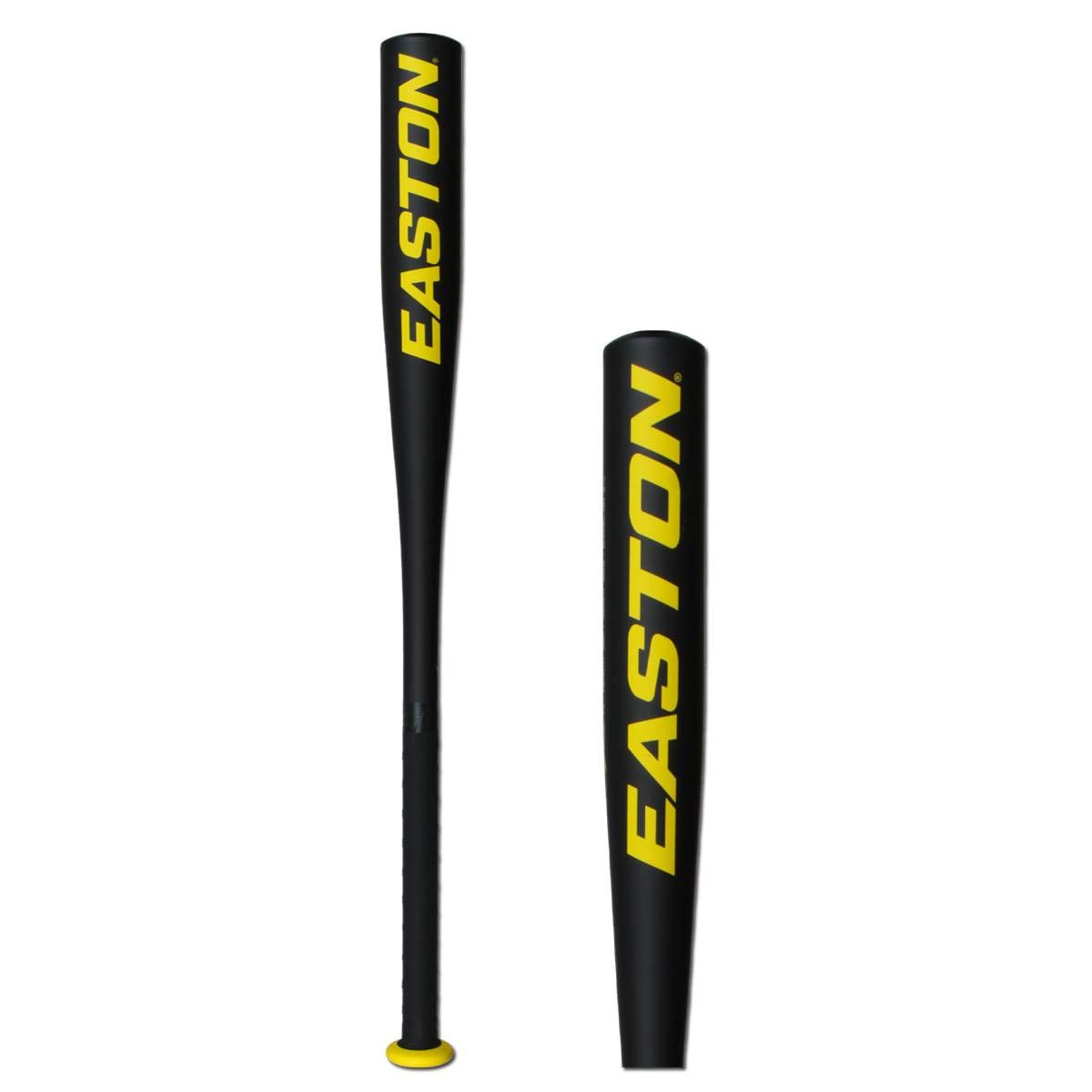
The Easton F4 is a classic aluminum fungo that has been in service for years with travel ball and little league coaches. It’s a simple, no-frills design: thin handle, pro tapered grip, and a 35-inch aluminum barrel that delivers solid pop without beating up your hands. The 22-ounce weight keeps it light enough for extended practice sessions without causing the forearm fatigue you get with a heavier wood fungo.
The high-tack grip is a step above the standard vinyl wrap — it stays secure when things get sweaty. Reviewers consistently note that the bat has “a lot of pop” and makes hitting grounders and fly balls easier compared to a regular game bat. The thin handle allows you to get your top hand into a comfortable position for directional bunting and controlled hits. Several coaches report using the F4 for multiple seasons without any denting or structural issues.
Where the F4 shows its lower price point is the grip. The factory grip is described by multiple users as “medical tape” quality; it works, but it’s thin and provides minimal shock absorption. Most reviewers recommend replacing the grip with a cushioned tape before your first full practice. Once you swap the grip, the underlying aluminum frame is excellent for the price.
Why it’s great
- Durable aluminum frame survives multiple seasons
- Thin handle gives excellent control for directional hitting
- 22-ounce weight reduces forearm fatigue
Good to know
- Factory grip is thin and low quality — plan to replace
- Metal construction transmits more vibration than wood
5. Louisville Slugger K100 Fungo 36″

Louisville Slugger’s K100 is the budget-friendly wood fungo that gets the fundamentals right. At 36 inches, it sits between the standard 35-inch infield and 37-inch outfield lengths, making it a decent compromise for coaches who don’t want to buy two bats. The wood is pine or a mixed turning blank — not the high-end maple of pricier fungos — but with proper care (tape at the sweet spot and a grip upgrade), it holds up for a season of high school infield and outfield work.
The traditional knob and smooth vinyl decal finish are no-frills, but the bat’s weight distribution feels balanced for its length. Reviewers note that it’s slightly heavier than expected, but once you add an aftermarket grip, the overall feel improves noticeably. Several high school coaches report hitting consistent 200-300 foot shots without feeling swing fatigue. The barrel has enough pop to make outfielders move without requiring a hard cut.
The main limitation is durability. Like most budget wood bats, the K100 can crack if you repeatedly hit off the end of the barrel. One reviewer proactively taped the sweet spot to prevent splitting, which is a common practice among coaches who want to extend the life of a wood fungo. If you’re a coach who swings hard and hits everything, the aluminum options in this price range may last longer.
Why it’s great
- Balanced 36″ length works for infield and outfield
- Good pop-to-weight ratio for the price
- Traditional wood feel without the premium price
Good to know
- Wood can crack with repeated off-center hits
- Vinyl grip is smooth and should be upgraded
6. GKK Aluminum Swing Trainer 30″
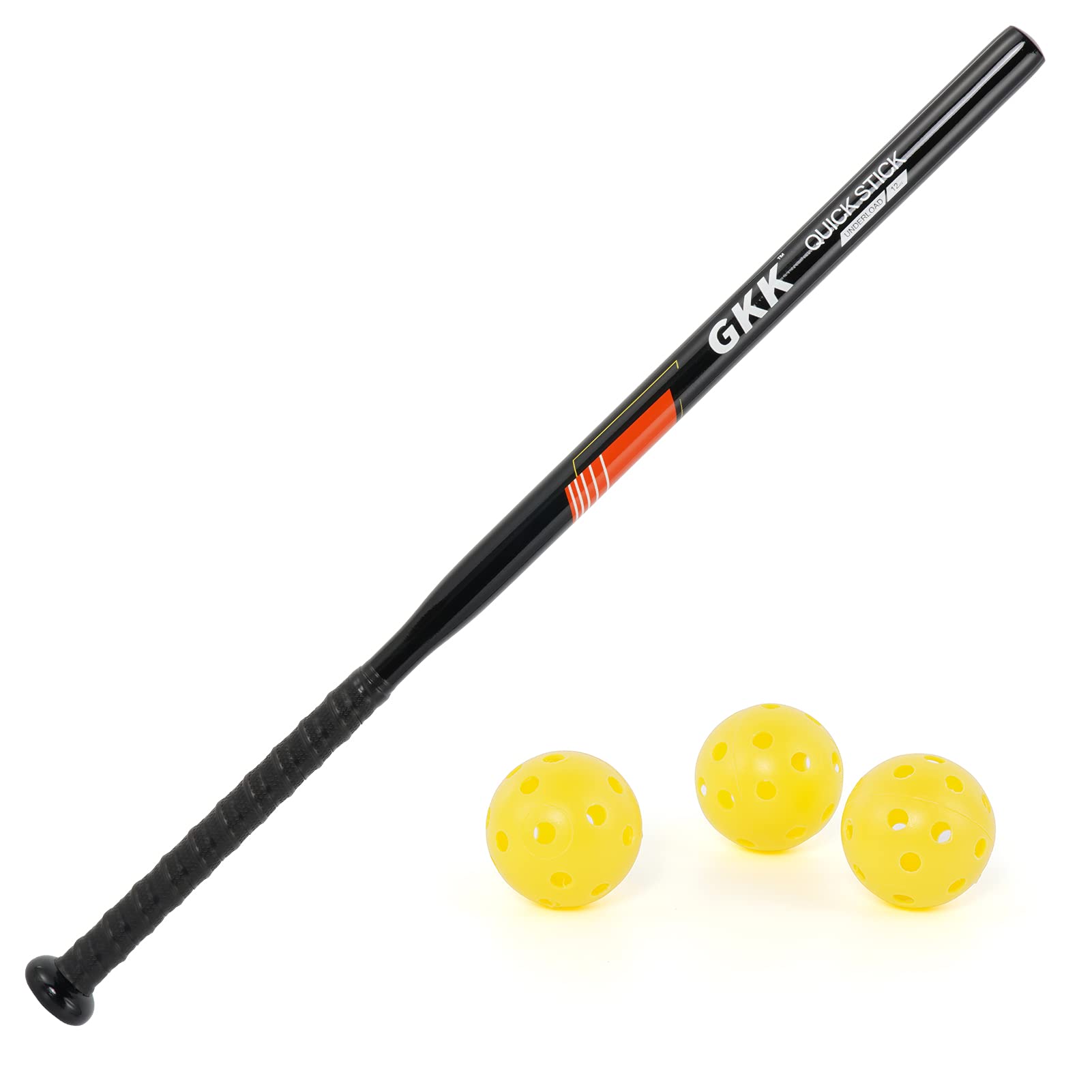
The GKK aluminum bat is designed differently than a traditional fungo. At 30 inches and only 12 ounces, it’s intended as a hand-eye coordination trainer for youth players rather than a full-size coaching fungo. The ultralight weight forces batters to focus on contact timing, and the narrow barrel diameter (1.8 inches) rewards precise swings. Kids ages 8-12 will find it manageable for tee work, soft toss, and front toss drills.
The aluminum alloy construction is durable enough to withstand daily use in a batting cage environment, and the rubber grip is comfortable for small hands. Reviewers consistently note that their children improved hand-eye coordination and batting confidence after a few weeks of using this bat. Several parents report using it with sponge golf balls for indoor drills, which speaks to its versatility as a training aid.
This is not a fungo for coaching. It’s too short and too light to deliver the barrel whip needed for field placement. If you’re looking for a traditional fungo to hit grounders and fly balls, the GKK won’t serve that purpose. It’s best understood as a youth training bat that happens to be labeled as a fungo.
Why it’s great
- Ultra-light 12 oz weight reduces fatigue for young players
- Narrow barrel forces focus on hand-eye coordination
- Durable aluminum construction for cage use
Good to know
- Too short (30″) and light for coaching fungo work
- Not a replacement for a conventional 35″ fungo bat
7. Louisville Slugger Genuine MIX 34″

The Louisville Slugger Genuine MIX is a 34-inch wood bat that blurs the line between a fungo and a traditional bat. It’s cupped and turned from a mixed wood blank (not specifically a fungo design), but its lightweight feel and balanced swing make it functional for soft toss, front toss, and limited fielding drills. The clear finish reveals the wood grain, and the traditional knob gives you standard top-hand control.
Reviewers praise its surprising pop and the absence of vibration sting — a common problem with budget wood barrels. Senior league players in particular report that the MIX handles well for slower pitch levels, delivering clean contact without the jarring feedback that some cheaper bats produce. The 34-inch length is shorter than most dedicated fungos, but it works well for infield work where you need quick barrel control rather than extended reach.
The catch is that this isn’t designed for the volume of reps a true fungo bat takes. It’s a game bat that can double for light practice work, not a purpose-built coaching tool. If you’re only hitting 20-30 balls per session, it’ll hold up fine. If you’re hitting buckets every day, you’ll want something with thicker walls or a dedicated fungo frame.
Why it’s great
- No vibration sting on contact — clean feedback
- 34″ length offers quick barrel manipulation for infield drills
- Cupped design keeps swing weight manageable
Good to know
- Not a dedicated fungo bat — thinner walls than purpose-built models
- Wood blank may crack under high-volume daily coaching
FAQ
What length fungo bat should a softball coach use for infield drills?
Is an aluminum fungo bat better than a wood fungo for softball practice?
Can you use a regular softball bat as a fungo bat?
Final Thoughts: The Verdict
For most coaches, the best fungo bat for softball winner is the Rawlings Maple Fungo 37″ because its dense maple construction, generous 2.25-inch sweet spot, and cupped barrel balance give you the durability and pop needed for daily practice without breaking down mid-season. If you want an aluminum build that eliminates hand sting and never cracks, grab the Marucci Aluminum Fungo. And for a versatile wood fungo with professional-level craftsmanship, nothing beats the SSK Z9 Professional Edge Comp in the 35-inch length.