
Every guitarist knows the moment: you hit that open chord, the note blooms into a wall of harmonic complexity, and the sustain hangs in the air until you reach for the next fret. That is the sound of fuzz — a circuit that clips your guitar signal into a warm, saturated growl or a searing, gated rip. But finding a pedal that delivers the right character, from the velvety sag of germanium to the aggressive bite of silicon, without turning your tone into a muddy mess is the real challenge.
I’m Mohammad Maruf — the founder and writer behind Drink4Good. I’ve spent countless hours analyzing the circuits, transistor types, and customer feedback behind dozens of fuzz pedals to separate the genuinely musical players from the one-trick noise boxes.
Whether you are chasing the glassy cleanup of a vintage Fuzz Face or the crushing wall of a Big Muff, this guide breaks down the most reliable fuzz pedals for guitar to help you find your signature distortion voice.
How To Choose The Best Fuzz Pedals For Guitar
Fuzz is not just distortion — it is a distinct type of clipping that can sound warm, sputtery, gated, or massive depending on the circuit and transistor type. The wrong pick can leave you fighting with your amp or your band mix. Here are the critical factors to consider.
Transistor Type: Silicon vs. Germanium
Germanium transistors deliver a warmer, more docile fuzz that cleans up beautifully when you roll back your guitar’s volume knob. They are temperature-sensitive and can be finicky, but the dynamic response is unmatched for classic rock and blues. Silicon transistors are more consistent, louder, and brighter — perfect for aggressive, modern fuzz tones that need to cut through. Choose germanium if you want expressive, touch-sensitive feel; choose silicon if you need raw power and reliability.
Bias and Gate Controls
A bias control lets you starve the transistor circuit, producing a gated, velcro-like sputter that decays quickly. This is essential for stoner rock, doom, and experimental sounds. Without a bias knob, you get a more traditional, smooth sustain. Gate controls similarly shape how the note dies — tight gating for rhythmic chugging, or open for singing leads. If you play heavy or riff-based music, bias and gate are must-have features.
EQ Shaping and Mids
Many classic fuzz pedals, especially the Big Muff, scoop the mids heavily. This sounds glorious alone but can cause you to disappear in a live band mix. Look for pedals with a tone control that sweeps from dark to bright, or — better yet — a mid-boost switch or dedicated EQ. Pedals with a “Mid+” mode or active bass/treble controls let you dial in presence without sacrificing that fuzz characteristic.
Cleanup with Guitar Volume
A great fuzz pedal should clean up to a warm, slightly overdriven sound when you roll back your guitar’s volume knob — this is the hallmark of a responsive circuit. Not all pedals do this well. Germanium Fuzz Face circuits are famous for this cleanup; many silicon Big Muffs do not clean up at all. If you need a pedal that doubles as a dynamic overdrive, prioritize the ones known for volume-knob cleanup.
Quick Comparison
On smaller screens, swipe sideways to see the full table.
| Model | Category | Best For | Key Spec | Amazon |
|---|---|---|---|---|
| Keeley Fuzz Bender | Premium | Versatile all-in-one fuzz | Germanium+Silicon hybrid, Bias, 20dB Bass/Treble boost | Amazon |
| Dunlop Germanium Fuzz Face Mini | Premium | Dynamic cleanup with volume knob | Germanium transistors, 9mA draw | Amazon |
| JHS Pedals Muffuletta | Premium | Six Big Muff flavors in one box | 6 analog circuits, 4mA draw | Amazon |
| EHX Op Amp Big Muff Pi | Mid-Range | 90s alternative/shoegaze wall | Op-amp clipping, Tone Bypass switch | Amazon |
| EHX Ram’s Head Big Muff Pi | Mid-Range | Vintage sustain with mid punch | Ram’s Head circuit, 2mA draw | Amazon |
| Walrus Audio Fundamental Fuzz | Mid-Range | Three-voicing versatility | 3 modes: Gate, Classic, Mid+ | Amazon |
| EHX Big Muff Pi (NYC) | Budget | Classic sustain at lowest cost | Standard NYC circuit, true bypass | Amazon |
In‑Depth Reviews
1. Keeley Fuzz Bender

The Keeley Fuzz Bender is a rare hybrid that combines a Japanese germanium transistor with a silicon clipping section, giving you the warmth of germanium and the headroom of silicon in one pedal. The ginormous foot-friendly Level and Fuzz knobs make on-the-fly adjustments easy during a live set. The gyrator Bass and Treble controls offer 20 dB of boost each, which means you can sculpt your EQ to punch through any mix — a huge advantage over traditional two-knob fuzz pedals.
The Bias control is where this pedal really earns its keep. Dial it up for smooth, velvety sustain, or crank it down for glitchy, gated velcro tones perfect for stoner rock and experimental passages. Users report excellent compatibility with both single-coil and humbucker guitars, and the circuit cleans up reasonably well when you roll back your guitar volume. The build quality is solid and the enclosure is pedalboard-friendly.
Reviewers consistently note that the Fuzz Bender is incredibly versatile — it stacks beautifully with overdrive and boost pedals and can go from subtle aggressiveness to raging fuzz without losing note definition. The only minor complaint is that some units may have power jack issues, but Keeley’s customer service is well-regarded. If you want one fuzz that covers vintage, modern, and weird sounds, this is it.
Why it’s great
- Hybrid germanium/silicon circuit for tonal flexibility
- Independent 20 dB Bass and Treble boost for mix-cutting EQ
- Bias control from smooth sustain to gated velcro
Good to know
- Potential power jack defects in some units
- Requires DC power supply (no battery included)
2. Dunlop Germanium Fuzz Face Mini

The Dunlop Germanium Fuzz Face Mini is a faithful recreation of the legendary mid-60s Fuzz Face circuit that defined the sounds of Hendrix, Gilmour, and countless others. Housed in a compact, pedalboard-friendly box, this pedal uses slightly mismatched germanium transistors to deliver that warm, saggy, harmonically rich fuzz that cleans up like magic when you roll back your guitar’s volume knob. At max fuzz, it produces creamy, singing sustain; at lower settings, it becomes a glassy, touch-sensitive overdrive.
This pedal rewards players who use their guitar’s volume knob as an expressive tool. Roll it back to 7 or 8 and you get a beautiful edge-of-breakup crunch with dynamic pick attack. Roll to 5 for spanky, clean tones that still have warmth. This cleaning-up characteristic is what separates germanium Fuzz Faces from almost every other fuzz circuit — it feels more like an extension of your guitar than a separate effect.
Reviewers praise its warm, deep fuzz sound and sturdy construction, with the mini enclosure saving precious board space. The biggest downside is a slight volume drop compared to true bypass pedals when engaged, though this is a characteristic of the original circuit. It works beautifully with humbuckers and single coils alike, though the cleanup is more dramatic with single-coil guitars. If you play blues, classic rock, or anything needing dynamic responsiveness, this is the benchmark.
Why it’s great
- Iconic germanium voicing with superb volume-knob cleanup
- Compact mini enclosure for easy pedalboard use
- Warm, creamy fuzz that doubles as dynamic overdrive
Good to know
- Minor volume drop when engaged (classic Fuzz Face behavior)
- Temperature-sensitive circuit may change character in extreme conditions
3. JHS Pedals Muffuletta
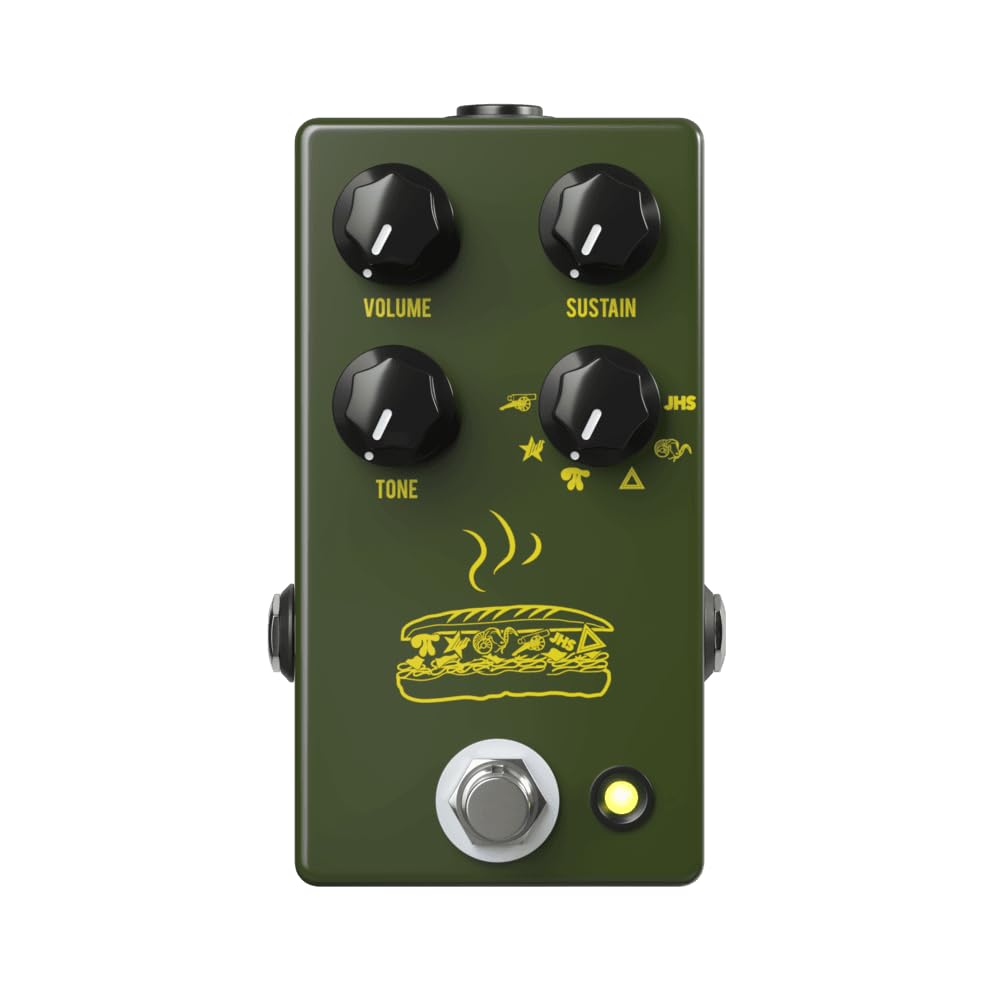
The JHS Muffuletta is the ultimate Big Muff collector for players who cannot decide on a single era of this iconic circuit. Inside the compact Army Green enclosure are five analog recreations of the most beloved Big Muff tones — from the 70s Ram’s Head to the 90s Op Amp — plus a unique JHS-exclusive voicing. Each mode is an independent circuit, not a digital emulation, meaning you get the authentic voltage response and clipping characteristics of each specific Muff format.
The controls are refreshingly simple: a six-position rotary dial selects the voicing, and the standard Volume, Tone, and Sustain knobs work identically across all settings. This makes switching from Gilmour’s soaring Ram’s Head leads to Smashing Pumpkins’ Op Amp wall of sound effortless, without needing to relearn the interface. The pedal is 90% accurate to the originals, according to users, and the JHS-exclusive mode adds a modern tightness that works well with humbuckers.
Customer feedback highlights the Muffuletta’s versatility — it covers shoegaze, stoner, classic rock, and indie perfectly, all in one compact pedal. The build quality is excellent and the low 4mA current draw means it is easy on any power supply. The main trade-off is the premium price, but when you consider you are getting six dedicated fuzz circuits in a single pedal, the value is hard to beat. If you are a Big Muff connoisseur, this is the only fuzz pedal you need.
Why it’s great
- Six distinct analog Big Muff circuits in one pedal
- Simple, intuitive controls work across all voicings
- JHS-exclusive tone adds modern versatility
Good to know
- Premium entry price reflects the multi-circuit design
- Not for players needing a single, dedicated fuzz sound
4. Electro-Harmonix Op Amp Big Muff Pi

The Electro-Harmonix Op Amp Big Muff Pi is the faithful reissue of the Big Muff circuit that defined the 90s alternative and shoegaze sound — think Smashing Pumpkins’ Siamese Dream, Bush, and Collective Soul. Rather than the traditional transistor-based Muffs, this version uses an LM308 op-amp chip for a more aggressive, brighter top-end and a tighter low-end. The result is a fuzz that feels punchy and articulate, ideal for layered guitar tracks and chordal playing.
The classic three-knob layout (Volume, Tone, Sustain) is joined by a Tone Bypass switch that removes the tone stack for a more direct, raw fuzz sound. This feature lets you toggle from the scooped-mid standard voicing to a flat-response mode that sits differently in a mix. Players report that the pedal nails that signature 90s wall of sound, and when combined with reverb, it creates massive atmospheric textures. The pedal is built into EHX’s rugged die-cast enclosure and features true bypass for signal integrity.
Customer reviews rave about its iconic sound and solid construction. Some note that the price on Amazon can be higher than other retailers, but the availability and fast shipping offset that. The pedal does not clean up with guitar volume — it is a dedicated fuzz, not a dynamic overdrive. If you are chasing that specific era of fuzz or play stoner/sludge rock, the Op Amp Big Muff delivers that sound with authenticity and reliability.
Why it’s great
- Authentic op-amp circuit for 90s alternative/shoegaze tones
- Tone Bypass switch adds raw voicing option
- Rugged die-cast enclosure with true bypass
Good to know
- Does not clean up with guitar volume knob
- Not ideal for subtle or dynamic overdrive sounds
5. Electro-Harmonix Ram’s Head Big Muff Pi

The Electro-Harmonix Ram’s Head Big Muff Pi is a faithful recreation of the early 70s Ram’s Head circuit, which is famed for its singing sustain and mid-range punch. Unlike later Big Muffs that scooped the mids heavily, the Ram’s Head retains more presence in the upper-mid frequencies, making it easier for lead lines to cut through a band mix while still providing that massive sustain that Big Muffs are known for. Players describe it as having sustain for days — clean to nasty — depending on where you set the knobs.
The controls are the classic Volume, Tone, and Sustain configuration, but the circuit itself is voiced differently from the standard NYC Big Muff. The tone sweep is more musical and the fuzz character remains articulate even at high sustain settings, preserving pick attack detail. It works beautifully with single-coil Strats for achieving David Gilmour-style soaring leads, and handles humbuckers well for heavier rock tones. The enclosure is a compact die-cast box with true bypass and an effect status LED.
Users consistently highlight its exceptional sustain and versatile range, from clean-ish breakup to full fuzz saturation. It does not clean up with the guitar volume knob as aggressively as a Fuzz Face, but the tonal range between settings is wide enough to cover multiple genres. The only downside is the slightly higher price compared to the standard Big Muff, but for that classic Ram’s Head voicing, the premium is justified. If you want iconic sustain with a bit more mid-range authority, this is the Big Muff to get.
Why it’s great
- Exceptional sustain with mid-range punch for mix presence
- Versatile voicing from clean-ish to full fuzz saturation
- Compact, true-bypass enclosure with LED and battery door
Good to know
- More expensive than the standard NYC Big Muff
- Does not clean up as dramatically as germanium circuits
6. Walrus Audio Fundamental Series Fuzz

The Walrus Audio Fundamental Series Fuzz is a modern take on fuzz that packs three distinct voicings into one compact, slider-controlled pedal. The three-position toggle offers Gate, Classic, and Mid+ modes. Classic mode is a thick, Muff-style fuzz that is great for rhythm work, while Mid+ mode adds an EQ boost that makes your leads cut through the densest mix. Gate mode is designed for gated, sputtery effects, though some users report a significant volume drop in this mode — it is best used for experimental textures rather than primary fuzz.
The Gain, Tone, and Volume sliders feature center notches for repeatable settings, making it easy to dial in and recall tones. The Tone control is particularly effective, changing the fuzz character from dark and wooly to bright and biting across its range. The pedal does not clean up with the guitar volume knob, so it is best treated as a set-and-forget sound rather than a dynamic overdrive. It stacks reasonably well with other drives and the modes respond differently to input level.
Customer reviews praise the balance of quality and affordability, noting that the sound quality is on par with pedals that cost significantly more. The sliders, while intuitive, raise some concerns about dust and moisture ingress over time, but the overall build quality is solid. If you need multiple fuzz voicings in a small footprint without breaking the bank, the Fundamental Fuzz is a strong contender — just keep the Gate mode for niche use only.
Why it’s great
- Three voicing modes (Classic, Mid+, Gate) for tonal variety
- Slider controls with center notches for repeatable settings
- Excellent value compared to similarly featured pedals
Good to know
- Gate mode has significant volume drop on some units
- Sliders may be prone to dust over time
7. Electro-Harmonix Big Muff Pi (NYC)

The Electro-Harmonix Big Muff Pi (NYC) is the definitive standard Big Muff — the pedal that has been a staple of rock, blues, and indie for decades. This is the current production version of the classic NYC circuit, known for its massive sustain and thick, creamy distortion. It preserves the original harmonic saturation that made the Big Muff famous, with controls for Volume, Tone, and Sustain that let you dial in everything from smooth, singing leads to crushing power chords.
While it is not the most versatile fuzz pedal — it does not clean up with guitar volume and its mid-scooped EQ can make it disappear in a loud band mix — it excels at delivering that iconic Big Muff sound. The true bypass switching maintains your guitar’s signal integrity when the pedal is off, and the included 9V battery gets you started immediately. Reviewers note that it sounds nearly identical to the vintage 1970s models, with modern improvements like a battery door and external power jack.
Customer feedback is consistently positive, praising the great sustain and sound quality for the price. It works beautifully for classic rock tones (White Stripes, Smashing Pumpkins, David Gilmour solos) and is built like a tank. The power requirements are minimal at just 3mA, making it friendly for any power supply. If you want the authentic Big Muff experience at the lowest entry price, this is the one to grab — just be prepared to manage the mid scoop with your amp EQ.
Why it’s great
- Authentic classic Big Muff sustain and saturation at entry price
- True bypass preserves clean signal when disengaged
- Very low 3mA draw, battery included
Good to know
- Mid-scooped EQ can get lost in full-band mixes
- No cleanup with guitar volume — dedicated fuzz sound only
FAQ
What is the difference between germanium and silicon fuzz?
Will a Big Muff disappear in a live band mix?
Can I use a fuzz pedal with an overdrive or distortion?
How do I fix a fuzz pedal that has a volume drop?
Final Thoughts: The Verdict
For most users, the fuzz pedals for guitar winner is the Keeley Fuzz Bender because it combines the warmth of germanium with the headroom of silicon, plus bias and EQ controls that make it work for everything from smooth leads to gated riffs. If you want a dynamic, touch-sensitive classic that cleans up with your volume knob, grab the Dunlop Germanium Fuzz Face Mini. And for the ultimate Big Muff collector who needs every era in one box, nothing beats the JHS Pedals Muffuletta.