
For caregivers of elderly or rehab patients, the simple act of standing or walking can become a high-stakes maneuver. Without the right support, a transfer from bed to chair risks a fall for the patient and back strain for the caregiver. This is where a properly designed support belt with multiple grab points makes the difference, offering a secure hold for both parties without the pain of a narrow strap digging into the user’s ribs.
I’m Mohammad Maruf — the founder and writer behind Drink4Good. After spending hours comparing webbing widths, handle construction, buckle durability, and real caregiver feedback across dozens of models, I assembled this guide to cut through the confusion and help you find the tool that truly fits your care routine.
Whether you are helping a loved one recover from surgery or managing daily transfers in a professional setting, choosing the right best gait belt with handles is the single most practical decision you can make for safer, more confident mobility assistance.
How To Choose The Best Gait Belt With Handles
Not all gait belts are built the same. The difference between a safe, comfortable transfer and a frustrating, risky lift often comes down to a few specific design details. Focus on these four factors when making your decision.
Belt Width and Padding
The most common mistake is choosing a belt that is too narrow. A standard 2-inch belt can cause significant discomfort, pinching the ribs or waist of the patient during a lift. Look for options with a belt body of 5 inches or wider. This wider surface area distributes the pulling force across the torso, reducing pressure points and making the experience far less painful for the user.
Handle Count and Position
Handles are the defining feature here, and their number and placement dictate how useful the belt will be. A belt with only two side handles limits the caregiver to a single angle of pull. Models with seven handles — including longitudinal straps along the sides and a horizontal handle at the lower back — let you lift, pivot, and stabilize from any direction. This is especially important for two-person transfers where one caregiver supports the back and another assists from the side.
Buckle Mechanism: Plastic vs. Metal
There are two primary buckle types found on gait belts. Plastic quick-release buckles (often side-squeeze or click-style) are easy to fasten and unfasten, making them convenient for frequent adjustments. Metal spring-loaded buckles are extremely durable and secure, but they can be more difficult to tighten and release. For home care where the same person uses the belt daily, a plastic click buckle offers the best balance of speed and safety. For heavy institutional use, a metal buckle provides unmatched longevity.
Material and Maintenance
Nylon webbing is the most common material — it is strong, lightweight, and breathable. However, it absorbs moisture and can be difficult to fully sanitize after accidents. For incontinence care or multi-patient use, a belt made from polyurethane-encapsulated webbing like BioThane is superior. It can be wiped clean with a mild detergent, does not absorb liquids, and resists odors, making it the most hygienic choice for long-term care.
Quick Comparison
On smaller screens, swipe sideways to see the full table.
| Model | Category | Best For | Key Spec | Amazon |
|---|---|---|---|---|
| BRMDT Gait Belt | Mid-Range | Wider Belt for Obese Patients | 5.4 in. wide body with 7 handles | Amazon |
| Patient Aid Gait Belt | Mid-Range | Lightweight Daily Use | 4.16 oz weight with reinforced handles | Amazon |
| COW&COW Padded Belt | Premium | Pediatric or Petite Sizes | 5.5 in. wide, small adult fit (24-30 in.) | Amazon |
| Posey Premium EZ Clean | Premium | Institutional & Sanitary Needs | 60 in. spring-loaded metal buckle, wipeable | Amazon |
| LAMBOX Gait Belt | Budget | Entry-Level Value | 60 in. length, 5 in. wide pad | Amazon |
In‑Depth Reviews
1. BRMDT Transfer Belt with 7 Handles

This third-edition belt from BRMDT strikes the best balance of comfort, leverage, and adjustability. Its 5.4-inch wide nylon webbing is noticeably broader than standard 2-inch belts, which makes a real difference for heavier patients by spreading the pull force across a larger area. The seven-handle configuration is particularly well-thought-out: four longitudinal handles along the sides give caregivers a reliable grip at any angle, while the horizontal handle at the center of the back enables a strong, stable lift from behind.
The plastic click buckle is intuitive—adjust the size once for a waist between 31.5 and 54 inches, and you are done. Multiple users report that this buckle is far safer than traditional metal-teeth locking buckles, which can slip or pierce the webbing over time. The belt has been praised by physical therapists for its use with stroke, dementia, and Parkinson’s patients, where secure and predictable handling is vital.
One honest note: a few users mention the clip can be a bit stiff to close initially, though it holds securely once fastened. Also, this belt is slightly heavier than basic canvas options, but the extra weight comes from the robust webbing and reinforced stitching that give it a long service life. For most home care situations, this is the most versatile and confidence-inspiring option available.
Why it’s great
- Wider belt body reduces rib discomfort during lifts
- Seven handles allow secure two-person transfers from any angle
- Quick-release buckle is easy to fasten and adjust after initial sizing
Good to know
- Buckle can be stiff to close for users with limited hand strength
- Heavier construction than basic nylon belts
2. Patient Aid Transfer Belt with Padded Handles

This belt from Patient Aid is the lightest of the mid-range contenders, weighing just over 4 ounces, yet it does not sacrifice real durability. The reinforced handles are its standout feature—they are padded and firmly stitched into the webbing, providing a confident grip for caregivers without the handles shifting or bunching during a lift. The belt body itself is a standard width, but the quality of the nylon and the stitching gives it a rugged feel that holds up well to daily use.
Caregivers of bedridden and bariatric patients have reported that the extra handles make a significant difference in reducing back strain. The ability to grab from multiple angles helps distribute the lifting load between two caregivers, or allows a single caregiver to use a more ergonomic pulling motion. The quick-release buckle is straightforward and lives up to the “effortless application” promise, which is a big plus when you are dealing with a resistant or confused patient.
The tradeoff here is that the belt is not as wide as the BRMDT model, so for very heavy or large patients, the narrower webbing may still cause some discomfort over time. It rolls up small enough to fit in a standard bag, making it a solid choice for caregivers who need a portable, no-fuss solution for outpatient trips or emergency use.
Why it’s great
- Very lightweight and portable for on-the-go use
- Padded reinforced handles provide secure, comfortable grip
- Quick-release buckle is simple to operate even under stress
Good to know
- Belt body is standard width, may not be as comfortable for bariatric patients
- Fewer handles than the 7-handle premium options
3. COW&COW Padded Belt with 4 Handles (Small)

COW&COW takes a slightly different approach, offering a belt specifically sized for smaller adults and pediatric patients. At 5.5 inches wide, it is the broadest belt in this lineup, which maximizes comfort by dispersing pressure across a large surface area. This is especially beneficial for petite users or children with low muscle tone, where a narrow belt might dig in uncomfortably.
Soft inner layering prevents the belt from feeling too tight or abrasive against the skin, and the breathable nylon construction helps with long-term wear during therapy sessions. The quick-release buckle is easy for a caregiver to operate, and the stitching on the handles has been noted by reviewers as being very well-executed.
The primary limitation is the size range. This small version fits waist sizes from 24 to 30 inches only, which means it is not a universal tool. Several reviewers have noted that a growing child or heavier adult will quickly outgrow it. However, for its intended audience—small-framed elderly individuals, children in physical therapy, or anyone who finds standard belts too loose—this is an excellent, purpose-built choice.
Why it’s great
- Widest belt in the group at 5.5 in. for superior pressure distribution
- Soft inner layer prevents chafing and pinching
- Perfect fit for petite adults, children, and small-frame patients
Good to know
- Only 4 handles, which limits multi-angle grabbing options
- Size range (24-30 in.) is restrictive and not suitable for larger users
4. Posey Premium EZ Clean Gait Belt (60 inch)
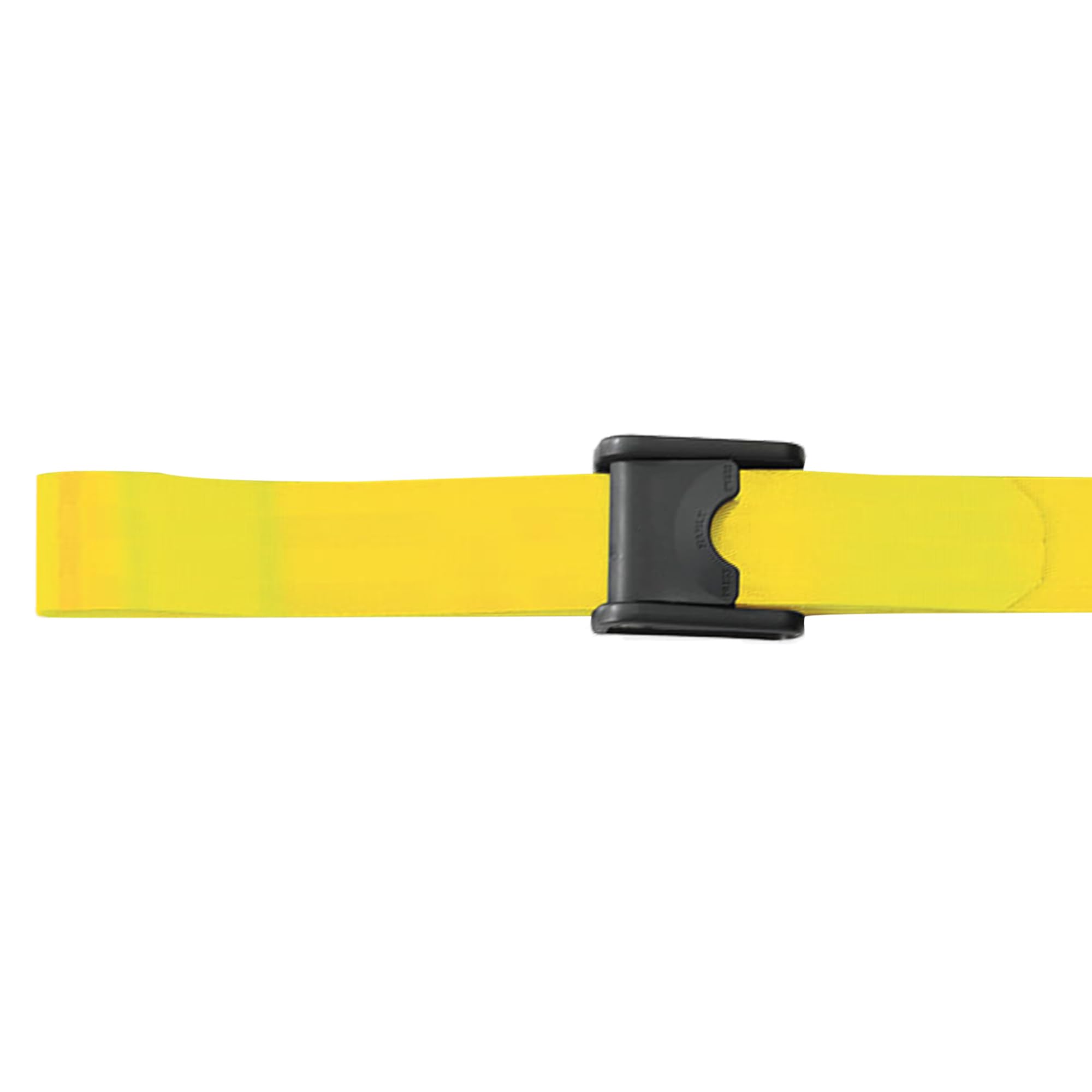
The Posey is the institutional-grade option in this list. Unlike every other belt here that uses fabric webbing, the Posey is made from BioThane, a polyurethane-encapsulated material that is completely waterproof and wipes clean with a mild detergent. This makes it the only belt that is truly suited for incontinence care, multiple-patient use, or any environment where sanitation is a top priority.
Its 2-inch wide design is narrower than the wide belts above, so comfort during lifts is less of a focus compared to durability and hygiene. The spring-loaded, self-locking metal buckle is extremely robust, providing a secure hold that does not slip. The 60-inch length accommodates waist sizes up to 58 inches, making it one of the most size-inclusive options. It is also stiff enough that caregivers can get a strong grip on the belt body itself in addition to using the buckle area as a hold point.
The main drawback is ease of use. The spring-loaded metal buckle is significantly harder to fasten and release than a plastic click buckle, and it requires more manual dexterity. It also cannot be adjusted as quickly. This belt is best for professional caregivers in a hospital or long-term care setting who prioritize hygiene and strength over convenience. For home use with a single patient, the metal buckle can be frustrating to manipulate every day.
Why it’s great
- Wipeable BioThane material is hygienic and resists odors
- Extremely durable metal buckle that never slips
- 60-inch length fits very large waist sizes
Good to know
- Narrow 2-inch belt can dig into the patient’s waist during lifts
- Metal buckle is difficult to fasten and release, not ideal for quick adjustments
- No padded handles; grip is on the belt body itself
5. LAMBOX Gait Belt with 7 Padded Handles (60 inch)

The LAMBOX belt is the entry-level champion: it offers many of the same features as the premium belts — seven foam-padded handles and a 60-inch nylon webbing body — but at a noticeably lower investment point. The handles are fitted with soft foam that provides a comfortable grip for the caregiver, and the multiple nylon straps are not fixed in one position, which allows pulling from all sides. The 5-inch wide padded section serves as a back support for the user.
For its price, the build quality is impressive. The strong nylon webbing and dense stitching hold up well to daily use. The plastic release buckle is similar in design to the one found on the BRMDT belt, making it easy to put on and take off. It is a great starter belt for new caregivers who are not sure how much they will use it, or for those on a tight budget who still want seven handles.
The compromises are in fit and finish. Some users have noted that the belt loosens during use and requires readjustment before each transfer. Also, the minimum waist size it can adjust to is 30 inches, which may be too large for petite individuals. A reviewer caring for a tiny parent found the belt could not cinch down enough to be secure. If your patient is small-framed, this may not work; for average-sized adults, it is a solid, low-cost option.
Why it’s great
- Seven foam-padded handles at an entry-level price
- Sturdy nylon webbing with reinforced stitching
- Easy-to-use plastic release buckle
Good to know
- Belt may loosen during use, requiring frequent readjustment
- Minimum 30-inch waist adjustment may not fit small patients
FAQ
Can a gait belt with handles be used for lifting a patient off the floor?
How tight should a gait belt be secured around the patient?
Are plastic buckle gait belts as safe as metal buckle ones?
Final Thoughts: The Verdict
For most users, the best gait belt with handles winner is the BRMDT Transfer Belt because its 5.4-inch wide webbing and seven-handle configuration offer the best combination of patient comfort and caregiver leverage at a fair price. If you need a sanitary, wipeable option for professional or incontinence care, grab the Posey Premium EZ Clean. And for a lightweight, portable belt that still provides great grip, nothing beats the Patient Aid Belt.