
Painting over galvanized metal without the correct primer is a recipe for immediate peeling and chipping. The slick zinc coating on galvanized surfaces resists adhesion so aggressively that standard primers lift off in sheets, leaving you with a wasted afternoon and a patchy mess. A specially formulated bonding agent is non-negotiable here.
I’m Mohammad Maruf — the founder and writer behind Drink4Good. I’ve spent years analyzing metal-finishing chemistry, studying acid-etch formulas versus zinc-rich compounds, and cross-referencing thousands of user reports to understand exactly which primers lock onto slick galvanized substrates without lifting.
After sifting through dozens of formulations and real-world durability tests, I’ve narrowed the field to five primers that genuinely solve the adhesion problem. This guide covers the best galvanized metal primer options for everything from automotive panels to marine hardware and outdoor structural steel.
How To Choose The Best Galvanized Metal Primer
Picking the right primer comes down to three non-negotiable factors: the chemical bonding mechanism, the surface prep required, and whether you need a single-coat solution or a dedicated base layer before your topcoat. Get these right, and your paint job stays locked on for years.
Acid Etch vs. Zinc-Rich Formulas
Acid-etch primers contain phosphoric acid that microscopically roughens the galvanized surface, creating a mechanical key for paint adhesion. These are your go-to for bare, clean galvanized panels. Zinc-rich primers, on the other hand, deposit a sacrificial zinc layer that bonds directly to the galvanized coating — ideal for touch-up work on rusted areas or for sealing scratched galvanizing.
Dry Time and Recoat Window
Fast-dry aerosols are convenient for small projects and quick repairs, but they often sacrifice flow and leveling. Brush-grade liquid primers take longer to cure but build thicker films that bridge minor surface imperfections. Check the recoat window — some primers require topcoating within a specific timeframe or the bond degrades.
Coverage and Film Thickness
Thin, runny primers need multiple coats to build adequate protection, while thicker formulations cover in one or two passes. A higher solids content generally means better corrosion resistance, but it also means longer drying between coats. Match the consistency to your application method — brush, roller, or spray.
Quick Comparison
On smaller screens, swipe sideways to see the full table.
| Model | Category | Best For | Key Spec | Amazon |
|---|---|---|---|---|
| U-POL Raptor Acid Etch Primer | Aerosol | Bare galvanized panels | 1-hour dry time | Amazon |
| Rust-Oleum Marine Metal Primer | Brush-On | Marine & heavy equipment | 100 sq ft per quart | Amazon |
| Krylon Rust Tough Zinc Primer | Aerosol | Wrought iron & fencing | Zinc-rich formula | Amazon |
| SMAPHY Rust Converter & Primer | Brush-On | Rusted galvanized surfaces | 350°F heat resistant | Amazon |
| Rust-Oleum Cold Galvanizing Compound | Aerosol | Galvanized touch-ups | 93% zinc content | Amazon |
In‑Depth Reviews
1. U-POL Raptor Acid Etch Primer 1K Aerosol

This is the specialist you want for fresh, bare galvanized steel. U-POL’s phosphoric acid ester formula chemically etches the slick zinc surface during application, creating a roughened profile that automotive-grade topcoats grab onto instantly. The flat fan nozzle lays down an even, wide spray pattern that minimizes overspray and wasted material — a clear advantage over generic nozzles on cheaper cans.
One-hour dry time is a massive win for production work or weekend projects. You can sand it smooth after curing without the primer delaminating, which is rare for an aerosol etch primer. It handles galvanized, aluminum, and bare steel equally well, making it a versatile addition to any shop. Coverage is generous for a 13.2-ounce can, though you’ll want two light coats rather than one heavy pass to avoid runs on vertical surfaces.
Users consistently report excellent long-term adhesion, with one reviewer noting it held bed liner firmly on running boards for nearly a year without any lifting. The only catch is that it needs a clean surface — any oil or grease will block the etching action. Degrease with acetone or a wax remover before spraying for best results.
Why it’s great
- Chemically etches galvanized surfaces for superior adhesion
- Dries in one hour, sandable after cure
- Works on aluminum and bare steel as well
Good to know
- Surface must be thoroughly degreased before use
- Not a rust converter — heavy rust must be removed first
2. Rust-Oleum Marine Metal Primer, Quart

When the job involves saltwater, road salt, or constant moisture, this quart-based oil primer is the right foundation. Designed for metal surfaces above the waterline, it builds a thick, corrosion-resistant film that sands smoothly without clogging paper. The white color provides a neutral base that makes topcoat color matching straightforward, even for light pastels.
Coverage is exceptional — a full quart covers roughly 100 square feet, which puts it ahead of most aerosol options in cost-per-square-foot efficiency. One to two hours dry time is competitive for a brush-grade primer, and it can be thinned with acetone for spray application if you prefer. Adhesion on sanded, clean galvanized surfaces is tenacious; users have reported zero chipping on snow plow blades after a full season of abuse.
The trade-off is that this is a dedicated primer, not a one-coat solution. You must topcoat it for UV protection and final appearance. Also, it requires thorough surface prep — sanding the galvanized surface with 180-grit paper is recommended to give the oil binder something mechanical to grip. Skip this step, and you’ll see peeling within months in wet conditions.
Why it’s great
- Excellent corrosion resistance in wet, salty environments
- High coverage — 100 sq ft per quart
- Sands easily for a smooth topcoat finish
Good to know
- Requires sanding for optimal adhesion on galvanized
- Must be topcoated — not a standalone finish
3. Krylon Rust Tough Enamel Spray Paint Primer Zinc

Krylon’s zinc-rich formula is the closest thing to a hot-dip galvanizing repair in a can. The high zinc loading provides sacrificial protection — if the coating gets scratched, the zinc corrodes first, protecting the underlying galvanized layer. This makes it an ideal match for touching up scratched galvanized fencing, railings, and automotive underbody components where the original galvanizing has been compromised.
The spray nozzle delivers excellent atomization for an even, non-clogging pattern that outperforms many Rust-Oleum nozzles, as noted in user feedback. Drying to touch in 30 minutes with full cure in 20 minutes is unreal for a zinc-loaded enamel — you can recoat or handle the part quickly. The semi-flat finish hides surface imperfections well and resists UV deglossing even in harsh Southern California sun.
One unusual thing: the zinc fumes during application can cause metal fume fever if inhaled heavily. A well-ventilated area and a proper respirator are essential, not optional. Also, while Krylon markets this as a direct-to-metal paint, using it over clean, etched galvanized yields much better long-term results than spraying it over oily or waxy surfaces. A quick wipe with mineral spirits before spraying makes the difference.
Why it’s great
- Sacrificial zinc protection for scratched galvanized surfaces
- Very fast dry — 30 minutes to touch
- Superior nozzle performance and UV resistance
Good to know
- Zinc fumes require ventilation and a respirator
- Best adhesion with a clean, etched surface
4. SMAPHY 2 in 1 Rust Converter & Metal Primer
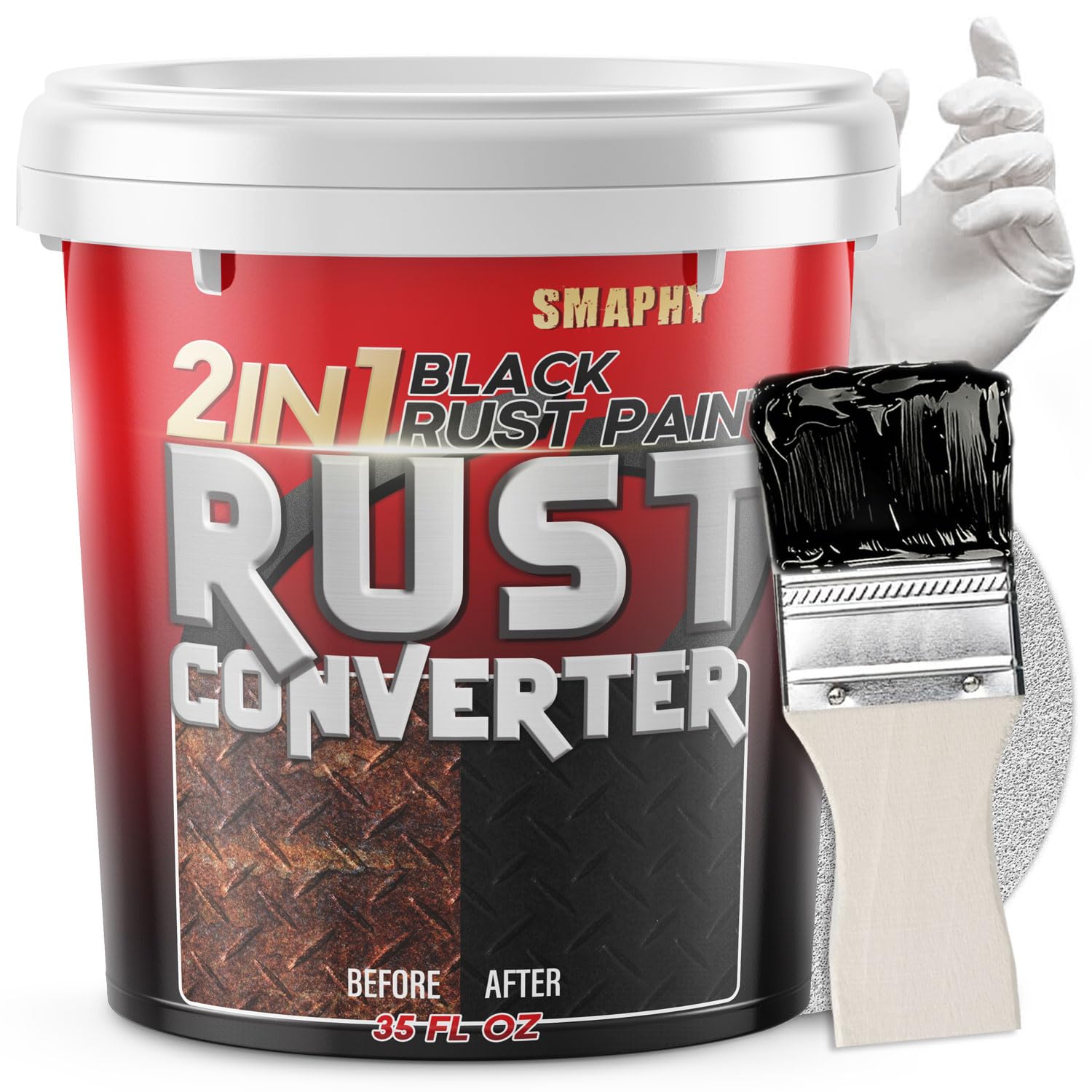
This formula solves a specific pain point: galvanized surfaces that have already started rusting. Instead of grinding down to bare metal, you brush this on directly over rust, and it chemically converts up to 50 microns of corrosion into a stable black primer layer. For lightly rusted galvanized gutters, trailers, or equipment, this eliminates the toughest prep step entirely.
The 350°F thermal shock resistance makes it suitable for engine bays, brake components, and exhaust-adjacent areas where standard primers would char. It’s waterproof and seals out salt and moisture for extended periods, with users reporting years of service on truck frames and chassis. The included brush and gloves are a thoughtful touch, though a roller or spray gun yields a more uniform finish on large surfaces.
Be aware that this is a rust converter first and a primer second. On clean, rust-free galvanized metal, it doesn’t etch the surface as aggressively as an acid-etch primer, so adhesion on pristine galvanized can be weaker. It shines when used over existing rust or aged galvanizing where the surface has already oxidized. Also, brush strokes are visible — if appearance matters, plan to sand or apply with a mini roller for a smoother texture.
Why it’s great
- Converts rust directly to primer — no sandblasting needed
- Heat resistant to 350°F for engine bay use
- Waterproof and salt-resistant for outdoor protection
Good to know
- Weaker adhesion on clean, rust-free galvanized surfaces
- Brush strokes visible; spray or roller recommended for large areas
5. Rust-Oleum Cold Galvanizing Compound 7785-830

With a 93% zinc loading in the dry film, this is about as close to a true cold galvanizing spray as you can buy. It’s not a primer in the traditional sense — it deposits a thick, metallic zinc layer that bonds electrochemically to the existing galvanized coating, effectively restoring the sacrificial barrier where the original galvanizing was damaged or worn through.
The 12-hour dry time is on the longer side, but the trade-off is a dense, durable film that stops rust on metal roofs, gas tanks, and structural steel for years without reapplication, as confirmed by users who have let it weather through multiple seasons. Coverage is modest at about 12 square feet per 16-ounce can, so budget accordingly for larger projects. The flat silver-gray finish blends well with existing galvanized surfaces, making touch-ups nearly invisible.
Two caveats: it’s an indoor-use-only product, so it shouldn’t be your first choice for outdoor projects requiring a topcoat. And because it’s pure zinc, it can cause galvanic corrosion if applied directly to aluminum or copper surfaces. Stick to galvanized steel and iron with this one, and you’ll get the most authentic cold-galvanizing repair possible from a spray can.
Why it’s great
- 93% zinc film provides true sacrificial protection
- Blends seamlessly with existing galvanized surfaces
- Long-lasting — years of rust protection reported
Good to know
- Indoor use only; not rated for outdoor topcoat systems
- Can cause galvanic corrosion on aluminum or copper
FAQ
Do I need to remove the galvanized coating before applying primer?
Can I use regular metal primer on galvanized steel?
How long should I wait before applying topcoat over galvanized primer?
Final Thoughts: The Verdict
For most users, the best galvanized metal primer winner is the U-POL Raptor Acid Etch Primer because it chemically locks onto bare galvanized surfaces and dries fast enough for same-day topcoating, making it the most versatile choice for automotive and general metalwork. If you need a durable base in wet or marine conditions, grab the Rust-Oleum Marine Metal Primer for its high coverage and corrosion resistance. And for repairing damaged galvanizing or covering rusted surfaces without grinding, nothing beats the SMAPHY 2-in-1 Rust Converter and Primer.