
Placing a camera on a scrape line or trail junction only to return weeks later and find 2,000 blank images of waving grass is the single most frustrating experience in scouting. The difference between a productive camera and a time-waster comes down to three things: trigger speed, detection zone geometry, and the quality of the infrared flash. A slow trigger or a wide-open PIR sensor will fill your SD card with nothing useful.
I’m Mohammad Maruf — the founder and writer behind Drink4Good. I’ve spent hundreds of hours cross-referencing trigger speed claims, night vision range tests, and cellular carrier performance data to identify which cameras actually deliver reliable, usable footage in real hunting conditions.
Whether you need a no-subscription unit for a secluded food plot or a cellular model that beams buck photos straight to your phone, this breakdown of the best game cameras for hunting will help you avoid the common pitfalls of false triggers and poor low-light performance.
How To Choose The Best Game Cameras For Hunting
The trail camera market has split into two distinct lanes: manual retrieval cameras that rely on battery efficiency and no monthly fees, and cellular cameras that send images to your phone for a subscription. Each lane serves a different scouting style, but within both, the same core specs determine whether your camera is a scouting asset or just a tree ornament.
Trigger Speed and Detection Zone
A deer moving at a brisk walk covers over 3 feet per second. A camera with a 0.5-second trigger will capture the back half of that deer or nothing at all. Look for a trigger speed of 0.2 seconds or faster, ideally with a multi-sensor PIR array that detects movement from the sides as well as directly in front. Three-sensor designs (left, center, right) dramatically reduce the “deer walked right past and the camera missed it” problem.
Infrared Flash Type – No-Glow vs Low-Glow
Low-glow IR uses 850nm LEDs that produce a faint red glow visible to human eyes and, more importantly, to deer. No-glow IR uses 940nm LEDs that are completely invisible. If you are hunting pressured public land or targeting mature bucks that pattern human activity, no-glow is non-negotiable. On private land where deer are less educated, low-glow models often deliver better nighttime image clarity at a lower price.
Cellular Connectivity and Data Plans
Cellular cameras save windshield time by sending photos directly to your phone, but they require a data plan ranging from roughly to per month depending on the carrier and plan tier. Multi-carrier models that auto-switch between AT&T and Verizon are superior because they lock onto the strongest signal at your camera location, eliminating dead zones. For remote properties with zero cell service, stick with a high-capacity SD card non-cellular model.
Quick Comparison
On smaller screens, swipe sideways to see the full table.
| Model | Category | Best For | Key Spec | Amazon |
|---|---|---|---|---|
| Tactacam Reveal X 3.0 | Cellular | Real-time scouting anywhere | 6+ Month Battery Life | Amazon |
| Moultrie Edge 2 Pro | Cellular | onX integration & AI filtering | Built-in 8GB + Cloud Backup | Amazon |
| TACTACAM Reveal X PRO | Cellular | GPS tracking & dual carrier | 96ft No-Glow IR Range | Amazon |
| MAXDONE Solar WiFi | WiFi Hybrid | No-subscription app access | 6000mAh Solar Rechargeable | Amazon |
| XTU 4K Solar Trail Cam | WiFi Hybrid | On-site WiFi downloads | 4K Video, 0.2s Trigger | Amazon |
| Meidase P70 2-Pack | Manual | Best value two-pack setup | 100ft No-Glow, 0.1s Trigger | Amazon |
| GardePro E5S | Manual | Budget-friendly manual camera | 3 PIR Sensors, 0.1s Trigger | Amazon |
In‑Depth Reviews
1. Tactacam Reveal X 3.0 Cellular Trail Camera
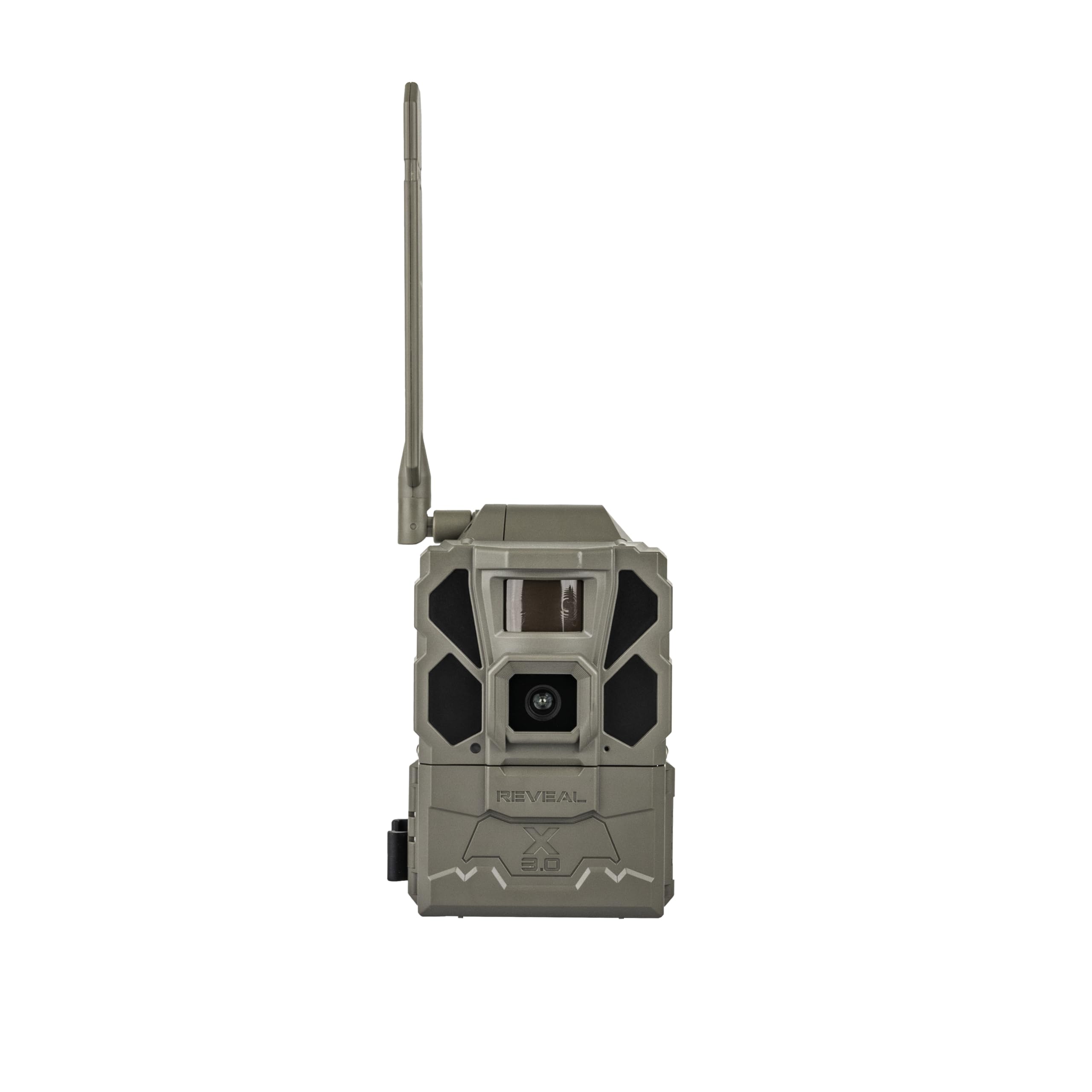
The Tactacam Reveal X 3.0 sets the standard for cellular trail cameras with its auto-connect multi-carrier LTE system that intelligently selects between AT&T and Verizon. The pre-installed SIM and antenna mean you can have this camera live and sending photos to your phone in under ten minutes. The sub-half-second trigger combined with a 3-shot burst mode practically guarantees you’ll get a centered shot of a buck moving through a shooting lane. Independent battery testing confirms over six months of life on a single set of AAs, and pairing it with the optional lithium power pack extends that window even further for year-round deployment.
Built-in GPS tracking lets you locate the camera in the REVEAL app at all times, a feature that pays for itself if a camera gets bumped off a tree by a bear or simply hidden by thick summer foliage. The no-SD-card design eliminates card failures and formatting headaches — photos go straight to built-in storage and then to your phone. Image quality at 4K photo resolution and 1080p video is crisp enough to count tine points at 40 yards, and the low-glow IR flash provides solid nighttime illumination without washing out the image.
For hunters managing multiple properties or covering large tracts of public land, the subscription model is straightforward and avoids long-term contracts. The camera’s weather-sealed housing has held up through heavy rain and freezing temperatures without any condensation inside the lens. The real-world feedback from long-term users consistently highlights the reliability of the connection and the ease of the app interface, making this the top pick for anyone who wants to minimize time spent checking cards and maximize time spent hunting.
Why it’s great
- Auto-switching 4G LTE between AT&T and Verizon prevents dead zones.
- No SD card required — built-in storage eliminates card failures.
- Built-in GPS tracks camera location in the app.
- Independent battery testing confirms 6+ months of life.
- Sub-half-second trigger with 3-shot burst captures fast-moving game.
Good to know
- Requires a monthly data plan starting around – per month.
- Low-glow IR is visible to deer at close range; not ideal for pressured public land.
- Field of view is 60 degrees, narrower than some competitors.
2. Moultrie Edge 2 Pro Cellular Trail Camera

The Moultrie Edge 2 Pro stands apart because of its integration with the onX Hunt app, meaning your scouting photos appear directly on your onX maps next to your waypoints. This is a massive workflow improvement for digital-age hunters who already plan their season around onX. The camera captures 40MP photos and 1440p video with HD audio, and the Live Aim feature sends a real-time preview to your phone so you can adjust the camera angle without making multiple trips to the tree. The no-glow flash keeps the camera invisible at night, which is critical for mature bucks that pattern human intrusion.
The AI false trigger elimination is not a gimmick — the Moultrie Mobile AI identifies and tags animals by species (buck, doe, turkey, human) and only sends the images you actually want. After a month in the field with Energizer AA Lithium batteries, many users report the battery indicator still reads 100%. The built-in 8GB memory plus unlimited cloud backup means you never have to worry about a full SD card or lost photos if the camera is stolen or damaged. Data plans start at per month with no contract, which is competitive for this feature set.
Detection range is rated at 100 feet, and the 50-degree field of view is narrower than some manual cameras, but this helps reduce false triggers from wind-blown vegetation at the edges. The 2-year warranty from the date of activation provides peace of mind that budget brands do not offer. For hunters who already use onX and want a cellular camera that integrates rather than just sends photos, the Edge 2 Pro is the clear choice.
Why it’s great
- Direct integration with onX Hunt app for map-based scouting.
- AI false trigger elimination filters out non-target species.
- No-glow IR flash is invisible to game animals.
- Built-in 8GB memory plus unlimited cloud backup.
- No-glow IR flash is invisible to game animals.
Good to know
- Requires 16 AA batteries or a separate rechargeable/solar pack.
- 50-degree field of view is narrower than many manual cameras.
- Photo resolution at 40MP is lower than the 64MP manual competitors.
3. TACTACAM Reveal X PRO Cellular Trail Camera
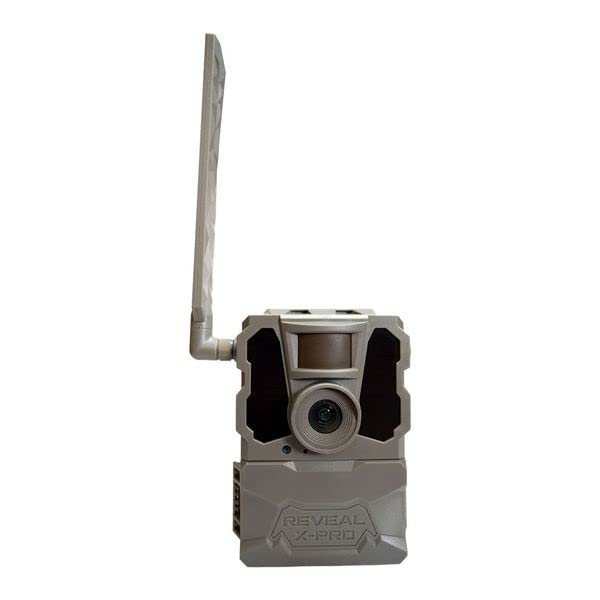
The Reveal X PRO was the 2022 flagship from Tactacam and remains a strong contender for hunters who need integrated GPS tracking and dual-carrier cellular support. The camera includes both Verizon and AT&T SIM cards, allowing you to select the best carrier for your specific property without being locked into a single network. The built-in LCD screen lets you review photos and adjust settings directly on the camera, which is a practical feature when you are already at the camera site and want to check a angle without pulling the card.
No-glow IR technology provides a 96-foot flash and detection range, making this camera suitable for security surveillance as well as hunting. The hybrid mode balances picture delivery speed with battery conservation, sending HD photos and videos to your phone via the REVEAL app. The app interface is intuitive and consistent across the entire Tactacam lineup, which is helpful if you eventually add more cameras. The trigger is lightning-fast in practice, and users consistently report accurate motion detection with very few false triggers from branches or grass.
One consideration is that the camera requires a 32GB Class 10 U3 SD card (recommended brand is Tactacam) and 12 AA batteries or the optional Tactacam lithium battery cartridge. The SD card requirement is a step down from the X 3.0’s card-free design. However, the GPS tracking is a standout feature for security-conscious users — if the camera is stolen, its location can be tracked, and photos auto-upload to the cloud. For a slightly older model that still performs at a high level, the X PRO offers excellent value for those who want cellular capability without the absolute latest price tag.
Why it’s great
- Includes both Verizon and AT&T SIMs for carrier selection.
- Built-in LCD screen for on-camera photo review and settings.
- Integrated GPS tracking for security and recovery.
- No-glow IR up to 96 feet keeps camera invisible at night.
- Hybrid mode optimizes battery life and delivery speed.
Good to know
- Requires a 32GB Class 10 U3 SD card (not included).
- Photo resolution is 16MP, lower than many current models.
- Battery consumption is higher with heavy cellular uploads.
4. MAXDONE Solar Trail Camera WiFi Bluetooth
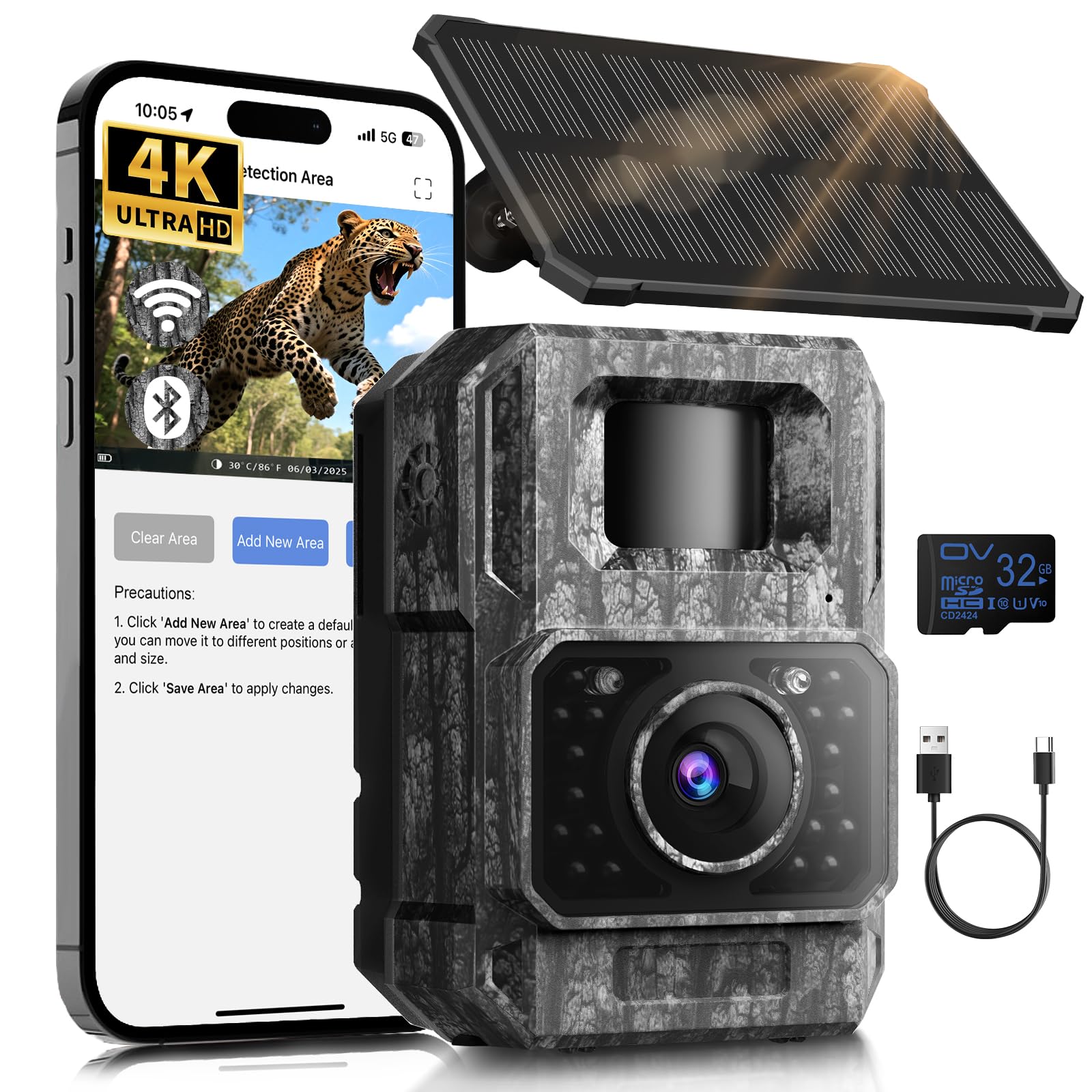
The MAXDONE Solar Trail Camera eliminates two of the biggest recurring costs of running trail cameras: batteries and SD card reader trips. The split solar panel design allows you to angle the panel independently of the camera body, maximizing sun exposure even on east-facing trees or shaded food plot edges. The 6000mAh rechargeable lithium battery handles hundreds of photos and keeps the camera running through cloudy stretches without needing a manual recharge. A 32GB SD card is included and pre-installed, so you are ready to deploy immediately.
This camera creates its own short-range WiFi hotspot for app connection rather than connecting to your home network. The “TrailCamGO” app allows you to download photos and videos directly to your phone from up to 55 feet away in open areas, eliminating the need to remove the SD card. The 4K video and 64MP photo resolution are genuinely sharp during daylight, and the 0.1-second trigger speed is fast enough to capture running deer. The no-glow night vision reaches 65 feet and produces clear images without spooking game.
The IP66 waterproof rating means it survives rain and snow without issues, and the adjustable PIR sensitivity helps reduce false triggers from swaying branches. One important limitation is that this camera does not support remote viewing — the WiFi hotspot only works when you are physically within range. For hunters checking cameras on a small property or near a cabin, this is not a problem. For those covering large tracts of land, the manual retrieval requirement is worth noting. Overall, this is an exceptional value for a solar-powered, no-subscription camera.
Why it’s great
- Solar panel charges the 6000mAh battery, no disposable batteries needed.
- 32GB SD card included and pre-installed.
- WiFi hotspot allows photo download without removing the SD card.
- 4K video and 64MP photo resolution for sharp daytime capture.
- No monthly subscription or data plan required.
Good to know
- WiFi range is limited to approximately 55 feet; no remote viewing.
- Solar panel placement is critical in shaded areas.
- App connection range is best within 10 feet for reliable setup.
5. XTU 4K 64MP Solar Trail Camera with WiFi & Bluetooth
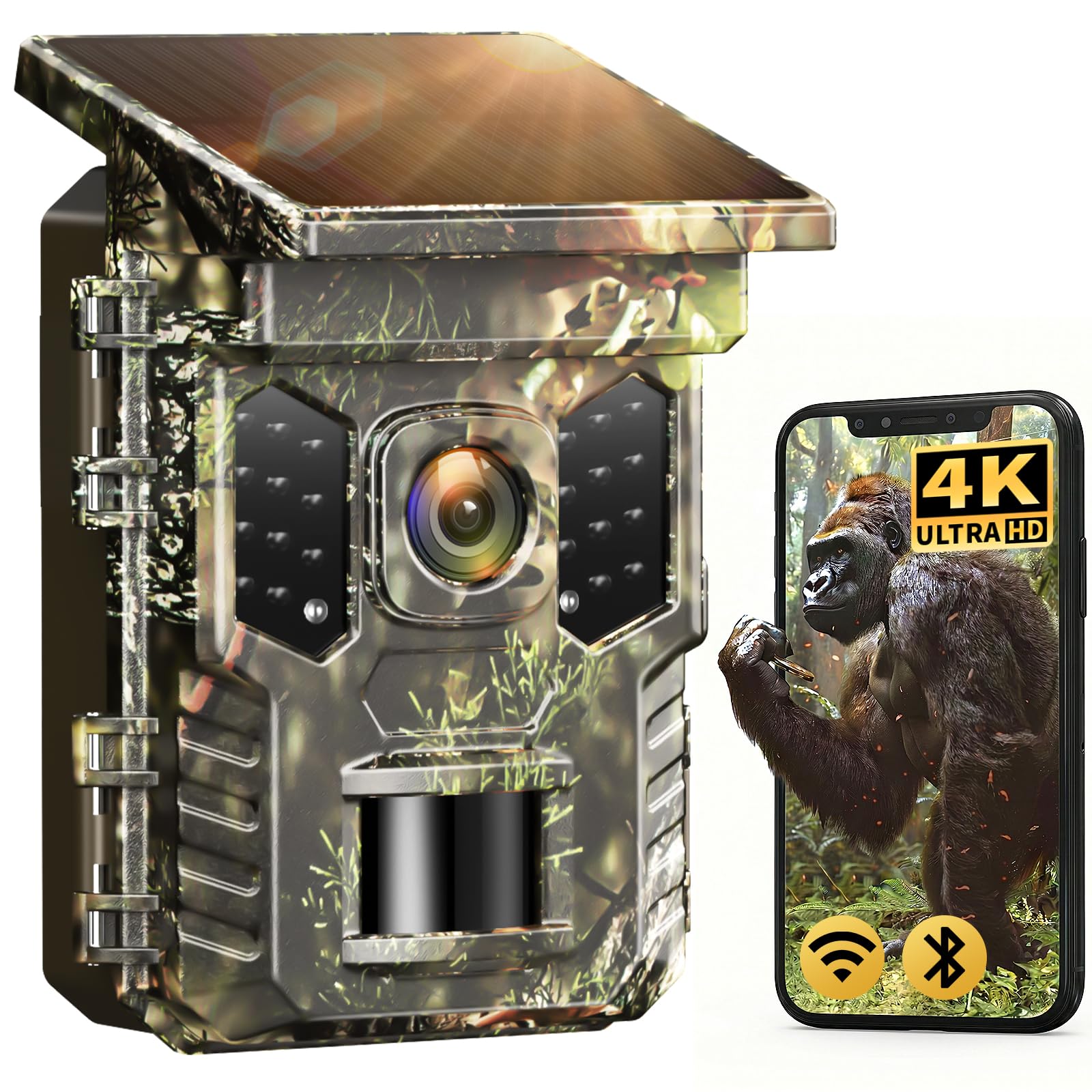
The XTU 4K Solar Trail Camera is a direct competitor to the MAXDONE, offering similar WiFi app download capability and a 64MP/4K sensor at a slightly different price point. The standout feature here is the fast 0.2-second trigger speed combined with the 2×850nm IR LEDs that deliver clear night vision out to 65 feet. The camera supports multiple power backup options: internal rechargeable battery, solar panel top-up, USB-C charging, DC 6V external power, and even 4×AA backup batteries for extended cloudy periods. This flexibility is genuinely useful for remote setups where you cannot retrieve the camera frequently.
The “TrailCamGO” app works the same as the MAXDONE, creating a local WiFi connection for photo transfer. The camera supports up to 256GB Micro SD cards, though a card is not included. The IP66 rating holds up in heavy rain, and the adjustable PIR sensitivity combined with time-lapse mode gives you precise control over what triggers a capture. The scheduled recording and time-lapse functions are particularly useful for monitoring food plots or scrape lines without relying solely on motion detection.
Quality control is a mixed bag based on user reports — some units arrive with focus issues or develop SD card read errors after a few weeks. The WiFi range for the hotspot is fairly short at around 49 feet, and some users find the solar panel insufficient to keep the battery topped off in deep woods shade. That said, when the camera works correctly, the image quality is impressive for the price. This is a solid choice for a backup camera or for hunters willing to do a bit of troubleshooting in exchange for the solar and WiFi convenience.
Why it’s great
- Multiple power options: solar, USB-C, DC 6V, and AA backup.
- Fast 0.2-second trigger with 70-foot detection zone.
- 2×850nm IR LEDs for clear night vision.
- Supports time-lapse and scheduled recording modes.
- Rugged IP66 waterproof housing.
Good to know
- SD card is not included.
- Quality control can be inconsistent; some units have issues.
- Solar panel may not fully charge in shaded or deep woods locations.
- WiFi hotspot range is short at about 49 feet.
6. Meidase P70 2-Pack Trail Camera (Non-Cellular)
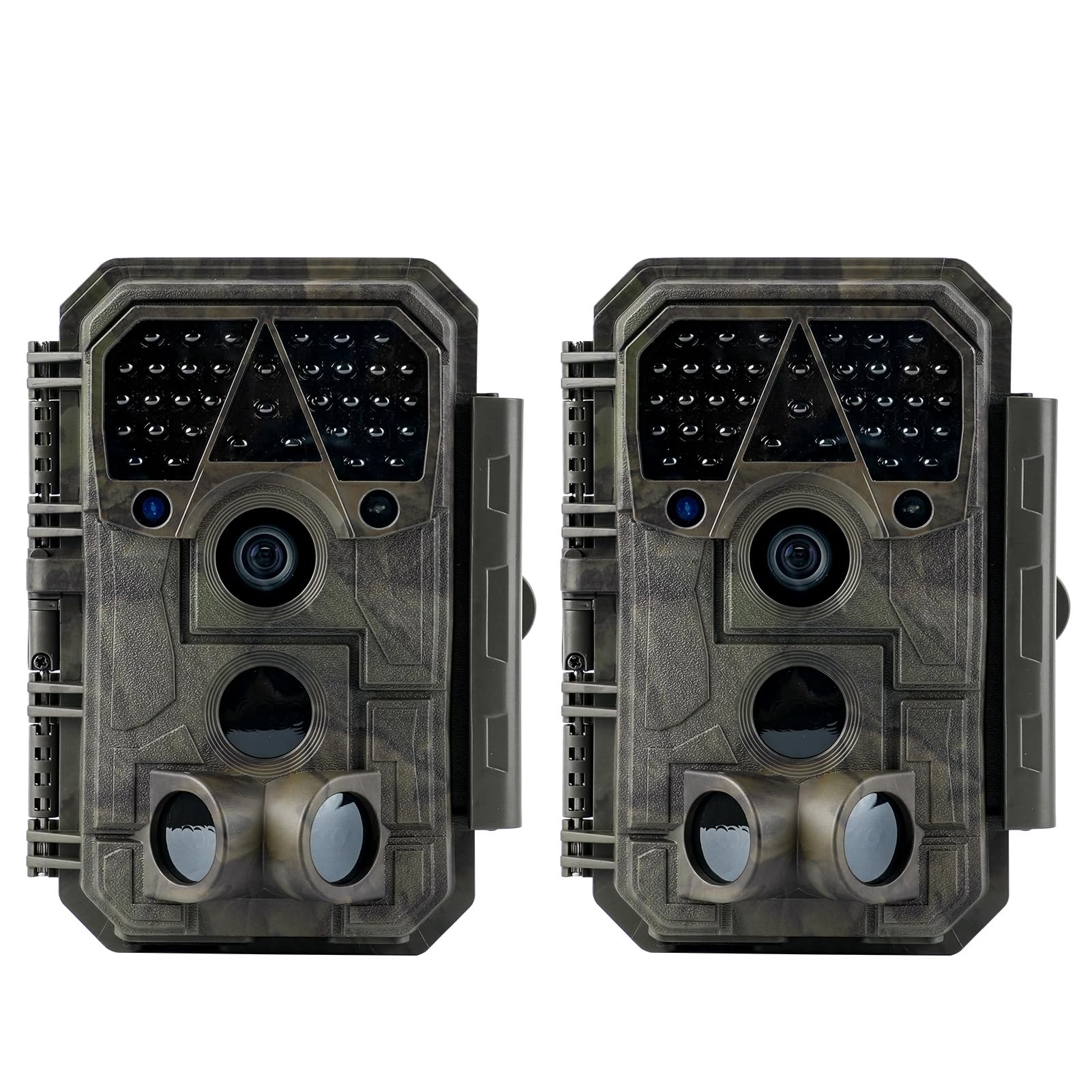
The Meidase P70 two-pack is the strongest value proposition for hunters who need to cover multiple pinch points, field edges, or scrapes without spending cellular-level money. Each camera delivers 64MP still images and 1296p HD video, which is more than sufficient for identifying buck age class and unique antler characteristics. The H.264 video encoding significantly reduces file sizes, making it faster to transfer and review on a laptop or phone. The 2.4-inch color display allows on-camera previews, so you can check your framing and settings at the camera site without needing a separate device.
The no-glow 940nm IR LEDs combined with the large f/1.6 aperture lens provide bright, invisible night vision up to 100 feet. This is a genuine standout — most cameras at this price point use low-glow IR or have shorter night vision range. The 0.1-second trigger speed is achieved through two additional side PIR sensors, which catch movement approaching from the flank rather than only from straight ahead. This three-sensor design dramatically reduces the chance of missing a deer that walks through the detection zone at an angle.
Battery life is excellent when using Energizer Ultimate Lithium AA batteries, lasting an entire season under moderate trigger counts. The cameras are IP66-rated and have survived Florida heat, heavy storms, and freezing temperatures without any performance degradation. One practical downside is that the real-time clock resets after each battery change, which requires re-setting the date and time. The optional Meidase SP350 solar panel extends deployment indefinitely, but the cameras do not include it in the box. For hunters managing multiple cameras on a budget, the two-pack format and long-range no-glow night vision make the P70 a hard package to beat.
Why it’s great
- Two-pack format provides excellent value for multiple camera setups.
- No-glow 940nm IR with f/1.6 aperture for 100-foot night vision.
- Three PIR sensors for 0.1-second trigger speed from side approaches.
- H.264 video reduces file sizes for faster transfers.
- IP66 waterproof housing tested in extreme weather.
Good to know
- Clock resets after each battery change; requires manual re-setting.
- Rechargeable batteries may not work reliably; Energizer Lithium recommended.
- Solar panel sold separately for continuous top-up.
7. GardePro E5S Trail Camera (Non-Cellular)

The GardePro E5S is the entry-level champion for hunters who want a reliable, no-nonsense manual camera without paying for connectivity features they will not use. It captures 64MP photos and 1296p HD video, and the three-sensor PIR array gives it a 0.1-second trigger speed that rivals cameras costing twice as much. The 100-foot no-glow night vision range is competitive, producing clear images of nocturnal deer movement without alerting them to the camera’s presence. The 120-degree field of view is wider than most cellular cameras, covering more trail or food plot area per camera.
Battery efficiency is the E5S’s biggest strength. Because it lacks WiFi or cellular radios, power draw is minimal, and a set of eight Energizer Ultimate Lithium AA batteries lasts an entire season for most users. The optional GardePro SP350 solar panel allows indefinite deployment. The camera is built with an IP66 waterproof rating and a 1/4-inch-20 mounting thread that works with standard tripods, tree mounts, and fence post brackets. The camo housing helps it blend into natural surroundings.
The primary limitations are product consistency — some buyers have reported receiving the wrong model (E5 instead of E5S) in the package, so it pays to check the camera model immediately upon arrival. The small playback screen on the camera is not ideal for detailed image review; you will need to pull the SD card and view photos on a laptop or tablet. The microphone on some units produces a crackling sound in video mode. For the price, however, the E5S delivers impressive core performance in trigger speed, night vision, and battery life, making it a strong entry-level pick for new hunters or as a second-tier camera for high-traffic areas.
Why it’s great
- Three PIR sensors provide a fast 0.1-second trigger speed.
- 100-foot no-glow night vision range.
- Excellent battery life; a set of lithium AAs lasts a season.
- 120-degree field of view is wider than cellular models.
- Budget-friendly price for core camera performance.
Good to know
- Product consistency is a concern; verify you received the correct model.
- Small on-camera screen is not suitable for detailed image review.
- Microphone may produce crackling audio in video mode.
FAQ
What is the difference between a cellular and a WiFi trail camera?
How do I prevent my game camera from taking too many false triggers?
Is no-glow night vision really necessary for hunting mature bucks?
Can I use rechargeable AA batteries in my trail camera?
What SD card speed rating do I need for 4K trail camera video?
Final Thoughts: The Verdict
For most users, the best game cameras for hunting winner is the Tactacam Reveal X 3.0 because it combines the fastest cellular auto-connect with best-in-class battery life and a no-SD-card design that removes the most common failure point in trail cameras. If you want AI-driven false trigger elimination and direct integration with onX maps, grab the Moultrie Edge 2 Pro. And for a budget-conscious two-camera setup that delivers 100-foot no-glow night vision and a 0.1-second trigger, nothing beats the Meidase P70 2-Pack.