
Choosing the first gaming device for a five-year-old is about balancing engagement with development. You want something that captivates their imagination without overstimulating them or requiring your constant tech support. The market is flooded with options, but not all are built for small hands or short attention spans.
I’m Mohammad Maruf — the founder and writer behind Drink4Good. I spend my time analyzing hardware specs and real-world feedback to find devices that genuinely match a stage of early childhood development.
After combing through dozens of models, I’ve narrowed the field to the five that offer the strongest mix of durability, educational value, and pure fun. This guide delivers my top picks for the best game system for 5 year old based on what matters most at this age: intuitive controls, quality content, and zero frustration setup.
How To Choose The Best Game System For 5 Year Old
The right device for a five-year-old isn’t about raw power or the latest graphics. It’s about a physical design that fits their grip and an interface that encourages problem-solving without causing meltdowns. Let’s break down the three most important factors.
Physical Design and Ergonomics
At age five, fine motor skills are still developing. A device that is too heavy or has tiny, stiff buttons will frustrate a child quickly. Look for chunky controllers, larger buttons, and a lightweight frame that a child can hold for ten to fifteen minutes without fatigue. A built-in handle or a shape that mimics a grown-up controller helps them feel like they’re playing a real game.
Content Quality and Educational Depth
Not all games are created equal. For a five-year-old, you want titles that teach letter recognition, counting, vocabulary, or simple logic—not just mindless tapping. The best systems have adaptive difficulty levels that grow with the child, offering new challenges without causing frustration. Avoid devices that rely heavily on flashing lights or frenetic action, which can lead to overstimulation.
Battery Life and Screen Safety
A device that dies after an hour of play is a source of tears, not learning. Look for a minimum of four to five hours of real-world battery life. For screen-based systems, an IPS screen offers better viewing angles and less glare. For completely screen-free options, wall projection systems can be a fantastic alternative that protects young eyes and encourages reading comprehension.
Quick Comparison
On smaller screens, swipe sideways to see the full table.
| Model | Category | Best For | Key Spec | Amazon |
|---|---|---|---|---|
| LeapFrog Leapster Ultra | Handheld | Educational gaming | Rotating 3.98″ LCD screen | Amazon |
| LeapFrog ABC Laptop | Laptop | Basic computer skills | Full QWERTY keyboard | Amazon |
| VTech Race Driver | Wheel | Interactive play | 20 game/race modes | Amazon |
| Little Tikes Story Machine | Projector | Screen-free reading | Wall projection + narration | Amazon |
| 32-Bit Handheld Console | Handheld | Classic arcade fun | 3.0″ IPS display | Amazon |
In‑Depth Reviews
1. LeapFrog Leapster Ultra Handheld Learning Game Console

The Leapster Ultra stands out because it feels like a grown-up controller but is sized for small hands. Its rotating screen is a welcome feature, letting kids tilt the display to find the perfect viewing angle whether they are lying on the carpet or sitting at a table. The 30-plus bite-sized games cover preschool and kindergarten skills, and the three skill levels mean the device grows with your child rather than becoming stale after a month.
Setup is zero-friction — there is no internet connection, no account creation, and no app store. Insert four AA batteries and you’re playing immediately. Parents report that the controls are intuitive enough for a five-year-old to master without help, promoting independence. The educational objectives are embedded naturally into the gameplay, so children are practicing counting and vocabulary while they help characters on LeapFriends Island.
The rotating screen is a unique physical differentiator that helps with sharing and reduces glare. While it runs on alkaline batteries, the draw is modest enough that a set lasts several weeks with daily use. The volume control is effective, and the handheld shape prevents the device from feeling like a toy too young for a five-year-old.
Why it’s great
- Rotatable screen adapts to play position
- No internet or account setup required
- Three skill levels keep content fresh
Good to know
- Requires 4 AA batteries (included for demo only)
- Content is educational-focused, not pure action
2. LeapFrog ABC and 123 Laptop for Preschoolers

This laptop is an excellent introduction to basic computer literacy. The full QWERTY keyboard layout is key — it teaches finger placement and the letter row arrangement that a child will use for the rest of their life. The 11 activities range from pressing letters and numbers to hear their names to simple coding sequences that clean or cuddle the Pixel mascot.
Pixel’s animated face, moving hands, and singing ability make the device feel alive. Children quickly form a bond with the character, which motivates them to keep trying the different learning modes. The device includes a texting function for sending messages to Pixel’s friend Chip, which introduces early reading and composition in a playful context. The build quality is typical LeapFrog — sturdy enough to survive being carried around the house.
The laptop is designed for ages three to seven, meaning it has a longer usability window than many preschool toys. The wide age range is supported by activities that adjust in complexity. The only downside is the demo batteries are weak, so plan to replace them immediately. Overall, it is a fantastic tool for reinforcing letter and number recognition.
Why it’s great
- Real QWERTY keyboard for early typing skills
- Animating mascot increases engagement
- Teaches basic sequencing and coding logic
Good to know
- Small screen size for a laptop form factor
- Requires fresh AA batteries for optimal use
3. VTech Race and Discover Driver

For a child who loves motion and pretend play, this driving toy is a fantastic choice. It features a physical steering wheel, turn signals, a gear shift, and a horn, providing a very tactile experience that a standard handheld cannot match. The colorful LCD screen displays 20 different games that include racing, road trips, and driving practice through a virtual town.
The educational value is woven into the driving scenarios. Kids practice counting by counting objects on the road, spelling through sign recognition, and problem-solving by navigating hazards. The leveling system rewards winning races with new tracks, giving a sense of progression. The device works on a table, the floor, or even in a car, making it versatile for travel.
The recommended age is three to six, which is a near-perfect range for the target five-year-old. The steering wheel is easy to turn, and the dashboard buttons are large and labeled. Multiple parents noted that it quickly became their three-year-old’s favorite toy, but the depth of the racing modes keeps a five-year-old engaged. The volume has a decent range, and the sound effects are not annoyingly loud.
Why it’s great
- Immersive steering wheel and gear shift controls
- Teaches counting, spelling, and problem-solving
- Portable enough for car and tabletop use
Good to know
- Bulkier than handheld models for storage
- Requires 4 AA batteries for operation
4. Douddy 32-Bit Handheld Game Console

This is the budget-friendly workhorse of the list. For a very low entry point, you get 139 preloaded 32-bit games, a 3.0-inch IPS screen, and a rechargeable battery that delivers about five hours of play per charge. The IPS screen is a notable upgrade over basic LCDs — colors are punchy, and the viewing angles are wide enough for two kids to watch together.
The game library spans casual, puzzle, and sports genres, offering variety without overwhelming a young child. The arcade-style joystick and simple button layout are easy for a five-year-old to learn. Multiple parent reviews confirm this device works as an effective iPad replacement for car rides and quiet time, keeping children occupied without the lure of streaming video. The USB-C charging is a modern convenience that means no hunting for AA batteries.
The lack of a brightness adjustment and a slightly wonky battery indicator are the main compromises at this price point. However, the device is lightweight, durable, and comes with a clear game guide in the manual. For a child who just wants to play classic-style games without any educational bells or internet requirement, this is the best entry-level choice.
Why it’s great
- Five hours of play on a single charge
- Vibrant 3.0-inch IPS display
- No internet or account needed
Good to know
- No screen brightness adjustment available
- Game library is all preloaded, no expansions
5. Little Tikes Story Dream Machine Dr. Seuss Starter Pack
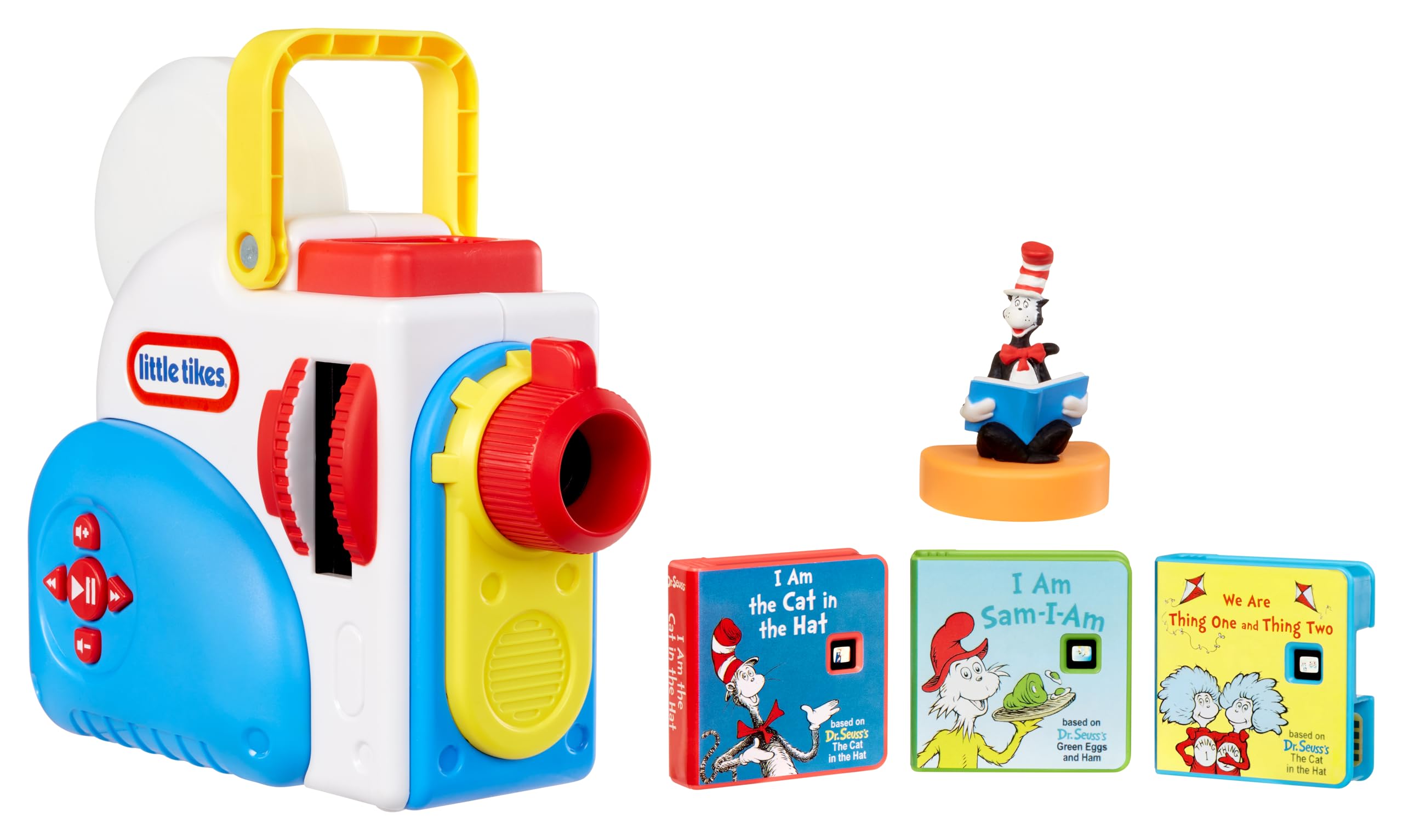
This device redefines what a “game system” can be for a five-year-old. It uses a figurine-based system to project Dr. Seuss stories onto a wall, complete with narration, colorful lights, and sound effects. There is zero screen involved — the child watches the story unfold on the wall, which is much gentler on developing eyes and encourages a different kind of focused attention.
The included starter pack features three classic Dr. Seuss stories: I Am the Cat in the Hat, I Am Sam-I-Am, and We are Thing One and Thing Two. The Cat in the Hat figurine doubles as a nightlight with fun light effects. The device also has a white noise setting, meaning it can transition from storytime to sleep aid seamlessly. The kid-friendly controls let them rewind, fast forward, and adjust volume without help.
Setup is simple: insert the cartridge, place the figurine, and adjust the focus. The stories are shortened adaptations, which is actually a benefit for a five-year-old’s attention span. The only real downside is that the projector needs a clear wall space and a consistent distance to get the image right, which can take a few tries to dial in. For a screen-free bedtime routine, this is a brilliant and unique choice.
Why it’s great
- Completely screen-free wall projection
- Doubles as a white noise nightlight
- Encourages reading and listening comprehension
Good to know
- Stories are shorter adaptations of originals
- Needs a clear wall and proper distance for focus
FAQ
Can a five-year-old use a standard video game controller?
Are screen-free game systems better for a five-year-old?
Final Thoughts: The Verdict
For most users, the best game system for 5 year old winner is the LeapFrog Leapster Ultra because it combines a grown-up feel with educational depth and a rotating screen that adapts to any play situation. If you want a screen-free bedtime option that also serves as a white noise machine, grab the Little Tikes Story Dream Machine. And for pure arcade value with the best battery life, nothing beats the 32-Bit Handheld Game Console.