
At ten, kids are caught between simple games and complex adult rules. They crave strategy, but lose interest if the rulebook reads like a tax form. The perfect game respects their growing brain without punishing attention spans.
I’m Mohammad Maruf — the founder and writer behind Drink4Good. My research combines rating analysis, play-time data, and real parent feedback to identify the titles that actually survive a Friday night.
From tile-laying sheep to collapsing Lego palaces, this guide flags the choices that deliver repeat play through genuine decisions, not just flashy components. Here are the most tested games for 10 year olds available today.
How To Choose The Best Games For 10 Year Olds
At ten, the sweet spot is a game that takes under an hour, supports at least two players, and offers real decisions rather than pure luck. The wrong game either bores them in five minutes or frustrates them after two turns. Here’s what to watch for.
Play Time & Attention Span
A 20- to 45-minute playtime hits the zone for this age. Games like Battle Sheep wrap in 20 minutes, letting you play multiple rounds. Anything over 60 minutes risks losing focus unless the theme is gripping.
Player Count & Social Fit
Two-player games like Targi or Electronic Battleship Reloaded work for focused head-to-head play, while four-player options like Monkey Palace or Battle Sheep invite siblings and friends. Check the box — many games play differently at different player counts.
Complexity Ceiling
The best ten-year-old games have rules that fit on a single page but reveal layered strategy after repeated plays. Look for “easy to learn, difficult to master” reviews. Games with educational value — like geography or resource management — naturally extend their shelf life.
Quick Comparison
On smaller screens, swipe sideways to see the full table.
| Model | Category | Best For | Key Spec | Amazon |
|---|---|---|---|---|
| Thames & Kosmos Targi | Strategy | Two-player deep strategy | 60 min playtime | Amazon |
| Battle Sheep | Abstract Strategy | Quick family rounds | 20 min playtime | Amazon |
| The World Game | Educational | Geography & trivia | 194 country cards | Amazon |
| Monkey Palace | Creative Strategy | Lego & board game fans | 231 Lego elements | Amazon |
| Electronic Battleship Reloaded | Electronic Strategy | Classic naval combat | Sounds & lights | Amazon |
In‑Depth Reviews
1. Thames & Kosmos Targi

Targi is a two-player worker placement game that earned a Kennerspiel des Jahres nomination for good reason. Players place workers on a 4×4 grid of border cards to collect resources and acquire Tribe cards that build a 3×4 display. The intersecting-line mechanic creates tension every turn — every move simultaneously claims a card and blocks your opponent from a different one.
At a 60-minute playtime, this is on the longer side for a ten-year-old, but the rules are lean enough that a capable 10-year-old grasps the loop after one round. The solo variant adds longevity when no partner is available. Customer reviews highlight that the game stays fresh through many plays because the center card layout changes each time.
The component quality is solid: good card stock and wood pieces, though the token differentiation between values could be better. The suggested house rule to limit a specific Tribe card conversion address the one potential imbalance. For a 10-year-old ready to graduate from lighter games, this is a perfect next step.
Why it’s great
- Genuine strategic depth in a compact box
- Solo variant extends replay value
- Award-nominated design with proven replayability
Good to know
- Only supports 2 players
- Tokens are same size for different values
- Learning curve for first game
2. Battle Sheep
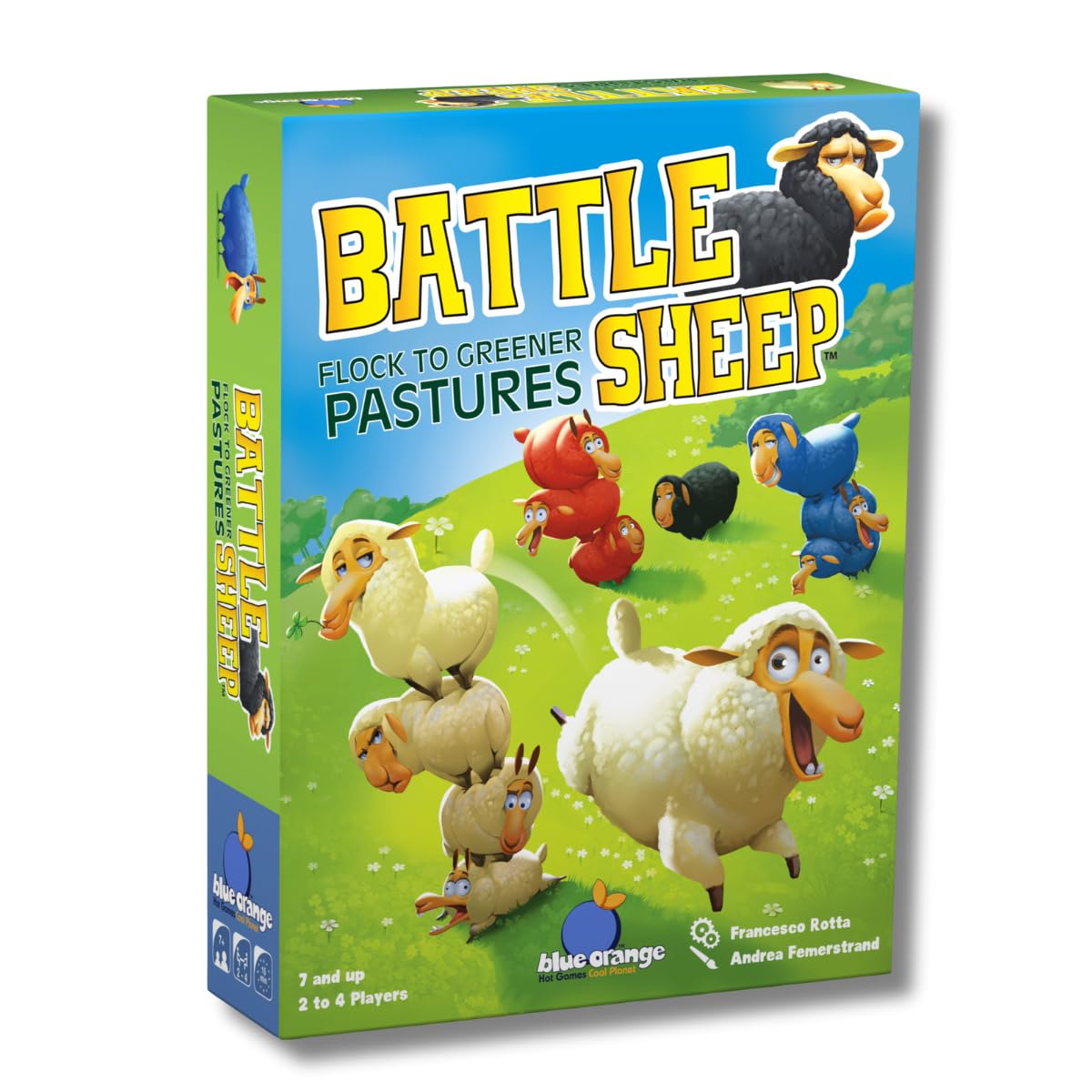
Battle Sheep is an area-enclosure abstract game where each player starts with a tall stack of sheep chips on the edge of a hex-grid board built from identical four-hex tiles. On your turn, you slide a new stack as far as it can go in a straight line, leaving one chip behind. The board fills up, pathways shrink, and you fight for every last hex.
The 20-minute playtime is nearly perfect for this age. Customer reviews note that a 9-year-old regularly beats chess-playing parents, which speaks to the accessibility and depth. The modular board means every game looks different — no two setups are the same. The components are excellent: heavy urea sheep chips that feel substantial and a board that stays put during play.
This works well with 2, 3, or 4 players, though the 3- and 4-player modes are notably more cutthroat as space tightens faster. Very young children (under 7) may struggle to move tall stacks without toppling them, but at age 10 that’s not a concern. For families wanting a fast, replayable, screen-free option, this is the one.
Why it’s great
- Extremely quick to learn and play
- Modular board ensures high replay value
- High-quality, satisfying components
Good to know
- 3-4 player mode can be very confrontational
- Young kids may tip tall stacks
- Pure abstract, no theme narrative
3. The World Game
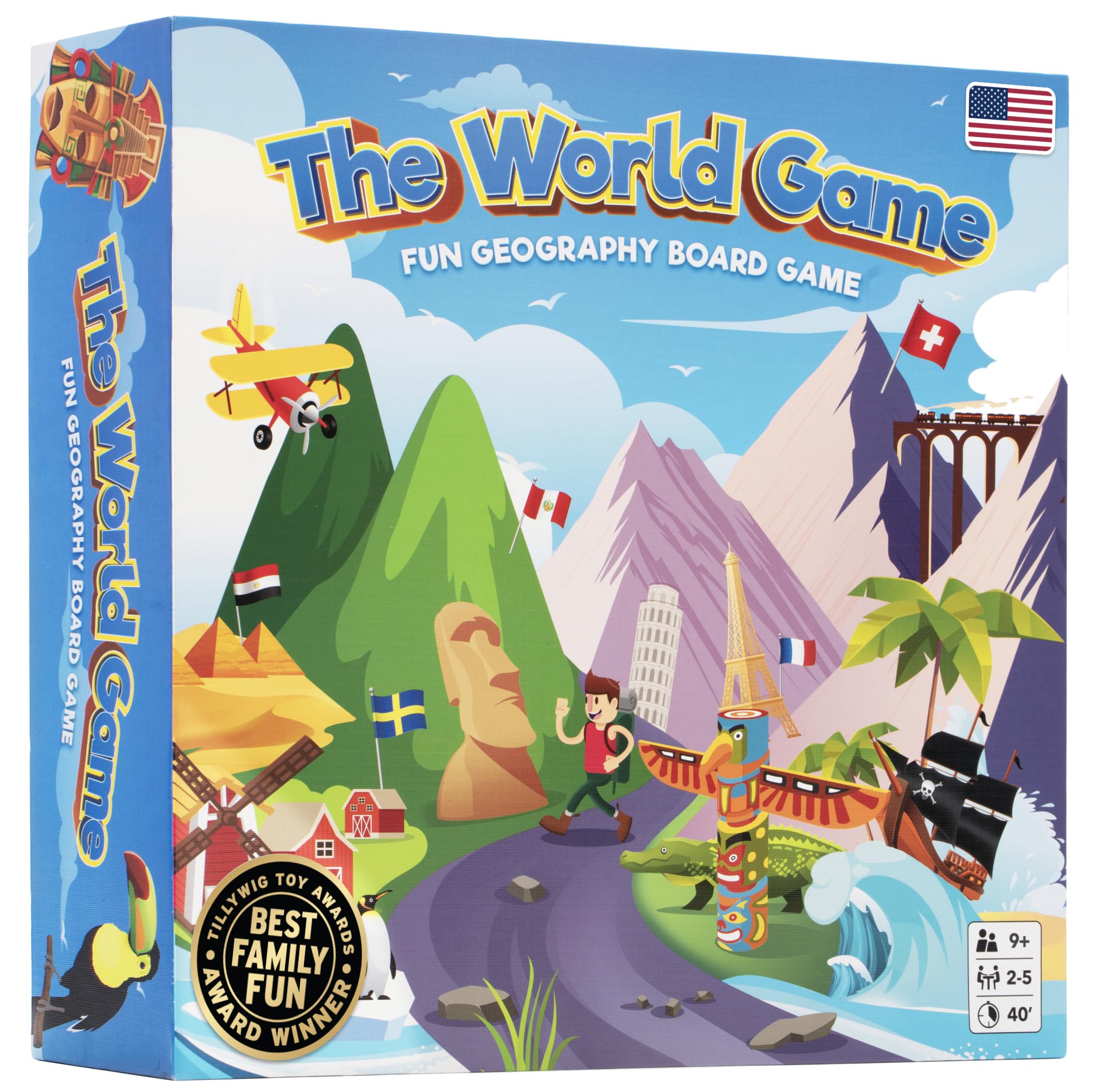
The World Game turns geography into a competitive race where players identify countries by flag, capital, or location on the map. The card deck holds over 1,500 country facts, covering GDP, population, area, and landmarks. Reviewer feedback from teachers and parents confirms that kids aged 10-11 latch onto the trivia aspect and quickly absorb knowledge they wouldn’t get from a textbook.
The estimated 40-minute playtime fits well into a school night or weekend afternoon. The game scales from 2 to 5 players and works as flash cards or trivia on road trips — the portable card deck alone justifies the purchase. One teacher noted that the game ran long for 45-minute class periods, but a quick rules modification (shortening the win condition) solved it.
The component quality is good, with a sturdy board and clear card printing. The country data is regularly updated, though you should check the publication date to ensure recent geopolitical changes are reflected. For a 10-year-old who loves facts or needs a gentle push into global awareness, this is the strongest educational choice.
Why it’s great
- Teaches real geography through gameplay
- Portable enough for road trips
- Scales well from family to classroom
Good to know
- May run long without rule tweaks
- Less engaging for kids who dislike trivia
- Data freshness depends on edition
4. Monkey Palace

Monkey Palace is a hybrid board game where players build towers using 231 genuine Lego elements on a 32×32 baseplate. The strategy comes from placing monkeys to score points when towers collapse — unexpected tumbles create equal parts laughter and tactical recalculation. The 45-minute playtime includes the building and scoring phases, making it a full evening activity.
This game hits a sweet spot for Lego fans who want more structure than free play but more creativity than a standard board game. Customer reviews from families note that a 10-year-old grasps the turn structure quickly, while adults find the resource management genuinely challenging. The major downside: the included bricks are barely enough for 3-4 players through multiple rounds, so you may need to supplement from your existing Lego stash.
Setup and cleanup take longer than a typical board game — expect 5-10 minutes to sort pieces — and the instructions initially feel overwhelming, though gameplay is simpler than the rulebook suggests. The color palette has known issues for color-blind players, specifically the greens. For a family with existing Lego and a desire for a game that blends building with strategy, this is a standout.
Why it’s great
- Unique physical building mechanic
- Real Lego bricks ensure quality
- Challenging for adults too
Good to know
- Brick count insufficient for full 4-player game
- Time-consuming setup and cleanup
- Color-blind unfriendly green palette
5. Hasbro Gaming Electronic Battleship Reloaded

Electronic Battleship Reloaded upgrades the classic naval combat game with voice commands, sound effects, and light sequences that engage players before the first shot is fired. Players choose between Classic Mode and Advanced Mode, where special weapon pegs (salvo strike, radar sweep) add tactical depth beyond the traditional guess-and-sink formula.
The easy-setup edition addresses the chief complaint against earlier versions: ship placement is faster, and preset layouts let you skip straight to the action. Customer feedback highlights the suspense created by the audio cues — the explosion sound on a successful hit adds palpable drama that a silent board can’t match. The game supports solo play against the computer, which is a useful feature when friends aren’t available.
The build quality is a clear step up from older Battleship editions, with a sturdy folding unit that stores ships and pegs. The primary drawback remains setup time for the ships themselves, though it is faster than previous versions. Batteries are required for the electronic features. For a kid who enjoys dramatic, confrontational gameplay with modern production values, this delivers.
Why it’s great
- Immersive sound and light effects
- Solo mode vs computer opponent
- Improved setup over older editions
Good to know
- Still requires manual ship setup
- Batteries needed for electronic features
- Only 2 players or solo
FAQ
How long should a board game session be for a 10-year-old?
Are two-player games worth it for this age?
Final Thoughts: The Verdict
For most users, the games for 10 year olds winner is the Thames & Kosmos Targi because it delivers real strategic depth without overwhelming rules. If you want fast, replayable family rounds, grab the Battle Sheep. And for a creative, hands-on experience that blends building with board game strategy, nothing beats Monkey Palace.