
An 11-year-old boy lives in a gap year of play—too old for simple preschool matching games, yet not quite ready for the hour-long rules read of advanced war games. The sweet spot sits at the intersection of fast tactical thinking, a dash of luck, and enough physical interaction to pull eyes away from a glowing screen. The best options move past token-moving exercises and deliver real decisions that reward smart play over blind luck.
I’m Mohammad Maruf — the founder and writer behind Drink4Good. After analyzing the mechanics, component quality, and playtest feedback for dozens of current titles built for this exact transition age, I’ve matched each pick to the specific way an 11-year-old actually plays at the table.
Whether your child thrives on spatial puzzles, NFL trivia, or the chaotic thrill of a game board that collapses mid-round, the right games for 11 year old boys blend competition with moments of genuine surprise—and none of the picks below waste time on filler turns.
How To Choose The Best Games For 11 Year Old Boys
At age 11, a boy’s cognitive speed and reading comprehension are often ahead of his patience. Games that score best with this demographic mix a 15-to-30-minute runtime with rules that fit on one page. The table below breaks the practical specs that separate shelf collectibles from games that actually hit the table every weekend.
Match the Mechanic to the Kid
A spatial kid who builds with LEGO will lock into a tile-matching or polyomino puzzle game before a deduction game. A sports-obsessed kid needs a deck or board that validates his player knowledge, not a generic trivia deck. If the boy is social and loud, choose a party game with a bluff or flip-the-board element. Choosing the wrong mechanic for the personality is the single fastest way to lose interest mid-round.
Player Count and Scalability
A two-player game can build intense head-to-head focus, but a four-player game spreads the social weight and keeps nobody waiting too long. Verify the maximum player count on the box. Many mid-range titles claim 4 players but play best at 3. For sleepovers or family nights, aim for a game that accommodates 4 to 6 players without stretching the play time past 45 minutes.
Component Durability and Portability
An 11-year-old’s game table can be a living room floor, a car backseat, or a picnic table. Cards should feel substantial—not flimsy cinema-ticket stock. Acrylic or thick cardboard tiles survive being grabbed and dropped. A travel case with a zip closure and a clip for a backpack strap is a huge practical win for families that move the game around.
Quick Comparison
On smaller screens, swipe sideways to see the full table.
| Model | Category | Best For | Key Spec | Amazon |
|---|---|---|---|---|
| Project L | Abstract Strategy | Engine-building puzzle fans | 120 acrylic pieces | Amazon |
| Exploding Kittens: The Board Game | Party / Family | Flip-board action chaos | Pop-up board, 6 standees | Amazon |
| Spin Master Tetris: The Board Game | Spatial Puzzle | Real-life Tetris strategy | 128 Tetriminos, 4 grids | Amazon |
| Guess Who? NFL Edition | Deduction | Football fans and sports trivia | 48 players, 2 double-sided sheets | Amazon |
| Five Crowns Travel Case | Rummy-Style Card Game | Rotating wild card strategy | Travel case + scorecard | Amazon |
In‑Depth Reviews
1. Asmodee Project L

This is the pick for the kid whose favorite part of any game is optimizing his next three moves. Project L drops a set of glossy acrylic polyomino pieces onto 52 puzzle tiles (32 white, 20 black at increasing difficulty). Each turn gives exactly three actions—pick a piece, complete a puzzle, or upgrade your inventory. There is no filler. The engine-building arc is tight: you start with two basic shapes and work toward the full set of nine, which is exactly the right curve for an 11-year-old who wants visible progress every round.
The tactile factor here is high. The pieces are chunky, colored acrylic that feels satisfying in the hand, and the puzzle tiles have a clean iconography that eliminates any language barrier. The solo mode plays exactly the same as the multiplayer setup, so a kid can work through the stack alone without a rule variant. Playtime clocks at 30 minutes with 3–4 players, which lands perfectly inside the attention window for this age.
Newer players will occasionally hit a puzzle tile where the required pieces don’t match their current inventory, which teaches adaptability without punishing too hard. More experienced friends will pull ahead, so it helps to pair kids of similar strategy comfort. For families looking to level up from basic matching games into true spatial strategy, Project L is the strongest argument at the table.
Why it’s great
- Acrylic pieces are tough and premium-feeling
- Engine-building ramps satisfaction every round
- Functional solo mode for independent play
Good to know
- Expansions add depth but cost extra
- Experienced players can dominate early
2. Exploding Kittens: The Board Game
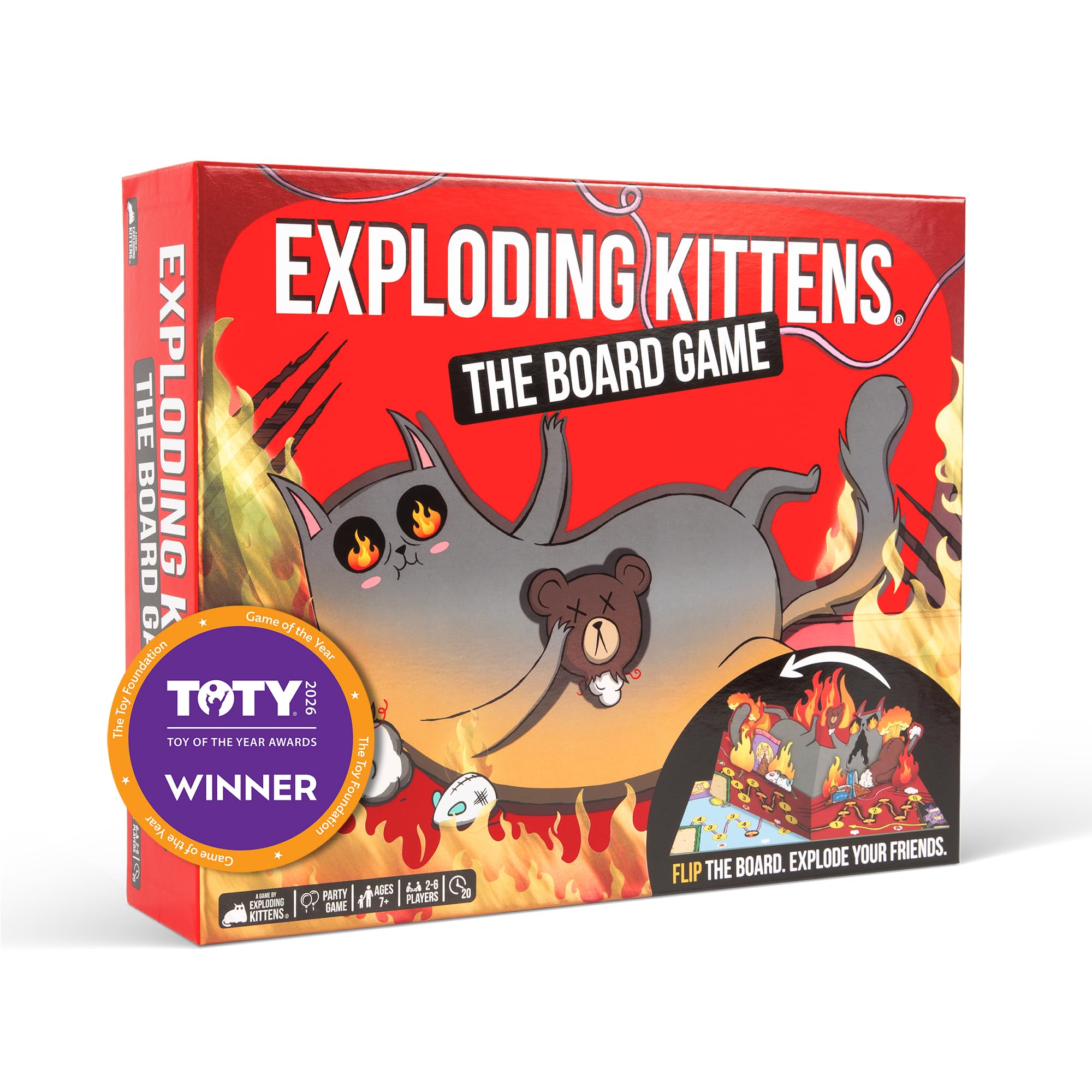
The core twist here is the board itself. Unlike the original card game, the new board game uses a pop-up 3D board with a flip mechanism: landing on certain spaces forces the board to rotate, revealing a completely different path lined with danger cards. For an 11-year-old, that physical transformation is the hook—it feels less like a board game and more like a booby-trapped cardboard machine that can fall apart mid-turn.
The component list is generous for the price tier: 65 action cards, 26 move cards, 6 character standees, and one pop-up game board. The card art carries the signature absurd ilLustration style of The Oatmeal—meatpants, taco cats, and litterbox sandworms. The humor lands hard at ages 10–13, and the rules are short enough that a group can be playing within three minutes of opening the box.
Some early copies required a few play sessions to loosen the board folds, and the flame tokens partially obscure certain action spaces on the “bad side” of the board, requiring the group to lift and peek during rule checks. For a quieter family, the chaos level might overshoot. But for a birthday party or sleepover where controlled pandemonium is the goal, this is the single most engaging title in the group.
Why it’s great
- Flip-board creates genuine surprise each round
- Art style and humor perfectly tuned for this age
- Fast setup and easy to teach
Good to know
- Board folds are stiff at first
- Flame tokens partially block some action icons
3. Spin Master Games Tetris: The Board Game
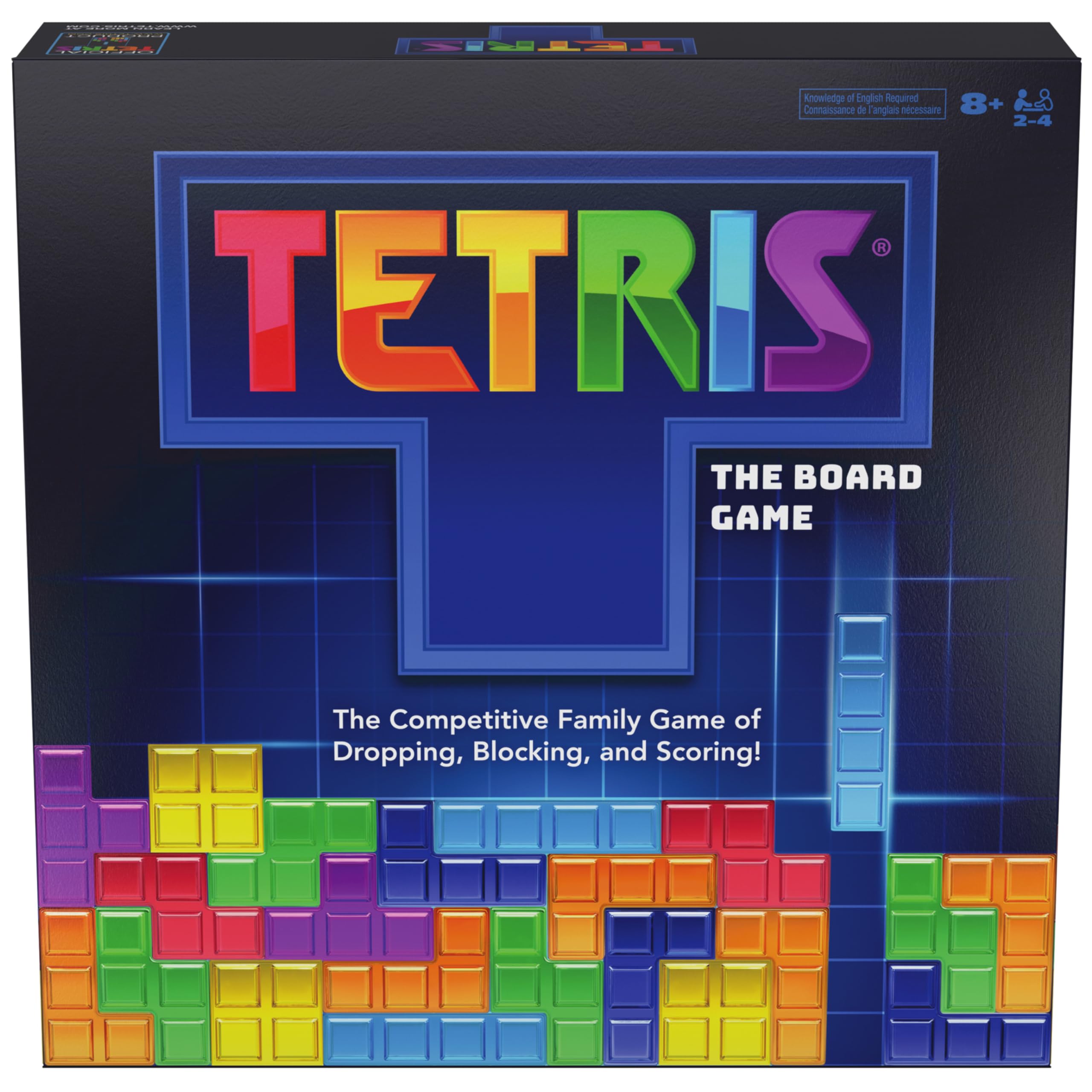
This is a faithful physical translation of the digital Tetris formula, but the board game adds a blocking layer that the video game lacks. Players get their own Tetris grid on a base, draw Tetrimino cards, and physically drop translucent plastic pieces into their grid to complete lines. The competitive bite comes from black Garbage Drop icons: land a piece on an opponent’s garbage spot and you force a Mino blocker into their grid. This turns a pure solo exercise into a real head-to-head tactical standoff.
The component count is high for the price: 4 Tetris grids, 4 grid bases, 4 player cards, 1 gameboard, 24 Tetrimino cards, 128 Tetriminos, and 8 Minos. The pieces are translucent and color-coded to match the original video game palette. Setup takes under 30 seconds per player, and the rule sheet can be read in under two minutes. Game length averages 20 minutes, which is short enough for multiple rounds in a single sitting.
A small batch of units arrived with bent puzzle pieces in the packaging, which suggests the box insert could use a tighter fit. Also, the blocking mechanic can cause frustration for a younger kid who prefers pure building without interference. For an 11-year-old who loves the video game and wants a physical version that adds a layer of strategic sabotage, this is a rare and satisfying conversion.
Why it’s great
- Translucent pieces mimic the video game aesthetic
- Garbage Drop mechanic adds real head-to-head tension
- Ultra-fast setup and 20-minute rounds
Good to know
- Packaging may bend a few pieces in transit
- Blocking mechanic may frustrate non-competitive kids
4. Guess Who? NFL Edition
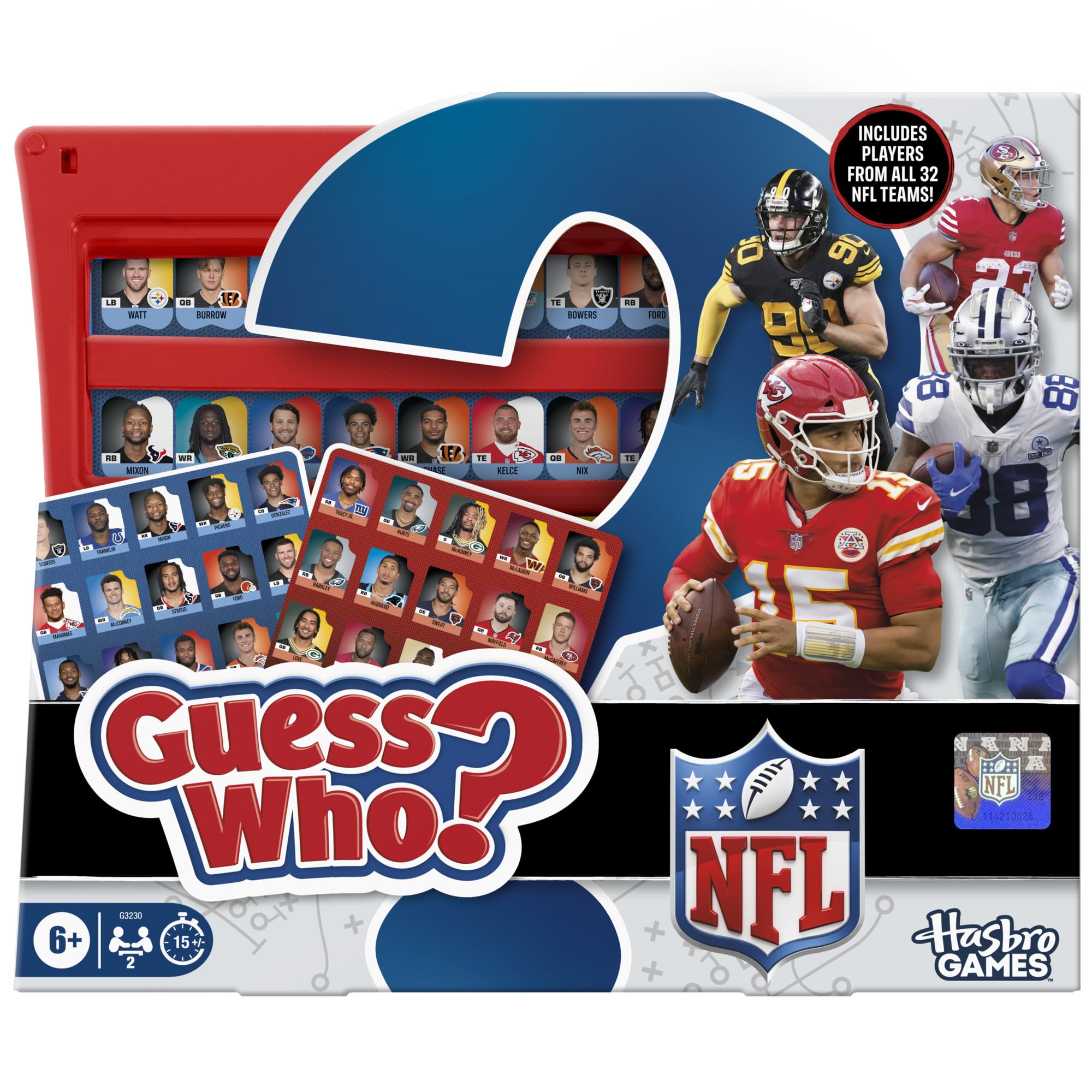
The classic deduction grid gets a full NFL reskin with 48 real players across all 32 teams, split into two double-sided sheets—AFC on one side, NFC on the other. An 11-year-old football fan will immediately recognize names like Josh Allen, Patrick Mahomes, Lamar Jackson, Jalen Hurts, and Christian McCaffrey. The questioning mechanic uses visual clues first (team color, smile, helmet style) and then graduates to football-specific trivia like Super Bowl wins and passing records.
The two fold-up cases click together to form a single carry unit, making this genuinely portable for tailgates, car trips, or a sibling game in the back of an SUV. Plastic build quality feels sturdy enough for repeated folding. Playtime runs about 15 minutes per round, which hits the sweet spot for short attention spans. The memory and observation training baked into the format is a natural cognitive bonus—it rewards paying close attention to a 24-player grid.
If the kid is not an NFL fan, the entire theme falls flat. The game also maxes out at 2 players, so it is not suitable for larger groups or party settings. For the price, the included player count is small, but for a dedicated football fan who wants to flex his roster knowledge against a friend or parent, this is the strongest niche pick in the list.
Why it’s great
- 48 real NFL players from all 32 teams
- Two-sided grid gives 24 unique faces per side
- Snap-together cases make it genuinely portable
Good to know
- Exclusive to football fans—zero appeal without the theme
- Only 2-player format limits group use
5. Five Crowns Travel Case Bundle

Five Crowns has been a proven card game staple for years, and this bundle wraps the deck in a soft zipper case with a carabiner clip—a practical upgrade for families that travel. The game uses a rummy-style format with five suits (including a fifth star suit) and a rotating wild card that changes every round over 11 hands. The twist keeps even routine sessions feeling different, and the math demands are light enough for an 11-year-old to track his own runs and books.
The included scorecard pad and pencil mean no scrambling for scrap paper. The case measures about 6 by 4.4 by 1.6 inches and fits easily inside a backpack pocket or glove compartment. The card stock is standard for the PlayMonster line—decent thickness but not premium poker card stock—so frequent shuffling may eventually wear the edges. The game accommodates up to 7 players, which makes it the most inclusive option in this list for larger family gatherings or group sleepovers.
The strategy ceiling is moderate. A tactical kid will quickly learn when to hold high cards versus when to lay down runs early, so experienced adults won’t trample a younger player. For an 11-year-old who enjoys a calm, pattern-based card game that can stretch a road trip, this is the most portable and highest-player-count option in the set.
Why it’s great
- Max 7 players—best for large groups
- Rotating wild card adds genuine replay value
- Zip case with clip fits any bag or backpack
Good to know
- Card stock is standard, not premium
- Frequent shuffling may show edge wear over time
FAQ
Are board games or card games better for an 11-year-old boy?
How do I know if a game is too complex for an 11-year-old?
What player count is best for a sleepover with five 11-year-old boys?
Final Thoughts: The Verdict
For most families, the games for 11 year old boys winner is the Asmodee Project L because its combination of tactile acrylic pieces, tight 30-minute engine-building, and solo-play option covers the widest range of play scenarios. If you want a flip-the-board party experience that generates howling laughter during sleepovers, grab the Exploding Kittens Board Game. And for a dedicated football fan who wants to test his NFL knowledge head-to-head, nothing beats the Guess Who? NFL Edition.