
Seven-year-olds live in a sweet spot — they’ve outgrown preschool toys but still crave play that feels big, surprising, and hands-on. The challenge is finding games that match their growing logic skills without overwhelming them with complex rules or fragile parts. A good game for this age needs to be quick to learn, durable enough for repeated play, and built around a hook — whether that’s a football roster, a magic trick, or a flipping game board — that makes them want to come back.
I’m Mohammad Maruf — the founder and writer behind Drink4Good. I’ve spent years analyzing how kids’ games balance engagement with developmental value, digging into the construction quality, age-appropriateness, and replay factors that separate a one-time hit from a steady favorite.
After evaluating dozens of options by their build, learning curve, and real-world feedback from parents, I’ve narrowed it down to five standouts that earn a spot on any shortlist for the best games for 7 year olds. Each one brings something different to the table, from stealthy math practice to full-on stunt driving.
How To Choose The Best Games For 7 Year Olds
At age seven, a child’s ability to follow multi-step instructions, read simple text, and handle minor frustration varies widely. The best games hit a sweet spot: they challenge without causing defeat, and they entertain without requiring constant adult intervention. Focus on these three factors to pick a winner.
Reading and rule complexity
Many games aimed at ages 6+ still rely on text-heavy cards or lengthy rulebooks. For a seven-year-old, look for games that use visual cues, symbols, or simple phrases rather than dense paragraphs. Games that can be learned in under five minutes — and taught to a friend — tend to get played far more often.
Physical durability and component size
Seven-year-olds are not gentle. Card thickness, board material, and the size of small pieces matter. Thin cardboard or tiny tokens that are easy to lose or bend can turn a fun game into a frustration. Consider games with sturdy plastic frames, thick cardstock, or components that are large enough to handle easily.
Replay value and skill growth
A game that is solved after one or two rounds has limited value. The best options offer variable setups, hidden information, or adjustable difficulty levels. Electronic games that increase problem complexity over time, or board games with random elements that change the path each time, keep a seven-year-old engaged for months instead of minutes.
Quick Comparison
On smaller screens, swipe sideways to see the full table.
| Model | Category | Best For | Key Spec | Amazon |
|---|---|---|---|---|
| NEXBOX 8-Wheel RC Stunt Car | RC Car | High-energy outdoor play | 8-wheel drive with gesture sensing | Amazon |
| Exploding Kittens: The Board Game | Board Game | Family game nights | Flipping board with 65 action cards | Amazon |
| National Geographic Magic Set | Magic Kit | Building confidence and showmanship | 45 tricks with video instructions | Amazon |
| Guess Who? NFL Edition | Board Game | Sports-loving kids | 48 NFL players on dual-sided sheets | Amazon |
| Educational Insights Math Whiz | Electronic Game | Silent, screen-free math practice | Drill, challenge, and calculator modes | Amazon |
In‑Depth Reviews
1. NEXBOX Cool 8 Wheels Hand Controlled rc Stunt Car

This RC car stands out from the usual two-wheel drive toys by bringing an eight-wheel chassis that lets it drive on both sides and flip mid-motion. The gesture-sensing wrist controller is a clever touch — kids wave their hand to steer, which feels more like a video game controller than a traditional remote, and the learning curve is almost zero for a seven-year-old. The car also includes flashing lights, music, and simulated exhaust effects, which turn a simple drive around the driveway into a full performance.
The package includes two rechargeable lithium-ion batteries, which is a practical detail because the car is so engaging that a single battery run won’t satisfy most kids. It handles both indoor carpet and outdoor pavement well, though the plastic body can show wear if repeatedly crashed at full speed into curbs. The gesture watch requires a clear line of sight to the car, so dense indoor furniture can occasionally cause signal hiccups, but open spaces work flawlessly.
Several reviews note that the car is a showstopper at birthday parties and that the 7-year-old age group is exactly the right sweet spot. The stunt capabilities — 360-degree spins, flips, and dual-sided driving — provide the kind of immediate feedback that keeps a child’s attention without needing a parent to set up anything. For a high-energy outdoor toy that feels more advanced than a basic RC car, this is the pick.
Why it’s great
- Gesture wrist control is intuitive and fun for this age group
- Eight wheels allow driving on both sides for endless flips
- Two rechargeable batteries double playtime outdoors
Good to know
- Plastic body can crack if driven hard into concrete repeatedly
- Gesture sensor requires clear line of sight to work reliably
2. Exploding Kittens: The Board Game
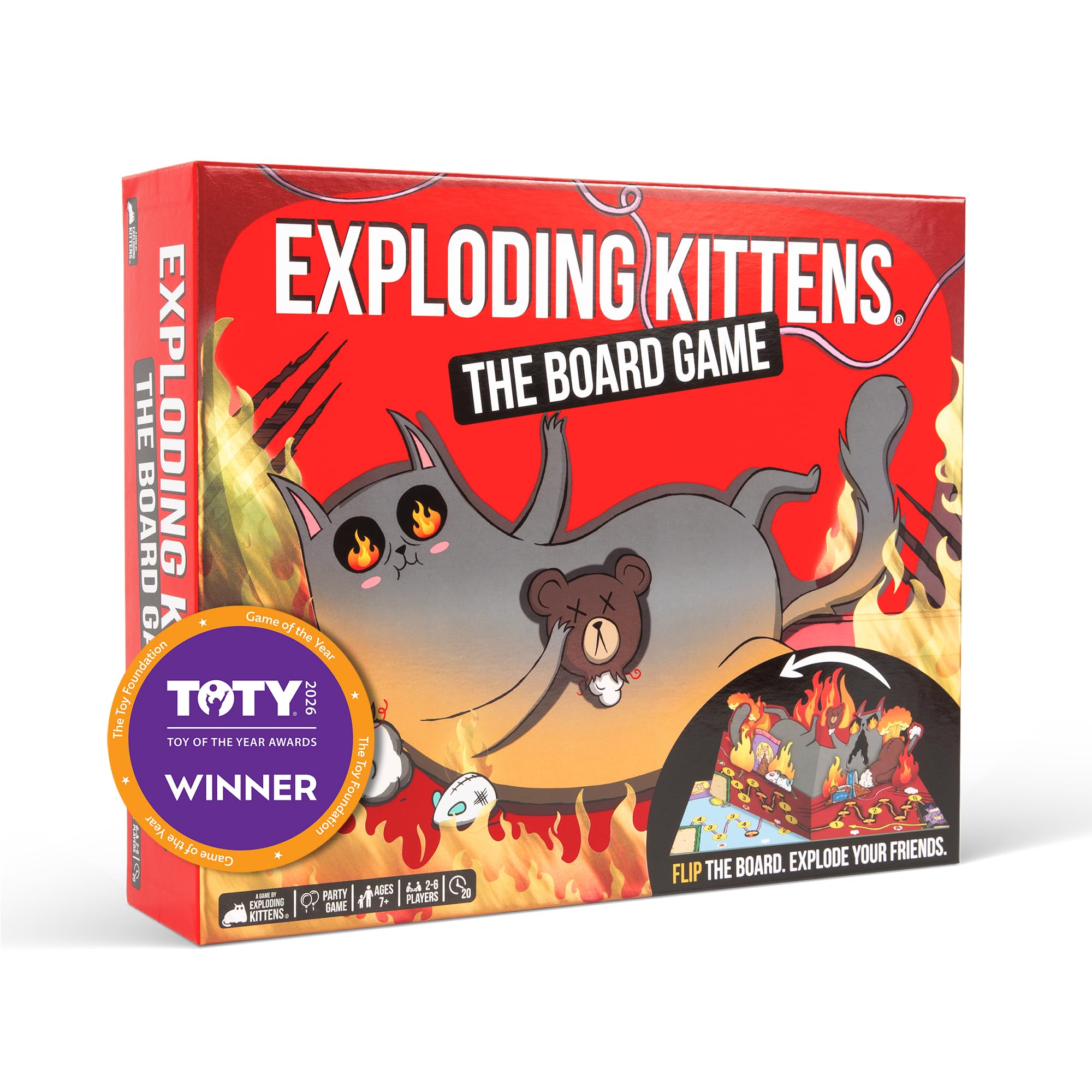
This board game version of the hugely popular card game introduces a physical board that literally flips mid-game, revealing a new path and raising the stakes just as players think they are safe. The core goal is simple — reach the end without exploding — but the flipping mechanism adds a layer of surprise that keeps even adults engaged. The included 65 action cards and 26 move cards provide enough variety that no two games play out exactly the same, and the character standees (TacoCat, SushiCat, GnomeCat) are goofy enough to get laughs before a single move is made.
Assembly is straightforward — the pop-up board, standees, and cards all come ready to play straight out of the box. The card quality is decent, though some reviewers noted the cardboard pieces can feel thin after repeated handling. The game plays best with 4 to 5 players, which is rare for family games that often cap at 4, making it a solid choice for larger families or playdates. Setup takes under two minutes, and a full game runs about 30 to 45 minutes once everyone understands the flow.
A few families mentioned that the first round or two involves some rule-checking, but by the third game, kids as young as seven were playing independently. The humor leans silly rather than mean, which matters for a game that involves eliminating other players. For a party game that bridges the gap between kid fun and adult strategy, this is a versatile tabletop option.
Why it’s great
- Flipping board mechanic adds genuine surprise every game
- Supports up to 6 players, great for larger groups
- Quick to learn after one or two trial rounds
Good to know
- Cardboard standees and cards may feel less durable than premium games
- Board fold can be stiff initially before it loosens up
3. National Geographic Kids Magic Set

Magic kits are a classic for good reason, and this National Geographic set stands apart by including 45 distinct tricks with a dedicated video library taught by a professional magician. The props — a false thumb tip, ball and vase, coin case, magic wand, and a specialized card deck — are sturdy enough for repeated practice, and the video format means a seven-year-old can learn at their own pace without needing a parent to decipher a written instruction sheet. The kit covers everything from simple coin vanishes to illusions that involve cups and balls, offering a clear progression from beginner to more advanced moves.
The card deck is notably higher quality than the flimsy decks found in budget magic kits, and the false thumb tip fits small hands reasonably well. Some tricks require fine motor control that may frustrate younger seven-year-olds, but the video format allows them to rewind and practice exactly the moment that gives them trouble. The kit also includes performance tips, which help kids understand that magic is as much about presentation as it is about the secret move — a nice confidence builder for shy or outgoing kids alike.
Reviews consistently highlight that this kit keeps kids entertained for hours on end and that the variety of tricks prevents boredom from setting in after one session. The kit is labeled for ages 8 and up, but most seven-year-olds with decent patience handle it fine with a little adult help on the first few tricks. For a gift that builds confidence, presentation skills, and fine motor coordination, this magic set is a standout.
Why it’s great
- Video instruction by a pro magician makes learning self-directed
- 45 tricks offer a long progression from beginner to advanced
- Props are well-made and sized for small hands
Good to know
- Some tricks require adult help for the first few attempts
- Labeled ages 8+, so younger 7-year-olds may need patience
4. Guess Who? NFL Edition Board Game

This licensed twist on the classic Guess Who? formula replaces generic faces with 48 real NFL players spanning all 32 teams, including stars like Patrick Mahomes, Josh Allen, and Christian McCaffrey. The gameplay remains the same — ask yes/no questions about physical features or team clues to eliminate suspects — but the football theme gives it immediate relevance for any kid who watches the sport or collects trading cards. The two double-sided sheets let players choose between 24 AFC players or 24 NFC players, effectively giving the game a choice of difficulty levels.
The build quality is standard Hasbro fare: two plastic frames that snap together into a single portable unit, making it easy to carry to a friend’s house or on a road trip. The character cards are printed on thin cardboard, but the frames are sturdy enough for regular use. The game supports exactly 2 players and lasts about 15 minutes per round, which is perfect for short attention spans. The NFL licensing means the names and faces are accurate as of the current season, adding a collectible feel for young fans.
Parents report that the game works especially well for kids who are not naturally drawn to board games but love football. The visual clues — uniform color, team logo, player position — make the deduction process concrete rather than abstract, which helps younger players build logical reasoning skills without feeling like they are doing homework. For a quick, portable, and sports-themed board game, this is the best in its lane.
Why it’s great
- Real NFL stars make the game instantly relatable for sports fans
- Quick 15-minute rounds fit short attention spans well
- Portable snap-together design is ideal for travel
Good to know
- Only supports 2 players, not suitable for larger groups
- Character cards are thin cardboard and may bend over time
5. Educational Insights Math Whiz

The Math Whiz is a handheld electronic game that covers addition, subtraction, multiplication, and division across eight difficulty levels per skill. It operates in three modes: Drill mode presents a progressive sequence of problems, Challenge mode turns math into a elimination game, and Calculator mode lets kids check their work on their own. The LCD screen is clear and responsive, and the buttons are large enough for small fingers to press accurately. It runs on two AAA batteries (not included), and its compact size makes it easy to toss into a backpack for car rides or quiet time at a restaurant.
The adjustable difficulty levels are the standout feature here — a child who struggles with basic addition can start at level 1, while a more advanced 7-year-old can jump straight to multiplication or division at higher levels. This prevents the game from becoming frustrating or boring as the child’s skills grow. The Challenge mode, in particular, gamifies the experience by requiring quick answers to eliminate numbers, which taps into the same competitive drive that makes arcade games addictive.
Some users noted that the battery compartment screws are unusually small and easy to strip, so it is worth using a quality screwdriver the first time you open it. The device itself is well-built, and multiple reviews mention that it survived drops and rough handling from kids. For a screen-free way to build math fluency without a child feeling like they are doing homework, this electronic game delivers quietly and effectively.
Why it’s great
- Eight difficulty levels per skill grow with the child’s ability
- Challenge mode turns math practice into a fun elimination game
- Compact and portable, perfect for travel or waiting rooms
Good to know
- Battery compartment screws are very tiny and easy to strip
- Requires AAA batteries which are not included
FAQ
How many players do I need for most board games suitable for a 7-year-old?
Are electronic games like Math Whiz as durable as board games for active kids?
Final Thoughts: The Verdict
For most users, the best games for 7 year olds winner is the NEXBOX 8-Wheel RC Stunt Car because it delivers immediate, high-energy fun that feels like a toy a much older kid would own, while the gesture controls keep the experience accessible. If you want a game that brings the whole family together around the table, grab the Exploding Kittens Board Game. And for a quiet, screen-free option that builds real math skills without tears, nothing beats the Educational Insights Math Whiz.