
Every parent knows the struggle: the shelf is full of toys, yet the kids claim there’s nothing to do. The real trick isn’t just buying more stuff—it’s finding games that hold attention, teach a skill, and get everyone laughing instead of arguing over a screen. That’s where a handpicked selection of tabletop and active games changes the dynamic.
I’m Mohammad Maruf — the founder and writer behind Drink4Good. My research focuses on how children engage with structured play, analyzing game mechanics, component durability, and educational value to identify which titles truly earn their spot in the family rotation.
Whether you want to boost reading confidence with tactile letter blocks, master addition without a groan, or just have a silly round of abdominal surgery, finding the right fit matters. This guide covers the best games for kids that actually get played again and again.
How To Choose The Best Games For Kids
Picking a game that lands well with kids requires more than just grabbing the newest box off the shelf. You need to balance the child’s current skill level with the game’s complexity, while ensuring the physical components can handle enthusiastic play. The games below sidestep the usual pitfalls—fragile pieces, confusing rules, or a boring premise—so you can focus on the fun.
Match the Mechanics to the Age
A six-year-old’s patience and dexterity are worlds apart from a ten-year-old’s. Games with simple turn-taking, like the CVC word spelling kit, work wonders for preschoolers still building basic letter recognition. Older kids thrive on strategic sabotage in card games like Elimino or the timed pressure of Operation’s Emergency mode. Always check the manufacturer’s suggested age range—it’s one of the most reliable indicators of whether a game will click or collect dust.
Prioritize Component Quality
Kids are not gentle on cardboard. Look for laminated flashcards that resist bending, solid wood letter tiles that survive drops, and game boards that fold into sturdy carrying cases. The best games anticipate wear and tear. Thin card stock that peels after one session, or small plastic pieces that vanish under the sofa, will kill a game’s replay value fast. Investing in durable materials upfront means fewer replacements and less frustration.
Balance Learning with Laughter
The most successful kids’ games disguise education behind a layer of pure silliness. A math game that uses a volcano popper to launch dice feels like an adventure, not a worksheet. A word game with colorful pictures and letter blocks turns early literacy into a satisfying puzzle. When the emotional reward is laughter—whether from a buzzing buzzer or a sabotaged card layout—kids absorb skills naturally and ask to play again.
Quick Comparison
On smaller screens, swipe sideways to see the full table.
| Model | Category | Best For | Key Spec | Amazon |
|---|---|---|---|---|
| Cows in Space | Active Party | Group play and laughter | 2 UFO headbands included | Amazon |
| Operation Board Game | Classic Skill | Fine motor skill practice | Built-in storage drawer | Amazon |
| Wooden CVC Word Spelling | Literacy | Early reading skills | 53 wooden letter blocks | Amazon |
| Elimino Family Card Game | Strategy Card | Multi-age family game night | 2-5 player support | Amazon |
| Math Island Addition & Subtraction | Educational Math | Making math fun | Volcano popper launcher | Amazon |
In‑Depth Reviews
1. Wooden CVC Word Spelling Games

This set from Gojmzo is a complete early literacy kit packaged in a sturdy storage box. It includes 50 double-sided phonics flashcards, 53 lowercase wooden letter blocks (with red vowels and blue consonants for clear visual separation), and five spelling boards. The cards are laminated and thick, resisting bends and spills from small hands.
Children build consonant-vowel-consonant (CVC) words by matching the picture side of a card with the correct letter blocks. The self-checking design—flip the card to see the word—encourages independent practice. Parents and teachers report that the bright colors and tactile wooden pieces hold a child’s attention far longer than a standard workbook.
One minor sticking point: a few card illustrations were confusing, such as a purse for “bag” or a shed for “hut,” which can mislead a beginner learning to decode. Overall, the combination of phonics, sight words, and hands-on play makes this an exceptional investment for ages 3 to 6.
Why it’s great
- Thick laminated cards and solid wood blocks hold up to daily use
- Color-coded vowels and consonants aid pattern recognition
- Self-checking design supports solo play and confidence
Good to know
- A few illustrations are confusing for absolute beginners
- Letters q, y, and z are intentionally excluded from the set
2. Cows in Space by Relatable
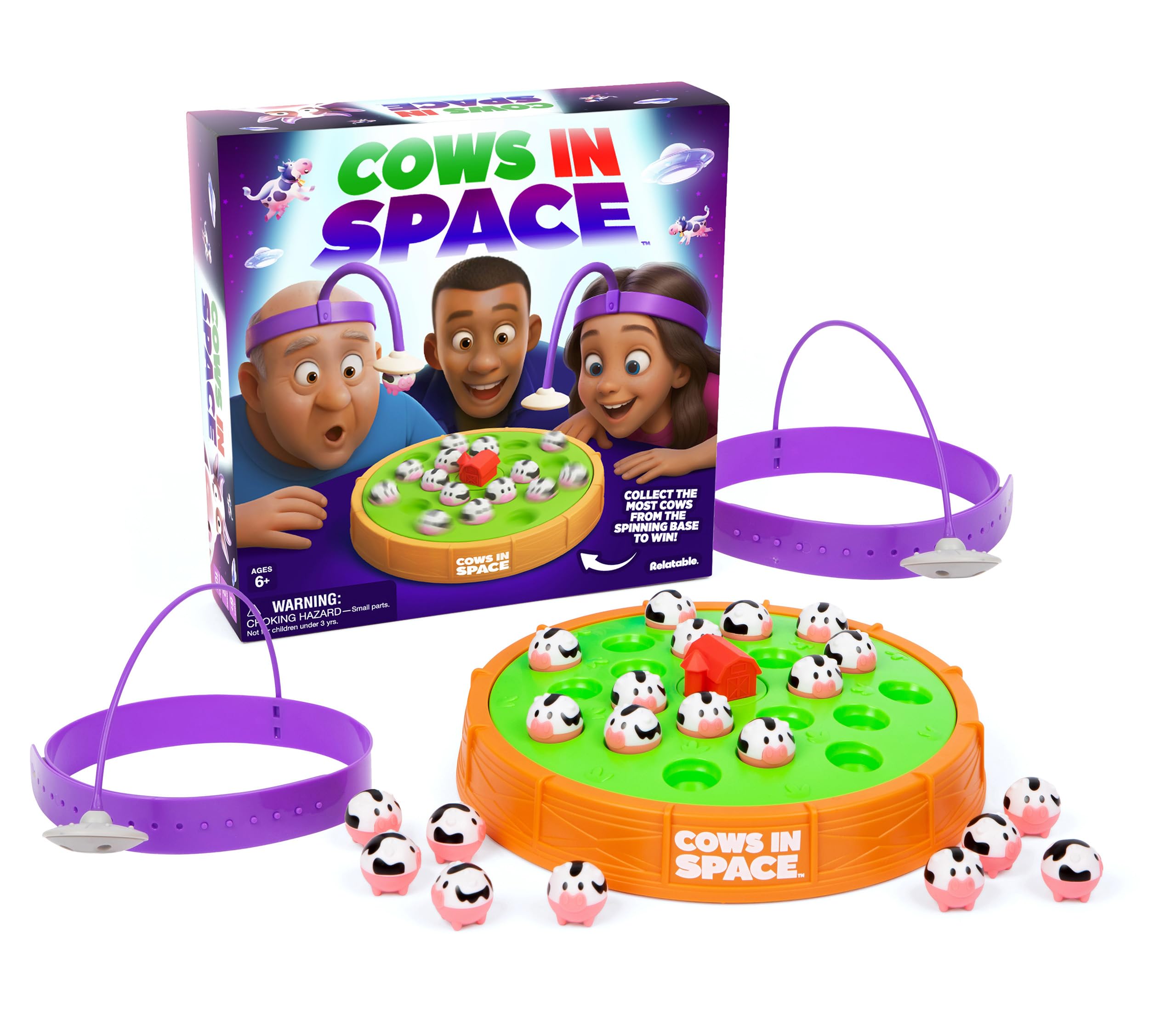
A 2026 Toy of the Year finalist, Cows in Space flips the classic arcade claw-game concept on its head. Two players wear magnetic UFO headbands and use head motion to “abduct” levitating plastic cows from an electronic spinning base. The simple goal—collect the most cows—belies the chaotic physical challenge of coordinating head movement against a rotating platform.
Kids as young as six catch on immediately. The game rewards dexterity and strategy: players can bonk heads to block opponents, adding a layer of silly physical comedy that keeps rounds quick and replayable. The electronic base runs on included batteries, and the headbands adjust to fit children and adults alike.
Reviewers note the headband construction could feel more robust, but the core gameplay is a hit at parties and family gatherings. It’s an excellent choice for families seeking an active, laugh-filled alternative to screen time.
Why it’s great
- Instantly understandable for all ages; no long rules to read
- Promotes physical movement and hand-eye coordination
- Quick 5-minute rounds keep short attention spans engaged
Good to know
- Headband build quality could be more durable
- Limited to 2 players at a time; others watch
3. Operation Electronic Board Game

Hasbro’s latest Operation edition keeps the core tension—tweeze out plastic ailments without touching the metal edges—while adding meaningful modern upgrades. The game board is slightly larger than previous versions and folds into a handled plastic case that looks like a doctor’s kit. A built-in drawer under the board stores all cards, money, and pieces, solving the perennial problem of lost components.
Two game modes refresh the experience. Hospital mode follows the classic card instructions with the familiar buzzer and Cavity Sam’s lit-up nose. Emergency mode removes the cards and adds a race-against-the-clock element with funny sound effects like burps and sneezes. The updated ailments—”Glued to His Phone” and “Frog in His Throat”—bring genuine giggles from today’s kids.
The electronic buzz remains delightfully startling. One reviewer noted the battery compartment screw was too tight, but that’s a minor assembly hiccup. The game is an ideal introduction to turn-taking, patience, and steady hands for kids aged 6 and up.
Why it’s great
- Built-in storage compartment and carrying case eliminate lost pieces
- Emergency mode adds fresh variety and sound effects
- Updated ailments are genuinely funny and relatable
Good to know
- Requires 3 AA batteries, not included
- Tweezer tips can be tricky for very small hands
4. Elimino Family Card Game
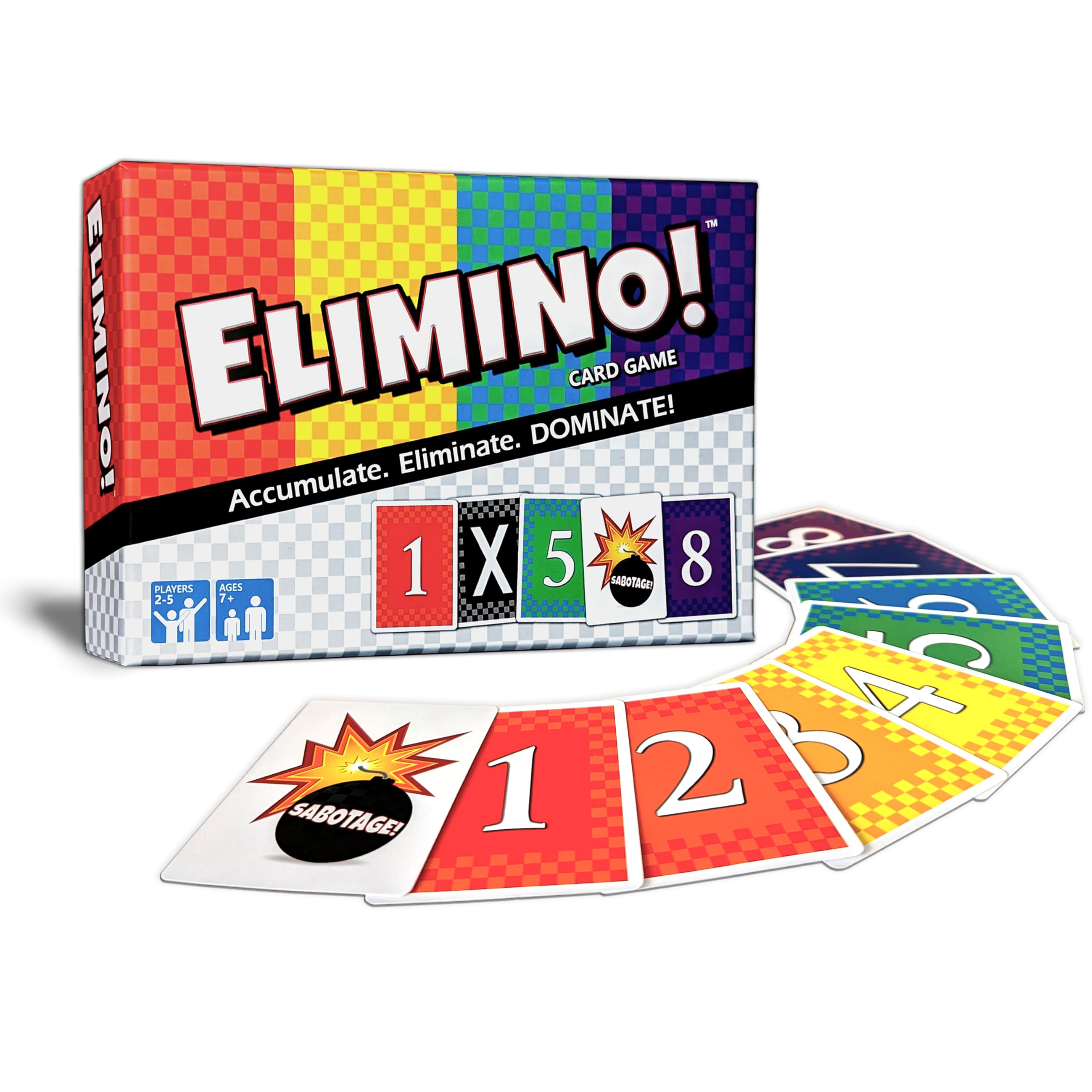
Elimino distills the essence of the classic “Garbage” or “Trash” card game into a polished, fast-paced package. Players race to complete card layouts while using special action cards to steal from or sabotage opponents. The rules fit on a single page and take less than two minutes to explain, making it accessible to ages 7 and up.
What separates Elimino from a standard deck of cards is the intentional game design. The addition of “steal” and “sabotage” cards forces players to think ahead, balancing luck with light strategy. The compact box (6.25 x 4.5 inches) slides into a backpack effortlessly, ideal for road trips, camping, or waiting at restaurants.
The card stock quality has drawn some criticism—early reviews report peeling and tearing after a week of regular play. The manufacturer responded with refunds, which is good customer service, but the physical durability is a weak point. If you value a game that can survive years of shuffle-and-deal, heavier stock would have been a better choice here.
Why it’s great
- Extremely easy to teach; suitable for grandparents and young kids alike
- Plays quickly (15-minute rounds) with high replay value
- Small footprint makes it perfect for travel and restaurants
Good to know
- Card stock is thin and prone to peeling with regular use
- No expansion packs available; limited to included cards
5. Math Island Addition & Subtraction Game

Learning Resources designed Math Island to solve a common problem: how to make arithmetic practice feel like a treat rather than a chore. Players move character pieces around a colorful volcano-themed board, rolling two 10-sided number dice and an operation die to generate equations. Landing on special spaces triggers the volcano popper, which launches the dice sky-high and gets cheers from the table.
The math covers addition and subtraction up to 20, hitting the sweet spot for first and second graders. The operation die is removable for beginners still mastering one operation at a time, a thoughtful flexibility that extends the game’s useful lifespan. The board, pieces, and launcher are built with the durable plastic typical of Learning Resources products, surviving over a year of classroom use according to homeschool reviews.
One design quirk: the dice can roll into large gaps on the board, occasionally slowing down play. But the trade-off is a game that genuinely excites kids about mental math, which is a rare achievement. It’s a top-tier choice for parents or teachers looking to supplement math facts with genuine fun.
Why it’s great
- Volcano popper mechanic adds physical excitement to equation solving
- Removable operation die allows gradual skill progression
- High-quality components hold up to frequent use
Good to know
- Dice can land in board gaps, causing minor delays
- Limited to addition and subtraction; no multiplication or division
FAQ
What is the best game for a 4-year-old who cannot read yet?
How do I know if a game will hold a 7-year-old’s attention?
Why is component durability important for kids’ games?
Final Thoughts: The Verdict
For most users, the games for kids winner is the Wooden CVC Word Spelling Games because it transforms a critical early literacy skill into a hands-on, screen-free activity that kids genuinely enjoy. If you want active, laugh-out-loud group play, grab the Cows in Space. And for boosting math confidence without a groan, nothing beats the Math Island Addition & Subtraction Game.