
A ten-year-old’s brain is a uniquely powerful engine — hungry for rules, thirsty for competition, and just starting to grasp the layered thinking that makes a great board game sing. But the wrong game kills that spark fast: too simple and they’re bored in ten minutes, too complex and the rulebook becomes a chore. The sweet spot is a game that feels like a challenge, not homework.
I’m Mohammad Maruf — the founder and writer behind Drink4Good. I’ve spent years analyzing the board game market at the shelf level, tracking which mechanics keep this exact age group engaged and which components stand up to repeated plays.
After researching the top contenders based on depth, replayability, and build quality, I’ve assembled this guide to the best games for ten year olds that deliver real strategic weight without the frustration.
How To Choose The Best Games For Ten Year Olds
A ten-year-old is old enough for real strategy but young enough that a clunky rulebook or a 90-minute playtime can kill the fun. The games that work best at this age balance clear rules with genuine depth — the kind a parent and child can both enjoy without one side dominating every time.
Look For Adaptable Player Counts
Many family games claim 2-4 players, but the best ones scale well. A game that works perfectly with two players but also shines with four means more invitations to play, fewer arguments about teams, and a longer shelf life as friend groups change.
Prioritize Replayability Over Theme
A flashy licensed theme can sell a game once, but a ten-year-old will want to play a game ten times if the mechanics are solid. Modular boards, variable setups, and hidden information create situations where no two games feel the same — that’s the secret to a game that stays on the table, not in the closet.
Check The Estimated Play Time
Games that run 20 to 40 minutes hit the sweet spot for this age. Shorter than 15 minutes and it feels like a snack; longer than 60 minutes and attention starts wandering before the endgame. A clear, achievable win condition keeps the energy high from setup to final score.
Quick Comparison
On smaller screens, swipe sideways to see the full table.
| Model | Category | Best For | Key Spec | Amazon |
|---|---|---|---|---|
| Battle Sheep | Abstract Strategy | Quick strategic play for 2-4 | 20-minute play time | Amazon |
| Spin Master Tetris Board Game | Tabletop Puzzle | Fans of the classic video game | 128 Tetrimino pieces | Amazon |
| The World Game | Educational Geography | Learning flags & capitals | Over 1500 country facts | Amazon |
| Hasbro Battleship Reloaded | Naval Combat | Head-to-head electronic action | Advanced mode with special attacks | Amazon |
| Thames & Kosmos Targi | Two-Player Strategy | 1-on-1 strategic depth | 60-minute estimated play time | Amazon |
In‑Depth Reviews
1. Battle Sheep
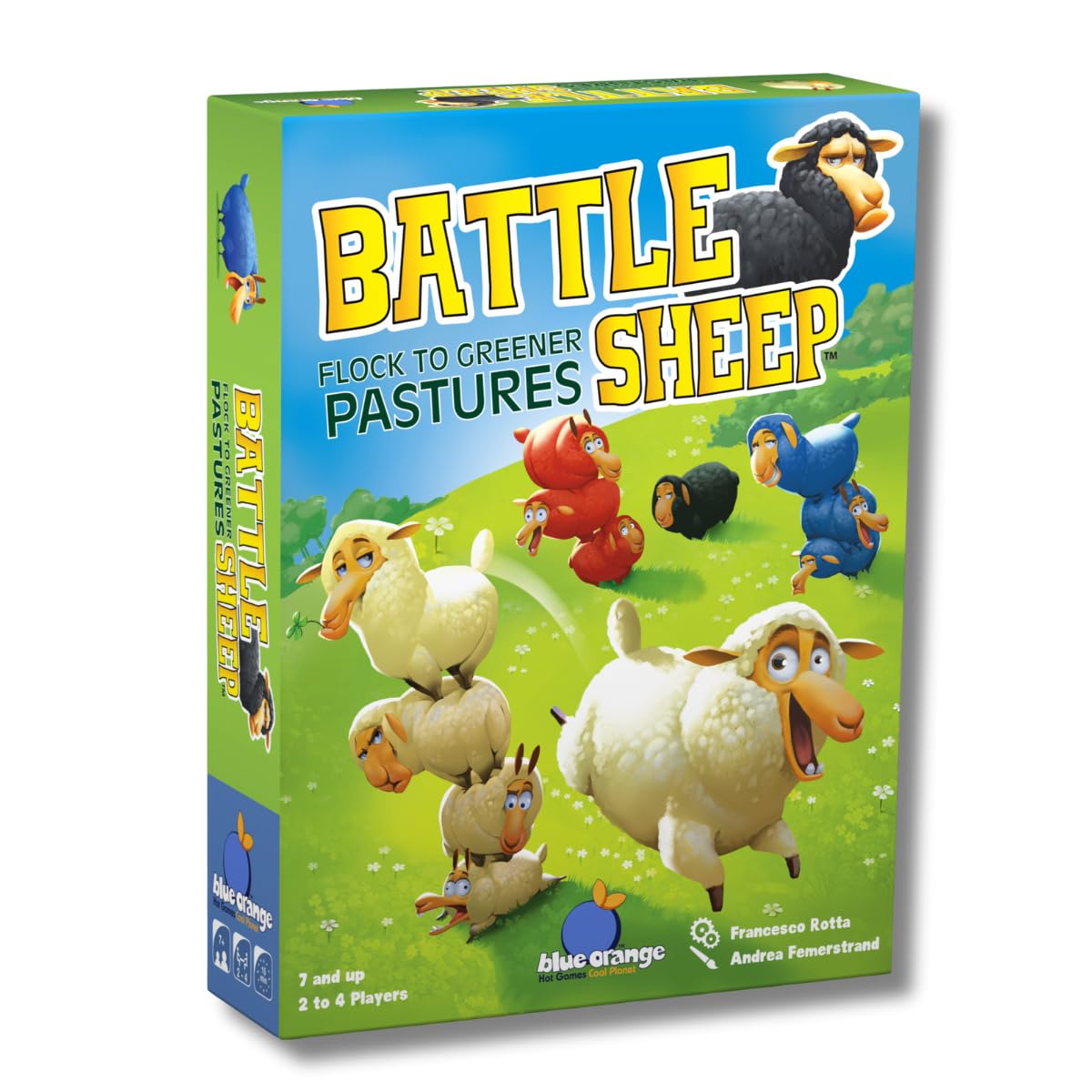
Battle Sheep is the rare game that perfectly matches this age. The rules fit on a single page — players take turns moving stacks of sheep tokens in a straight line, leaving at least one behind — but the strategy ramps up quickly as the modular board changes shape every game. Each pasture tile is identical in shape, but the way you arrange them before play creates a unique puzzle each time, which keeps a ten-year-old’s pattern-recognition engine running at full speed.
Games run about 20 minutes, which is ideal for a school night or a quick round before dinner. The components are genuinely impressive for the category: the sheep tokens are thick, heavy urea pieces that feel substantial in the hand, and the board pieces snap together without sliding. Because the board has no text, it’s language-independent, making it a strong option for playdates or travel.
What earns it the top spot on this list is how it scales across ages. Parents report that adults frequently lose to their 9- and 10-year-old children because the spatial reasoning required is something kids this age often excel at. It’s not a game where the adult has to hold back — and that’s the highest compliment you can give a family strategy game.
Why it’s great
- Exceptional replay value from the modular board setup
- High-quality urea tokens that will survive years of use
- Plays equally well with 2, 3, or 4 players
Good to know
- Tall sheep stacks can be toppled by smaller hands — careful stacking helps
- Abstract theme might not appeal to kids who prefer story-driven games
2. Spin Master Games, Tetris: The Board Game
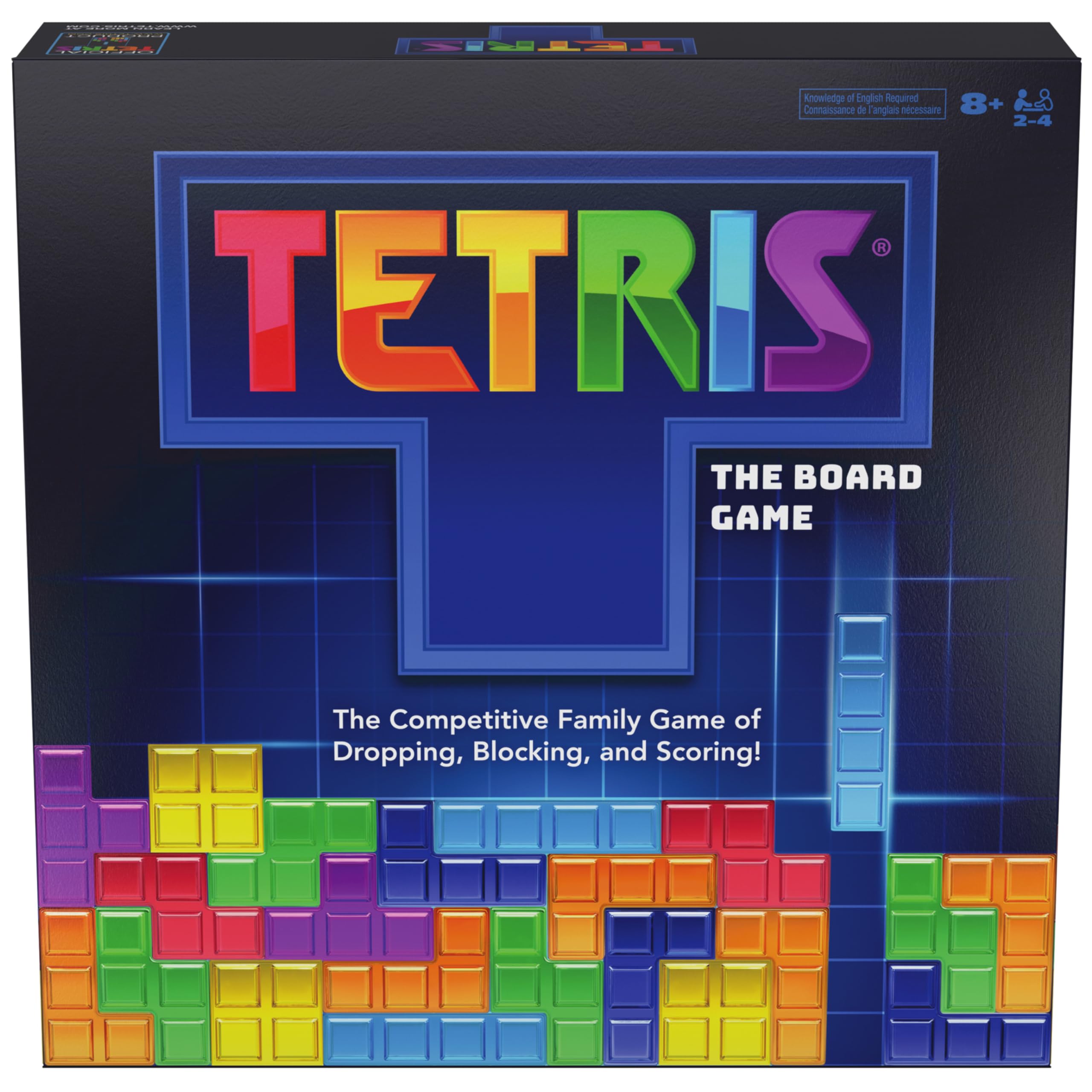
Translating a classic video game to the tabletop is fraught with risk, but Spin Master’s Tetris Board Game nails the physicality that makes the original so satisfying. Each player gets a grid and a supply of semi-translucent Tetrimino pieces in those iconic shapes — T, L, S, Z, O, I, and J — and the goal is to complete lines faster than your opponent. The twist is a competitive element: dropping a piece on a black Garbage Drop Icon in your own grid lets you add a blocking piece to an opponent’s grid, introducing a layer of take-that strategy that keeps everyone engaged.
For a ten-year-old who grew up on screens, this game provides a rare tactile version of a beloved digital puzzle. The pieces are colorful and the grids are clearly marked, making setup quick and orientation easy. The recommended age is 8 and up, and parent reviews consistently note that the 9-10 age range is where the strategic blocking and line-clearing really click. Estimated play time is about 20 minutes, which fits neatly into a single session.
One detail worth noting: some units shipped with slightly bent puzzle pieces, though this appears to be a packaging issue rather than a design flaw. The competitive mechanic is light enough that it doesn’t cause the kind of arguments more aggressive take-that games can trigger, making it a strong choice for siblings with a friendly rivalry.
Why it’s great
- Brilliant translation of digital gameplay to physical form
- Semi-translucent pieces feel authentic to the video game
- Competitive blocking adds depth without complexity
Good to know
- Some pieces may arrive with slight warping from packaging
- Requires enough table space for four players with separate grids
3. The World Game
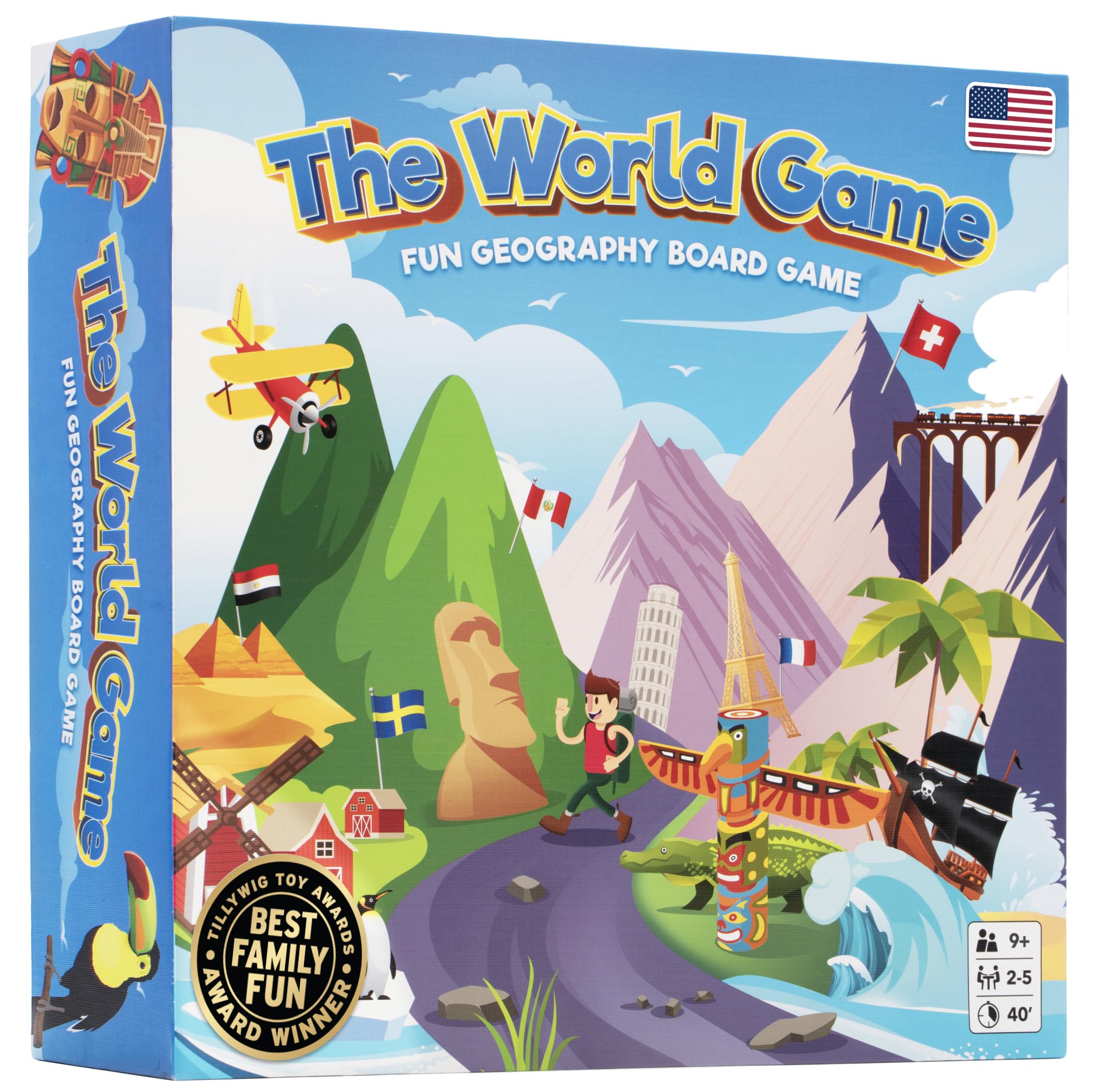
The World Game is the rare educational board game that doesn’t feel like homework. Each card contains over 1500 facts about a specific country — including flag, capital, population, area, GDP, and the Human Development Index — and players race to identify countries on the map, name capitals, and recognize flags. The deck covers all 194 UN-recognized countries, and the data is updated regularly, so it stays relevant as borders and statistics change.
For a ten-year-old, this game hits a sweet spot: the flag-recognition and capital-naming challenges are accessible enough to build confidence, while the deeper stats (GDP, area) provide a scaffold for advanced play with older siblings or adults. The game board is 11.6 inches square, which is compact enough for a coffee table or a classroom desk. The estimated play time is 40 minutes, making it one of the longer games on this list — but parents of 10-11 year olds report that the trivia format keeps attention locked in.
The cards can also be used as standalone flash cards or trivia decks, which extends the value beyond the standard game format. One minor note from classroom use: a 45-minute class period was sometimes too short to finish a full game, but the card format makes it easy to pause and resume. If you’re looking for a game that teaches geography through genuine competition rather than rote memorization, this is the clear pick.
Why it’s great
- Covers all 194 countries with regularly updated data
- Cards double as flash cards, increasing value per dollar
- Accessible for beginners with depth for advanced players
Good to know
- 40-minute playtime may need adjustment for shorter sessions
- Best with at least 3 players for balanced competition
4. Hasbro Gaming Electronic Battleship Reloaded

The Electronic Battleship Reloaded is a significant upgrade from the classic peg-board version. The folding command unit generates voice commands, sound effects, and flashing lights when you hit or miss, turning the standard grid-based guessing game into a sensory experience. Salvo Strike and other special attacks in Advanced Mode add a layer of tactical decision-making that the original lacked: you can fire multiple shots per turn or use special weapon pegs to force your opponent into harder choices.
For a ten-year-old, this game delivers two big wins. First, the electronics handle all the tracking and confirmation, so there’s no arguing over whether a shot was a hit or a miss — the game tells you. Second, the solo mode lets a child play against the computer, which is a valuable option for households where an adult isn’t always available for a two-player game. The recommended age is 8 and up, and both the Classic and Advanced modes let kids grow into the game rather than outgrow it.
The main trade-off is setup time. Because of the electronic components and the need to place ships carefully, getting a game ready takes longer than the classic version. Some parents also note that the sound effects, while immersive for kids, can be a bit loud in a quiet home. But for a game that brings the theater of naval combat to the living room, those are minor quibbles for the level of engagement it produces.
Why it’s great
- Electronic voice commands and lights create immersive gameplay
- Advanced Mode with special attacks adds strategic depth
- Solo mode against the computer extends solo play value
Good to know
- Setup time is longer than the original Battleship game
- Sound effects can be loud in quiet environments
5. Thames & Kosmos Targi

Targi is a full-fledged worker placement game designed specifically for two players — a rare and valuable configuration for the 10-year-old audience. The game board consists of 16 fixed border cards and 9 variable center cards. Players place three workers on the intersections of these cards to claim resources, tribe cards, and special actions. The intersection mechanic is unique: instead of claiming a card directly, you claim the intersection where two cards meet, giving you access to both.
For a ten-year-old who has outgrown simpler games, Targi provides genuine strategic depth. The 7.6 Board Game Geek rating and Kennerspiel des Jahres nomination aren’t just decoration — the game is tight, balanced, and offers meaningful decisions every turn. Tribe cards form a 3×4 scoring grid in your play area, and how you position them affects your endgame score. The solo variant adds even more value for independent play. The estimated play time is 60 minutes, which is the longest on this list, so it’s best for kids with longer attention spans or weekend afternoons.
The main consideration is the learning curve. The rulebook is clear, but the intersection mechanic and resource conversion system take a few rounds to internalize. Parent reviews note that many 10-year-olds grasp the core strategy after a single playthrough, though younger siblings on the lower end of the 8+ age range may need more guidance. Component quality is solid — thick cardboard tiles and wooden tokens — though some users wish the player tokens were more differentiated. This is a buy for the kid who is ready for grown-up strategy games, not for the casual player.
Why it’s great
- Unique intersection-based worker placement mechanic
- High strategic depth with minimal luck component
- Includes a solo variant for independent play
Good to know
- 60-minute playtime requires sustained attention
- Moderate learning curve for younger or less experienced players
FAQ
How long should a game last for a ten-year-old to stay engaged?
What is the difference between cooperative and competitive games for this age?
Final Thoughts: The Verdict
For most users, the games for ten year olds winner is the Battle Sheep because it delivers genuine strategic depth in a 20-minute package with components that will outlast the age group itself. If you want an educational game that kids actually beg to play, grab the The World Game. And for focused 1-on-1 strategy that rewards repeated plays, nothing beats the Thames & Kosmos Targi.