
Finding a game that holds a toddler’s attention for more than five minutes can feel like a small miracle. Between the short attention spans, the need for hands-on interaction, and the constant search for something that isn’t just another screen, the right plaything needs to hit a specific sweet spot—engaging enough to keep little fingers busy, simple enough to avoid frustration, and sturdy enough to survive a few tumbles.
I’m Mohammad Maruf — the founder and writer behind Drink4Good. I’ve spent years analyzing the early childhood toy market, focusing on how specific game mechanics, material safety, and design durability affect a toddler’s cognitive and motor development.
After sorting through dozens of options across different play styles, I’ve narrowed down the field to the most worthwhile picks. Here is my curated list of the best games for toddlers that balance learning value with real staying power.
How To Choose The Best Games For Toddlers
The toddler years are a unique window where play is the primary vehicle for learning. A great game at this stage does more than occupy time—it builds foundational skills like hand-eye coordination, patience, and early problem-solving. The trick is matching the game’s complexity to your child’s current developmental stage without making it too easy or too frustrating.
Match the Game to Motor Skill Level
For a 1-year-old, simple cause-and-effect toys with large buttons or switches work best because their grip is still developing. By age 2, children can handle pincer-grasp actions like picking up small pieces with tweezers or placing puzzle pieces. By age 3, turn-taking mechanics and simple strategic thinking become accessible. Picking a game that aligns with these motor milestones makes the difference between joyful play and a tossed-aside toy.
Prioritize Material Safety and Durability
Toddlers explore with their mouths, so non-toxic materials are non-negotiable. Look for solid wood with water-based paints or BPA-free plastics with smooth, rounded edges. The game should also survive drops, throws, and the occasional stomp without splintering or cracking. A well-constructed wooden game will outlast a cardboard version by years, making it the better long-term investment for repetitive play.
Look for Open-Ended or Multi-Way Play
The best toddler games offer more than one way to play. A memory matching set can be used for simple picture identification before graduated matching games. A busy board with switches and lights works for both quiet solo exploration and guided parent-child learning. Games that grow with the child—offering easier rules for beginners and more challenging variations later—deliver the best value and keep boredom at bay.
Quick Comparison
On smaller screens, swipe sideways to see the full table.
| Model | Category | Best For | Key Spec | Amazon |
|---|---|---|---|---|
| Preschool Learning Activities Workbook | Reusable Workbook | Pre-writing & number practice | 62 reusable pages, dry-erase | Amazon |
| Hoppy Floppy’s Happy Hunt | Board Game | Color matching & fine motor | Squeezer tool, 16 carrots | Amazon |
| Montessori Wooden Matching Game | Memory Game | Verbal & memory skills | 36 solid wood cards (2.2 in) | Amazon |
| Grarain Busy Board | Sensory Board | Travel-friendly quiet play | 23 LED lights, wooden frame | Amazon |
| TOY Life Dinosaur Puzzles | Wooden Puzzle | Problem solving & shape matching | 7 puzzles, 6-7 pieces each | Amazon |
In‑Depth Reviews
1. Preschool Learning Activities Educational Workbook
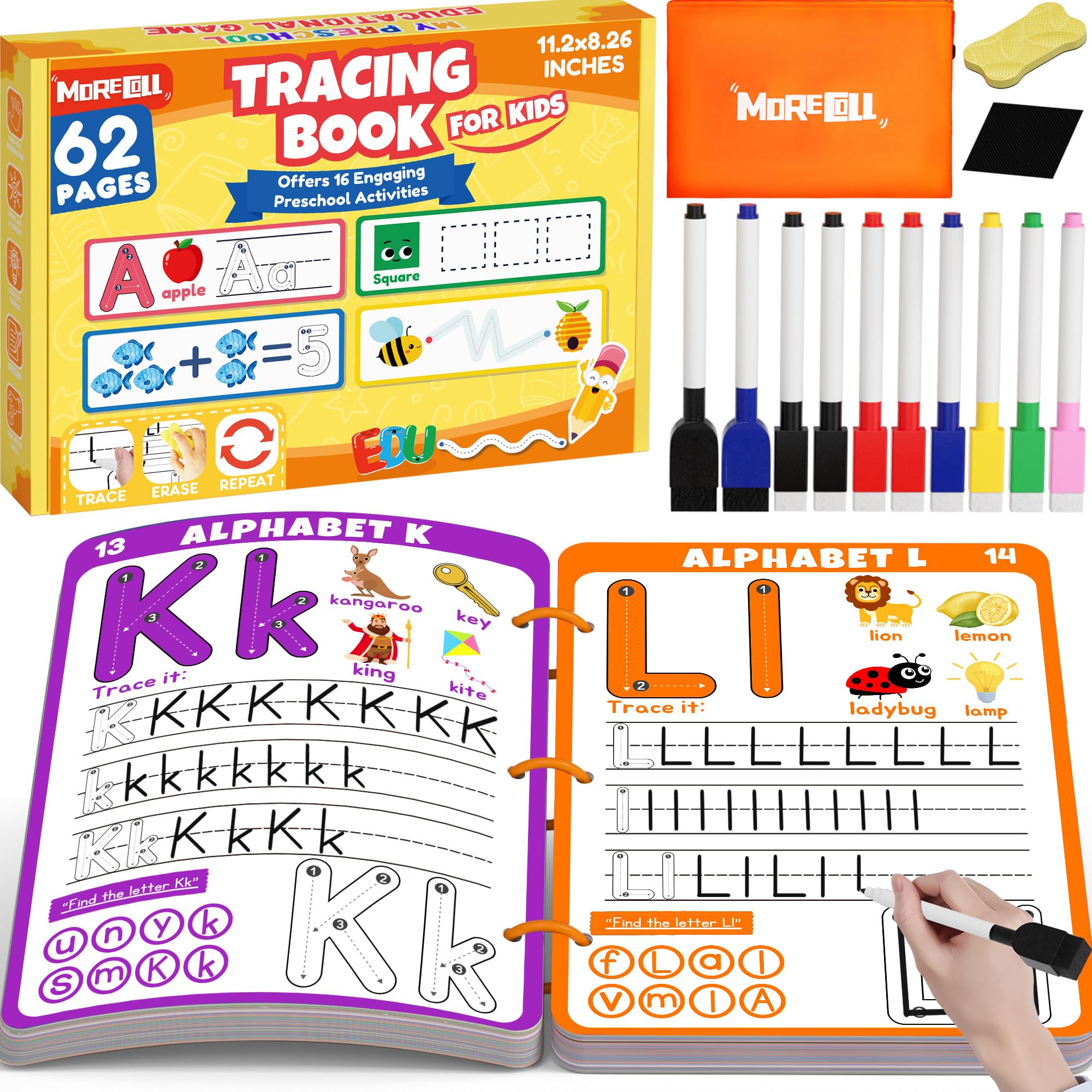
This is the rare all-in-one that actually earns the label. The set comes with 62 pages of traceable letters, numbers, shape tracing, and even simple addition—all bound with removable rings so you can pull out a few pages for on-the-go learning. The waterproof, tear-resistant pages wipe clean instantly, which means a 4-year-old can practice writing their name ten times in a row without wearing out the material.
What sets this workbook apart from a standard pad is the sheer breadth of content. It covers pen control, body parts, emotions, and weekly planners alongside the expected ABCs and 123s. The included storage bag and colorful dry-erase markers make it feel more like a special activity kit than a chore. Parents of children with autism and language delays have noted the structured layout helps build focus without overstimulation.
The weight of the book at 1.68 pounds gives it a substantial feel, and the manufacturer-recommended age range of 3-7 years means this will stick around for multiple preschool years. For a screen-free option that genuinely teaches writing mechanics, this workbook delivers more per page than any single-purpose toy.
Why it’s great
- 62 washable pages cover letters, numbers, shapes, and addition
- Storage bag and 10 markers keep everything organized
- Rounded corners and waterproof material survive repetitive practice
Good to know
- Requires adult supervision to clean pages completely
- Storage bag is functional but not heavy-duty
2. Educational Insights Hoppy Floppy’s Happy Hunt

This is the toddler board game that bridges the gap between simple play and real turn-taking structure. The premise is straightforward: spin the spinner, then use the Hoppy Floppy squeezer to pick up one of the 16 carrots in the matching color and drop it into your basket. The first to collect all four colors wins. The squeezer tool is the star here—it requires a pincer grip that directly strengthens the same small muscles needed for holding a pencil.
The egg-shaped game board doubles as the storage box, so setup and cleanup take under 30 seconds. The spinner includes a mix of straightforward color spins and penalty spaces like “steal a carrot” or “lose all your carrots,” which for 3- and 4-year-olds introduces the concept of winning and losing gracefully. Multiple speech therapists have reported using this as a reward tool for kids up to age 6 because the motor challenge stays relevant.
At just 12.32 ounces, it is compact enough to toss into a diaper bag. Some families note that younger 2-year-olds may struggle with the frustration of the steal mechanic, but the game is easily modified by removing those spinner sections. For a first true board game experience, this hits every developmental note without feeling like homework.
Why it’s great
- Squeezer tool builds pincer grip essential for writing
- Game board doubles as storage box for quick cleanup
- Turn-taking mechanics teach social skills naturally
Good to know
- Basket handles may snap under rough play (can be glued)
- Younger 2-year-olds may find stealing mechanic frustrating
3. Cottify Montessori-Inspired Wooden Matching Game

If you have ever watched a cardboard memory game get crumpled after two plays, this wooden alternative is your answer. Each card is a 2.2-inch circle cut from solid basswood with a silk-painted surface, making them tear-resistant, water-resistant, and thick enough to survive being chewed on or thrown. The set includes 18 pairs of colorful animal illustrations—lion, elephant, monkey—printed on a background color that subtly helps younger kids remember matches by hue.
The Montessori influence is evident in the design philosophy: the pieces are large enough for small hands to manipulate independently, and the game offers graduated complexity. A 2-year-old can start by simply naming the animals on the cards, while a 4-year-old can play the full memory matching challenge. The drawstring pouch keeps everything contained, which matters when you need to pack a game for a restaurant or a playdate.
The only minor quibble from some parents is that the back of the cards shows three small animal heads, which can confuse very young players who expect a uniform back pattern. But for the durability alone—especially compared to paper-based memory games—this set will outlast several birthday parties and countless living room floor sessions. Gameplay takes about 10 minutes per round, perfect for a short attention span.
Why it’s great
- Solid wood construction survives drops, spills, and chewing
- Color-coded backgrounds help toddlers learn matching
- Compact pouch makes it a true grab-and-go game
Good to know
- Card back pattern can confuse younger toddlers
- Limited to 18 pairs—may feel small for older kids
4. Grarain Busy Board for Toddlers
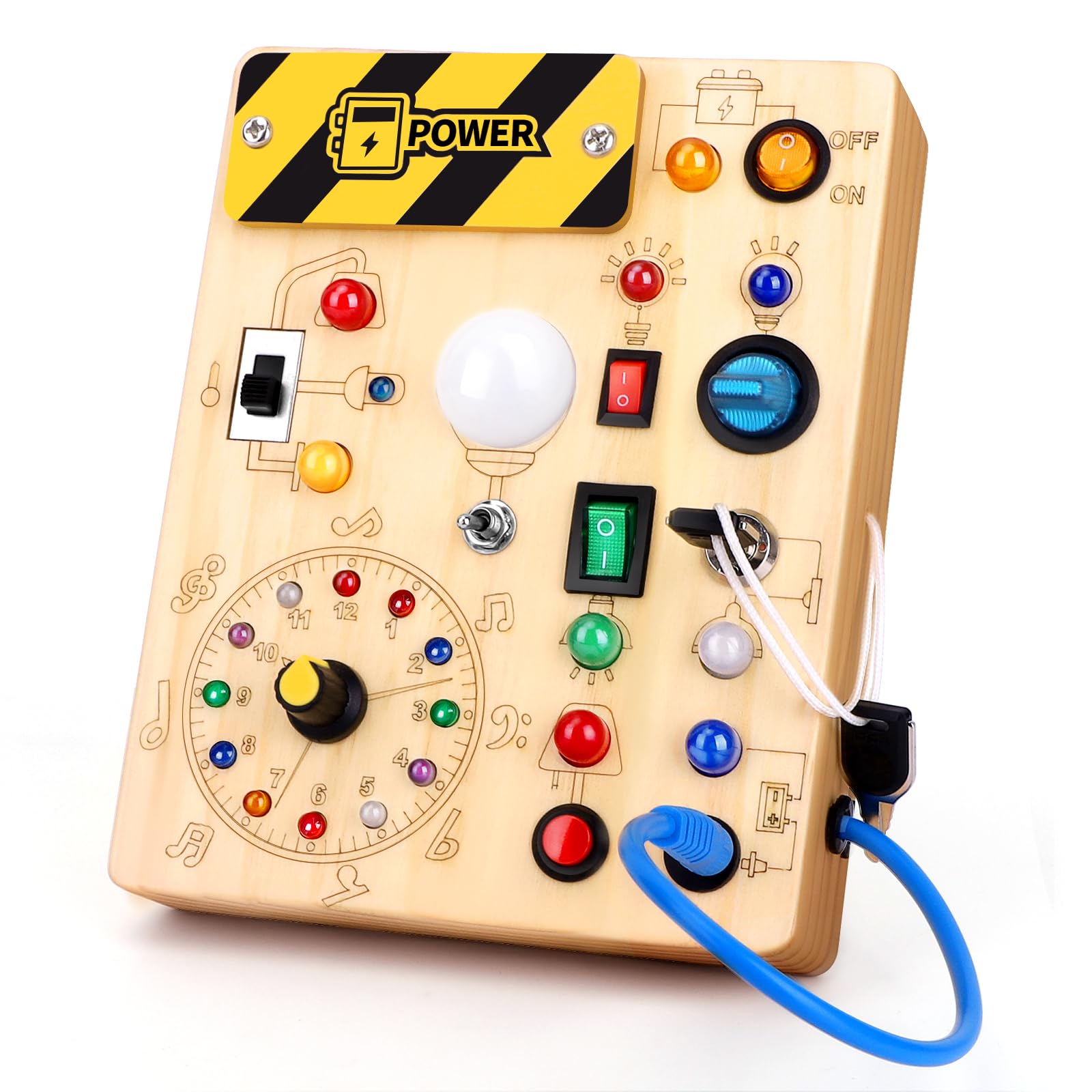
When you need fifteen minutes of quiet in a car seat or a restaurant booth, this busy board delivers. Measuring just 6.7 x 5.3 inches—roughly the size of a small planner—it packs multiple toggle switches, push buttons, and 23 LED lights into a wooden frame that fits in a diaper bag side pocket. The front features a clock design with a visible LED circuit diagram, while the back has an alpha-numeric chart for older toddlers.
What makes this board stand out from cheaper plastic alternatives is the build quality. The wood is drop-resistant with smooth, rounded edges, and the battery compartment uses a secure screw cover that toddlers cannot pry open. The LEDs are intentionally low-brightness to avoid eye strain during extended play. Children as young as 12 months can flip switches and see immediate light feedback, teaching cause and effect in the most direct way possible.
The board requires 2 AAA batteries (not included) and has demonstrated impressive battery life even when left on for long stretches. While the wire plug on the toy key does look a bit fragile, multiple reviewers report the board surviving drops, throws, and six months of daily use without functional failure. For an autism-friendly sensory tool that doubles as a travel savior, this is a compact powerhouse.
Why it’s great
- Compact size fits any bag for on-the-go distraction
- Sturdy wood and secure battery cover ensure safety
- Immediate LED feedback teaches cause and effect
Good to know
- Requires 2 AAA batteries not included
- Wire plug on toy key may feel less durable than frame
5. TOY Life Dinosaur Puzzles for Toddlers
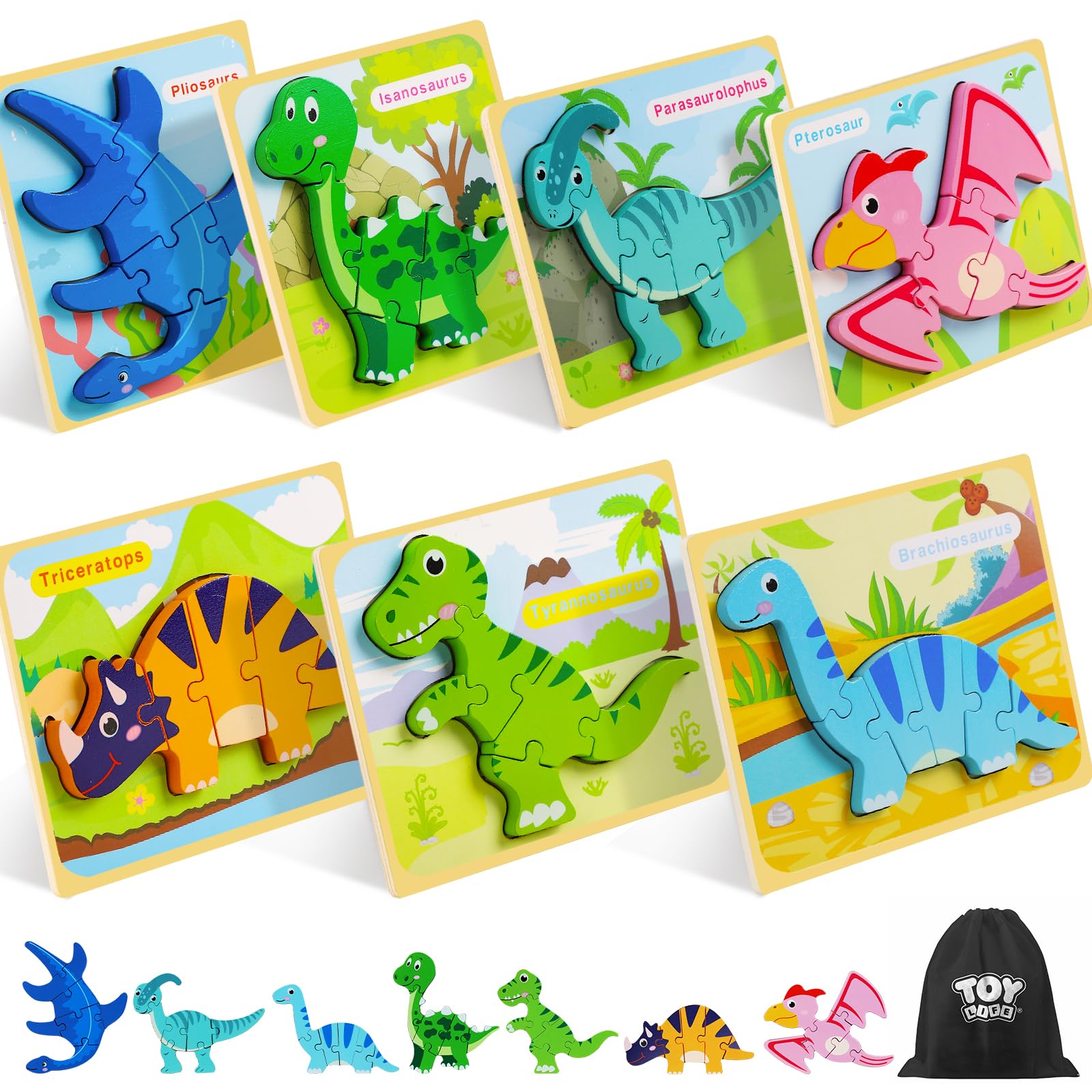
Puzzles are a rite of passage for toddlers, but many sets jump too quickly from chunky peg puzzles to 24-piece floor puzzles with tiny pieces. This set hits the perfect intermediate sweet spot: seven individual wooden puzzles, each depicting a different dinosaur species with 6 to 7 pieces per puzzle. The pieces are large enough for a 2-year-old grip but include actual interlocking notches, requiring more deliberate placement than simple slide-in boards.
Each puzzle board has a printed outline of the dinosaur on the base, giving young children a visual guide for where each piece belongs. This reduces frustration while still teaching spatial reasoning and problem-solving. The non-toxic watercolors and smooth sanded wood mean there is no risk from splinters or chemical paints if pieces end up in a mouth. The 7-puzzle format also works well for group play—multiple kids can work on different dinosaurs simultaneously.
The biggest advantage here is the graduated difficulty within the same box. Some dinosaurs use simpler shapes while others require more careful orientation, so a child can progress through the set as their skills improve. At 0.4 inches thick per board, these puzzles store easily back in the original box. For a first real puzzle experience that builds confidence rather than frustration, this dino set is a crowd-pleaser.
Why it’s great
- Interlocking pieces with outline guide reduce frustration
- Non-toxic watercolors and smooth wood ensure safety
- Multiple puzzles allow for group or solo progression
Good to know
- May be too easy for advanced 3-year-olds
- Pieces can be mixed up between puzzles if not stored carefully
FAQ
What is the best type of game for a 2-year-old who won’t sit still?
How many pieces should a toddler puzzle have?
Final Thoughts: The Verdict
For most users, the best games for toddlers winner is the Preschool Learning Activities Educational Workbook because it combines 62 reusable pages of pre-writing practice with a built-in organizational system that lasts through years of learning. If you want a true turn-taking board game that builds fine motor skills, grab the Hoppy Floppy’s Happy Hunt. And for travel-friendly quiet play with sensory feedback, nothing beats the Grarain Busy Board.