
The difference between winning and losing often comes down to the milliseconds your display takes to process a command. A standard home theater projector, built for cinematic immersion, smears those milliseconds into sluggish motion blur that throws off your aim and breaks your rhythm. A dedicated gaming beamer solves this by pairing high refresh rates with ultra-low input lag, turning your living room wall into a competitive battlefield without sacrificing image quality.
I’m Mohammad Maruf — the founder and writer behind Drink4Good. I’ve spent months analyzing throw ratios, lumen outputs, and refresh rate specifications across the entire projector landscape to identify the models that deliver genuine gaming performance without compromise.
Whether you need a short-throw model for a cramped apartment or a laser-powered unit capable of 4K at 120Hz, this guide to the best gaming beamer breaks down the 11 most compelling options on the market today based on real-world specs and user feedback.
How To Choose The Best Gaming Beamer
Choosing a gaming beamer requires balancing raw speed with visual fidelity. The wrong decision leaves you with a dim, blurry image that ruins immersion, or a response time so slow you can’t compete. Focus on these three pillars to make the right call.
Input Lag and Refresh Rate
Input lag is the delay between pressing a button and seeing the action on screen. For competitive shooters or fighting games, anything above 20ms feels sluggish. Look for a projector with a dedicated gaming mode that reduces processing overhead. A 120Hz or 240Hz refresh rate ensures motion stays smooth, eliminating the judder that occurs at standard 60Hz when rendering fast camera pans.
Light Source and Brightness
Lamp-based projectors degrade over time and generate significant heat, which can be distracting during long gaming sessions. Laser projectors offer instant-on, consistent brightness for 20,000 hours or more, and run cooler. For brightness, aim for at least 2,500 ANSI or ISO lumens if you plan to play with ambient light. Higher lumens also help preserve detail in HDR gaming.
Resolution and Panel Technology
Native 4K delivers the sharpest image but comes at a premium. Many projectors use pixel-shifting to simulate 4K from a 1080p or 1440p DLP chip—this is effective for most players. DLP projectors typically have lower input lag than 3LCD models and are the dominant choice for dedicated gaming beamers, but some users notice a “rainbow effect” on fast-moving white objects. 3LCD eliminates rainbowing entirely and offers better color brightness, though often at slightly higher latency.
Quick Comparison
On smaller screens, swipe sideways to see the full table.
| Model | Category | Best For | Key Spec | Amazon |
|---|---|---|---|---|
| ViewSonic PX701-4K | DLP | Competitive 240Hz gaming | 4.2ms input lag at 1080p | Amazon |
| Valerion VisionMaster Pro2 | Triple Laser | Pro-level 4ms & 240Hz | 15,000:1 native contrast | Amazon |
| Hisense C2 Ultra | Triple Laser | Xbox & bright-room gaming | 3,000 ANSI lumens | Amazon |
| Nebula X1 by Anker | Triple Laser | Outdoor/indoor versatility | 3,500 ANSI lumens | Amazon |
| AWOL VISION LTV-2500 | UST Laser | Ultra-short throw gaming | Built-in center channel | Amazon |
| Epson LS11000 | 3LCD Laser | High-end cinematic gaming | 1,200,000:1 dynamic contrast | Amazon |
| Hisense Laser Mini C2 | Triple Laser | Portable gimbal gaming | 135° vertical tilt | Amazon |
| NexiGo TriVision Ultra | Tri-LED-Laser | 4K@120Hz input | 4.2ms latency & Dolby Vision | Amazon |
| Optoma HD28HDR | DLP | Budget 1080p/120Hz gaming | 16ms response time (gaming mode) | Amazon |
| BenQ TH671ST | DLP Short Throw | Small-room 100” screen | 5ft throw for 100” | Amazon |
| Epson Pro EX11000 | 3LCD Laser | Bright-room casual play | 4,600 lumens | Amazon |
In‑Depth Reviews
1. ViewSonic PX701-4K

The ViewSonic PX701-4K earns the top spot because it nails the two numbers that matter most to a competitive gamer: 4.2ms input lag and a 240Hz refresh rate. At 3,200 ANSI lumens, it keeps the image punchy even in a living room with some ambient light, and its native 4K pixel-shifted resolution looks crisp on screens up to 150 inches. The 1.1x optical zoom and auto vertical keystone make setup forgiving in tricky rooms.
In practice, this beamer excels at fast-twitch shooters where every frame counts. The SuperColor engine produces vivid greens and blues, though HDR performance is respectable rather than stunning—it handles HDR10 and HLG but lacks the dynamic tone mapping found on pricier laser models. The built-in speaker is weak, so plan on using an external audio system or a gaming headset.
Several users reported a whirring sound in SuperEco mode at 240Hz, and the remote feels dated. But for a player who wants 4K resolution and esports-level speed without jumping into the four-figure premium tier, this is the most balanced option available. The 3-year warranty adds peace of mind for a long-term investment.
Why it’s great
- Ultra-low 4.2ms input lag at 240Hz
- Bright 3,200 lumens for daytime play
- Sharp 4K pixel-shifted image
Good to know
- Fan can produce audible whir in certain modes
- Built-in speaker lacks bass and volume
- Pixel-shifting can cause slight fuzziness on desktop text
2. Valerion VisionMaster Pro2

The Valerion VisionMaster Pro2 targets the discerning gamer who refuses to compromise on contrast. Its 15,000:1 native contrast ratio—enhanced by EBL (Enhanced Black Level) technology—delivers ink-black shadows that make HDR horror games genuinely immersive. With a triple laser light source rated for long life, it outputs 3,000 ISO lumens and supports a 240Hz refresh rate at a staggering 4ms input lag.
The OpticFlex Lens System features a 0.9-1.5x optical zoom that preserves full 4K resolution without digital artifacts, allowing flexible placement in both small and large rooms. The built-in Google TV interface and support for AirPlay 2, Chromecast, and Miracast mean you can jump from streaming to gaming without switching inputs. Gamers will appreciate the dedicated FPS, RPG, and RCG picture modes, plus an on-screen crosshair overlay and night vision boost.
Users consistently rate the image quality as near-4K television level, with natural color reproduction that avoids the oversaturation common in cheaper beamers. The portable form factor includes a carrying bag, though it is not truly compact. Some players noted a subtle rainbow effect on high-contrast edges, a common DLP trait, but the addition of Filmmaker Mode and IMAX Enhanced certification makes this an excellent hybrid for both gaming and cinema nights.
Why it’s great
- Industry-leading 15,000:1 native contrast
- Ultra-smooth 4ms input lag at 240Hz
- Optical zoom with zero brightness loss
Good to know
- Premium price tag limits accessibility
- Rainbow effect visible to sensitive viewers
- Not truly compact despite portability claims
3. Hisense C2 Ultra

The Hisense C2 Ultra is specifically “Designed for Xbox,” meaning it automatically detects console input and engages a low-latency mode optimized for Microsoft’s ecosystem. Its triple laser light source pushes 3,000 ANSI lumens, making it one of the brightest portable projectors available—capable of maintaining a vivid picture even with blinds partially open. The 1.67x optical zoom is a standout feature, allowing flexible placement without sacrificing a single pixel of 4K resolution.
Color accuracy is superb thanks to 110% BT.2020 coverage and a claimed Delta E of 0.9, which means skin tones and environmental textures look natural. Dolby Vision and IMAX Enhanced certifications ensure that supported games and movies display the full dynamic range the creators intended. The 240Hz refresh rate works at 1080p, while 4K runs at 120Hz—more than enough for the vast majority of modern titles.
The JBL-tuned 30W speaker system produces room-filling sound with noticeable bass, reducing the immediate need for an external audio setup. The integrated gimbal stand offers 360° horizontal and 135° vertical rotation, so you can project onto a wall or ceiling without a tripod. Some users found the black levels a touch weak during midday use, but for a dedicated gaming session in a controlled-light environment, this beamer delivers a near-reference experience.
Why it’s great
- Xbox-optimized auto low-latency mode
- Excellent 3000-lumen brightness with optical zoom
- Versatile gimbal design for ceiling or wall projection
Good to know
- Black levels suffer in bright rooms
- Requires more distance for a 100-inch screen than some competitors
- Premium price point
4. Nebula X1 by Anker

The Anker Nebula X1 is built for gamers who want to take the action outside. With 3,500 ANSI lumens—the highest raw brightness in this roundup—it delivers a watchable image even in broad daylight, and it becomes truly stunning at dusk. The triple laser engine is paired with a 6-blade iris that achieves a native 5,000:1 contrast ratio, enhanced to 56,000:1 dynamically for deep, cinematic blacks during HDR gaming.
The auto-alignment system is among the most frictionless on the market. It scans the projection surface and adjusts focus, keystone, and screen size in a single click, then remembers those settings for future sessions. The built-in Google TV interface eliminates the need for a separate streaming stick, and the TÜV Rheinland eye-care certification means you can marathon sessions without eye fatigue. The custom 14-element all-glass lens produces edge-to-edge sharpness with zero color fringing on a 300-inch screen.
Potential buyers should note that the X1 caps its input at 60Hz, which is a disappointment for competitive players seeking 120Hz or 240Hz. A firmware update adds a 5-level dynamic contrast engine for deeper blacks, but the lack of high-refresh gaming makes this a better fit for cinematic single-player adventures and outdoor movie nights than for esports. The rainbow effect is present but less pronounced than on many DLP projectors thanks to the triple laser architecture.
Why it’s great
- Extremely bright 3,500 lumens for outdoor and lit-room use
- Outstanding dynamic contrast at 56,000:1
- One-click auto alignment with spatial memory
Good to know
- Limited to 60Hz input, not for competitive esports
- Rainbow effect still visible to sensitive users
- Quality control issues reported on early units
5. AWOL VISION LTV-2500

The AWOL VISION LTV-2500 is an ultra-short throw (UST) projector that sits inches from the wall, making it ideal for gamers who want a clean, shadow-free setup without ceiling mounts. Its triple laser light source—not the older ALPD color wheel technology—eliminates rainbow effects entirely and produces a whisper-quiet 26dB operation. It covers 107% of BT.2020 color gamut, delivering over a billion colors with Dolby Vision and HDR10+ support.
The unique selling point here is the integrated center channel speaker. The projector itself functions as a dedicated dialogue speaker, mapping audio directly to the center of the screen. When paired with an ALR screen and the optional ThunderBeat surround system, it creates a 5.2.2 Dolby Atmos setup without a separate AV receiver. For gamers who value spatial audio in titles like Call of Duty or Hellblade, this is a compelling all-in-one solution.
Active 3D support is a rare bonus in the 4K projector space, and the LTV-2500 handles it well with compatible Blu-ray sources. Brightness is rated at 1,700 ISO lumens, which is sufficient for a dark or controlled-light room but will struggle in direct sunlight. A small number of users reported dead pixels after extended use, though the manufacturer’s replacement service was generally responsive. This is a specialized tool for the UST enthusiast who wants cinema-grade gaming without a traditional projector footprint.
Why it’s great
- Ultra-short throw eliminates placement constraints
- Built-in center channel speaker for immersive audio
- Zero rainbow effect from pure triple laser
Good to know
- 1,700 lumens is dim for bright rooms
- Some units developed dead pixels over time
- Complex menu system for 3D adjustments
6. Epson Home Cinema LS11000

The Epson LS11000 is the 3LCD champion in a field dominated by DLP. Its three-chip architecture displays 100% of the RGB color signal continuously, meaning zero rainbow effect and superior color brightness compared to single-chip DLP models. The laser array light source pushes 2,500 lumens and achieves a dynamic contrast ratio of over 1,200,000:1, resulting in blacks that genuinely rival OLED televisions on a 150-inch screen.
Gamers will appreciate the 120Hz refresh rate support and the impressively low input lag for a 3LCD projector—about 20ms in fast mode, which is competitive with many mid-range DLP units. The motorized lens system with 4-way lens shift, focus, and zoom is a joy for permanent installations, allowing perfect image alignment without digital keystone correction. The Precision Shift Glass Plate technology delivers a sharp 4K PRO-UHD image that avoids the softness of budget pixel-shifting implementations.
This beamer is best suited for the dedicated home theater gamer who prioritizes color fidelity and contrast over the absolute lowest input lag. It does not support 3D, and the 2,500-lumen brightness is only adequate for a light-controlled room. Some users experienced a “snow” effect on startup after two years, so an extended warranty is advisable. For cinematic single-player titles like Red Dead Redemption or The Last of Us, the image quality is unparalleled in this list.
Why it’s great
- Zero rainbow effect with 3LCD technology
- Superb 1,200,000:1 dynamic contrast
- Motorized 4-way lens shift for perfect placement
Good to know
- Input lag around 20ms, not for esports
- Brightness limited to 2,500 lumens
- No 3D support
7. Hisense Laser Mini C2

The Hisense C2 brings triple laser quality to a portable form factor with an integrated gimbal mount that rotates 360° horizontally and tilts 135° vertically. This means you can project onto a wall from the coffee table, onto a ceiling from the floor, or even onto the side of a tent while camping without needing a separate stand. The 2,000 ANSI lumens and 110% BT.2020 color coverage deliver vibrant HDR images with Dolby Vision support.
For gaming, the C2 supports a 240Hz refresh rate at 1080p and a 120Hz input at 4K, with a measured lag of around 12ms in game mode. The built-in JBL speaker system with DTS Virtual:X produces clear dialogue and surprising bass for its size, making it a self-contained gaming station. The automatic magic adjustment system uses TOF sensors and a gyroscope to align the image within seconds, even on irregular surfaces.
Some users noted that black levels weaken slightly during the day, a common limitation of portable laser projectors in this brightness class. The native contrast sits at 1,700:1, which is acceptable but not in the same league as the Valerion Pro2 or Epson LS11000. It also requires more throw distance for a 100-inch screen than some competitors. Still, for a gamer who moves between rooms or takes their setup on trips, the C2’s flexibility is unmatched.
Why it’s great
- Innovative gimbal design for ceiling/wall projection
- 240Hz refresh rate at 1080p
- Vivid triple laser colors with Dolby Vision
Good to know
- Black levels suffer in ambient light
- Requires significant throw distance for large screens
- Not as bright as dedicated home theater models
8. NexiGo TriVision Ultra

The NexiGo TriVision Ultra uses a distinctive hybrid Tri-LED-Laser light source that blends tri-color LED and tri-color laser engines. This approach eliminates laser speckle entirely—a common complaint with pure laser projectors—while achieving 110% BT.2020 color gamut coverage. It is one of the few projectors that accepts a true 4K@120Hz input via HDMI 2.1, with input lag as low as 4.2ms.
Dolby Vision, HDR10+, and HLG support ensures the HDR presentation is fully featured, while the Active 3D mode adds another layer of immersion for compatible games. The hidden Fire TV Stick compartment is a clever design touch, keeping the setup tidy. The 30W speaker system with Dolby Audio and DTS Virtual:X delivers a convincing soundstage without external speakers.
However, reliability is a significant concern. Multiple user reports describe units failing within hours or days, and the customer support experience has been described as unhelpful. The autofocus and auto keystone system can become unbalanced after moving the unit, requiring manual recalibration. For the price point, the inconsistent quality control makes this a risky choice compared to more established brands like Hisense or Epson. If you do get a functional unit, the picture is excellent, but the gamble may not be worth it for a primary gaming rig.
Why it’s great
- Zero laser speckle thanks to hybrid light source
- True 4K@120Hz input with ultra-low lag
- Hidden Fire TV storage keeps setup clean
Good to know
- Significant quality control and reliability issues
- Unhelpful customer support reported
- Auto-correction becomes unbalanced when moved
9. Optoma HD28HDR

The Optoma HD28HDR is a pure 1080p DLP projector that focuses on raw speed and brightness. With 3,600 lumens, it is among the brightest 1080p projectors available, and its Enhanced Gaming Mode reduces input lag to a claimed 16ms at a 120Hz refresh rate. The Dynamic Black technology smooths lamp output to improve contrast in dark scenes, making it a solid choice for both competitive shooters and dark horror games.
It accepts a 4K input and downscales it to 1080p, which means you can connect a PS5 or Xbox Series X and still get HDR10 support. The 6-segment color wheel (RYGCWB) produces accurate Rec.709 colors that look natural out of the box. The 50,000:1 contrast ratio is decent for a DLP in this class, and the lamp life of up to 15,000 hours in Eco mode means years of regular use before a replacement.
The lack of a dust filter is a notable omission—several users reported overheating issues caused by dust buildup on the DLP chip, requiring periodic disassembly for cleaning. Fan noise is audible at 26dB, which is noticeable in quiet scenes. The digital keystone and zoom adjustments introduce slight image distortion, so physical placement is preferable. For a budget-conscious gamer who wants high brightness and responsive gameplay at 1080p, the HD28HDR delivers proven performance.
Why it’s great
- Very bright 3,600 lumens for daylight gaming
- Low 16ms input lag at 120Hz
- Long lamp life reduces long-term cost
Good to know
- No dust filter, prone to overheating from dust
- Fan noise is audible during quiet gameplay
- Digital zoom/shift causes slight distortion
10. BenQ TH671ST

The BenQ TH671ST solves a specific spatial problem: it can project a 100-inch image from just 5 feet away. This short-throw capability makes it perfect for gamers in small apartments, dorm rooms, or any space where a standard throw projector would be blocked by furniture or people. Its native 1080p resolution and 3,000 lumens deliver a sharp, bright image even in rooms with some ambient light.
BenQ built this projector with console gamers in mind, optimizing the low input lag to match the output of Xbox One X and PS4 Pro. The 92% Rec.709 color accuracy ensures that games look as the developers intended, without the oversaturated or washed-out tones common in cheaper gaming projectors. The built-in speaker is sufficient for a small room, and the auto vertical keystone simplifies setup on uneven surfaces.
After several years on the market, the TH671ST has proven its durability—many users report flawless operation after four years of regular use. The image quality remains competitive with newer models in its class. The main compromises are the 1080p resolution (no 4K input support) and the absence of HDR support, which means you lose the expanded dynamic range of modern titles. For the dedicated console gamer in a compact space, this is a proven, reliable workhorse.
Why it’s great
- Projects 100” from just 5 feet away
- Low input lag optimized for consoles
- Excellent long-term reliability and color accuracy
Good to know
- 1080p resolution only, no 4K support
- No HDR support
- Onboard audio is weak for larger rooms
11. Epson Pro EX11000
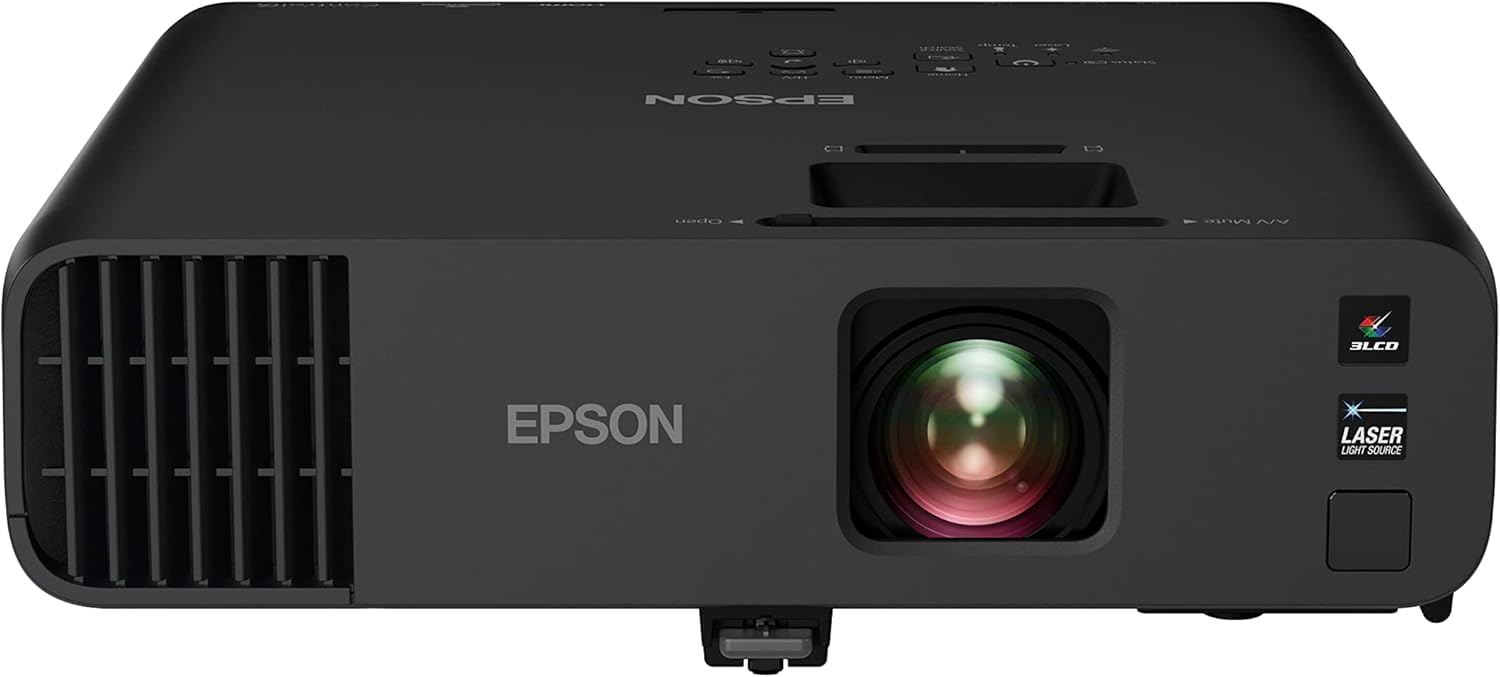
The Epson Pro EX11000 is a business-class laser projector that happens to be excellent for casual gaming in bright environments. Its 4,600 lumens output—the highest on this list—allows it to maintain a clear, vivid image in a fully lit room, making it ideal for living room setups where you cannot control the lighting. The 3LCD technology means zero rainbow effect and 100% color brightness, which is rare at this lumen count.
The laser light source is rated for 20,000 hours of maintenance-free operation, so there are no bulbs to replace. Connectivity is versatile with Miracast screen mirroring, two HDMI ports, and a USB port for powering a streaming stick. The built-in 16W speaker is loud enough for a medium-sized room, though dedicated gamers will want an external sound system for better spatial audio.
The critical limitation is the 60Hz refresh rate. There is no high-refresh mode, and input lag is not optimized for gaming—it feels sluggish compared to the DLP competition. Blacks are flat, and the lack of HDR support means you lose dynamic range in compatible titles. This beamer is not for competitive players. It is for the gamer who prioritizes screen size and brightness above all else, playing slower-paced titles like strategy games or RPGs in a bright communal space.
Why it’s great
- Extremely bright 4,600 lumens for any lighting condition
- Zero rainbow effect with 3LCD technology
- Long-life laser, no lamp replacements needed
Good to know
- 60Hz only, not suitable for competitive gaming
- No HDR support
- Input lag is higher than dedicated gaming beamers
FAQ
Is a higher lumen count always better for gaming?
What is the rainbow effect and should I worry about it?
Can I use a gaming beamer as a daily computer monitor?
Does HDR make a real difference in gaming projectors?
Final Thoughts: The Verdict
For most users, the best gaming beamer winner is the ViewSonic PX701-4K because it delivers a 4K image, a 240Hz refresh rate, and sub-5ms input lag at a price point that doesn’t demand a second mortgage. If you want the absolute best contrast and color for cinematic single-player games, grab the Valerion VisionMaster Pro2. And for portable, flexible gaming—especially if you project onto ceilings or walls—nothing beats the Hisense Laser Mini C2 with its integrated gimbal stand.