
The average gaming session puts your cervical spine through eight hours of sustained forward-head posture that most standard racing-style bucket seats actually make worse. After reviewing dozens of chairs that claim to solve this, the difference between a chair that relieves neck pain and one that accelerates it comes down to three things: how the headrest meets your skull’s natural curve, how the lumbar support interacts with your thoracic spine, and whether the armrests allow your shoulders to drop into a neutral position.
I’m Mohammad Maruf — the founder and writer behind Drink4Good. This guide comes from analyzing hundreds of hours of user reports, cross-referencing biomechanical specifications against cervical spine ergonomics.
What follows is a head-to-head comparison of the models that actually deliver measurable relief, not just marketing promises, so you can confidently choose the right gaming chair for neck pain for your specific build, habits, and workspace.
How To Choose The Best Gaming Chair For Neck Pain
The biggest mistake buyers make is focusing on the headrest pillow alone, ignoring the four other contact points that collectively determine whether your neck gets support or compression. A chair that forces a rounded mid-back or elevated shoulders will always override any pillow’s benefit.
Headrest Adjustability Range
A fixed or limited-range headrest either misses your cervical curve or pushes your head forward. Look for models offering at least 10 cm of height adjustment and 5–10° of tilt. The sweet spot is a contoured memory foam pad that cradles the C3–C5 vertebrae without forcing your chin toward your chest.
Lumbar Support Coordination
The lumbar region drives the entire seated posture. A chair with a lumbar curve that is too flat or too aggressive will cause your pelvis to rotate, which forces your upper back to compensate, dumping load directly into the neck. Look for adjustable lumbar that allows both height and depth changes, ideally with a dynamic mechanism that moves with you.
Armrest Geometry
When armrests are too low, too wide, or non-adjustable, your shoulders lift toward your ears, recruiting the upper trapezius and scalenes to hold your arms up. This referred tension lands squarely in the neck. Seek chairs with at least 3D armrests (height, width, angle) or 4D for full rotation and slide.
Quick Comparison
On smaller screens, swipe sideways to see the full table.
| Model | Category | Best For | Key Spec | Amazon |
|---|---|---|---|---|
| Razer Iskur V2 | Premium | Targeted lumbar & neck alignment | Adaptive lumbar + 60mm height knob | Amazon |
| Secretlab Titan Evo | Premium | Heavy build, multi-position recline | 4-way built-in lumbar, 165° recline | Amazon |
| HINOMI H2 Pro | Premium | 19-point ergonomic fine-tuning | 30mm vertical + 25mm depth lumbar | Amazon |
| AutoFull M6 | Premium | Massage & climate features | 6cm fore-aft, 5cm height lumbar | Amazon |
| SUNNOW Ergonomic | Mid-Range | Full adjustability with footrest | 3D lumbar + 3D headrest + 3D armrests | Amazon |
| DXRacer Drifting XL | Mid-Range | Racing-style bucket support | 90°–135° recline, memory foam headrest | Amazon |
| COLAMY Executive | Mid-Range | Thick seat cushion, pop-out lumbar | 6.7″ thick cushion, pop-out lumbar | Amazon |
| LarkLeaves Ergonomic | Budget | Mesh coolness & multi-adjustability | 5-level backrest height adjustment | Amazon |
| Symino Gaming | Budget | Entry-level value with footrest | 150° recline + pop-out footrest | Amazon |
In‑Depth Reviews
1. Razer Iskur V2

The Razer Iskur V2’s adaptive lumbar support system uses a spring-loaded mechanism that dynamically shifts its curve as you change angles, which is the single best feature for preventing the upper-back compensation that leads to neck pain. Combined with 60 mm of vertical and 40 mm of protrusion adjustability, you can fine-tune the lumbar curve to match your specific spine shape — a rarity in the category. The memory foam head cushion is contoured to cradle the C-spine without forcing forward head posture, and the EPU-grade synthetic leather resists cracking far longer than standard PU.
The 4D armrests allow height, width, angle, and slide adjustments, letting you position your elbows directly under your shoulders to unload the trapezius. The high-density foam cushions in both seat and backrest are firm enough to prevent slouching but mold to your body after a few hours of break-in. The 152-degree recline supports full-length rest positions, which helps relax the cervical spine during breaks.
A few users note the lumbar support isn’t perfectly flush and can create a slight forward push on the shoulders for some body types, so it’s worth testing if you have pre-existing upper-back issues. Assembly takes about 15 minutes, and the build quality feels robust with a metal frame and solid base. This is the chair to pick if you want the most biomechanically intelligent lumbar-to-neck support chain available today.
Why it’s great
- Adaptive lumbar shifts dynamically with posture
- Memory foam headrest contoured for cervical spine
- 4D armrests for full shoulder/elbow positioning
- High-density foam resists slumping for hours
Good to know
- Lumbar curve may push shoulders forward for some users
- Premium pricing limits accessibility
2. Secretlab Titan Evo

The Secretlab Titan Evo stands out for its built-in 4-way adjustable lumbar support that lets you dial in both height and depth without a detachable pillow, which eliminates the common problem of lumbar pillows migrating out of position and leaving your lower back unsupported. When the lumbar section is correct, the head pillow — a magnetic memory foam piece that snaps onto the backrest — aligns naturally with the neck. The full-length 165-degree recline allows you to tilt far enough back to take full weight off the cervical spine during breaks.
The cold-cure foam seat and backrest are firm out of the box but break in over several weeks to match your body shape, providing sustained posture support that softer foams can’t maintain. The 4D armrests feature the world’s first replaceable armrest tops, and their four-direction adjustments let you keep shoulders relaxed even during intense controller use. The Titan Evo also comes in three sizes (including XL for users up to 395 lbs), ensuring the proportions — including headrest height — match your frame.
A small percentage of units have reported lumbar support creaking or headrest magnet alignment issues, though Secretlab’s support team generally resolves these quickly. The leatherette is rated 12x more durable than standard PU, so peeling is unlikely even after years of daily use. This is the best pick for larger users and anyone who wants a proven, long-term investment in neck-sparing posture.
Why it’s great
- 4-way built-in lumbar stays in place reliably
- Three size options ensure correct headrest alignment
- 165° recline unloads cervical spine fully
- 12x more durable leatherette than standard PU
Good to know
- Firm foam requires break-in period
- Minor quality variation reported on some units
3. HINOMI H2 Pro
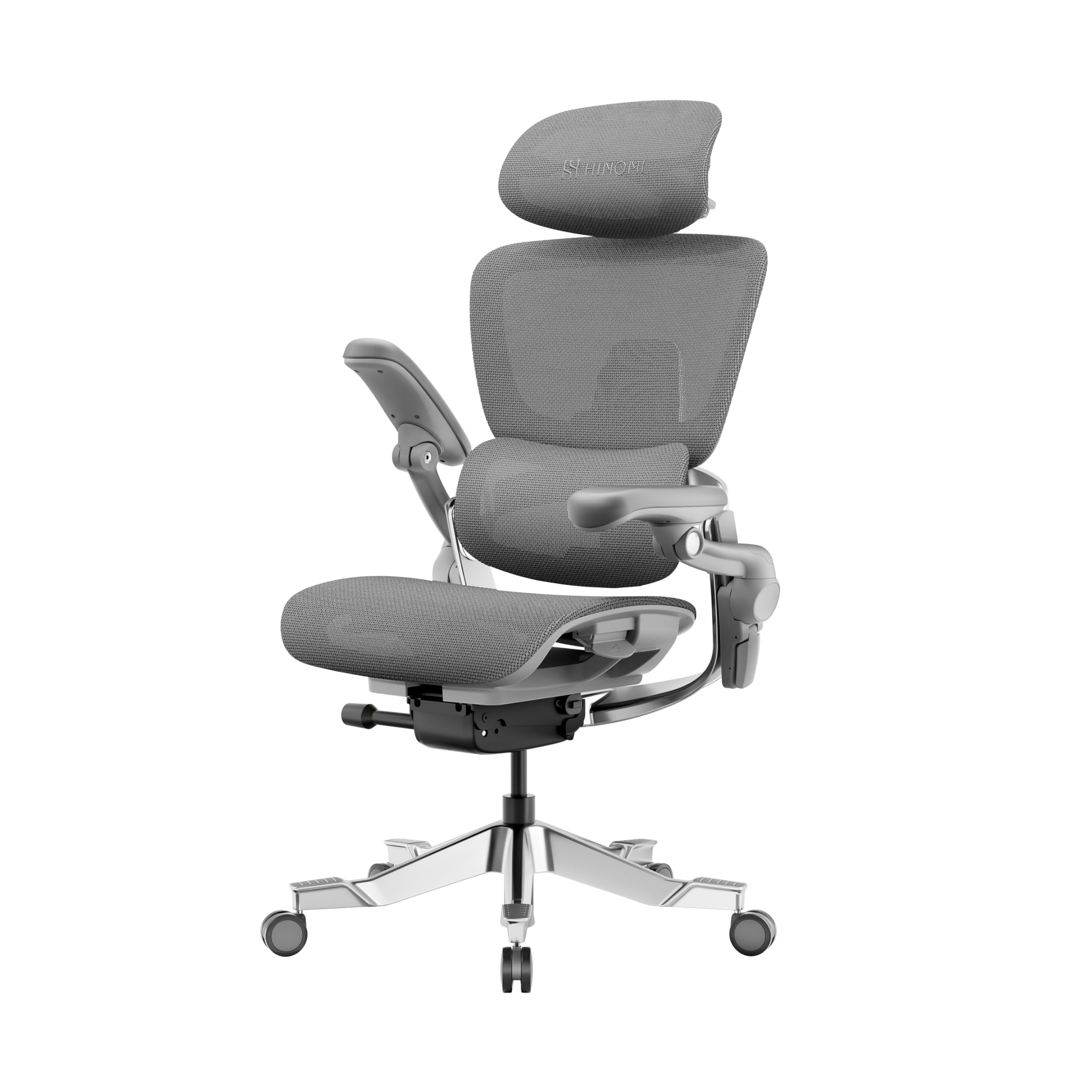
The HINOMI H2 Pro offers 19 separate adjustment points, a number that puts it in a league of its own for fine-tuning neck support. The extendable headrest adjusts in height, depth, and tilt, letting you match your exact cervical lordosis whether you sit upright or recline. The lumbar support is independently adjustable: 30 mm up/down, 25 mm forward/backward, and a 12° auto-sync tilt that moves as you shift — meaning your lower back never loses contact, which prevents the thoracic collapse that typically sends strain to the neck.
The dual-layer soft mesh seat is highly breathable and surprisingly comfortable for all-day wear, with a solid aluminum frame and base that supports up to 330 lbs. The flip-up arms provide 130° pad rotation and 40° joint movement, plus 30° vertical tilt, so you can find the exact position that keeps your shoulders dropped. The split-back design also allows the upper section to move independently, following your shoulder blade motion during dynamic tasks.
The biggest concern is a reported design flaw where the backrest can slide down over time in some units, and customer support responsiveness has been inconsistent. Assembly is straightforward with clear instructions. The optional retractable footrest adds rest versatility. If you need the absolute maximum per-point adjustability to dial out a specific neck pain trigger, this chair gives you the most knobs to turn.
Why it’s great
- 19 adjustment points for centimeter-perfect neck alignment
- Auto-sync lumbar moves with your posture shifts
- Breathable dual-layer mesh prevents heat buildup
- Aluminum frame provides stable, long-term durability
Good to know
- Some units show backrest slide issue
- Customer support responsiveness varies
4. AutoFull M6
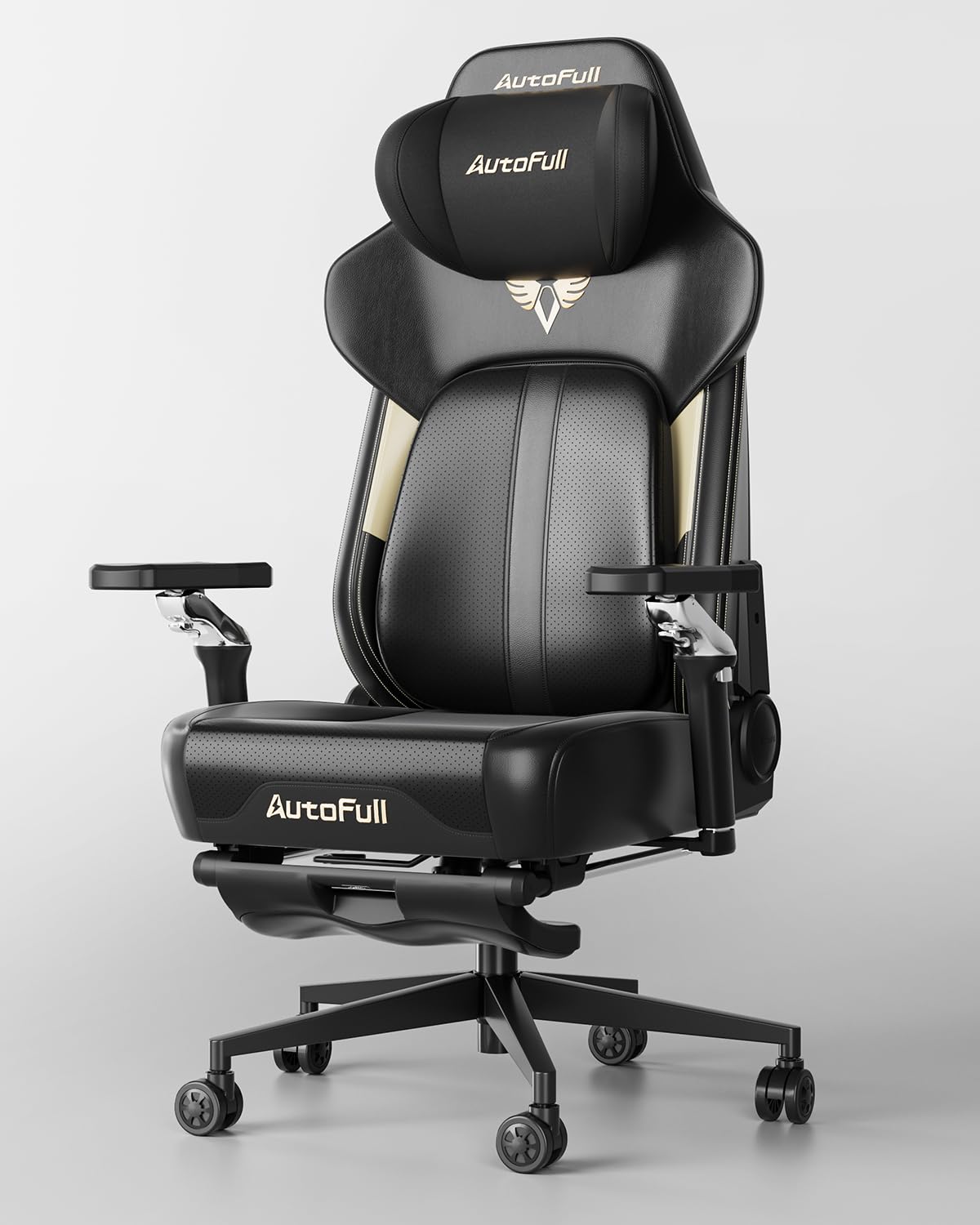
The AutoFull M6 is the only chair in this lineup with built-in climate control — dual fans for ventilation and graphite heating up to 104°F — which directly affects neck pain because temperature-controlled sitting reduces muscle guarding and stiffness in the upper back. The 3rd-generation active lumbar support offers 6 cm fore-aft, 5 cm height adjustment, plus a 5° auto-swivel that tracks your movement, providing continuous support that static chairs can’t match. When the lumbar curve stays correct, the neck follows suit.
The massage function includes both lumbar and thigh vibration, which can help release the trapezius and levator scapulae after long sessions. The 360° mechanical armrests have 20-stage rotation in both pad and body, letting you dial in precise elbow angles that keep the shoulder girdle relaxed. The 3D headrest adjusts with 5° tilt, 2 cm fore-aft, and 10 cm height, accommodating a wide range of torso heights.
The biggest drawback is the assembly instructions, which multiple users describe as nearly unusable due to black-on-black images and missing part numbering. The chair is also heavy at 75 lbs. A few users experienced leg breakage after months, though support sent replacement parts. For those who sit in temperature-controlled environments or want massage-assisted muscle relaxation to complement the ergonomic chain, this chair adds therapeutic value no competitor matches.
Why it’s great
- Ventilated and heated seat for muscle relaxation
- 3rd-gen active lumbar auto-tracks your movements
- Lumbar and thigh vibration massage included
- 360° armrests with 20-stage rotation
Good to know
- Assembly instructions are poorly designed
- Heavy unit at 75 lbs may be hard to move
5. SUNNOW Ergonomic Office Chair
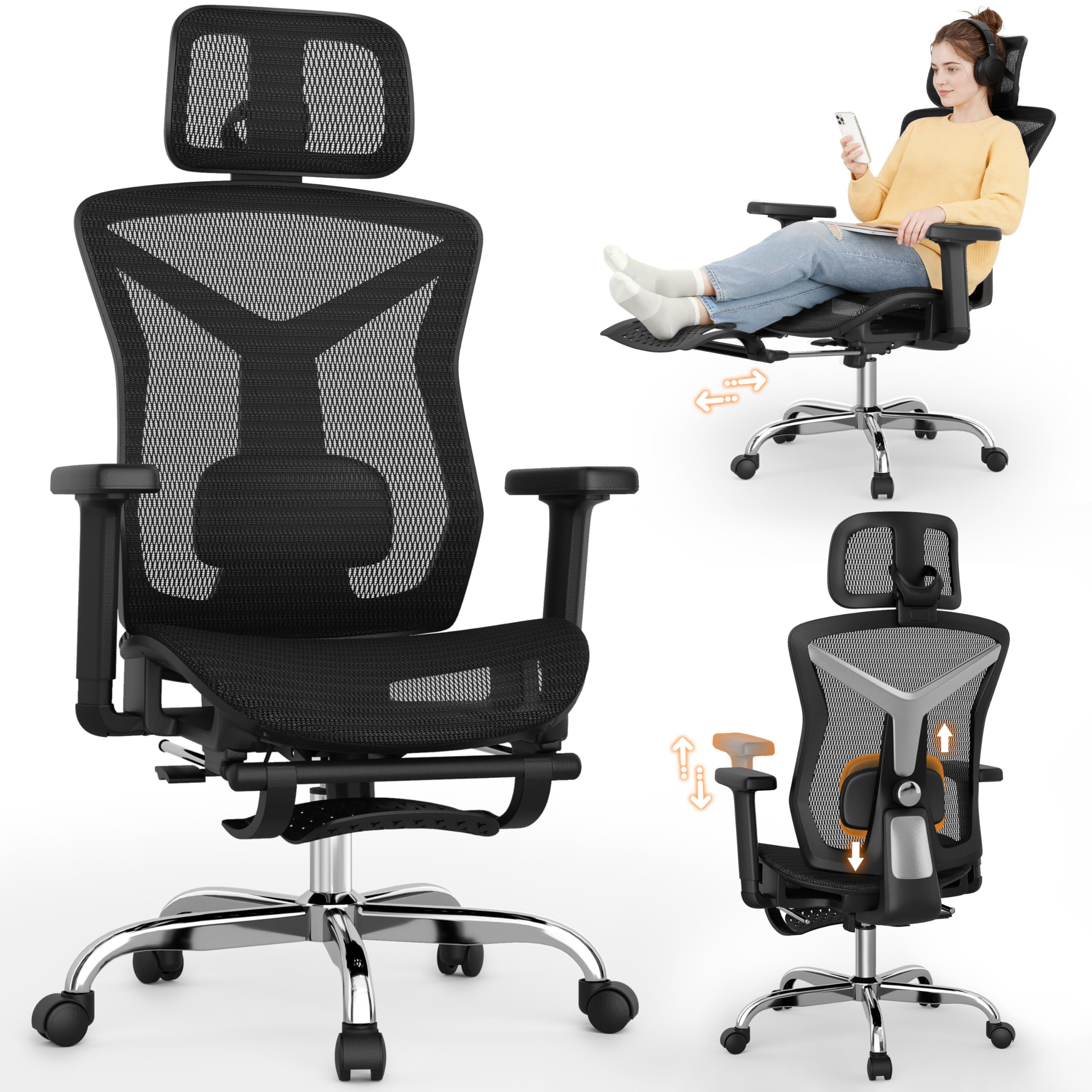
The SUNNOW chair brings 3D adjustable lumbar support (height and depth), a full-contour 3D adjustable headrest (height and tilt), and 3D armrests (height, slide, and angle) to a price point where most competitors offer only 2D or static support. This is the minimum adjustment axis count needed to properly unload the neck: the headrest must meet your C-spine curve, the lumbar must hold your pelvis neutral, and the arms must let your shoulders drop. The SUNNOW delivers all three.
The breathable mesh seat uses a dual-thread weave that stays cool and elastic, while the 4-gear lockable recline (90°–135°) paired with the retractable footrest lets you take full weight off the spine during rest. The Class-4 gas lift and BIFMA certification ensure safety and durability for users up to 300 lbs. The 2-year warranty covers most manufacturing defects, adding peace of mind at this tier.
A few users note the mesh is on the firmer side and requires a break-in period, and the footrest can feel somewhat flimsy compared to the chair’s main structure. Assembly takes about 15 minutes. For anyone looking to solve neck pain without crossing into premium price territory, this chair offers the essential adjustment features that actually make a difference, not just a padded headrest bolted onto a generic seat.
Why it’s great
- 3D lumbar, headrest, and armrests included at this tier
- Breathable dual-thread mesh prevents sweat buildup
- 4-gear lockable recline with retractable footrest
- BIFMA certified with 2-year warranty
Good to know
- Mesh can feel firm initially
- Footrest quality is less robust than main chair
6. DXRacer Drifting XL
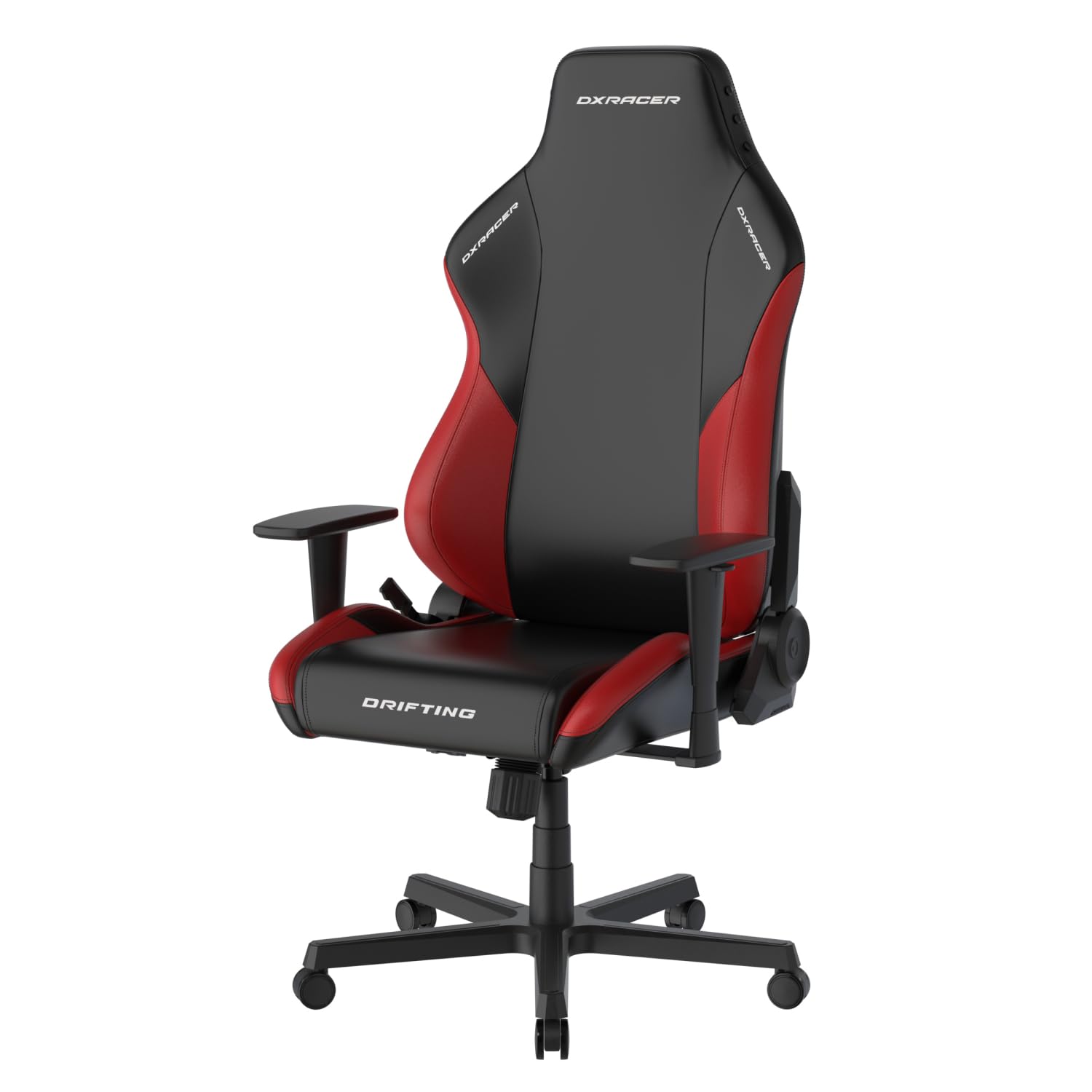
The DXRacer Drifting XL uses a classic racing-style bucket seat design with high bolsters that wrap around the torso. For neck pain, this geometry works both ways: the curved side bolsters keep the upper back from rotating, which stabilizes the cervical spine, but they also require the user to fit within a fixed shoulder width. The memory foam lumbar pillow and headrest cushion (which users report doubles as a neck pillow) provide decent support, though the lack of integrated adjustable lumbar limits fine-tuning.
The cold-cure foam and Class-4 hydraulics provide a solid, stable feel, and the 90°–135° recline with 15° rocking function lets you shift postures frequently. The 3D armrests offer height, width, and angle adjustments, which is one step above basic 2D models and sufficient for most users to find a shoulder-neutral position. The EPU leatherette and fabric combo looks sharp and holds up reasonably well over time.
The main limitation for neck pain is that the headrest pillow is removable and not height-adjustable on a track, so taller or shorter users may not get proper cervical alignment. A few users also mentioned the armrests could be slightly higher for optimal shoulder drop. This chair suits gamers who prefer the locked-in feel of a bucket seat and are willing to accept a more limited adjustment range in exchange for stability and build quality.
Why it’s great
- Bucket design stabilizes upper back for cervical support
- Cold-cure foam and Class-4 hydraulics provide solid feel
- 3D armrests allow good shoulder positioning
- Recline and rocking functions for posture variety
Good to know
- Headrest pillow is not height-adjustable on a track
- Armrests may not go high enough for all users
7. COLAMY Executive Chair

The COLAMY Executive chair’s defining feature is its 6.7-inch thick high-density foam seat cushion, which provides a level of pressure distribution uncommon in gaming chairs and directly affects neck pain by preventing the pelvic tilt that happens when you sink into a worn-out foam. The pop-out lumbar support — activated with a button — lets you adjust the lower back curve on the fly, though it’s a simple protrusion rather than a multi-axis system. The adjustable headrest helps with basic cervical positioning.
The flip-up arms are a clever space-saving feature, but they’re not height-adjustable, which is a significant limitation for neck pain since you can’t dial in the exact elbow height to drop your shoulders. The upgraded casters roll silently and smoothly on hard floors, and the selected leather upholstery is easy to clean and looks professional. The chair supports up to 300 lbs with a metal base.
The major red flag reported by users is that the headrest adjustment mechanism can be defective — some units have buttons that don’t work, dropping the headrest to the lowest position. The lumbar support has also been described as flat and lacking true ergonomic contour by some. For the price, this chair works best for users whose primary need is a plush seat cushion and who already have a separate plan for proper head and arm positioning — it’s not a primary neck-pain solution on its own.
Why it’s great
- 6.7″ thick foam seat cushion for pressure distribution
- Pop-out lumbar support for easy lower back tuning
- Quiet, floor-friendly upgraded casters
- Selected leather upholstery is easy to clean
Good to know
- Headrest mechanism may be defective on some units
- Lumbar support lacks true ergonomic contour
- Armrests are not height-adjustable
8. LarkLeaves Ergonomic Chair
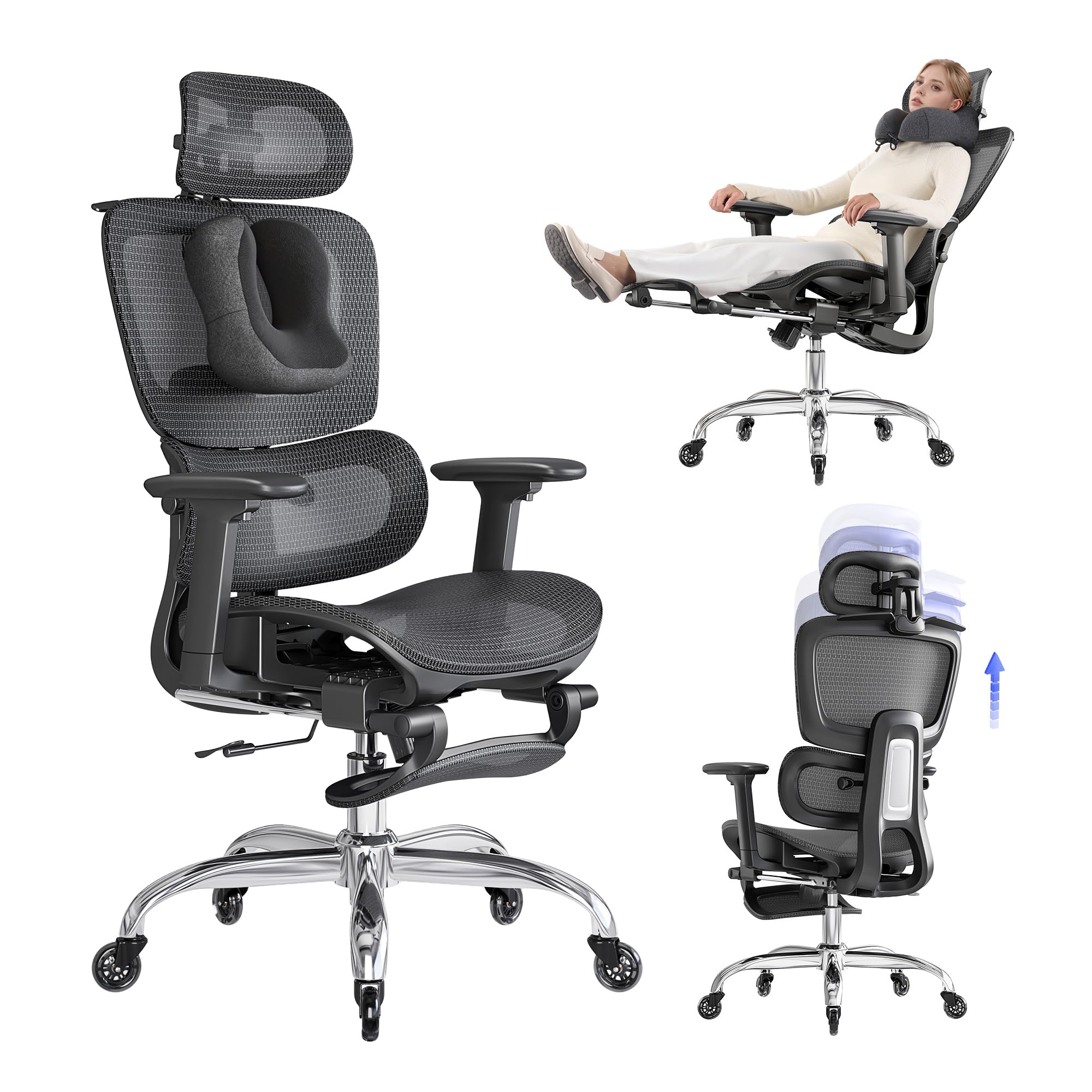
The LarkLeaves chair offers a surprising amount of adjustability for its price tier: a 3D headrest (height, depth, tilt), 3D armrests, 2D adaptive lumbar support, and a 5-level height-adjustable backrest. This combination gives you the core tools to address neck pain — headrest alignment, lumbar curve positioning, and arm/shoulder unloading — at a price where most chairs offer only a static headrest pad. The breathable mesh seat keeps you cool during long sessions, which matters because heat discomfort can cause muscle tension.
The rubber wheels are smooth and quiet (described as “in-line skate quality” by users), and the built-in coat hanger is a thoughtful workspace addition. The chair is heavy at 42 lbs, which signals sturdier construction than its price suggests, and the 3-year warranty provides decent risk coverage. Users consistently report comfort for all-day sitting, with particular praise for the lumbar support’s ability to maintain posture.
The footrest is a weak point: users describe it as cheap-feeling and unbalanced, to the point where the chair tips forward when the footrest is extended. The assembly process takes around 45 minutes, longer than most competitors. This chair is the right choice for budget-conscious buyers who want the essential adjustability features needed for neck pain relief and are willing to skip the footrest or use it sparingly.
Why it’s great
- 3D headrest + 3D armrests + 2D lumbar at budget pricing
- Breathable mesh seat stays cool for long sessions
- Quiet rubber wheels suitable for all floor types
- 3-year warranty for long-term peace of mind
Good to know
- Footrest is poorly balanced and feels cheap
- Assembly takes about 45 minutes
9. Symino Gaming Chair
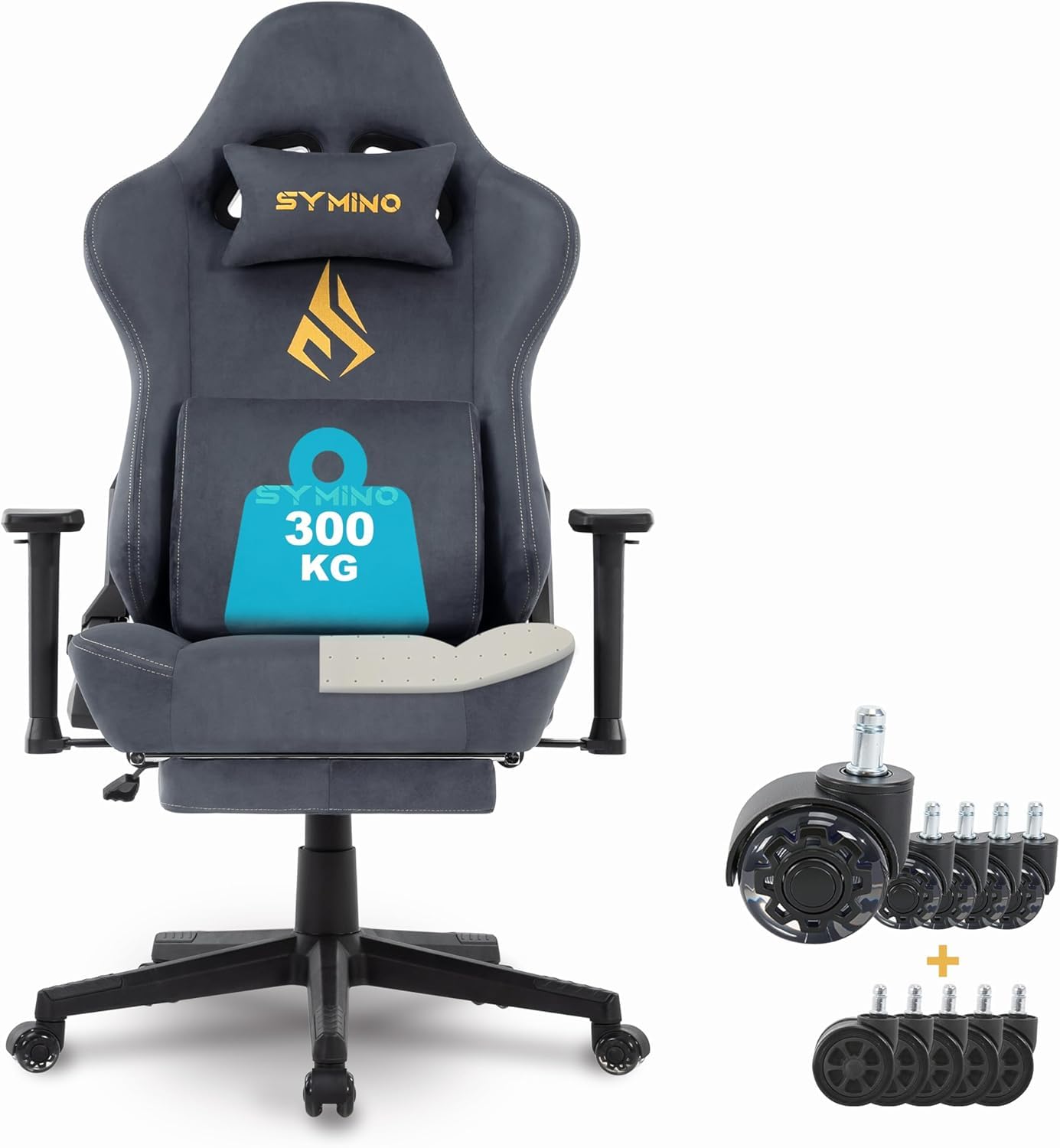
The Symino Gaming Chair uses a solid faux suede fabric that’s breathable and avoids the sweat buildup common with budget PU leather, which is a practical benefit for neck pain management since moisture and skin friction can exacerbate muscle guarding. The 150° recline paired with the pop-out footrest lets you shift posture and take full spinal load off during breaks. The adjustable headrest and lumbar pillows provide basic support, though they are not attached or track-adjustable.
The 2D armrests adjust up/down and left/right, which is the minimum needed to avoid the shoulder elevation that worsens neck tension. The chair supports up to 330 lbs (150 kg) with a metal and wood frame, and assembly is rated at about 15 minutes by most users. The price point is the lowest in this guide, making it accessible for anyone just beginning to address neck pain with seating.
The main drawbacks are quality control issues: multiple buyers reported bent armrests within the first week, and one user received a chair with a broken piston that the seller was unresponsive about. The foam is described as “hard” initially, requiring a break-in period. This chair works as a starting point for someone who needs basic recline and footrest functionality and is willing to accept an elevated risk of early defects in exchange for the lowest entry price.
Why it’s great
- Faux suede fabric breathes better than budget PU
- 150° recline with footrest for full spinal offload
- Supports up to 330 lbs with solid frame
- Fast 15-minute assembly time
Good to know
- Quality control issues reported (bent armrests, broken piston)
- Foam is firm and requires break-in
- Lumbar/head pillows are not track-adjustable
FAQ
Can a gaming chair actually fix neck pain or only reduce it?
Is a higher recline angle always better for neck pain?
Do bucket-style gaming chairs help or hurt neck pain?
What armrest dimensions matter most for neck pain relief?
Final Thoughts: The Verdict
For most users, the gaming chair for neck pain winner is the Razer Iskur V2 because its adaptive lumbar system and fully contoured memory foam headrest create the most reliable posture chain from pelvis to skull. If you want the proven build and 165-degree recline of the Secretlab Titan Evo, grab that model for its long-term durability and three size options. And for the finest point-by-point adjustability, the HINOMI H2 Pro gives you 19 adjustment points to dial out even the most specific neck pain triggers.