
Your squad is counting on a clear callout, but the audio delay between what you hear and what happens on screen is costing you every firefight. The wrong pair of earbuds introduces latency that throws off your aim, muffles directional footsteps, and buries teammate chatter under muddy bass. Finding the right set under a strict budget means balancing low-latency performance, driver quality, and a mic that actually works — no room for compromise on the basics.
I’m Mohammad Maruf — the founder and writer behind Drink4Good. With years spent dissecting audio hardware specs and gaming accessory market trends, I focus on the measurable metrics that separate a competitive edge from a distraction: latency millisecond ratings, driver configurations, and real-world battery performance.
Whether you favor wired precision or wireless freedom, this breakdown of the best gaming earbuds for under $100 highlights the seven most capable models that deliver the speed and sound you need without draining your wallet.
How To Choose The Best Gaming Earbuds For Under $100
Every gamer wants crisp audio and zero delay, but under the hundred-dollar mark, you have to prioritize the specs that actually affect your gameplay. Latency, driver design, and microphone quality matter far more than flashy branding or unverified claims.
Latency: The Difference Between a Kill and a Miss
Wireless earbuds introduce a delay between sound generation and playback. Below 40 milliseconds is considered imperceptible for all but the most demanding rhythm games. Wired earbuds naturally have zero added latency, which is why many competitive players still prefer a cable. When shopping wireless, look for dedicated low-latency modes or a 2.4GHz dongle rather than relying on standard Bluetooth alone.
Driver Configuration and Sound Signature
A single dynamic driver can deliver punchy bass, but more complex sounds can become cluttered. Hybrid driver setups — combining balanced armatures with a dynamic driver — separate frequencies so footsteps, gunfire, and environmental cues remain distinct. For gaming, you want a soundstage that lets you pinpoint direction rather than just booming explosions.
Wired vs. Wireless: Connection Trade-offs
Wired earbuds never need charging, pair instantly, and offer the lowest possible latency. They do tether you to your controller or PC, which can be restrictive during long sessions. Wireless earbuds provide freedom of movement but require monitoring battery levels and may introduce sync issues if the codec or connection isn’t optimized for gaming. The best choice depends on whether you prioritize absolute performance or convenience.
Quick Comparison
On smaller screens, swipe sideways to see the full table.
| Model | Category | Best For | Key Spec | Amazon |
|---|---|---|---|---|
| Razer Hammerhead HyperSpeed | Wireless | Multi-platform 2.4GHz | 2.4GHz + Bluetooth 5.2 | Amazon |
| JBL Quantum TWS AIR | Wireless | PC and mobile versatility | 2.4GHz Dongle + Bluetooth | Amazon |
| Middle Rabbit SW5 | Wireless | Ultra-low latency gaming | 20ms Latency (LC3 codec) | Amazon |
| KZ ZS12 PRO 2 | Wired IEM | Competitive footstep clarity | 6 Hybrid Drivers (5BA + 1DD) | Amazon |
| Black Shark Wireless | Wireless | Casual mobile gaming | 35ms Low Latency Mode | Amazon |
| Boytond RGB Gaming | Wireless | Extended battery sessions | 10-Hour Battery Life | Amazon |
| Vibes 202M | Wired IEM | Budget audiophile start | 1-Tesla Dynamic Driver | Amazon |
In‑Depth Reviews
1. Razer Hammerhead HyperSpeed Wireless

The Razer Hammerhead HyperSpeed bridges the gap between console and PC with its dedicated 2.4GHz dongle that bypasses Bluetooth latency entirely. The USB-C connector plugs directly into a PS5, PC, or Nintendo Switch, delivering the kind of low-latency performance that wireless gamers demand. Active Noise Cancellation further isolates you from room distractions, keeping you locked into the match.
Inside, dynamic drivers produce a sound signature tuned for aggression: punchy bass for explosions and clear mids for voice chat. The dual Environmental Noise Cancelling microphones cut background noise during squad calls. Battery life stretches up to 30 hours with the charging case, and Razer Chroma RGB lets you sync lighting with other compatible gear.
The included dongle ensures lag-free connection across multiple platforms, but the battery life is shorter when using the 2.4GHz connection compared to Bluetooth only. Some users note the case feels slightly plastic and the voice prompts sound basic. For a premium wireless experience under the budget cap, this is the most complete package available.
Why it’s great
- True 2.4GHz low-latency connection
- Active Noise Cancellation for immersive play
- Multi-platform support out of the box
Good to know
- Battery life drops in low-latency mode
- Case build is mostly plastic
- Basic voice prompt quality
2. JBL Quantum TWS AIR

JBL brings its audio pedigree to the gaming arena with the Quantum TWS AIR, a true wireless set that prioritizes positional accuracy. The 6.8mm dynamic drivers work with JBL QuantumSURROUND — available on PC via the QuantumENGINE software — to create a virtual soundstage that makes enemy footsteps feel directional. The low-latency USB-C dongle is stored directly inside the charging case, so you never misplace it.
Four beamforming microphones (two per earbud) ensure voice chat remains clear even in noisy environments. Smart Ambient technology lets you toggle between full noise isolation and awareness of your surroundings without removing the earbuds. The IPX4 water resistance rating means sweat or light rain won’t end your session.
Battery life averages about 8 hours per charge, with the case providing an additional 16 hours. The dongle’s low-latency performance works well on PC and Steam Deck, but some users report slight audio artifacts during extended use. The case is larger than many competitors, and the touch controls can feel overly sensitive during adjustment.
Why it’s great
- QuantumSURROUND creates accurate directional audio
- Dongle stores inside charging case
- Four beamforming mics for clear chat
Good to know
- Dongle battery life shorter than Bluetooth
- Case is bulkier than typical TWS
- Occasional audio artifacts in wireless mode
3. Middle Rabbit SW5 Wireless Gaming Earbuds
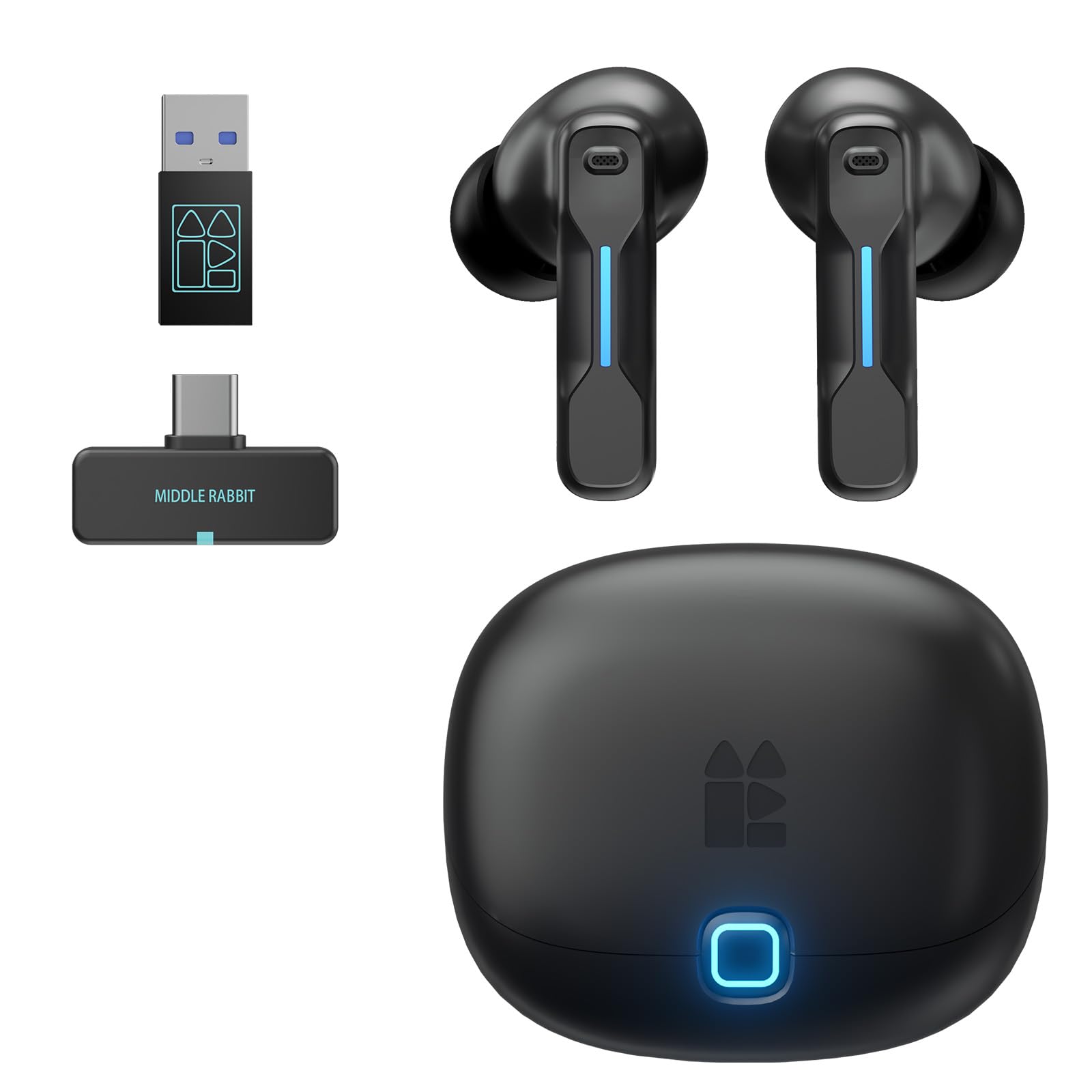
The Middle Rabbit SW5 pushes the latency barrier down to 20 milliseconds by combining a 2.4G dongle with Bluetooth 5.4 and the advanced LC3 codec. That figure is low enough to satisfy competitive shooters where every frame of audio matters. The earbuds also support dual-device connection, so you can listen to Discord on your PC while taking calls from your phone without interrupting your game.
AI-enhanced microphones filter ambient noise during voice chat, while multiple EQ modes — Music, Game, and Podcast — let you tailor the frequency response. The companion app provides OTA firmware updates, custom control mapping, and a battery status readout. The charging case includes a dedicated slot for the dongle, keeping everything organized for travel.
Battery life is rated at 8 hours per charge, though real-world use closer to 6 hours at higher volume is more common. Some users report the case needs nightly charging and earbud battery drain can occur if they don’t seat properly in the case. When everything aligns, the soundstage and connection stability rival more expensive options.
Why it’s great
- Market-leading 20ms latency with LC3 codec
- Dual-device connection for multitasking
- Companion app with OTA firmware upgrades
Good to know
- Earbud battery depletes quickly
- Case lacks battery indicator for individual buds
- Inconsistent pairing reported by some users
4. KZ ZS12 PRO 2
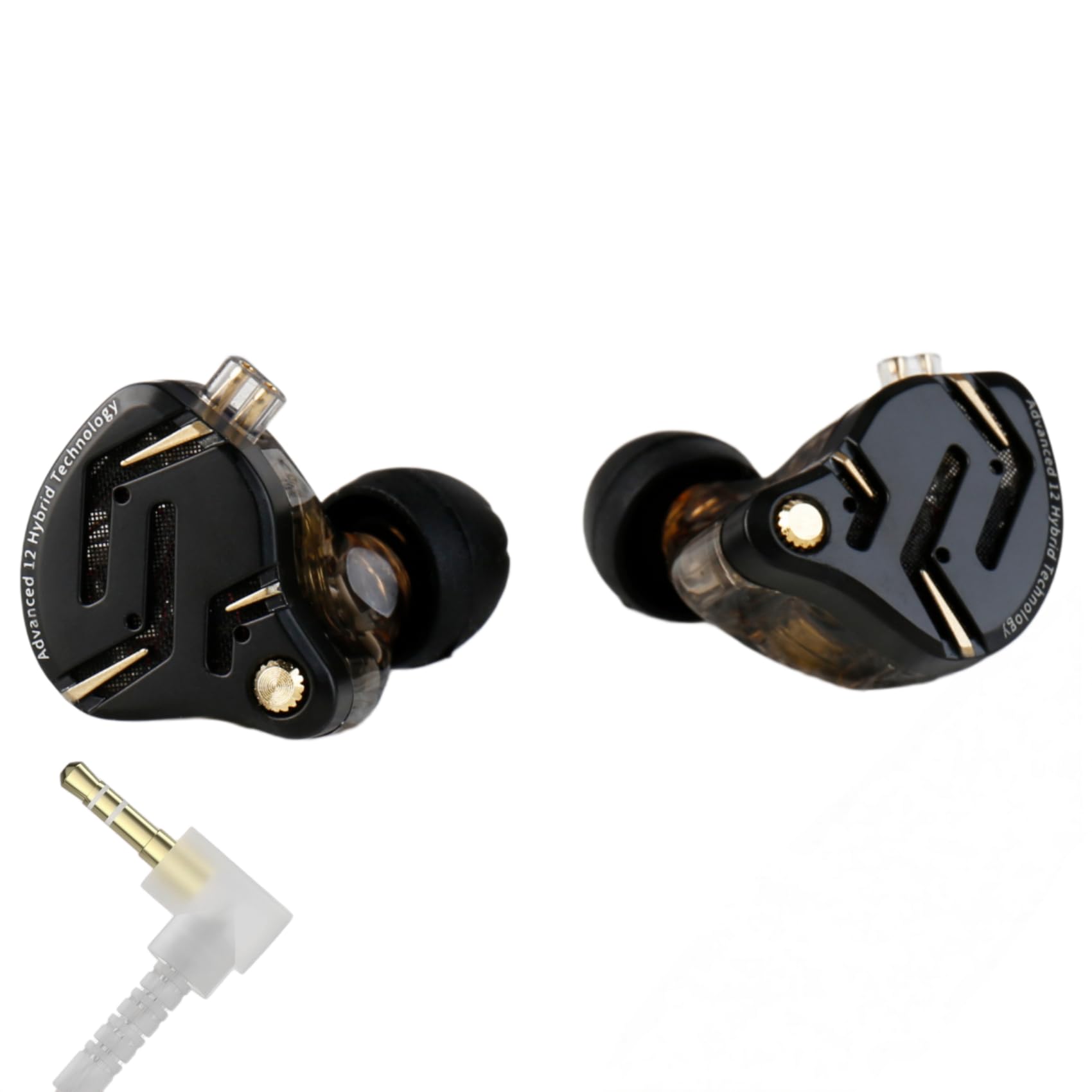
The KZ ZS12 PRO 2 is a wired in-ear monitor with a hybrid beast under the hood: five balanced armature drivers handle the mids and highs, while a dedicated 10mm dynamic driver delivers the low-end thump. An electronic crossover board coordinates the drivers to minimize interference and maintain separation between frequency bands — critical for hearing footsteps over gunfire in fast-paced shooters.
The ergonomic resin shell with a metal faceplate is designed for long wear, and the detachable cable lets you upgrade or replace the cord without swapping the entire set. Sound imaging is precise, with a wide soundstage that helps you locate enemies by sound alone. The omnidirectional HD microphone is an optional inclusion depending on the version you choose.
First-time IEM users may need adjustment time to find a comfortable fit with the over-ear cable routing. The lack of a wireless option means you stay tethered, but for pure audio fidelity and zero latency, this hybrid setup outperforms many wireless options at double the price. It is a serious tool for competitive and music-critical gamers alike.
Why it’s great
- Six-driver hybrid configuration for detailed separation
- Electronic crossover minimizes driver interference
- Detachable cable for easy replacement
Good to know
- Over-ear fit has a learning curve
- Wired only; no wireless option
- Microphone cable sold separately
5. Black Shark Wireless Earbuds

Black Shark’s wireless earbuds target mobile and casual console gamers who want a secure fit and noticeable low-latency performance. The 35ms gaming mode reduces audio delay to levels that feel responsive for most fast-paced titles, while the 10mm dynamic drivers produce a bass-forward sound signature that suits action-heavy gameplay. Four microphones work together to capture your voice with clarity during team chat.
The IPX5 water resistance rating is a practical addition for gamers who sweat during intense sessions or want to use the buds during workouts. The case provides an additional 15 hours of playback on top of the 5-hour bud battery. Bluetooth 5.2 ensures a stable connection within a 10-meter range, and the low-latency mode activates with a simple tap on the earbuds.
Build quality is decent for the price, though the plastic case feels lightweight. Some users report occasional connection hiccups when opening the case and removing the left earbud. The sound quality is solid but lacks the refinement of higher-tier options. For a budget-friendly entry into wireless gaming audio, it delivers reliable fundamentals without breaking the bank.
Why it’s great
- 35ms low-latency mode for gaming
- IPX5 water resistant for active use
- Secure fit during movement
Good to know
- Earbud battery lasts only 5 hours
- Inconsistent left bud connection reported
- Plastic case feels budget-tier
6. Boytond RGB Gaming Wireless Earbuds
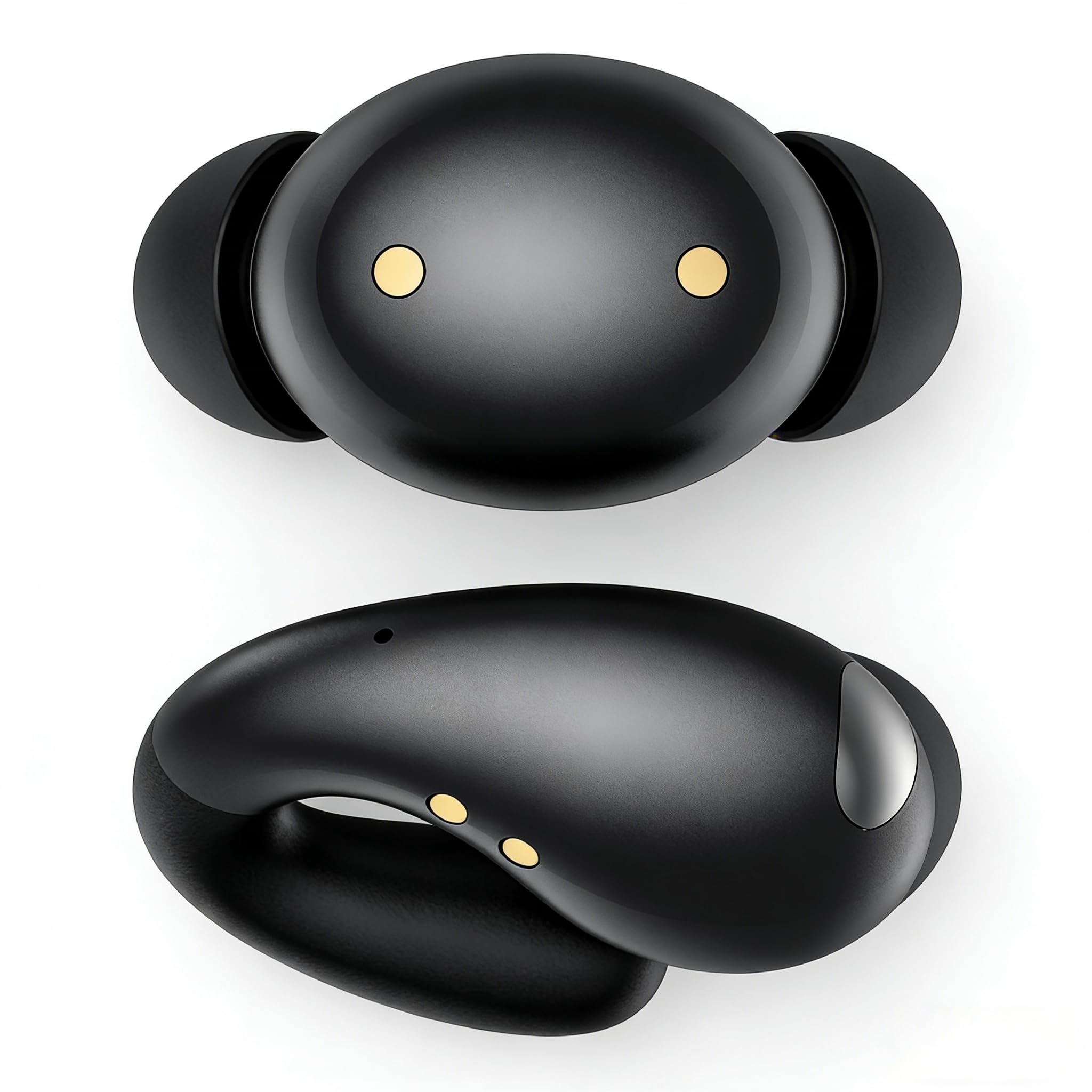
The Boytond RGB Gaming Earbuds lean into visual flair and extended runtime. Each earbud features a breathing RGB light that syncs to music or game audio, adding an atmospheric touch to late-night sessions. The Bluetooth 5.3 connection offers decent range and stability, while the low-latency mode minimizes sync issues for mobile gaming.
Battery life stands out at up to 10 hours per charge, making these suitable for marathon gaming sessions or all-day listening. The IPX4 sweat-resistant coating provides basic protection, and the open-ear design — where the earbud rests near the ear canal rather than sealing inside it — allows ambient sound to filter through. This can be an advantage for gamers who need to stay aware of their surroundings.
The open-ear fit reduces bass impact compared to in-ear designs, which might disappoint those seeking deep sub-bass. Audio quality is adequate for casual play but lacks the clarity required for competitive footstep tracking. Some users note that the left and right earbuds can drain unevenly. As a lifestyle gaming accessory with long battery life, it serves a specific niche well.
Why it’s great
- 10-hour battery per charge
- Visual RGB lighting for immersion
- Allows ambient sound awareness
Good to know
- Open-ear design reduces bass response
- Earbud battery drains unevenly
- Not ideal for competitive sound positioning
7. Vibes 202M Wired Earbuds
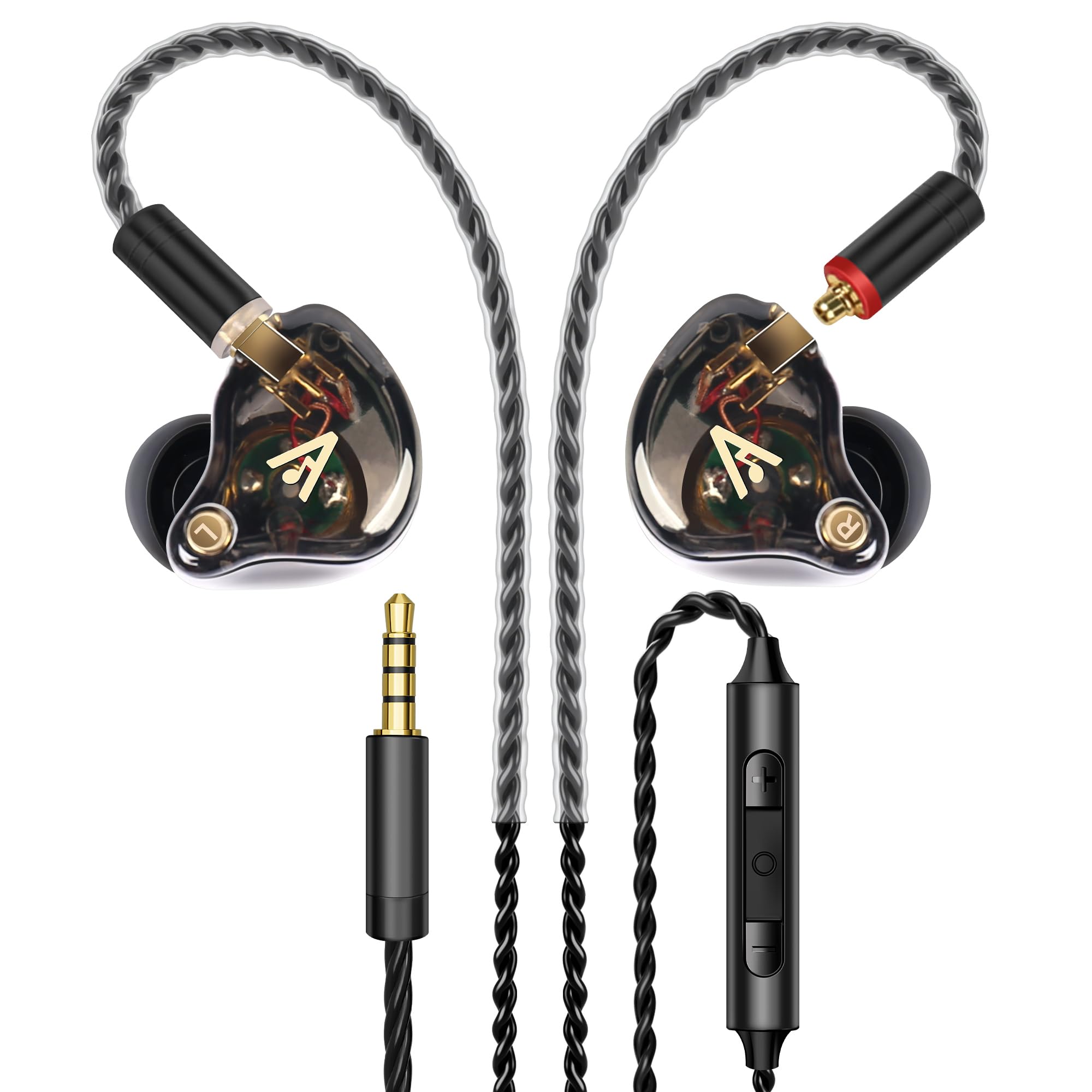
The Vibes 202M offers a beginner-friendly route into wired IEM gaming audio without sacrificing quality. A single 1-Tesla dynamic driver, housed in a durable resin shell, delivers studio-grade HiFi sound with deep bass, clear mids, and crisp highs. The 8Hz to 23kHz frequency range captures sub-bass rumble and high-frequency detail that many budget earbuds miss.
The silver-plated Litz-braided cable with gold-plated MMCX connectors is detachable, allowing for easy cable replacement or future upgrades. Six pairs of ear tips in three sizes ensure a custom seal for passive noise isolation. An inline remote and microphone handle volume control and voice chat, while the carrying case and carabiner keep everything organized for travel or LAN parties.
As a wired set, there is zero latency and no battery to manage — plug into any 3.5mm source and play. The semi-transparent design comes in ten color options for personal expression. The cable is long at 63 inches, which can be cumbersome for mobile use but works well for desktop gaming. It is a low-risk entry point with performance that punches above its price class.
Why it’s great
- Zero-latency wired connection
- Detachable MMCX cable for upgrades
- Wide frequency response 8Hz-23kHz
Good to know
- 63-inch cable is long for portable use
- No inline volume control on all versions
- Single dynamic driver lacks multi-driver separation
FAQ
Is 35ms latency good enough for competitive gaming?
Can I use Bluetooth gaming earbuds with my PS5 or Xbox Series X?
What does a hybrid driver do that a single driver cannot?
Do wired gaming earbuds sound better than wireless under $100?
Final Thoughts: The Verdict
For most users, the best gaming earbuds for under $100 winner is the Razer Hammerhead HyperSpeed because it combines true 2.4GHz low-latency wireless with Active Noise Cancellation and broad platform support. If you prioritize absolute audio clarity and zero latency, grab the KZ ZS12 PRO 2 for its six-driver hybrid design. And for the best balance of ultra-low latency and modern connectivity features, nothing beats the Middle Rabbit SW5 with its 20ms latency and dual-device capability.