
When you’re deep into a game—tracking footsteps, reacting to distant explosions—but you also want your playlist to hit with clarity and warmth, you face a specific problem: most headsets built for gaming compress the life out of music. The thumping bass that makes an FPS feel intense turns your favorite track into a muddy mess. Finding a pair that separates gunfire from guitar riffs requires understanding the hardware, not just the marketing.
I’m Mohammad Maruf — the founder and writer behind Drink4Good. I’ve spent countless hours analyzing driver technologies, frequency response graphs, and real-world owner feedback to isolate the models that actually deliver for both competitive play and critical listening.
Whether you are looking for a wired studio-grade option or a lightweight wireless companion, this guide cuts through the noise to help you find the best gaming headphones for music that deliver clear highs, detailed mids, and controlled bass without sacrificing positional accuracy.
How To Choose The Best Gaming Headphones For Music
Choosing a headset that serves both gaming and music means looking past gamer aesthetics and focusing on what actually creates clean, separated audio. Below are the three most important factors to consider before you buy.
Driver Type: Dynamic vs. Planar Magnetic
Dynamic drivers, usually sized at 50mm, are the standard for gaming headsets. They deliver punchy bass and good volume, making footsteps and explosions feel impactful. Planar magnetic drivers, found in higher-end models like the HIFIMAN Sundara, use a thin diaphragm suspended between magnets. This design produces much lower distortion and faster transient response, meaning cymbals crash cleanly and vocals remain clear even during chaotic gameplay. Planar is almost always better for music, but it costs more and often requires a headphone amplifier to reach its full potential.
Open-Back vs. Closed-Back
Closed-back headsets, like the HyperX Cloud Alpha, isolate outside noise and prevent your audio from leaking. This is best for shared spaces and competitive play where external sounds are a distraction. Open-back designs, popular in studio and audiophile gear, have vented ear cups that create a much wider, more natural soundstage—instruments feel placed in a physical space around you. The tradeoff is significant sound leakage and zero noise isolation, making them unsuitable for noisy rooms or multiplayer voice chats unless you can control your environment.
Frequency Response and Imaging
For music, you want a balanced frequency response—not one that artificially boosts bass or treble. Look for specifications that show extension below 20Hz (for deep sub-bass) and smooth highs without sharp peaks. Imaging, or the headphone’s ability to place sounds in a 3D space, is critical for both hearing footsteps and following a complex mix. Planar magnetic headphones typically excel here because their lower distortion creates cleaner separation between instruments and audio cues.
Quick Comparison
On smaller screens, swipe sideways to see the full table.
| Model | Category | Best For | Key Spec | Amazon |
|---|---|---|---|---|
| HyperX Cloud Alpha | Closed-Back Dynamic | Best balance of gaming and music | Dual Chamber Drivers | Amazon |
| HIFIMAN Sundara | Open-Back Planar | Audiophile music and gaming | Planar Magnetic Driver | Amazon |
| Razer BlackShark V3 X HyperSpeed | Wireless Closed-Back | Lightweight wireless with low latency | 70 Hour Battery | Amazon |
| FIFINE AmpliGame H13BP | Wired RGB Closed-Back | Budget-friendly with versatile sound | 50mm Dynamic Driver | Amazon |
| beyerdynamic TYGR 300 R | Open-Back Dynamic | Professional spatial sound | Open-Back Design | Amazon |
| Skullcandy PLYR | Multi-Platform Wireless | All-day comfort with app customization | Enhanced Sound Perception | Amazon |
| HIFIMAN Ananda | Open-Back Planar | Critical listening and soundstage | Stealth Magnet Technology | Amazon |
In‑Depth Reviews
1. HyperX Cloud Alpha

The HyperX Cloud Alpha remains a reference point for hybrid gaming and music headsets because of its Dual Chamber Driver design. By separating the bass-producing and mid/high-producing parts of the driver into two distinct chambers, HyperX reduces distortion significantly compared to single-chamber dynamic drivers. The result is cleaner bass that doesn’t bleed into the mids, making both gunfire and guitar riffs more distinct. The frequency response of 15Hz to 25kHz gives it extension beyond the typical human hearing range, which helps with sub-bass rumble and airy treble.
Comfort is a standout feature here. The memory foam ear cups and padded headband are wrapped in soft leatherette, and the aluminum frame keeps the weight manageable while adding real durability. The detachable braided cable with an in-line audio control is a thoughtful upgrade from older models, reducing the risk of cable failure. Noise cancellation is passive but effective—it reduces ambient noise by roughly 30 percent, which is enough for most gaming sessions without the added circuitry of active noise cancellation.
Where this headset falls short is the microphone, which sounds average for a gaming headset—fine for Discord but not for streaming or professional calls. After years of use, the leatherette on the ear cups and headband tends to peel, a common issue with synthetic leather pads. For pure music listening, the Cloud Alpha is good but not audiophile-level; the sound signature is slightly V-shaped, with emphasized bass and treble, which works well for games but can feel less neutral for critical listening.
Why it’s great
- Dual chamber drivers provide clean separation between bass and mids.
- Extremely durable build with metal frame and detachable cable.
- Legendary comfort for long sessions.
Good to know
- Leatherette pads peel after extended use.
- Microphone quality is average for the category.
- Sound signature is slightly V-shaped, not neutral.
2. HIFIMAN Sundara

The HIFIMAN Sundara is a planar magnetic headphone that sets the entry-level benchmark for audio clarity in this category. Its diaphragm is 80 percent thinner than the HE400 series, which allows for faster transient response and lower distortion. The sound signature is balanced with a slight tilt toward neutrality—mids are detailed and present, highs have sparkle without harshness, and bass reaches deep without overwhelming the mix. The open-back design creates a wide, natural soundstage that makes both game environments and music recordings feel spacious and three-dimensional.
Build quality is mostly metal, with a weight-spreading headband strap that improves comfort during long sessions. The ear cups are plush and spacious, accommodating most ear sizes without pressure. The detachable cable uses a 3.5mm connector on the headphone side, which is a welcome standard for easy replacement. The Sundara can be driven by a decent laptop or smartphone dongle, but pairing it with a dedicated amplifier—like a FiiO K7—unlocks its full potential, especially in terms of dynamics and headroom.
The most common complaint is the plastic adjustment collar on the yoke, which is a known weak point—some users report it snapping after months of use. The open-back nature means zero noise isolation and significant sound leakage, making it unsuitable for noisy rooms or environments where others can hear your audio. It also lacks a built-in microphone, so you will need a separate solution for voice chat. For pure music and gaming positional audio, however, the Sundara remains a top contender at this price.
Why it’s great
- Excellent clarity and detail with low distortion.
- Wide soundstage ideal for immersive gaming and music.
- Efficient enough for most portable sources.
Good to know
- Plastic adjustment collars are a known durability concern.
- No built-in microphone.
- Open-back design leaks sound and offers no isolation.
3. Razer BlackShark V3 X HyperSpeed
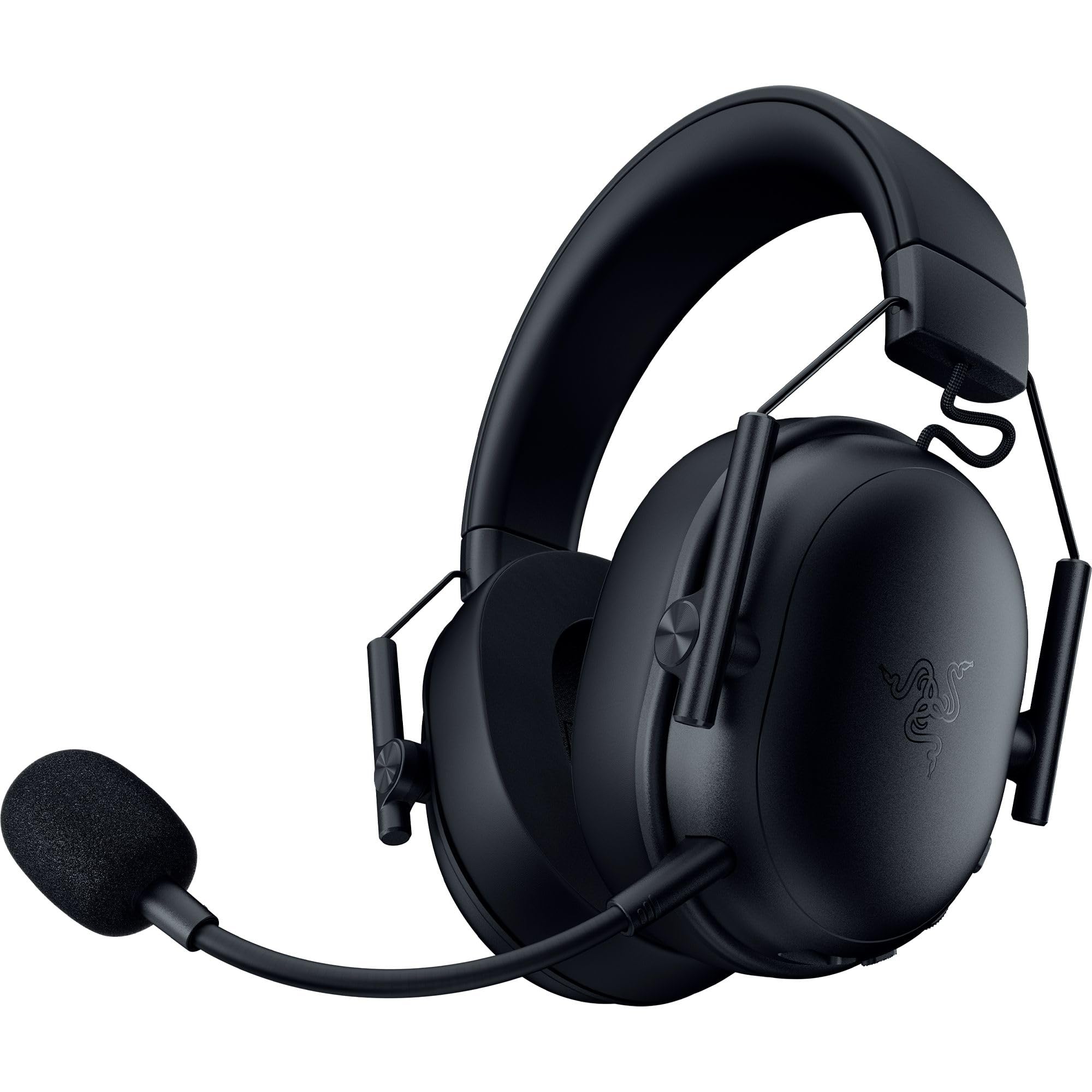
Razer’s BlackShark V3 X HyperSpeed delivers a rare combination for a wireless gaming headset: low latency on par with wired connections and a weight of only 270 grams. The TriForce 50mm Gen-2 drivers are tuned for improved clarity and a wider soundstage than previous generations, which helps distinguish between game audio and music without the muddy crossover typical of budget wireless headsets. The 70-hour battery life means weeks of daily use between charges, and SmartSwitch Dual Wireless lets you toggle between 2.4 GHz and Bluetooth 5.3 seamlessly.
The detachable HyperClear Cardioid 9.9mm microphone is better than average for a sub-premium headset. Its unidirectional pattern picks up your voice clearly while rejecting background noise from your keyboard and room. The headset connects to PC, Mac, PlayStation, Nintendo Switch, and smartphones via USB dongle or Bluetooth, making it one of the most versatile options in its tier. The ear cups are plush and oval-shaped, designed to accommodate longer gaming sessions without causing hot spots, and the clamping force is gentle enough for users with larger heads.
The microphone quality can be inconsistent without Razer’s software tweaks—some users report low volume or wave feedback on certain apps. The fit, while light, can feel slightly tight for some, and the lack of memory foam inside the headband means the padding compresses over time. The sound signature is slightly bass-forward, which works for gaming immersion but can make classical or acoustic music sound less balanced. Despite these tradeoffs, it remains a strong pick for gamers who prioritize wireless convenience without sacrificing audio performance entirely.
Why it’s great
- Ultra-lightweight 270g design is comfortable for long sessions.
- Low latency wireless with 70-hour battery life.
- Multi-platform connectivity with detachable cardioid mic.
Good to know
- Mic performance varies without software adjustment.
- Slightly bass-heavy sound may not suit all music genres.
- Firm clamping force may feel tight for some.
4. FIFINE AmpliGame H13BP
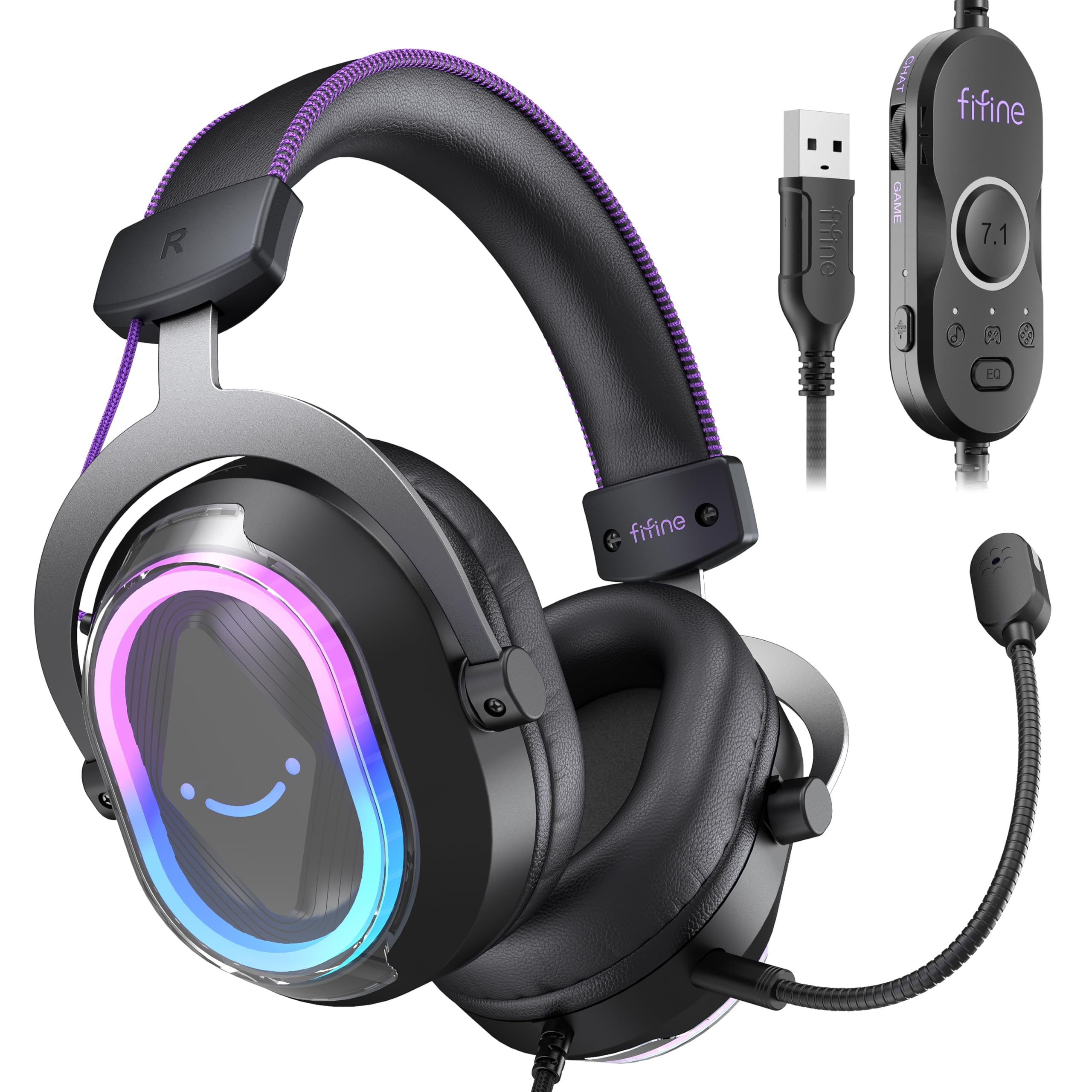
The FIFINE AmpliGame H13BP overdelivers for its price point by packing a 50mm dynamic driver with decent frequency extension and a 7.1 surround sound mode that works on PC and PS5. The sound signature is balanced for the cost, offering clear highs and mids with bass that is present but not overpowering. The three EQ modes allow you to tune the headset slightly toward gaming, music, or a flat profile, and the game/chat balance wheel on the inline control is a practical feature that higher-priced competitors often omit.
Build quality uses a sturdy metal frame inside the headband, which is surprising at this level. The rhombus-shaped ear cups with transparent shells and adjustable RGB lighting (11 modes) add a visual flair that streamers will appreciate. The protein skin memory foam ear pads are comfortable for extended wear, and the closed-back design provides passive noise isolation that blocks out typical room-level distractions. The braided USB cable is 7.55 feet long, giving you decent reach to your PC or console.
The microphone is noise-cancelling in a basic sense—it suppresses some background hum but sounds less natural than more expensive pickups. The RGB lighting, while customizable, adds to the already plastic-heavy aesthetic that may feel less premium to some. The wired USB connection limits compatibility with devices like Xbox or mobile phones. For budget-conscious buyers who want solid audio and comfort, however, this headset delivers far more than its tier suggests.
Why it’s great
- 50mm drivers deliver clear and balanced sound with EQ modes.
- Sturdy metal frame and comfortable memory foam pads.
- Inline controls with surround sound, volume, and chat balance.
Good to know
- Wired USB connection limits platform compatibility.
- Mic quality is average and not suited for professional use.
- RGB lighting adds to a plasticky visual feel.
5. beyerdynamic TYGR 300 R

The beyerdynamic TYGR 300 R is essentially a DT 990 re-engineered for gaming, which means it inherits the same high-quality dynamic driver and open-back acoustic design but tuned specifically for longer wear and spatial awareness. The soundstage is wide and airy, allowing you to localize footsteps, gunshots, and environmental cues with high precision—critical for competitive shooters. The bass is present but not boosted to booming levels, keeping mids and highs clean and detailed, which serves both orchestral game scores and complex metal or electronic music well.
Comfort is exceptional for extended sessions, thanks to the circumaural ear pads with soft velour fabric that reduces heat buildup. The headband is padded and self-adjusting, distributing weight evenly across the top of the head. At roughly 300 grams, it remains light enough to forget you are wearing it after an hour. The cable is a straight 3.5mm to 1/4-inch design, which is standard for home use but a bit short for desktop setups—most users will need an extension.
The lack of a built-in microphone means you need a separate mic solution for multiplayer communication. Bass extension is weaker than closed-back competitors, so if you want deep sub-bass thump for electronic music, this headset may leave you wanting more. The open-back design also means significant sound leakage, so it is not suitable for shared quiet spaces. For gamers who prioritize accurate positioning and natural sound over isolated bass, the TYGR 300 R is a refined choice.
Why it’s great
- Excellent soundstage for precise in-game positioning.
- Velour ear pads provide exceptional long-wear comfort.
- Natural, balanced sound suitable for music listening.
Good to know
- No built-in microphone or cable extension included.
- Weak sub-bass compared to closed-back options.
- Sound leakage is significant due to open-back design.
6. Skullcandy PLYR

The Skullcandy PLYR stands out for its Enhanced Sound Perception (ESP) feature, which creates a personalized sound profile based on a hearing assessment. This is a genuine differentiator for music: the headset adjusts EQ curves to compensate for your unique hearing sensitivity, making vocals and high-frequency details clearer without turning up the overall volume. The 50mm dynamic drivers deliver a sound signature that is slightly warm and bass-friendly out of the box, which works for both game immersion and casual playlist listening.
The PLYR offers three modes of connectivity—2.4 GHz low-latency wireless via the included transmitter, Bluetooth 5.2, and a backup 3.5mm wired option. The 24-hour battery life is practical for all-day gaming sessions, and the Rapid Charge feature provides 4 hours of use from just a 10-minute charge. The removable headband strap improves weight distribution, and the memory foam ear cups are soft and plush. The Skullcandy app provides additional EQ control and sidetone adjustment for fine-tuning the audio to your preference.
The build quality is primarily plastic, which feels less premium than metal-framed alternatives. The wireless transmitter is not included with all bundles—some units require a separate purchase to achieve low-latency wireless on PC. The microphone quality is average and can sound compressed, making it less ideal for streaming or serious voice chat. The plastic construction can also creak during movement. For gamers who value personalized sound profiles and wireless versatility, however, the PLYR offers features you won’t find elsewhere at this price.
Why it’s great
- Personalized sound profile via Enhanced Sound Perception (ESP).
- Multi-platform with low-latency 2.4 GHz, Bluetooth, and wired options.
- Rapid charge gives 4 hours in 10 minutes.
Good to know
- Primarily plastic build with some creaking.
- Microphone quality is average for the price.
- Low-latency wireless transmitter may not be included.
7. HIFIMAN Ananda

The HIFIMAN Ananda represents a significant step up in planar magnetic performance, using Stealth Magnet technology that reduces wave diffraction turbulence for cleaner transient response. The Neo Supernano Diaphragm (NsD) is 80 percent thinner than previous designs, enabling faster and more detailed reproduction of complex audio. The soundstage is enormous—among the widest in its class—making both game environments and orchestral recordings feel expansive and layered. Instrument separation is exceptional, allowing you to track multiple sound sources in a busy mix without confusion.
The Ananda is designed for home or studio use with an asymmetrical ear cup shape that follows the natural contour of the human ear. The hybrid headband uses a weight-dispersing strap that reduces pressure on the top of the head. The detachable cables use 3.5mm connectors, and the overall sensitivity is high enough to be driven by a good portable dongle, though a dedicated amplifier will improve dynamics and bass control. The matte black finish and metal construction give it a serious, professional appearance.
Comfort can be a mixed experience—the ear pads are deep and plush but the headband lacks swivel, and the lack of gimbals can create pressure points on the jaw during longer sessions. The build quality, while mostly metal, has some plastic components that have been reported to fail at the height adjustment mechanism. The stock cable feels flimsy for a headphone at this level, and the open-back design offers no noise isolation. For the user who prioritizes sheer detail and spatial presence above all else, the Ananda delivers studio-level performance that transforms both gaming audio and music playback.
Why it’s great
- Massive soundstage with exceptional instrument separation.
- Stealth magnet technology reduces distortion and improves clarity.
- High sensitivity allows use with portable sources.
Good to know
- Comfort is compromised by lack of ear cup swivel.
- Build quality has some reported durability issues.
- Stock cable is flimsy for the price tier.
FAQ
Can I use a gaming headset for music production or mixing?
Does 7.1 surround sound improve music listening?
Should I get a wireless headset if I care about music audio quality?
What is the difference between a dynamic driver and a planar magnetic driver for music?
Final Thoughts: The Verdict
For most users, the gaming headphones for music winner is the HyperX Cloud Alpha because it balances clear dual-chamber audio with reliable build quality and comfort at a fair price. If you want the wide, natural soundstage of open-back headphones without breaking the bank, grab the beyerdynamic TYGR 300 R. And for the purest audiophile experience where music detail and spatial accuracy matter most, nothing beats the HIFIMAN Sundara.