
The difference between a clutch win and a respawn timer often comes down to what you hear first. At this tier, you are not buying a headset — you are buying a competitive edge, spatial accuracy for Tempest 3D Audio, and a microphone that makes callouts sound like studio-grade commands. Whether you game on PS5, Xbox, PC, or Switch, the right pair delivers pinpoint directional audio, a plush over-ear seal for marathon sessions, and a wireless connection that never introduces a latency penalty.
I’m Mohammad Maruf — the founder and writer behind Drink4Good. I have spent over a decade analyzing hardware specifications for gaming peripherals, focusing on driver materials, spatial audio codecs, microphone frequency ranges, and battery hot-swap architectures that define the premium experience in this niche.
After deep research across dozens of models, these seven selections represent the absolute best gaming headset under $800, balancing ultra-low-latency wireless, high-fidelity drivers, and microphones that capture every whisper of a flanking maneuver.
How To Choose The Best Gaming Headset Under $800
At this budget ceiling, every headset earns its place through driver quality, wireless stability, and microphone fidelity. You are beyond basic gaming audio — the decision comes down to how each model handles Tempest 3D Audio, Microsoft Spatial Sound, and simultaneous Bluetooth mixing for in-game audio with phone calls or music.
Driver Material and Frequency Response
The driver is the heart of the headset’s soundstage. Titanium-plated diaphragms (found in many premium models) offer a faster transient response, reproducing crisp footsteps and environmental cues with precision. Neodymium magnetic drivers deliver deeper bass and more detailed mids, which is critical for immersive single-player titles and music listening. Pay attention to the frequency response range — a wider range (20 Hz–20 kHz) ensures you hear everything from the lowest explosion rumble to the highest-pitched reload sound.
Wireless Protocol and Latency
2.4GHz wireless remains the gold standard for lossless, lag-free audio on PC and consoles. Bluetooth 5.3 provides a solid fallback for mobile and casual use, but for competitive play, look for a low-latency mode (sub-20ms). The true premium feature is tri-mode connectivity, where a single headset can switch between a 2.4GHz dongle, Bluetooth, and a wired USB-C connection without missing a beat.
Microphone Technology
A super-wideband microphone (capturing frequencies from 100 Hz to 10 kHz or wider) elevates your voice from tinny to broadcast-grade. Detachable booms offer flexibility for streaming versus daily driver use. Built-in mesh filters and noise-cancelling algorithms are essential for blocking out keyboard clicks and fan hum without making your voice sound processed.
Quick Comparison
On smaller screens, swipe sideways to see the full table.
| Model | Category | Best For | Key Spec | Amazon |
|---|---|---|---|---|
| SteelSeries Arctis Nova Pro Wireless | Premium | Hi-Fi audio, hot-swap battery | Hot-swappable batteries + ANC | Amazon |
| SteelSeries Arctis Nova 7P | Mid-Range | Multi-platform, dual audio | Neodymium drivers, 38hr battery | Amazon |
| Logitech G Astro A20 X | Premium | 2-system audio switching | PLAYSYNC Audio, 48 kHz mic | Amazon |
| Logitech G522 Lightspeed | Mid-Range | RGB style, crystal-clear mic | PRO-G 48 kHz/24-bit audio | Amazon |
| Razer BlackShark V3 Wireless | Mid-Range | Cross-platform, FPS tuning | TriForce Titanium 50mm drivers | Amazon |
| ASUS ROG Pelta Wireless | Mid-Range | Lightweight, long battery life | 70hr battery, 309g weight | Amazon |
| HyperX Cloud III Wired | Budget | Maximum value, proven comfort | Angled 53mm drivers, DTS:X | Amazon |
In‑Depth Reviews
1. SteelSeries Arctis Nova Pro Wireless

The Arctis Nova Pro Wireless is the luxury SUV of gaming headsets — it packs every feature you could want, from an Infinity Power System with hot-swappable batteries to active noise cancellation and a premium DAC base station. Its Premium High Fidelity Drivers deliver a frequency response wide enough (20 Hz–20 kHz) to make Tempest 3D Audio on PS5 truly spatial, with pinpoint clarity on reloads and ambient footsteps. The ClearCast Gen 2 microphone captures voice detail across a super-wideband range, ensuring your callouts cut through the chaos without sounding muffled.
The 4-mic hybrid ANC system is competent for home use, dialing out fan noise and HVAC hum, while the Transparency Mode lets you hear your surroundings with a quick tap. The DAC base station is the real star: twin USB ports let you connect a PC and a console simultaneously, swapping between them with a single button press. The battery life per charge is 20 hours, but since the base station charges a second battery while you use the first, your downtime is effectively zero.
Some users note the ear cups feel snug for larger ears, and the mic can sound slightly muffled compared to the HyperX Cloud III’s raw clarity. The charging port is tucked behind a removable magnetic cover, which is mildly inconvenient during intense sessions. For a headset that seamlessly bridges high-fidelity audio, multi-system connectivity, and near-limitless battery life, the Nova Pro Wireless justifies every cent of its premium price.
Why it’s great
- Hot-swappable batteries eliminate downtime
- DAC base station enables instant system switching
- Premium Hi-Fi drivers with parametric EQ support
Good to know
- Ear cups are small for larger ears
- ANC is decent, not plane-cabin grade
- Charging port location behind magnetic cover is fiddly
2. SteelSeries Arctis Nova 7P Wireless

The Arctis Nova 7P delivers a near-premium experience at a lower entry point, anchored by its neodymium magnetic drivers that produce an ultra-detailed soundscape with crystal-clear highs, pinpoint mids, and deep bass. This driver architecture is purpose-built for Tempest 3D Audio and Microsoft Spatial Sound, giving you directional awareness that feels almost unfair in competitive shooters. The dual-audio stream capability lets you mix your game’s 2.4GHz wireless audio with Bluetooth from your phone — perfect for taking a call or queuing music without leaving the match.
The 38-hour battery life is generous for a wireless headset, and the USB-C fast charge delivers 6 hours of play from just a 15-minute top-up. The retractable microphone is a clever design choice: slide it out for comms, hide it away for commuting or music. The AirWeave memory foam ear cushions and adjustable steel headband ensure it stays comfortable for sessions that stretch past eight hours. Multi-platform compatibility via the USB-C dongle makes it a no-brainer for gamers juggling PS5, PC, Switch, and mobile.
The dongle shape is bulky and can block adjacent USB ports on a laptop or PC. The Bluetooth does not automatically disconnect when the headset powers off, so you will need to toggle it manually to avoid battery drain. For a mid-range wireless headset that nails comfort, battery, and spatial audio, the Nova 7P is hard to beat.
Why it’s great
- Neodymium drivers deliver exceptional spatial detail
- Dual audio (2.4GHz + Bluetooth) for mixing calls with game audio
- Extremely comfortable AirWeave memory foam for marathon sessions
Good to know
- USB-C dongle is large and blocks adjacent ports
- Bluetooth must be turned off manually to prevent battery drain
- Touch controls can be oversensitive during adjustment
3. Logitech G Astro A20 X Lightspeed
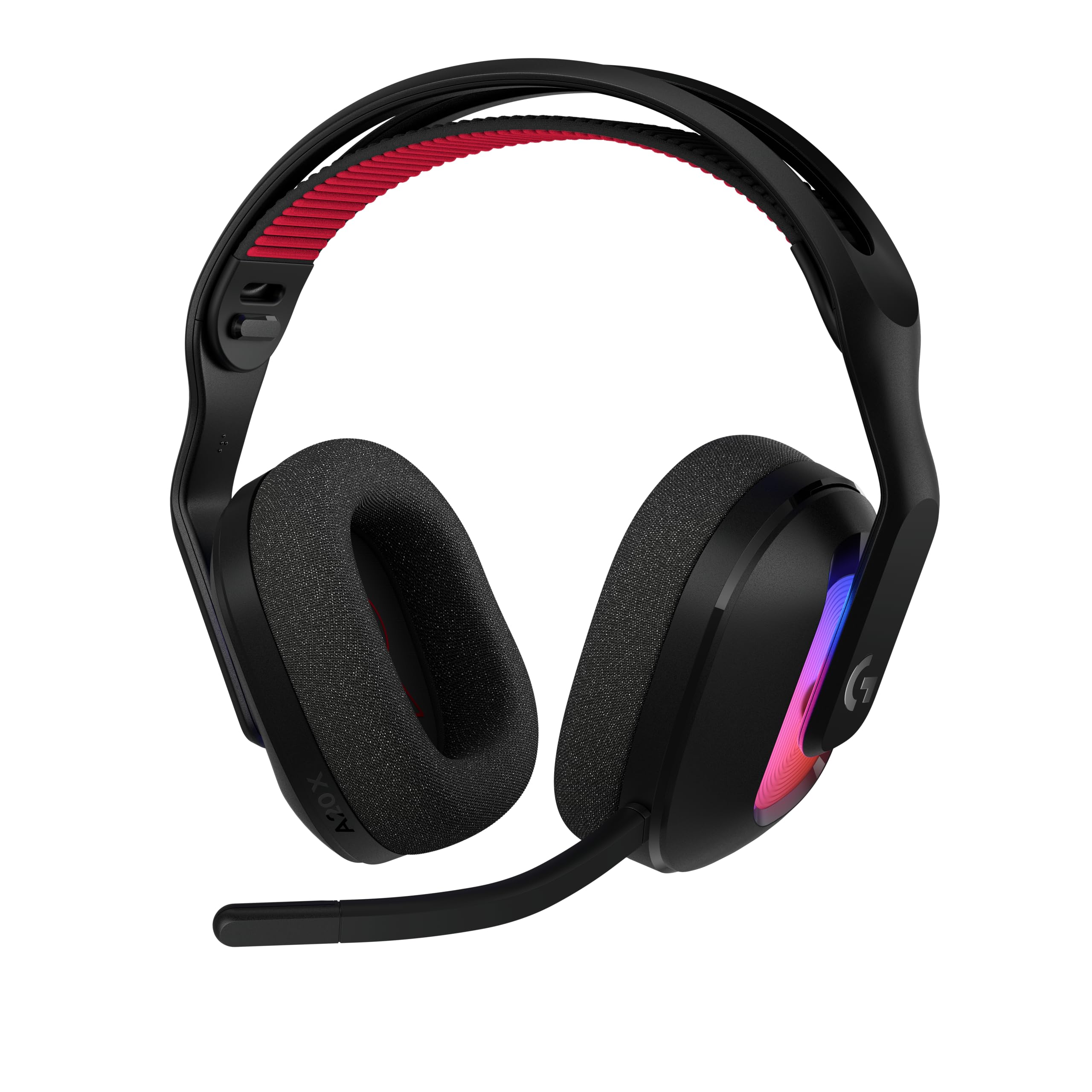
The Astro A20 X is built around a single killer feature: PLAYSYNC Audio, which lets you switch audio between two systems — think Xbox and PS5, or PC and Switch — with no cable swapping or dongle juggling. Under the hood, it uses 40 mm PRO-G Audio Drivers with live edge technology, delivering a 48 kHz/24-bit audio stream that is clean, punchy, and well-balanced across the frequency range. The 48 kHz high-resolution boom mic with Blue VO!CE customization gives you studio-grade voice clarity out of the box, with software that lets you dial in compression, noise gate, and EQ for streaming or competitive comms.
Weighing under 300 grams, the A20 X is among the lightest premium headsets in this class. The 8-zone LIGHTSYNC RGB is tasteful and fully customizable via G HUB. Built-in MixAmp technology gives you on-the-fly game/chat balancing on PC and Xbox, a feature that serious multiplayer gamers will appreciate. Battery life is competitive for the weight class, and the 24-bit LIGHTSPEED wireless keeps latency imperceptible.
The on-ear earpiece shape may feel slightly less enveloping for those used to over-ear cups. The microphone, while excellent, lacks the super-wideband frequency extension of the Razer BlackShark V3’s mic. For a lightweight headset that prioritizes seamless multi-system switching and broadcast-quality voice capture, the A20 X is a standout mid-range pick.
Why it’s great
- PLAYSYNC Audio allows seamless 2-system audio switching
- Ultra-lightweight design (under 300 g) for fatigue-free wear
- 48 kHz mic with Blue VO!CE software for broadcast-quality voice
Good to know
- On-ear design is less immersive than over-ear alternatives
- Mic could benefit from a wider frequency capture range
- No ANC for noisy environments
4. Logitech G522 Lightspeed Wireless

Logitech’s G522 takes the proven G-series formula and refines it with state-of-the-art PRO-G audio drivers that deliver 48 kHz/24-bit audio for low distortion and rich bass — a noticeable upgrade over standard 16-bit offerings. The tri-connect setup (LIGHTSPEED wireless, Bluetooth 5.0, and USB-C wired) ensures you can play on PC, Switch, or mobile without compromise. The full-bandwidth 48 kHz/16-bit microphone captures voice with broadcast-quality clarity, and Blue VO!CE software lets you apply noise gates, compressors, and custom EQs.
The lightweight 280-gram build is accented by a washable suspension band and rounded cushion ear cups that fit comfortably over long sessions. LIGHTSYNC RGB lighting is customizable across 16.8 million colors, syncing with your game or desktop aesthetic. Battery life reaches up to 60 hours with lighting off, cutting down on charging stops. The wireless range extends to 30 meters, giving you freedom to grab a drink without taking the headset off.
Some users report that the default volume level is lower than expected, requiring a software boost via G HUB to reach competitive loudness. The sound signature leans toward bass-heavy, which is excellent for explosions and cinematic moments but can muddy mid-range frequencies in music. For a mid-range wireless headset with deep software integration and impressive battery life, the G522 is a strong contender.
Why it’s great
- PRO-G drivers deliver 48 kHz/24-bit audio with low distortion
- Tri-connect (LIGHTSPEED, Bluetooth, USB-C) for total platform support
- 60-hour battery life with customizable LIGHTSYNC RGB
Good to know
- Default volume may be too low for some users without software boost
- Bass-heavy tuning can muddy mid-range frequencies
- Rounded ear cups may not accommodate very large ears
5. Razer BlackShark V3 Wireless
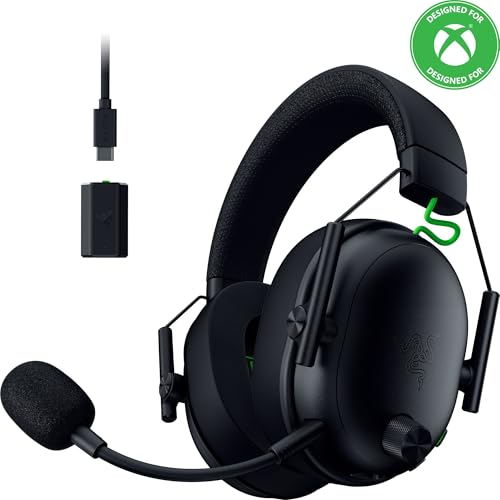
Razer’s BlackShark V3 is tuned specifically for competitive FPS gameplay, using TriForce Titanium 50 mm Gen-2 drivers with a titanium-coated diaphragm that excels at reproducing footsteps and environmental cues with stunning clarity. The Hyperspeed Wireless Gen-2 delivers latency as low as 10 ms, making it one of the fastest wireless headsets on the market. The detachable HyperClear Super Wideband 9.9 mm microphone captures voice frequencies that standard mics miss, ensuring your callouts sound natural and rich.
Connectivity is tri-mode: 2.4GHz, Bluetooth 5.3, and USB-C wired. The simultaneous mixing of 2.4GHz and Bluetooth audio lets you stay in game chat while taking a phone call. Next-gen surround sound on Xbox and PC (7.1.4 on the latter) creates an expanded soundstage that gives you a tangible positional advantage. The headset comes with Pro-Tuned FPS profiles created with Razer’s esports roster, so you can dial in the perfect EQ for Valorant, Apex, or Counter-Strike out of the box.
The build feels slightly plasticky compared to the metal-framed HyperX Cloud III, which detracts from the premium aura at this price point. The microphone, while excellent in frequency range, lacks the broadcast-quality software polish of Logitech’s Blue VO!CE. For a headset laser-focused on competitive audio cues and ultra-low latency, the BlackShark V3 is a top-tier pick for FPS purists.
Why it’s great
- TriForce Titanium drivers provide unmatched footstep clarity
- 10 ms latency is among the industry’s fastest
- Pro-Tuned FPS EQ profiles for popular esports titles
Good to know
- Build quality feels less robust than metal-framed competitors
- Mic software lacks advanced broadcast features like noise gate compression
- No ANC or transparency mode for ambient awareness
6. ASUS ROG Pelta Wireless

The ROG Pelta is built for gamers who prioritize battery life above all else — its 70-hour endurance in 2.4GHz mode (with RGB off) is class-leading, and a 15-minute fast charge gives you 3 hours of playtime. The 50 mm titanium-plated diaphragm drivers produce a balanced frequency response from 20 Hz to 20 kHz, with a sound signature that avoids the excessive bass bias found in some lower-cost models. This makes it equally capable for hearing subtle in-game details and enjoying music or podcasts between sessions.
Tri-mode connectivity (Bluetooth 5.0, 2.4GHz via ROG SpeedNova, and USB-C wired) ensures compatibility with PC, PS5, PS4, Switch, and mobile. The detachable 10 mm super-wideband microphone captures voice with exceptional clarity, competing well with mics on headsets costing twice as much. The ergonomic design weighs in at just 309 grams, with a breathable three-level adjustable elastic headband that minimizes pressure points during long gaming sessions. ASUS Aura Sync provides customizable RGB lighting for those who want their peripherals to match.
The bass response is slightly subdued compared to the Logitech G522, which may disappoint players who want thunderous explosions. The plastic housing lacks the metal reinforcement of the HyperX Cloud III, giving it a slightly less durable feel. For a wireless headset that delivers phenomenal battery life, lightweight comfort, and versatile connectivity at a competitive price, the ROG Pelta is an excellent mid-range value.
Why it’s great
- 70-hour battery life with fast charging (3 hours from 15 min)
- Lightweight 309 g design with breathable headband
- Titanium-plated drivers for clear, balanced sound
Good to know
- Bass is leaner than bass-boosted competitors
- Plastic build may not feel as premium as metal-framed alternatives
- RGB off required to reach maximum battery life
7. HyperX Cloud III Wired
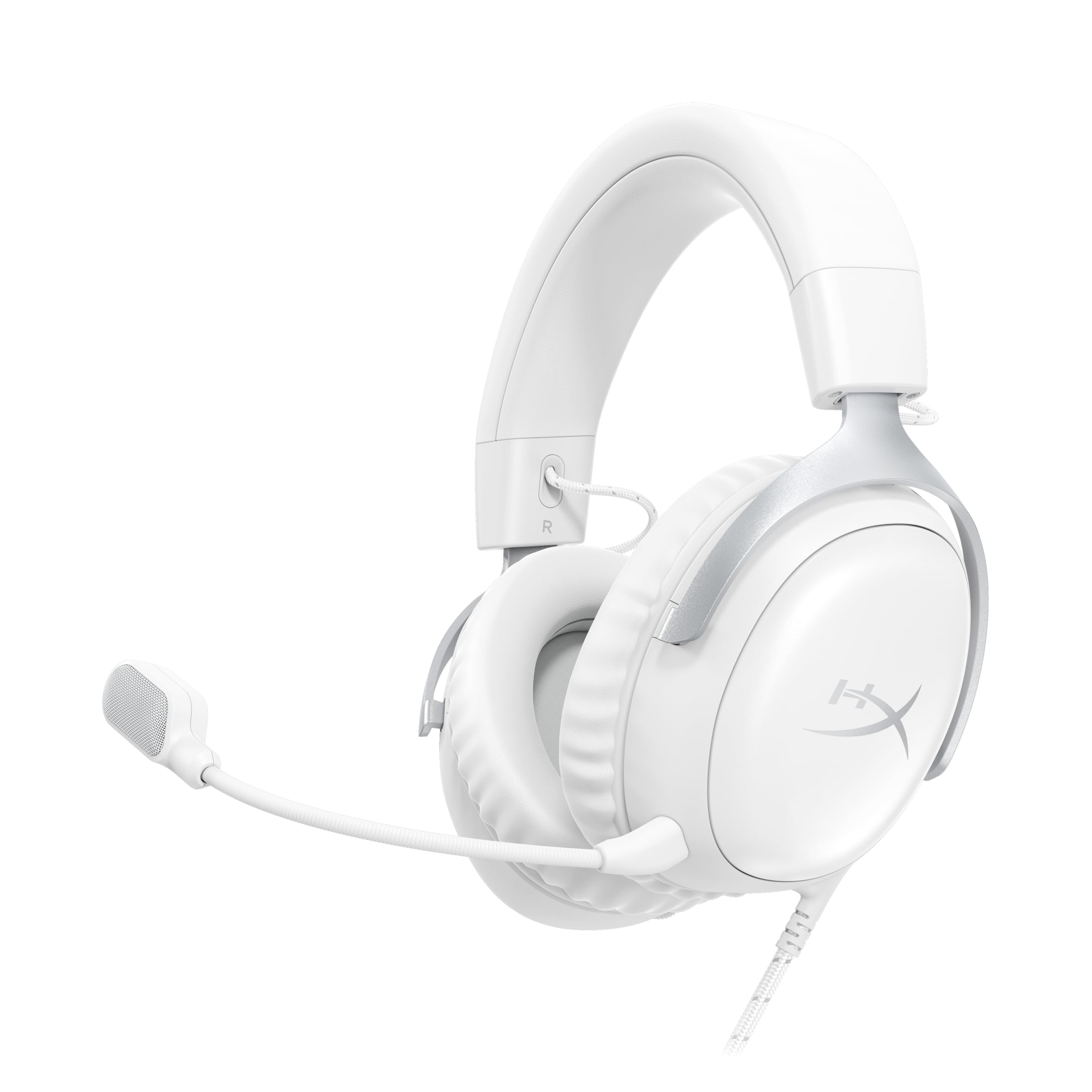
The HyperX Cloud III is the wired workhorse that proves you do not need to spend triple digits to get excellent gaming audio. Its angled 53 mm drivers are tuned by HyperX engineers to emphasize dynamic gaming sounds — footsteps, reloads, and ability cues — without distorting at high volumes. The DTS Headphone:X Spatial Audio (lifetime activation on PC) creates a virtual 3D soundstage that rivals more expensive wireless solutions, especially for competitive shooters where positional awareness is critical.
The build quality is exceptional for the price bracket: a full metal frame wrapped in HyperX’s signature memory foam cushions with premium leatherette. The upgraded 10 mm noise-cancelling microphone includes a built-in mesh filter that cuts disruptive background noise and features an LED mute indicator. Connectivity is versatile with USB-A, USB-C, and 3.5 mm cables, making it compatible with PC, PS5, Xbox Series X|S, Switch, and mobile devices. Onboard audio controls on the earcup let you adjust volume and mute without alt-tabbing out of your game.
Being wired means you are tethered to your device, which can be a nuisance for console players with long cable runs or PC players who value desk freedom. The mic, while clear, does not match the super-wideband extension of the Razer or ASUS models. For gamers who want the absolute best value, proven comfort, and a durable build that will survive years of use, the Cloud III is unbeatable.
Why it’s great
- Angled 53mm drivers deliver excellent spatial audio
- Full metal frame with HyperX memory foam for durable comfort
- Works with every major platform via USB-A, USB-C, and 3.5 mm
Good to know
- Wired connection limits freedom of movement
- Microphone lacks super-wideband frequency capture
- No Bluetooth or wireless option
FAQ
Should I choose a wired or wireless gaming headset for competitive play?
What does Tempest 3D Audio compatibility mean for PS5 headsets?
Is a super-wideband microphone worth paying extra for in a gaming headset?
Final Thoughts: The Verdict
For most users, the gaming headset under $800 winner is the SteelSeries Arctis Nova Pro Wireless because it combines hot-swappable batteries, active noise cancellation, and a DAC base station that bridges PC and console seamlessly. If you want a lightweight headset with exceptional spatial audio and dual-audio mixing, grab the SteelSeries Arctis Nova 7P. And for a pure competitive edge with the fastest wireless latency and FPS-tuned drivers, nothing beats the Razer BlackShark V3 Wireless.