
That faint footstep directly behind you in an FPS round isn’t just audio detail — it’s the difference between clutching the win and respawning. A gaming headset with USB connectivity delivers that positional awareness through a dedicated digital signal, bypassing the analog noise floor of a standard 3.5mm jack and powering advanced surround sound processing without draining your controller’s battery.
I’m Mohammad Maruf — the founder and writer behind Drink4Good. I spend my weeks analyzing market trends across PC peripherals, comparing driver materials, DAC integration, and frame build quality to separate genuine upgrades from marketing noise.
Whether you are building a new battle station or upgrading from a basic earbud setup, finding the right gaming headset with usb means balancing driver size, comfort padding, microphone clarity, and platform compatibility — all without overspending on features you will never use.
How To Choose The Best Gaming Headset With USB
A USB gaming headset is a self-contained audio solution. Unlike a 3.5mm headset that relies on your motherboard’s onboard audio chip (which can introduce electrical noise and limit surround sound processing), a USB headset has a built-in DAC and amplifier. This means cleaner sound, virtual surround sound support, and often a dedicated control box for volume and mic mute. The trade-off is that you lose compatibility with some console controllers that lack a USB audio port, so confirm your platform’s ports before buying.
Driver Size and Driver Type
The drivers are the speakers inside each earcup. Larger drivers — 50mm or 53mm — typically produce more impactful bass and higher volume ceilings, which helps footsteps and explosions feel weighty. Smaller 40mm drivers can deliver clearer mid-range detail but may lack sub-bass punch. Driver design matters too: standard dynamic drivers are the norm, but some headsets use patented multi-chamber designs (like HyperX’s dual chambers) to physically separate bass from mids and highs, reducing distortion at higher volumes.
Microphone Clarity and Placement
In multiplayer games, your headset mic is your lifeline to teammates. Look for a cardioid or uni-directional pickup pattern that rejects background noise — the click of your keyboard or the hum of your PC fan should not make it to your Discord call. Flip-to-mute or retractable designs keep the mic out of the way when you are in single-player mode. Detachable mics offer the most flexibility if you plan to use the headset for music or travel, but detachable mics can sometimes introduce connection noise over time.
Comfort Padding and Frame Weight
Gaming sessions regularly stretch past three hours. Memory foam earpads with a breathable fabric cover (like mesh or microfiber cloth) prevent sweat buildup and pressure points. An adjustable floating headband distributes weight evenly across your skull rather than clamping on your temples. Weigh the frame too — a headset under 300 grams feels noticeably lighter on the crown after a marathon session than one pushing 380 grams. Glasses wearers should look for headsets specifically advertised as glasses-friendly, with softer padding and deeper ear cups.
Quick Comparison
On smaller screens, swipe sideways to see the full table.
| Model | Category | Best For | Key Spec | Amazon |
|---|---|---|---|---|
| Razer Kraken V4 X | Wired USB-C/A | Multi-platform gaming | Retractable cardioid mic | Amazon |
| HyperX Cloud Alpha | Wired 3.5mm+USB | Competitive FPS audio clarity | Dual chamber 50mm drivers | Amazon |
| Corsair HS80 RGB USB | USB Wired | High-fidelity audio & streaming | Dolby Audio 7.1 + 24bit/96kHz | Amazon |
| Razer Kraken Kitty V2 | USB Wired | Streamer aesthetic & engagement | Stream reactive RGB kitty ears | Amazon |
| Turtle Beach Atlas 200 | USB Wired | Glasses-wearers & all-day comfort | 280g lightweight + Waves 3D audio | Amazon |
| Redragon H510 Zeus-X | USB Wired | Budget-conscious breathable wear | 53mm drivers + fabric mesh pads | Amazon |
| FIFINE AmpliGame H13BP | USB Wired | Customizable RGB & entry-level 7.1 | 11-mode RGB + in-line control box | Amazon |
In‑Depth Reviews
1. Razer Kraken V4 X

The Kraken V4 X bridges the compatibility gap that plagues many USB-only headsets. Instead of a fixed USB-A cable, Razer includes a convertible Type-C to Type-A cable that lets you plug directly into a Nintendo Switch, Steam Deck, or modern smartphone while still supporting your PC or PS5. The patented TriForce 40mm driver architecture separates tuning for highs, mids, and lows across three distinct driver ports, which reduces the audio blurring common in single-chamber 40mm designs.
During extended sessions, the hybrid fabric-and-leatherette memory foam cushions provided consistent comfort without heat buildup. The retractable HyperClear cardioid mic pulls cleanly into the left earcup when not in use — a cleaner solution than a detachable mic that can be lost. The mic’s pickup pattern rejected keyboard clatter effectively during Discord and in-game voice tests. Razer’s 7.1 surround sound (available on Windows 10 64-bit) adds spatial depth, though some users note that the software processing can feel artificial in fast-paced shooters.
The lightweight frame (approximately 280g) makes this a strong candidate for gamers who shift between desk and couch setups. The volume dial is conveniently located on the left earcup, and an included protective case adds value for portable use. The lack of an in-line control box means all adjustments happen via the headset itself or Razer Synapse software.
Why it’s great
- Convertible USB-C/A cable works with PC, Switch, Steam Deck, and phones
- Retractable mic eliminates the risk of losing a detachable mic
- Lightweight 280g frame with breathable hybrid cushions
Good to know
- 40mm drivers lack the bass punch of 50mm+ competitors
- 7.1 surround sound software can introduce audio choppiness
- Requires Razer Synapse for RGB customization
2. HyperX Cloud Alpha

The HyperX Cloud Alpha remains a benchmark for competitive gamers who prioritize audio separation over RGB flair. Its dual chamber driver design physically separates the bass-producing rear chamber from the mid/high front chamber, which virtually eliminates distortion at higher volumes — a crucial advantage when footsteps and gunshots occupy the same frequency band in games like Valorant or Call of Duty. The 50mm neodymium magnets deliver a frequency response spanning 15Hz to 25kHz, giving sub-bass rumble without muddying vocal cues.
The legendary HyperX comfort is largely due to the memory foam ear pads and leatherette covering, though some users report the leatherette peels after two to three years of heavy use. The aluminum frame adds durability without excessive weight; the headset has survived drops and door slams reported by long-term owners. The detachable braided cable with in-line audio control is a smart design choice — if the cable fails, you replace only the cable, not the entire headset.
The detachable noise-cancelling microphone delivers clear communication, though it is not as transparent as a dedicated cardioid mic on studio-level headsets. The Cloud Alpha connects via 3.5mm by default, meaning you will need to use a separate USB adapter or your motherboard’s analog port for surround sound processing (the headset itself is analog and relies on the source for any virtual surround). This makes it less plug-and-play for USB-only setups compared to native USB headsets.
Why it’s great
- Dual chamber drivers deliver distortion-free audio separation
- Durable aluminum frame withstands drops and travel
- Detachable braided cable reduces total replacement cost
Good to know
- Leatherette padding may peel after 2-3 years
- Requires external USB adapter for virtual surround
- Lacks in-line mute button on the detachable cable
3. Corsair HS80 RGB USB

The Corsair HS80 RGB USB is one of the few headsets in this price tier to offer native Dolby Audio 7.1 surround sound over a USB connection rather than a proprietary software solution. This means you get consistent spatial audio without depending on a specific operating system version. The custom-tuned 50mm neodymium drivers handle a frequency range from 20Hz to 40kHz — extending beyond human hearing but ensuring headroom for high-resolution audio files and in-game soundtracks.
The broadcast-grade omni-directional microphone is a standout feature. It picks up voice from all directions with remarkable clarity, rivaling standalone USB mics in the range. The flip-up mute mechanism includes an LED mute indicator visible from the front, so you always know your broadcast status. The memory foam earpads use a breathable microfiber cloth exterior that stays cool during long streaming sessions, and the floating headband design reduces pressure on the top of the skull.
Some users note that the cloth earcuffs can feel slightly itchy, and the cable is non-braided, which is a minor downgrade from the metal-braid on competitors. The HS80 also lacks an in-line volume control — all adjustments happen through Corsair’s iCUE software or the Windows volume mixer. For PS5 and PS4 users, the USB connection works perfectly, though the Dolby Atmos processing is only available on Windows.
Why it’s great
- Native Dolby Audio 7.1 over USB without software dependency
- Broadcast-grade mic rivals standalone USB microphones
- Breathable microfiber cloth earpads resist heat buildup
Good to know
- Non-braided cable feels less premium than competitors
- No in-line volume control — requires software adjustment
- Cloth earcuffs may irritate sensitive skin
4. Turtle Beach Atlas 200
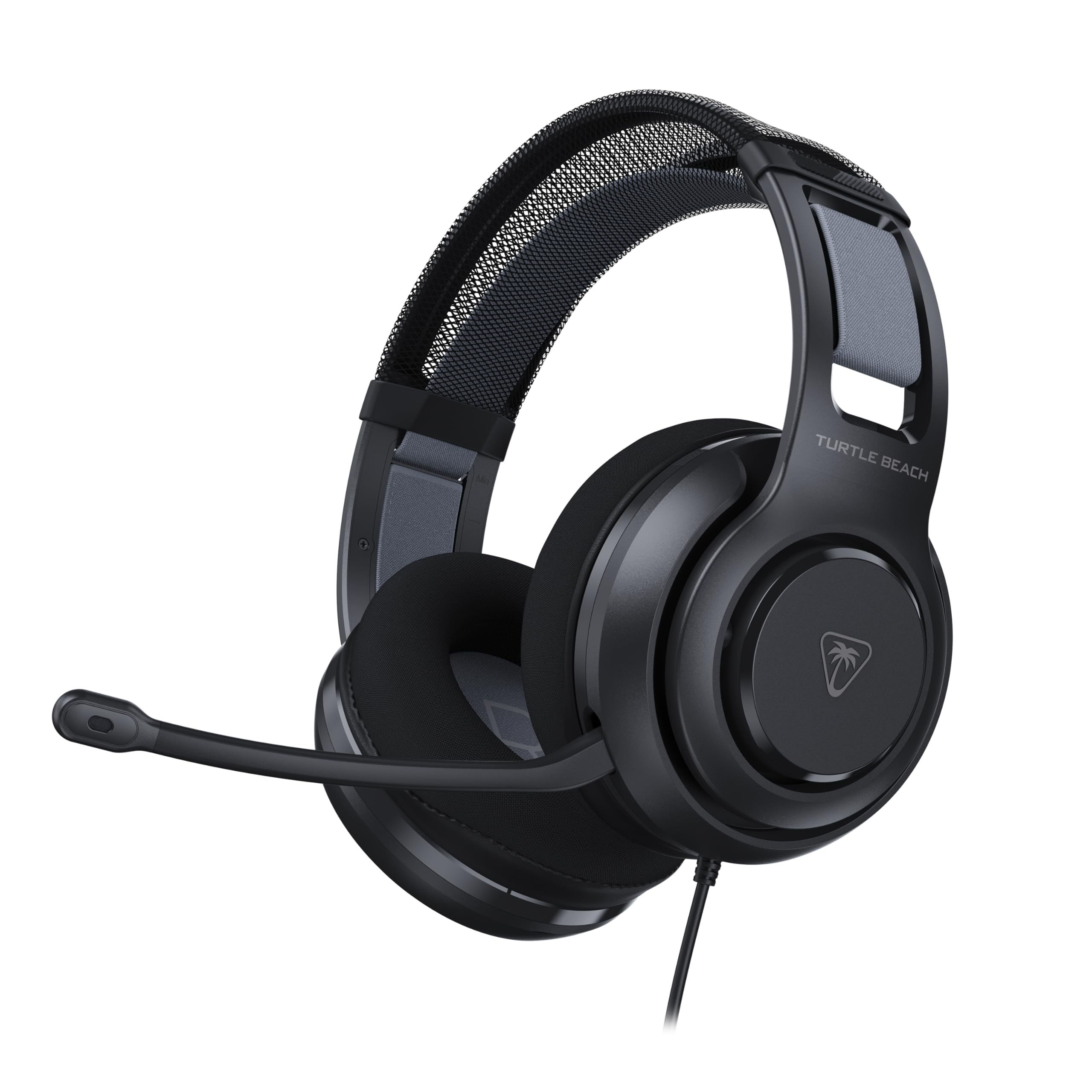
Turtle Beach built the Atlas 200 specifically for PC gamers who wear glasses. At approximately 280g, it is one of the lightest USB gaming headsets on the market, and the memory foam cushions are designed with deeper ear cavities that reduce pressure on eyeglass frames. The 50mm Nanoclear drivers deliver 24-bit/96kHz high-fidelity audio via the included USB adapter, and the Waves 3D audio processing creates a virtual soundstage that works well with Turtle Beach’s Swarm 2 software for custom EQ tuning.
The uni-directional flip-to-mute microphone captures voice accurately without picking up ambient room noise. The variable mic monitoring feature — which lets you hear your own voice through the earcups to avoid shouting — is a thoughtful addition for group chat scenarios. The floating headband design with fabric-wrapped padding distributes weight evenly, and the earcup adjustment range is generous enough to accommodate larger head sizes.
The primary limitation is build quality: the mostly plastic construction feels less substantial than the aluminum-framed Cloud Alpha or the denser Corsair HS80. The USB adapter is required for the 24-bit audio and Waves processing, but the headset also works as a standard 3.5mm headset for console or mobile use without the adapter. The lack of RGB lighting may disappoint streamers looking for visual flair, but the trade-off is a cleaner, more professional look.
Why it’s great
- Deep ear cups designed specifically for glasses-wearers
- Ultra-light 280g frame reduces fatigue
- Variable mic monitoring prevents shouting on voice chat
Good to know
- Plastic frame feels less durable than metal alternatives
- USB adapter required for high-fidelity audio processing
- No RGB lighting — purely functional design
5. Razer Kraken Kitty V2

The Razer Kraken Kitty V2 is designed for streamers who want their headset to be part of the show. The signature kitty ears house Chroma RGB lighting that reacts to Twitch alerts, emotes, and stream events — not just static color. The stream reactive lighting is customizable across 16.8 million colors through Razer Synapse, and the ears are removable for a more subtle look when not broadcasting. The 40mm TriForce drivers (the same architecture found in the Kraken V4 X) provide clear, balanced audio suitable for both gaming and music.
The HyperClear cardioid microphone is a significant upgrade over omnidirectional mics found on cheaper headsets. It picks up voice primarily from the front while rejecting keyboard clicks, fan hum, and room echo. The hybrid fabric and leatherette cushions provide good noise isolation for an immersive experience during long streams. Earcup lighting complements the ears, creating a cohesive visual package.
The main trade-off is compatibility. The 7.1 surround sound functionality requires Windows 10 64-bit, and the headset uses a USB-A connection that works with PC, PS4, and PS5 — but not Xbox or Nintendo Switch. Some PS5 users report lower volume levels compared to PC. The headset is also non-detachable from the cable, so if the cable frays, the entire unit needs replacement. At 320g, it is heavier than the Atlas 200 but still reasonable for extended wear.
Why it’s great
- Stream reactive kitty ears engage Twitch and YouTube audiences
- HyperClear cardioid mic rejects background noise effectively
- Hybrid fabric/leatherette cushions balance comfort and isolation
Good to know
- Non-detachable cable requires full replacement if damaged
- 7.1 surround sound only works on Windows 10 64-bit
- PS5 volume may be lower than PC output
6. Redragon H510 Zeus-X

The Redragon H510 Zeus-X is a value-oriented entry that does not cut corners on driver size. With 53mm audio drivers — the largest in this roundup — it produces a wide soundstage with substantial bass presence. The larger driver surface area moves more air, which translates to more impactful explosions in games like Battlefield or Apex Legends. The 7.1 surround sound processing is handled via the USB connection, offering virtual positional audio without requiring additional software downloads.
The defining comfort feature is the fabric mesh ear cushion covering over memory foam. Unlike leatherette that traps heat and can peel, the mesh surface remains breathable during warm gaming sessions and tends to last longer without degradation. The RGB backlighting inside the earcups is adjustable through the in-line control box, which also houses volume control and mic mute — though the mute function lacks a visible indicator. The braided USB cable is robust and resistant to tangling.
The microphone is serviceable for in-game chat but lacks the clarity of the cardioid mics found on the Razer or Corsair options. Some users report the mic quality degrades slightly compared to the original H510 non-RGB version. The earcup adjustment range is limited — users with larger heads may find the headband maxed out, leading to uncomfortable pressure. The non-detachable cable means you cannot replace the cord independently if it fails.
Why it’s great
- 53mm drivers are the largest in this comparison for deep bass
- Fabric mesh ear pads stay cool and resist peeling
- Braided USB cable with in-line control box
Good to know
- Limited earcup adjustment may not fit larger head sizes
- Mic clarity is average compared to cardioid alternatives
- Non-detachable cable prevents independent replacement
7. FIFINE AmpliGame H13BP
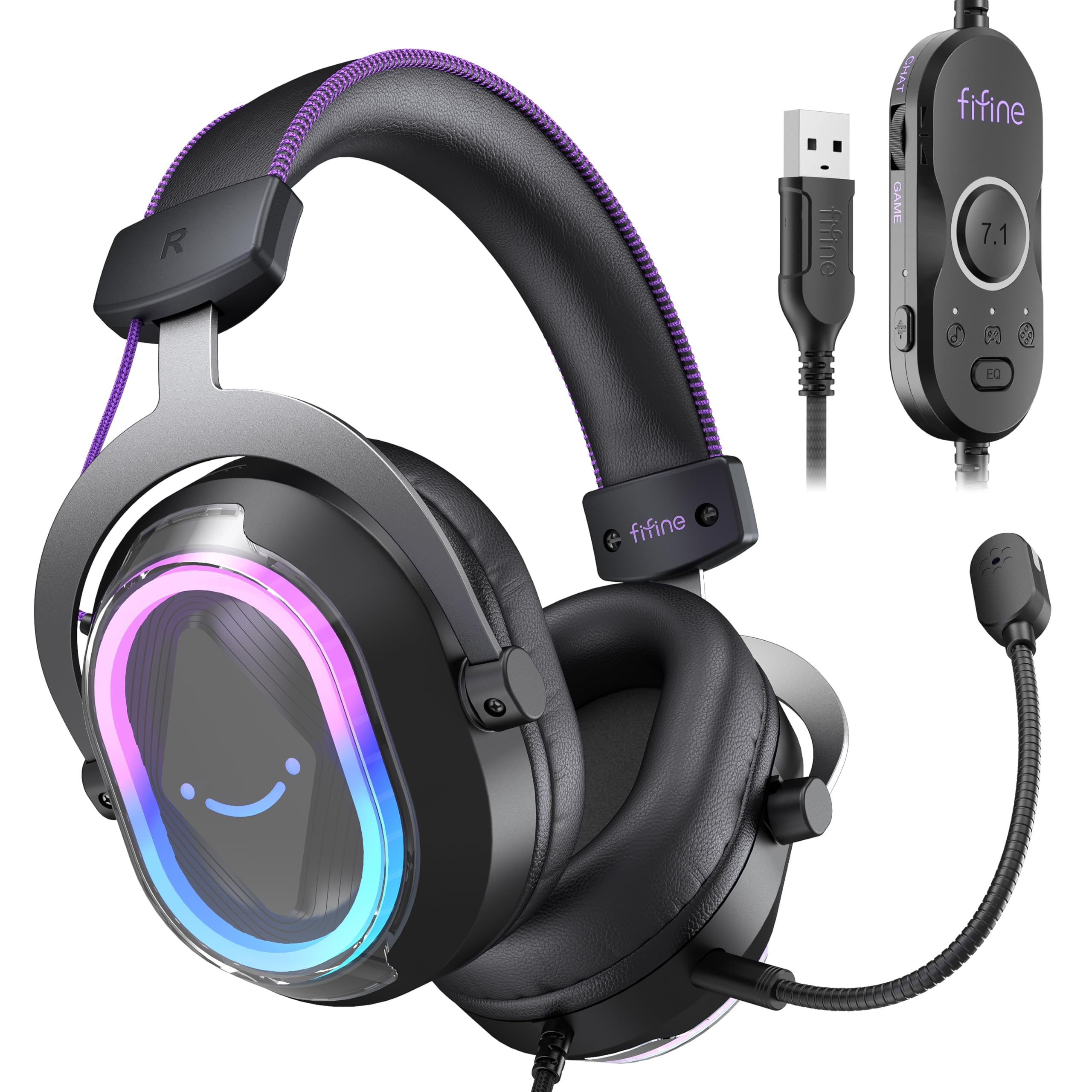
The FIFINE AmpliGame H13BP enters the market at a friendly price point while packing features often reserved for higher tiers. The 50mm dynamic drivers deliver clear audio across high, mid, and low frequencies, and the 7.1 surround sound processing (activated via the in-line control box) adds spatial awareness for competitive titles. The rhombus-frame design with transparent earcups gives the H13BP a distinct look that stands out in a sea of black rectangles.
The RGB implementation is unusually flexible for this tier. A long press on the control box toggles the lighting on and off, while a single click cycles through 11 different lighting modes — including breathing, wave, and static patterns. The protein skin ear pads with memory foam cushioning provide adequate comfort for sessions under three hours, though the clamping force is slightly tighter than the Corsair or Redragon options. The 7.55-foot braided cable gives generous reach around a desktop or console setup.
The microphone includes a one-click mute with a red LED indicator, plus noise cancellation that reduces background hum. However, the mic is not detachable, and the noise cancellation is less effective than cardioid designs — some background noise may bleed into chat. The USB-A connection supports plug-and-play on PC, Mac, PS5, and PS4, but it does not work with Xbox or PlayStation controllers. The control box’s EQ button toggles between game and chat audio balance, a useful feature for coordinating with teammates.
Why it’s great
- 11-mode RGB with transparent earcup design stands out visually
- In-line control box includes 7.1 toggle, volume, and game/chat balance
- 50mm drivers with 7.1 surround sound at entry-level pricing
Good to know
- Non-detachable cable limits replacement options
- Microphone noise cancellation is weaker than cardioid mics
- Not compatible with Xbox or PlayStation controllers
FAQ
Can I use a USB gaming headset on Xbox without an adapter?
Does a larger driver diameter always mean better sound quality?
How do I clean memory foam earpads without damaging them?
Why does my USB headset sound quieter on PS5 than on PC?
Final Thoughts: The Verdict
For most users, the gaming headset with usb winner is the Razer Kraken V4 X because the convertible USB-C/A cable solves the platform compatibility problem that frustrates console-and-PC gamers, while the retractable mic and 280g frame deliver practical comfort across long sessions. If you want better audio separation for competitive FPS gaming, grab the HyperX Cloud Alpha and pair it with a USB adapter for virtual surround. And for glasses-wearers or streamers who prioritize all-day wear and mic clarity, nothing beats the Corsair HS80 RGB USB with its Dolby Audio 7.1 and broadcast-grade microphone.