
The difference between winning and losing a firefight often comes down to how fast your monitor refreshes and whether that refresh stays in sync with your GPU. A budget office panel introduces input lag, ghosting trails behind fast-moving targets, and screen-tearing ruins immersion during critical moments. Choosing the right display means balancing resolution, refresh rate, response time, and panel type to match your hardware and the genres you play most.
I’m Mohammad Maruf — the founder and writer behind Drink4Good. I’ve spent years analyzing gaming monitor specifications, comparing IPS, VA, and OLED panel technologies, and tracking how each spec translates to real-world performance in competitive and immersive titles.
The guide below breaks down nine of the best options across different price tiers to help you find a gaming monitor for pc that delivers smooth motion, accurate colors, and minimal input lag for the way you actually play.
How To Choose The Best Gaming Monitor For PC
The right gaming monitor balances three core elements: resolution, refresh rate, and panel technology. A 4K panel with 60Hz might look sharp but feels sluggish in fast-paced shooters. Conversely, a 1080p 360Hz monitor offers blazing speed but lacks the sharpness for detailed RPG landscapes. Understanding how these specs interact with your GPU’s capabilities is the first step toward a purchase you won’t regret.
Match Refresh Rate to Your GPU’s Output
Your monitor’s refresh rate defines how many frames it can display per second. If your graphics card averages 120 fps in your favorite title, a 144Hz monitor is a perfect match. Buying a 240Hz monitor for a system that struggles to hit 100 fps delivers no benefit and wastes potential. Modern adaptive sync technologies like FreeSync and G-Sync eliminate tearing across a wide range of frame rates, making a mid-range refresh rate monitor a safer long-term bet for most builders.
Panel Type Determines Visual Character
IPS panels dominate the mid-range because they offer excellent color accuracy, wide viewing angles, and fast enough response times for competitive play. VA panels deliver deeper contrast ratios (3000:1 versus 1000:1 on IPS), making dark scenes in horror or open-world games more immersive, but they sometimes suffer from black smearing. OLED panels offer the best of both worlds with per-pixel lighting, infinite contrast, and near-instantaneous response times, but they come at a premium and require basic care to avoid burn-in.
Don’t Ignore Connectivity and Ergonomics
Connectivity limits what your PC can achieve. HDMI 2.1 supports higher bandwidth for 4K at higher refresh rates, while DisplayPort remains the standard for high-refresh PC gaming. A fully adjustable stand (height, tilt, swivel, pivot) prevents neck strain during long sessions and makes multi-monitor setups easier to align. These quality-of-life features often separate a good monitor from a frustrating one months after purchase.
Quick Comparison
On smaller screens, swipe sideways to see the full table.
| Model | Category | Best For | Key Spec | Amazon |
|---|---|---|---|---|
| ASUS ROG Strix XG27AQDMG | Premium OLED | Competitive Esports & Immersive Play | 0.03ms GtG / 240Hz / Glossy WOLED | Amazon |
| LG 27GX704A-B UltraGear OLED | Premium OLED | High-Fidelity Open World Games | 0.03ms GtG / 240Hz / OLED 1300 Nits Peak | Amazon |
| AOC Agon PRO AG276QZD2 | QD-OLED | Vibrant Color & High-Speed Action | 0.03ms GtG / 240Hz / QD-OLED | Amazon |
| Samsung Odyssey G50D 32″ | Fast IPS | Versatile Gaming & Productivity | 1ms GtG / 180Hz / VESA DisplayHDR 400 | Amazon |
| Alienware AW2725DM | Premium IPS | Long Gaming Sessions & Color Work | 1ms GtG / 180Hz / DCI-P3 95% | Amazon |
| Acer Nitro VG270K V4 | Mid-Range IPS | High-Resolution Single-Player Gaming | 0.5ms GtG / 4K 160Hz DFR | Amazon |
| Dell S2725QS 4K | Ergonomic IPS | Hybrid Work & Casual Gaming | 0.03ms / 120Hz / 1500:1 Contrast | Amazon |
| LG 32GS60QC-B UltraGear | Curved VA | Immersive Sim Racing & RPGs | 1ms GtG / 180Hz / 1000R Curve | Amazon |
| Samsung Odyssey G5 G53F | Entry-Level IPS | Budget QHD Gaming Upgrade | 1ms MPRT / 200Hz / FreeSync Premium | Amazon |
In‑Depth Reviews
1. ASUS ROG Strix XG27AQDMG

The ASUS ROG Strix XG27AQDMG uses a third-generation WOLED panel with a glossy finish that produces deeper blacks and richer colors than matte-coated OLEDs, especially in a controlled lighting environment. The 240Hz refresh rate and 0.03ms gray-to-gray response time eliminate motion blur entirely, making fast strafes and flick shots feel instantaneous. A custom heatsink and advanced airflow design reduce burn-in risk, and ASUS covers it with a three-year warranty that includes burn-in protection.
The anti-flicker technology smooths out luminance changes during variable refresh rate operation, which addresses a common complaint on earlier OLED panels. The uniform brightness setting maintains consistent luminance levels regardless of the on-screen white window size, preventing the automatic dimming that can distract during desktop use. On the connectivity side, dual HDMI 2.1 ports and DisplayPort 1.4 give full bandwidth for 1440p at 240Hz with HDR enabled.
Text clarity is slightly softer than a high-PPI IPS panel due to the sub-pixel layout, but it remains perfectly readable for daily use. The DisplayWidget software allows quick profile switching without reaching for physical buttons. If you want OLED motion clarity with a glossy anti-glare finish and a solid burn-in warranty, this is the premium pick to beat.
Why it’s great
- Glossy WOLED panel delivers exceptional contrast and color vibrancy
- Custom heatsink and 3-year burn-in warranty for long-term confidence
- Dual HDMI 2.1 ports support high-bandwidth input
Good to know
- Text clarity slightly less sharp than high-PPI IPS panels
- No built-in speakers require external audio solution
- VESA mount attachment process is fiddly
2. LG 27GX704A-B UltraGear OLED
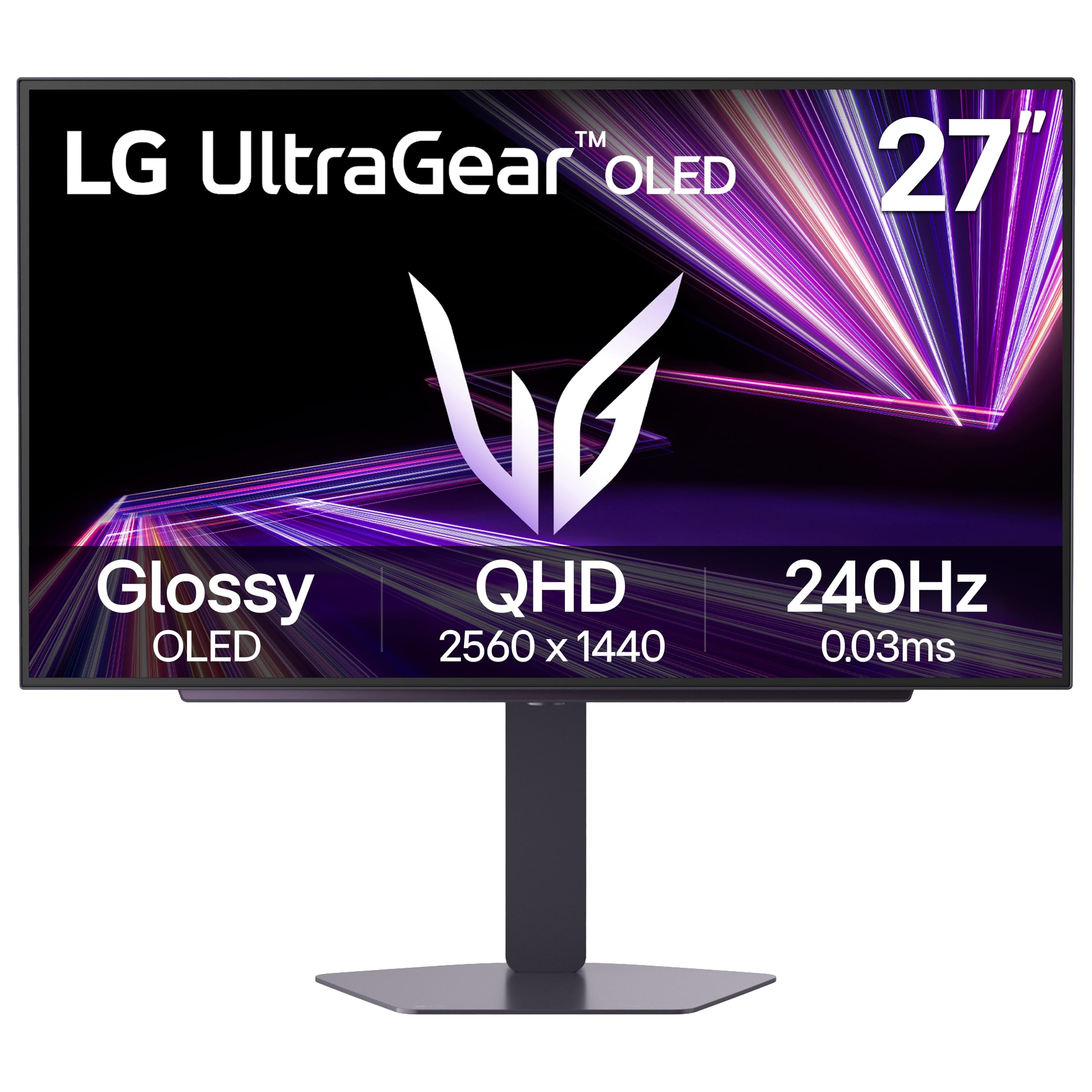
The LG 27GX704A-B brings a glossy OLED panel to the UltraGear lineup with a peak brightness of 1300 nits, making HDR highlights in games like Cyberpunk 2077 and Forza Horizon truly pop. The 240Hz refresh rate and 0.03ms response time ensure that fast-moving objects remain sharp with zero ghosting, while the 1.5M:1 contrast ratio produces perfect blacks that make dark scenes in horror games fully immersive. The display carries VESA DisplayHDR True Black 400 certification, confirming its ability to maintain deep black levels while hitting bright highlights.
Three UL certifications cover anti-glare, flicker-free operation, and low blue light output, which helps reduce eye fatigue during long sessions. The glossy finish does reflect overhead lighting, so positioning it away from direct light sources is recommended for optimal image quality. LG includes OLED Care features that automatically run pixel cleaning cycles during standby to mitigate image retention over time.
The fully adjustable stand supports height, swivel, tilt, and pivot, giving you plenty of flexibility for finding the ideal viewing angle. The four-side virtually borderless design works well for multi-monitor setups. For gamers who want an OLED with strong HDR performance and comprehensive ergonomic adjustment, this LG model is a top contender.
Why it’s great
- 1300 nit peak brightness delivers outstanding HDR impact
- VESA DisplayHDR True Black 400 with 1.5M:1 contrast ratio
- Full ergonomic stand with height, pivot, and swivel
Good to know
- Glossy finish reflects light in bright rooms
- No smart features or Dolby Vision support
- Requires basic care routines to prevent burn-in
3. AOC Agon PRO AG276QZD2

The AOC Agon PRO AG276QZD2 uses a QD-OLED panel that covers over 136% of the sRGB gamut and 101% of DCI-P3, resulting in color volume that surpasses standard OLED and IPS displays. The 240Hz refresh rate paired with a 0.03ms GtG response time gives you the same motion clarity as competing OLEDs, while the anti-glare screen coating reduces reflections without dulling the image as much as traditional matte finishes. HDR10 support brings out rich detail across diverse contrast scenarios, from bright skyboxes to shadowy interiors.
Built-in speakers are included, which is rare at this tier, though they suffice for casual use rather than competitive audio. The stand provides limited height and tilt adjustment, so mounting it on a VESA arm is a common upgrade for users wanting full ergonomic control. AOC ships each unit with a factory calibration report, ensuring out-of-box color accuracy for users who also do photo or video work.
The firmware on newer revisions supports a native 280Hz refresh rate, giving an extra 40Hz headroom for ultra-competitive scenarios. The OSD includes six game modes and Shadow Control for adjusting dark-area visibility without washing out the entire image. If color accuracy and wide gamut coverage are your top priorities, this QD-OLED delivers exceptional value.
Why it’s great
- Exceptional color gamut coverage (101% DCI-P3)
- Factory calibrated for accurate out-of-box color
- Supports up to 280Hz on newer firmware revisions
Good to know
- Stand is wobbly and has limited adjustment range
- Built-in speakers are basic, not for serious gaming audio
- Text fringing typical of QD-OLED sub-pixel layout
4. Samsung Odyssey G50D 32″

The Samsung Odyssey G50D combines a 32-inch Fast IPS panel with QHD resolution and a 180Hz refresh rate, making it a strong contender for gamers who want a larger screen without sacrificing motion clarity. The 1ms GtG response time keeps ghosting to a minimum, and VESA DisplayHDR 400 certification provides enough contrast and peak brightness to make HDR content look substantially better than standard SDR. The 178-degree viewing angles mean colors stay consistent even if you shift your seating position.
AMD FreeSync and G-Sync compatibility ensure smooth frame delivery whether you use an NVIDIA or AMD GPU. The adjustable stand supports height, swivel, tilt, and pivot, giving you full ergonomic control for long sessions. Eye Saver Mode reduces blue light emissions without a noticeable shift in color temperature, which helps maintain visual comfort during late-night gaming.
Some users report that the default calibration out of the box leans toward oversaturated whites, so spending a few minutes adjusting the settings improves the overall picture quality. The DisplayPort connection may require trying a different port on your GPU if you encounter handshake issues. For a 32-inch Fast IPS monitor with comprehensive adjustability and solid HDR performance, this is a well-rounded choice.
Why it’s great
- 32-inch Fast IPS panel with full ergonomic stand adjustment
- VESA DisplayHDR 400 provides meaningful HDR improvement
- G-Sync and FreeSync dual compatibility
Good to know
- Default calibration requires manual adjustment for accurate color
- DisplayPort handshake issues reported on some GPU ports
- Color balance can drift with adaptive sync off
5. Alienware AW2725DM

The Alienware AW2725DM balances high refresh rate gaming with eye comfort features that make it a solid pick for marathon sessions. The 27-inch IPS panel runs at 180Hz with a 1ms GtG response time, delivering smooth motion in competitive titles without the responsiveness penalty of slower panels. DCI-P3 95% color coverage and VESA DisplayHDR 400 certification give it strong vibrancy and decent HDR punch for single-player games and media consumption.
The hardware-based low blue light solution reduces eye strain without shifting colors to a warm tint, which is a common complaint with software-based blue light filters. The stand offers full height, pivot, swivel, and tilt adjustment, making it easy to align perfectly with your eye level. Alienware includes a dedicated console mode that optimizes the display for PlayStation and Xbox input, expanding its usefulness beyond PC gaming.
One limitation worth noting is that HDMI input caps at 144Hz, so you need to use DisplayPort to hit the full 180Hz refresh rate. There are no built-in speakers or a headphone jack, so plan for an external audio solution. If long comfortable sessions with accurate colors are your priority, this Alienware monitor delivers reliability and ergonomics in a refined package.
Why it’s great
- Hardware-based low blue light preserves natural color temperature
- Full ergonomic stand with height, pivot, and swivel
- Dedicated console mode for multi-platform use
Good to know
- HDMI limited to 144Hz; DisplayPort required for 180Hz
- No built-in speakers or headphone jack
- IPS glow visible in dark scenes with low brightness
6. Acer Nitro VG270K V4

The Acer Nitro VG270K V4 stands out by offering a 4K UHD (3840 x 2160) resolution on a 27-inch IPS panel with a high refresh rate, thanks to its Dynamic Frame Rate (DFR) technology. At 4K, it runs at 160Hz, but you can switch to 1080p resolution to reach 320Hz for competitive shooters where raw speed matters more than pixel density. The 0.5ms GtG response time keeps motion clear, and AMD FreeSync Premium eliminates tearing across the entire refresh range.
The IPS panel covers 90% of the DCI-P3 color gamut with HDR10 support, giving games and movies a noticeably wider color range than standard sRGB displays. Built-in speakers are included, though they are basic in output quality. The ZeroFrame design with thin bezels makes this an excellent candidate for multi-monitor setups where seamless alignment is important.
The stand only offers tilt adjustment, so you will likely want a VESA arm or monitor riser for proper ergonomic positioning. Some user reports indicate potential reliability concerns with HDMI ports over the long term, so using DisplayPort may offer more consistent performance. For the price, the combination of 4K resolution and 160Hz native refresh is rare and makes this a compelling choice for gamers who want sharp visuals across a wide range of genres.
Why it’s great
- 4K 160Hz with DFR can switch to 1080p 320Hz mode
- 90% DCI-P3 coverage for wide color gamut
- Thin ZeroFrame bezels for seamless multi-monitor setups
Good to know
- Stand only provides tilt adjustment
- Built-in speakers are basic in quality
- Long-term HDMI port reliability reported as inconsistent
7. Dell S2725QS 4K

The Dell S2725QS targets users who need a 4K monitor for productivity work but also want enough gaming capability to enjoy titles without switching displays. The 27-inch IPS panel runs at 120Hz with a 0.03ms response time, providing smooth motion that is more than adequate for casual and single-player gaming. The 1500:1 contrast ratio is higher than typical 1000:1 IPS panels, giving deeper black levels that improve both spreadsheet readability and game immersion.
AMD FreeSync Premium synchronizes frame delivery across the entire refresh range, and G-Sync compatibility works well with NVIDIA GPUs according to user reports. The expanded audio system offers better output power and frequency response than previous Dell monitors, making it suitable for video calls, media playback, and gaming without external speakers. ComfortView Plus reduces blue light emissions to 35% of standard levels while maintaining color accuracy, certified by TÜV Rheinland.
The stand provides full ergonomic adjustment including height, pivot, swivel, and tilt, and the ash white finish gives it a clean modern look. Some users note a slight vignetting effect on the right edge of the panel, and the HDR implementation is limited compared to dedicated gaming monitors. If your primary use case mixes office productivity with light to moderate gaming, this Dell 4K monitor strikes an effective balance.
Why it’s great
- 120Hz refresh rate with 0.03ms response for smooth motion
- 1500:1 contrast ratio delivers deeper blacks than typical IPS
- Full ergonomic stand and improved built-in speakers
Good to know
- HDR performance is limited compared to gaming-focused monitors
- Slight vignetting reported on edges of some panels
- Not ideal for high-level competitive or esports gaming
8. LG 32GS60QC-B UltraGear
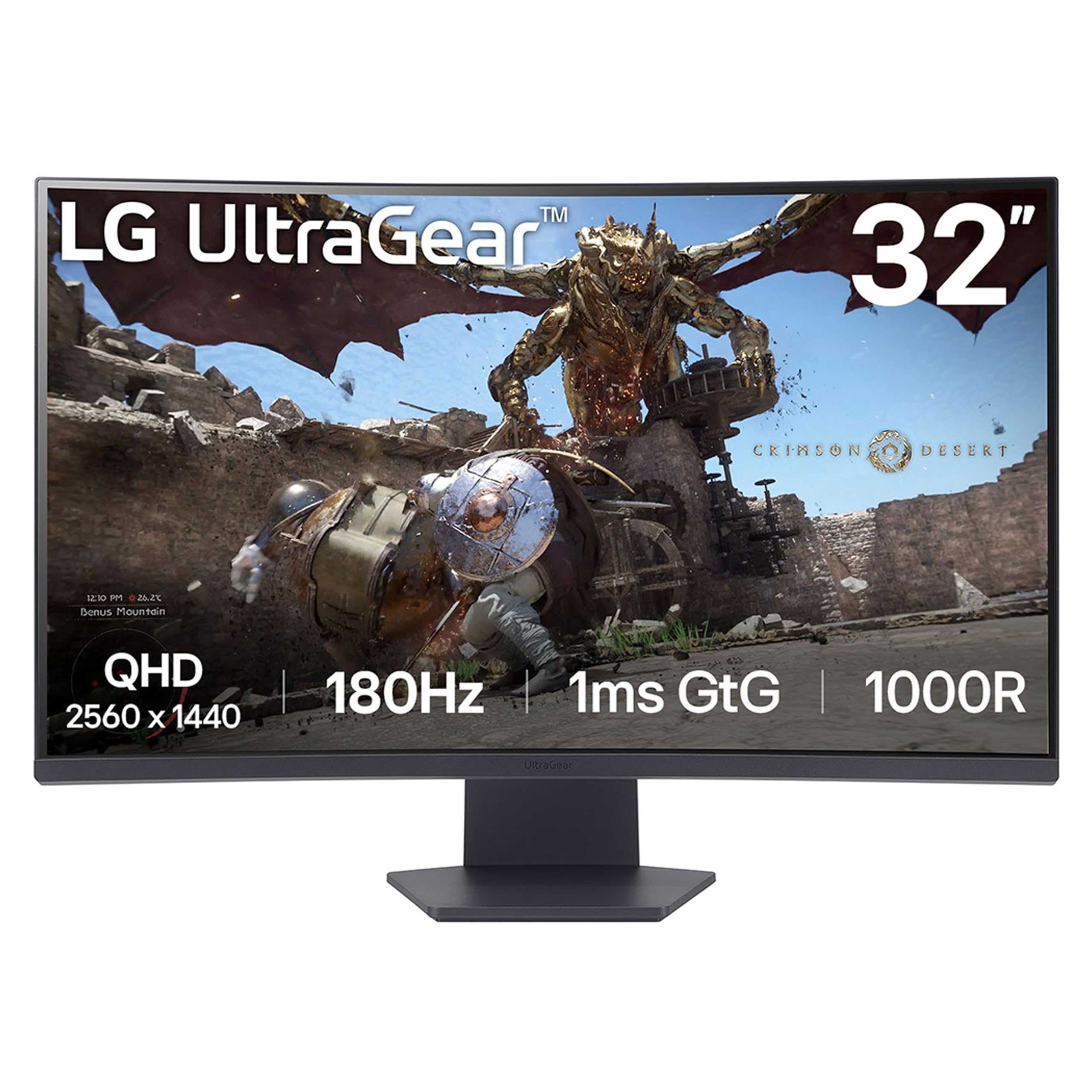
The LG 32GS60QC-B wraps a 32-inch VA panel in a steep 1000R curve that pulls the edges of the display into your peripheral vision, creating a genuinely immersive wraparound feel for sim racing, flight sims, and open-world RPGs. The VA panel delivers a 3000:1 native contrast ratio, which makes blacks appear deeper and inky compared to IPS alternatives, especially in dark scenes in games like Starfield or Alan Wake 2. The 180Hz refresh rate and 1ms GtG response time provide smooth motion for most genres, though VA black smearing can occasionally appear in very dark transitions.
AMD FreeSync support ensures tear-free gameplay, and the 99% sRGB color gamut keeps colors vibrant without oversaturation. The three-side virtually borderless design minimizes distraction and works well for single-monitor focus setups. Black Stabilizer brightens dark areas to reveal hidden enemies, while Dynamic Action Sync reduces input lag for faster response in competitive matches.
The stand is limited to tilt adjustment only, so you will want to plan for VESA mounting if height or swivel adjustment matters to you. The auto brightness feature cannot be disabled and may cause fluctuations in perceived brightness during scene transitions. For gamers who prioritize contrast and immersion in a curved format over absolute response time, this LG UltraGear delivers an engaging visual experience.
Why it’s great
- 3000:1 VA contrast ratio for deep blacks and immersive dark scenes
- 1000R curve wraps the display into your peripheral view
- 180Hz refresh rate with FreeSync for tear-free gameplay
Good to know
- Tilt-only stand limits ergonomic adjustment
- Auto brightness feature cannot be disabled
- Dark scene ghosting can occur on VA panel
9. Samsung Odyssey G5 G53F
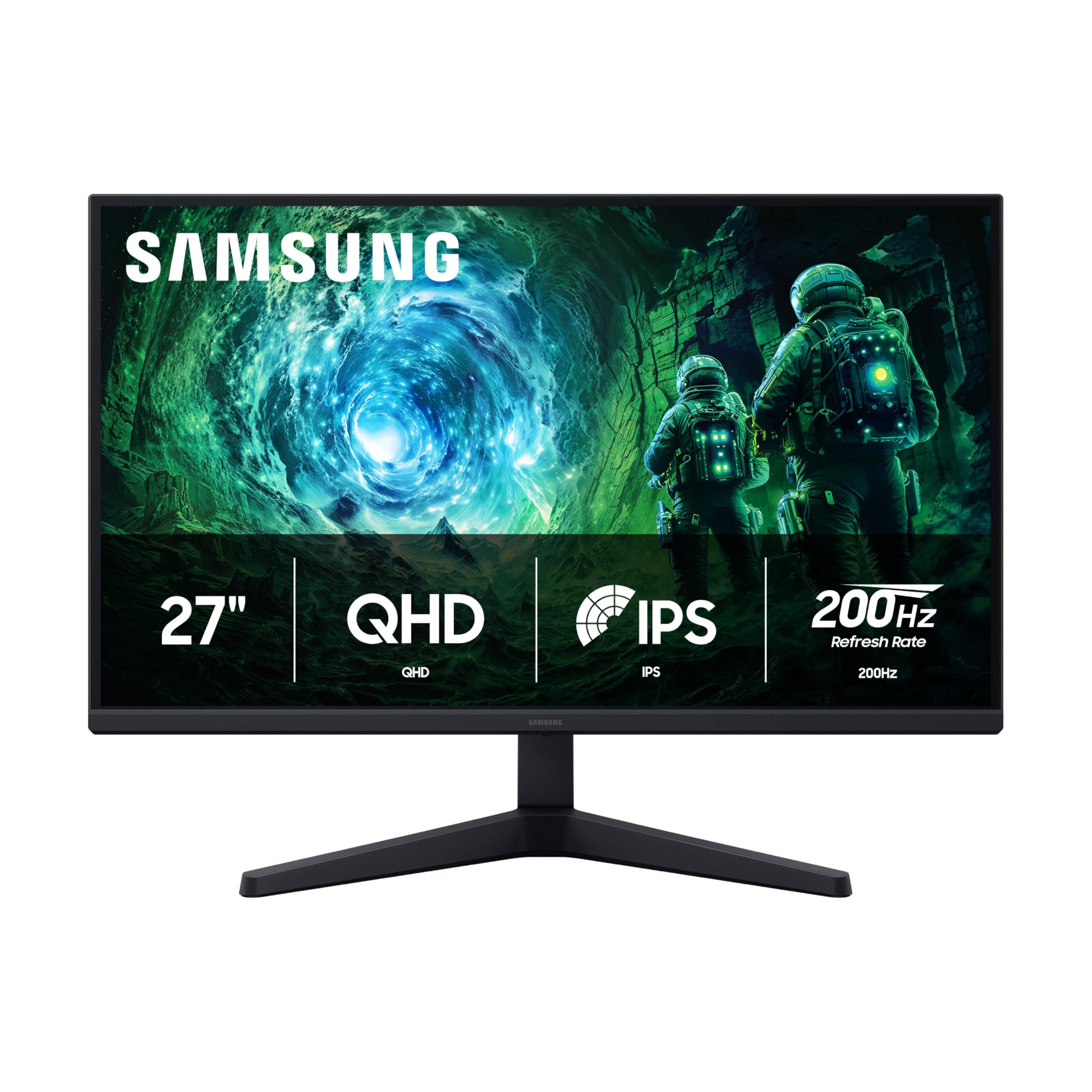
The Samsung Odyssey G5 G53F offers an entry point into QHD gaming by combining a 27-inch IPS panel with a 200Hz refresh rate and 1ms MPRT response time. The 2560×1440 resolution delivers a sharp image with 1.7 times the pixel density of 1080p, making textures in modern games look noticeably clearer. AMD FreeSync Premium keeps the refresh rate in sync with your GPU output to eliminate screen tearing and stuttering during gameplay.
The IPS panel provides consistent color accuracy and wide 178-degree viewing angles, which is helpful if you share your screen or sit off-center. HDR10 support adds depth to highlights and shadows, and the Black Equalizer feature improves visibility in dark areas without washing out the overall image. Auto Source Switch+ automatically detects and switches to the active input, which simplifies setup in multi-device environments.
The stand is the weakest point, offering only slight tilt adjustment, and the cable management loop feels flimsy. The included cables are a welcome addition for immediate setup. For budget-conscious gamers looking to make the jump to QHD resolution without sacrificing a high refresh rate, this Samsung Odyssey model delivers essential gaming performance at an accessible price point.
Why it’s great
- QHD (2560×1440) resolution with 200Hz refresh rate under entry-level pricing
- IPS panel with wide viewing angles and consistent color accuracy
- FreeSync Premium eliminates tearing and stuttering
Good to know
- Stand offers only tilt adjustment with a flimsy cable loop
- MPRT response time is less precise than GtG measurements
- Cheaper build quality compared to mid-range and premium options
FAQ
Is 1440p or 4K better for a gaming monitor for PC?
Does G-Sync or FreeSync matter for a gaming monitor for PC?
Should I worry about OLED burn-in on a gaming monitor for PC?
Final Thoughts: The Verdict
For most users, the best gaming monitor for PC overall is the ASUS ROG Strix XG27AQDMG because its glossy WOLED panel delivers unmatched contrast, motion clarity, and HDR performance for both competitive and immersive play with a three-year burn-in warranty. If you want a bright HDR OLED with a fully adjustable stand, grab the LG 27GX704A-B UltraGear OLED. And for the best value in a QHD IPS monitor with comprehensive ergonomics and strong HDR support, nothing beats the Samsung Odyssey G50D.