
Choosing a gaming monitor under $650 means you’re hunting for the sweet spot where high refresh rates, sharp resolutions, and rich color accuracy converge without pushing into diminishing returns. The market at this price cap is dense with fast IPS panels, curved ultrawide options, and even glossy OLEDs that deliver near-instant response times and immersive visuals for competitive and story-driven gaming alike.
I’m Mohammad Maruf — the founder and writer behind Drink4Good. I spend hundreds of hours cross-referencing panel technology, motion clarity specs, and adaptive sync compatibility to find the monitors that actually deliver on their promises for this specific budget bracket.
Whether you’re chasing fluid motion in fast-paced shooters or vibrant visuals in open-world epics, finding the right gaming monitor under $650 demands understanding how resolution, refresh rate, and panel type work together to shape your experience.
How To Choose The Best Gaming Monitor Under $650
With so many options at this price point, focusing on the right combination of resolution, refresh rate, and panel technology will save you from buyer’s remorse. Here’s what to prioritize.
Resolution vs. Refresh Rate Trade-Off
At under $650, you typically face a choice: a QHD (2560×1440) monitor with a high refresh rate of 180Hz or more, or a 4K (3840×2160) panel that may cap out at 160Hz. For competitive gaming, QHD with a higher refresh rate offers the best balance of sharpness and fluid motion. For cinematic single-player experiences, 4K at a stable 60-160Hz provides superior detail.
Panel Type: IPS, VA, or OLED
IPS panels dominate this price bracket for their wide viewing angles and color accuracy, making them ideal for both gaming and content consumption. VA panels offer deeper blacks and higher contrast ratios, which benefit dark scenes in games like horror or RPG titles. OLED panels, now appearing at the top of this budget, deliver unbeatable black levels and near-instant 0.03ms response times but require care to avoid burn-in.
Adaptive Sync and Connectivity
FreeSync Premium and G-Sync Compatible certifications ensure your monitor and GPU work in harmony to eliminate screen tearing and stuttering. Look for at least one DisplayPort 1.4 or HDMI 2.1 port if you plan to use a modern console or high-end graphics card, as these support higher bandwidths needed for 1440p at 240Hz or 4K at 144Hz.
Quick Comparison
On smaller screens, swipe sideways to see the full table.
| Model | Category | Best For | Key Spec | Amazon |
|---|---|---|---|---|
| ASUS ROG Strix XG27AQDMG | OLED | Competitive & Immersive Gaming | 0.03ms GTG / 240Hz | Amazon |
| ASUS ROG Strix XG27UCG | 4K Dual-Mode | 4K & High-FPS Hybrid | 4K 160Hz / FHD 320Hz | Amazon |
| LG 27GR83Q-B Ultragear | Fast IPS | High-FPS QHD Gaming | 240Hz / 1ms GTG | Amazon |
| Samsung Odyssey G50D | Fast IPS | Balanced Mid-Range Performance | 180Hz / 1ms GTG | Amazon |
| SANSUI 27 inch 1440p | Fast IPS | Budget-Friendly High Refresh | 200Hz / 1ms MPRT | Amazon |
| INNOCN 49″ Curved Ultrawide | VA Ultrawide | Multitasking & Immersion | 3840×1080 / 144Hz | Amazon |
| ASUS TUF VG32VQ1B | VA Curved | Curved Immersion on a Budget | 165Hz / 1ms MPRT | Amazon |
| Sceptre C345B-QUT168 | VA Ultrawide | Budget Ultrawide Productivity | 3440×1440 / 180Hz | Amazon |
| LG 32GX850A-B UltraGear | Glossy OLED | Top-Tier Visuals & Dual-Mode | 0.03ms GTG / 165Hz 4K | Amazon |
In‑Depth Reviews
1. ASUS ROG Strix XG27AQDMG

The ASUS ROG Strix XG27AQDMG brings true OLED performance into the under $650 bracket with a glossy WOLED panel that produces deep, inky blacks and vibrant, punchy colors. Its 0.03ms GTG response time eliminates ghosting entirely, while the 240Hz refresh rate ensures buttery-smooth motion in fast-paced shooters and racing games. The custom heatsink and advanced airflow design help manage thermals to reduce the risk of burn-in, making this a durable choice for long gaming sessions.
Color accuracy is outstanding with 99% DCI-P3 coverage and uniform brightness settings that maintain consistent luminance across the screen. The glossy finish enhances perceived contrast and sharpness, though it may reflect ambient light in bright rooms. The anti-flicker technology works well during refresh rate fluctuations, and the included DisplayWidget software allows easy adjustments without reaching for the on-screen display.
G-Sync Compatible and FreeSync Premium support ensure tear-free gameplay with both NVIDIA and AMD GPUs. The stand offers full ergonomic adjustments including height, tilt, swivel, and pivot. The 3-year warranty with burn-in coverage provides peace of mind. The only trade-off is the lack of built-in speakers, so you’ll need external audio.
Why it’s great
- Stunning glossy OLED with perfect blacks and vibrant colors
- 240Hz and 0.03ms GTG for elite-level motion clarity
- 3-year warranty including burn-in coverage
Good to know
- No built-in speakers; requires external audio
- Glossy finish can reflect bright ambient light
2. LG 32GX850A-B UltraGear
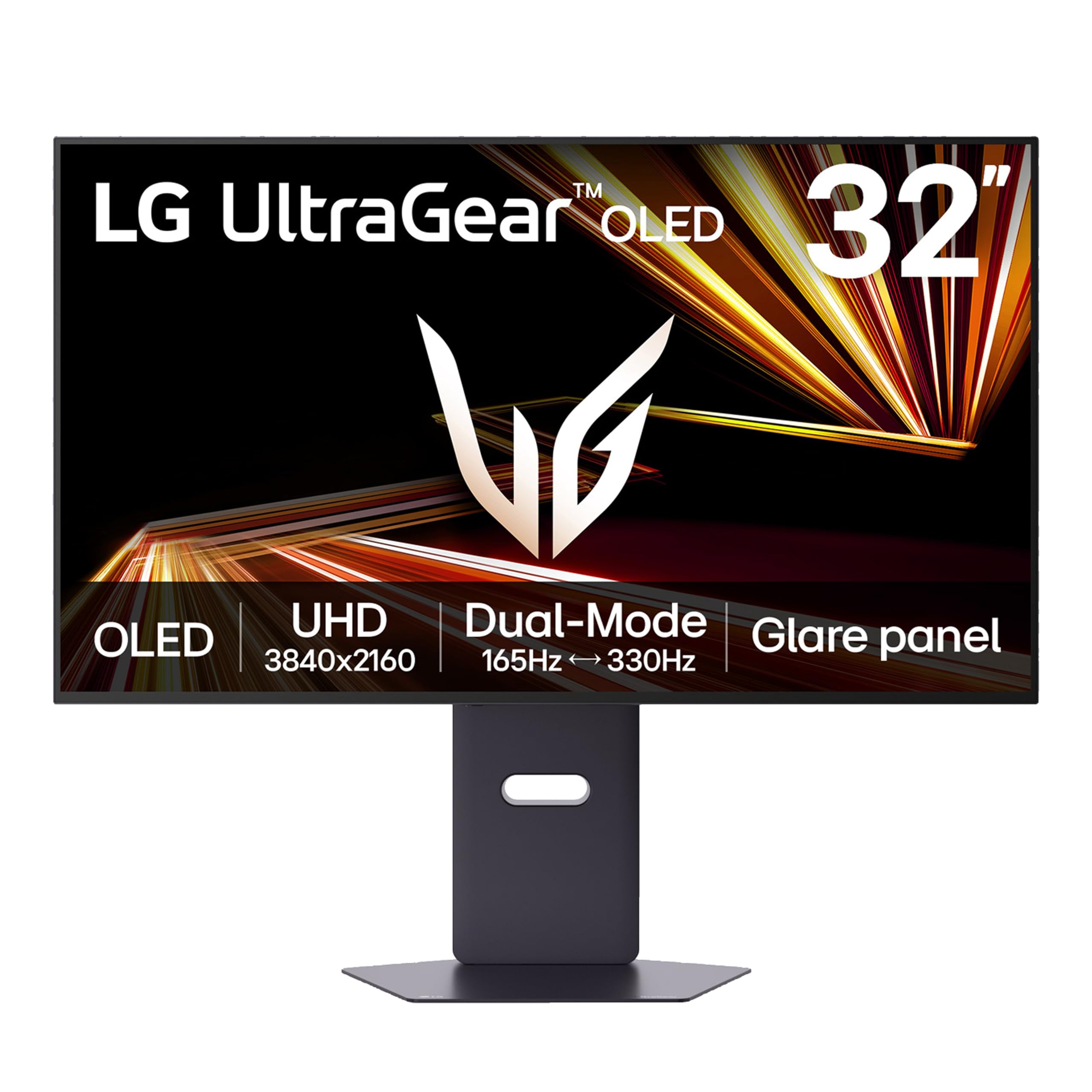
The LG 32GX850A-B pushes the boundary of what’s possible under $650 with its 32-inch glossy 4K OLED display and a dual-mode feature that lets you switch between 4K at 165Hz and Full HD at 330Hz. The Micro Lens Array+ technology delivers a typical brightness of 275 nits, which is solid for an OLED, and the VESA DisplayHDR TrueBlack 400 certification means blacks are truly deep and shadow detail is excellent in HDR content.
Color gamut covers 98.5% DCI-P3, producing rich, lifelike visuals that make both games and movies pop. The 0.03ms GTG response time virtually eliminates motion blur, and the anti-glare, flicker-free, and low blue light certifications keep eye strain minimal during extended sessions. The fully adjustable stand offers height, tilt, swivel, and pivot adjustments for ergonomic comfort.
Connectivity includes HDMI 2.1 and DisplayPort, and both G-Sync Compatible and AMD FreeSync Premium Pro ensure smooth, tear-free gameplay. The glossy panel enhances color vibrancy but can be reflective in bright rooms. Some users report minor text clarity issues common to WOLED panels, and brightness is lower than high-end LED monitors, but for pure visual fidelity in gaming, this is a standout choice.
Why it’s great
- 4K OLED with dual-mode up to 330Hz
- Exceptional contrast and color accuracy
- Fully ergonomic stand with pivot
Good to know
- Reflective glossy finish
- Lower peak brightness than high-end LEDs
3. ASUS ROG Strix XG27UCG

The ASUS ROG Strix XG27UCG offers a versatile dual-mode experience that lets you run 4K at 160Hz for immersive single-player titles or switch to Full HD at 320Hz for ultra-smooth competitive play. The Fast IPS panel delivers a 1ms GTG response time, and the Extreme Low Motion Blur Sync technology works alongside VRR to eliminate ghosting and tearing simultaneously, a rare combo at this price.
Color performance is strong with 95% DCI-P3 coverage and advanced gray-scale tracking for smooth gradations. The DisplayWidget Center software makes monitor adjustments simple with a mouse, eliminating the need for button navigation. The stand provides height, swivel, and tilt adjustments, and the build quality feels premium with a heavy-duty chassis.
Connectivity includes DisplayPort 1.4, HDMI 2.1, and a USB-C port, making it compatible with modern GPUs and consoles. The 3-year warranty adds security. The 4K desktop sharpness is excellent for productivity, though the 27-inch screen size means pixel density is high, requiring scaling for comfortable reading. The RGB lighting on the back is a nice aesthetic touch for themed setups.
Why it’s great
- Dual-mode: 4K 160Hz and FHD 320Hz
- ELMB Sync works with VRR for blur-free gaming
- USB-C connectivity for modern devices
Good to know
- Requires scaling for 4K desktop use
- HDR performance is acceptable but not OLED-level
4. LG 27GR83Q-B Ultragear
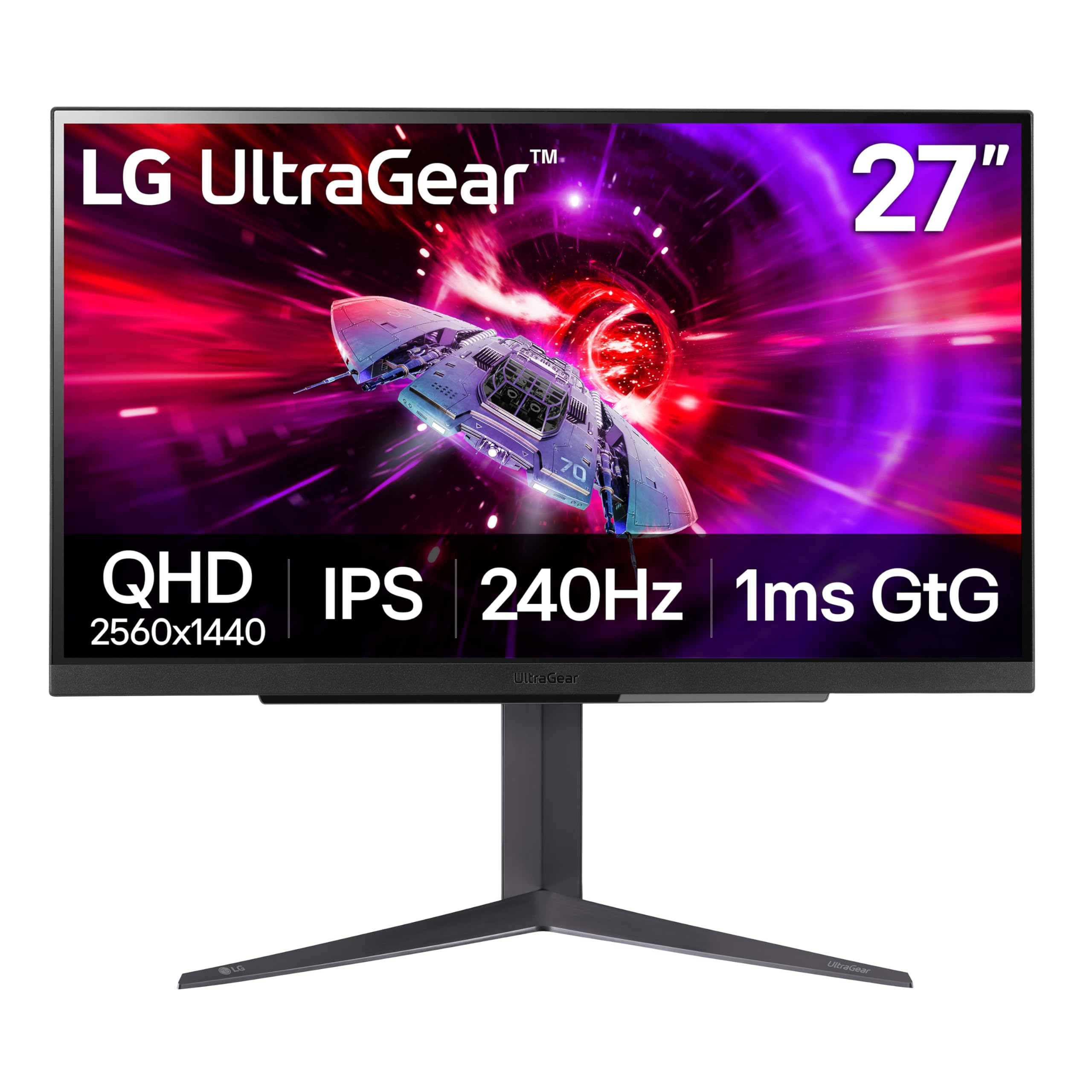
The LG 27GR83Q-B Ultragear is built for pure speed, offering a 240Hz refresh rate on a QHD IPS panel that delivers sharp, colorful visuals with a 1ms GTG response time. This monitor supports both HDMI 2.1 and DisplayPort 1.4, meaning you can hit the full 240Hz refresh rate with either connection, a key advantage for those using modern GPUs or consoles.
The IPS panel covers 95% DCI-P3 and is VESA DisplayHDR 400 certified, providing decent contrast and brightness for HDR content. The gaming GUI includes useful overlays like a crosshair, FPS counter, and Black Stabilizer to brighten dark scenes without washing out highlights. The 4-pole headphone jack with DTS Headphone:X support delivers spatial audio over headphones, enhancing immersion in shooters and RPGs.
G-Sync Compatible and FreeSync Premium ensure tear-free performance across both GPU ecosystems. The stand is fully ergonomic with height, tilt, swivel, and pivot adjustments. The build quality feels premium with a heavy, stable base. The main caveat is that some units have been reported with stuck pixels, so inspect upon arrival. Overall, this is a top-tier choice for competitive QHD gaming.
Why it’s great
- 240Hz QHD with HDMI 2.1 support
- Excellent ergonomic stand with pivot
- DTS Headphone:X spatial audio support
Good to know
- Some reports of stuck pixels
- HDR 400 is entry-level
5. Samsung Odyssey G50D

The Samsung Odyssey G50D delivers a compelling mid-range package with a 32-inch Fast IPS panel at QHD resolution, an 180Hz refresh rate, and a 1ms GTG response time. The larger screen size makes it ideal for immersive gaming and productivity, offering significantly more screen real estate than 27-inch models without sacrificing pixel density too much.
Color quality is vibrant out of the box, covering 99% sRGB, though some units may require calibration to correct a slight color imbalance when adaptive sync is disabled. VESA DisplayHDR 400 support provides improved contrast and brightness for HDR content, and the wide 178-degree viewing angles ensure consistent colors from any position. The adjustable stand offers height, tilt, swivel, and pivot adjustments for flexible ergonomics.
G-Sync Compatible and FreeSync support work flawishly to eliminate tearing and stuttering. The Eye Saver Mode and flicker-free technology reduce eye strain during long sessions. The main downside is the default color calibration, which may require manual tweaking to achieve ideal accuracy. At this price point, the combination of size, refresh rate, and panel quality makes it a strong value pick.
Why it’s great
- 32-inch QHD Fast IPS with 180Hz
- Fully adjustable ergonomic stand
- Eye Saver Mode reduces strain
Good to know
- Default color calibration may need adjustment
- HDR 400 performance is modest
6. SANSUI 27 inch 1440p
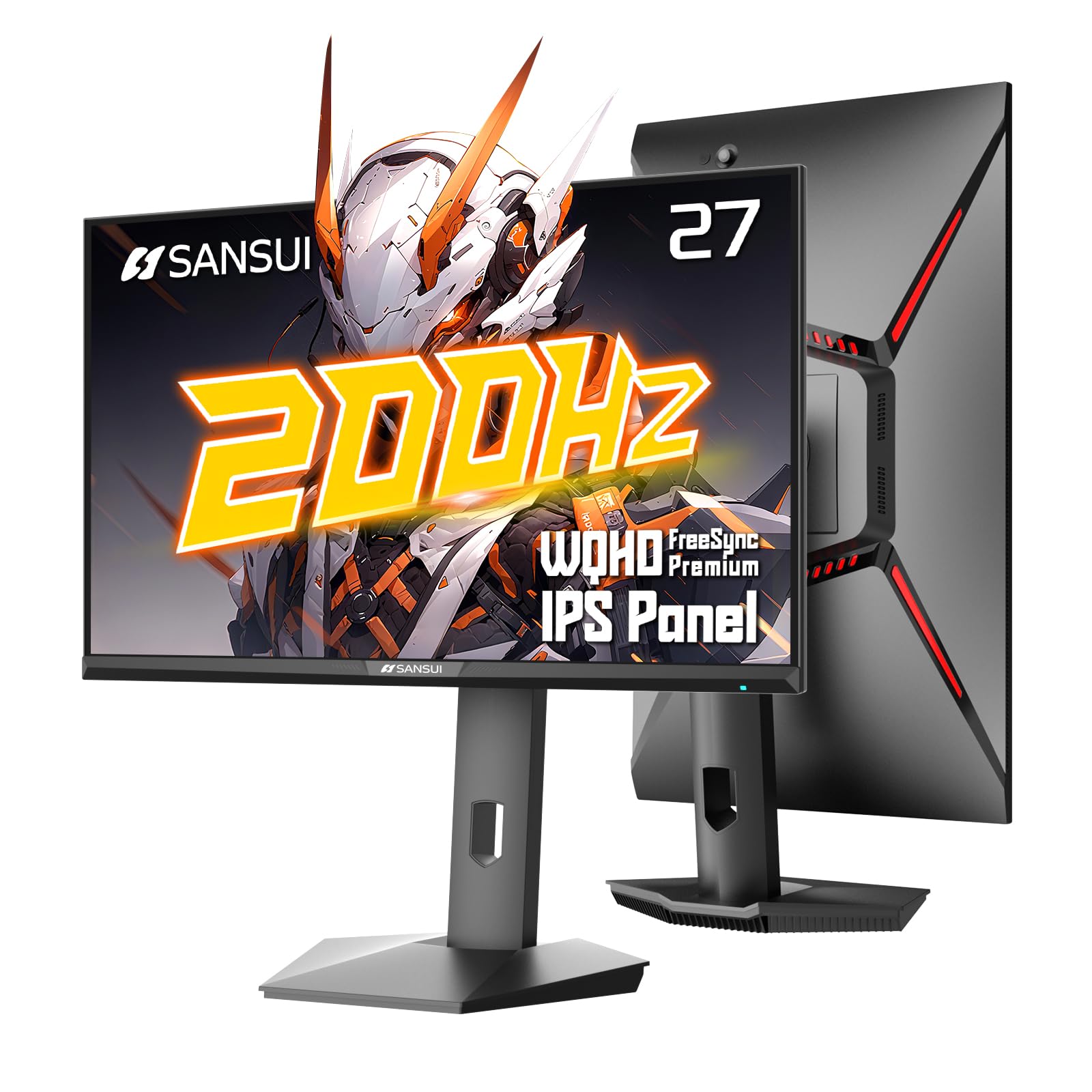
The SANSUI 27-inch 1440p monitor punches above its price class with a 200Hz refresh rate (180Hz via HDMI) and a Fast IPS panel that delivers a 1ms MPRT response time. The 400-nit brightness is significantly higher than many competitors at this level, making it suitable for well-lit rooms, and the 130% sRGB color gamut ensures vibrant, saturated colors.
The ergonomic stand provides full adjustments including pivot, swivel, height, and tilt, a rare feature at this price point. AI-assisted gaming features like AI Crosshair and FPS Sniper Scope add utility for competitive titles. The monitor includes two DisplayPort 1.2 ports and two HDMI 2.0 ports, supporting up to 200Hz via DP. The 10-bit color depth (8-bit+FRC) produces smooth gradients without visible banding.
The build quality is solid with a clean, modern design. Some users note that the advertised 200Hz is only achievable via DisplayPort, and the included DP cable may not support the full bandwidth, so using a quality aftermarket cable is recommended. The 30-day money-back guarantee and lifetime technical support provide peace of mind for budget buyers. This is a great entry into high-refresh QHD gaming.
Why it’s great
- 200Hz QHD Fast IPS at a low price
- Full ergonomic stand with pivot
- High 400-nit brightness
Good to know
- 200Hz only via DisplayPort
- Included cable may limit refresh rate
7. INNOCN 49″ Curved Ultrawide
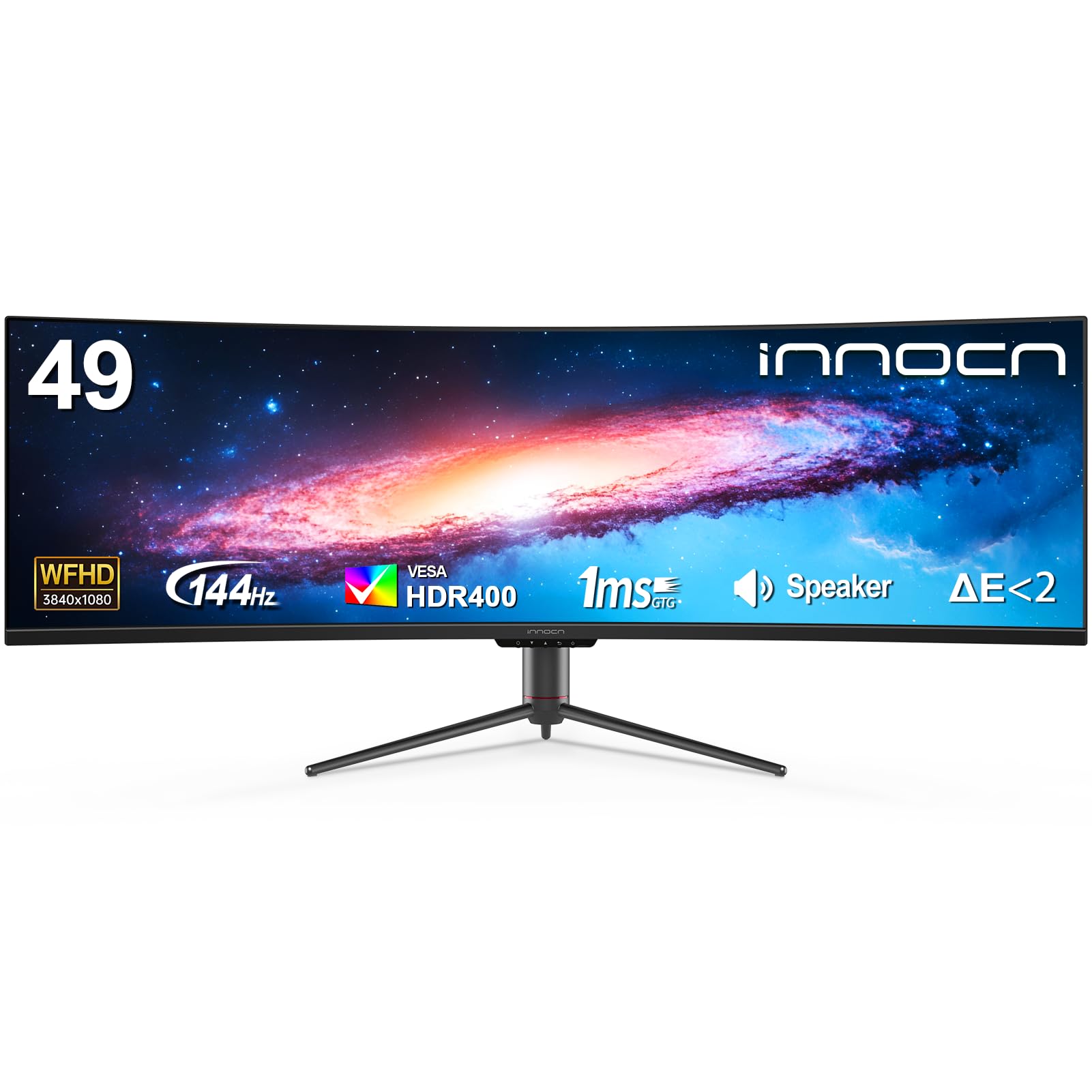
The INNOCN 49-inch Curved Ultrawide monitor offers a massive 32:9 aspect ratio with a 3840×1080 resolution, effectively functioning as two 27-inch monitors side-by-side without a bezel. The 1800R curvature wraps around your peripheral vision, creating an immersive experience for both gaming and productivity workflows like stock trading, video editing, or programming.
The VA panel delivers a 3000:1 contrast ratio, producing deep blacks and good shadow detail that benefit dark games and movies. The 144Hz refresh rate with adaptive sync (FreeSync Premium and G-Sync Compatible) ensures smooth motion with minimal tearing. The HDR400 support improves brightness and contrast for HDR content, and the 99% sRGB coverage provides accurate colors for general use.
The stand offers height and tilt adjustments, and connectivity includes HDMI, DisplayPort, and USB-C with power delivery, simplifying laptop connectivity. Built-in speakers are adequate for casual use. The main trade-off is the lower pixel density compared to QHD or 4K monitors, so text may appear less sharp. This is a specialized choice for users who prioritize screen real estate and immersion above pixel-perfect clarity.
Why it’s great
- 49-inch ultrawide replaces dual monitors
- Deep 3000:1 contrast ratio from VA panel
- USB-C with power delivery for laptops
Good to know
- Lower resolution density than QHD monitors
- Requires significant desk space
8. ASUS TUF VG32VQ1B
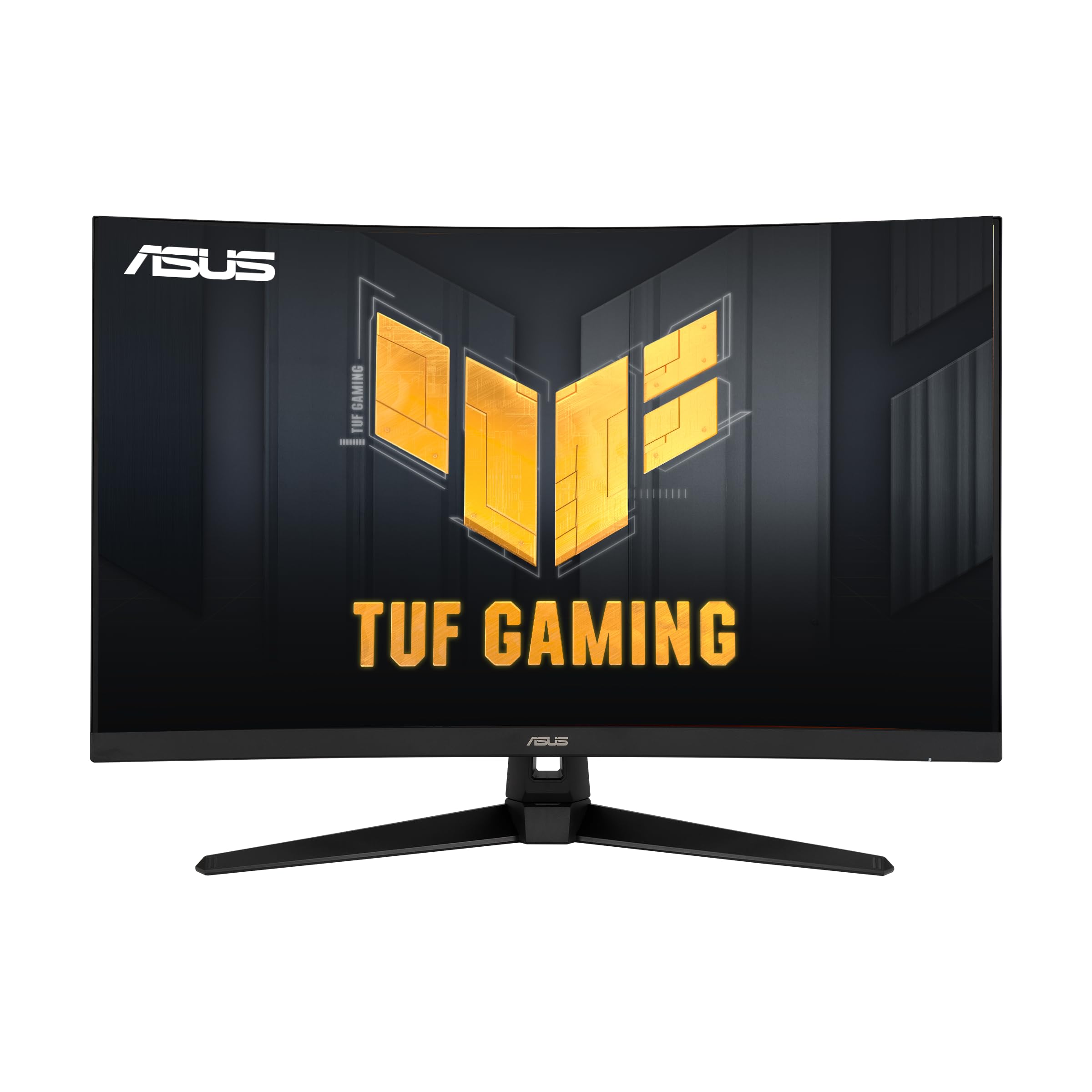
The ASUS TUF VG32VQ1B is a 32-inch QHD curved monitor that brings a 1500R curvature and a 165Hz refresh rate to gamers who prefer VA panel contrast. The 3000:1 native contrast ratio delivers deep, immersive blacks that make dark scenes in games like horror or space titles look rich and detailed, far surpassing typical IPS panels in this regard.
The Extreme Low Motion Blur (ELMB) technology works with adaptive sync to reduce motion blur and screen tearing, providing sharp visuals during fast movement. Shadow Boost enhances detail in dark areas without overexposing bright sections, giving a competitive edge in games with uneven lighting. The built-in speakers are decent for casual use, and the stand is VESA mountable for arm setups.
The monitor supports FreeSync Premium and is G-Sync Compatible, ensuring smooth performance with both GPU brands. The 1ms MPRT response time is competitive for a VA panel, though some ghosting is present compared to fast IPS. The HDR 10 support is acceptable but not HDR400 certified, so HDR performance is modest. Overall, this is a solid curved choice for gamers who prioritize contrast and immersion.
Why it’s great
- Excellent 3000:1 contrast for deep blacks
- 1500R curve enhances immersion
- ELMB reduces motion blur
Good to know
- Some ghosting typical of VA panels
- HDR performance is modest
9. Sceptre C345B-QUT168

The Sceptre C345B-QUT168 offers an ultrawide WQHD resolution of 3440×1440 on a 34-inch curved VA panel with a 1500R radius and a 180Hz refresh rate. This combination provides 30% more horizontal screen space than a standard 16:9 monitor, making it excellent for immersive gaming and multitasking with multiple windows side-by-side.
The 99% sRGB color gamut delivers vibrant, accurate colors out of the box, and the 1ms MPRT response time keeps motion blur to a minimum. The 1,000,000:1 dynamic contrast ratio ensures good black levels, though VA panel limitations mean viewing angles are narrower than IPS. The built-in speakers are adequate for casual use, and the backcover LED lights add a touch of aesthetic customization.
Connectivity includes two HDMI ports and two DisplayPort inputs, with FreeSync support for tear-free gaming. The stand offers tilt adjustment but lacks height adjustment, so using a VESA mount is recommended for ergonomic setup. The frame-less design looks clean in a multi-monitor setup. Some users report backlight bleed and dead pixels in rare cases, so proper inspection upon arrival is advised. For the price, this is a fantastic entry into ultrawide gaming.
Why it’s great
- 34-inch WQHD ultrawide with 180Hz
- Excellent value for immersive gaming and productivity
- 99% sRGB color accuracy
Good to know
- Stand lacks height adjustment
- Potential for backlight bleed in some units
FAQ
Is 1440p QHD better than 4K for a gaming monitor under $650?
What is the difference between FreeSync Premium and G-Sync Compatible?
Is a curved monitor better for gaming than a flat one?
Final Thoughts: The Verdict
For most users, the gaming monitor under $650 winner is the ASUS ROG Strix XG27AQDMG because it delivers true OLED performance with perfect blacks, a 240Hz refresh rate, and a 0.03ms response time that transforms competitive and immersive gaming alike. If you want a large, immersive screen for multitasking and cinematic games, grab the INNOCN 49″ Curved Ultrawide. And for the best all-around value in a fast QHD panel, nothing beats the Samsung Odyssey G50D.