
Gaming on an OLED TV is a sensory shift — per-pixel lighting delivers infinite contrast, eliminating the backlight bloom that haunts traditional LCDs during dark dungeon crawls or night-time racing circuits. The immediate benefit is zero ghosting in fast-paced shooters, but the real win is the color volume that makes HDR content look volumetric rather than just bright.
I’m Mohammad Maruf — the founder and writer behind Drink4Good. I’ve spent years analyzing panel technology roadmaps, burn-in mitigation systems, and HDMI 2.1 feature sets to separate genuine gaming OLEDs from marketing-driven models that don’t deliver the low input lag and high refresh rates competitive players actually need.
Whether you’re pairing with a PlayStation 5, an RTX 4090-equipped PC, or an Xbox Series X, the right panel must balance luminance, motion clarity, and anti-burn-in safeguards — and this guide breaks down the top contenders in the gaming oled tv landscape to help you match the perfect screen to your setup.
How To Choose The Best Gaming OLED TV
Gaming OLEDs aren’t created equal — a panel that excels for cinematic movies may struggle with static HUD elements, while a monitor-grade QD-OLED might lack the smart TV integration you want for console play. You need to weigh refresh rate ceiling, VRR compatibility, HDR brightness, and real-world input lag against your primary gaming platform. Below are the key decision factors that separate a good gaming OLED from a great one.
Panel Type: WOLED vs QD-OLED
WOLED (white OLED with color filters) delivers excellent black levels and is widely used in LG’s C and G series. QD-OLED (quantum dot OLED) uses blue OLED layers with quantum dot conversion to achieve higher color volume and peak brightness — ideal for HDR gaming in bright rooms. Sony and Samsung’s flagship models use QD-OLED for vibrancy that WOLED struggles to match at high APL (average picture level).
Refresh Rate and HDMI 2.1 Features
For competitive gaming, you want at least a 120Hz native panel with HDMI 2.1 bandwidth (48Gbps) to run 4K at 120Hz with 10-bit color and HDR simultaneously. Support for Variable Refresh Rate (VRR) and Auto Low Latency Mode (ALLM) eliminates screen tearing and automatically switches to the lowest-lag preset when you launch a game. Some 2025 models push to 144Hz or even 165Hz over DisplayPort or HDMI, but 120Hz remains the practical ceiling for most console titles.
HDR Brightness and Burn-In Mitigation
Peak HDR brightness matters more for gaming than movies because game HUDs and highlight details need to punch through without crushing shadow detail. Look for panels certified VESA DisplayHDR True Black 400 or higher — True Black 600 is even better for well-lit rooms. Equally important is a robust OLED care suite: pixel shift, logo luminance adjustment, and a proximity sensor that dims the panel when you step away. These features extend panel lifespan significantly when you’re racking up hundreds of hours on a single title with static elements.
Quick Comparison
On smaller screens, swipe sideways to see the full table.
| Model | Category | Best For | Key Spec | Amazon |
|---|---|---|---|---|
| MSI MPG 321URX QD-OLED | Monitor | PC gaming 4K 240Hz | 0.03ms GtG, 240Hz | Amazon |
| ASUS ROG Swift PG27UCDM | Monitor | Premium PC/console gaming | DP 2.1a, 90W PD USB-C | Amazon |
| Sony A90K 48 | TV | PS5 dedicated setup | 8.5ms input lag | Amazon |
| Panasonic Z8 Series 77 | TV | Cinematic HDR gaming | 144Hz, FreeSync Premium | Amazon |
| LG C1 77 | TV | Value 77-inch gaming | 120Hz, G-Sync Compatible | Amazon |
| LG G4 OLED evo 65 | TV | Bright room gaming | Brightness Booster Max | Amazon |
| Samsung S90F 77 | TV | QD-OLED vibrant gaming | 144Hz Motion Xcelerator | Amazon |
| Samsung S90F 77 (Bundle) | TV | Value QD-OLED bundle | NQ4 AI Gen3, HDR+ | Amazon |
| Sony A80L 77 | TV | PS5 cinematic gaming | Acoustic Surface Audio+ | Amazon |
| Sony BRAVIA 8 II 55 | TV | High-end PS5/PC gaming | QD-OLED, XR Processor | Amazon |
| Sony BRAVIA 8 77 | TV | Large-screen PS5 gaming | XR Contrast Booster 15 | Amazon |
| LG G3 OLED evo 83 | TV | Ultra-large premium gaming | a9 Gen6, 70% brighter | Amazon |
| LG G5 OLED evo 77 | TV | Flagship HDR gaming | 165Hz, 2000+ nits | Amazon |
In‑Depth Reviews
1. MSI MPG 321URX QD-OLED

The MSI MPG 321URX is a 31.5-inch 4K QD-OLED monitor built for serious PC gaming — its 240Hz refresh rate and 0.03ms GtG response time eliminate motion blur in competitive shooters, while VESA DisplayHDR True Black 400 ensures HDR highlights pop without crushing shadow detail. The 99% DCI-P3 gamut and Delta E ≤2 accuracy make it equally viable for color-critical creative work between gaming sessions.
Connectivity is future-proofed with HDMI 2.1, DisplayPort 1.4a, and a USB-C port delivering 90W power delivery to a laptop. MSI’s OLED Care 2.0 suite includes pixel shift and panel refresh algorithms that run automatically, and the KVM switch with PiP/PbP is a boon for multi-device setups. The 4-way adjustable stand supports height, tilt, swivel, and pivot adjustments.
Customer feedback consistently praises the transformative visual upgrade from 1080p IPS panels, though some units arrive with cosmetic damage due to insufficient Amazon packaging. The 250-nit sustained SDR brightness means this is best used in a controlled ambient light environment — direct sunlight will wash out the image, but the infinite contrast ratio mitigates this during dark game scenes.
Why it’s great
- Ultra-fast 0.03ms response time eliminates all motion blur
- QD-OLED delivers vibrant colors with 99% DCI-P3 coverage
- USB-C with 90W PD simplifies laptop connectivity
Good to know
- Sustained SDR brightness is moderate at 250 nits
- Some customers report shipping damage from Amazon
- No integrated speakers; external audio required
2. ASUS ROG Swift PG27UCDM

The 26.5-inch ASUS ROG Swift PG27UCDM uses 4th-gen QD-OLED technology with a custom heatsink for improved thermal management and longer panel lifespan. Its 240Hz refresh rate and 0.03ms response time match the MSI entry, but the PG27UCDM pulls ahead with DisplayPort 2.1a UHBR20 delivering full 80Gbps bandwidth — essential for uncompressed 4K at 240Hz with HDR enabled on next-gen GPUs.
ASUS integrates a Neo Proximity Sensor that detects when you leave the desk and automatically dims the screen to reduce burn-in risk, alongside OLED Anti-Flicker 2.0 that cuts perceived flicker by 20% versus earlier panels. Dolby Vision support and a 99% DCI-P3 gamut with Delta E <2 calibration make this a legitimate hybrid monitor for gaming and photo/video editing. The USB-C port provides 90W power delivery for a connected laptop.
User reviews highlight the stunning HDR and Dolby Vision calibration out of the box, with motion clarity that feels near-instant. The triangular QD-OLED subpixel layout can reduce Windows font clarity for some users, and there are no built-in speakers. The three-year warranty includes burn-in coverage, which adds peace of mind for long gaming sessions with static HUD elements.
Why it’s great
- DP 2.1a UHBR20 delivers 80Gbps bandwidth for uncompressed 4K 240Hz
- Neo Proximity Sensor and OLED Care Pro reduce burn-in risk significantly
- Dolby Vision and 99% DCI-P3 color gamut for hybrid gaming/creative use
Good to know
- QD-OLED subpixel layout may reduce font clarity in Windows
- No built-in speakers; requires external audio solution
- Ports face downward, making wall-mount cable access tight
3. Sony A90K 48

The Sony A90K is a 48-inch WOLED TV tailored for PlayStation 5 owners who want a dedicated gaming display smaller than a traditional living-room setup. Its Cognitive Processor XR delivers exceptional motion clarity — Sony’s proprietary processing handles fast camera pans and particle effects without the judder that plagues lesser OLEDs. Input lag measures as low as 8.5ms at 4K/120Hz, making it one of the most responsive TVs for console gaming.
Sony’s exclusive PS5 features include Auto HDR Tone Mapping and Auto Genre Picture Mode, which automatically optimize the TV’s picture settings when you launch a game or switch to a streaming app. The Acoustic Surface Audio+ uses actuators behind the screen to produce sound directly from the display surface, paired with a built-in subwoofer for surprisingly robust bass without an external soundbar. XR OLED Contrast Pro and XR Triluminos Pro ensure inky blacks and natural color gradients.
Customer reviews consistently describe the A90K’s picture as the best they’ve seen in a compact size, with motion processing that outperforms LG and Samsung rivals. The Google TV interface is responsive and easy to navigate. The primary compromise is value — the 48-inch size commands a premium for its form factor, and bright-room performance is limited by the panel’s moderate peak brightness compared to larger models.
Why it’s great
- Deep PS5 integration with Auto HDR Tone Mapping
- Superb motion clarity with minimal judder
- Acoustic Surface Audio+ produces immersive sound from the screen
Good to know
- Moderate peak brightness limits HDR impact in bright rooms
- 48-inch size is premium-priced for its screen real estate
- No built-in support for Dolby Vision at 120Hz
4. Panasonic Z8 Series 77
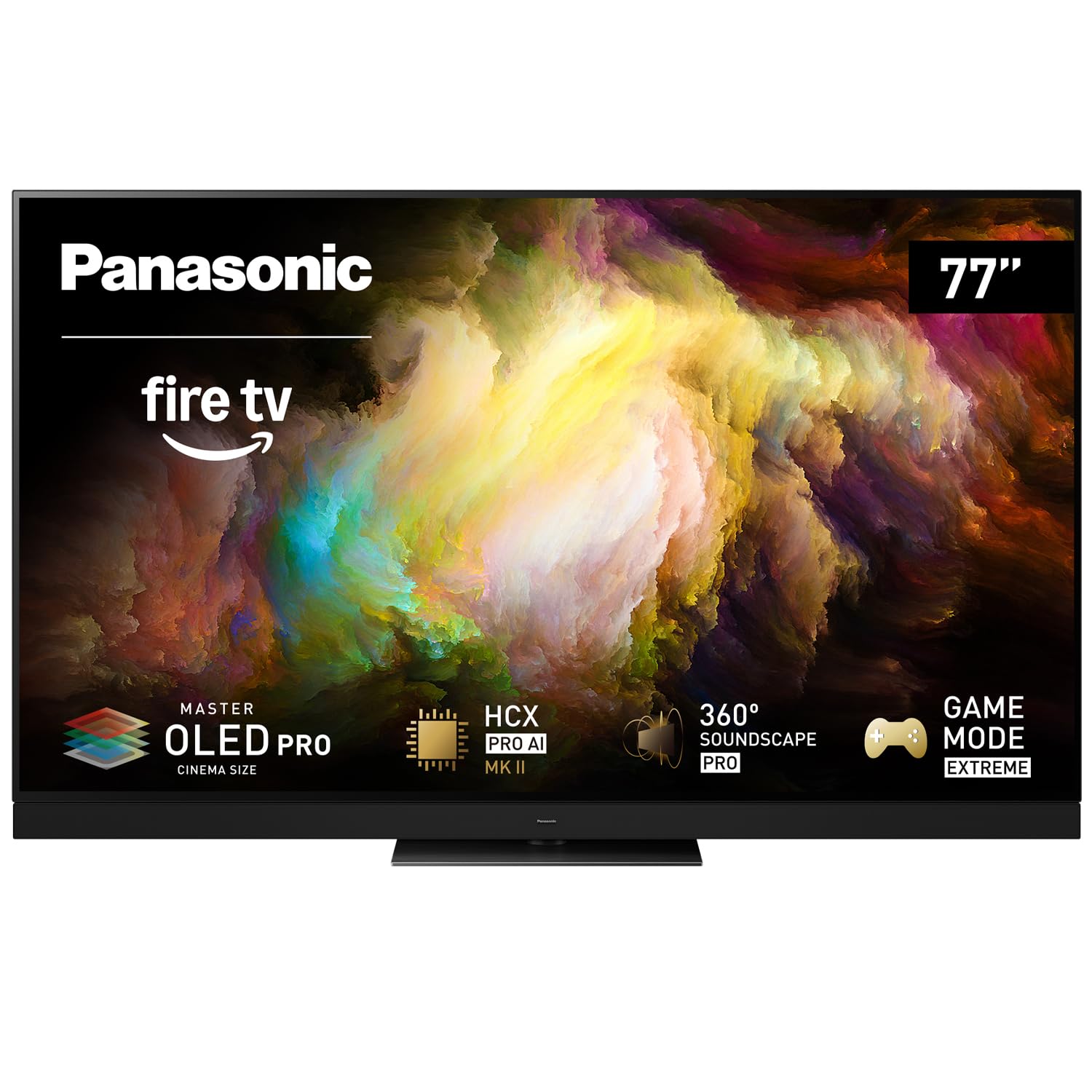
The Panasonic Z8 Series is a 77-inch Master OLED PRO panel that punches above its price tier with features typically reserved for more expensive flagships. It supports a 144Hz refresh rate via HDMI 2.1, along with VRR, AMD FreeSync Premium, and NVIDIA G-SYNC compatibility — making it one of the few large-format OLEDs that can fully exploit a high-refresh PC gaming rig. The HCX Pro AI Processor MKII and micro-lens-array technology boost brightness significantly compared to earlier Panasonic OLEDs.
Multi-format HDR support includes Dolby Vision IQ and HDR10+ Adaptive, both of which use ambient light sensors to adjust the picture dynamically based on room conditions. The 360 Soundscape Pro audio system, tuned by Technics, integrates front-array, upward, and side-firing speakers for a Dolby Atmos bubble that reduces the immediate need for a soundbar. The Fire TV built-in interface provides hands-free Alexa control and access to major streaming apps.
Customer feedback praises the color accuracy in Filmmaker Mode and the robust build quality, though several reviewers note the television is extremely heavy — around 100 pounds — requiring a sturdy stand or a two-person wall-mount installation. Brightness is good but not class-leading; direct sunlight in the room will wash out the image. The USB media player lacks support for some common codecs, but for pure gaming and streaming value at 77 inches, this is hard to beat.
Why it’s great
- 144Hz refresh rate with G-SYNC and FreeSync Premium
- Dolby Vision IQ and HDR10+ Adaptive with ambient light sensing
- 360 Soundscape Pro audio reduces need for external soundbar
Good to know
- Very heavy (~100 lbs); requires sturdy mounting solution
- Moderate brightness compared to QD-OLED rivals
- USB media player lacks support for some codecs
5. LG C1 77

The LG C1 may be a 2021 model, but its 77-inch WOLED panel still delivers the core gaming OLED experience at a significantly lower entry point than current-year alternatives. It features four HDMI 2.1 inputs, a 120Hz refresh rate, and native support for NVIDIA G-SYNC and AMD FreeSync Premium — enough bandwidth and VRR compatibility to drive a high-end PC or both a PS5 and Xbox Series X simultaneously.
The a9 Gen 4 Intelligent Processor handles upscaling and motion interpolation competently, and the Dolby Vision IQ + Dolby Atmos support ensures cinematic HDR presentation. The WebOS 6 interface is snappy, though some users find the home screen ad-heavy and the gyro Magic Remote disorientating. The C1’s peak brightness is modest by 2025 standards — around 700-800 nits in HDR — but in a light-controlled room, the infinite contrast and black-level performance still impress.
Customer reviews overwhelmingly praise the picture quality as a massive upgrade over LED and QLED panels, with deep blacks and accurate midtones that make HDR games look volumetric. Some users note that OLED reflections from windows and lamps can be distracting, and the screen is more fragile than an equivalent LED panel. For buyers who prioritize a large gaming canvas and don’t need the absolute highest brightness, the C1 remains a compelling value.
Why it’s great
- Four HDMI 2.1 inputs for multi-console setups
- Native G-SYNC and FreeSync Premium support
- Excellent price-to-size ratio for 77-inch OLED
Good to know
- Moderate peak brightness; not ideal for bright rooms
- WebOS 6 home screen has ad-heavy interface
- Older model; no longer receiving major software updates
6. LG G4 OLED evo 65

The LG G4 is the 2024 iteration of the company’s Gallery Series, designed to sit flush against the wall with its flush-mount bracket. The Brightness Booster Max technology uses a heat-dissipating panel structure to push peak luminance significantly higher than the C-series — sustained brightness now rivals mid-tier QD-OLEDs while maintaining the WOLED advantage of perfect black uniformity. This makes the G4 a strong choice for living rooms with ambient daylight.
The a11 AI Processor handles AI Picture Pro and AI Super Upscaling to polish sub-4K content, and the WebOS Re:NEW Program guarantees five years of software updates. Gaming features include four HDMI 2.1 ports, a 120Hz refresh rate, G-SYNC and FreeSync Premium compatibility, and a new Game Dashboard that centralizes VRR status and latency info. The One Wall Design leaves virtually no gap when mounted, and the Always Ready mode displays art or photos when idle.
Customer feedback is overwhelmingly positive about the brightness and color volume, with many noting a clear visual step up from the previous G3 model. The built-in sound is improved over older LG panels but still benefits from an external soundbar for bass impact. One reviewer received a G5 instead of the G4, indicating some inventory confusion, but the image quality itself is universally praised as top-tier for a WOLED panel.
Why it’s great
- Brightness Booster Max delivers WOLED output rivaling QD-OLED
- Flush wall-mount design with Always Ready art mode
- Five-year webOS software update commitment
Good to know
- No stand included; designed for wall mounting
- Built-in sound adequate but soundbar recommended
- Premium pricing over comparable C-series models
7. Samsung S90F 77

The Samsung S90F is a 77-inch QD-OLED that leverages the NQ4 AI Gen3 processor with 128 neural networks to deliver AI-enhanced picture and optimized sound. Its Motion Xcelerator technology pushes the refresh rate to 144Hz over HDMI, which benefits PC gaming with supported graphics cards. QD-OLED’s quantum dot layer produces color volume that WOLED cannot match — especially in bright, saturated highlights — making this one of the most visually striking panels for HDR gaming.
Auto HDR Remastering analyzes SDR content in real-time and maps it to HDR-like luminance, reducing the visual gap between standard and high-dynamic-range content. The Tizen smart TV platform integrates Samsung Health fitness tracking and Q-Symphony Pro for synchronizing with a compatible Samsung soundbar. The graphite black finish and ultra-slim bezels give the S90F a premium, almost floating appearance on a stand or wall mount.
Customer reviews highlight the incredible color saturation and deep blacks typical of QD-OLED, with several users calling it the best picture they have ever seen. The anti-reflective coating effectively handles indirect light but can be easily scratched during cleaning. The minimalist SolarCell remote charges via ambient light and feels premium, though some users find the button layout too small and the persistent ad prompts on the home screen frustrating to disable.
Why it’s great
- QD-OLED delivers superior color volume and brightness for HDR
- 144Hz Motion Xcelerator for high-refresh PC gaming
- AI upscaling with 128 neural networks improves HD content
Good to know
- Anti-reflective coating is easily scratched during cleaning
- Tizen interface has persistent ad prompts
- Brightness can feel overwhelming in very dark rooms
8. Samsung S90F 77 (Bundle)
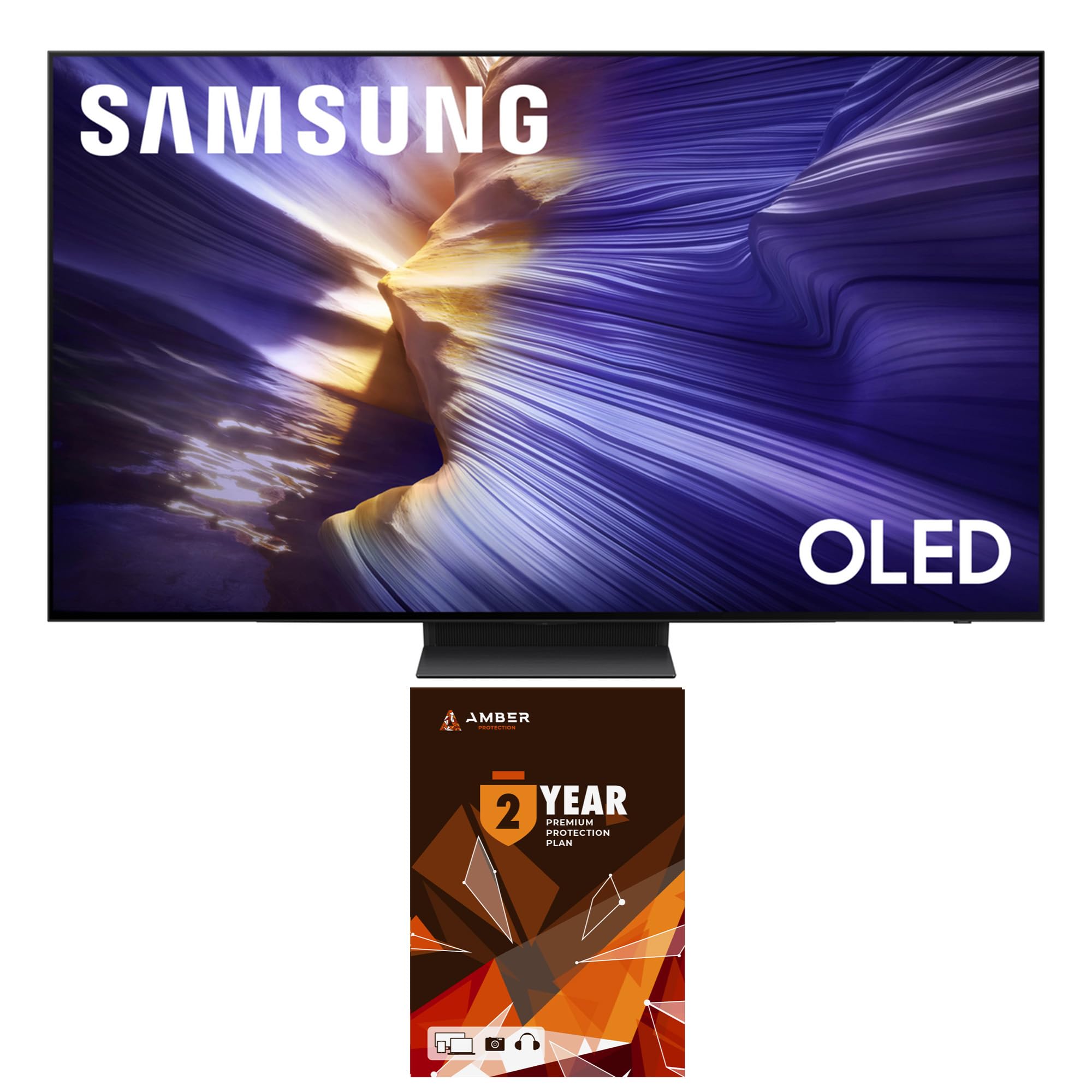
This bundle packages the Samsung S90F 77-inch QD-OLED with a two-year Amber Protection plan and a screen cleaner kit, effectively extending the coverage and providing maintenance tools for the delicate anti-reflective coating. The television itself is identical to Product 7 — NQ4 AI Gen3 processor, 144Hz Motion Xcelerator, QD-OLED color volume — but the bundled protection makes it a more attractive option for buyers concerned about longevity or accidental damage.
The Amber Protection plan covers a full two years beyond the manufacturer’s one-year warranty, specifically for residential use, and is offered exclusively through the seller Walt’s TV. The included screen cleaner is ammonia and alcohol-free, formulated specifically for OLED panels to avoid stripping the anti-reflective layer. The bundle adds tangible value without altering the core performance, which remains class-leading for color gamut and HDR vibrancy.
Customer feedback for this specific bundle is limited, but the underlying S90F reviews mirror the main listing — outstanding picture quality, easy setup, and a bright, color-rich image that transforms gaming and movie watching. The extra warranty provides peace of mind, especially given QD-OLED’s higher manufacturing cost and potential burn-in risk over extended use. If you’re already set on the S90F, the bundled protection is a sensible addition.
Why it’s great
- Two-year Amber Protection plan included for peace of mind
- Screen cleaner kit formulated for delicate OLED coatings
- All the QD-OLED brilliance of the standard S90F
Good to know
- Same television as the standard S90F; no exclusive upgrades
- Protection plan specific to residential use only
- Bundle may cost slightly more than standalone TV
9. Sony A80L 77

The Sony A80L is a 77-inch WOLED panel from 2023 that represents a more accessible step into Sony’s BRAVIA XR line, priced below the A90K and A95L flagships. It still uses the Cognitive Processor XR for intelligent scene analysis, delivering wide dynamic contrast, detailed blacks, and natural colors. The Game Menu consolidates all gaming picture settings and assist features into a single interface, and the exclusive PS5 features — Auto HDR Tone Mapping and Auto Genre Picture Mode — work seamlessly out of the box.
Acoustic Surface Audio+ turns the entire screen into a speaker for sound that follows the on-screen action, with support for Dolby Atmos. The 120Hz panel with VRR and ALLM via HDMI 2.1 ensures smooth gameplay, though the peak brightness is noticeably lower than 2024/2025 QD-OLED rivals — this is a TV best suited for a dedicated media room rather than a sunlit living space. The Google TV interface is fast and supports Apple AirPlay and Chromecast built-in.
Customer reviews are overwhelmingly positive, with many calling the A80L’s picture quality the best they have seen at this price tier. The motion processing and upscaling are universally praised — Sony’s XR technology makes 1080p content look near-4K. Some users report occasional freezing in the Google TV interface, requiring a cache clear or restart, and the A80L is not as bright as higher-end models. For PS5 owners prioritizing cinematic image quality over raw luminance, this is a comfortable sweet spot.
Why it’s great
- Superb XR motion processing and upscaling
- Deep PS5 integration with Auto HDR Tone Mapping
- Acoustic Surface Audio+ delivers immersive on-screen sound
Good to know
- Peak brightness is lower than QD-OLED and LG G-series
- Occasional Google TV freezing reported by users
- 2023 model; no 144Hz support for high-refresh PC gaming
10. Sony BRAVIA 8 II 55

The Sony BRAVIA 8 II is a 55-inch QD-OLED that combines Sony’s class-leading XR processor with quantum dot technology for Sony’s highest OLED brightness to date. Over 8 million self-lit pixels are controlled by the XR Processor with AI to boost color, contrast, and clarity in real-time — and the XR Triluminos Max delivers billions of accurate real-world colors. The QD-OLED panel gives the BRAVIA 8 II a color volume and luminance advantage over the WOLED A80L and A90K, making it a more capable HDR gaming display.
Studio-calibrated picture modes for Netflix, Prime Video, and Sony Pictures CORE ensure out-of-the-box accuracy for streaming content. The Google TV interface supports Apple AirPlay 2 and Google Cast for easy casting. Dolby Vision and Dolby Atmos support is complemented by DTS:X for disc-based media. The ultra-slim design with a near-gapless wall mount profile makes it a furniture-friendly option for smaller living spaces or dedicated gaming stations.
Customer reviews consistently describe the BRAVIA 8 II’s picture quality as exceptional, with deep blacks, vibrant colors, and superb 4K upscaling that breathes new life into older content. The built-in speakers are decent but a soundbar is recommended for full immersion. Some users note that the HDR brightness, while improved over earlier Sony OLEDs, is still not quite at the level of Samsung’s S95D or LG’s G4 — but the superior motion processing and color accuracy give it an edge for cinematic single-player gaming experiences.
Why it’s great
- QD-OLED with XR Triluminos Max for vibrant, accurate colors
- Studio-calibrated modes for Netflix and Prime Video
- Superior motion processing from Sony’s Cognitive Processor XR
Good to know
- Peak HDR brightness slightly behind Samsung QD-OLED flagships
- Built-in speakers adequate but external audio recommended
- Premium pricing for 55-inch size tier
11. Sony BRAVIA 8 77

The 77-inch BRAVIA 8 uses a WOLED panel combined with Sony’s XR Contrast Booster 15 to push peak brightness higher than the A80L while maintaining the company’s gold-standard motion processing. Over 8 million self-lit pixels deliver pure black with high brightness, and the XR Triluminos Pro handles billions of accurate real-world colors. This is a large-format OLED designed for buyers who want Sony’s processing expertise at a larger size than the 55-inch BRAVIA 8 II offers.
Exclusive PS5 features — Auto HDR Tone Mapping and Auto Genre Picture Mode — are present and optimized for the larger screen, making cinematic single-player titles like Horizon Forbidden West or God of War Ragnarok look stunning at 77 inches. The Game Menu consolidates all gaming settings, and HDMI 2.1 supports 4K/120 with VRR and ALLM. Acoustic Surface Audio+ uses the entire display as a speaker, and Dolby Vision and Dolby Atmos are supported along with IMAX Enhanced and DTS:X.
Customer reviews highlight the fantastic black levels and overall picture quality, with many calling it a significant upgrade from previous LED TVs. The 77-inch panel is heavy and requires a two-person installation. Some users report intermittent auto-on/off behavior that Sony support has been unable to fully resolve, and the Google TV interface can occasionally be buggy. For PS5 gamers who prioritize a large cinematic canvas with Sony’s processing magic, the BRAVIA 8 77 delivers in spades.
Why it’s great
- XR Contrast Booster 15 improves WOLED brightness significantly
- Deep PS5 integration with Auto HDR Tone Mapping
- Acoustic Surface Audio+ with Dolby Atmos for immersive sound
Good to know
- Panel is heavy; requires two-person installation
- Occasional Google TV interface bugs and auto-on/off issues
- Not as bright as LG G-series or QD-OLED competitors
12. LG G3 OLED evo 83

The LG G3 is a 2023 OLED evo panel that still holds its own in 2025 thanks to the Micro Lens Array (MLA) technology that boosts brightness up to 70% over standard WOLED panels. At 83 inches, this is one of the largest OLEDs available, and the combination of size and brightness makes it a commanding gaming display for both multiplayer and single-player titles. The a9 AI Processor Gen6 handles AI Picture and AI Upscaling, delivering sharp, artifact-free images at any distance.
Four HDMI 2.1 ports with 120Hz, G-SYNC, FreeSync Premium, and VRR give it maximum flexibility for multi-console setups. The One Wall Design includes a flush-mount bracket that leaves virtually no gap when wall-mounted, and the Always Ready mode displays art or photo collections when the TV is idle. Dolby Vision and Dolby Atmos are fully supported, and LG’s Filmmaker Mode preserves the director’s intent for cinematic gaming cutscenes.
Customer reviews describe the G3’s brightness as eye-melting in HDR mode, with colors and contrast that make gaming a genuinely immersive experience. The 83-inch size is transformative for multiplayer splitscreen and cinematic RPGs. Some users report quality control issues — dead pixels and vertical lines appearing within days of installation — though these appear to be isolated to certain batches. LG includes a five-year panel warranty, which provides some reassurance given the premium investment. The lack of a stand (wall mount only included) and the need for a high-end AV receiver for optimal audio routing are important physical constraints.
Why it’s great
- MLA technology delivers up to 70% brighter WOLED image
- 83-inch size is among the largest OLED gaming panels
- Five-year panel warranty included for peace of mind
Good to know
- No stand included; designed for wall mounting
- Some quality control issues reported (dead pixels)
- Needs high-end AV receiver for optimal audio routing
13. LG G5 OLED evo 77

The 2025 LG G5 is the company’s flagship OLED evo panel, pushing performance boundaries with a native 165Hz refresh rate — a first for a large-format OLED television. The Brightness Booster Max technology, combined with the Alpha 11 AI Processor Gen2, produces peak HDR luminance exceeding 2000 nits, verified by UL for Discomfort Glare Free with a UGR rating below 22. This makes the G5 genuinely bright-room-ready while maintaining perfect black-level performance that defines the OLED category.
Gaming features include a 0.1ms response time, G-SYNC and FreeSync Premium support, and four HDMI 2.1 inputs. The Game Dashboard and Game Optimizer provide on-screen controls for VRR status and latency adjustments. The webOS Re:New program guarantees five years of software updates, and the One Wall Design with a flush bracket ensures the panel sits almost flush against the wall. Dolby Vision, Dolby Atmos, Filmmaker Mode, and 360-degree sound processing via Wow Orchestra (when paired with an LG soundbar) round out the media features.
Customer reviews highlight the unreal color saturation and contrast, with several calling it the best TV they have ever owned. The 165Hz mode is hidden in the Game Optimizer menu and requires specific GPU settings, but once enabled, the motion clarity is transformative for competitive PC gaming. The non-backlit remote controller is a persistent annoyance for dark-room use, and the wall-mounted power cable exiting the bottom rather than the center back complicates flush wiring. For buyers who demand the absolute best HDR luminance and responsiveness at 77 inches, the G5 is currently the benchmark.
Why it’s great
- 165Hz refresh rate sets a new standard for OLED TVs
- 2000+ nits peak HDR brightness for bright-room gaming
- Alpha 11 AI Gen2 processor delivers exceptional upscaling
Good to know
- Remote is not backlit; difficult to use in dark rooms
- 165Hz mode hidden in Game Optimizer menu
- Power cable exits bottom, not center back, complicating flush wiring
FAQ
Will a Gaming OLED TV burn in if I play the same game for months?
Do I need HDMI 2.1 for gaming on an OLED TV?
Should I buy a WOLED or QD-OLED gaming television?
Final Thoughts: The Verdict
For most users, the gaming oled tv winner is the MSI MPG 321URX QD-OLED because it combines a blazing 240Hz refresh rate, ultra-low 0.03ms response time, and QD-OLED color volume in a 32-inch form factor that functions equally well as a dedicated gaming monitor and a media display. If you want the largest cinematic canvas with the highest luminance available, grab the LG G5 OLED evo 77 for its 165Hz panel and 2000+ nit peak brightness. And for a PS5-specific setup where motion processing and audio integration matter more than raw refresh rate, nothing beats the Sony A90K 48. Each of these picks serves a distinct gaming philosophy — choose based on your platform, room lighting, and size preference rather than chasing the highest spec sheet alone.