
The morning dew on the grass, the gritty feel of potting soil, and that one stray sprinkler that soaks your feet before you’ve even grabbed the trowel — your garden clogs are supposed to handle all of this without turning your feet into a sloshy, uncomfortable mess. The wrong pair will leave you sliding on wet pavement, holding mud between the lugs, or feeling every pebble through a thin sole.
I’m Mohammad Maruf — the founder and writer behind Drink4Good. I’ve spent hundreds of hours analyzing the tread patterns, EVA foam densities, and material compositions that separate a true garden workhorse from a fashion accessory that crumbles after one rainy season.
After combing through real user feedback and comparing the core specifications of the top contenders, this guide breaks down exactly how to find the best garden clogs for your specific soil, slope, and schedule — no hype, just the mechanical truth.
How To Choose The Best Garden Clogs
Garden clogs aren’t just waterproof shoes — they’re your primary interface with the ground during every dig, hose-down, and compost haul. Choosing the wrong pair means fighting for grip on wet slate or dealing with foot fatigue after an hour of standing. Focus on three non-negotiable factors.
Tread Depth and Pattern
A shallow, cosmetic tread is dangerous on damp soil and slick patio stones. Look for lugs at least 4–5 millimeters deep with directional channels that eject mud rather than trapping it. Toward the heel, a defined ridge or lip helps with braking on downhill slopes.
Material and Cushioning Density
Most modern clogs use molded EVA foam because it’s lightweight and water-resistant. The density of that foam determines whether you feel every root underfoot or float above it. Bio-based EVA (growing in availability) offers similar performance with a lower environmental footprint but can feel firmer initially. Rubber outsoles bonded to an EVA midsole offer the best durability for rocky or gravel-heavy paths.
Fit and Closure Style
Garden clogs are almost always slip-ons, so heel retention matters. Some models have a molded heel cup that holds your foot securely without a backstrap; others rely on a snug fit through the instep. If you have narrow feet, a roomy Croc-style fit may cause heel lift. Consider whether you’ll wear them with or without socks — many buyers size down with bare feet and size up for thick sock use.
Quick Comparison
On smaller screens, swipe sideways to see the full table.
| Model | Category | Best For | Key Spec | Amazon |
|---|---|---|---|---|
| Dansko Kaci | Premium | Long hours on hard surfaces | Bio-based EVA, slip-resistant | Amazon |
| Hunter Elana | Premium | Lightweight yard duty & errands | Lightweight EVA, secure fit | Amazon |
| Muck Muckster Lite | Premium | Narrower feet & chicken coop duty | Non-slip sole, narrower fit | Amazon |
| Crocband Clog | Mid-Range | Everyday walkability & water play | Croslite foam, sporty outsole | Amazon |
| Crocs Crafted Canvas | Mid-Range | Casual styling & wide flat feet | Canvas upper, EVA outsole | Amazon |
| Guide Gear Low Bogger | Budget | Affordable wet-weather slip-on | Rubber construction, shallow lug | Amazon |
| Sloggers Original | Budget | Colorful garden style on flat ground | Rigid waterproof material | Amazon |
In‑Depth Reviews
1. Dansko Women’s Kaci Occupational Mule Clog
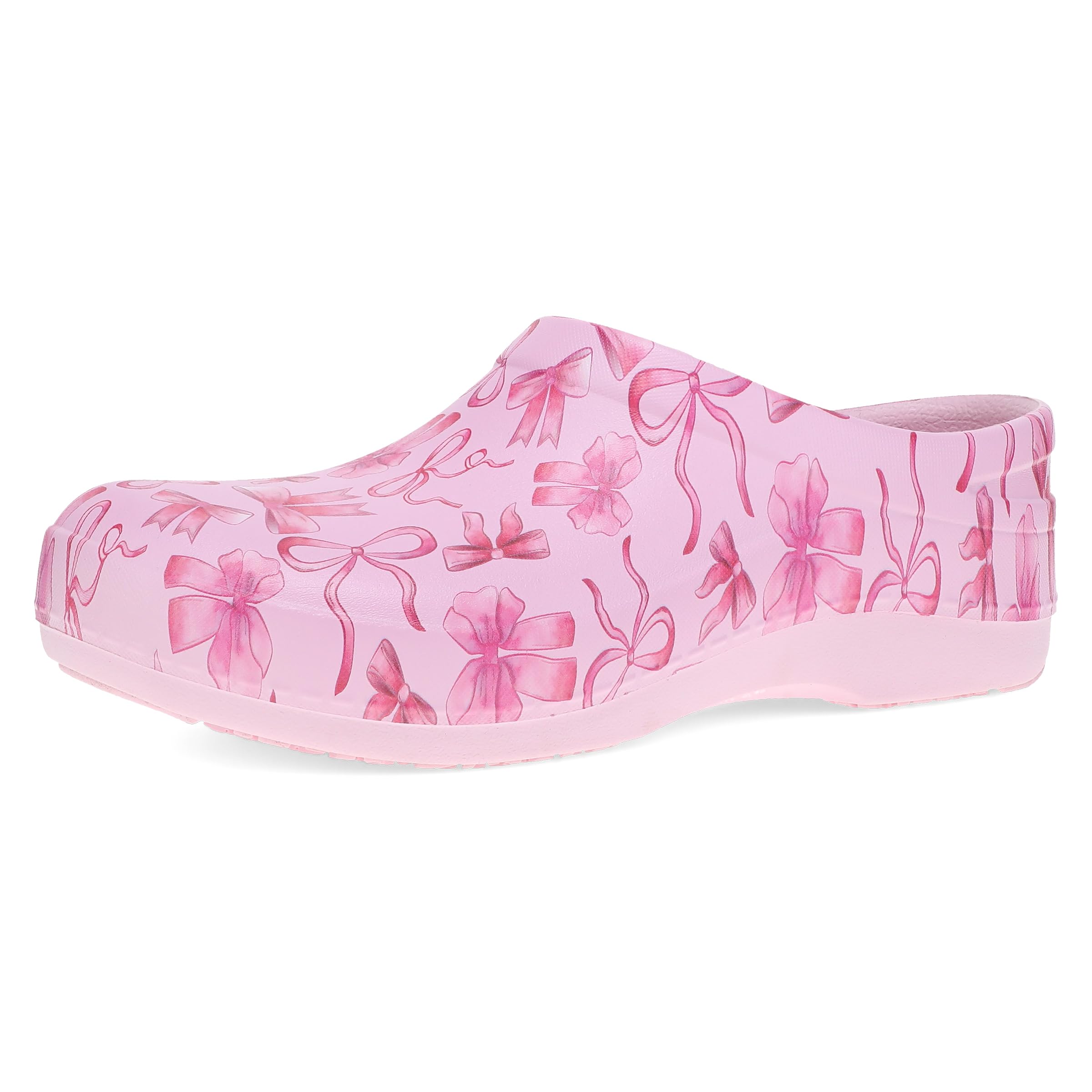
Dansko’s Kaci uses a bio-based EVA compound that delivers the same supportive density as their classic leather clogs but at a fraction of the weight. The slip-resistant outsole gives you reliable purchase on wet tile and damp grass without the heavy, clunky feel of traditional occupational footwear. Nurses and landscapers alike report it eliminates the ankle-rolling issue some experience with the original Dansko clog — a direct result of a wider, more stable heel base.
The upper is easily wipeable, so potting soil and grass stains come off with a quick rinse. Multiple reviewers noted that the shoe runs large; if you’re between half sizes, sizing down is the common recommendation. The generous interior volume accommodates thicker socks comfortably, making it a true four-season garden companion.
While the squeaking out of the box bothers some wearers, it typically fades after a week of break-in. The arch support is slightly less aggressive than the classic Dansko, but the trade-off is a more forgiving feel for those who stand for hours without shifting weight constantly. For a clog that doubles as a work shoe and a gardening tool, this is the most technically refined option available.
Why it’s great
- Excellent slip resistance on wet surfaces
- Very lightweight for the level of support
- Wipeable upper cleans up instantly
Good to know
- Runs notably large — size down
- Some initial squeaking during walking
- Not designed for deep mud or water immersion
2. Hunter Women’s Elana
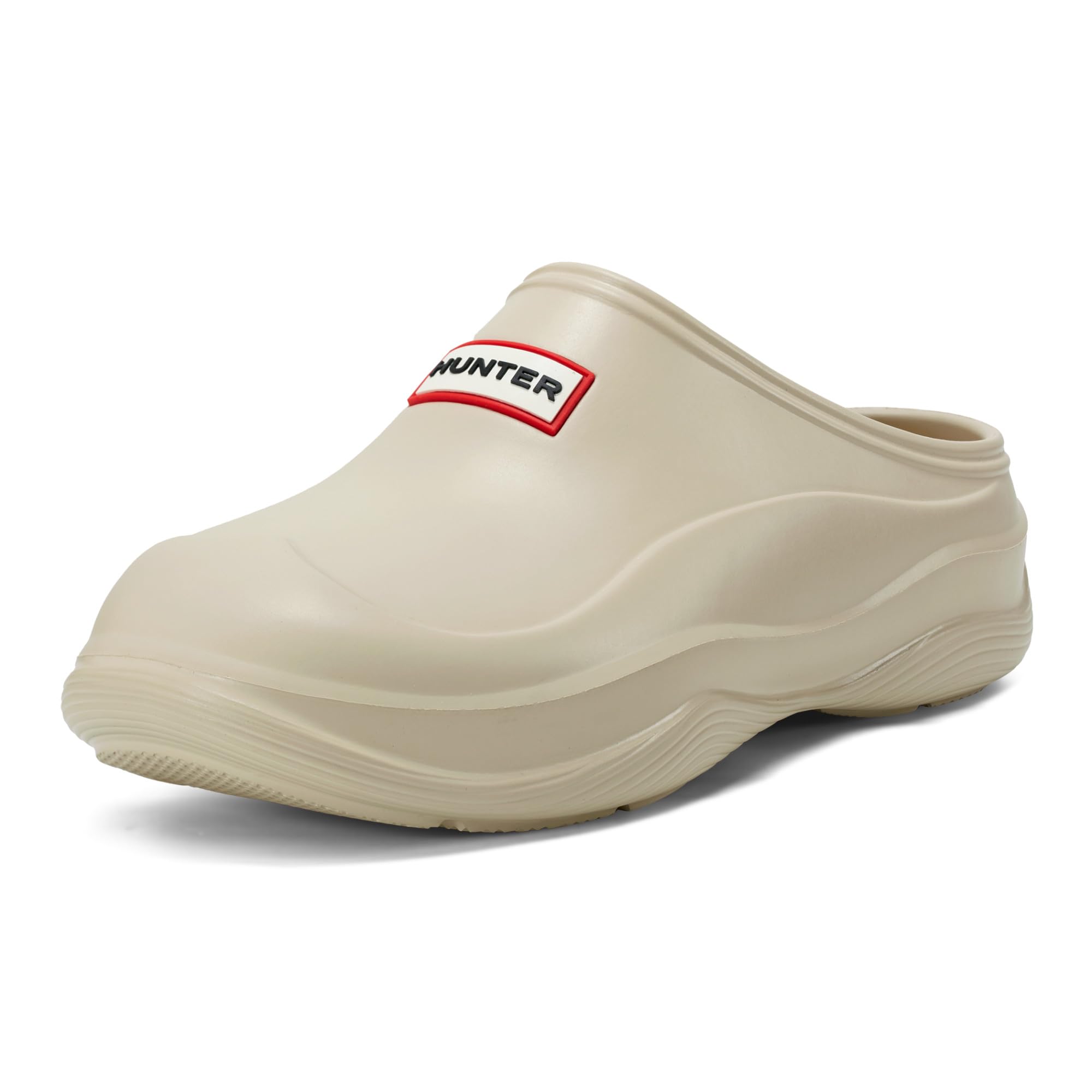
Hunter brings its rain-boot pedigree to the clog world with the Elana, which feels noticeably more refined than the standard Croc silhouette. The molded EVA upper has a more tailored shape — it wraps the foot without the gaping that can let in small stones. Reviewers consistently call it more comfortable than Crocs, citing the snugger heel pocket that prevents slippage on quick trips to the hose or compost bin.
At just over half a pound, the Elana is featherlight, making it an ideal choice for slipping on and off dozens of times during a gardening session. The outsole is smooth enough to avoid tracking mud indoors but still provides adequate grip on damp patio brick and natural stone. The smooth interior means you can go sockless without irritation, a plus for warm-weather weeding.
One commonly missed detail: there are cutouts on the inner footbed that allow water to drain — great for quick drying, but if you’re walking through tall wet grass, your feet will get damp. The lack of a rear heel lip also means the shoe can slide off if you’re doing heavy squatting or kneeling. For light yard maintenance, dog walks, and greenhouse work, this is a top-tier option that looks good doing it.
Why it’s great
- Very lightweight — easy to wear all day
- More secure heel fit than most clogs
- Water-draining footbed for quick drying
Good to know
- Cutouts let water in from wet grass
- No rear lip means possible heel slip
- Drain holes collect small debris
3. MUCK Men’s Muckster Lite EVA Clog
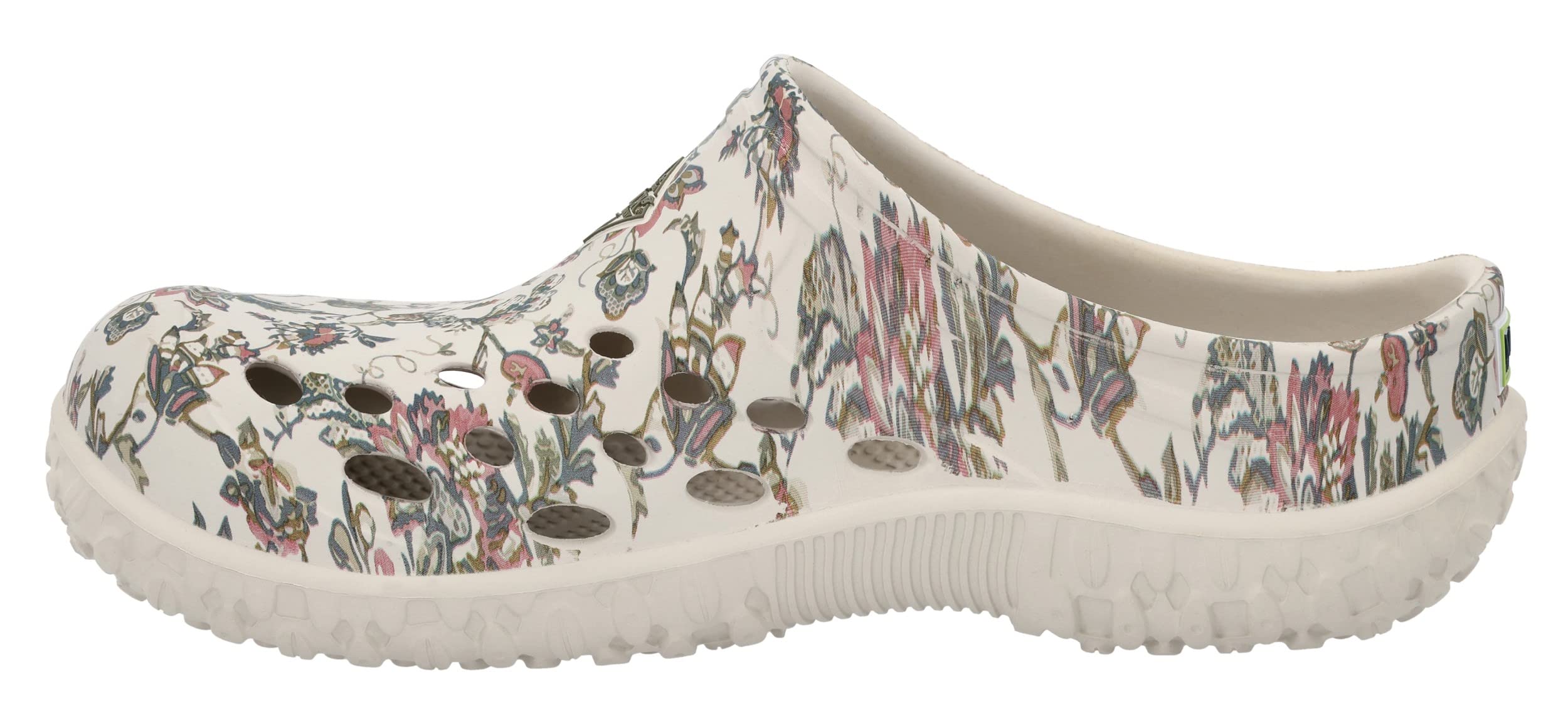
Muck built its reputation on serious wet-weather boots, and the Muckster Lite brings that DNA into a clog form factor. The EVA construction is noticeably denser than budget options, translating to better stability on uneven ground. Its stand-out feature for gardening use is the narrower, more anatomically correct last — a relief for anyone who finds standard Crocs too roomy and sloppy around the midfoot.
The non-slip sole pattern uses multi-directional lugs that handle wet grass and light mud better than the shallow treads found on many fashion-oriented clogs. Multiple reviewers independently confirm that sizing down one full size is the right move, particularly for those with narrower feet. The snug fit means you can squat to plant bulbs without the shoe threatening to come off.
Bear in mind that the Muckster runs long; half-size buyers should size down rather than up. The material does not have the same give as Croslite, so getting the right size is critical for comfort. If you need a clog for daily trips to the chicken coop, light farm chores, or any scenario where you want the shoe to stay planted, this is a smart, performance-oriented choice.
Why it’s great
- Narrower fit works well for non-wide feet
- Multi-directional lugs grip uneven ground
- Dense EVA holds up to daily wear
Good to know
- Runs large — size down one full size
- Material is stiffer than classic Crocs
- Less color variety than competitors
4. Crocs Unisex-Adult Crocband Clog
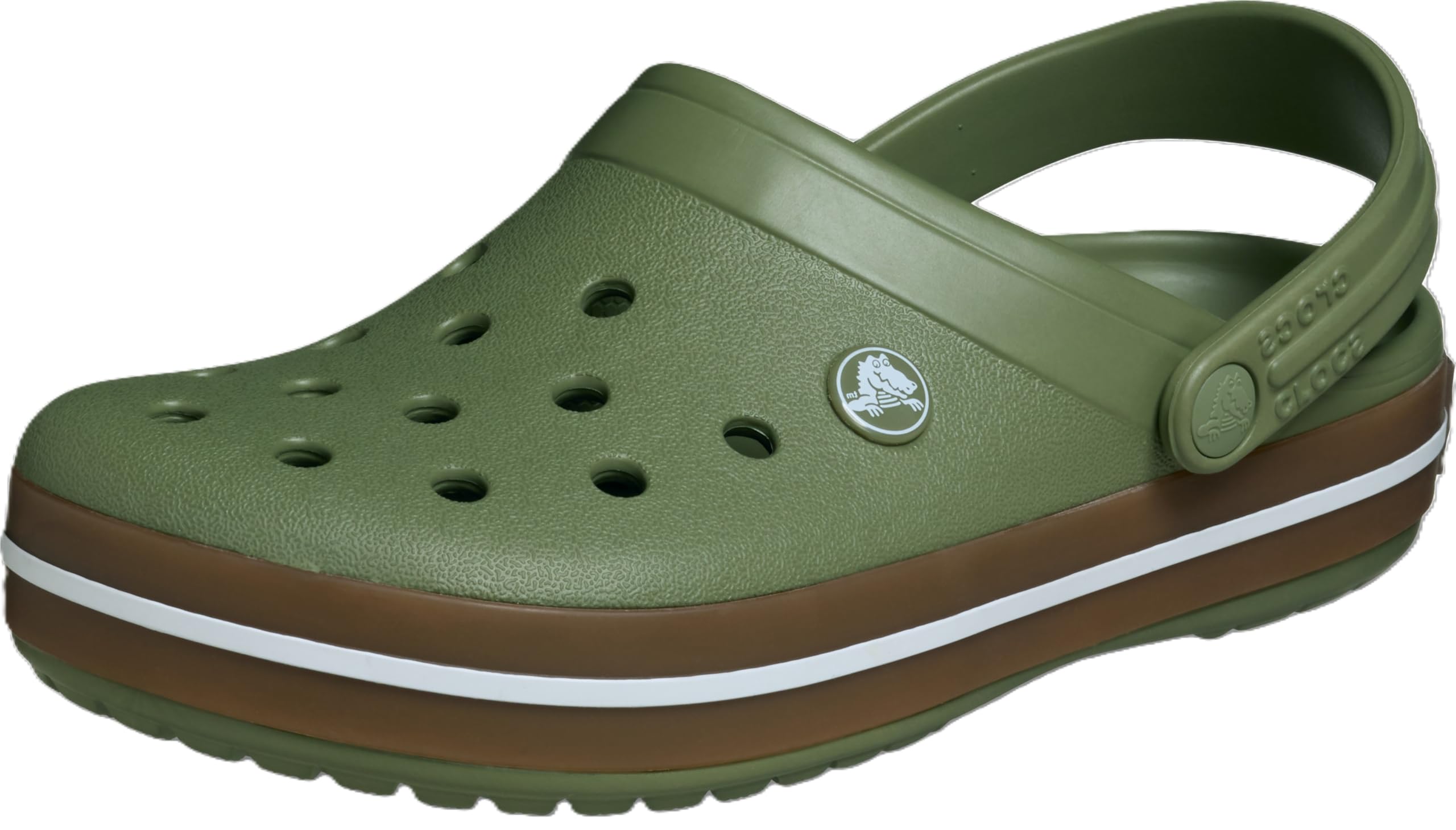
The Crocband is the most recognizable and widely available clog on this list, and for good reason. Its midsole band adds a touch of arch support that the classic Crocs lack, and the outsole pattern is more athletic — better for walks on pavement and dry trails than purely flat-bottomed clogs. The unisex sizing is generous, and the Croslite foam is famously forgiving for long days on your feet.
The durability of the Crocband sole is a double-edged sword. Multiple long-term users report that the tread wears smooth after 12–18 months of heavy use, particularly if worn daily on rough concrete or asphalt. The shoe is machine-washable, which makes mud and grass maintenance simple. For the price-to-versatility ratio, it remains a strong all-purpose choice for the gardener who also wants a shoe for quick errands and river outings.
One persistent sizing issue: the classic Crocs fit runs short if you have a higher-volume foot. Users consistently recommend going up two sizes from your usual length for a comfortable toe box. The lack of a heel strap means this is not the best choice for steep, muddy hills, but for flat ground and general yard work, the Crocband is a proven, reliable tool.
Why it’s great
- Better arch support than basic Crocs
- Machine-washable for easy care
- Very affordable and widely available
Good to know
- Tread wears smooth on rough surfaces
- Sizing inconsistency — may need 2 sizes up
- Roomy fit can let in pebbles
5. Crocs Unisex-Adult Classic Crafted Canvas & Suede Clogs
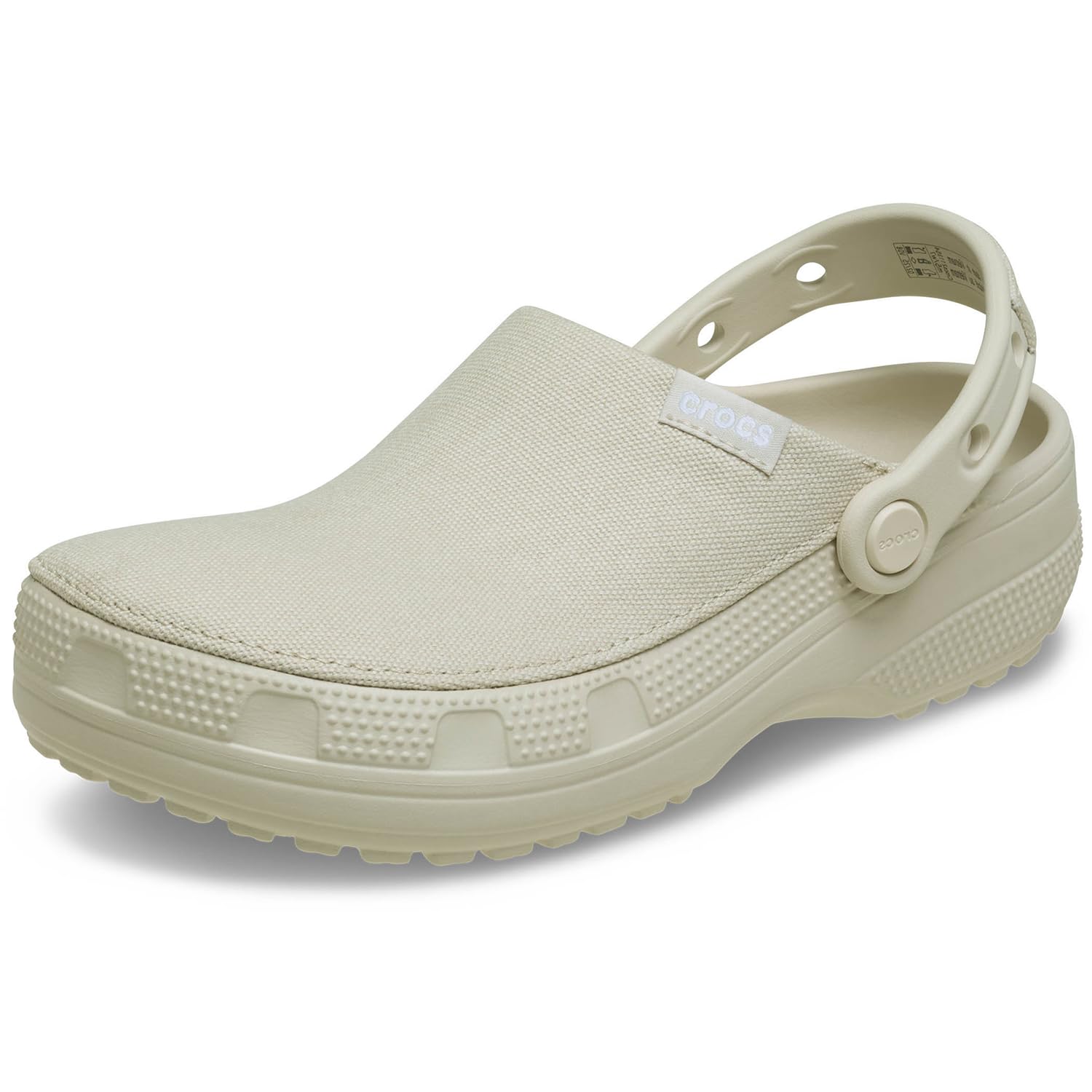
The Crafted Canvas iteration is Crocs’ attempt to blend the classic comfort of Croslite foam with a more lifestyle-friendly textile upper. The canvas and suede materials breathe better than solid EVA, reducing foot sweat during hot-weather watering sessions. The padded top collar also helps block dirt and small debris from entering the shoe — a small detail that makes a difference when you’re working loose soil.
Fit-wise, this model runs slightly large, and the wide footbed is especially accommodating for flat, wide feet. Reviewers with post-surgery foot sensitivity or bunions praise the roomy toe box and lack of pressure points. The outsole uses the same standard Crocs lug pattern, which offers adequate traction on dry ground but can feel slippery on wet clay or smooth garage floors.
The canvas material is a compromise: it looks more like a regular shoe, but it is not waterproof. A spray-on water-resistant treatment helps, but standing in a puddle will soak through. Cleaning requires a gentle scrub rather than a simple rinse. For the gardener who prioritizes breathability and style over maximum water resistance, this is a solid mid-range choice.
Why it’s great
- Breathable canvas reduces sweaty feet
- Padded top collar blocks debris
- Generous width for wide flat feet
Good to know
- Not waterproof — fabric gets wet
- Outsole lacks aggressive mud traction
- Harder to clean than all-EVA clogs
6. Guide Gear Men’s Low Bogger Rubber Clogs
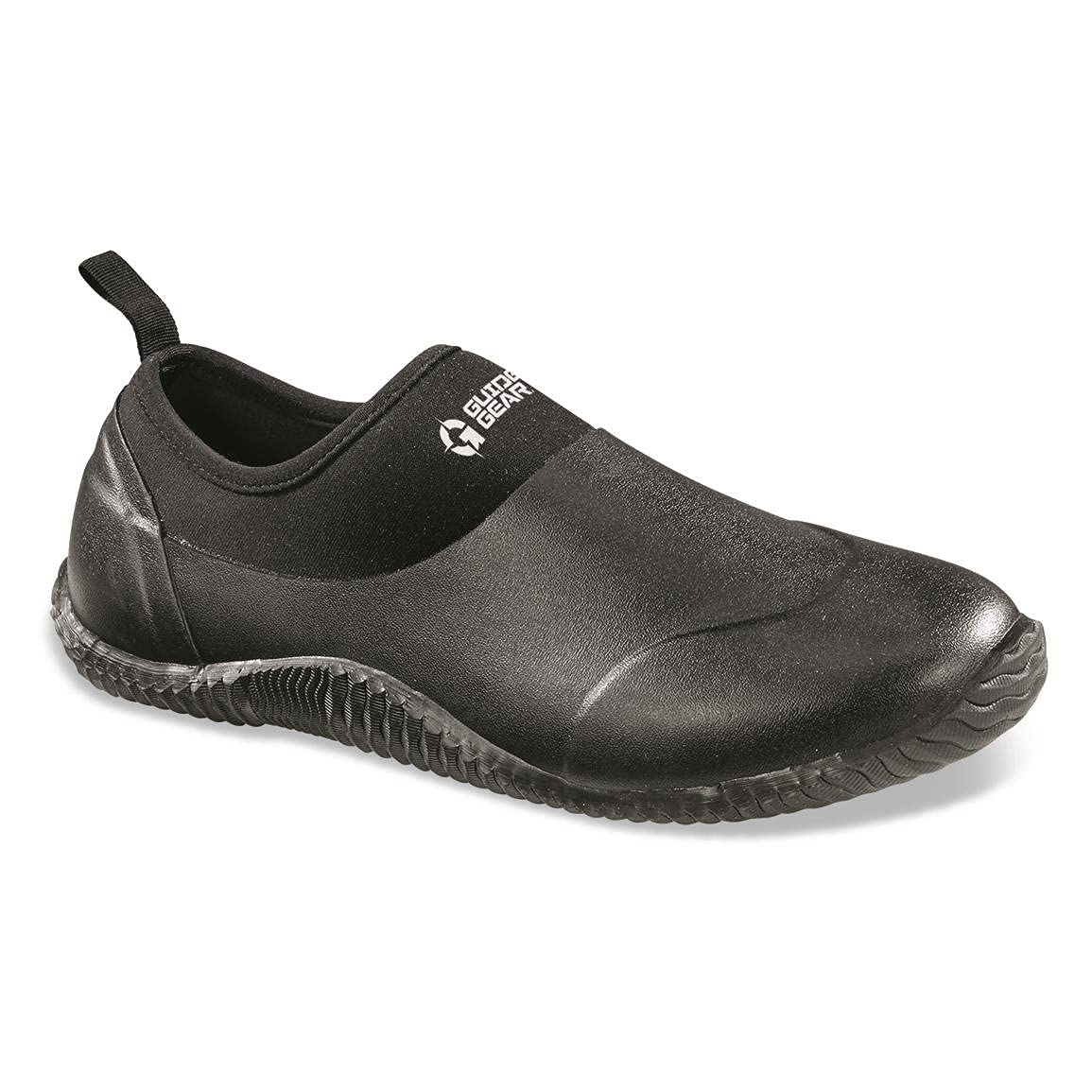
Guide Gear’s Low Bogger is a no-frills rubber clog that focuses on affordability and basic protection from damp ground. The one-piece rubber construction is completely waterproof, making it a legitimate choice for rainy garden days or quick trips through wet grass where you don’t want to risk soaking through a fabric shoe. The material is thicker and more durable than the thin EVA found in some ultra-budget clogs.
The tread depth is the main weakness here: users note the lugs are not aggressive enough for steep, muddy inclines. On flat terrain, the grip is fine, but anyone gardening on a slope will want more bite. Sizing up to accommodate thick socks is common, as the rubber does not stretch and the interior is snug when worn barefoot.
For the price, the Bogger solves the core problem of keeping your feet dry while doing yard chores. It is not a precision fit or a cushioned walking shoe, but it is a practical tool for those who need a cheap, throw-on-and-hose-off solution. If your garden is flat and your need is simple, this is a perfectly functional entry-level option.
Why it’s great
- Fully waterproof rubber construction
- Very affordable for basic wet-weather use
- Low cost means less worry about damage
Good to know
- Shallow tread — not for steep slopes
- Snug fit when barefoot; size up for socks
- Minimal arch support or cushioning
7. Sloggers Original Waterproof Rain and Garden Shoe for Women
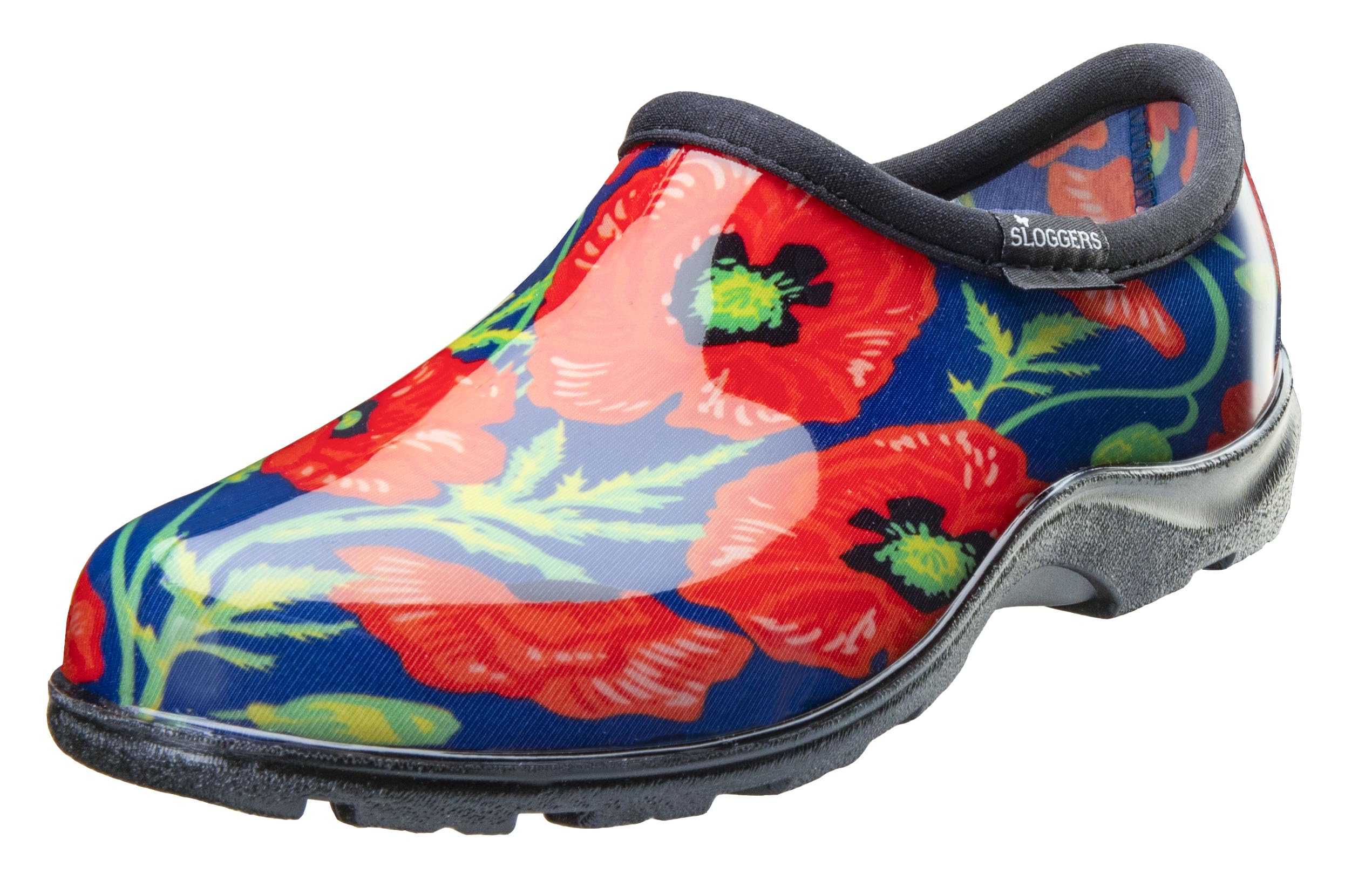
Sloggers has a loyal following among gardeners who value personality and waterproofing in equal measure. The material is rigid and durable — multiple reviewers report clogs lasting over a decade — and the slip-resistant heel provides reliable braking on slight inclines. The wide range of patterns, from paw prints to florals, makes them an easy choice for anyone who wants their garden footwear to show some style.
The fit is true to size for most users, though the rigid construction means you may need a shoehorn to get them on initially — the material does not flex like EVA. Once on, the fit is secure and the footbed is comfortable for light gardening. Several reviewers noted that the arch support is minimal, so if you have high arches, you may want to add an aftermarket insole.
The rigidity that gives Sloggers their longevity can also make them feel heavy and clunky compared to EVA alternatives. They are best suited to flat or gently sloping ground rather than steep hillsides. For the gardener who wants a rain-ready, long-lasting clog that stands out visually and stands up to years of abuse, these are a cult classic for a reason.
Why it’s great
- Exceptional durability — often lasts years
- 100% waterproof construction
- Fun, fade-resistant patterns available
Good to know
- Rigid material can be hard to get on
- Minimal arch support
- Heavier than EVA-based clogs
FAQ
How should garden clogs fit compared to regular shoes?
Can garden clogs handle muddy conditions?
Final Thoughts: The Verdict
For most users, the best garden clogs winner is the Dansko Kaci because it combines bio-based EVA cushioning with a genuinely slip-resistant outsole that works on wet grass and tile alike. If you want a featherlight option that feels more like a slipper, grab the Hunter Elana. And for a budget-friendly pair that keeps your feet dry without worrying about stains or damage, nothing beats the simple utility of the Guide Gear Low Bogger.