
A standard shovel blade meets its match the moment you hit compacted clay or a web of perennial roots. The digging fork changes that equation entirely — its open tine bed penetrates hardpan without the blunt force a spade demands, and the lever action lifts root-bound soil with less strain on your lower back. For gardeners who spend spring turning beds or breaking new ground, this tool is the difference between a chore and a productive afternoon.
I’m Mohammad Maruf — the founder and writer behind Drink4Good. I’ve spent years analyzing garden tool metallurgy and handle ergonomics to understand what separates a fork that lasts a decade from one that bends on the first rock.
Whether you’re aerating a raised bed, harvesting potatoes, or working a patch of stubborn red clay, choosing a garden digging fork that matches your soil type and physical build is the single most important decision for your back and your garden’s health.
How To Choose The Best Garden Digging Fork
A digging fork is not a one-size-fits-all tool. The wrong tine profile for your soil or a handle that’s too short can turn a simple task into a frustrating workout. Focus on these three factors before you buy.
Head Material and Tine Design
Forged carbon steel is the gold standard for raw strength — it resists bending under extreme leverage in clay or rocky soil. Stainless steel offers superior rust resistance, making it ideal for users who leave tools outside or work in consistently damp conditions. Tine shape matters too: flat-backed square tines dig deeper and hold soil better for turning beds, while round tines slip through mulch with less resistance. A flared step-bar (often called a tread plate) helps you drive the fork into hard ground without your boot slipping off.
Handle Length and Grip Style
A handle that reaches your hip or higher allows you to use your body weight effectively rather than relying on arm strength. Standard fork handles range from 30 to 44 inches. Taller gardeners (above 5’10”) should prioritize a minimum 40-inch overall length. D-grip handles offer superior control for vertical digging, while T-handles reduce wrist fatigue during twisting motions. Ash wood is the preferred handle material for its natural shock absorption, though steel shafts are virtually unbreakable in extreme conditions.
Weight and Balance
A fork that is too light lacks the inertia to penetrate hard soil, while an overly heavy fork tires you out before the bed is half turned. The sweet spot for most gardeners is between 4.5 and 6 pounds. A well-balanced fork will feel heavier at the head than the handle, allowing gravity to assist the initial thrust. Check the weight distribution by imagining a balance point near the ferrule — if the fork feels top-heavy, you will experience more strain on your wrists and shoulders.
Quick Comparison
On smaller screens, swipe sideways to see the full table.
| Model | Category | Best For | Key Spec | Amazon |
|---|---|---|---|---|
| TABOR TOOLS J59A | Alloy Steel | Rocky or compacted clay | Alloy steel shaft, 40 in length | Amazon |
| Spear & Jackson Neverbend | Forged Carbon | Professional heavy-duty turning | Weatherproofed hardwood shaft | Amazon |
| Berry&Bird Digging Fork | Stainless Steel | Raised beds and composting | FSC-certified ash wood handle | Amazon |
| Garden Pitch Fork (HLT-US-CSC-0205) | Stainless Steel | Harvesting root crops | 43.9 in total handle length | Amazon |
| Ymachray 5-Tine Fork | Boron Steel | Clay soil breakdown | Welded boron steel blade | Amazon |
| Truper 30293 | Steel Head | General garden turning | 30 in wood D-handle | Amazon |
| Little Giant PDF1 | Polycarbonate | Stable and manure cleanup | 13 in angled tines | Amazon |
In‑Depth Reviews
1. TABOR TOOLS Digging Fork, Steel Shaft (J59A)

The TABOR TOOLS J59A is built around a single-piece alloy steel shaft that eliminates the traditional wooden handle weak point. The diamond-point tines are sharp enough to sink into heavy clay on the first thrust, and the black oxide finish adds a layer of corrosion resistance that holds up after seasons of outdoor storage. At 40 inches in total length, it offers enough leverage for a 6-foot-tall gardener to engage their full body weight without bending over.
Users consistently report that this fork survives years of abuse, including prying out limestone chunks that would bend a standard carbon steel tine. The step-bar is wide enough to accommodate a boot without slipping, and the diamond-shaped tine profile reduces soil adhesion compared to flat square tines. The fork weighs in at just under 6 pounds, feeling solid without being exhausting to lift repeatedly over a full bed.
The only consistent knock is the handle length — some tall users wish it extended another 12 inches for upright posture. That said, for its sheer durability against physical misuse and its ability to handle the most challenging soil types, this fork earns the top recommendation for serious diggers.
Why it’s great
- One-piece alloy steel shaft is virtually unbreakable even when leveraging rocks.
- Diamond-point tines penetrate hard soil with minimal effort.
- Survives years of outdoor exposure without rust issues.
Good to know
- Handle feels short for gardeners over 6’2″.
- Heavier than wood-handled alternatives after extended use.
2. Spear & Jackson Neverbend Professional Digging Fork

The Neverbend lives up to its name with solid forged carbon steel tines that are heat-treated for maximum springback. The weatherproofed hardwood shaft is treated to resist splitting in damp conditions, and the traditional Y-D handle provides a comfortable grip for both vertical thrusting and twisting motions during cultivation. With a head width of roughly 8 inches and tines that measure 7 inches, this fork is proportioned for deep soil penetration rather than broad surface raking.
Gardeners dealing with cement-like clay report that this fork can break through where a rototiller stalls. The 39-inch overall length suits taller users well (6’3″ reviewers note they can stand upright while digging), and the weight distribution favors the head, allowing gravity to assist each plunge. The carbon steel develops a natural patina over time, which actually reduces soil stickiness as the surface roughens slightly.
A small number of users have reported handle failure after several seasons of heavy use, particularly when the fork was used as a pry bar — a misuse that stresses the shaft-to-head joint. For normal digging, turning, and aerating, this is a professional-grade tool that outperforms most consumer-tier forks in longevity.
Why it’s great
- Forged carbon steel tines resist permanent bending under heavy leverage.
- Weatherproofed hardwood handle prevents rot in damp storage.
- Excellent length for tall gardeners working upright.
Good to know
- Not designed for prying or side-to-side leverage on buried rocks.
- Carbon steel requires occasional oiling to prevent rust in humid climates.
3. Berry&Bird Gardening Digging Fork

Berry&Bird takes a sustainable approach by pairing a stainless steel head with an FSC-certified ash wood handle sourced from managed forests. The stainless steel resists rust entirely, making this fork ideal for gardeners who work in wet soil or store tools in damp sheds. The four square tines are polished smooth to minimize soil adhesion, and the D-grip handle is sculpted to fit the palm comfortably during repeated thrusting motions.
The 44-inch overall length is among the longest in this roundup, offering a distinct advantage for upright posture during raised bed work. The fork weighs approximately 6.3 pounds, placing it on the heavier side — but the stainless steel head provides superb rigidity, and users report no bending after a year and a half of regular use in normal garden soil. The ash wood handle naturally absorbs vibration better than fiberglass or steel shafts.
This fork excels in compost turning, mulch moving, and raised bed aeration rather than extreme clay breaking. Some users note that the tines are straight rather than slightly curved, which reduces the fork’s ability to cradle soil during lifting. For general-purpose gardening with an emphasis on sustainability and rust resistance, it is a beautifully crafted choice.
Why it’s great
- Stainless steel head will not rust, even with frequent wet use.
- FSC-certified ash handle offers excellent shock absorption.
- Extra-long 44-inch height reduces back strain for most users.
Good to know
- Straight tines are less effective at holding loose soil during transfer.
- Heavier than some alternatives at over 6 pounds.
4. Garden Pitch Fork (Haliaeetus HLT-US-CSC-0205)
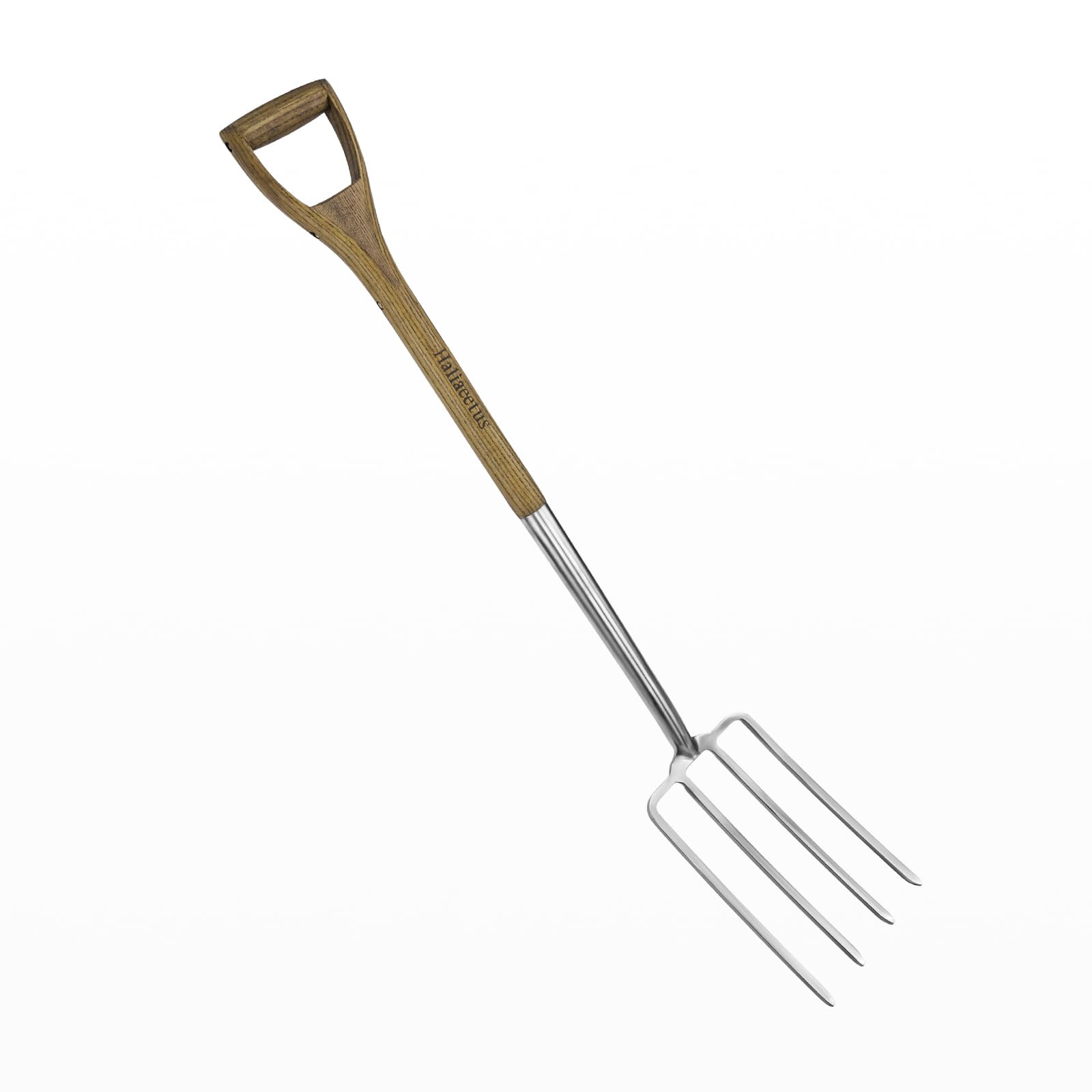
This fork from Haliaeetus leans into the concept of leverage, offering a 43.9-inch total height paired with a thick stainless steel head that resists bending. The D-grip ash wood handle places your wrist in a neutral position, and the extra height allows you to engage your hips and legs rather than your lower back when prying up compacted soil. The seamless welding technology on the tine-to-shaft joint eliminates a common weak point found in cheaper pressed-steel forks.
Users report that this fork excels in raised beds and clay soils alike, with the sharp tines cutting through hardpan more effectively than a shovel or mattock. The weight comes in at nearly 6 pounds, which provides useful momentum for deep penetration. The fork is also well-suited for harvesting root crops — garlic, onions, and potatoes lift cleanly without being sliced, as the tines slide underneath rather than chopping through the bulbs.
The lifetime warranty adds confidence, though the real selling point is the combination of stainless steel corrosion resistance with a design that prioritizes leverage for the home gardener. It may not be as indestructible as the TABOR in extreme rock-prying scenarios, but for day-to-day bed turning and cultivation, it is a refined tool at a reasonable investment.
Why it’s great
- Long handle provides exceptional leverage for upright digging.
- Seamless welding on tine joint resists breakage during heavy use.
- Stainless steel head offers rust resistance and smooth tines.
Good to know
- Not ideal for prying up buried rocks or extreme lateral force.
- Ash wood handle may dent under very aggressive impact.
5. Ymachray 5-Tine Heavy Duty Pitch Fork

The Ymachray is distinct for offering five square tines instead of the standard four, providing a wider bite for each thrust. The head is made from welded boron steel — a material that offers an excellent strength-to-weight ratio — and the T-handle design reduces wrist strain during twisting motions. The shaft is a solid steel rod rather than a wooden handle, eliminating the risk of the handle splitting at the ferrule over time.
Gardeners working in Georgia red clay or other heavy soils report that this fork is one of the few tools that can break through cement-like ground without bending. The sharp tines cut through clay on the first push, and the flared step bar provides a stable platform for boot pressure. Assembly requires bolting the handle to the fork head, and the bright color makes the tool easy to spot if left in the garden.
The main trade-off is weight: at roughly 5.5 pounds, it is not the lightest fork, and some taller users wish the handle extended a few more inches. The boron steel is notably rigid, meaning it will not flex under load — which is great for durability but means the fork transfers shock directly to your hands if you hit a buried rock. For the price, however, this fork delivers disproportionate value for tough soil conditions.
Why it’s great
- Five tines offer a wider working area per thrust than standard four-tine forks.
- Boron steel head resists bending in heavy clay and rocky soil.
- T-handle reduces wrist fatigue during twisting cultivation.
Good to know
- Steel shaft transfers shock more directly than wood handles.
- Handle length feels short for users over 5’10”.
6. Truper Spading Fork (30293)
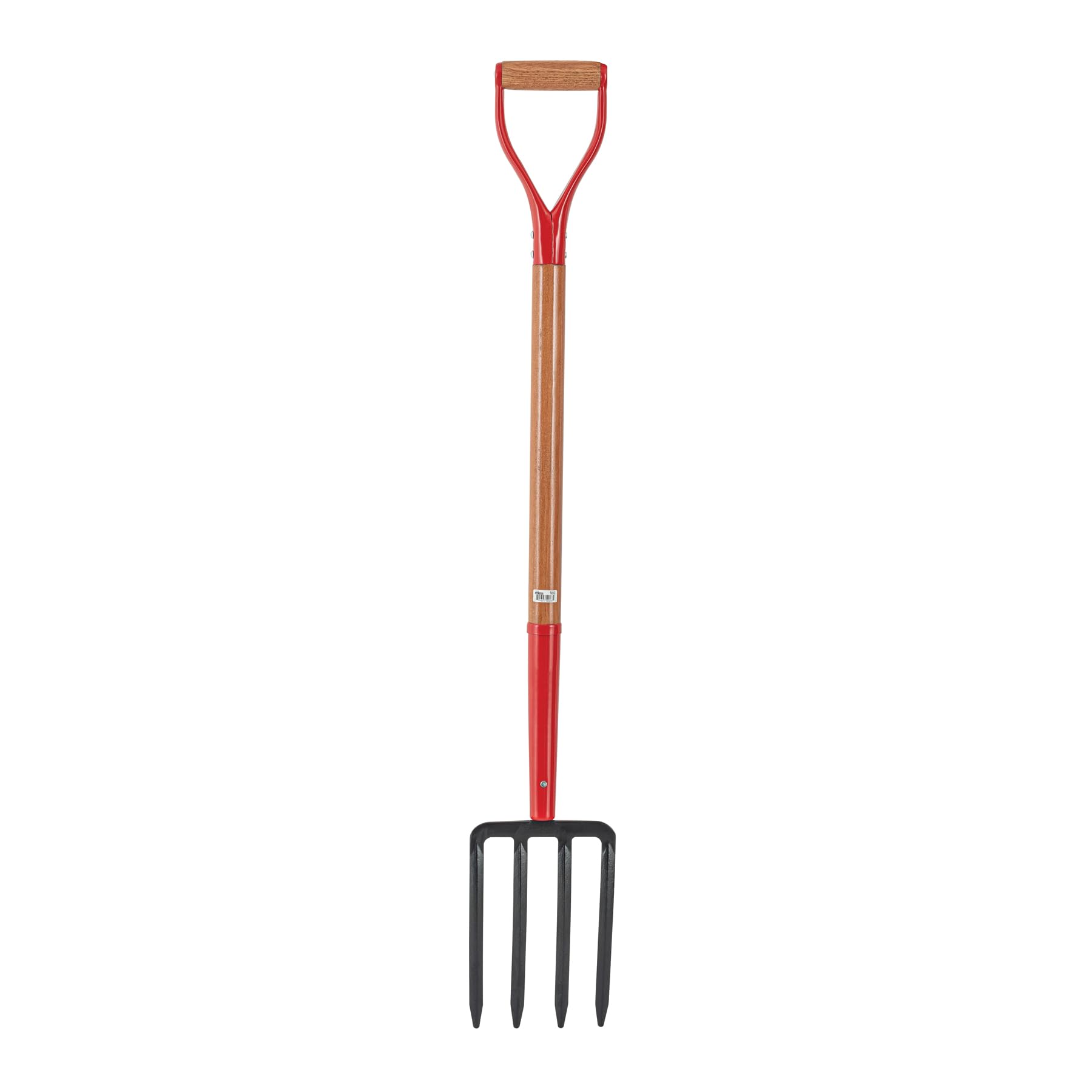
The Truper 30293 is a straightforward, no-frills digging fork with a 30-inch wood D-handle and a four-tine steel head. The shorter length makes this fork ideal for smaller gardeners, raised beds, or anyone who prefers a more compact tool for maneuverability in tight planting spaces. The steel head is durable enough for routine garden turning and compost moving, and the wood handle provides solid shock absorption.
Users who have owned this fork for close to a decade report that it holds up well under normal use — turning soil, moving mulch, and light weeding. The green paint on the handle has held up against weather exposure, and the D-grip allows for controlled one-handed lifting. The fork weighs just under 3.7 pounds, making it one of the lighter options in this roundup and easier to swing repeatedly.
The key limitation is the handle length — at 30 inches, taller gardeners will find themselves bending over significantly, which can strain the lower back during extended sessions. The steel tines have also been known to bend slightly if used to pry against rocks or roots. This fork is best viewed as a reliable entry-level tool for general bed maintenance rather than heavy breaking work.
Why it’s great
- Lightweight design reduces fatigue during prolonged use.
- Wood D-handle absorbs vibration and provides secure control.
- Trusted budget-friendly option with proven decade-long lifespan.
Good to know
- Short 30-inch handle requires bending for taller gardeners.
- Tines may bend under extreme prying force on rocks or roots.
7. Little Giant Green PDF1 Digging Fork

The Little Giant PDF1 breaks from the metal-tine convention by using a polycarbonate head with angled tines designed specifically for manure and stable cleanup. The wide tine spacing allows dirt and small debris to fall through while retaining larger material, making it an efficient tool for stalls and paddocks. The fork weighs only 2.7 pounds, dramatically reducing arm fatigue during repetitive scooping, and the smooth wood handle is comfortable for gloved and bare hands alike.
Horse owners praise this fork for its ability to handle daily stall cleaning without the neck and shoulder strain that comes with heavy metal pitchforks. The polycarbonate construction flexes slightly under load, which prevents the tines from snapping during normal manure scooping. The range of available colors — from hot pink to burgundy — adds a personalization aspect that is rare in garden tools.
This fork is not designed for soil digging or heavy cultivation. The polycarbonate tines will not penetrate compacted clay, and users attempting to dig with it risk breaking the head. For its intended use — stable maintenance and light mulch moving — it is the best tool available. If your primary need is turning garden soil, skip this fork and choose a steel-tine option instead.
Why it’s great
- Ultra-lightweight polycarbonate head reduces neck and arm strain.
- Angled tines effectively separate manure from bedding material.
- Multiple color options for easy tool identification.
Good to know
- Polycarbonate tines cannot penetrate hard or compacted soil.
- Tines may snap under heavy loads if used for digging.
FAQ
Can a digging fork break up clay soil effectively?
How does a 5-tine fork compare to a standard 4-tine model?
What handle length should I choose for my height?
Is a stainless steel digging fork worth the extra cost?
Final Thoughts: The Verdict
For most users, the garden digging fork winner is the TABOR TOOLS J59A because its one-piece alloy steel shaft and diamond-point tines deliver unmatched durability for breaking through clay, rocky soil, and compacted beds. If you want a rust-free fork with a sustainable ash handle for raised beds and composting, grab the Berry&Bird Digging Fork. And for budget-conscious gardeners who need a solid performer for general bed turning without breaking the bank, nothing beats the Ymachray 5-Tine Fork.