
Watching aphids swarm your prized roses or discovering half-eaten tomato leaves at sunrise is a gardener’s specific brand of heartbreak. The shelf at the garden center offers a dizzying array of sprays, concentrates, and granules, but choosing the wrong one can mean harming beneficial pollinators or simply wasting your weekend. The key is matching the active ingredient to the specific pest and your gardening philosophy — synthetic knockdown versus organic prevention.
I’m Mohammad Maruf — the founder and writer behind Drink4Good. I’ve spent years analyzing the chemistry and real-world performance of pest control formulations, digging past marketing claims to understand which active ingredients actually target specific insect life stages without collateral damage to your soil biology.
These five products represent the smartest options currently available for protecting your edible and ornamental plants. Whether you are fighting chewing caterpillars, sap-sucking aphids, or fungal outbreaks, the right garden pest control choice depends on matching the mode of action to the pest’s biology and your garden’s ecosystem.
How To Choose The Best Garden Pest Control
Garden pest control is not one-size-fits-all. The most effective strategy aligns the product’s active ingredient and delivery method with your specific pest, plant type, and tolerance for synthetic chemistry. Start by identifying the enemy: caterpillars, aphids, spider mites, and fungal pathogens each require a different mode of action.
Identify Your Pest’s Mouthpart (Chewing vs. Sucking)
Caterpillars and beetles chew holes in leaves and are best targeted with Bacillus thuringiensis (B.t.), which paralyzes their gut after ingestion. Sucking pests like aphids, whiteflies, and spider mites pierce plant tissue and require a contact or systemic product, such as neem oil or a pyrethroid-based spray that coats their bodies or disrupts their feeding.
Choose Between Biological and Synthetic Active Ingredients
Biological options like neem oil and B.t. are OMRI-listed for organic gardening and break down quickly in sunlight and soil, making them safer for honeybees, earthworms, and edible crops. Synthetic concentrates like lambda-cyhalothrin offer faster knockdown and longer residual activity but require strict adherence to pre-harvest intervals and can harm non-target insects if misapplied.
Consider the Application Format
Ready-to-use (RTU) trigger sprays are ideal for small gardens and spot treatments but become expensive per square foot for larger areas. Liquid concentrates that you mix in a hose-end sprayer or pump tank offer better coverage for vegetable beds and ornamental borders. Granular products are best for soil-dwelling pests like grubs but are less common for foliar pests.
Quick Comparison
On smaller screens, swipe sideways to see the full table.
| Model | Category | Best For | Key Spec | Amazon |
|---|---|---|---|---|
| Neem Oil Spray (Botanical Tradesman) | Neem Concentrate | Fungus gnats, whiteflies, aphids | Cold-pressed, 3.4 fl oz concentrate | Amazon |
| Garden Safe Fungicide3 | 3-in-1 Spray | Powdery mildew, aphids, spider mites | Clarified neem oil, 1 gallon RTU | Amazon |
| Control Solutions Cyonara | Synthetic RTU | Grasshoppers, mosquitoes, springtails | Lambda-cyhalothrin, 32 oz | Amazon |
| Monterey B.t. Caterpillar Killer | Biological B.t. | Cabbage loopers, bagworms, gypsy moths | Bacillus thuringiensis, 8 oz | Amazon |
| Smart Grower Peppermint Oil Spray | Essential Oil RTU | Mice, rodents, spiders, ants | 100% peppermint oil, 16 fl oz | Amazon |
In‑Depth Reviews
1. Neem Oil Spray (Botanical Tradesman)

This kit delivers exceptional value by pairing a 3.4 fl oz bottle of 100% cold-pressed neem oil concentrate with a refillable 16 oz trigger sprayer. When diluted according to instructions, the concentrate yields roughly 320 fl oz of ready-to-use spray, making it one of the most cost-efficient neem options for a medium-sized vegetable garden or a collection of houseplants. The cold-pressing process preserves azadirachtin and other active limonoids that disrupt the feeding and reproduction of aphids, whiteflies, fungus gnats, and spider mites without leaving synthetic residues on edible crops.
The oil itself is notably thick — reviewers note it requires thorough mixing with water and a mild soap emulsifier to prevent separation and ensure even coverage. Patience during dilution is rewarded with a robust solution that visibly reduces pest populations over a four-week treatment cycle, particularly for fungus gnats. The included spray bottle features an adjustable nozzle for targeted leaf undersides or broader canopy coverage.
One limitation is the strong, earthy scent that some find unpleasant, though it dissipates quickly after drying. The concentrate’s viscosity also means you will use more product per mix if you are not precise with your measuring. For gardeners committed to organic practices and willing to mix their own sprays, this kit is a smart, economical choice that outperforms many pre-diluted neem oils on the market.
Why it’s great
- Cold-pressed concentrate yields over 300 fl oz of usable spray
- Effective against both fungus gnats and whiteflies with repeated application
- Includes a refillable spray bottle for immediate use
Good to know
- Very thick oil requires thorough mixing with soap and water
- Strong neem scent may linger in enclosed spaces
2. Garden Safe Brand Fungicide3
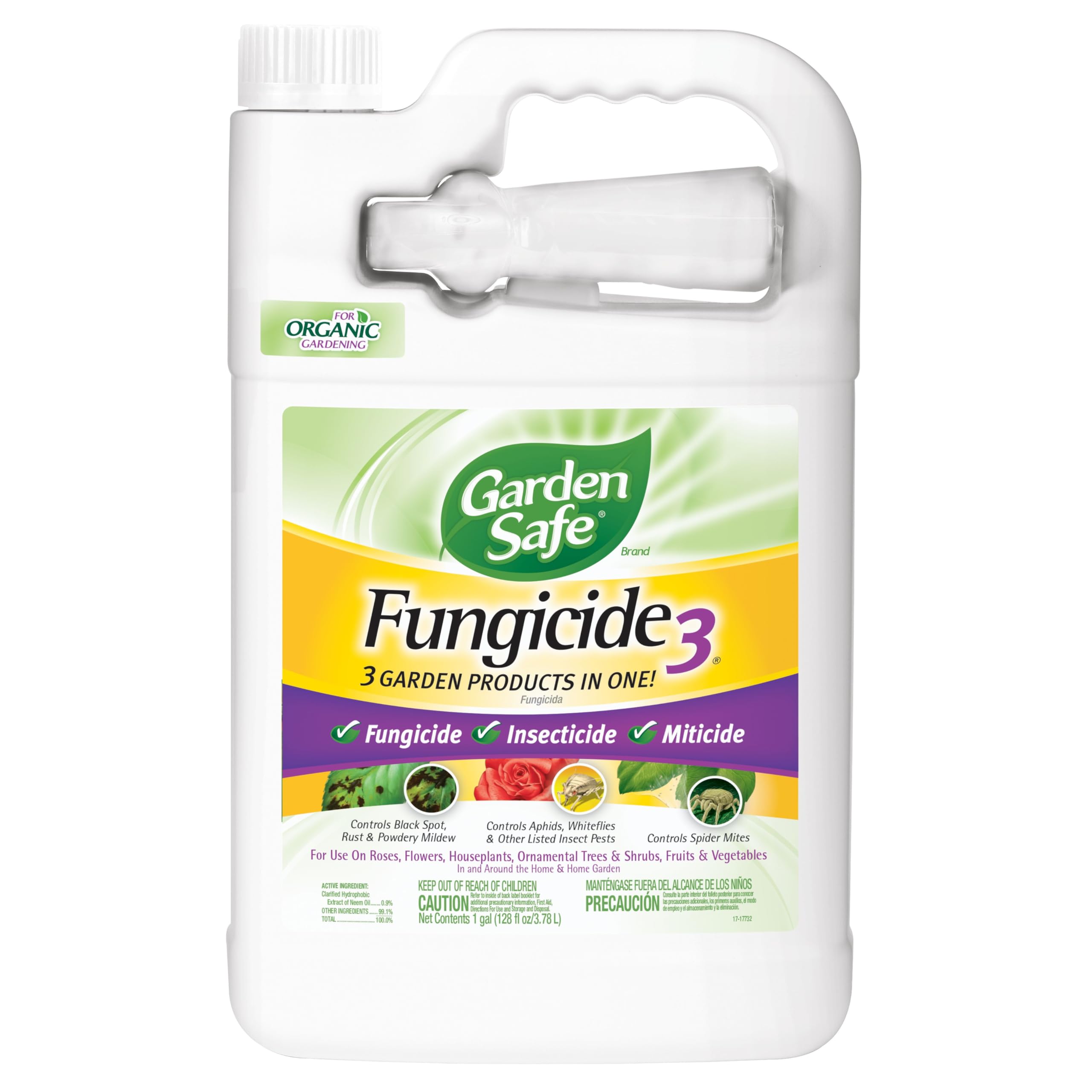
Fungicide3 is a rare triple-threat product that functions as a fungicide, insecticide, and miticide in one ready-to-use gallon container. The active ingredient is clarified hydrophobic extract of neem oil, a refined formulation that offers better mixing stability than raw cold-pressed neem. It is approved for organic gardening and targets an exceptionally broad spectrum: black spot, rust, and powdery mildew on the fungal side, plus aphids, whiteflies, and spider mites on the insect side.
Gardeners with large rose beds or mixed vegetable gardens will appreciate the convenience of the integrated sprayer, which eliminates measuring and mixing. Real-world results are compelling — regular weekly applications prevent powdery mildew recurrence on hibiscus and roses while simultaneously controlling aphid populations, leading to visibly greener foliage and increased flowering. The product also penetrates the protective webbing of spider mites, which many surface sprays fail to do.
The main drawback is the sprayer wand itself, which some users find too short for reaching deep into dense shrubs. A few plants have shown minor leaf burn when the product was applied in direct, intense sunlight or at higher-than-recommended concentrations. Starting with the label’s minimum dose and spraying in the early morning or evening will avoid this issue. For a single-bottle solution to both fungal and insect problems, this is a stellar pick.
Why it’s great
- Fungicide, insecticide, and miticide in one ready-to-use formula
- Prevents powdery mildew while controlling aphids and spider mites
- One gallon covers extensive ornamental and vegetable gardens
Good to know
- Integrated sprayer wand is short for deep shrub penetration
- Can cause minor leaf burn if applied in direct midday sun
3. Control Solutions Cyonara Lawn & Garden RTS

When a heavy grasshopper infestation is stripping your roses and tomatoes in days, you need a rapid knockdown product. Cyonara delivers that power through lambda-cyhalothrin, a synthetic pyrethroid that attacks the insect nervous system on contact. The 32-ounce ready-to-spray bottle hooks directly to a garden hose, making it the fastest option for covering large lawn and garden areas without mixing or measuring.
User feedback consistently highlights its effectiveness against the toughest chewing pests: lubber grasshoppers, mosquitoes, and spiders. One gardener reported wiping out an infested yard of grasshoppers that were decimating plants within a single application. The product also controls springtails and other nuisance insects around patios and foundations, providing a residual barrier that lasts for weeks on treated surfaces.
The trade-off is that this is a broad-spectrum synthetic insecticide. Over-application caused temporary grass browning on a 1,500-square-foot lawn after three heavy sprays in two weeks — the label should be followed strictly to avoid phytotoxicity. It is also non-selective, meaning it will kill beneficial insects like bees if sprayed on open blooms. For targeted, heavy-duty control of aggressive pests when organic options fail, Cyonara is the go-to heavy hitter.
Why it’s great
- Fast knockdown of grasshoppers, mosquitoes, and spiders
- Hose-end sprayer covers large lawns with zero mixing
- Long residual activity reduces reapplication frequency
Good to know
- Broad-spectrum synthetic kills beneficial insects on contact
- Overuse can cause temporary grass browning
4. Monterey B.t. Caterpillar Killer
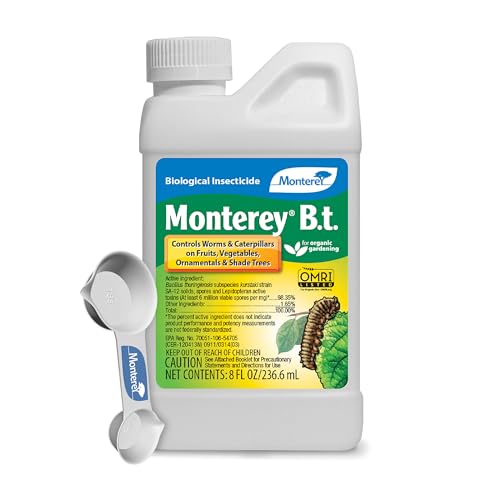
Monterey B.t. is the gold standard for organic caterpillar control. The active ingredient is Bacillus thuringiensis subspecies kurstaki, a naturally occurring soil bacterium that, when ingested by caterpillars, releases a protein toxin that paralyzes their digestive system within hours. It is lethal to cabbage loopers, bagworms, gypsy moths, and elm spanworms, yet completely harmless to birds, earthworms, honeybees, and ladybugs — a crucial distinction for any gardener maintaining an edible landscape.
The 8-ounce concentrate mixes with water and is applied using a standard trigger sprayer or pressure tank. Users report total elimination of cabbage loopers on broccoli and cilantro seedlings after a single thorough application, saving crops that were being skeletonized overnight. The product also works on tree foliage for tent caterpillars and fall cankerworms without harming the tree or surrounding soil biology.
Because B.t. must be ingested to work, thorough coverage of all leaf surfaces — especially the undersides where young caterpillars hide — is essential. The concentrate has a shorter shelf life once mixed, so you should use the solution within 24 hours for maximum potency. For any gardener growing brassicas, tomatoes, or ornamentals plagued by chewing worms, this biological weapon is indispensable.
Why it’s great
- Zero impact on honeybees, earthworms, and beneficial insects
- Effectively killed cabbage loopers and bagworms in user tests
- OMRI-listed for use on organic vegetable gardens
Good to know
- Requires thorough leaf coverage for ingestion by caterpillars
- Mixed solution loses potency after 24 hours
5. Smart Grower Peppermint Oil Spray
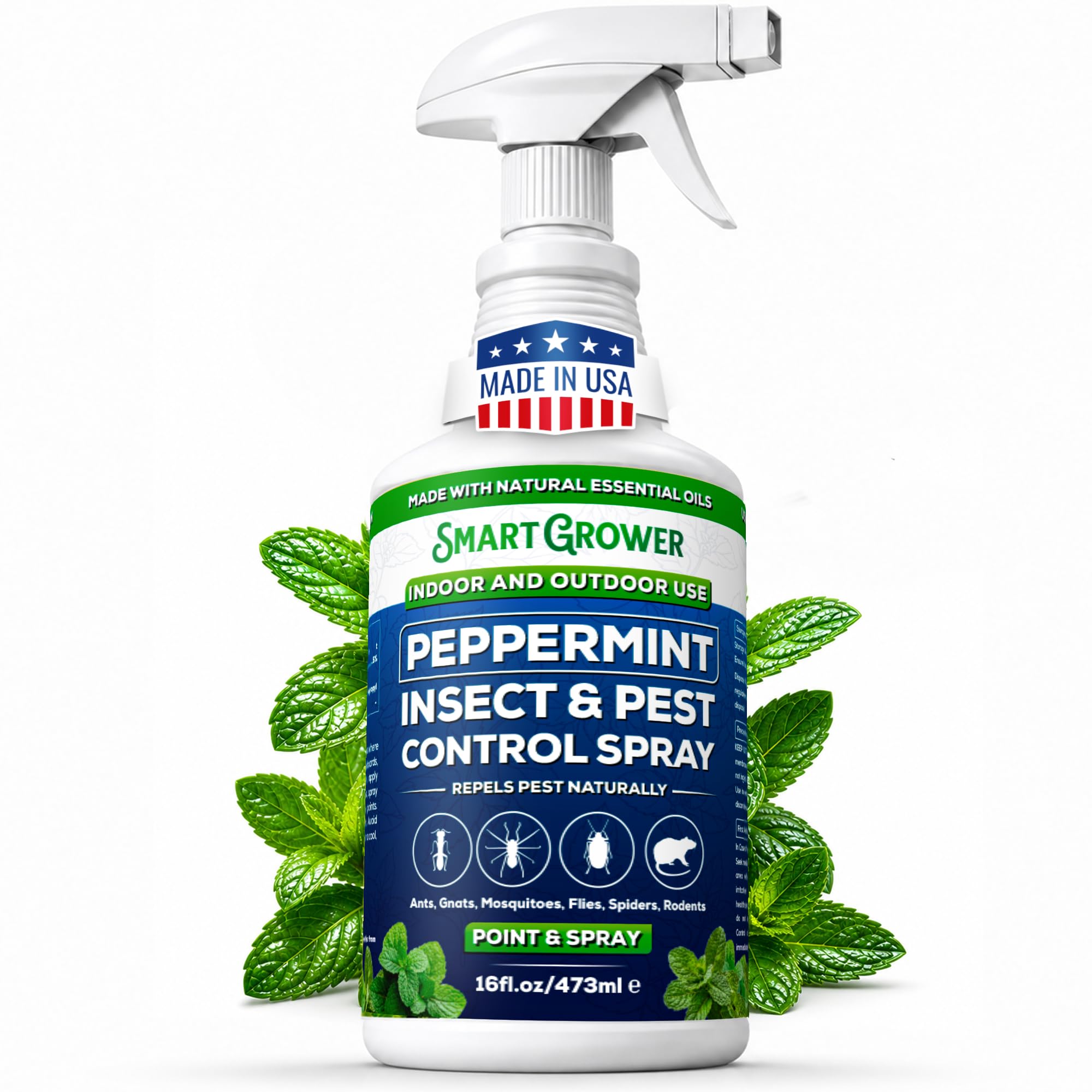
This spray is a different approach: it uses concentrated peppermint essential oil as a repellent rather than a poison. It is designed to deter mice, rats, spiders, ants, wasps, and insects through an overwhelming scent barrier that pests find intolerable. The 16-ounce ready-to-use bottle works indoors and outdoors, making it a versatile option for gardeners who also want to protect their garage, basement, or tool shed from rodent activity without setting traps or using rodenticides.
Gardeners have found it effective against crickets, camel spiders, and ants on rose bushes, and one user specifically noted that their dog avoided the treated perimeter — a useful side effect for keeping pets away from certain plants. Another gardener successfully used it on pomegranate and pear trees to repel leafhoppers in early spring. The peppermint scent is strong but far more pleasant than chemical pesticides, dissipating within an hour after application.
The biggest limitation is that repellents do not kill existing pest populations. For hornets or wasps that have already established a nest, this spray will not provide the knockdown needed. The spray bottle nozzle can also be finicky, and some units arrived with oil leaking around the seal during shipping. For gentle, non-toxic perimeter defense against rodents and crawling insects, this is an excellent first line of defense.
Why it’s great
- Non-toxic peppermint oil repels rodents and insects effectively
- Pleasant scent compared to synthetic chemical sprays
- Safe for use around pets and in vegetable gardens
Good to know
- Repellent only — does not kill existing infestations
- Nozzle can be prone to leaking during shipping
FAQ
Can I use neem oil on edible plants right up until harvest?
Will B.t. kill caterpillars on my tomato plants without harming the fruit?
How often should I reapply peppermint oil spray for rodent control?
Final Thoughts: The Verdict
For most users, the garden pest control winner is the Garden Safe Fungicide3 because it covers fungal, insect, and mite problems in a single pre-mixed gallon, saving time and storage space. If you are targeting specific caterpillar outbreaks while protecting bees, grab the Monterey B.t. Caterpillar Killer. And for budget-conscious organic gardeners who prefer mixing their own spray, nothing beats the value of the Botanical Tradesman Neem Oil Kit.