
Whether you’re filling a raised bed, starting seeds, or repotting a prized houseplant, the difference between a productive garden and a disappointing one often comes down to what’s below the surface. A loose, airy structure that holds moisture without turning to mud is the real goal, and that demands more than just a bag of generic dirt.
I’m Mohammad Maruf — the founder and writer behind Drink4Good. I’ve spent years analyzing horticultural blends, from brick coir to peat-based mixes, weighing how each formula handles aeration, water retention, and nutrient availability across different growing scenarios.
In this guide, I’ve narrowed the options down to five proven blends for raised beds, containers, and in-ground gardens to help you find the best garden soil mix for your specific plants and growing environment.
How To Choose The Best Garden Soil Mix
Finding the right mix starts with knowing what your plants actually need. A seed-starting blend differs drastically from a raised-bed filler, and a bag that promises everything for everyone often delivers mediocrity. Focus on three pillars: base ingredient quality, texture balance, and pH stability.
Base Ingredient: Peat vs. Coir vs. Compost
Peat moss retains water well but can be acidic and slow to re-wet once dry. Coco coir, a byproduct of coconut husks, holds more air, resists compaction, and rehydrates instantly — but it lacks inherent nutrients. Compost-based blends add fertility but can introduce weed seeds or gnats if not pasteurized. Choose based on whether your priority is long-term aeration or a self-fertilizing start.
Texture and Aeration
Roots need oxygen. A mix that stays soggy suffocates them, while one that drains too fast dries out before roots can drink. Look for perlite or coarse sand to create pore space, and vermiculite to hold water. A fluffy, friable texture that crumbles easily in your hand signals good structure.
pH and Nutrient Buffering
Most garden crops prefer a pH between 6.0 and 7.0. Unbuffered peat can drop below 5.0, while coir often sits around 5.5 to 6.5. Pre-buffered blends that include lime or are triple-washed (in coir’s case) save you from having to adjust pH yourself, especially if you’re mixing large volumes for a raised bed.
Quick Comparison
On smaller screens, swipe sideways to see the full table.
| Model | Category | Best For | Key Spec | Amazon |
|---|---|---|---|---|
| MODELLOR Premium Coco Coir (10 lb) | Coco Coir | Large raised beds & DIY blending | Expands to 18–20 gallons per brick | Amazon |
| MODELLOR Premium Coco Coir (5 lb) | Coco Coir | Small pots & seed starting | Expands to 9 gallons (4 bricks) | Amazon |
| Coast of Maine Organic Vegetable Soil | Compost Blend | Container tomatoes & vegetables | Pre-mixed with composted manure | Amazon |
| Midwest Hearth Potting Mix | Peat-Based Mix | Small indoor planters & seedling pots | 8 dry quarts; contains peat, perlite, vermiculite | Amazon |
| Michigan Peat All Purpose Potting Soil | All-Purpose Mix | High-volume container & raised bed filling | 50-lb bag; includes starter fertilizer | Amazon |
In‑Depth Reviews
1. MODELLOR (10 lb) Premium Super Washed Coco Coir Brick
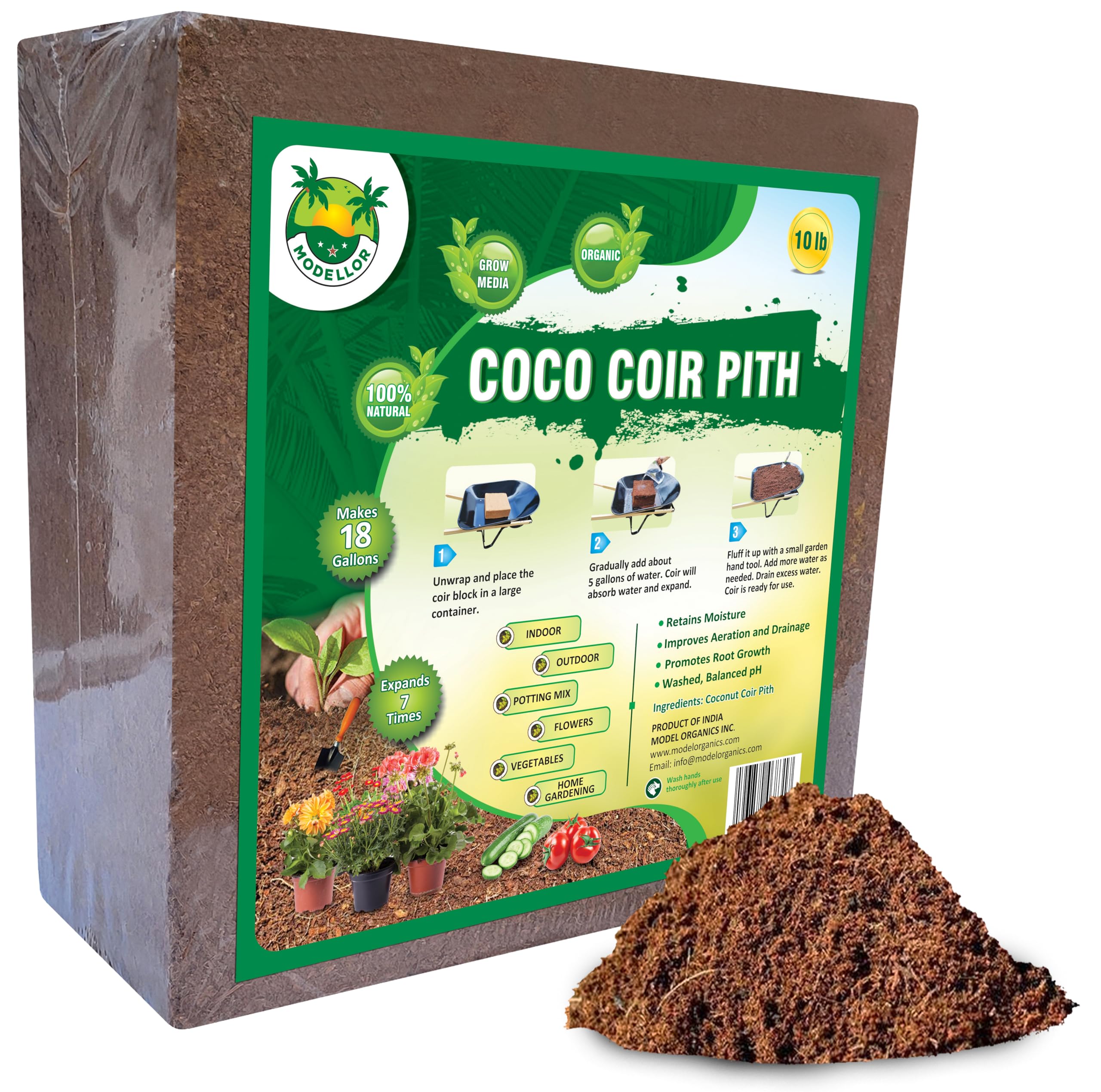
This 10-pound brick of triple-washed coco coir expands into 18 to 20 gallons of fluffy, pH-balanced growing medium — enough to fill a 4×4 raised bed to a depth of about 4 inches or a dozen 5-gallon pots. The low-salt, pre-buffered formulation means you can hydrate and plant immediately without rinsing, a time-saving advantage over raw coir blocks that require leaching.
Coco coir’s fibrous structure provides superior air porosity compared to peat, and this batch is remarkably consistent brick to brick. Customers consistently report clean expanses with no debris, no sour smells, and no pest larvae. The roots of seedlings and transplants move through it faster because the texture resists compaction, even after repeated watering cycles.
If you mix your own soil from base components, this brick serves as the ideal carbon-based substrate. Blend it with perlite for drainage or vermicompost for fertility — the neutrality of the coir gives you total control over your final recipe. For growers who need volume without chemical additives, this is the foundation to build on.
Why it’s great
- Clean, consistent, pre-buffered coir with no salt residue.
- Massive expansion ratio saves storage space compared to pre-moistened bags.
- Versatile base for custom blends or standalone use in pots.
Good to know
- Requires hydration ahead of planting (10-15 minutes soak time).
- Contains no added nutrients — you must amend for fruiting crops.
2. MODELLOR (5 lb) Premium Super Washed Coco Coir (4 Bricks)
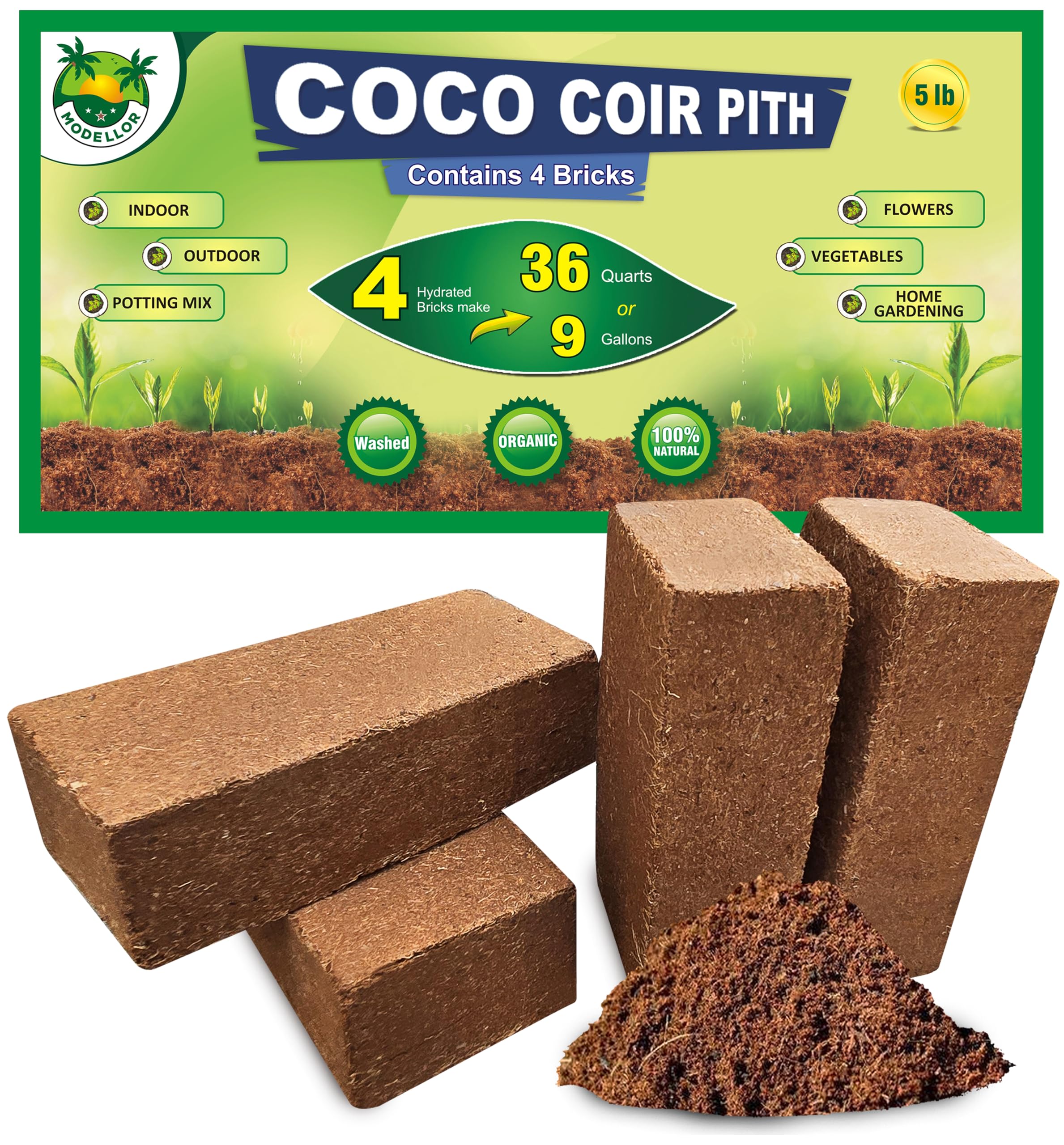
This set of four 1.25-pound bricks yields a total of 9 gallons (36 quarts) of hydrated coir, making it a practical entry point for container gardeners and seed starters who don’t need a massive batch. Each brick expands predictably — just add warm water and wait ten minutes — and the resulting medium is light, crumbly, and free of the dust or sticks that plague lower-tier coir products.
The triple-washing process removes soluble salts that can stunt seedlings, and the pH sits in the 5.5 to 6.5 range naturally. For critical germination projects like microgreens or orchid propagation, this consistent chemistry reduces the risk of damping-off or nutrient lockout. User reviews highlight how fast seeds sprout and how clean the root zone stays compared to peat-based mixes.
Because the bricks store flat and last indefinitely in dry conditions, you can hydrate only what you need per planting session. This eliminates the waste of opening a full bag of wet soil that dries out or molds before you finish it. For apartment gardeners with limited shelf space, the compact brick format is a real advantage over bulky pre-moistened bags.
Why it’s great
- Ultra-compact storage before hydration — fits in a drawer.
- No rinsing required; low EC (electrical conductivity) verified by users.
- Consistent brick-to-brick quality for repeatable results.
Good to know
- Four bricks must be hydrated individually if not mixing a full batch.
- Best used as a base — add fertilizer for heavy feeders.
3. Coast of Maine Organic & Natural Planting Soil for Vegetables & Tomatoes

Specifically formulated for tomatoes and vegetables, this 20-quart blend combines composted manure, sphagnum peat moss, and a touch of cedar to create a ready-to-use mix that balances moisture retention with drainage. The composted manure provides a slow-release nutrient base that supports fruiting crops for several weeks without supplemental feeding — a real advantage for container growers who prefer a set-and-forget approach.
The texture is notably dark and crumbly, with less woody debris than many bagged soils. Users report excellent results with heirloom tomatoes, noting that the mix drains well enough to prevent root rot but holds enough moisture to buffer through a missed watering day. The cedar content acts as a natural pest deterrent, though some customers have observed fungus gnats emerging from the bag, so a pre-treatment with neem oil is wise if you’re using it indoors.
This mix is OMRI-listed for organic production, so it’s suitable for certified organic gardens. It works equally well for in-ground beds and containers, but the 20-quart size is best suited for a few large pots or a moderate raised bed. If you’re planting dozens of tomatoes, the cost per quart is higher than a DIY coir or peat base, so prioritize it for your highest-value plants.
Why it’s great
- Pre-loaded with composted manure for sustained feeding.
- Loose, friable texture that roots penetrate easily.
- Organic certified and includes cedar for pest deterrence.
Good to know
- 20-quart bag may be pricey per volume for large gardens.
- Some bags may carry fungus gnat eggs; inspect before use.
4. Midwest Hearth Premium Potting Soil Mix (8 Dry Quarts)

This 8-quart blend from Midwest Hearth is built around the professional grower’s trifecta: sphagnum peat moss for water retention, perlite for drainage, and vermiculite for aeration. The result is a balanced growing medium that stays light and fluffy even after weeks of watering — ideal for container plants that are prone to root binding in heavier soils.
The pH is pre-adjusted to a neutral level suitable for a broad range of plants, from petunias to jade plants. Users specifically note that the soil doesn’t harden into a crust on the surface, which is a common issue with cheaper peat-only mixes. The resealable bag is a thoughtful touch for small-space gardeners who won’t use the full 8 quarts at once.
Because this mix contains no added fertilizers, it gives you complete control over feeding schedules — a benefit for growers who use liquid nutrients or who want to avoid the salt build-up often found in pre-fertilized soils. The 8-quart volume is perfect for repotting a half-dozen houseplants or starting a flat of seedlings indoors.
Why it’s great
- Light, aerated texture that resists compaction and crusting.
- No added fertilizer — ideal for controlled nutrient regimens.
- Resealable bag keeps unused mix fresh.
Good to know
- Small bag volume (8 qt) limits use to containers and seed starting.
- Peat moss base may lower pH over time if not monitored.
5. Michigan Peat All Purpose Premium Potting Soil (50 Pounds)

When you need to fill multiple large containers or a sizable raised bed without breaking the budget, this 50-pound bag of all-purpose potting soil delivers volume at a competitive price point. The blend combines reed sedge peat, perlite, and sand with a starter and slow-release fertilizer, giving you a ready-to-use medium straight out of the bag — no mixing or amending required for basic plantings.
The texture is denser than the coir-based options, which suits outdoor containers that need weight for stability and water-holding capacity for hot days. The included fertilizers provide an initial nutrient boost for vegetables and flowers, though heavy feeders will need supplemental feeding after four to six weeks. Some users have reported fungus gnats emerging from the bag, so opening and airing it out before use is a smart precaution.
At 50 pounds, this bag is a workout to transport and store, but the economy of scale is undeniable when you’re planting dozens of containers. It works well for flowers, bulbs, vegetables, and general potting tasks where you don’t need the precise texture of a specialty seed-starting mix. For budget-conscious gardeners who prioritize quantity over premium composition, this is the straightforward workhorse.
Why it’s great
- High volume at a low cost per pound for large-scale projects.
- Pre-mixed with starter and slow-release fertilizers for instant use.
- Dense enough to anchor top-heavy outdoor pots.
Good to know
- Heavy bag (50 lb) is cumbersome to handle and store.
- Some batches may harbor fungus gnats; air out before indoor use.
FAQ
Is coco coir better than peat moss for garden soil?
Do I need to add fertilizer to coco coir?
How do I prevent fungus gnats in bagged garden soil?
Final Thoughts: The Verdict
For most users, the best garden soil mix winner is the MODELLOR 10 lb Premium Coco Coir because it offers the best balance of volume, purity, and pH stability for custom blending. If you want a nutrient-loaded mix you can use straight from the bag for container tomatoes, grab the Coast of Maine Organic Vegetable Soil. And for high-volume budget planting, nothing beats the Michigan Peat All Purpose 50lb Bag for sheer value.