
Buying a bag of dirt sounds simple, but nothing kills a planting season faster than soil that compacts into concrete, harbors fungus gnats, or lacks the microbial life your roots need to thrive. The difference between a bag that works and a bag that fights you comes down to three specs: aeration structure, organic matter content, and how the base material handles water.
I’m Mohammad Maruf — the founder and writer behind Drink4Good. I’ve spent years digging into the chemistry of compost-based blends, the salt levels in coco coir, and the real-world performance of peat moss versus sustainable alternatives across hundreds of garden beds and container setups.
Whether you’re filling raised beds, potting tomatoes, or starting seeds in trays, the key is matching the soil’s texture and nutrient profile to your specific growing style. This guide breaks down the top five contenders for best garden soil, from premium organic blends to expandable coco coir bricks, so you can choose the one that gives your plants the strongest start.
How To Choose The Best Garden Soil
Every garden soil bag promises rich harvests, but the real difference is in the ingredient deck. The wrong mix leads to waterlogged roots, nutrient deficiencies, or soil that turns brick-hard after a single dry spell. Here’s what to look for.
Organic Matter vs. Synthetic Fertilizers
Organic soils rely on compost, worm castings, kelp meal, and bone meal to feed the soil food web, releasing nutrients slowly as microbes break them down. Synthetic fertilizers feed the plant directly but do nothing for the long-term structure of your soil — and they can salt up over time. For in-ground gardens and raised beds, organic blends with a diverse compost base build healthier root zones season after season.
Texture and Drainage Components
The physical structure of the soil determines whether water runs through freely or sits around the roots. Peat moss and coco coir hold moisture, while perlite and coarse sand create pore space for aeration. A balanced blend has enough drainage material to prevent compaction but enough organic matter to hold water through a hot afternoon. Coco coir typically rehydrates faster than peat moss and has a neutral pH, making it easier to manage in container gardens.
pH Level and Salt Content
Most garden vegetables prefer a pH between 6.0 and 7.0. Peat moss naturally lowers pH, so alkaline soils benefit from its acidity, while coco coir sits near neutral and requires less amendment. High salt content — common in cheap coco coir that hasn’t been properly washed — can burn roots and stunt growth. Always look for triple-washed or low-EC coco coir if that’s your base material.
Quick Comparison
On smaller screens, swipe sideways to see the full table.
| Model | Category | Best For | Key Spec | Amazon |
|---|---|---|---|---|
| Espoma Organic Vegetable & Flower | Organic In-Ground Mix | Vegetable gardens & transplants | 1 cu ft / Myco-Tone mycorrhizae | Amazon |
| Coast of Maine Bar Harbor Blend | Premium Organic Potting | Container gardens & raised beds | 16 qt / Lobster & kelp meal | Amazon |
| Michigan Peat All Purpose | Budget All-Purpose Potting | Pots, planters & general use | 50 lb / Reed sedge peat + perlite | Amazon |
| Midwest Hearth Premium Potting | Balanced Potting Mix | Seed starting & small pots | 8 dry qt / Peat + vermiculite + perlite | Amazon |
| MODELLOR Coco Coir Brick | Expanding Coco Coir | DIY soil mixes & seed starting | 10 lb / Expands to 18-20 gal | Amazon |
In‑Depth Reviews
1. Espoma Organic Vegetable & Flower Garden Soil

Espoma’s Vegetable & Flower mix is built around a rich compost base with earthworm castings, but the standout component is Myco-Tone — a proprietary blend of endo and ecto mycorrhizae that colonize the root system and dramatically increase nutrient uptake. For in-ground vegetable gardens where root-to-soil contact matters, this biological boost creates stronger plants without synthetic fertilizers.
The 1-cubic-foot bag volume is generous enough to amend a 4×4-foot raised bed at a 2-inch depth, and the texture is looser than standard topsoil blends, which means roots can spread without hitting compacted layers. Users consistently report that tomatoes and peppers planted with this mix outperform those in generic garden soils, with fewer blossom-end rot issues and more vigorous early growth.
One caveat: this is designed for in-ground use, not containers. Drainage in pots will be too heavy without added perlite. Also, a small number of users observed soil gnats when moving bags indoors, so store it outside or in a garage until use. For the price, the biological activity in this bag is unmatched among organic garden soils.
Why it’s great
- Myco-Tone mycorrhizae boost root efficiency naturally.
- Rich in compost and worm castings for slow-release nutrition.
- Light, crumbly texture avoids compaction in garden beds.
Good to know
- Not ideal for containers without adding perlite.
- Bags may attract gnats if stored indoors.
2. Coast of Maine Bar Harbor Blend Potting Soil
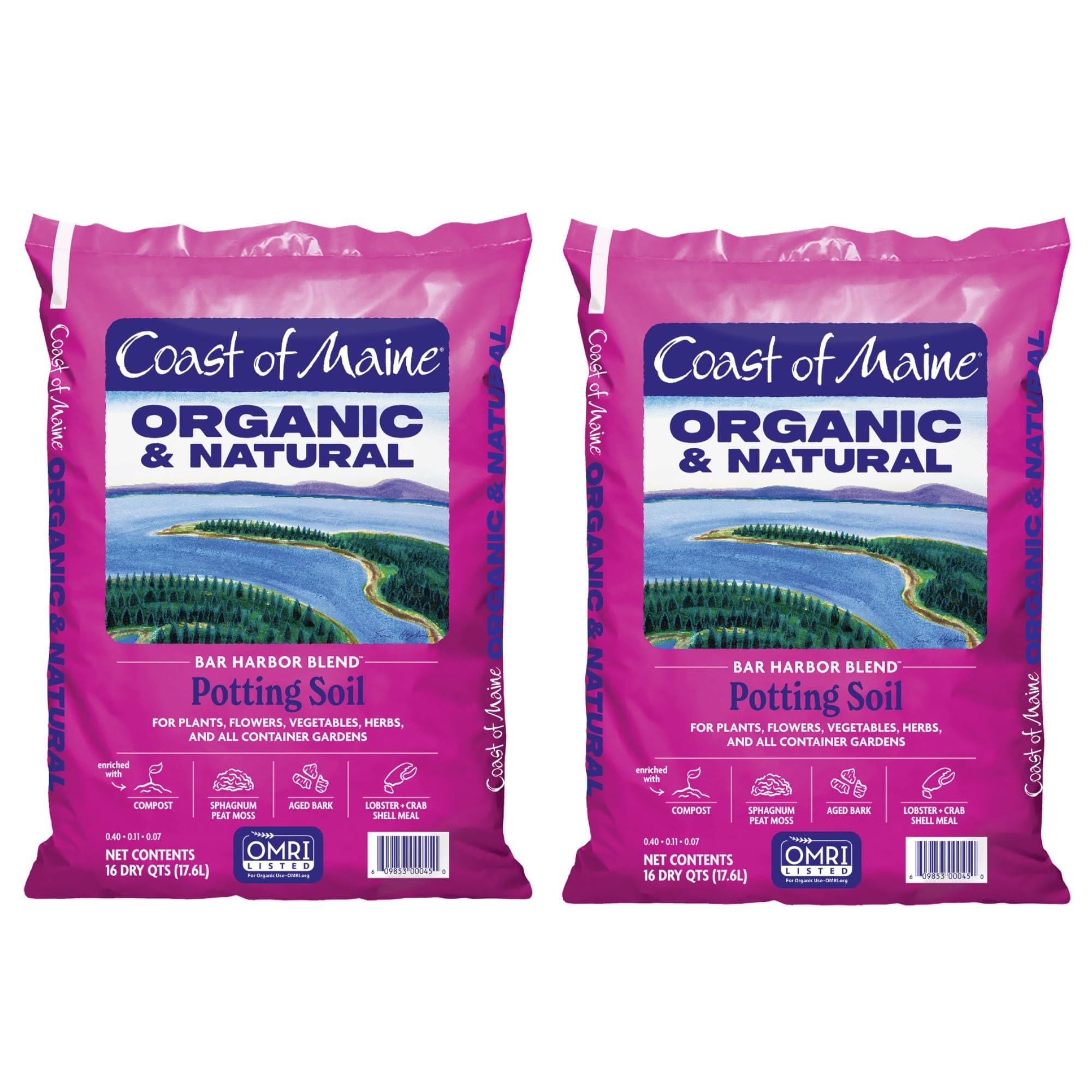
Coast of Maine’s Bar Harbor Blend uses a unique mix of sphagnum peat moss, compost, perlite, lobster and crab shell meal, and kelp meal. The shellfish meal provides a slow-release source of calcium and chitin, which naturally suppresses soil-borne pathogens and feeds beneficial bacteria — something you won’t find in standard potting mixes. The dark, rich color indicates a high compost-to-peat ratio, giving it more microbial activity than pale, peat-heavy blends.
In container trials, users found that vegetables like tomatoes, peas, and potatoes produced noticeably more growth compared to generic organic potting soils. The moisture retention is excellent without becoming waterlogged, largely thanks to the perlite content and the fibrous compost structure. The 16-quart bag is the perfect size for a few large pots or hanging baskets, and the organic certification means no synthetic chemicals leaching into your produce.
The main drawback is the premium cost — this is one of the pricier options per quart. If you’re filling multiple large raised beds, the expense adds up quickly. Also, some users recommend adding extra perlite if you’re growing succulents or plants that demand sharp drainage. For container-grown vegetables and herbs, this is about as good as bagged soil gets.
Why it’s great
- Lobster and crab meal provides natural calcium and disease suppression.
- High compost content boosts microbial life and soil structure.
- Holds moisture without getting soggy.
Good to know
- Premium price per quart compared to standard mixes.
- May need extra perlite for succulents or heavy-drainage plants.
3. Michigan Peat General All Purpose Premium Potting Soil

Michigan Peat’s 50-pound bag is the classic economy workhorse for container gardening and raised beds. The base is reed sedge peat rather than sphagnum, which gives it a darker, denser texture that holds moisture well. It comes with both a starter fertilizer and slow-release fertilizers pre-mixed, so you don’t need to add anything for the first few weeks of growth. The inclusion of perlite and sand improves drainage over straight peat.
Users consistently note that this mix arrives moist and ready to use straight from the bag — no hydration or mixing required. The 50-pound volume covers a lot of ground, making it one of the most cost-effective options for large container gardens or filling multiple pots. Vegetables and flowers in pots perform solidly, especially if you top-dress with compost midway through the season.
The trade-offs are significant. Several users reported fungus gnats emerging from the bag, which points to inconsistent sterilization during production. The texture is heavier than premium blends, and the peat component can create a crust on the surface if left dry for too long. For budget-conscious gardeners who don’t mind adding their own amendments and managing pests, this is a viable option — but it requires more hands-on management than the top-tier picks.
Why it’s great
- Very affordable for the volume at 50 pounds.
- Includes starter and slow-release fertilizers pre-blended.
- Arrives moist and ready to use straight from the bag.
Good to know
- Fungus gnats are a recurring issue with some batches.
- Heavier texture can crust over if it dries out.
4. Midwest Hearth Premium Potting Soil Mix

Midwest Hearth keeps the formulation simple and effective: peat moss for moisture retention, vermiculite for water-holding capacity, and perlite for drainage and aeration. This three-part structure creates a light, fluffy texture that is ideal for seed starting and small container projects where roots need to push through soft media. The pH is balanced to a neutral range, so it works for a broad spectrum of plants without immediate amendment.
Users report that petunias and other fine seeds germinate reliably in this mix, and the resealable bag is a practical touch for gardeners who won’t use the full 8 quarts in one session. The mix stays airy even after multiple waterings, which means less risk of damping-off disease in seedlings. It’s also entirely free of visible weed seeds and insect life out of the bag — a distinct advantage over some budget blends.
The main limitation is volume. At 8 dry quarts, this is a small bag suited for a few pots or a single seed-starting tray rather than large garden beds. The price per quart is higher than bulk options, so it’s not economical for large-scale use. For indoor potted plants and starting transplants, though, the consistency and clean formulation make it a reliable choice that won’t introduce pests into your home.
Why it’s great
- Light, fluffy texture perfect for seed germination.
- Resealable bag keeps unused soil fresh.
- No weeds, bugs, or pathogens reported.
Good to know
- Small 8-quart size is not cost-effective for large gardens.
- Lacks the heavy nutrient load needed for mature vegetables.
5. MODELLOR Premium Super Washed Coco Coir Brick
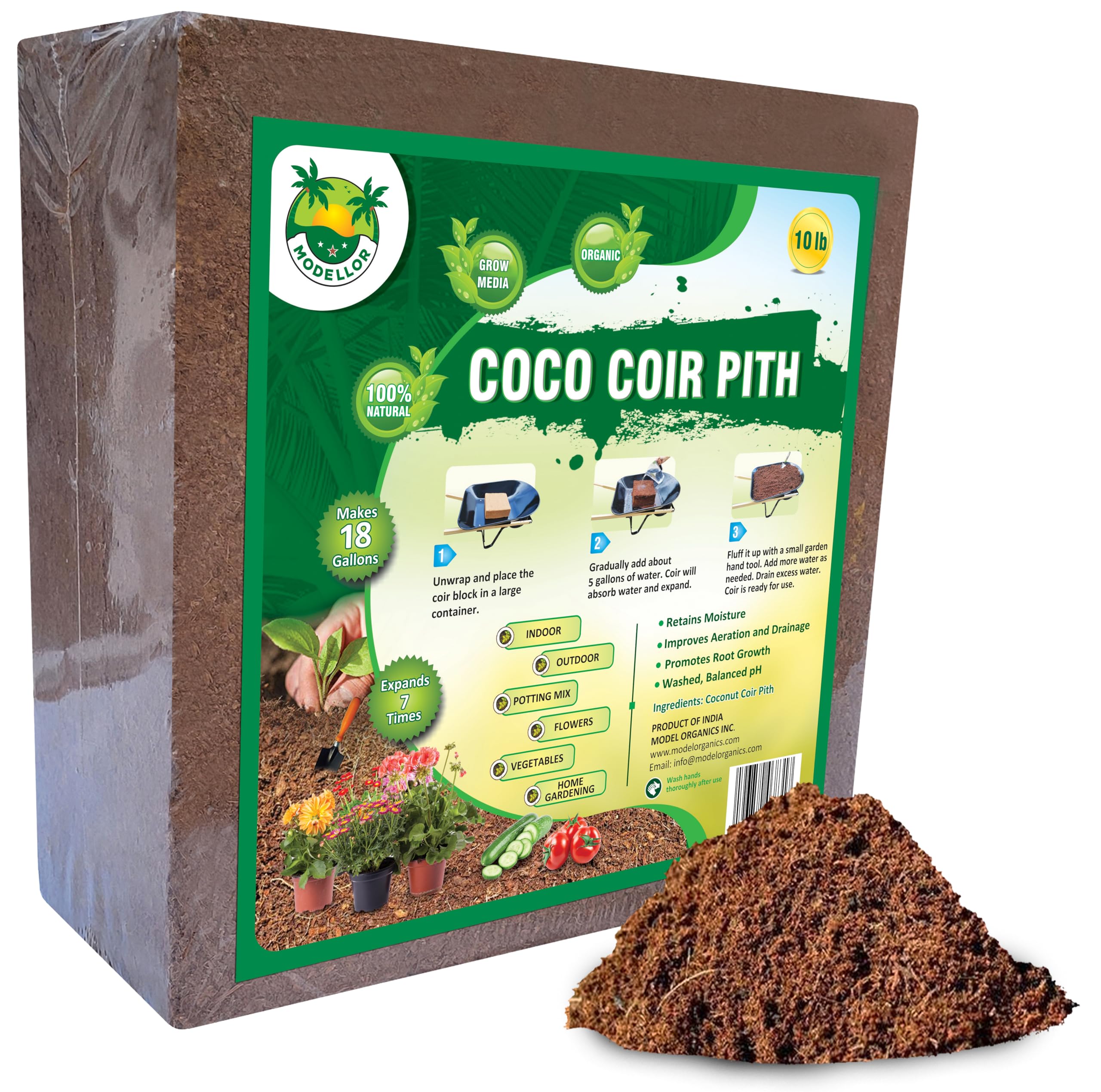
MODELLOR’s coco coir brick is triple-washed to remove excess salts — the main killer of seedlings in unwashed coir — and pH-balanced to a neutral range, so you can use it straight after hydration without rinsing. A single 10-pound brick expands into 18 to 20 gallons of growing medium, which is roughly the equivalent of three large bags of potting soil. The resulting texture is light, fluffy, and holds moisture without becoming waterlogged.
Gardeners who prefer to build their own soil mixes appreciate the blank-slate nature of this coir. It works as a base to which you add compost, worm castings, perlite, and dry organic fertilizers tailored to your specific crop. Users consistently praise the consistency of expansion and the lack of salt burn, and many use it as a peat moss replacement for environmental reasons — peat mining is not renewable, while coco coir is a byproduct of the coconut industry.
The biggest adjustment is that coco coir has no inherent nutrients, so it cannot be used as a standalone soil. You must mix it with compost or fertilizer to feed plants. Also, the brick requires hydration time — typically 10 to 20 minutes in warm water — so it’s not as grab-and-go as bagged soil. For the DIY-oriented gardener who wants control over their soil chemistry and a sustainable product, this is the best value per cubic foot on the list.
Why it’s great
- Triple-washed and pH-balanced — no salt burn risk.
- Expands to 18-20 gallons from a compact brick.
- Sustainable alternative to peat moss.
Good to know
- No nutrients — requires compost or fertilizer to support growth.
- Needs hydration time before use.
FAQ
Can I use garden soil from my yard instead of buying bagged soil?
What does organic certification mean for garden soil?
Is coco coir better than peat moss for starting seeds?
Final Thoughts: The Verdict
For most users, the best garden soil winner is the Espoma Organic Vegetable & Flower Garden Soil because it delivers mycorrhizae-enhanced biology and rich compost in a bag designed specifically for in-ground vegetable beds. If you want a premium container mix with shellfish-based nutrition, grab the Coast of Maine Bar Harbor Blend. And for budget-conscious gardeners filling multiple pots, the Michigan Peat All Purpose offers the best volume per dollar, though you’ll want to monitor for gnats and amend with compost as the season progresses.