
That first strike of the shovel into a patch of sun-baked earth tells you everything — your back is in for a long season unless you have the right machine. A quality tiller transforms that struggle into minutes of work, breaking apart compacted clay and weaving in compost before you’ve broken a sweat. The decision between corded electric, battery-powered, and gas models comes down to your plot size, soil type, and how much maintenance you’re willing to tolerate.
I’m Mohammad Maruf — the founder and writer behind Drink4Good. I’ve spent years analyzing engine displacement, amp ratings, tine geometry, and gear-drive durability to separate the machines that deliver season after season from those that just shake your arms and call it a day.
Whether you’re prepping a new vegetable bed or maintaining an established flower garden, finding the right machine starts with knowing which specs matter for your ground. That’s exactly what this guide to the best garden tiller covers — the tine count, motor power, tilling width, and build quality that separate a tool from a chore.
How To Choose The Best Garden Tiller
Picking the wrong tiller means wasted money and an afternoon fighting a machine that bucks, bogs down, or runs out of power halfway through a row. Focus on four areas — power source, tine design, working width, and build durability — and you’ll land on a model that matches your garden’s demands.
Power Source: Corded Electric, Battery, or Gas
Corded electric tillers deliver consistent torque without fuel mixing, but they tether you to a 100-foot extension cord and a nearby outlet. Battery-powered units offer cordless freedom but limit runtime to roughly 15–30 minutes per charge, making them best for small beds and light cultivation. Gas engines, ranging from 46cc to 99cc, provide the raw power to break new ground and handle thick roots, though they require oil checks, carburetor care, and pull-start patience.
Tine Design: Count, Material, and Rotation
Four tines are standard on entry-level cultivators, while six or more heavy-duty steel tines provide faster, deeper soil breakup — useful for clay and rocky ground. Look for rust-resistant alloy steel or forged steel tines that resist bending when they strike a hidden stone. Forward-rotating tines pull the machine forward, so you’ll need to lean into the handles to control depth; this design is more aggressive than counter-rotating models.
Working Width and Tilling Depth
Narrow 9-to-12-inch widths work well for weeding between established rows and tight flower beds. Medium 14-to-18-inch widths cover more ground quickly for vegetable plots, while 21-inch widths suit larger gardens where speed matters. Tilling depth should reach at least 8 inches for root vegetables and soil aeration; some gas-powered models push past 10 inches for breaking up heavily compacted soil or preparing new beds.
Weight, Handling, and Storage
A tiller that weighs under 20 pounds is easy to maneuver but may bounce or fail to dig in on hard ground. Models between 25 and 35 pounds offer a better balance — enough mass to stay engaged without exhausting the user. Foldable handles and removable wheels simplify garage storage, which matters if you have limited shed space. Check for a drag stake or depth-adjustment bar, which lets you control how aggressively the tines bite.
Quick Comparison
On smaller screens, swipe sideways to see the full table.
| Model | Category | Best For | Key Spec | Amazon |
|---|---|---|---|---|
| Westinghouse W18TCAC | Corded Electric | Medium gardens, hard soil | 15 Amp motor, 400 RPM | Amazon |
| Scotts TC70135SS | Corded Electric | Adjustable tilling width | 13.5 Amp, 11″/16″ widths | Amazon |
| SENIX 4QL | Gas 4-Cycle | No-mix fuel convenience | 46cc, 15″ width, 8″ depth | Amazon |
| TAZZ 35310 | Gas 2-in-1 | Large gardens, tough soil | 79cc, 21″ width, 11″ depth | Amazon |
| Earthquake 20015 | Gas 2-in-1 | Heavy clay, root clearing | 99cc, 21″ width, 11″ depth | Amazon |
| BUCOTOD 18-Inch | Corded Electric | Budget-friendly, wide swath | 13.5 Amp, 6 steel tines | Amazon |
| BILT HARD 14-Inch | Corded Electric | Small beds, lightweight use | 10 Amp, 17.98 lbs | Amazon |
| IncwBo 12-Inch | Corded Electric | Compact spaces, flower beds | 10.5 Amp, overload protection | Amazon |
| TaskStar TH4000 | Battery Powered | Cordless convenience, small plots | 21V, 48 tines, 7″ depth | Amazon |
In‑Depth Reviews
1. Westinghouse W18TCAC 18-Inch 15 Amp Corded Electric Tiller
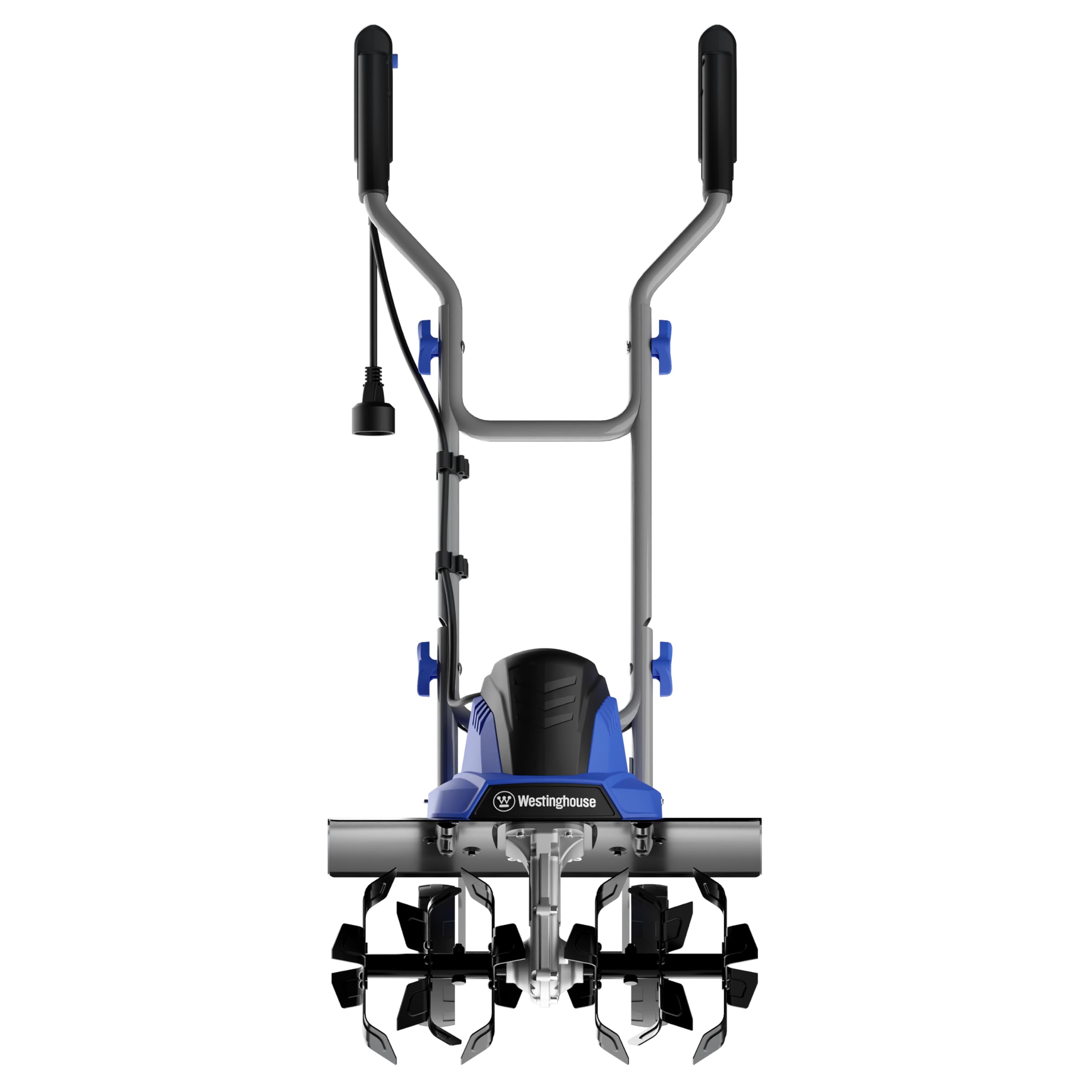
The Westinghouse W18TCAC sits at the sweet spot of the corded electric category with a 15-amp motor that spins its six steel tines up to 400 RPM. That combination delivers enough torque to chew through compacted garden beds and cut superficial roots without bogging down — a clear step above the 10-amp units that struggle in heavy clay. The 18-inch working width lets you cover ground at a productive pace, while the adjustable tilling depth reaching 9 inches gives you control for both surface cultivation and deeper bed preparation.
At 24 pounds, this tiller is light enough to lift into a truck bed but heavy enough to stay engaged with the soil. The H-type handle folds flat for vertical storage, and the assembly is minimal — it arrives mostly pre-built from the box. Owners report that the single-speed operation pulls forward aggressively, meaning you need to commit to the depth instead of feathering the throttle, but that same direct power makes it fast once you find the rhythm.
The 2-year limited warranty and Westinghouse’s nationwide service network add peace of mind beyond what most budget corded tillers offer. If you have a medium-to-large garden with mixed soil conditions and want a unit that won’t quit halfway through a row, the W18TCAC earns its spot at the top of the list.
Why it’s great
- 15-amp motor provides consistent power through hard soil and roots
- 18-inch tilling width speeds up medium-to-large garden prep
- Foldable handle and 24-pound weight simplify storage and transport
Good to know
- Single-speed may feel aggressive; requires good footing to control
- Extension cord management is essential to avoid accidental cuts
- Light weight can cause bounce until tines fully bite in hard-packed ground
2. Scotts Outdoor Power Tools TC70135SS 16-Inch Garden Tiller

Scotts brings a smart design twist to the mid-range corded market with adjustable tines that switch between an 11-inch and a 16-inch working width without tools. That flexibility makes this tiller useful across multiple seasons — use the narrow setting for weeding between rows and the wider setting for initial bed preparation. The 13.5-amp motor provides reliable breakout power, and users consistently report it tears through grass roots and compacted topsoil faster than expected for its size.
The rear flip-down wheels are a practical touch for moving the tiller across pavement or grass without dragging the tines, and they fold up during operation so they don’t interfere with tilling depth. Assembly requires only a Philips screwdriver and wing nuts, which means you can unbox and be working in under 15 minutes. The bail wire switch along the soft-grip handle lets you position your hands naturally, reducing fatigue during longer sessions.
Some owners note that the effective tilling depth maxes out around 4 to 6 inches in very hard ground rather than the advertised 8 inches, and the machine can jump when it hits rocks or thick roots. Those minor limitations aside, the adjustable width gives this tiller a versatility that most competitors at this tier don’t offer, making it a smart buy for gardeners who want one machine for both prep and maintenance.
Why it’s great
- Tool-less adjustable tines switch between 11″ and 16″ width
- Rear flip-down wheels simplify transport on hard surfaces
- Powerful 13.5-amp motor handles grass roots and packed soil
Good to know
- Effective depth may be shallower than 8 inches in tough clay
- Fast tine rotation can throw rocks and soil aggressively
- Cord management requires attention to avoid tangling
3. SENIX 4QL 46cc Gas Powered Tiller Cultivator

The SENIX 4QL bridges the gap between electric convenience and gas-powered muscle by eliminating the two biggest annoyances of small engines — mixing oil and dealing with carburetor floods. The 46cc 4-cycle engine runs on straight gas, and the patented 4QL technology allows all-directional operation without oil leakage or stalling, even when you tilt the machine to maneuver around beds. The auto choke and compression release mean it typically starts within two or three pulls, which is rare for a gas tiller at this price.
With a 15-inch tilling width and 8-inch depth, it slots into the compact gas category but delivers enough torque for breaking new ground with grass, sod, and small roots. The six forward-rotating steel tines are aggressive, and the foldable handles keep storage manageable for a gas machine. Owners note that it doesn’t love rocks — hitting one can stall the tines — but in normal garden soil it chews through work that would overwhelm a 10-amp corded unit.
The 3-year limited warranty is generous for a gas-powered tool, though a few isolated reports of early engine failure remind you that gas machines require proper break-in and oil maintenance. If you want gas power without the mixing and starting headaches, the SENIX 4QL delivers a rare no-fuss experience in this category.
Why it’s great
- 4-cycle engine runs on straight gas with no oil mixing required
- Auto choke and compression release enable reliable 2-3 pull starts
- Foldable handles and 31.7-pound weight make storage practical
Good to know
- Forward rotating tines can buck if not controlled with the drag stake
- Some units have shown plastic cosmetic parts that feel less durable
- Not ideal for rocky soil; tines stall on large obstructions
4. TAZZ 35310 79cc 2-in-1 Gas Tiller/Cultivator
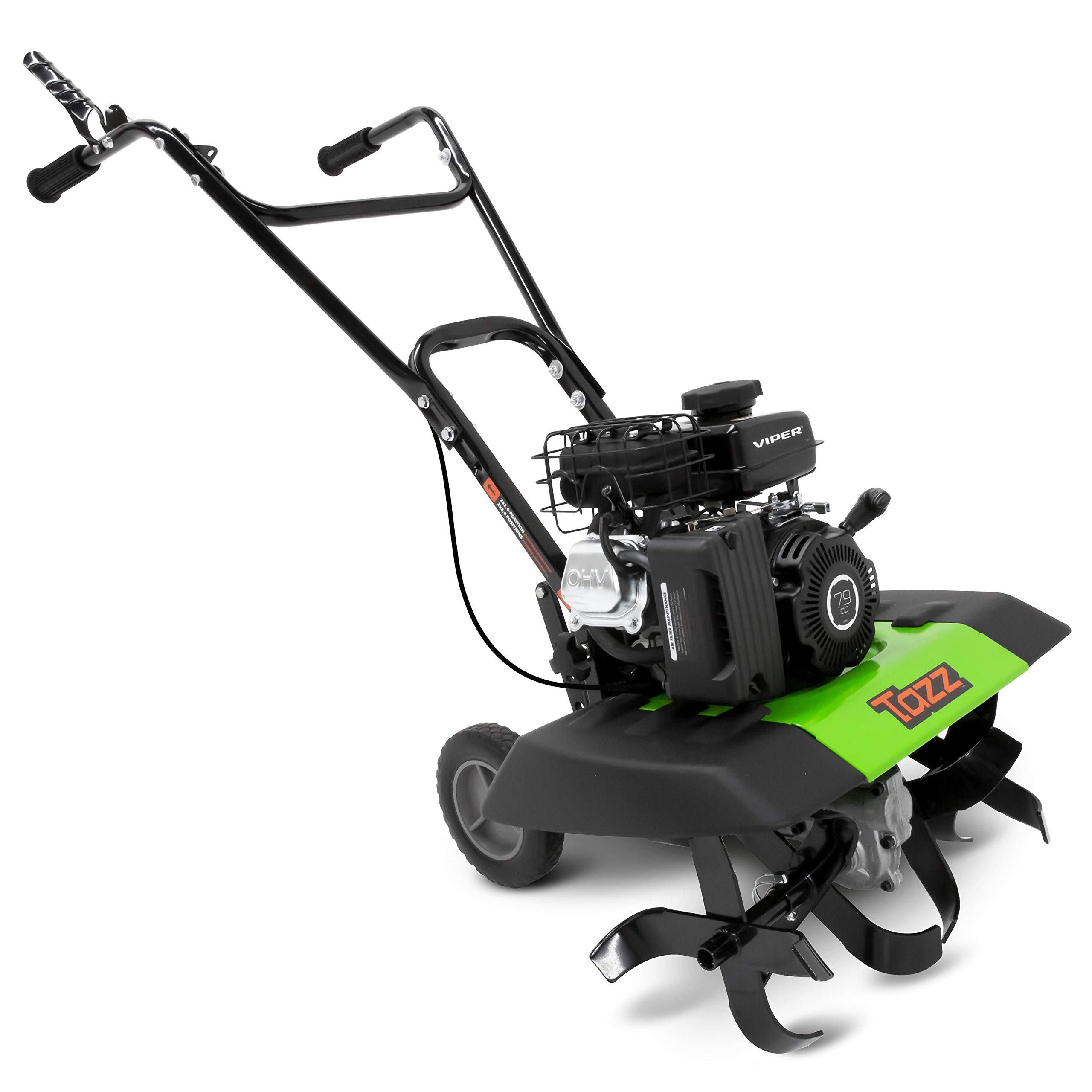
The TAZZ 35310 steps into serious territory with a 79cc Viper engine and a bronze gear transmission that delivers consistent torque to the forged steel tines. This is a 2-in-1 machine that toggles between a full 21-inch tilling width for seedbed creation and narrower 16-inch or 11-inch widths for cultivating and weeding — a tool-less swap that takes under a minute. The gear drive adds durability compared to belt-driven alternatives, and the low center of gravity reduces the bucking that plagues lighter front-tine tillers.
Tilling depth adjusts up to 11 inches via a multi-position drag stake that clicks into place without tools, giving you precise control for deep soil breakage or shallow aeration. The steel handlebar has four height positions, so tall and short users can both find a comfortable posture. Owners consistently report that this tiller starts on the first or second pull with ethanol-free fuel, and the forged tines survive contact with 3- to 4-inch rocks without bending.
The 3-year limited warranty and US-based support from Ardisam provide solid backing for a machine designed to last multiple seasons. Assembly takes about 30 minutes, and the 51-pound weight is noticeable but manageable for the power output. If you have a large garden or plan to break new ground every year, the TAZZ 35310 offers premium-tier capability at a price far below commercial units.
Why it’s great
- 79cc engine with gear drive delivers high torque to tines
- Tool-less width adjustment from 21″ down to 11″ for versatility
- Forged steel tines resist bending in rocky soil conditions
Good to know
- Assembly requires roughly 30 minutes and some mechanical patience
- Handlebar height can feel low for transporting between plots
- Oil filling is easier if the machine is laid on its side
5. Earthquake 20015 Versa 99cc 2-in-1 Gas Tiller

The Earthquake 20015 Versa brings the largest engine displacement in this guide — a 99cc Viper four-cycle engine — and pairs it with a 2-in-1 design that adjusts from 11 to 21 inches in width. This is the machine you reach for when your garden has heavy clay, matted roots, or compacted ground that has not been tilled in years. The bronze gear drive transmission keeps the forged steel tines spinning with consistent force, and the low center of gravity makes it less likely to leap out of the soil compared to lighter gas tillers.
Tilling depth reaches a full 11 inches, which gives you room to mix deep amendments and break up hardpan that stops shallower machines cold. The onboard wheels make transport across pavement and grass much easier than dragging a 78-pound unit. Owners report that it starts on the first or second pull even after storage, and the tool-less removal of outer tines and side shields lets you switch from full-width tilling to narrow cultivation in seconds.
The 5-year limited warranty is the longest coverage in this comparison and reflects the brand’s confidence in the gear-drive design. Some bolts can loosen from vibration during break-in, so keeping a small wrench set nearby is recommended during the first few sessions. If you maintain a large garden or deal with the worst soil conditions, the Earthquake 20015 is the final answer.
Why it’s great
- 99cc engine provides the highest torque output in the guide
- Adjustable tilling width from 11″ to 21″ without tools
- Onboard wheels and 5-year warranty add long-term value
Good to know
- 78-pound weight requires care when loading into a vehicle
- Vibration can loosen handlebar bolts during initial use
- Assembly is straightforward but needs a 15.5mm socket or adjustable wrench
6. BUCOTOD 18-Inch 13.5 Amp Corded Tiller

The BUCOTOD 18-inch tiller punches above its mid-range price with a 13.5-amp copper motor and six cross-structure steel tines that spin at 360 RPM. The 18-inch working width is among the widest in the corded electric category, letting you cover more ground per pass than typical 14-inch units. The tilling depth adjusts between 4 and 8 inches, and the motor includes an overload protection system that cuts power if the tines jam on a root or rock — a safety feature that saves the gearbox from damage.
The three adjustable wheels give you a choice between transport mode and tilling mode, and the foldable handle collapses for upright storage. At 27.9 pounds, it’s light enough for one-handed lifting but carries enough mass to stay planted during operation. Owners praise its ability to tear through hard red clay and cut small roots, though the single-speed design means you cannot slow the tines for delicate work around established plants.
The safety-button start requires using both hands to engage the motor, which eliminates accidental startup but can feel awkward until you develop the muscle memory. If you need a budget-friendly corded tiller that covers a wide swath and handles tough soil without overheating, the BUCOTOD delivers serious output for the money.
Why it’s great
- 18-inch width works fast for medium-to-large garden beds
- Six cross-structure steel tines provide dense, aggressive soil breakup
- Overload protection prevents motor damage from hidden obstructions
Good to know
- Single-speed operation means no slowing for delicate cultivation
- Two-handed safety button takes practice to use smoothly
- Cord management requires attention to avoid cutting the line
7. BILT HARD 14-Inch 10 Amp Electric Tiller

The BILT HARD 14-inch tiller proves that entry-level pricing doesn’t have to mean entry-level performance. Its 10-amp AC motor spins the four rust-resistant steel tines at up to 360 RPM, and the 14-inch working width with 8.7-inch depth covers small garden beds and flower borders effectively. The standout feature here is the weight — at just 17.98 pounds, this is the lightest corded tiller in the lineup, making it ideal for gardeners who need to lift, carry, and maneuver the machine frequently.
The foldable H-handle collapses without tools using quick-bolt knobs, so it stashes flat in a closet or car trunk. Two-position 6-inch wheels let you roll it to the work site and then raise them for full-depth tilling. Owners who have used it for three seasons report it stays reliable for small gardens and flower beds, though the single-speed operation creates strong forward pull that requires some upper-body effort to control on hard ground.
Some users note that the high tine speed flings soil and debris more aggressively than slower units, which means you’ll want to wear boots and long pants during use. The lightweight frame also means it struggles to penetrate very hard, dry clay without multiple passes. For small plots and soft-to-medium soil, the BILT HARD is a capable, affordable entry point that won’t take up much storage space.
Why it’s great
- Very lightweight at under 18 pounds for easy handling and transport
- Foldable H-handle stores compactly in small spaces
- Adjustable 2-position wheels add portability on hard surfaces
Good to know
- Single-speed pulls forward aggressively, requiring strength to control
- Light weight limits penetration in hard, dry clay without multiple passes
- High tine speed throws dirt and debris; wear protective clothing
8. IncwBo 12-Inch 10.5 Amp Electric Tiller

The IncwBo 12-inch tiller makes a strong case for tight spaces with a compact footprint and a thoughtful design addition you rarely see at this price — a soil spur that digs into the ground to help control forward pull. The 10.5-amp motor drives four rust-resistant tines through a 12-inch width at up to 8 inches deep, which covers small vegetable plots, raised beds, and flower borders without wasting space. The mechanical overload protection system automatically kills power if the tines jam, which is a genuine safety upgrade over cheaper units with no such safeguard.
Assembly takes about five minutes, and the 23.8-pound weight (10.84 kg) sits in the middle of the corded range — light enough to carry but heavy enough to dig in without excessive bouncing. Owners consistently report that it slices through hard clay soil “like water” and handles packed dirt that would break a hand tool. The left handle hardware has occasionally loosened during extended use, so a quick check with a wrench before each session is wise.
The main trade-off is the 12-inch tilling width, which means you’ll make more passes to cover a large garden compared to 18-inch models. For targeted soil prep, weeding between rows, or working in tight raised beds where maneuverability matters more than raw speed, the IncwBo delivers reliable, powerful performance in a compact package.
Why it’s great
- Soil spur reduces forward pull and gives better depth control
- Mechanical overload protection prevents tine and motor damage
- Compact 12-inch width ideal for raised beds and tight garden rows
Good to know
- 12-inch width requires more passes for large garden areas
- Left handle hardware may loosen during heavy use; check periodically
- Corded operation limits range to extension cord length
9. TaskStar TH4000 21V Cordless Tiller/Cultivator
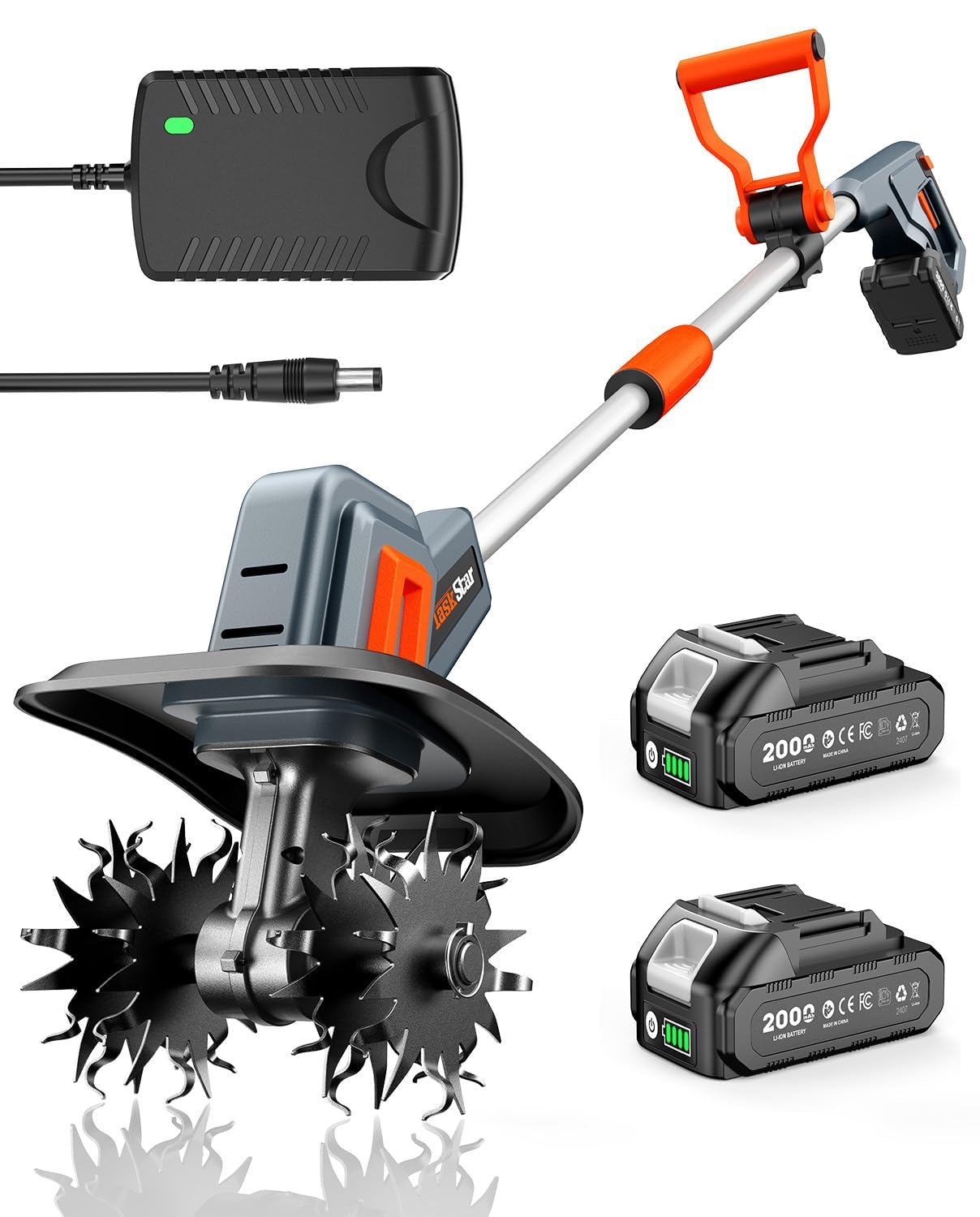
The TaskStar TH4000 is the only battery-powered tiller in this guide, and it brings a genuinely different value proposition — true cordless freedom for gardeners who are tired of wrestling extension cords around shrubs and raised beds. The 21-volt motor spins 48 heavy-duty steel tines at up to 360 RPM, covering a 9-inch width at 7 inches deep. That’s a narrower and shallower cut than the corded and gas options, but the convenience of grabbing the machine and walking to any corner of the yard without a power cord is a real advantage for smaller plots.
Two 2.0Ah lithium-ion batteries provide a combined 4000mAh of runtime, which owners report covers about 30 minutes of continuous tilling — enough for a typical 30×40-foot vegetable bed. The 12.79-pound weight makes it the lightest machine in the guide, and the ergonomic design reduces forearm fatigue during extended use. Assembly takes under five minutes, and the batteries often arrive partially charged, so you can start work immediately.
The runtime limitation is the main consideration — heavy soil or thick grass will drain the batteries faster, and there’s no option to swap in higher-capacity packs. If your gardening involves frequent small-bed cultivation, weeding, or mixing compost in established flower beds, the TH4000 eliminates the two biggest frustrations of corded tillers: range and tangling. For larger gardens or breaking new ground, you’ll want one of the corded or gas models above.
Why it’s great
- True cordless operation with two rechargeable batteries included
- Very lightweight at under 13 pounds for easy one-hand carrying
- 48 steel tines provide thorough soil breakup for a battery unit
Good to know
- 7-inch depth and 9-inch width limit use to small beds and light soil
- Battery runtime is approximately 15 minutes per pack in heavy soil
- Not suitable for breaking new ground or heavy clay without multiple passes
FAQ
Can a corded electric tiller handle hard clay soil?
What is the difference between a tiller and a cultivator?
How long should a gas tiller last before needing major maintenance?
Do I need a tiller with adjustable tilling width?
Is a battery-powered tiller powerful enough for a vegetable garden?
Final Thoughts: The Verdict
For most users, the best garden tiller winner is the Westinghouse W18TCAC because it combines a powerful 15-amp motor, 18-inch working width, and foldable storage at a reasonable weight — delivering the best balance of power and handling for medium-to-large gardens. If you want adjustable tilling width for both bed prep and row maintenance, grab the Scotts TC70135SS. And for breaking new ground or clearing heavy clay with maximum torque, nothing beats the Earthquake 20015 Versa with its 99cc engine and 5-year warranty.