
A backyard filled with dandelions, crabgrass, and thistle isn’t just an eyesore — it’s a relentless cycle of bending, pulling, and hoping you got the root. The wrong weeding tool leaves broken stems behind, which means the weed resprouts within days, forcing you to start over. The right one severs the taproot cleanly or extracts it whole, turning a weekend chore into a 30-minute task.
I’m Mohammad Maruf — the founder and writer behind Drink4Good. After analyzing the construction, blade geometry, and grip ergonomics of dozens of manual weeders, I’ve separated the tools that actually grab deep roots from the ones that just scratch the surface.
Whether you’re clearing cracks between pavers, maintaining raised beds, or tackling a full lawn, the best garden weeding tool depends on your specific soil type and the weed variety you’re up against.
How To Choose The Best Garden Weeding Tool
Not all weeding tools are created equal. A tool optimized for shallow-rooted chickweed in loose garden soil will fail miserably against a deep taproot dandelion wedged between concrete pavers. Focus on three factors to match the tool to your specific weed problem.
Blade Shape and Extraction Mechanism
L-shaped crevice tools slide into cracks and hook under roots, making them ideal for patios and driveways. Curved-neck weeders with split prongs cradle the root and lift it with a rocking motion, which works well in flower beds. Sickle-style blades slice horizontally just below the soil surface, killing annual weeds quickly but leaving taproots intact. Stand-up claw pullers use a foot step and lever action to grip and yank entire plants — best for lawns where you want the root out in one piece.
Handle Length and Ergonomics
Short handles (under 15 inches) give you precise control for tight spaces but force you to kneel or bend. Medium-length handles (around 30 inches) allow you to work while crouching, reducing lower back strain. Full-length handles (45 inches or more) let you stand upright, which is a game-changer for larger lawns and older gardeners. Grip material also matters: ash wood absorbs sweat and feels natural, while rubberized or foam grips reduce vibration and blisters during long sessions.
Steel Quality and Edge Retention
Heat-treated stainless steel resists rust and holds a sharp edge longer than standard carbon steel. The thickness of the blade at the prongs determines how easily it slides into compacted soil: thin prongs (around 1/16 inch) excel in cracks, while thicker prongs (1/8 inch) are needed to lever out heavy clay. Serrated edges on claw teeth improve grip on slippery weed stems, while a clean, honed edge cuts through roots with less effort.
Quick Comparison
On smaller screens, swipe sideways to see the full table.
| Model | Category | Best For | Key Spec | Amazon |
|---|---|---|---|---|
| SOMOLUX 52″ Stand-up Weeder | Stand-up | Lawn dandelions, crabgrass | 4 serrated claws, 52-inch handle | Amazon |
| AON 2-Pack Hand Crack Weeder | Hand tool set | Paver cracks, patio gaps | L-shaped + curved-tip, ash wood handles | Amazon |
| COCONUT 45″ Garden Hoe | Stand-up hoe | Raised beds, loosening soil | 2-in-1 hoe/cultivator, 45-inch length | Amazon |
| Japanese Weeding Sickle (Long Handle) | Sickle blade | Shallow weeds, raised beds | 17.3-inch total, forged steel blade | Amazon |
| Garden Guru Patio Crack Weeder | Crack weeder | Concrete crack weeds, thistle | L-shaped 13-inch, soft-grip handle | Amazon |
In‑Depth Reviews
1. SOMOLUX 52” Stand-up Weed Puller

The SOMOLUX stand-up weeder uses four heavy-duty stainless steel claws with serrated teeth to grip weeds from multiple angles. At 52 inches long, it eliminates bending entirely — you simply center the claw over the weed, step down to push the prongs into the soil, then tilt the handle to engage the lever and extract the root. The aluminum alloy handle keeps the total weight manageable despite the robust claw assembly.
Customer reports confirm it performs best in dry, loose to moderately compacted soil. Dandelions and crabgrass come out root-and-all in one smooth motion. A few users noted the handle joint can loosen with repeated use, but a drop of thread-locking compound solves the issue permanently. The serrated claw teeth hold even slippery weed stems without tearing, and the rust-resistant stainless steel holds up in damp lawn conditions.
This is the right choice for anyone with a medium to large lawn who wants to avoid knee and back strain. It’s particularly effective for older gardeners or anyone with mobility concerns who still wants a weed-free yard without relying on chemical sprays. The three-step weeding process is intuitive — after the first few pulls, you’ll gain a rhythm that makes quick work of an entire yard.
Why it’s great
- No bending required — 52-inch length keeps you upright
- Four serrated claws extract entire root systems reliably
- Rust-resistant stainless steel with a lifetime warranty
Good to know
- Handle joint may loosen over time; Lock-Tight recommended
- Heavier than handheld tools at over 3 pounds
- Claws can clog in wet, sticky mud
2. AON 2-Pack Hand Crack Weeder Puller Tool Set
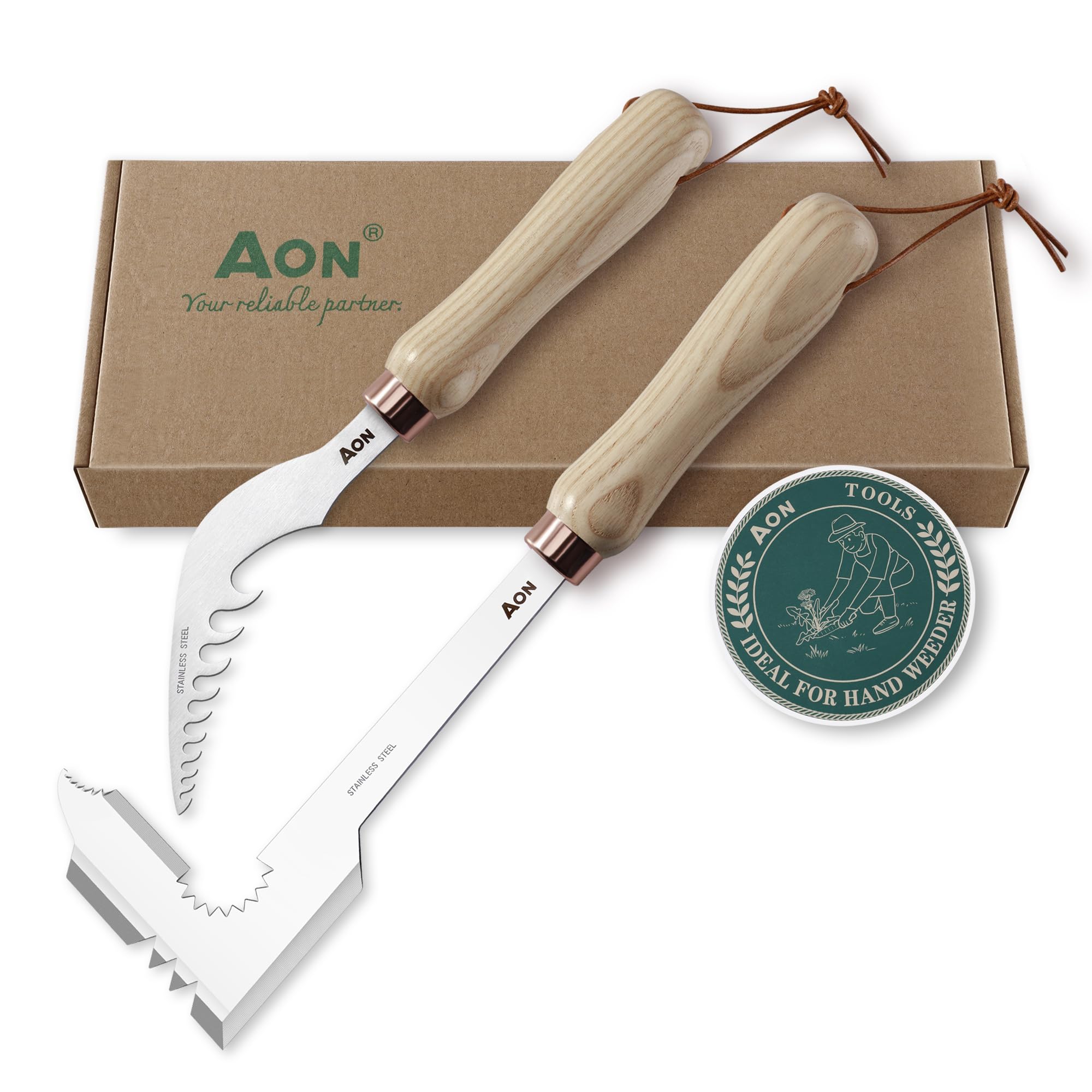
The AON set gives you two distinct tools in one purchase: an L-shaped crevice weeder with twin prongs for sliding into tight gaps, and a curved-tip puller with precision prongs for lifting weeds from garden beds without creating large craters. Both are made from heat-treated stainless steel that resists bending and rust, mounted on ergonomic 12.5-inch ash wood handles with leather lanyards for hanging storage.
The L-shaped tool excels between bricks and pavers, where the prongs hook under the root crown and lever it upward with minimal soil disturbance. The curved-tip tool is better suited for flower beds, where its narrow prongs can target individual dandelions and thistles while leaving surrounding plants undisturbed. The 10-degree angled handle reduces wrist strain during repetitive rocking motions, and the ash wood develops a comfortable patina over time.
Serious gardeners will appreciate having both heads available — switching between crack weeding and bed weeding takes seconds. The lifetime warranty adds long-term confidence. The only limitation is the blade thickness, which some users found too wide for the narrowest brick joints, though it handles standard paver gaps without issue.
Why it’s great
- Two complementary shapes cover cracks and beds
- Heat-treated steel maintains sharpness through heavy use
- Ash wood handles with lanyard are durable and comfortable
Good to know
- Blade is too thick for very narrow brick joints
- Short handles require bending or kneeling
- Edges are sharp — use caution around children
3. COCONUT 45-Inch Garden Hoe (2-in-1)

The COCONUT hoe stands out for its modular, adjustable pole design. Three sections screw together to reach 45 inches, or you can use just one or two poles for shorter reach when working in confined raised beds. The tool head is double-sided: a sharpened hoe blade on one end for chopping weed roots and digging holes, and a three-prong cultivator on the other end for stirring and aerating soil.
The 1-inch diameter steel handle feels solid but remains light enough for extended use — multiple reviewers with arthritis noted it was one of the few tools they could grip comfortably. The hoe blade is effective against shallow-rooted annual weeds and grass, and the cultivator prongs break up soil clods without excessive effort. Assembly takes under two minutes, and the entire tool disassembles small enough to pack for camping trips.
This is not a crack weeder — it’s designed for open soil in vegetable gardens and flower beds. The blade is not intended for hard, compacted soil or thick taproots. But for routine maintenance weeding in loose garden beds, the 2-in-1 design eliminates tool-switching, and the long handle saves your lower back. The included hang hole keeps storage simple.
Why it’s great
- Adjustable 45-inch length prevents back strain
- Dual-ended hoe and cultivator covers two jobs
- Lightweight alloy steel is easy to maneuver
Good to know
- Not designed for hard, compacted clay soil
- Hoe blade is not sharp enough for thick taproots
- Threaded connections can loosen during vigorous use
4. Japanese Weeding Sickle Nejiri Kama (Long Handle)

This Nejiri Kama sickle is forged by a traditional Japanese blacksmith, featuring a twisted blade that sits horizontally against the ground for efficient slicing just below the soil surface. The 17.3-inch total length includes a wooden handle, and the curved blade geometry allows you to cut weeds with a sweeping motion rather than chopping — making it one of the fastest tools for clearing large patches of shallow-rooted weeds.
The blade arrives razor-sharp out of the box and maintains its edge through extended use, though one reviewer reported chipping when striking buried rocks. The tool excels in raised beds and loose garden soil where you can slice through chickweed, henbit, and young grass stems in a single pass. The ambidextrous design works equally well for left- and right-handed users, and the compact size makes it easy to carry in a tool bucket.
Because this is a cutting tool rather than a pulling tool, it leaves taproots in the ground — deep-rooted perennials like dandelions will regrow. It’s best paired with a root extractor for a complete weed management system. The sickle is also excellent for edging along borders and trimming grass around plant stems without damaging them, provided you maintain the correct angle.
Why it’s great
- Razor-sharp forged blade makes fast work of shallow weeds
- Twisted geometry keeps the blade horizontal for clean cuts
- Lightweight (8.1 ounces) and ambidextrous
Good to know
- Blade can chip on rocks or hard soil
- Leaves taproots intact — not for deep-rooted weeds
- Requires practice to maintain correct cutting angle
5. Garden Guru Patio Crack Weeder Tool

The Garden Guru Crack Weeder is purpose-built for one job: extracting weeds from narrow gaps in concrete, asphalt, and brick patios. The 13-inch stainless steel shaft has an L-shaped head that slides into cracks as tight as 1/8 inch, hooks under the root, and pries it upward with a simple rocking motion. The soft-grip handle with contoured finger ridges provides excellent control even when your hands are sweaty or gloved.
Customer feedback is overwhelmingly positive from users who previously spent hours picking weeds out of driveway cracks by hand. The rust-resistant finish holds up to frequent contact with damp concrete, and the lightweight 6.7-ounce design reduces fatigue during long sessions. It’s particularly effective against thistle and grass that sprouts in expansion joints, where the L-head can wedge beneath the crown and pop the entire plant free.
The tool has a few limitations — it’s not designed for open garden soil, and the L-head is too narrow for large-weed removal in flower beds. But as a dedicated crack weeder, it delivers exactly as promised. The 90-day satisfaction guarantee and lifetime warranty provide solid backup, and the certified carbon-neutral manufacturing is a nice bonus for eco-conscious buyers.
Why it’s great
- L-head fits into the tightest paver and concrete cracks
- Soft-grip handle with finger contours reduces fatigue
- Lifetime warranty with 90-day no-questions guarantee
Good to know
- Not suited for open garden soil or large weeds
- Push stroke only — no pull cutting action
- Blade is sharp; store away from children
FAQ
What is the difference between a crack weeder and a stand-up weeder?
Can a weeding sickle replace a claw puller for dandelions?
How do I prevent a stand-up weeder from loosening during use?
Final Thoughts: The Verdict
For most users, the best garden weeding tool winner is the SOMOLUX 52″ Stand-up Weeder because it eliminates back strain, extracts entire root systems, and handles nearly every weed type in open lawn and garden soil. If you want a versatile two-tool set that covers both crack weeding and bed weeding, grab the AON 2-Pack Hand Crack Weeder Set. And for precision work in tight patio and driveway cracks, nothing beats the Garden Guru Patio Crack Weeder.