
Garlic is a heavy feeder. Push those fat cloves into the soil come fall, and if the nitrogen supply runs dry the following spring, you end up with stunted bulbs instead of the tight, pungent heads every cook wants. The difference between a trophy harvest and a disappointing one nearly always comes down to one decision: the granular NPK ratio you scratch into the earth at planting time and again at the first green shoot.
I’m Mohammad Maruf — the founder and writer behind Drink4Good. I’ve spent seasons cross-referencing organic input material registries, bag analysis stickers, and mycorrhizal colony counts to separate the true garlic-grade fertilizers from the all-purpose fillers that leave your soil hungry.
Whether you are planting your first autumn row or scaling up a dedicated garlic patch, finding the right best garlic fertilizer means matching a formula that delivers steady nitrogen, available phosphorus, and a calcium boost to fend off tip burn.
How To Choose The Best Garlic Fertilizer
Picking the wrong bag of granules can stall bulb development or push all energy into leaf growth at the expense of the clove. Garlic’s growing cycle is unique — it establishes roots in cool autumn soil, goes dormant, then races through a short spring bulbing window. The fertilizer you choose must deliver at the right time and in the right proportions.
NPK Ratio and the Garlic Window
Garlic needs a middle-weight phosphorus number (the second digit in the NPK trio) to support root establishment and proper clove division. A ratio around 5-7-3 or 4-6-2 is ideal. High-first-number blends (10-10-10 or 30-0-0) push foliar growth that leaves bulbs small and loose. Always check the analysis sticker — if the middle number is lower than the first, keep looking.
Calcium and Mycorrhizal Content
Calcium prevents tip burn and strengthens cell walls in the curing bulb. A fertilizer with 5–6% calcium is a strong signal. Mycorrhizal fungi (both endo and ecto types) extend the root zone’s reach, pulling phosphorus from soil particles that roots cannot penetrate alone. Granular formulas that include live microbes save you the extra step of inoculating separately.
Organic Certification and Residue Concerns
Garlic is sensitive to synthetic salt-based fertilizers that can scorch tender root hairs during the early spring growth spurt. OMRI-listed or registered organic input materials guarantee the product contains no sludge, synthetic nitrates, or prohibited fillers. Residue-free bulbs cure longer and store without premature sprouting.
Quick Comparison
On smaller screens, swipe sideways to see the full table.
| Model | Category | Best For | Key Spec | Amazon |
|---|---|---|---|---|
| FoxFarm Happy Frog Tomato & Vegetable 5-7-3 | Granular | Bulb size and fruit-set in heavy feeders | 5-7-3 blend with 6% calcium | Amazon |
| FoxFarm Happy Frog All Purpose 6-4-5 | Granular | Gentle slow release for mixed beds | 6-4-5 with soil microbes | Amazon |
| Espoma Organic Bio-Tone Starter Plus 4-3-3 (2-Pack) | Granular | Transplant survival and root development | 4-3-3 with endo & ecto mycorrhizae | Amazon |
| Down To Earth All Purpose Tomato & Vegetable 4-6-2 | Granular | All-around vegetable garden feeding | 4-6-2 OMRI-listed blend | Amazon |
| Espoma Organic Bulb-Tone 3-5-3 | Granular | Bulb-specific feeding at planting and post-bloom | 3-5-3 with 6% calcium | Amazon |
In‑Depth Reviews
1. FoxFarm Happy Frog Tomato & Vegetable 5-7-3

The Happy Frog Tomato & Vegetable formula hits the 5-7-3 sweet spot that garlic craves during the critical bulking phase. Phosphorus at 7% supports the root spread and clove division that directly translates to larger, tighter bulbs at harvest. The 6% calcium is a smart addition — it heads off tip burn in the scapes and keeps the wrapper leaves intact during curing.
Mycorrhizal fungi in the granules extend the root’s reach into the soil profile, which matters in clay-heavy beds where phosphorus tends to lock up. Gardeners report visible results within two weeks on struggling transplants, and the organic base means no salt burn on the tender spring roots that emerge from dormancy.
The 4-pound bag treats a generous garlic bed when applied at the recommended rate every other week during active growth. The lack of fish-based odor is a welcome relief compared to many organic feeds.
Why it’s great
- Phosphorus-heavy 5-7-3 ratio matched to garlic’s bulbing needs
- Calcium content prevents common tip burn in scapes
- Mycorrhizal fungi improve phosphorus uptake without extra inoculant
Good to know
- Premium-tier price per pound compared to all-purpose blends
- Best results require regular reapplication every two weeks during growth
2. FoxFarm Happy Frog All Purpose 6-4-5

This all-purpose Happy Frog blend is built for gardeners who want a single bag that works across the entire vegetable bed, including garlic. The 6-4-5 analysis leans slightly higher on nitrogen than the ideal bulb-specific ratio, but the slow-release mechanism prevents the leaf-only explosion that high-N fast formulas cause. It delivers steady nutrition over weeks rather than all at once.
Beneficial soil microbes in the granules help break down organic matter in the root zone, a feature that pays off when you are rotating garlic into a bed that just finished tomatoes or peppers. The OMRI listing gives confidence for certified organic plots, and the gentle feeding profile reduces the risk of over-application, which is a common beginner mistake.
Reports of revived yellowing plants within a week suggest that the 6-4-5 formula corrects early nitrogen deficiency fast. The strong odor during application is a trade-off — the microbial content comes with a barnyard smell that lingers for a day or two.
Why it’s great
- Slow-release granules reduce the chance of salt burn on garlic roots
- Soil microbes improve nutrient cycling in mixed vegetable beds
- OMRI listing works for certified organic garlic production
Good to know
- Pungent smell during and right after application
- Nitrogen level slightly high for strict bulb-only focus
3. Espoma Organic Bio-Tone Starter Plus 4-3-3 (2-Pack)
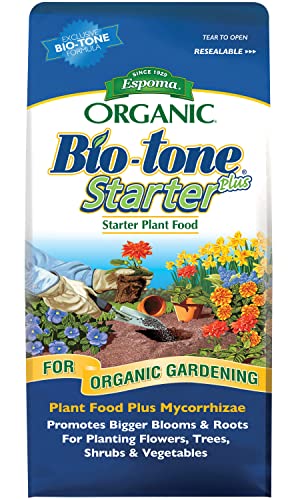
Bio-Tone Starter Plus is Espoma’s targeted solution for the transplant window — the exact moment garlic cloves go into the ground. The 4-3-3 ratio is lower overall than the heavy feeders, but that is intentional: the formula focuses on root colonization rather than foliar push. Both endo and ecto mycorrhizae are included, a rare combo that covers garlic’s symbiotic preferences across different soil types.
The 5% calcium content supports cell wall strength in the developing clove, and the absence of synthetic salts means you can scratch the granules directly into the planting trench without worrying about burn on the cut clove base. Users who follow the “mix with backfill soil” method report noticeably faster emergence and thicker scapes by late spring.
The pack contains two 4-pound bags, which is enough for a substantial garlic patch at planting time with some left over for a spring side-dress. The product has a strong manure-like odor that signals active microbial life, but it dissipates after a thorough watering.
Why it’s great
- Dual endo and ecto mycorrhizae support root symbiosis from day one
- 5% calcium reduces tip burn risk during early spring growth
- Two-bag pack provides enough volume for repeated seasonal applications
Good to know
- Strong smell during application that lingers for 1-2 days
- Lower NPK numbers mean it pairs best with a mid-season 5-7-3 booster
4. Down To Earth All Purpose Tomato & Vegetable 4-6-2

Down To Earth’s 4-6-2 mix delivers a phosphorus-forward profile that matches garlic’s requirements at a budget-friendly price per pound. The 6% phosphorus is the highest relative number in the trio, which is exactly what you want when planting cloves in fall and again when side-dressing in early spring. The OMRI listing backs the organic integrity of the ingredients.
The formula pulls from fish bone meal, blood meal, feather meal, rock phosphate, langbeinite, greensand, humates, and kelp meal — a diverse mineral base that feeds the soil food web rather than just the plant. The granular form is dry and easy to broadcast, and the 5-pound box covers around 50 linear feet of garlic row at the recommended rate.
Users note the smell is milder than many organic blends, which matters when you are working in a raised bed near a patio. The bag has held up well through humid storage conditions without clumping.
Why it’s great
- Phosphorus at 6% supports clove division and root development
- Broad mineral base improves long-term soil fertility
- Economical per-pound cost for large garlic beds
Good to know
- No mycorrhizal fungi added — needs separate inoculant for maximum root efficiency
- Fish-based ingredients can attract wildlife if not watered in promptly
5. Espoma Organic Bulb-Tone 3-5-3

Bulb-Tone is formulated specifically for the bulb life cycle — planting in fall and feeding after bloom — and garlic fits that rhythm perfectly. The 3-5-3 ratio prioritizes phosphorus above all, and the 6% calcium is a standout spec that most all-purpose granulars skip. Gardeners who apply this to their garlic beds at planting time report consistent, healthy bulbs with tight wrappers that cure beautifully.
The Bio-tone formula includes beneficial microbes that continue breaking down organic matter in cool autumn soil when biological activity slows. That matters because garlic roots are actively growing in 40–50°F ground long before spring warmth arrives. The 4-pound bag covers roughly 40 square feet at the standard rate.
Customer feedback consistently mentions improved bulb size and vigor compared to previous seasons without targeted feeding. The lack of mixing and the no-burn guarantee make it forgiving for beginners who tend to over-apply.
Why it’s great
- Phosphorus-heavy 3-5-3 ratio designed specifically for bulb development
- 6% calcium strengthens cell walls for better curing and storage
- Bio-tone microbes remain active in cool fall soil
Good to know
- Lower overall NPK numbers may require a mid-season side-dress for heavy feeders
- Primarily formulated for ornamental bulbs — check the analysis for your garlic variety
FAQ
Can I use a regular vegetable fertilizer on garlic?
When should I apply garlic fertilizer during the growing season?
Is a higher NPK number always better for bigger garlic bulbs?
Can mycorrhizal fungi in fertilizer really improve garlic yield?
Final Thoughts: The Verdict
For most users, the best garlic fertilizer winner is the FoxFarm Happy Frog Tomato & Vegetable 5-7-3 because its phosphorus-heavy ratio plus calcium and mycorrhizae directly target the bulbing process that defines a successful harvest. If you want a slow-release all-purpose bag that works across your entire vegetable bed, grab the FoxFarm Happy Frog All Purpose 6-4-5. And for planting-time root establishment on a budget, nothing beats the economy and organic integrity of the Down To Earth All Purpose 4-6-2.