
The modern gas can is no longer just a red plastic jug with a vent. Between EPA-mandated spill-proof spouts that fight back and the raw hazard of manually pouring 40 pounds of gasoline, the simple act of refueling a mower, generator, or boat has become a workout and a risk. The right solution today pairs a durable container with a transfer mechanism that eliminates lifting, glugging, and the inevitable splash on your boots.
I’m Mohammad Maruf — the founder and writer behind Drink4Good. I have spent hundreds of hours analyzing the construction, flow rates, and seal integrity of fuel containers to find the systems that make refueling genuinely mess-free and safe.
After sorting through dozens of options by build material, spout design, and transfer speed, the best gas can choice comes down to whether you prioritize a premium container or a hands-free transfer pump system.
How To Choose The Best Gas Can
Selecting a gas can involves more than picking a color. The material, the spout design, the capacity, and even the transfer method directly affect how easy and safe each refuel is. Focus on these three core factors to cut through the noise.
Material and Wall Thickness
Virgin high-density polyethylene (HDPE) is the standard for fuel containers. Premium cans use 30% more material in critical areas like corners and the base to resist cracking from drops or thermal expansion. Scepter’s 5-layer co-extrusion process prevents vapor permeation over time, which keeps your fuel fresh longer and reduces garage smells. Cheaper single-layer containers can become brittle after repeated exposure to ethanol blends.
Spout Design and Flow Control
The spout is where most gas cans fail. CARB/EPA-compliant spouts often include a spring-loaded nozzle and a separate air vent, which can dribble or create annoying glugs at low flow rates. Look for a spout with an integrated vent in the nozzle itself for a smooth, fast pour. If you struggle with lifting weight, a battery-operated pump with an auto-shutoff nozzle eliminates lifting entirely and delivers a consistent 2.4 GPM flow.
Capacity and Ergonomic Handling
A 5-gallon can is the standard for mowers and generators, weighing roughly 30 pounds when full. If you need to carry the can from a shed to a vehicle, look for a wide bottom grip and an ergonomic rear handle for balance. For larger jobs, consider a 5.5-gallon option. If back strain is a concern, a pump-based system paired with a basic 5-gallon container allows you to leave the can on the ground while you refuel.
Quick Comparison
On smaller screens, swipe sideways to see the full table.
| Model | Category | Best For | Key Spec | Amazon |
|---|---|---|---|---|
| Fuelio Transfer Pump | Pump System | Hands-free refueling | 2.4 GPM flow rate | Amazon |
| VP Racing Square Jug | Container | Durability and economy | 5.5 Gal, 30% more HDPE | Amazon |
| Scepter FSCD552 Diesel Can | Container | Spill-proof pour | 5-layer vapor barrier | Amazon |
| VP Racing Patriotic Jug | Container | Durable heavy-duty use | 14-inch filler hose | Amazon |
| FastRack 2-Pack Hedpak | Container | Budget multi-can storage | 5 Gal, BPA-free | Amazon |
In‑Depth Reviews
1. Fuelio Fuel Transfer Pump
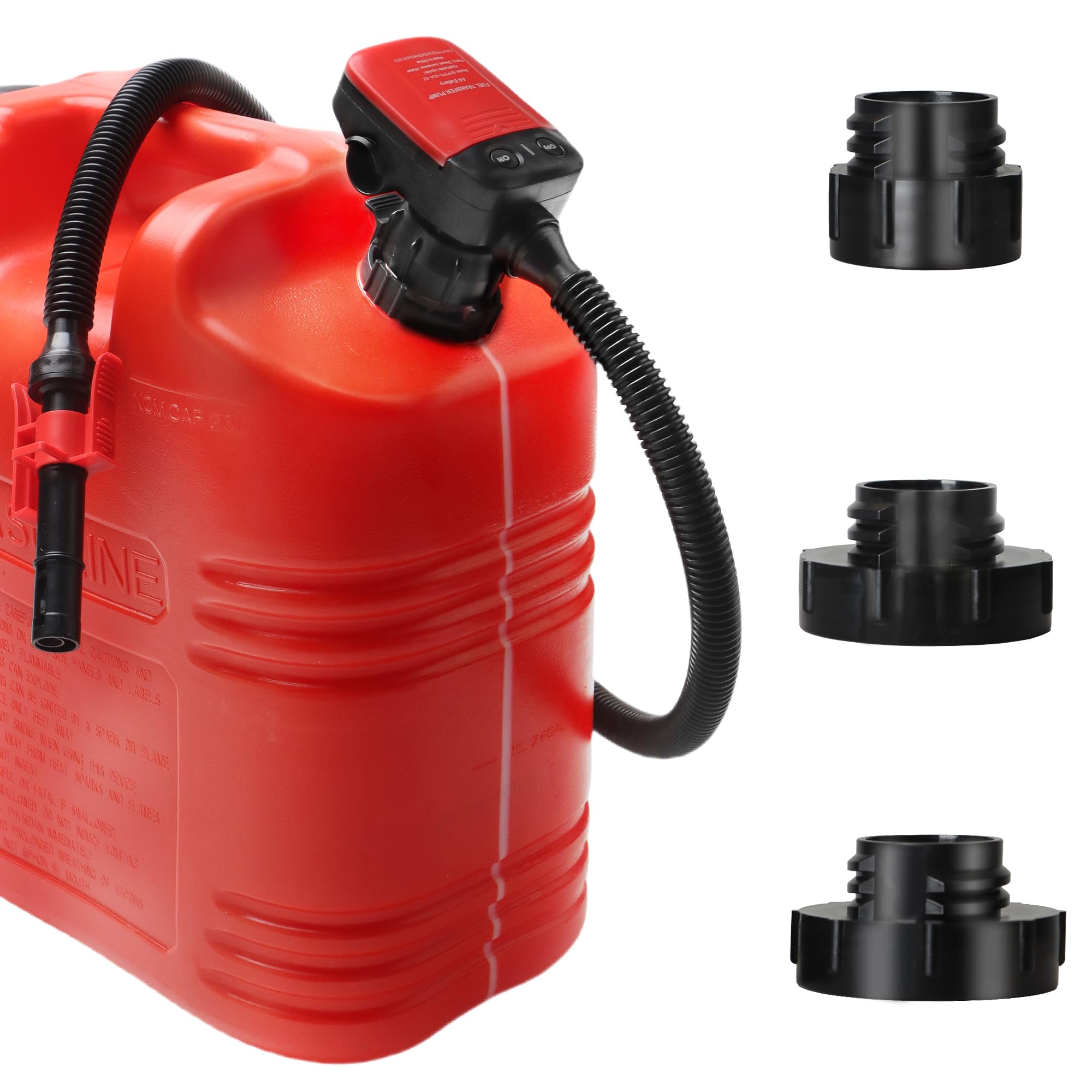
This pump reframes the entire refueling experience by eliminating the need to lift a heavy can at all. The automatic stop nozzle clicks off the moment the target tank is full, which completely removes the risk of overfill spills that standard spouts cause. The 42-inch hose reaches deep into boat fuel fills or tractor tanks without forcing you to balance the container on a fender.
Powered by four AA batteries, the pump delivers a measured 2.4 gallons per minute — noticeably faster than a manual siphon and consistent enough to make refueling a generator feel like a chore you actually want to do. The three included adapters ensure a snug fit on standard 5-gallon cans, and the locking clip lets you walk away while it fills, which is a huge safety and convenience win.
A few owners noted that the rubber bulb at the end of the hose can be too large for some older gas can openings, potentially requiring a small Dremel modification on the can neck. The absence of a dedicated on/off switch is a minor annoyance, but the pump’s overall reliability and mess-free operation make it a clear upgrade path for anyone tired of dribbling fuel down their leg.
Why it’s great
- Auto-shutoff nozzle prevents any overfill spillage
- 42-inch hose reaches deep tanks without lifting the can
- Runs on AA batteries, no cord needed
Good to know
- Hose bulb may not fit every can opening without modification
- No dedicated on/off switch on the handle
2. VP Racing Square Motorsports Jug (Red)

For buyers who simply need a robust, no-frills container, this VP Racing Jug delivers serious wall thickness. The high-density polyethylene includes 30% more material than a standard gas can, which translates to a rigid structure that won’t deform when full or warp under summer heat. The square shape stacks neatly in a truck bed or shed, and the screw cap with integrated clamps at each end ensures a vapor-tight seal.
At 5.5 gallons, it offers a half-gallon advantage over standard 5-gallon cans without a dramatic increase in footprint. The design is minimal — no fancy spout, just a robust cap — meaning you can pair it with your own pour spout or a transfer pump system. Owners consistently report that these jugs remain leak-proof and crack-free even after years of rough use on job sites and farms.
The primary limitation is that the jug is very tall, standing over 21 inches, which prevents it from fitting under a standard truck tonneau cover. A small number of recent reviews also mention that some units have thinner walls than older versions, so inspect the plastic thickness on arrival. For the price, it remains a top-tier container when matched with an aftermarket spout.
Why it’s great
- Extra material makes it extremely durable and crack-resistant
- 5.5 gallon capacity fits more fuel without a larger footprint
- Square shape stacks easily for storage
Good to know
- Tall design may not fit under tonneau covers
- Quality consistency may vary on recent units
3. Scepter FSCD552 Diesel Can, 5 Gallon

Scepter’s 5-layer co-extruded HDPE is the benchmark for vapor retention. This diesel can uses the same military-contract manufacturing process as their NATO-style fuel cans, which means the plastic walls actually prevent fuel permeation — a key factor if you store the can in a garage or enclosed space. The rear handle is deeply sculpted, allowing you to tilt the 5-gallon load with one hand while the SmartControl spout does the rest.
The integrated air vent inside the spout enables a fast pour of up to 3 gallons per minute, which is noticeably faster than most CARB-compliant nozzles that rely on a separate vent tube. The flame mitigation device inside the spout adds a genuine safety layer against accidental vapor ignition. It is EPA and CARB compliant, so it meets all current regulations without the awkward two-handed pour that many compliant cans force on you.
The spout’s thumb-release lock is intuitive, but a design quirk traps a small amount of fuel in the spout after pouring, which can dribble out when you remove the cap. Also, the fuel type is marked for diesel, so if you plan to use it for gasoline, double-check the color coding and nozzle compatibility to avoid mix-ups. For shop and farm use where robustness and safety are non-negotiable, this is a premium choice.
Why it’s great
- 5-layer HDPE stops vapor leaks and preserves fuel
- 3 GPM flow rate is among the fastest for compliant spouts
- Ergonomic handles make one-handed pouring possible
Good to know
- Fuel trapped in spout can spill when cap is removed
- Marked for diesel, confirm compatibility for gas use
4. VP Racing Patriotic Motorsport Jug, 5.5 Gallon

This jug is engineered for the most abusive environments. The 5.5-gallon container uses even-density plastic in the corners to prevent stress cracking, and the super-wide bottom grip allows you to tilt and pour with total control even when the container is full. The 14-inch deluxe filler hose reaches into tight fuel necks on race cars, tractors, and side-by-sides without forcing the jug into an awkward angle.
The ergonomic handle is wide enough to accommodate a gloved hand and channels airflow for venting during a pour, which eliminates the vacuum lock that causes glugging. This jug is explicitly labeled for non-fuel use, but many owners use it for gasoline without issue — the HDPE construction is identical to VP’s fuel-rated containers. It also works great for storing water, rock salt, deer corn, or used oil.
The main caveat is the manufacturer’s disclaimer: this jug is technically classified for non-fuel fluids. If you need a container that is 100% CARB/EPA compliant for gasoline storage, the Scepter or a standard VP Racing fuel jug is the safer regulatory bet. If you simply want a bombproof, easy-to-pour container for your shop, this is the best-handling jug on the list.
Why it’s great
- Wide bottom grip enables one-handed pouring with control
- 14-inch filler hose reaches deep fuel necks easily
- Reinforced corners resist cracking from impacts
Good to know
- Officially labeled for non-fuel use, check local compliance
- Large size doesn’t fit under all truck covers
5. FastRack 5 Gallon Hedpak with Cap (2-Pack)

This 2-pack of 5-gallon Hedpaks is built from food-grade, BPA-free HDPE, making them a versatile option that costs far less per gallon of capacity than dedicated fuel containers. The square, space-saving shape stacks neatly, and the threaded caps create a leak-proof seal when tightened. The integrated vent cap on each lid lets you control airflow for a smooth pour when using them as a water or oil container.
Many owners successfully use these for storing used motor oil and even gasoline, but the thinner wall construction means they won’t survive the abuse that a VP Racing or Scepter jug can take. The plastic is noticeably more flexible when full of liquid, and reports indicate that if you use straps to secure them, the walls can cave in as the liquid drains. For garage storage where the jug stays on a shelf, they work fine.
The key trade-off is durability versus cost. If you need two containers for water, waste oil, or occasional fuel transport on a budget, this pack delivers incredible value. If you plan to toss them in the back of a truck or leave them in direct sun, the thinner material may not hold up as long. They are a solid entry-level solution for light-duty liquid storage.
Why it’s great
- Two 5-gallon containers for less than the price of one premium can
- Food-grade BPA-free HDPE for versatile liquid storage
- Square shape stacks easily and saves space
Good to know
- Thinner walls are less durable for heavy-duty transport
- Not designed for rough outdoor or truck-bed use
FAQ
Why do some gas cans have a flame mitigation device?
Can I use a non-fuel-rated jug for gasoline storage?
Final Thoughts: The Verdict
For most users, the best gas can winner is the Fuelio Fuel Transfer Pump because it eliminates the physical strain and spill risk of pouring altogether with its auto-shutoff nozzle and 2.4 GPM flow rate. If you want a bombproof container that you can pair with your own spout, grab the VP Racing Square Jug. And for a shop setting where vapor retention and regulatory compliance matter most, nothing beats the Scepter Diesel Can with its 5-layer vapor barrier.