
A gas handheld leaf blower isn’t a luxury — it’s a time machine for anyone with a lawn larger than a postage stamp. Once you’ve felt the instant torque of a 2-cycle engine against a mat of wet October leaves, you’ll never go back to chasing extension cords or waiting for lithium-ion batteries to recharge. The right model turns a weekend chore into a 20-minute victory lap, but the wrong one leaves you fighting a stubborn pull cord and a clogged carburetor.
I’m Mohammad Maruf — the founder and writer behind Drink4Good. Over the years I’ve analyzed hundreds of power tool specs, and I keep coming back to a simple truth: the best gas handheld leaf blower balances air volume, engine displacement, and ergonomic weight distribution better than any other category of outdoor equipment.
Whether you’re clearing a suburban driveway or managing a multi-acre property, choosing the right best gas handheld leaf blower means understanding how CFM, MPH, and engine cycles translate into real-world cleanup speed and operator comfort.
How To Choose The Best Gas Handheld Leaf Blower
Gas handheld leaf blowers are not one-size-fits-all tools. The right choice depends on your property size, the type of debris you typically face, and how much weight you’re willing to carry. Focus on three core areas: air movement specs, engine design, and ergonomic features that keep you working longer without discomfort.
Air Volume (CFM) vs. Air Speed (MPH)
CFM (cubic feet per minute) measures the total amount of air the blower moves, while MPH measures how fast that air travels. For wet, heavy leaves and dense debris, CFM is the more important number — you want volume to lift and push the pile. MPH matters for sweeping light debris off hard surfaces. A blower with at least 380 CFM and 170 MPH handles most residential tasks. Commercial-grade units push 500 CFM or more.
Engine Cycle: 2-Stroke vs. 4-Stroke
A 2-stroke engine is lighter and delivers more power per displacement, but requires you to mix oil and gasoline. A 4-stroke engine runs on straight gas, produces lower emissions, and is generally quieter — but it weighs more and offers slightly less peak power. For occasional home use, a reliable 2-stroke with air purge starting is often the most practical choice. For users who hate mixing fuel, a 4-stroke eliminates that step entirely.
Weight and Vibration Management
A handheld blower that weighs over 10 pounds can cause fatigue in under 15 minutes on a large property. Look for models with anti-vibration handles or rubber-mounted engines — these reduce the tingling sensation that sets in after prolonged use. Cruise control or a throttle lock also helps by letting you maintain constant airflow without squeezing the trigger the entire time.
Quick Comparison
On smaller screens, swipe sideways to see the full table.
| Model | Category | Best For | Key Spec | Amazon |
|---|---|---|---|---|
| Husqvarna 125B | Mid-Range Handheld | Homeowners with medium to large yards | 470 CFM / 170 MPH | Amazon |
| Echo PB-2620 | Premium Handheld | Pro-sumer and commercial use | 456 CFM / 172 MPH | Amazon |
| Baotree 80CC Backpack | Premium Backpack | Heavy debris and large acreage | 800 CFM / 200 MPH | Amazon |
| Baotree 63CC Backpack | Mid-Range Backpack | Large properties on a budget | 665 CFM / 200 MPH | Amazon |
| Relxxon 52cc Backpack | Mid-Range Backpack | Lightweight backpack comfort | 550 CFM / 200 MPH | Amazon |
| SENIX 4QL | Mid-Range Handheld | No-mix 4-cycle convenience | 410 CFM / 125 MPH | Amazon |
| PROYAMA 26CC | Budget Handheld | Entry-level power at low cost | 412 CFM / 200 MPH | Amazon |
| Relxxon 26cc Handheld | Budget Handheld | Lightweight first-time gas buyer | 380 CFM / 180 MPH | Amazon |
| Getell 26cc Handheld | Budget Handheld | Budget-conscious homeowner | 380 CFM / 180 MPH | Amazon |
In‑Depth Reviews
1. Husqvarna 125B
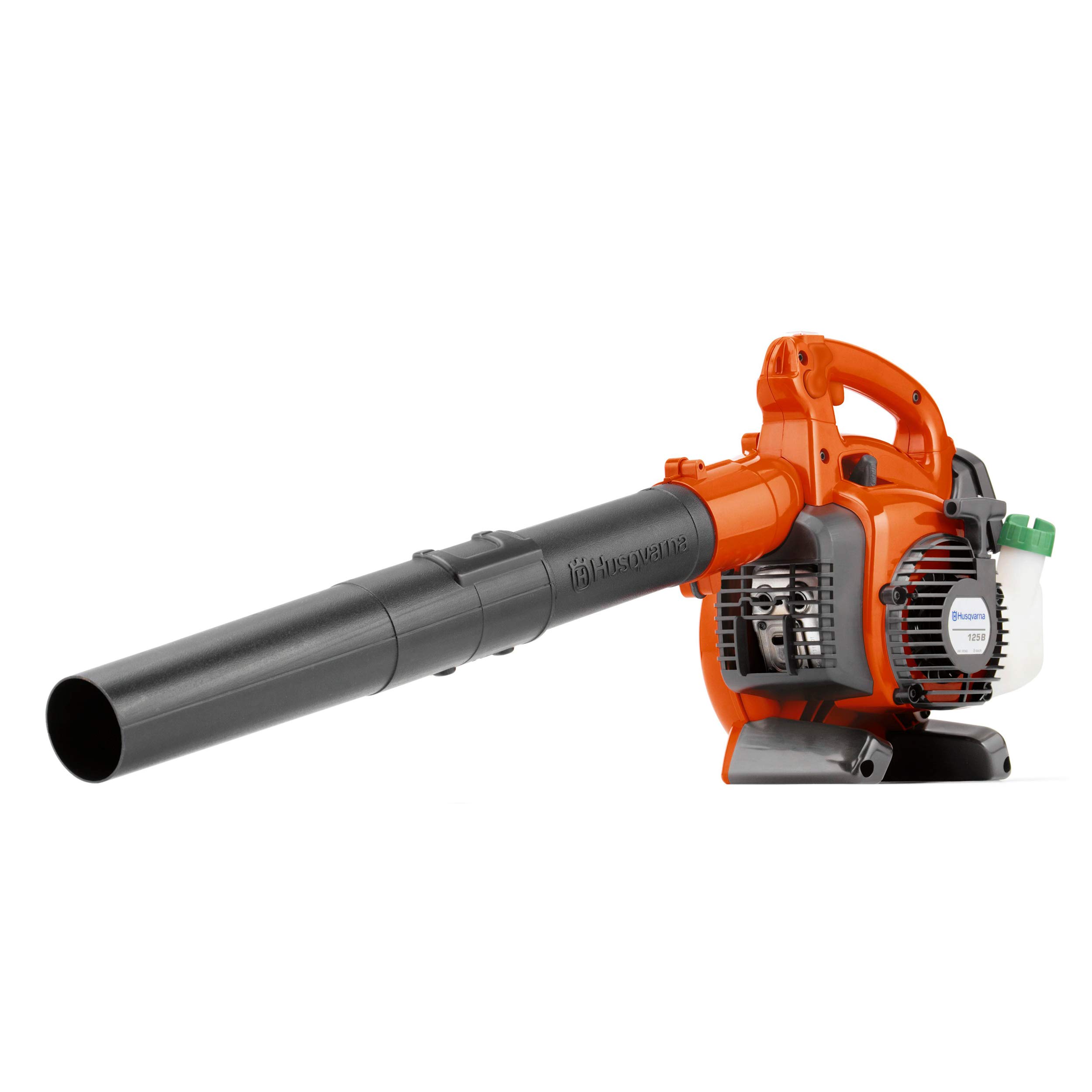
The Husqvarna 125B delivers a proven balance of power and ergonomics that has made it a staple on residential properties. Its 28cc 2-cycle engine pushes 470 CFM at 170 MPH, backed by 12.5 Newtons of clearing force — enough to move wet leaves and light debris without bogging down. The air purge system clears the carburetor for consistent starting, typically on the second pull even after months of storage.
At 9.4 pounds, the 125B is not exceptionally light, but Husqvarna’s LowVib anti-vibration handle and cruise control make it manageable for longer sessions. The blower tube is adjustable, adding flexibility for different operator heights. Some users note that the side-mounted air intakes can pull fabric against the vents if worn loose, but this is a minor ergonomic quirk.
Long-term reliability is strong, though the fuel lines are known to degrade if ethanol-blended gas is left in the tank. Switching to ethanol-free fuel or adding stabilizer prevents this. Husqvarna’s warranty support can be inconsistent, but the platform itself is well-understood by any small-engine repair shop.
Why it’s great
- Industry-leading 12.5 N clearing force moves wet, heavy debris
- LowVib handle reduces arm fatigue during extended use
- Cruise control locks airflow without constant trigger pressure
Good to know
- Ethanol-blend gas can damage fuel lines over time
- Side intakes may grab loose clothing if not careful
2. Echo PB-2620
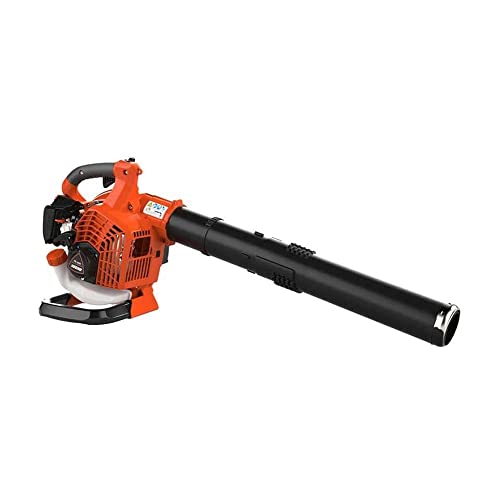
The Echo PB-2620 is a serious handheld with commercial DNA. Its 25.4cc 2-stroke X Series engine cranks out 456 CFM at 172 MPH, making it one of the most powerful handhelds on the market. The audible tone of the engine shifts noticeably after break-in, gaining roughly 500 RPM as the rings seat, which translates to even more clearing force on the job.
Starting is predictable — third pull on a cold engine, first pull when warm — thanks to Echo’s proven carburetion. The throttle lock is standard, allowing you to set a constant speed without squeezing the trigger. At roughly 10.5 pounds, it’s heavier than most handhelds, but the power-to-weight ratio is exceptional for clearing wet leaves, gravel, and even light snow.
The PB-2620’s build quality is visibly higher than budget alternatives. The air filter is accessible without tools, and the fuel tank is translucent for easy level checks. The biggest drawback is the price, which has crept upward, and the lack of a spark plug tool or extra oil in the box — small omissions for an otherwise premium tool.
Why it’s great
- Exceptional 456 CFM output for a handheld form factor
- Reliable cold-start behavior with minimal priming
- Tool-free air filter access for easy maintenance
Good to know
- Heavier than most handhelds at over 10 pounds
- Premium price point with limited included accessories
3. Baotree 80CC Backpack
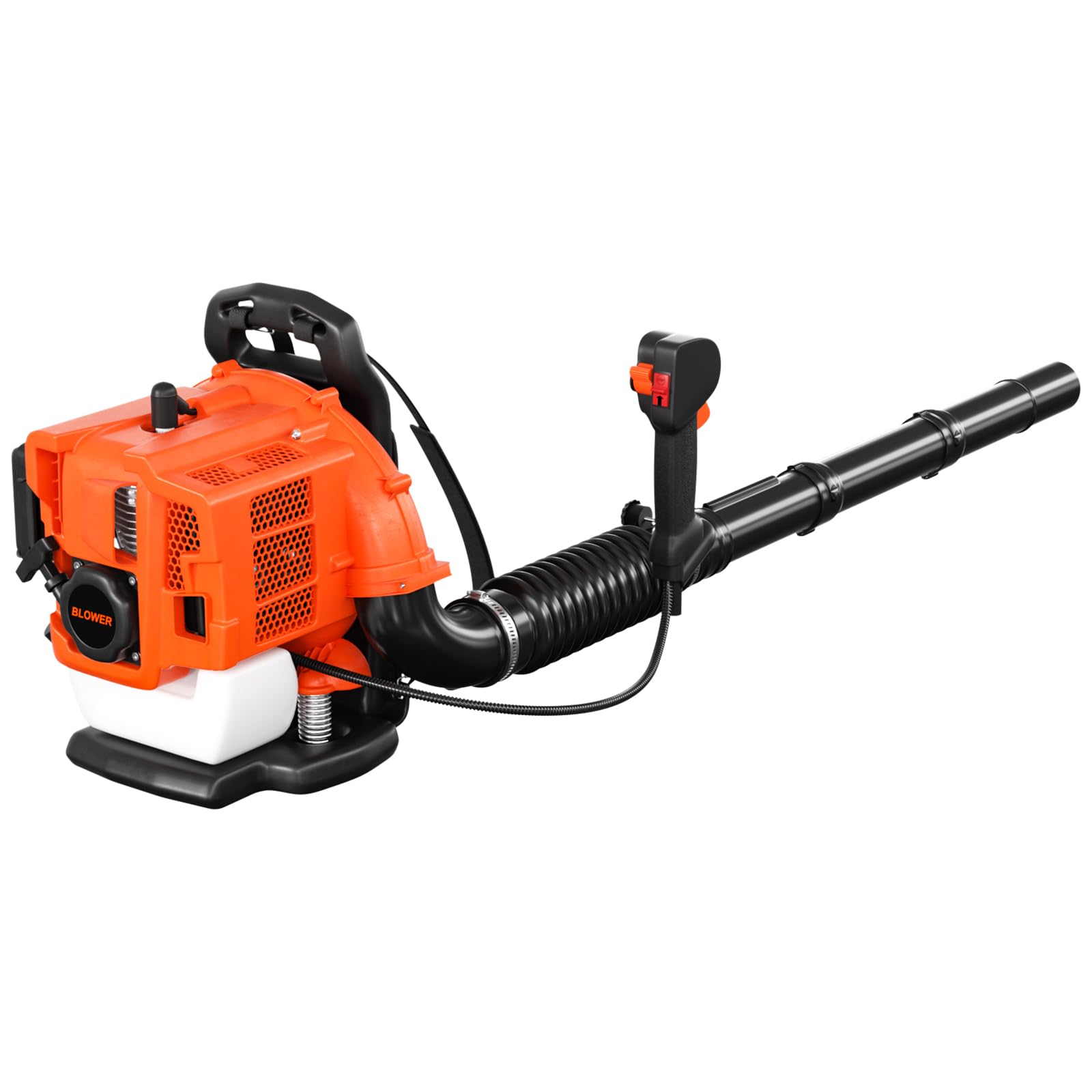
The Baotree 80CC backpack blower is built for operators who need to clear large areas of heavy debris in a single pass. Its 80cc 2-stroke engine produces 800 CFM at 200 MPH — roughly double the output of a typical homeowner handheld. This level of air volume instantly lifts wet, matted leaves and can even move small stones and pine cones without the engine bogging.
The backpack harness uses padded shoulder straps and a waist belt to distribute the 25-plus-pound weight across the torso, reducing the strain that would make a handheld unbearable after 15 minutes. The vibration-damping mounts are effective enough to make extended operation comfortable, though the physical heft is still noticeable on steep terrain. The thumb-controlled variable throttle gives precise speed adjustment for transitioning between flower beds and open lawn.
Build quality is solid for the price, with a metal impeller and reinforced housing. The fuel tank is adequately sized for an hour of continuous runtime. Some units have reported starting issues out of the box, so buying from a retailer with a solid return policy is wise. The 50:1 gas mix is standard for most 2-stroke pro equipment.
Why it’s great
- 800 CFM moves the heaviest debris with authority
- Padded backpack harness reduces operator fatigue
- Thumb-controlled variable throttle for precise power adjustment
Good to know
- Heavy unit — not suitable for small or uneven properties
- Quality control can be inconsistent between units
4. Baotree 63CC Backpack
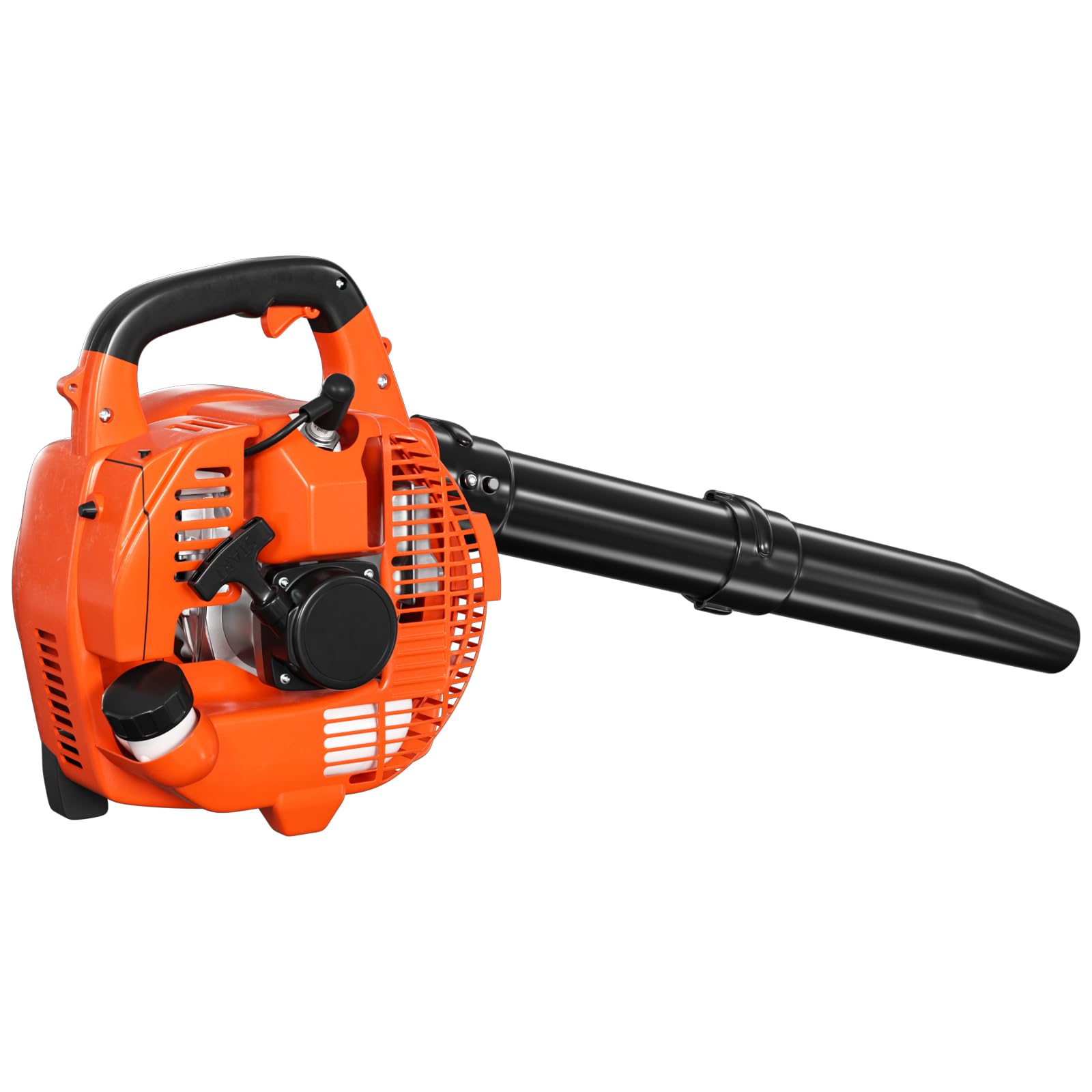
The Baotree 63CC backpack blower offers a strong middle ground between output and affordability. With 665 CFM and 200 MPH from a 63cc 2-stroke engine, it handles wet leaves, grass clippings, and driveway debris with room to spare. The advanced starting system reduces pull resistance noticeably — most users report firing up within two pulls even after the unit has cooled.
The backpack frame uses generous padding on the shoulders and lower back, along with adjustable straps to fit different torsos. The vibration-damping engine mounts keep hand and arm tingling to a minimum during longer cleanups. The thumb-controlled throttle provides infinite speed variation, letting you dial down for delicate garden areas and open up full power on open stretches of lawn.
At 11-plus pounds, it’s lighter than the 80cc version but still heavier than any handheld. The 25:1 fuel mix is richer than the more common 50:1, which means you’ll use more oil per gallon. Some users report that the blower lacks a throttle lock, requiring constant thumb pressure to maintain high RPM. Replacing the factory spark plug with a higher-quality option can improve starting consistency.
Why it’s great
- 665 CFM output at an accessible price point
- Comfortable padded backpack harness with adjustable fit
- Reduced pull resistance for easy starting
Good to know
- Requires 25:1 fuel mix, not the standard 50:1
- No cruise control — must hold throttle continuously
5. Relxxon 52cc Backpack
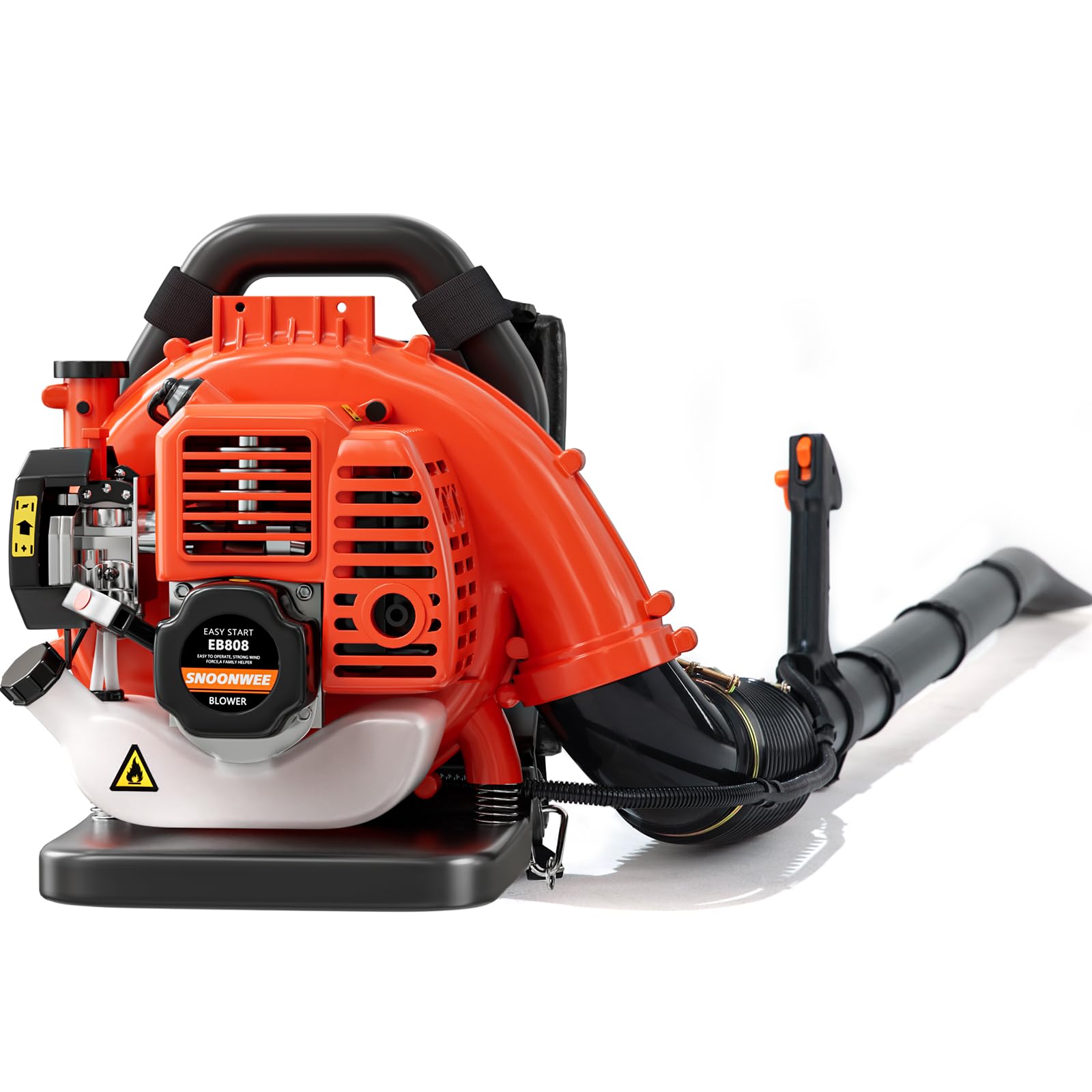
The Relxxon 52cc backpack blower targets operators who want backpack-level runtime and comfort without the weight penalty of larger engines. At 17.2 pounds, it’s one of the lightest gas backpack blowers available, yet it still delivers 550 CFM at 200 MPH — enough to clear an average suburban lot without needing to refuel. The 40-ounce tank provides roughly 60 minutes of continuous runtime.
The 3-point spring stabilizer is a standout feature for vibration control. It isolates the engine from the frame, significantly reducing the vibration transmitted to the operator’s arms and shoulders. The 90-degree adjustable control handle lets you set the angle to match your natural wrist position, reducing soreness. The tool-free air purge system helps the engine start within five pulls.
Some users have reported premature failure — the engine dying after 20 minutes and refusing to restart — which suggests quality control varies. The plastic housing feels less robust than premium brands, and the harness, while padded, doesn’t distribute weight as evenly as more expensive backpack systems. For the price, the performance per dollar is high, but longevity is a gamble.
Why it’s great
- Extremely light for a backpack blower at 17.2 pounds
- 3-point spring stabilizer minimizes vibration transfer
- Adjustable handle angle reduces wrist strain
Good to know
- Inconsistent quality control — some units fail quickly
- Harness weight distribution is less refined than premium brands
6. SENIX 4QL
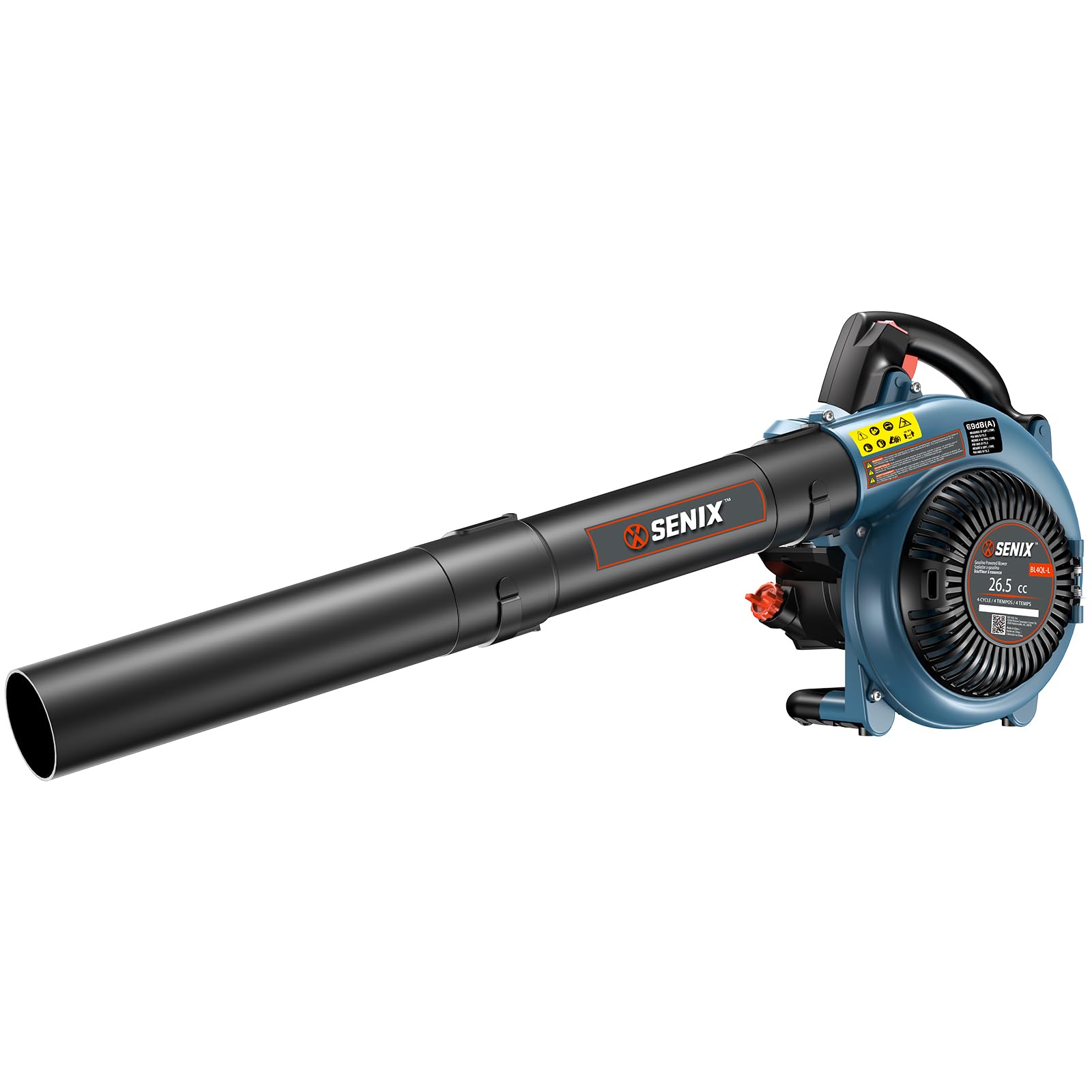
The SENIX 4QL is a 4-cycle handheld blower that eliminates the need to premix oil and gas — just fill the separate oil reservoir and pour straight gasoline into the tank. The 26.5cc engine delivers 410 CFM at 125 MPH, which is less airspeed than comparable 2-strokes but still adequate for clearing dry leaves, grass clippings, and light debris. The 4QL technology allows all-directional operation without oil starvation or stalling.
Starting is straightforward thanks to automatic compression release, typically firing on the second pull. Noise output is noticeably lower than a 2-stroke, and the engine runs smoother at idle without the harsh ringing of a typical leaf blower. The dual-grip handle gives users multiple holding positions, and the unit weighs only 9.48 pounds. The metal washable air filter is a welcome maintenance feature.
The biggest trade-off is power. With only 125 MPH peak speed, this blower struggles with wet, heavy leaves and compacted debris. The left-side air intake can be partially blocked by a right-handed operator’s leg. Some users also wish for a throttle lock — the trigger must be held continuously. The 3-year limited warranty is a confidence booster for a mid-range purchase.
Why it’s great
- No oil/gas mixing — runs on straight fuel
- Lower noise and vibration than comparable 2-strokes
- All-directional operation without stalling
Good to know
- Lower MPH output struggles with wet, heavy leaves
- No cruise control — continuous trigger pressure required
7. PROYAMA 26CC
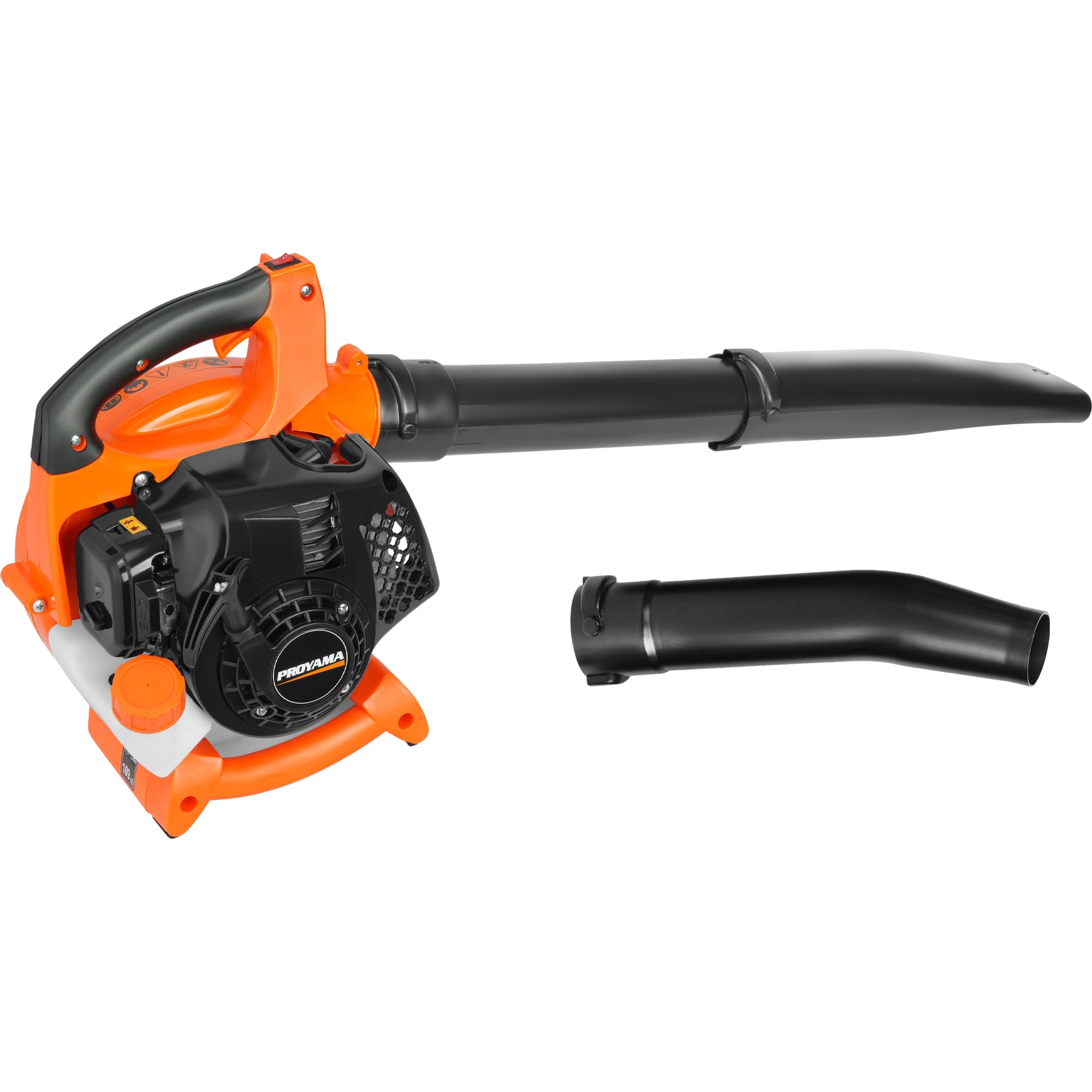
The PROYAMA 26CC punches above its price class with 412 CFM and 200 MPH from a 26cc 2-cycle engine. It competes directly with models that cost significantly more, offering comparable airflow numbers and a self-locking throttle that functions as cruise control — a rare feature at this level. The air purge system clears the carburetor for reliable starting, typically on the second pull.
Weighing 9.3 pounds with a balanced center of gravity, this blower is easy to handle one-handed for short bursts. The dual-nozzle set includes a round tip for precision and a flat tip for wider coverage, adding versatility for different tasks. The anti-vibration handle helps reduce fatigue during longer sessions, and the 7500 RPM max engine speed delivers a solid 1 HP output.
Build quality is acceptable for the price, though some units have reported the starter cord failing prematurely. The gas cap on early production runs could leak, but this is easily repaired. Users who have upgraded from entry-level electric blowers consistently report that the PROYAMA feels twice as powerful, making it a strong entry point for gas blower newcomers.
Why it’s great
- 200 MPH top speed at a budget-friendly price
- Self-locking throttle provides cruise control functionality
- Dual-nozzle system adds versatility for different tasks
Good to know
- Starter cord durability can be inconsistent
- Some units arrive with minor quality issues
8. Relxxon 26cc Handheld

The Relxxon 26cc handheld blower is a straightforward entry point for anyone making the switch from electric to gas. Its 26cc 2-cycle engine produces 380 CFM at 180 MPH — numbers that comfortably outpace most corded and battery-powered alternatives. The low-resistance pull cord and fingertip throttle make it easy to operate right out of the box, and the 2-year manufacturer warranty provides a safety net for first-time gas owners.
At 9.4 pounds, it’s not the lightest handheld, but the soft-grip handle and balanced design keep fatigue manageable for standard suburban lots. Noise output is rated at a modest 60 dB, which is quieter than many gas blowers and friendlier to neighbors. The translucent fuel tank is a practical touch, letting you monitor the fuel level without opening the cap.
The carburetor tuning is efficient, offering good runtime per tank. However, some users have reported units that run rough and then quit, with gas leakage issues that suggest quality control is not consistent. The instructions could be clearer for first-time users regarding the fuel mix ratio. For the price, it’s a capable machine if you get a good unit, but there’s a real risk of receiving a lemon.
Why it’s great
- Strong 180 MPH airspeed for its displacement class
- Quieter operation than most gas blowers at ~60 dB
- Translucent fuel tank for easy level checking
Good to know
- Inconsistent quality control — some units fail prematurely
- Instructions could be more thorough for new gas blower users
9. Getell 26cc Handheld
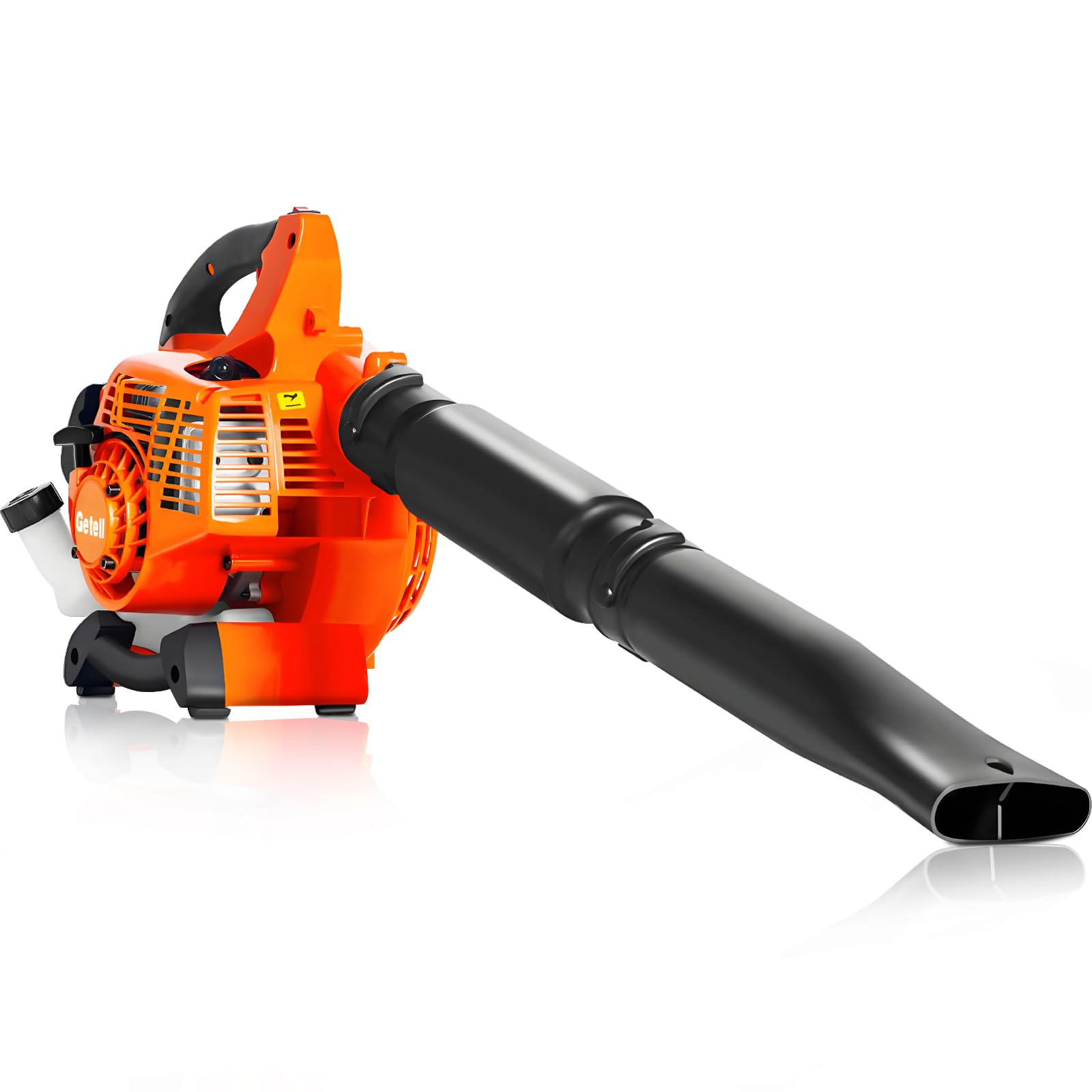
The Getell 26cc handheld blower is another budget-oriented option that mirrors the Relxxon in displacement and airflow — 380 CFM at 180 MPH from the same 26cc 2-cycle platform. It comes with anti-vibration handles and a cushioned grip that make it reasonably comfortable for a sub- handheld. The easy-start system is reliable for the first few pulls when the engine is warm.
At 9.4 pounds, it’s identical in weight to several other budget handhelds, but the Getell includes a few thoughtful extras: an exhaust duct, an oil mixing container, and a printed manual. The translucent fuel tank is standard here too. The variable-speed trigger provides adequate control for transitioning between delicate flower beds and open lawn areas, and the overall package feels reasonably well-assembled for the price point.
The downsides mirror the category’s budget limitations. Some units arrive with cosmetic flaws — cracked housings or loose fittings — that suggest less rigorous quality inspection. The engine is not as refined as a Husqvarna or Echo, with a rougher idle and slightly more vibration at full throttle. For occasional use on a small property, it gets the job done, but it’s not built for commercial or heavy seasonal demands.
Why it’s great
- Anti-vibration handles improve comfort at low cost
- Includes useful accessories like oil mixing container
- Variable-speed trigger offers good control flexibility
Good to know
- Occasional cosmetic defects from manufacturing
- Engine vibration is more pronounced than premium models
FAQ
Is CFM or MPH more important for a gas leaf blower?
Do I need to mix oil and gas for a 2-cycle leaf blower?
How important are anti-vibration features on a handheld blower?
Final Thoughts: The Verdict
For most users, the best gas handheld leaf blower winner is the Husqvarna 125B because it offers the best balance of clearing force, ergonomic comfort, and long-term reliability at a price that doesn’t require a commercial budget. If you want maximum handheld power in a compact package, grab the Echo PB-2620. And for clearing large properties without the fatigue of a handheld, nothing beats the Baotree 80CC Backpack.