
A gas leak is not a smell to ignore—it’s a measured emergency where fractions of a percent of Lower Explosive Limit (LEL) separate safety from catastrophe. Handheld sniffers and stationary alarms translate invisible combustible gas into audible buzzers, flashing bars, and digital %LEL readouts so you stop guessing whether that faint whiff near the water heater is real.
I’m Mohammad Maruf — the founder and writer behind Drink4Good. Every week I analyze gas detector sensor types, alarm thresholds, battery chemistry, and certification standards so homeowners, RV travelers, and HVAC pros can match the right detection tool to their specific leak-seeking scenario.
Whether you need a portable sniffer for pinpointing tiny propane leaks behind an RV stove or a plug-in monitor for whole-home coverage, this guide to the best gas leak detector breaks down sensor technology, alarm response, and real-world durability so you can buy with confidence.
How To Choose The Best Gas Leak Detector
Gas detectors fall into two distinct families: handheld sniffers used by homeowners and technicians to locate the exact source of a leak, and stationary alarms that live on a wall or countertop and sound when ambient gas reaches a dangerous threshold. Your choice hinges on whether you need occasional leak-hunting or always-on protection.
Sensor Type: Catalytic vs Semiconductor
Semiconductor sensors (often called “gas-sensitive semi-conductor”) are inexpensive, highly sensitive to small concentrations, and respond in under a second—ideal for handheld leak detectors that need to find a pinhole leak in a pipe joint. Catalytic bead sensors are more selective and durable, favored in industrial-grade tools and rechargeable models, but they can be poisoned by silicone vapors or prolonged high gas exposure. Match the sensor type to your environment: choose semiconductor for general home sniffing and catalytic for frequent RV or HVAC use.
Alarm Threshold and %LEL Readout
Lower Explosive Limit (LEL) is the minimum concentration of gas in air that can ignite. A good detector alarms well before that limit—typically starting at 1% LEL (roughly 100 ppm for methane). A detector that displays %LEL numerically lets you trend a leak’s severity over time rather than just hearing a binary beep. For natural gas (methane), a sensor that reads from 1% to 10% or 20% LEL gives you a useful safety window.
Power: Disposable Batteries vs Rechargeable
AAA-battery-powered sniffers (like the PT205 or PT299) are simple to keep running—just swap cells when the low-battery icon appears. Rechargeable models (PT760, PT520A+) eliminate battery waste and are ideal for regular use, especially if you’re an RV tech or propane installer who grabs the tool daily. Stationary alarms (Kidde, Safe-T-Alert) plug into AC or hardwire into 12V systems and include backup batteries for power outages.
Probe Length and Flexibility
Tight spaces define the gas detector use case—behind a kitchen range, inside a water heater access panel, under an RV belly. Short fixed sensors work for open areas, but a telescopic rod (6 to 12 inches) or a bendable gooseneck (17 inches on the PT520A+) lets you reach deep into cabinets without removing panels. This is the single feature that separates a frustrating search from a 30-second pinpoint.
Quick Comparison
On smaller screens, swipe sideways to see the full table.
| Model | Category | Best For | Key Spec | Amazon |
|---|---|---|---|---|
| TopTes PT520A+ | Handheld Sniffer | Bendable gooseneck detection in tight spots | 17-inch flexible probe | Amazon |
| TopTes PT760 | Handheld Sniffer | Extended range and rechargeable power | 12-inch telescopic probe | Amazon |
| TopTes PT205 | Handheld Sniffer | Compact everyday leak-hunting | %LEL bar graph | Amazon |
| TopTes PT299 | Handheld Sniffer | Extendable reach for overhead pipes | 6.3-inch adjustable rod | Amazon |
| Kidde KN-COEG-3 | Stationary Alarm | Whole-home plug-in safety | 85 dB alarm | Amazon |
| Safe-T-Alert 35-742-BR | Stationary Alarm | RV hardwire replacement | 12V DC flush mount | Amazon |
| MTI Industries 20441PWT | Stationary Alarm | Direct-fit camper propane alarm | Propane-only 12V sensor | Amazon |
In‑Depth Reviews
1. TopTes PT520A+ Rechargeable Gas Leak Detector
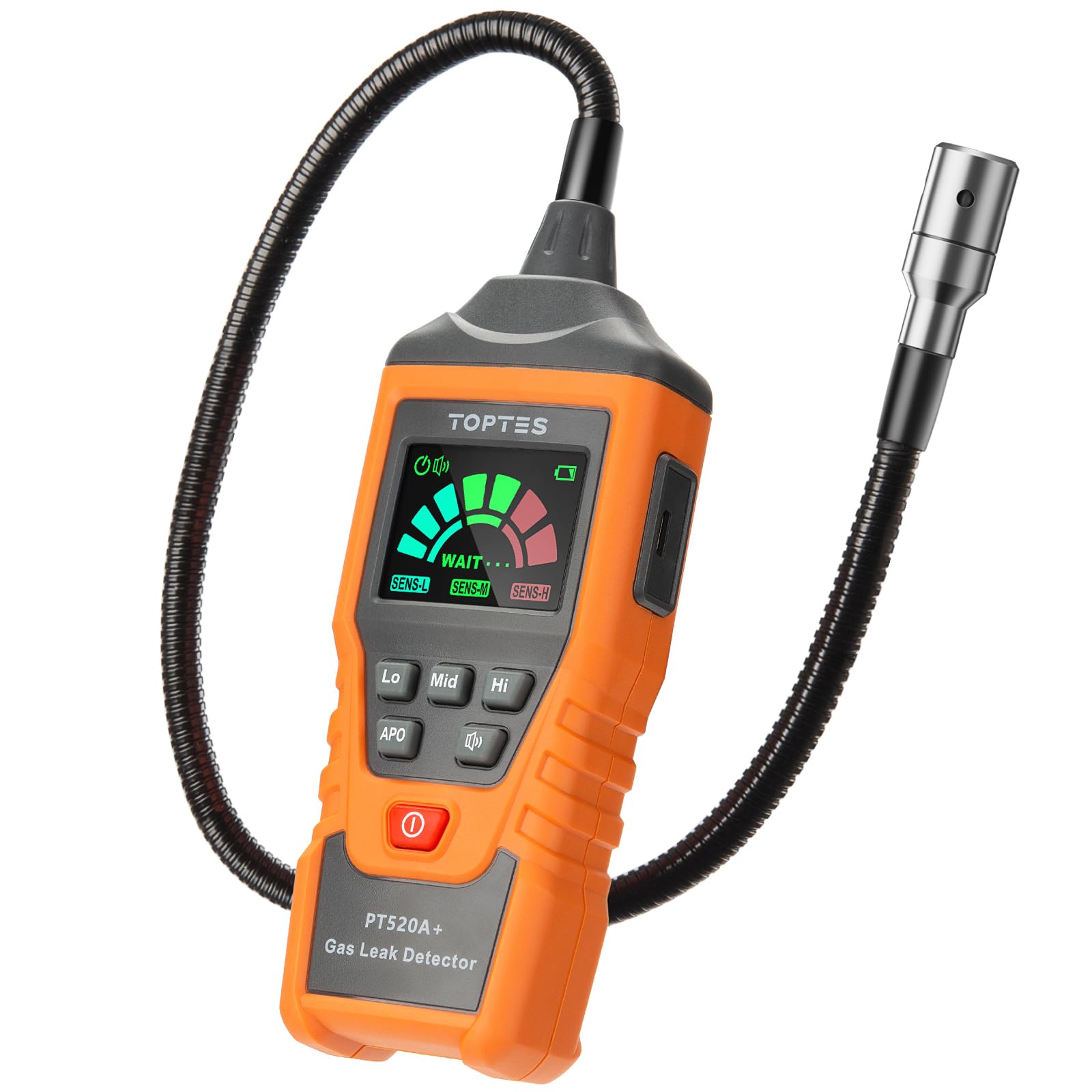
The PT520A+ hits the sweet spot where reach, rechargeability, and response speed converge. Its 17-inch bendable gooseneck snakes behind water heaters, into dryer vents, and under RV belly pans without you contorting to get the sensor close. The semiconductor sensor triggers audible and visual alarms within half a second of hitting gas, and the seven-segment bar graph ramps up intensity as concentration rises from 50 ppm to 10,000 ppm.
Recharge cycles exceed 3,000, meaning daily HVAC techs or regular RV inspectors won’t burn through alkaline cells. The auto power-off (adjustable via the APO button) and mute function reduce nuisance beeping when you’re dialing in on a leak location. Field reports from propane technicians confirm it catches leaks that cheaper sniffers miss, and it’s sensitive enough to detect vapor at a propane point-of-sale counter.
One caveat: the flexible neck lacks the rigidity of a telescopic rod, so pushing it into tight gaskets requires a steady hand. But for the combination of long reach, rechargeable convenience, and sub-second alarm, this is the unit most buyers should start with.
Why it’s great
- 17-inch bendable gooseneck reaches the deepest confined spaces
- Rechargeable via USB-C with 3,000+ cycle battery life
- 0.5-second response to propane, methane, and natural gas
Good to know
- Gooseneck is flexible but not rigid enough for forceful probing
- No numerical %LEL display—relies on bar graph only
2. TopTes PT760 Rechargeable Natural Gas Detector

The PT760 upgrades the sniffer formula with a catalytic bead sensor—more selective against false triggers from cooking vapors or cleaning solvents than semiconductor designs. Its stainless-steel telescopic probe extends to 12 inches, giving you precise access inside pipe chases and behind built-in appliances without removing screws. The detection range reaches 20% LEL (10,000 ppm), double that of most entry-level sniffers, which helps in larger spaces where gas dilutes faster.
A built-in flashlight is a practical addition for dark basements, crawlspaces, and RV compartments. The unit recharges via Type-C, and an ergonomic grip with textured material keeps the tool secure even with sweaty hands. An RV technician with 40 years of experience reported finding a propane leak in three minutes with this device—faster than with his previous industrial-grade detector.
The trade-off is that the catalytic sensor can be knocked offline by exposure to high concentrations of silicone or sulfur compounds. For general home use this is rarely an issue, but if you plan to hunt sewer gas or work around silicone sealants, stick with a semiconductor model.
Why it’s great
- Catalytic sensor offers better selectivity against false alarms
- 12-inch telescopic stainless steel probe reaches tight spots
- Built-in flashlight aids low-light leak inspections
Good to know
- Catalytic sensor can be poisoned by silicone vapors
- No bendable neck—probe is rigid straight only
3. TopTes PT205 Natural Gas Detector

The PT205 is the pocket-friendly sniffer that proves you don’t need a long probe for effective leak-spotting. At roughly the size of a thick marker with a pen clip, it slides into a tool pouch or jacket pocket. The semiconductor sensor delivers the same 0.5-second response as the larger TopTes models, and the LCD shows %LEL numerically—a feature missing from the premium PT520A+. You can watch the bar graph climb and the number tick up as the sensor approaches a leak, giving you a quantifiable sense of severity.
Powered by two included AAA alkaline batteries, it’s ready out of the box. Owners report detecting leaks in fireplace gas lines that professional technicians missed with expensive gear, and then verifying repair success in under 30 minutes. The non-slip texture and pen hook make it easy to carry; the storage bag keeps it safe when not in use.
It lacks an extendable or flexible probe, so reaching behind a fully installed range requires some creativity. The sensor also maxes out at 10% LEL (5,000 ppm), which is fine for pinpointing small leaks but won’t measure higher concentrations in enclosed spaces.
Why it’s great
- Numerical %LEL display provides real-time gas concentration readout
- Ultra-compact with pen clip for daily carry
- Highly sensitive—catches leaks other detectors miss
Good to know
- Short fixed probe limits reach inside deep cabinets
- Max detection stops at 10% LEL (5,000 ppm)
4. TopTes PT299 Gas Leak Detector with Extendable Rod

The PT299 brings the telescopic reach at the most accessible price point in this lineup. Its two-section rod extends from 2.2 to 6.3 inches—enough to get the sensor head a few inches past a pipe bend or into a wall penetration. Like the PT205, it uses a semiconductor sensor and responds in 0.5 seconds with audible and visual feedback. The nine-segment bar graph fills as gas concentration rises, and the screen turns red at higher levels for an unmistakable visual cue.
Battery life is solid with two included AAA cells, and the auto-off after five minutes prevents drain if you set it down mid-inspection. The non-slip grip material is identical to the PT205, comfortable and secure. Owners have successfully located LPG leaks at joints in under two minutes and confirmed repairs on the same day. The included storage bag is a simple touch that keeps the detector clean between uses.
The rod feels slightly stiff during extension, and the plastic construction lacks the heft of pricier metal probes. It also doesn’t display %LEL numerically—just the bar graph—so you can’t track concentration trends as precisely as with the PT205.
Why it’s great
- Adjustable rod (2.2–6.3 in) extends reach for overhead pipes
- Very fast 0.5-second response to combustible gas
- Auto-off and low-battery alert prevent unexpected failures
Good to know
- Rod extension is stiff and feels less durable than metal probes
- No numerical %LEL reading—bar graph only
5. Kidde KN-COEG-3 Carbon Monoxide & Explosive Gas Alarm

The Kidde KN-COEG-3 shifts from leak-hunting to continuous protection. It plugs into a standard 120V outlet and monitors for both carbon monoxide and explosive gases (natural gas and propane) 24/7. A 9V battery backup keeps it operational during power outages—essential for home safety when storms knock out electricity. The digital display normally shows the CO level in ppm, but switches to “GAS” when explosive gas is detected, eliminating confusion about which threat triggered the 85 dB alarm.
Peak Level Memory records the last CO reading, useful for tracking intermittent issues. The End-of-Life indicator flashes when the sensor expires (typically after 7 years), so you know exactly when to replace it. Owners consistently report easy setup, accurate propane detection, and the peace of mind that comes from dual-threat coverage in a single device.
As a stationary unit, it’s not designed for pinpoint leak location—it tells you gas is present somewhere in the room, not where it’s escaping. The battery compartment can be tight, but once installed it’s a set-and-forget safety device.
Why it’s great
- Monitors CO plus explosive gas in one plug-in unit
- 85 dB alarm and digital display for clear threat identification
- Battery backup maintains protection during power failures
Good to know
- Cannot pinpoint the exact leak source—room-level detection only
- Battery compartment can be stiff to open initially
6. Safe-T-Alert 35-742-BR Dual LP/CO Alarm

The 35-742-BR is designed specifically for 12V DC systems in RVs, boats, and campers, where AC plug-in detectors won’t work. It’s a flush-mount unit that fits the standard cutout left by older Safe-T-Alert models, making it a direct replacement for expired alarms. The brown housing blends with wood-paneled interiors, and the 108 mA current draw is low enough to run continuously without draining your house battery.
It detects both propane and carbon monoxide in a single sensor, with an audible alarm for each threat. The operating temperature range of -40°F to +158°F ensures it functions in extreme conditions—freezing winter storage or desert summer heat. Owners confirm it installs in minutes, snaps onto the existing backplate, and works reliably for years.
The low-voltage power warning is a useful feature that alerts you if your battery dips below safe operating voltage. The 35 series has been a staple in RV safety for years, and while it lacks the digital display of newer models, its simplicity and ruggedness make it a trusted choice for mobile living.
Why it’s great
- Direct flush-mount replacement for expired RV alarms
- Operates down to -40°F and up to 158°F for extreme environments
- Low-power warning protects against battery drain
Good to know
- No digital display—just audible alarm for threat identification
- Brown color may not match all interior finishes
7. MTI Industries 20441PWT 12V Propane/Gas Detector
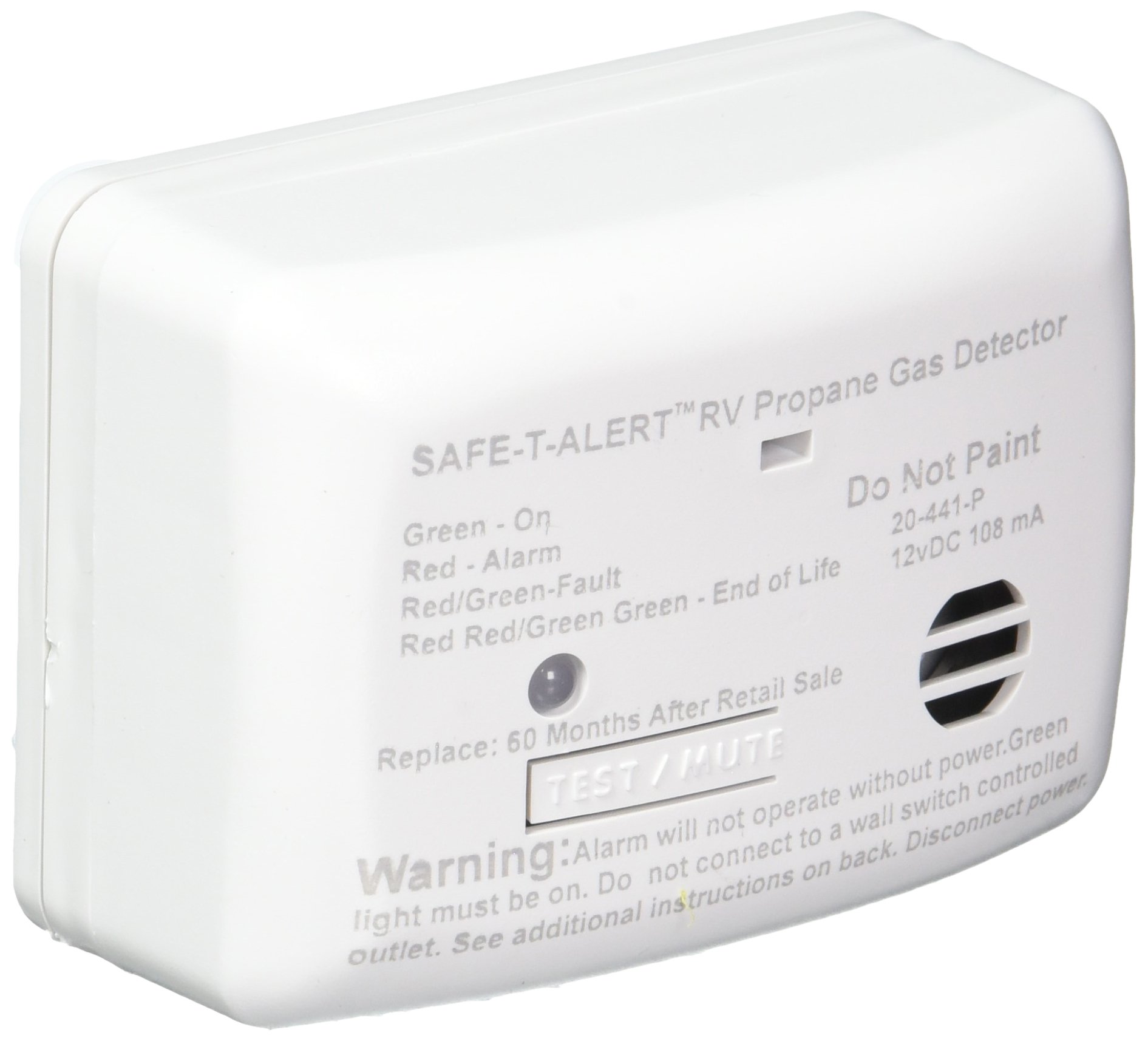
The 20441PWT is a no-frills propane-specific alarm for RVs and travel trailers that already have a compatible backplate. It snaps directly onto the existing mount without removing the old plate, making replacement a two-minute job. The white housing suits modern camper interiors, and the 12V DC operation ties into your trailer’s electrical system for continuous monitoring.
Customers report that it’s a perfect match for expired propane detectors in popular camper brands, including Solis and other models where the original unit reached end-of-life. The alarm triggers when propane concentration approaches explosive levels, and the test button confirms functionality during routine safety checks.
The primary limitation is that it detects propane only—no carbon monoxide or natural gas—so you’ll still need a separate CO alarm. Some users experienced false alarms at 3-4 AM after five years of use, which signals time for replacement rather than a defect. For a simple, cheap, and direct-fit propane alarm in a travel trailer, this gets the job done.
Why it’s great
- Direct snap-on replacement for many camper propane alarms
- Simple installation—no rewiring required with existing plate
- Inexpensive entry into continuous propane monitoring
Good to know
- Propane-only detection—no CO or natural gas coverage
- May false-alarm at end of sensor life (around 5 years)
FAQ
Will a natural gas detector also find propane leaks?
How long does a gas leak detector sensor last before it needs replacement?
Why does my gas detector go off even when there’s no leak I can smell?
Final Thoughts: The Verdict
For most users, the gas leak detector winner is the TopTes PT520A+ because its 17-inch bendable gooseneck and USB-C rechargeability give you the reach and convenience to find leaks in any tight space without battery waste. If you want a numerical %LEL readout in a compact pocket-friendly package, grab the TopTes PT205. And for always-on whole-home protection that covers both carbon monoxide and explosive gas, nothing beats the plug-in simplicity of the Kidde KN-COEG-3.