
Renting a two-person auger for every fence post or tree planting is a costly delay, and a manual post hole digger guarantees a sore back by lunch. You need a machine that handles the gas, the torque, and the kickback so you can focus on the job instead of fighting the tool. The right gas powered auger turns a weekend-long dig into a morning’s work, but only if the engine, bit, and vibration damping match your soil and stamina.
I’m Mohammad Maruf — the founder and writer behind Drink4Good. I’ve spent years analyzing small-engine power equipment, digging through torque curves, gear ratios, and blade metallurgy to separate weekend workhorses from real professional-grade kit.
Whether you are sinking fence posts in rocky pasture or planting a row of shrubs in heavy clay, the right preparation and tool selection make the difference between a clean hole and a busted wrist. After testing and researching dozens of models, I have narrowed the field down to the nine best gas powered auger options that offer real power without punishing your body.
How To Choose The Best Gas Powered Auger
A gas powered auger is a heavy-duty investment, so choosing based on simple engine size alone can lead to buyer’s remorse. The balance between power (torque), weight, vibration control, and bit compatibility determines whether a machine feels like a precision tool or a runaway beast. Here are the specs that matter most for this narrow category.
Engine Displacement and Starting System
Engine size measured in cubic centimeters (cc) directly correlates to available torque. A 43cc unit is adequate for light yard work and soft soil, while 78cc models power through hard clay and tree roots. Look for a primer bulb and an easy-pull recoil starter — gas augers with 50:1 or 40:1 mix ratios start consistently when the fuel path is primed properly.
Bit Design and Replaceable Blades
Not all auger bits are equal. Dual-spiral (double-flight) bits excavate faster and reduce the force needed to lift dirt out of the hole. Replaceable fishtail points and serrated blades extend bit life dramatically, especially in rocky ground. Standard 36-inch bits work for most fence-post depths, but an extension rod is critical if you plan to dig past 30 inches.
Vibration Damping and Operator Safety
The biggest physical pain with a gas auger is the kickback when the bit snags a root or rock. A centrifugal clutch that slips on sudden impact and a built-in shock spring (often called a Flex Coil or kickback spring) protect your wrists and shoulders. Foam-grip handles with anti-vibration inserts reduce fatigue during long digging sessions.
Quick Comparison
On smaller screens, swipe sideways to see the full table.
| Model | Category | Best For | Key Spec | Amazon |
|---|---|---|---|---|
| Earthquake E43 | Premium | One-person precision digging | 43cc Viper / 8” bit included | Amazon |
| EARTHQUAKE Dually 10310 | Premium | One or two-person heavy digging | 52cc / 5-year warranty | Amazon |
| PROYAMA 54cc | Premium | Versatile multi-bit projects | 54cc / 4 bits 4”-12” | Amazon |
| Garden Trax 52cc Dual | Mid-Range | Double excavation speed | 52cc / Dual-spiral bit | Amazon |
| Baotree 78cc 4-Stroke | Premium | Clean operation, no mix | 78cc 4-stroke / 2 bits + rods | Amazon |
| 78CC 4-Stroke Prowoo | Premium | Heavy clay continuous work | 78cc 4-stroke / low noise | Amazon |
| 72CC 2-Stroke Kit | Mid-Range | High power with accessory kit | 72cc / 2 bits + extension rod | Amazon |
| Baotree 68cc 4-Stroke | Mid-Range | 4-stroke efficiency kit | 68cc 4-stroke / 2 bits + rods | Amazon |
| Garden Trax 43cc | Budget | Budget-friendly light digging | 43cc / 8” bit included | Amazon |
In‑Depth Reviews
1. Earthquake E43

The Earthquake E43 stands out for its perfect balance of manageable weight and dependable torque. Its 43cc Viper engine starts easily thanks to a primer bulb and quick-pull recoil, and the industrial air filtration keeps dust out of the carburetor even in dry, silty soil. The 8-inch auger bit included is built with a hardened fishtail point and replaceable blades, so you can keep cutting without buying a new bit after a heavy job.
In real-world use, the E43 drives through heavy clay up to 30 inches deep without bogging down, though packed clay requires a plunging motion to clear the flutes. The anti-vibration foam grips and Flex Coil shock absorber noticeably reduce wrist fatigue, which is critical during a long afternoon of drilling fence posts. The welded steel handlebars feel solid and resist bending under sudden torque.
The only trade-off is that the plastic throttle lever feels slightly light compared to all-metal controls on larger units. It may struggle if you try to use a 12-inch bit in hard soil, but for 6-8 inch holes — the most common size for residential fencing and planting — it is a reliable, well-built machine that earns its reputation.
Why it’s great
- Starts easily even in cold weather
- Replaceable auger blades extend tool life
- Powder-coated finish resists rust
Good to know
- Plastic throttle lever feels less durable
- Not ideal for bits larger than 8 inches in clay
2. EARTHQUAKE Dually 10310
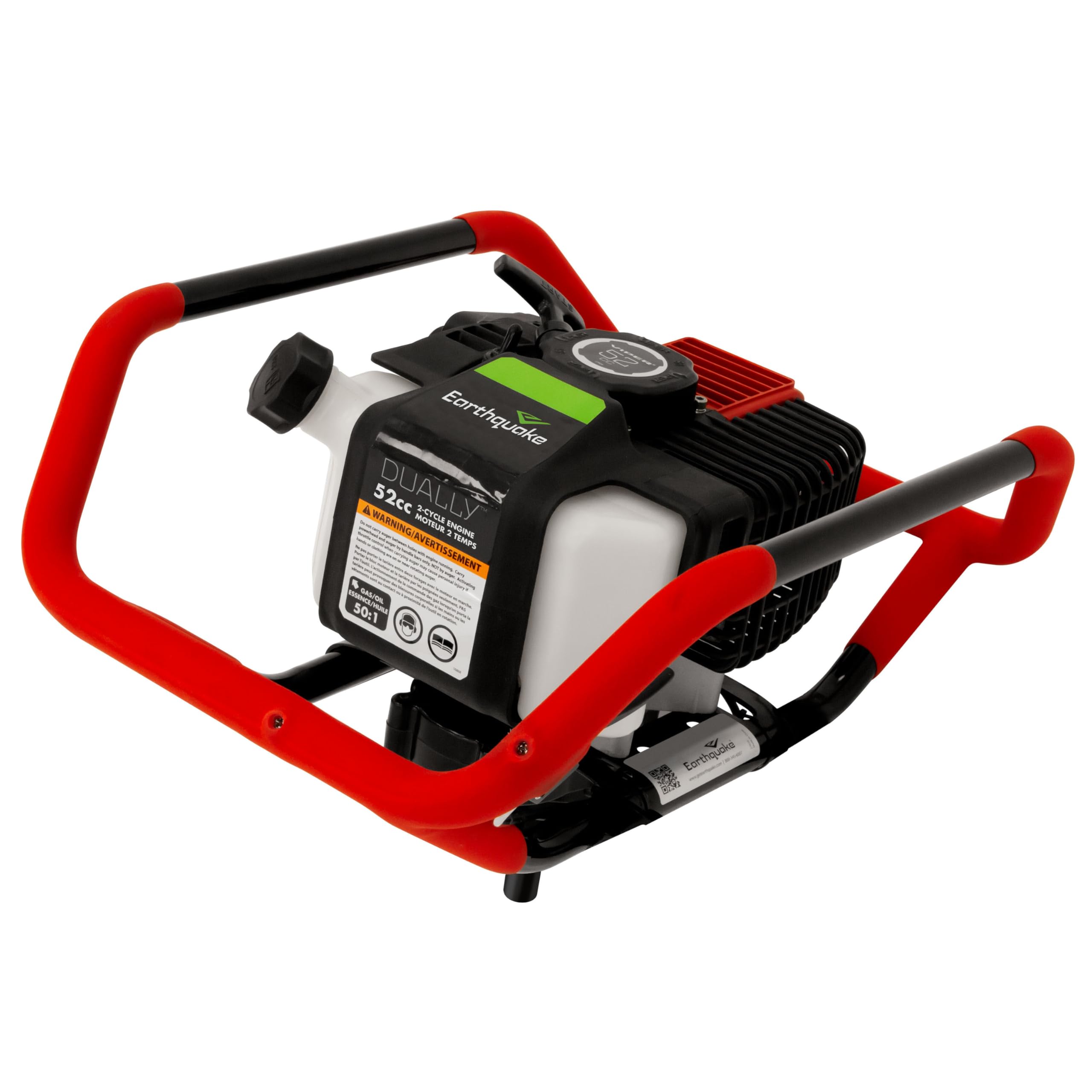
The EARTHQUAKE Dually is built for the toughest digging scenarios, with a 52cc Viper engine and a 5-bearing transmission that delivers smooth power transfer even under heavy load. Unlike many powerhead-only units, this one is designed for both one-person and two-person operation, with dual throttle controls mounted on the handlebars for either hand position. The centrifugal clutch slips on sudden impacts to reduce kickback injuries — a critical safety feature in rocky soil.
Users consistently report drilling 30-inch deep fence holes through wet clay and small roots without bogging down. The industrial air filtration system keeps fine dust from clogging the engine, which is a common failure point on cheaper augers. The handlebars are virtually indestructible, wrapping around the engine to protect the carburetor and starter housing during transport and rough storage.
Note that this model ships as a powerhead only — you will need to purchase auger bits separately. Some users have reported wiring issues with the throttle kill switch on early units, so check the connections before your first start. For large projects like whole-property fencing, pairing this powerhead with a 8- or 10-inch bit is a winning combination.
Why it’s great
- 5-year limited warranty backs the investment
- Centrifugal clutch reduces kickback danger
- One or two-person operation flexibility
Good to know
- Auger bits sold separately
- Occasional wiring issues reported
3. PROYAMA 54cc
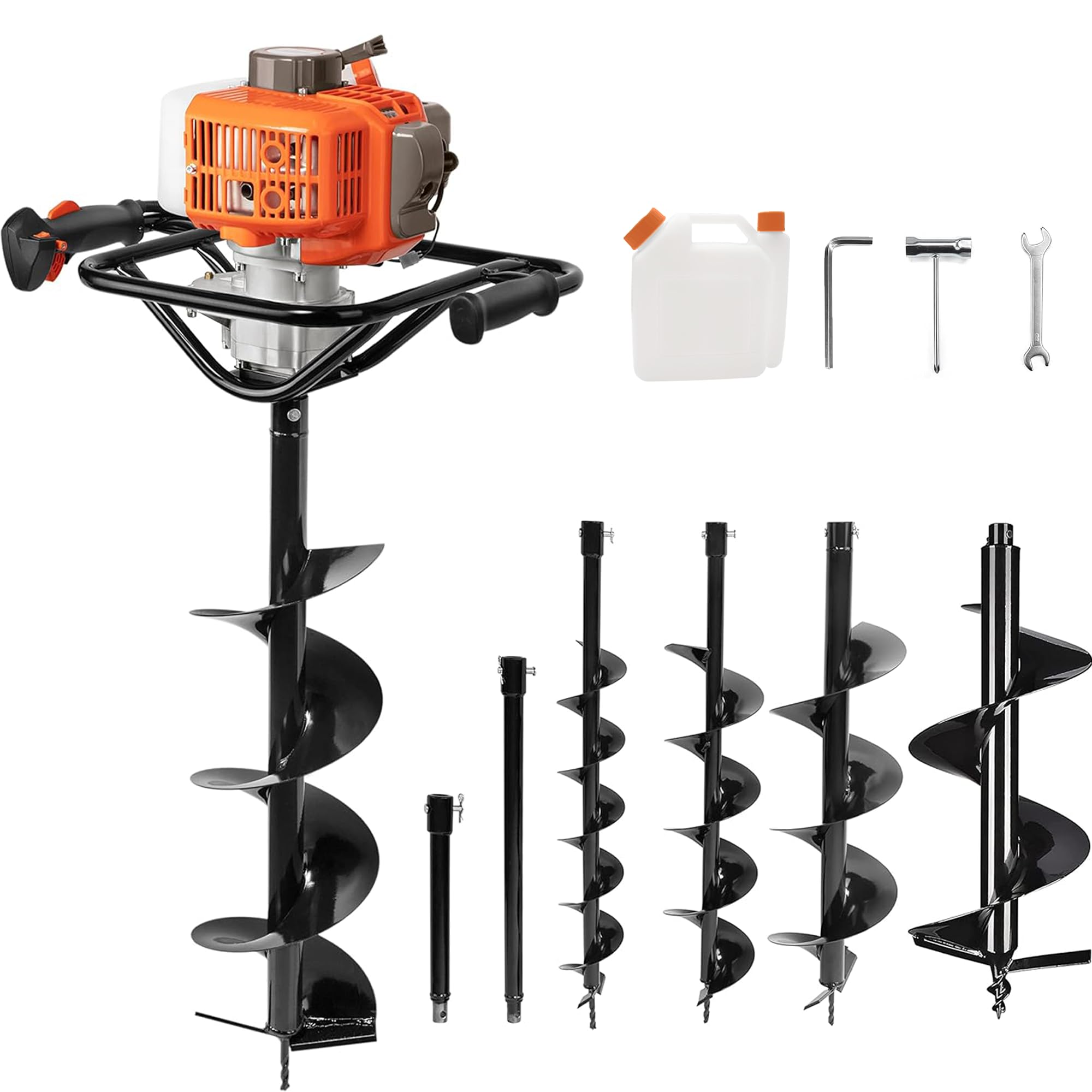
The PROYAMA 54cc delivers 2.4 HP from its 2-cycle engine and comes with an impressive four bits (4, 6, 8, and 12 inches) plus extension rods, making it the most versatile kit for different hole diameters. The EPA-certified engine runs cleaner than many unregulated imports, and the 50:1 mix ratio is standard for easy fuel preparation. Its ergonomic handles with anti-vibration grip provide decent leverage, though the true value here is the breadth of included accessories.
In field use, the 12-inch bit will tear through loose topsoil and sandy loam without issue, but the 54cc displacement can struggle when you push the largest bit through hard clay — you will need to clear the flutes frequently. The included extension rods allow drilling past 36 inches, which is helpful for deep fence posts in frost-prone areas. Users report the machine starts on 2-3 pulls with the primer bulb primed properly.
The main concern is customer support responsiveness; some buyers report difficulty reaching the seller for warranty issues, and the extension rod has been reported to bend under extreme torque in rocky ground. If you primarily work in medium-density soil and need multiple bit sizes at the ready, the PROYAMA kit offers excellent per-bit value.
Why it’s great
- Four bits cover all common hole sizes
- Extension rods included for deep digging
- EPA-certified engine reduces emissions
Good to know
- Largest bit bogs in hard clay
- Some customer support responsiveness issues
4. Garden Trax 52cc Dual-Spiral
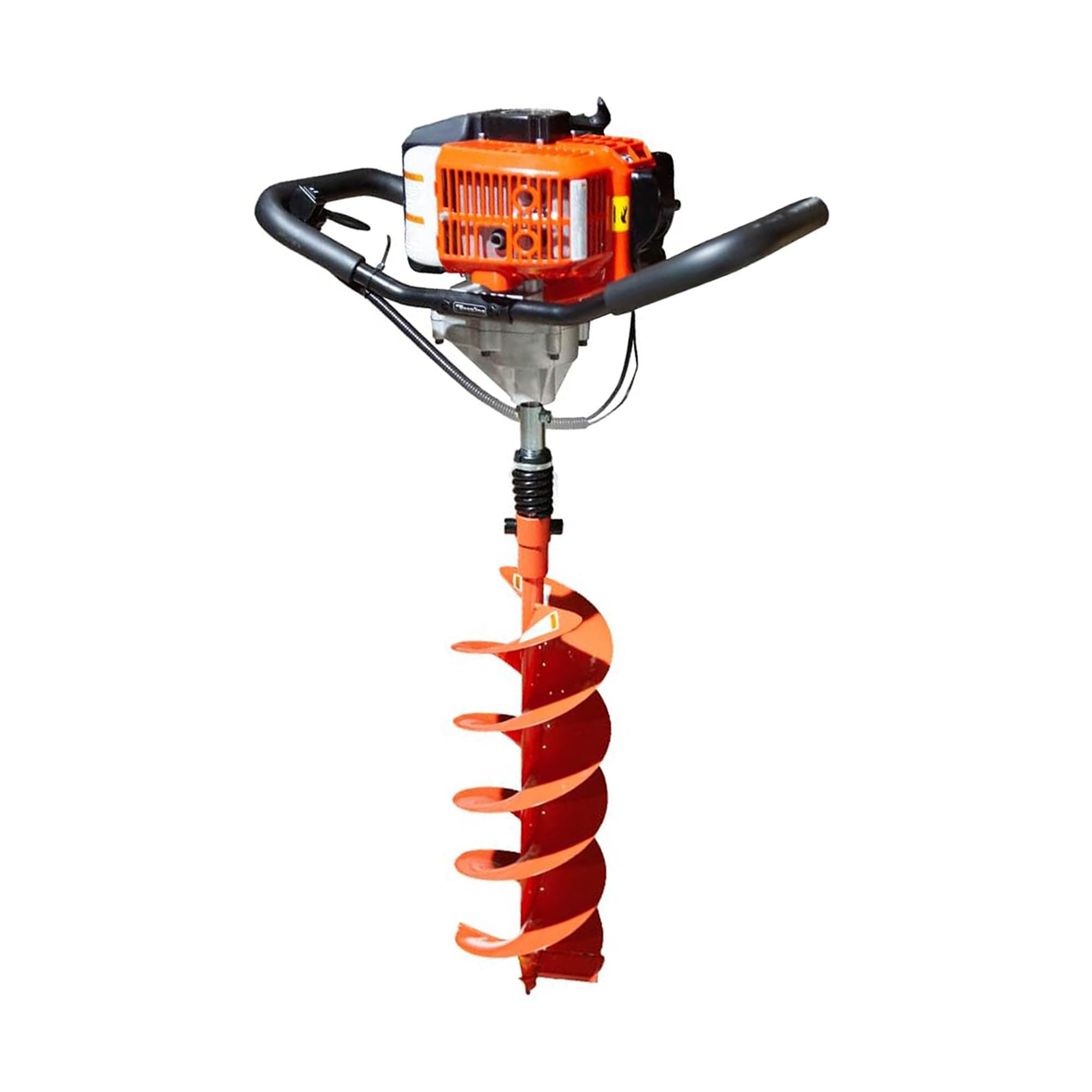
The Garden Trax 52cc distinguishes itself with a dual-spiral (double-flight) bit design that excavates twice the dirt per revolution compared to a standard single-spiral auger. This means less lifting force on the operator and faster hole completion in sandy or loamy soil. The 52cc 2-stroke engine is paired with an anti-shock patented spring that absorbs sudden torque spikes, significantly reducing the jarring sensation when hitting a root.
Users praise the shock absorber for making a noticeable difference during long days of planting — several reviewers reported drilling over 80 holes for arborvitae with minimal shoulder pain. The quick-pull recoil starter fires reliably in cold weather, which is common for 2-stroke engines with proper fuel mix. The 8-inch bit included is made from thicker steel than many budget options, resisting bending in rocky patches.
The biggest design flaw is the exhaust outlet, which is directed toward the operator rather than away. This means you will be breathing fumes if you work in still air. It is also worth noting that the dual-spiral bit generates more drag in extremely sticky clay, requiring frequent pull-outs to clear the flutes. For soft to medium soil, the digging speed advantage is undeniable.
Why it’s great
- Dual-spiral bit doubles excavation speed
- Shock absorber protects wrists
- Thicker bit metal resists bending
Good to know
- Exhaust blows toward operator
- Dual-spiral can clog in heavy clay
5. Baotree 78cc 4-Stroke
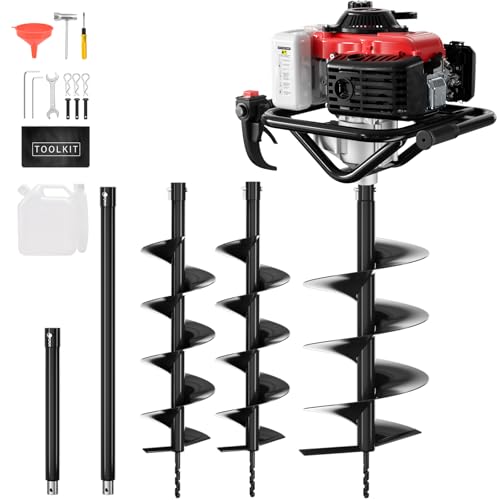
The Baotree 78cc switches to a 4-stroke engine, eliminating the need to mix oil and gas — just fill with straight unleaded fuel. This is a major convenience for users who dislike the mess and inconsistency of mixing 2-stroke fuel. The 78cc displacement provides abundant torque for cutting through hard clay and roots up to half an inch thick, and the included 6- and 8-inch bits cover the most common fence and planting hole sizes.
In practice, the 4-stroke engine runs noticeably quieter and produces less smoke than equivalent 2-stroke models, making it more pleasant for prolonged use near living areas. The two extension rods allow drilling depth beyond 36 inches, which is essential for setting posts in deep frost-line areas. Assembly is straightforward, and the manual recoil start system fires reliably after priming.
Some users note that the 4-stroke engine adds weight compared to a same-displacement 2-stroke, and the odd fuel mixture ratio (some units specify a non-standard ratio for their 2-stroke counterparts) causes confusion for first-time buyers. The cold-start procedure is also a bit more involved than a simple 2-stroke primer bulb system. For those prioritizing clean, low-maintenance operation, the Baotree is a strong contender.
Why it’s great
- No fuel mixing needed — pure gas
- Quieter and cleaner than 2-stroke engines
- High torque for deep clay drilling
Good to know
- Heavier than equivalent 2-stroke
- Cold-start can be finicky
6. 78CC 4-Stroke Prowoo
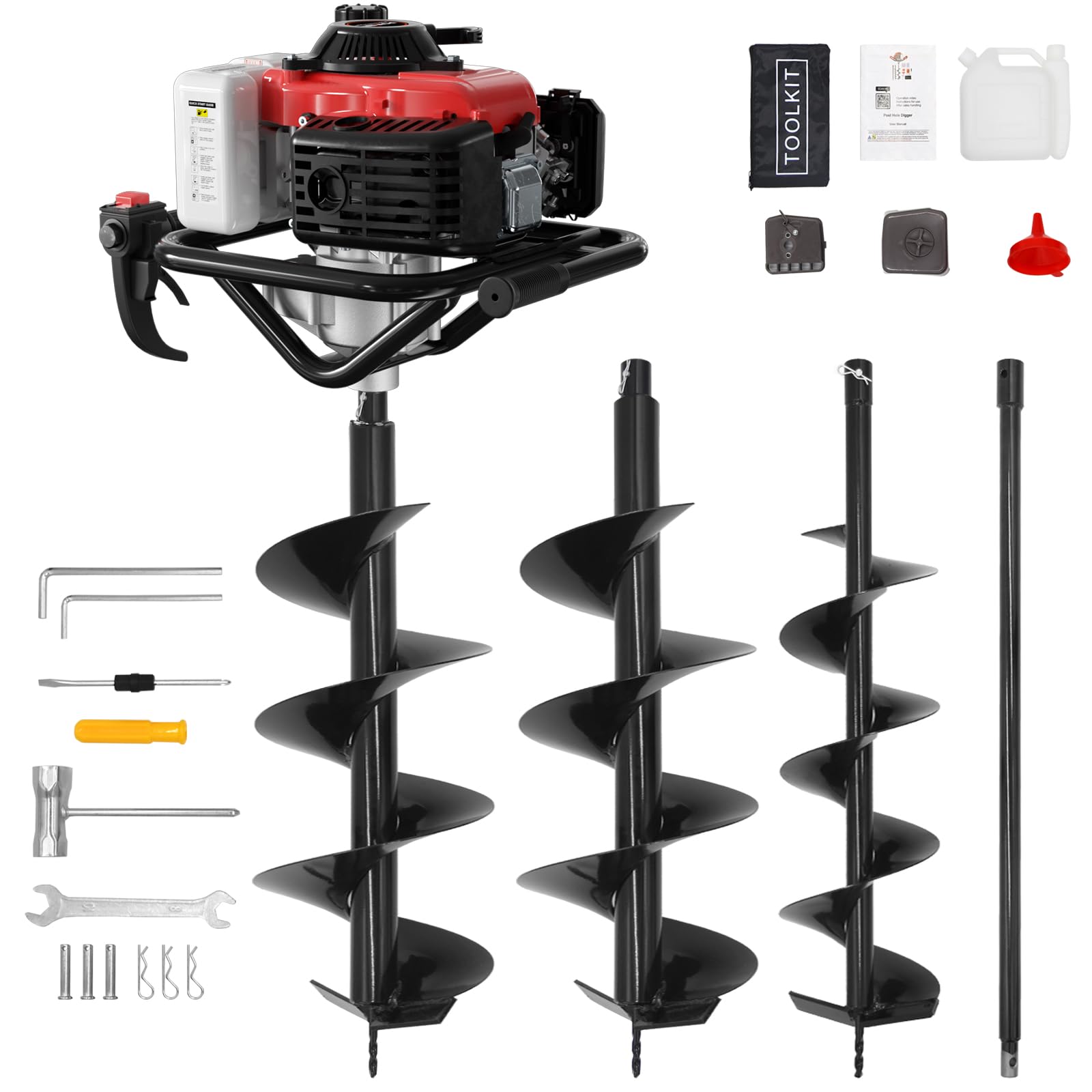
The Prowoo 78CC is purpose-built for continuous digging in the worst soil conditions, with a 4-stroke engine that reduces noise and smoke output significantly. Users in North Carolina report it chews through hard red clay for over 40 large shrubs and trees without overheating.
The accessory kit includes 6- and 8-inch bits and an extension rod, covering most residential and landscaping needs. The single-person operation is genuinely feasible thanks to the manageable weight distribution, though the 78cc engine does have authority that demands a firm grip. The manual recoil starter reliably fires on the second pull when cold, and the large fuel tank supports prolonged operation without mid-job refueling.
Potential buyers should know that the 8-inch bit can bend if you force it through large rocks — one user bent theirs in rocky ground and had to straighten it with a torch and hammer. The plastic throttle trigger also requires gentle handling to avoid breakage. If you need a reliable machine for large-scale clay digging and prefer the no-mix convenience of a 4-stroke, the Prowoo delivers.
Why it’s great
- 4-stroke runs clean and quiet
- Excellent vibration damping
- Handles continuous heavy use
Good to know
- Bits can bend in large rocks
- Plastic trigger needs gentle use
7. 72CC 2-Stroke Kit
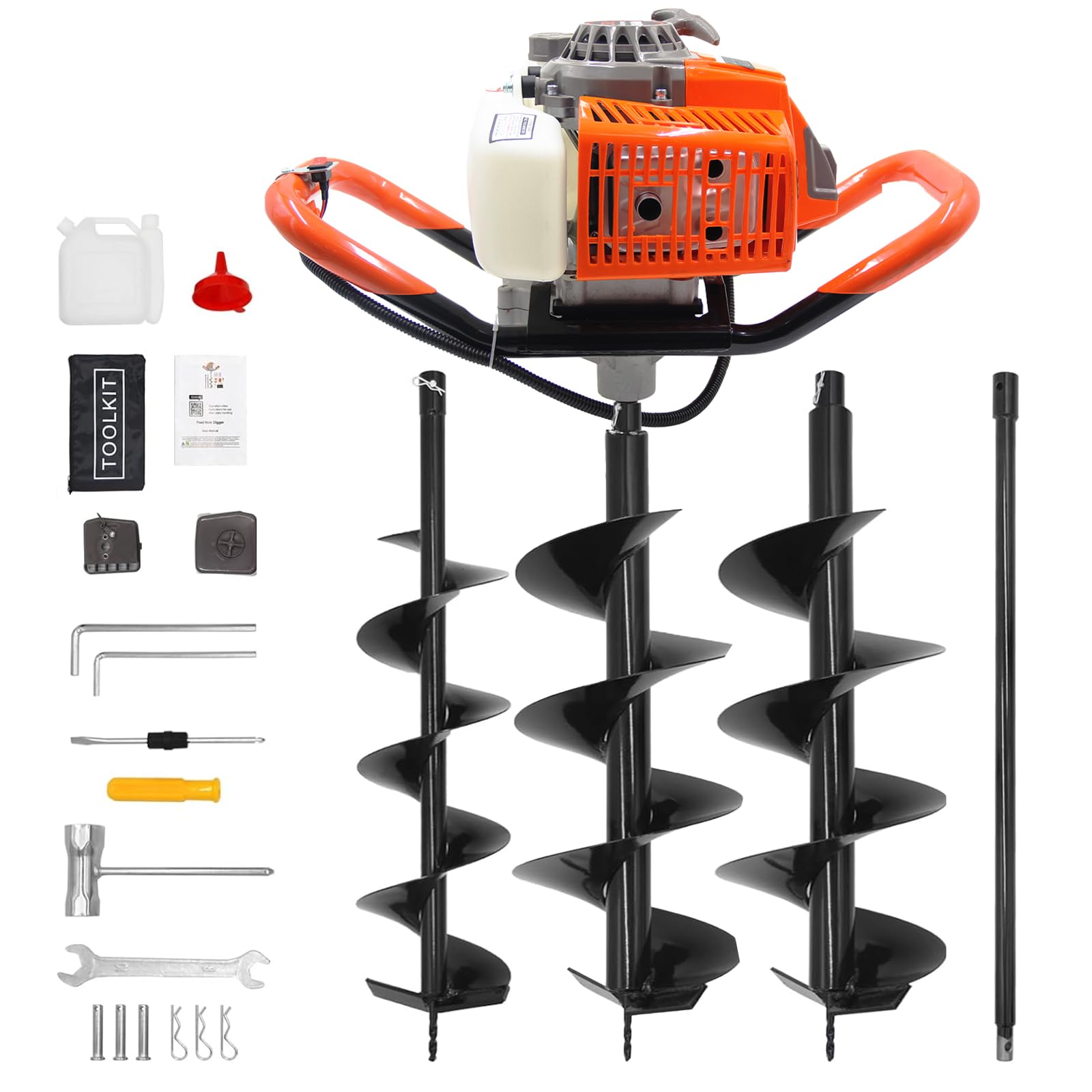
This 72cc 2-stroke kit delivers serious torque at a mid-range price point, with a 6- and 8-inch double-sheet drill bit set plus a 60cm extension rod. The 72cc displacement puts it in the heavy-duty class, capable of drilling 24-inch deep holes in under a minute even in clay with small rocks. The easy-grip finger throttle and ergonomic handles provide reasonable control, though the sheer power means it can snag and twist if not handled firmly.
Field reports from professional users — including a 14-year lineman — confirm the unit drills 4-foot deep, 12-inch holes with ease when fitted with a compatible bit. The manual recoil start is reliable, typically firing on the third pull out of the box and on the first pull when warm. The kit includes a fuel mixing bottle and tool kit for assembly, which simplifies the initial setup.
Some users have noted that the bottom tines on the included bits bend relatively easily in heavy soil — a quick fix is to cut off the bent time with an angle grinder. The throttle cable can also stick in the ON position if not lubricated before first use. For the power-to-cost ratio, this kit is hard to beat for medium-to-large fencing projects.
Why it’s great
- 72cc provides deep-digging torque
- Includes extension rod for deep holes
- Good power-to-cost value
Good to know
- Bit tines can bend in heavy soil
- Throttle cable may stick initially
8. Baotree 68cc 4-Stroke
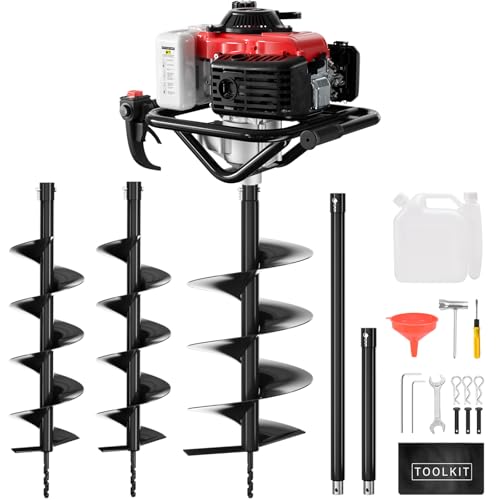
The Baotree 68cc is a 4-stroke option that fills the gap between entry-level 2-strokes and high-premium powerheads. Its 68cc engine provides sufficient torque for most residential projects, and the true benefit is the no-mix fuel convenience — simply pour straight gas and go. The kit includes 6- and 8-inch spiral bits plus two extension rods, giving you the flexibility to drill from 12 to 48 inches deep depending on rod configuration.
Users report drilling 2-foot deep fence post holes in under a minute, even cutting through half-inch roots without slowing down. The assembly is straightforward with clear instructions, and the unit is robust enough for frequent use. The ergonomic foam-grip handles are comfortable, and the manual recoil start is reliable when the fuel system is primed correctly.
The main downside is the cold-start procedure, which some users find more difficult compared to a 2-stroke with a primer bulb. The odd fuel mixture ratio listed in some documentation (for a different variant) causes confusion, but this 4-stroke model requires no oil mix at all. For homeowners who want the cleanliness of a 4-stroke without the premium price, the Baotree 68cc delivers solid performance.
Why it’s great
- Convenient straight-gas operation
- Two extension rods for deep drilling
- Good mid-range power output
Good to know
- Cold-start can be challenging
- Some documentation confusion about mix
9. Garden Trax 43cc
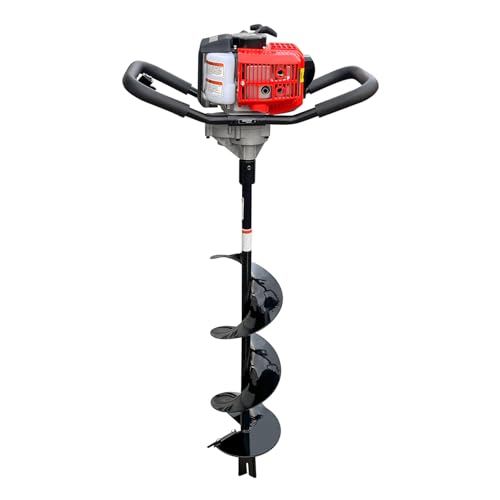
The Garden Trax 43cc is the entry-level option that punches above its weight class for light-duty digging. Its 43cc 2-cycle engine delivers enough torque for fence post holes and tree planting in loam, sandy soil, or moderately soft clay, and it comes ready with an 8-inch spiral bit. The full-wrap foam grips with built-in shock absorption reduce hand fatigue, making it a viable option for weekend warriors tackling a dozen holes or so.
Real-world users report the unit starts in 2-3 pulls even after sitting for a season, and it tears through roots up to 1.5 inches without stopping. The 7/8-inch output shaft fits most standard auger bits, so you can swap in a 6- or 4-inch bit for smaller projects. The replaceable fishtail point is a smart feature at this price point, extending the bit life significantly.
The downside is clear when you hit true hardpan or large rock gardens — the 43cc engine simply lacks the torque to maintain speed, and the clutch stops engaging on oversized rocks. For deep holes beyond 36 inches, the lack of an included extension rod is limiting. For light to medium duty work on a budget, the Garden Trax is a solid choice, but serious diggers will quickly outgrow it.
Why it’s great
- Lightweight and easy to transport
- Low vibration foam grips
- Replaceable fishtail point
Good to know
- Struggles in hardpan and large rocks
- No extension rod included
FAQ
Can I use a gas powered auger in rocky soil?
What fuel mix does a 2-stroke gas auger need?
How do I reduce vibration and arm fatigue while digging?
Final Thoughts: The Verdict
For most users, the gas powered auger winner is the Earthquake E43 because its 43cc Viper engine strikes the ideal balance of starting reliability, torque, and vibration control for residential and light commercial work. If you want the versatility of multiple bit sizes out of the box, grab the PROYAMA 54cc with its four-bit kit. And for the hardest clay digging without fuel mixing hassles, nothing beats the Prowoo 78cc 4-Stroke for clean, continuous operation.