
A garden plot that looks like concrete, a new flower bed that refuses to yield, or an overgrown patch of sod that laughs at a shovel — this is the reality a gas tiller cultivator is built to conquer. Unlike electric units that fade when the soil turns tough, these machines deliver raw, consistent torque, making them the go-to choice for anyone serious about preparing ground without spending an entire weekend wrestling with a manual tool. The right unit transforms a punishing chore into a satisfying, productive session.
I’m Mohammad Maruf — the founder and writer behind Drink4Good. I’ve spent years analyzing the engineering and market data behind power gardening equipment, focusing on the specific metrics that separate a reliable long-term investment from a frustrating season-ender.
Whether you’re expanding a vegetable plot or maintaining established rows, finding the right tool comes down to engine displacement, tine design, and transmission type. This analysis cuts through the marketing to deliver a clear verdict on the best gas tiller cultivator for every size of garden and every type of soil.
How To Choose The Best Gas Tiller Cultivator
Choosing a gas tiller cultivator is about matching the machine’s core specs to your soil type and garden size. A unit that excels in a soft, prepped flower bed will struggle mightily in hard, rocky clay. Focus on these four areas to make sure you buy the right tool the first time.
Engine Displacement: The True Measure of Grunt
Engine size is measured in cubic centimeters (cc). For light cultivating in already-soft soil, a 25cc to 46cc engine is sufficient. For breaking new ground, rocky soil, or heavy clay, you want a 79cc to 212cc engine. A tiller with insufficient power for your soil will bog down, forcing you to make multiple passes and causing unnecessary wear. Never underestimate the amount of power needed for your specific plot.
Front-Tine vs. Rear-Tine: Matching Drive to Task
Front-tine tillers are lighter, more maneuverable, and ideal for smaller gardens, raised beds, and cultivating between rows. The tines pull the machine forward, which can be physically demanding. Rear-tine tillers are heavier, self-propelled, and designed for larger areas and breaking tough ground. They offer better balance, deeper tilling, and are far less taxing on the user over long sessions. A rear-tine unit is the right choice for a 1,000+ square foot garden or soil that resembles concrete.
Tine Design and Material
The tines are the only thing touching your soil, so their build quality matters enormously. Forged steel tines are significantly more durable and resistant to bending than stamped steel tines. Look for bolt-on tines rather than welded ones; this allows you to replace individual tines if they wear out or hit a rock. The tilling width (typically 11 to 21 inches) determines how quickly you can cover ground, while the tilling depth (6 to 11 inches) dictates how well you can break up compacted subsoil.
Transmission: Belt vs. Gear Drive
Belt-driven transmissions are common on budget and mid-range tillers. They are quieter and absorb shock well, but belts can slip under heavy load and require periodic replacement. Gear-drive transmissions, found on more premium units, offer direct power transfer, higher torque at the tines, and virtually zero maintenance. For anyone planning to use a tiller for more than one or two seasons on tough soil, the premium for a gear-drive transmission is easily justified by long-term reliability.
Quick Comparison
On smaller screens, swipe sideways to see the full table.
| Model | Category | Best For | Key Spec | Amazon |
|---|---|---|---|---|
| Earthquake Badger 41080 | Front-Tine | Heavy soil in medium gardens | 160cc Viper engine | Amazon |
| NOVUS Rear Tine NV18DRTG | Rear-Tine | Large gardens & tough sod | Gear drive transmission | Amazon |
| Earthquake Versa 20015 | Front-Tine | Clay soil & deep tilling | 99cc, 11″ tilling depth | Amazon |
| TAZZ 2-in-1 35310 | Front-Tine | Versatile tilling & cultivating | Bronze gear transmission | Amazon |
| NOVUS 2-in-1 NV17FTG | Front-Tine | Adjustable row cultivating | Never-flat wheels | Amazon |
| Honda FG110 | Mini Front-Tine | Raised beds & soft soil | 25cc, 29 lbs | Amazon |
| SENIX TL4QL-L1 | Front-Tine | Small plots, no-mix fuel | 46cc 4-cycle engine | Amazon |
| YARDMAX YT4565 | Rear-Tine | Breaking hard ground | 212cc dual rotating tines | Amazon |
| Pulsar PTG1120R | Rear-Tine | Large area soil preparation | Counter-rotating tines | Amazon |
In‑Depth Reviews
1. Earthquake Badger Front Tine Tiller 41080
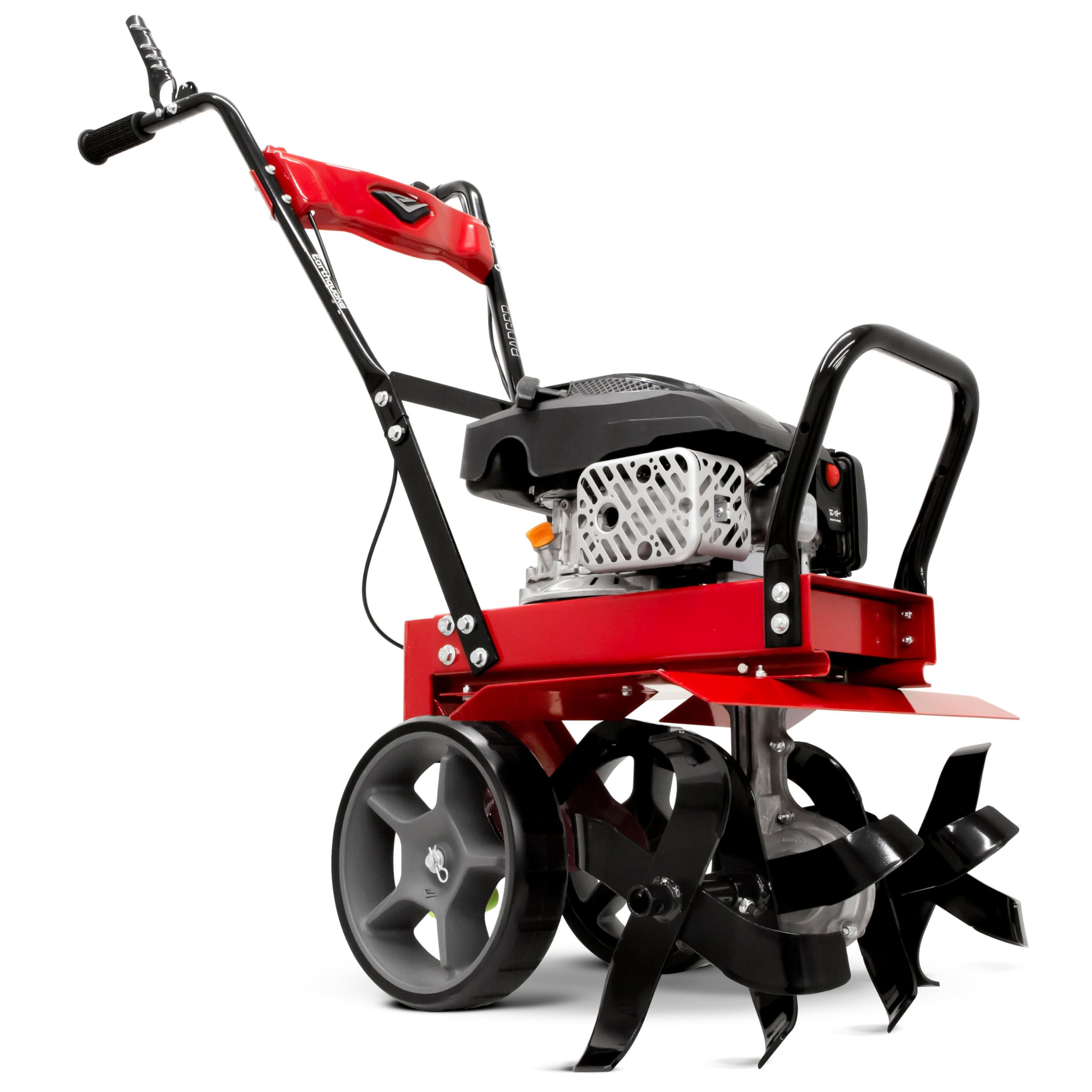
The Earthquake Badger sits at the sweet spot of the front-tine category with its 160cc Viper engine — a displacement that offers significantly more grunt than the 79cc class without jumping into the heavy, expensive rear-tine segment. The engine is responsive, starting reliably after a few primes, and it chews through compacted soil and clay with authority. The all-steel construction, including forged tines, gives the machine a durable, solid feel that inspires confidence when breaking ground.
The two-position wheel assembly is a standout design feature. In the forward position, you can roll the machine around the yard with minimal effort. When you flip the wheels to the extended position, the center of gravity drops, providing far greater control and stability during deep tilling. This allows the user to focus on guiding the machine rather than wrestling it, even as the tines dig in at the maximum 11-inch depth. The tool-free tine adjustment is straightforward, letting you switch between an 11-inch and 21-inch width in seconds.
Customer reports confirm the powerful engine and solid build, though a few note that the included assembly instructions are not the clearest. A small number of units have arrived with minor shipping damage or missing hardware, but the 5-year limited warranty provides a solid safety net. The machine is heavy at 102 pounds, which aids stability during use but makes it less portable than smaller front-tine units. For medium to large gardens with tough soil, it represents a near-perfect balance of power, control, and long-term value.
Why it’s great
- 160cc engine provides ample power for heavy clay and rocky soil.
- Two-position wheels dramatically improve stability during deep tilling.
- Forged steel tines and all-steel frame are built for long-term durability.
- 5-year limited warranty offers excellent peace of mind.
Good to know
- Assembly instructions could be more detailed; expect a small learning curve.
- At 102 pounds, it is too heavy for easy transport without a vehicle.
2. NOVUS 18-Inch Dual Direction Rear Tine Tiller NV18DRTG
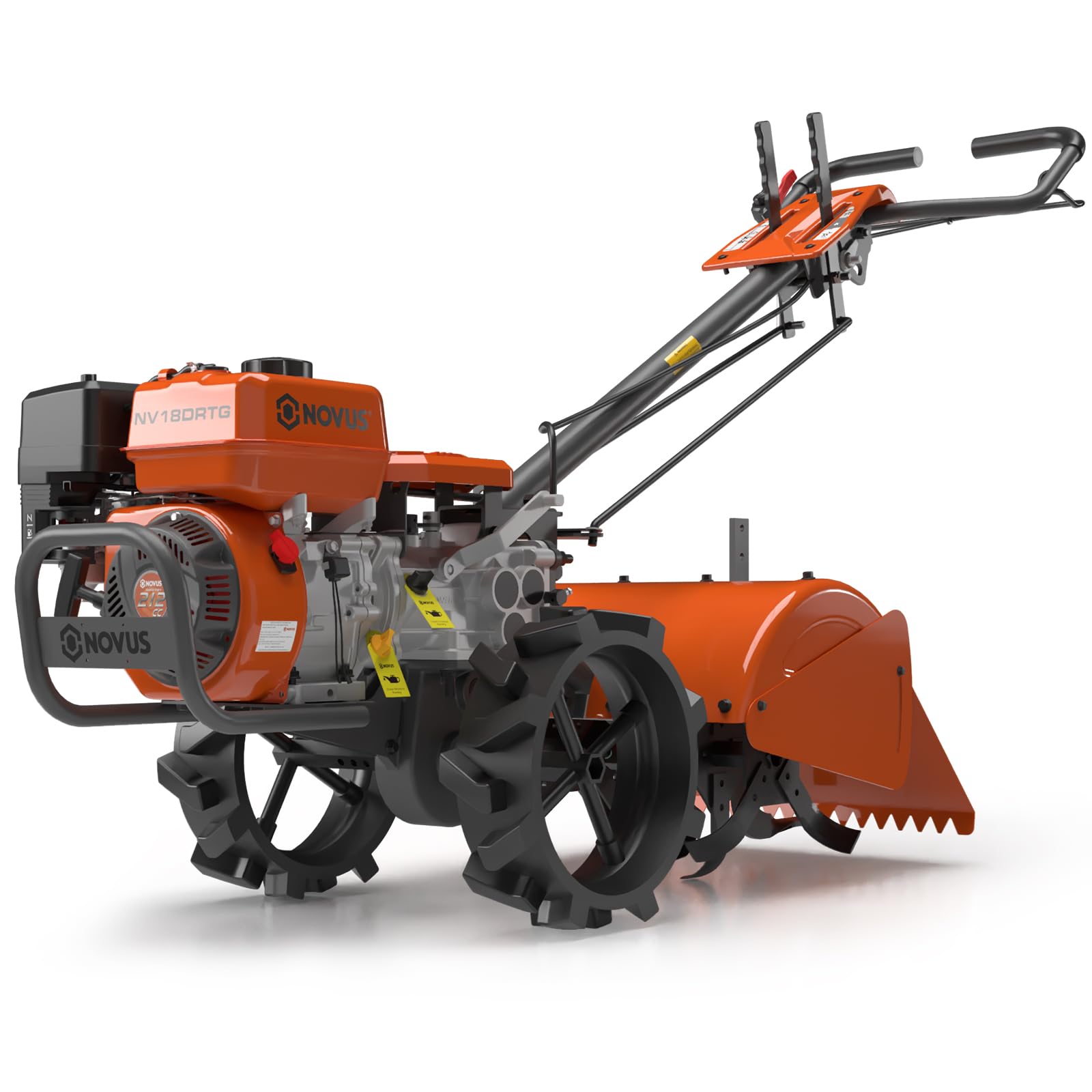
The NOVUS NV18DRTG is a serious rear-tine machine built for the gardener who needs to expand or maintain large plots. At its heart is a 212cc four-cycle engine mated to a full gear-drive transmission — a combination that delivers maximum torque to the tines with no belt to slip or replace. Sixteen durable steel tines, arranged for dual-direction rotation, allow you to choose standard rotation for cultivating existing beds or counter-rotation for breaking through tough, unworked sod and hardpan.
The user experience is defined by control. The handlebar features dual levers, allowing for one-handed operation, which makes turning at the end of a row smooth and natural. Two forward speeds and a reverse gear give you precise pace control, while the 8-position depth stake lets you dial in the tilling depth from shallow weeding up to a full 10 inches. The 18-inch tilling width is ideal for matching standard 36-inch row spacing, and the airless, never-flat tires eliminate the risk of a puncture mid-project.
Customer feedback is overwhelmingly positive, with owners praising the straightforward assembly (often completed in under 30 minutes with included fluids and tools), the reliable starting, and the machine’s ability to handle slopes and rocky soil without stalling. The gear-drive transmission is a major selling point for those who have experienced belt failure on other units. At 200+ pounds, this is not a machine you toss in the trunk — it requires a truck bed or trailer for transport. The 2-year warranty and US-based support provide a solid backstop.
Why it’s great
- Full gear-drive transmission eliminates belt maintenance and slippage.
- Dual-direction tines (standard and counter-rotation) handle both sod and existing beds.
- Dual lever handlebar allows easy one-handed operation and tight turns.
- Airless tires provide reliable mobility with no risk of flats.
Good to know
- Very heavy; requires a truck or trailer for transport.
- Premium tier investment best suited for large, serious gardens.
3. Earthquake Versa 2-in-1 Tiller Cultivator 20015

The Earthquake Versa is a workhorse that has earned a reputation for punching above its weight class. The high-performance 99cc Viper engine delivers power that feels closer to a 120cc unit, providing the torque needed to break through compacted clay and root-heavy soil. The tilling depth is adjustable up to 11 inches, and the tool-less removal of side shields and outer tines allows you to shift from a full 21-inch tilling width down to 11 inches for cultivating between established rows.
One of the most practical features is the onboard wheel assembly, which makes transporting this 78-pound machine around the yard far more manageable than front-tine models without wheels. The adjustable handlebar height accommodates users of different statures, reducing fatigue during longer sessions. The tines are durable and do a good job of breaking up soil clods, though some users report that vines and long roots can tangle around the tines, requiring periodic clearing.
Real-world owners consistently highlight the impressive power-to-price ratio. It starts reliably (often on the first or second pull) and handles tough Colorado clay without bogging down. The main point of caution is that bolts can loosen over time due to vibration, so regular tightening is a must. The drag stake position is critical — if it is set too shallow, the tiller can buck aggressively. Once dialed in, the Versa is a balanced, powerful machine that rivals units at twice the price.
Why it’s great
- 99cc engine provides surprising power for its size and weight class.
- Onboard wheels make transport easier than most front-tine tillers.
- 11-inch tilling depth is exceptionally deep for a front-tine model.
- Adjustable handlebar height improves ergonomics for different users.
Good to know
- Vibration can cause bolts to loosen; periodic tightening is required.
- Requires careful drag stake adjustment to prevent bucking.
4. TAZZ 2-in-1 Front Tine Tiller/Cultivator 35310
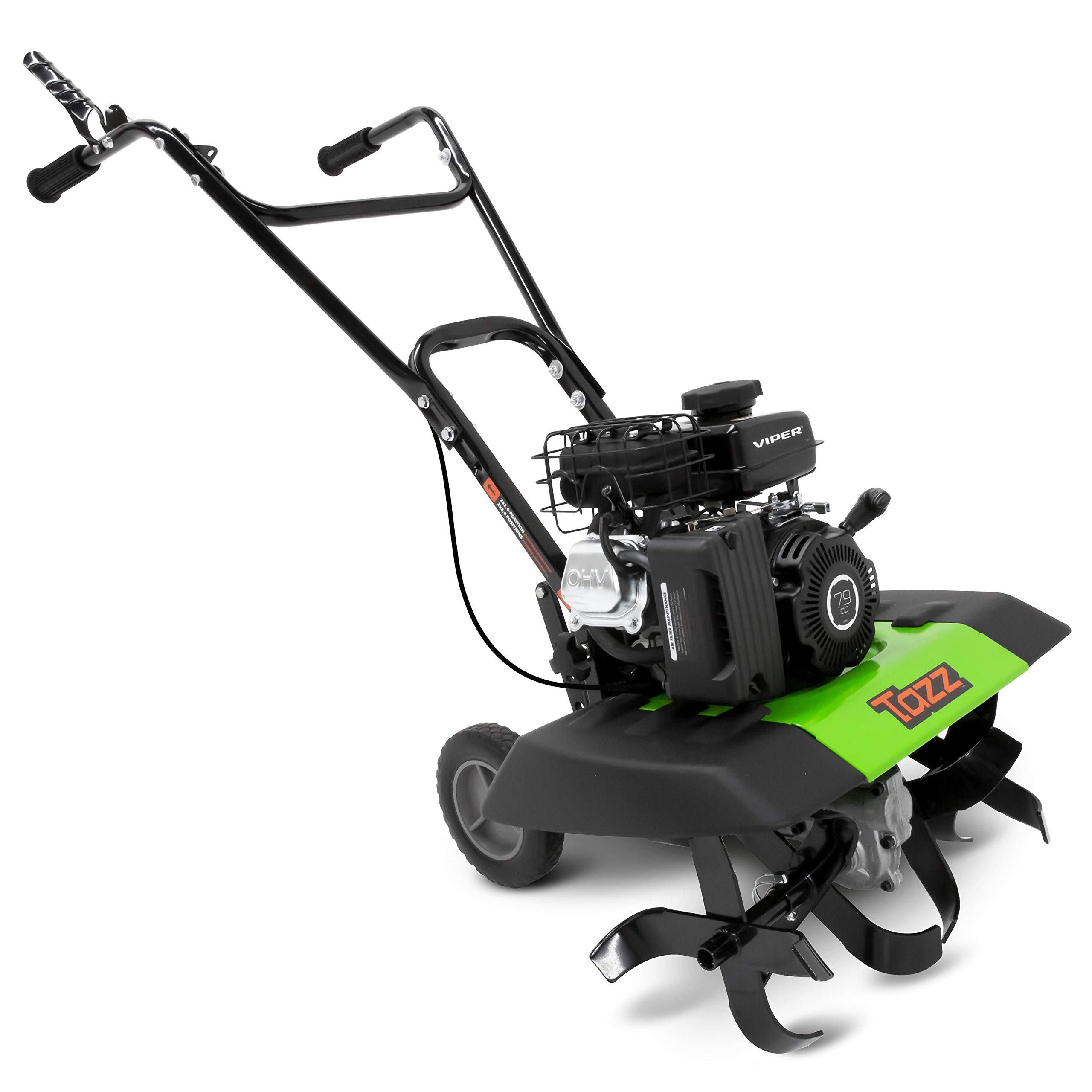
The TAZZ 35310 occupies a smart position in the market: it offers a bronze gear transmission — a meaningful upgrade over belt drives — at a price that undercuts most competitors with similar internals. The 79cc Viper engine is fuel-efficient and has proven to be a reliable starter, with many owners reporting first or second-pull starts even after seasonal storage when using ethanol-free gas. The forged steel tines are built to withstand rocks and roots without bending.
The 2-in-1 design is genuinely useful. Tool-less removal of the outer tines and side shields transforms the unit from a full 21-inch tilling width down to 16 or 11 inches for row cultivation. The four-position adjustable handlebar allows different users to find a comfortable operating height, which is a rare feature at this tier. The machine feels well-balanced for its size, with a low center of gravity that provides stable control at the end of rows.
Customer experiences confirm strong performance in hard-packed dirt, though it does require a couple of passes for the deepest results. The primary ergonomic drawback is the handle height, which some users find too low for comfortable extended use. Filling the oil is a bit tedious, often requiring the machine to be laid on its side. The 3-year limited warranty from a US-based support team adds confidence. For the price, the combination of a gear transmission and forged tines is hard to beat.
Why it’s great
- Bronze gear transmission is a durability upgrade over belt-driven competitors.
- Forged steel tines resist bending from rocks and roots.
- Tool-free tine removal makes width adjustment very quick.
- Four-position handlebar accommodates different user heights.
Good to know
- Handlebar height is on the lower side for tall users.
- Oil filling requires laying the machine on its side.
5. NOVUS 2-in-1 Gas Tiller NV17FTG
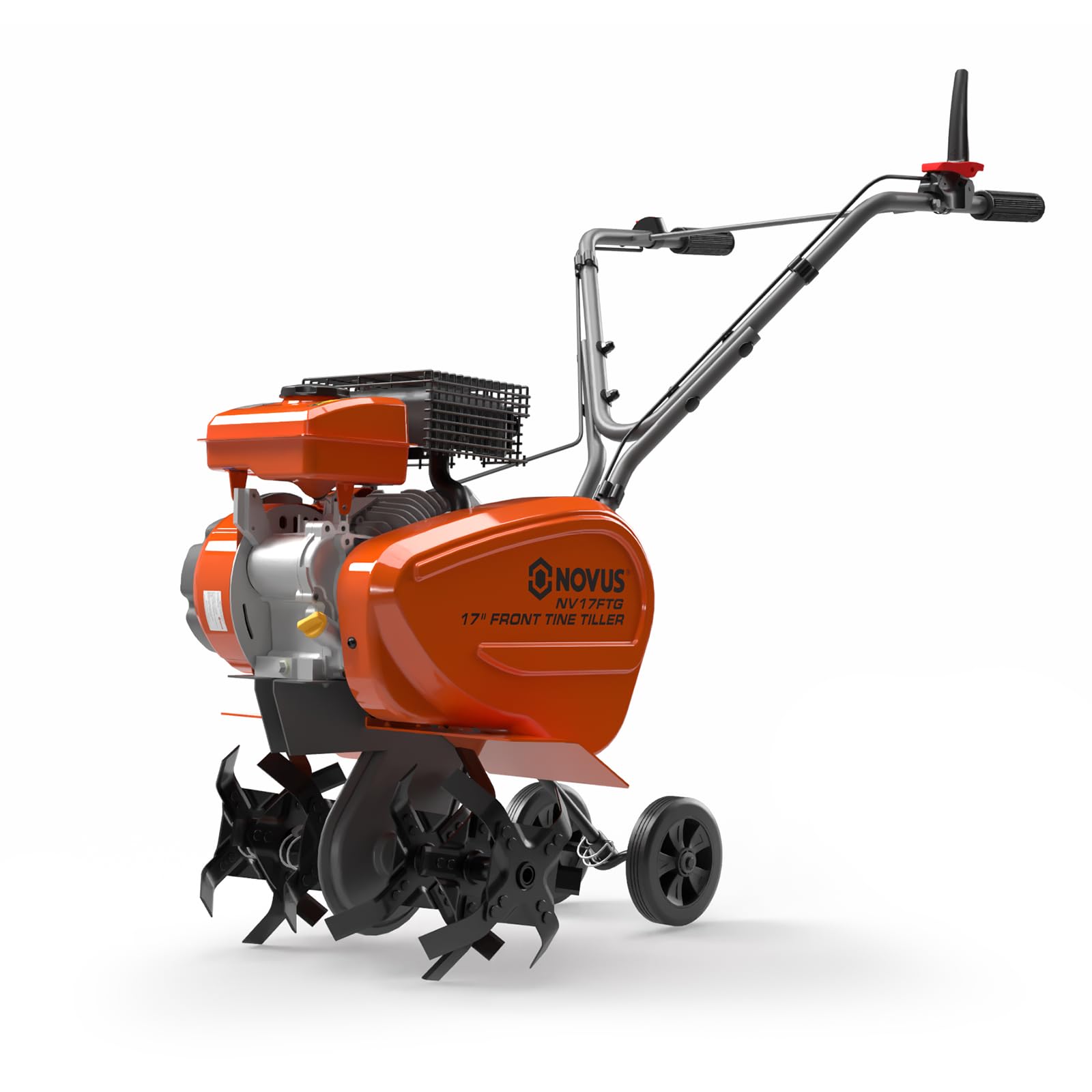
The NOVUS NV17FTG is built around convenience without sacrificing capability. Its 79cc four-cycle engine starts reliably, and the inclusion of a reverse gear — a feature typically reserved for more expensive rear-tine models — is a significant advantage for maneuvering in tight garden spaces. The 24 hardened steel tines provide aggressive soil penetration, and the tool-free outer tine removal allows for quick adjustments between 9, 14, and 17-inch tilling widths.
The 6-inch never-flat wheels are a practical upgrade over standard pneumatic tires. They provide smooth rolling over loose soil without the risk of a puncture, and they contribute to the machine’s balanced feel. The 2-in-1 design works well for both initial soil preparation and ongoing cultivation. The low center of gravity keeps the machine stable when the tines are engaged, reducing the effort needed to maintain a straight line at the end of rows.
User reviews appreciate the power-to-value ratio, calling it a capable machine for small to medium gardens. The reverse gear receives particular praise. A few owners note that the gas and oil caps can be prone to cross-threading if not aligned carefully, and some units have been reported with minor assembly issues like missing hardware. The US-based customer support team is responsive. This is a strong mid-range option that delivers premium features like reverse at a reasonable cost.
Why it’s great
- Reverse gear is a rare and valuable feature for a front-tine tiller.
- Never-flat wheels eliminate puncture concerns in rough terrain.
- 24 hardened steel tines provide aggressive, efficient soil breakup.
- Stable low center of gravity improves control during use.
Good to know
- Gas and oil caps require careful alignment to avoid cross-threading.
- Some units arrive with minor assembly issues or missing parts.
6. Honda FG110 Mini Tiller Cultivator
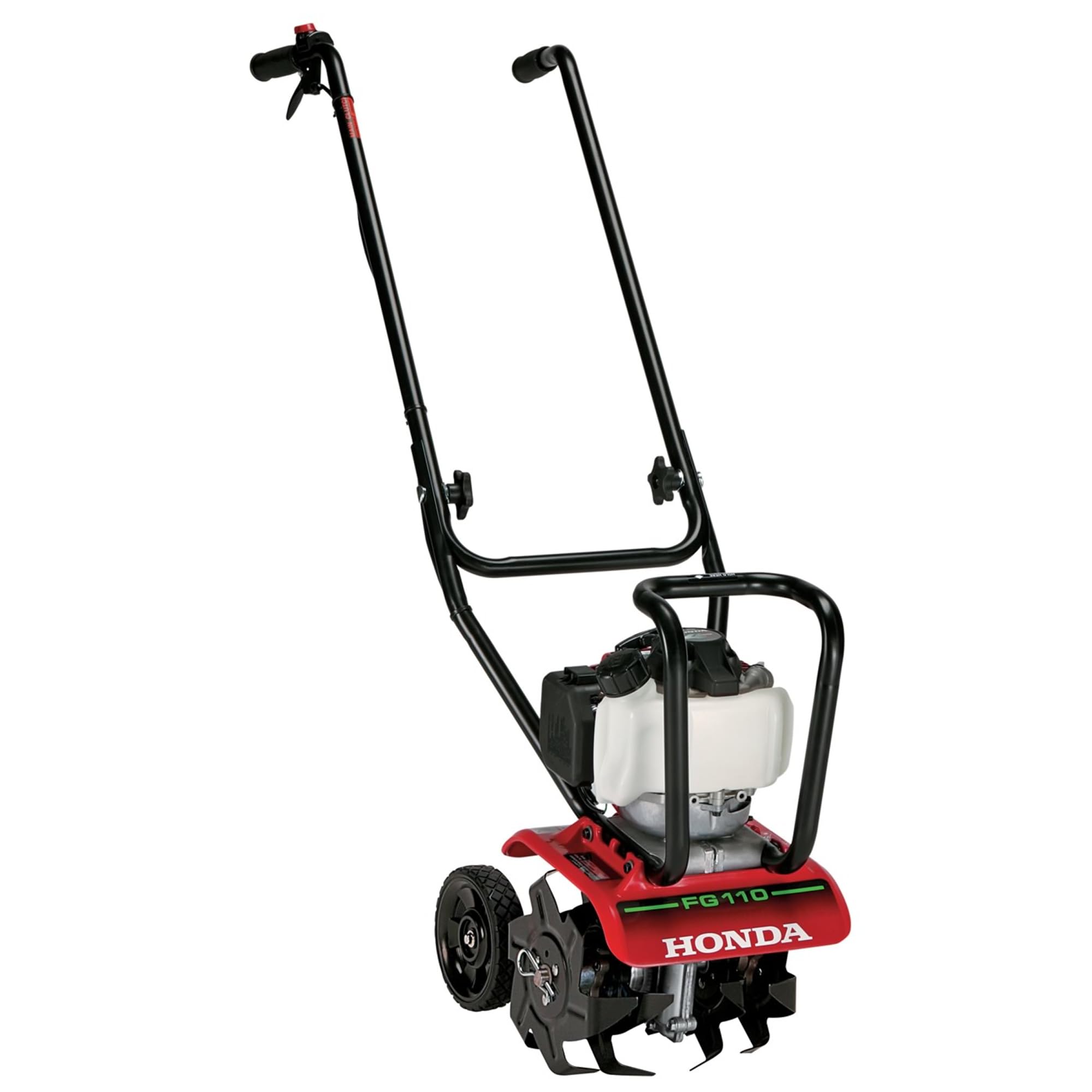
The Honda FG110 is a specialist tool, not a general-purpose tiller. Powered by the legendary Honda GX25 four-stroke engine, it is designed for light to moderate work in soft or pre-tilled soil. Its key advantage is weight: at just 29 pounds, it is easy to lift into raised planter beds and maneuver in tight spaces where a larger machine would damage plants. The 6 to 9-inch tilling width is ideal for cultivating between established rows.
The patented hybrid tines are a clever design. Half the blades are angled for digging, while the other half are angled for cultivating. This gives the machine a dual-action effect that breaks up clumps of soil more effectively than a simple rotating tine. The two-position transport wheels are removable, which is convenient for storage, and the folding handle reduces the storage footprint. The engine runs on straight unleaded gas — no oil mixing required.
Owner feedback consistently centers on reliability. The Honda engine starts on the first pull, idles smoothly, and runs for years with minimal maintenance. Many users are replacing older tillers with this model and reporting a significant improvement in ease of use. However, it is important to understand its limits: this machine is not designed for breaking new ground in heavy, compacted soil. It will struggle and dig in only a few inches at a time in such conditions. It is a premium tool for precision work, not raw power.
Why it’s great
- Honda GX25 engine is renowned for reliability and easy starting.
- Ultra-light 29-pound design is ideal for raised beds and tight spaces.
- Hybrid tines provide effective dual-action digging and cultivating.
- Folding handle and removable wheels make for compact storage.
Good to know
- Underpowered for breaking new ground in hard, compacted soil.
- Premium price for a relatively small engine displacement.
7. SENIX 4QL 4-Cycle Gas Tiller Cultivator TL4QL-L1

The SENIX TL4QL-L1 stands out for its patented 4QL Technology, which allows the engine to operate in any direction without stalling or leaking oil. This is a meaningful advantage for users who need to till on slopes or in awkward positions. The 46cc full-crank engine provides enough power for small to medium garden plots, and the six premium steel forward-rotating tines achieve a 15-inch tilling width and 8-inch depth.
The auto choke and compression release system is genuinely effective at simplifying the starting process. Most users report starting within three pulls on the first use and two pulls thereafter. The foldable handles are a practical storage feature, reducing the space needed in a garage or shed. The machine comes with engine oil included and is backed by a 3-year limited warranty, which is generous for this price tier.
Customer reports are largely positive, praising the power-to-size ratio and ease of use. A few negative experiences exist, including one unit that died after 20 minutes, which underscores the variability in budget-tier manufacturing. The tines do not handle rocks well, so clearing the soil beforehand is wise. Overall, it is a functional and user-friendly entry point for small-scale gardeners who want gas power without the hassle of mixing oil and gas.
Why it’s great
- 4QL Technology allows all-directional use without stalling or oil leaks.
- Auto choke and compression release make starting very easy.
- Foldable handles reduce storage footprint.
- 3-year limited warranty provides good coverage for the price tier.
Good to know
- Not well-suited for rocky soil; rocks can stop the tines.
- Quality control can be inconsistent; some units have had early failures.
8. YARDMAX 212cc Rear Tine Tiller YT4565
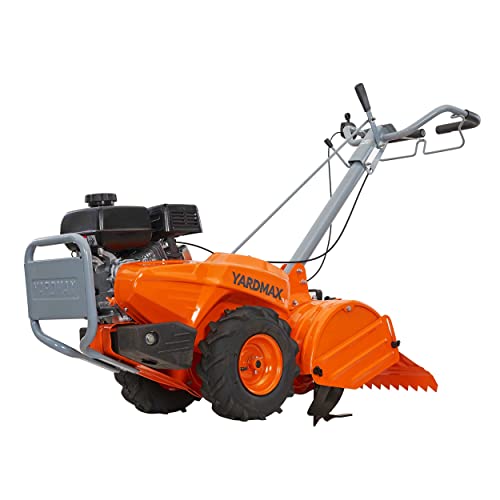
The YARDMAX YT4565 is a rear-tine tiller that prioritizes raw power for breaking the toughest ground. The 209cc or 212cc OHV engine (depending on production timing) is coupled with dual rotating tines that churn through hardpan, clay, and rocky soil with a level of aggression that front-tine machines cannot match. The forward and reverse gear system allows for precise control, with a neutral position that disengages the tines for transport.
The design is functional, not flashy. The steel construction is robust, and the 18-inch tilling width is well-suited for garden rows. The depth adjustment allows for deep plowing, and many users report that the machine handles soil preparation that would require a rental-grade unit from a big-box store. The controls are laid out intuitively, with separate levers for wheel drive and tine rotation.
Owner experiences are mixed, which is typical for this price and power tier. Many praise its ability to dig deep in hard ground that stops smaller machines cold. However, long-term reliability concerns surface in a significant number of reviews. Issues include transmission failure, throttle breakage, and bolts loosening — likely related to the vibration inherent in such a high-torque machine. The tilt safety cut-off switch on the handle can be overly sensitive on rough terrain, causing frustrating shutdowns. For budget-conscious buyers who need rear-tine power, it is a viable option, but stepping up to a model with a gear-drive transmission and a stronger warranty is advisable for heavy users.
Why it’s great
- Powerful 212cc engine is capable of breaking very hard, compacted soil.
- Dual rotating tines provide aggressive ground penetration.
- Forward, neutral, and reverse gears offer excellent control.
- Can handle tasks typically reserved for much larger rental machines.
Good to know
- Long-term reliability is questionable; some owners report transmission issues.
- Tilt safety switch can be overly sensitive on uneven terrain.
- Various bolts and components can loosen due to vibration.
9. Pulsar 212cc Rear Tine Tiller PTG1120R

The Pulsar PTG1120R is an entry into the rear-tine category that brings a 212cc OHV engine and counter-rotating tines at a price point well below most competitors. The four 13-inch counter-rotating tines provide a 20-inch tilling width and work aggressively to pull themselves into the soil, reducing the effort needed from the operator. The large 13.5-inch tractor-style wheels offer good clearance and mobility.
Setup is straightforward, with the machine arriving well-packaged in a steel frame. The packaging includes pre-filled gear oil and engine oil, which simplifies the initial preparation. The depth regulator is functional, allowing for consistent depth control across multiple passes. The machine is heavy at 154 pounds, which helps the tines stay planted but makes it very difficult to transport without a vehicle.
User feedback is pragmatic. Owners report that it starts reliably and runs efficiently, capable of tilling a 6,000 square foot garden on a single tank of gas. However, there are notable build quality quirks. The gear shifter can be stiff and difficult to engage. The transmission uses a plug rather than a dipstick to check oil, making level verification a guessing game. Some owners have received units with missing hardware. For the price, it delivers undeniable raw power, but the fit and finish are a clear step below the premium tier. It is best suited for buyers who need maximum displacement on a tight budget and are comfortable with some assembly adjustments.
Why it’s great
- 212cc engine and counter-rotating tines provide serious soil-breaking power on a budget.
- Excellent fuel efficiency; can cover large garden areas per tank.
- Well-packaged in a steel frame to prevent shipping damage.
- Large tractor-style wheels offer good ground clearance.
Good to know
- Gear shifter can be stiff and difficult to operate.
- Transmission oil plug design makes checking oil level difficult.
- Some units arrive with missing nuts or bolts.
FAQ
What size engine do I need for a gas tiller cultivator?
Should I choose a front-tine or rear-tine tiller for my garden?
Is a 4-cycle gas tiller better than a 2-cycle model?
Final Thoughts: The Verdict
For most users, the best gas tiller cultivator winner is the Earthquake Badger 41080 because it combines a powerful 160cc engine, forged steel tines, and a smart two-position wheel system in a balanced front-tine design that handles tough soil without the cost and bulk of a rear-tine machine. If you have a large garden and need the raw power of a gear-drive rear-tine tiller, grab the NOVUS NV18DRTG. And for small, precision work in raised beds, nothing beats the legendary reliability of the Honda FG110.