
Watery liquid dyes turn buttercream into soup, dilute your macaron batter, and force you to dump half a bottle into a single batch of frosting just to see a hint of pastel. Gel food coloring solves every one of those failures with a thick, concentrated pigment that clings to your spatula and delivers a saturated hue from a single tiny drop.
I’m Mohammad Maruf — the founder and writer behind Drink4Good. I’ve spent countless hours analyzing baking colorants, from the chemical composition of synthetic gels to the extraction methods of plant-based alternatives, to find the sets that actually perform without ruining your texture or leaving a chemical aftertaste.
This guide breaks down the five strongest contenders on the shelf, comparing pigment concentration, texture impact, heat stability, and ease of blending so you can confidently choose the best gel food coloring for your next batch of royal icing or birthday cake.
How To Choose The Best Gel Food Coloring
Gel food coloring is not a one-size-fits-all purchase. The right set depends on the medium you are coloring — buttercream behaves differently than fondant, and royal icing has its own tolerance for added liquid. Prioritize the traits below to avoid a purchase that thins your frosting or fades after baking.
Pigment Concentration
The defining advantage of a gel over a liquid dye is its pigment density. A high-quality gel requires only a toothpick dab to achieve a vivid shade, which means your frosting stays thick and your batter keeps its intended structure. Check the bottle volume against the number of colors: a 0.45 oz bottle of concentrated gel will outlast a 1 oz bottle of watered-down colorant by a wide margin.
Texture Compatibility
Gel food coloring should blend into buttercream, royal icing, batter, and fondant without leaving streaks or altering the consistency. The best gels feel smooth and spreadable — like a stiff paste — and disappear into the medium with minimal stirring. A gel that separates into clumps or feels grainy will give you uneven color patches and a frustrating mixing experience.
Flavor and Safety Profile
Gel colorants must be tasteless and odorless. A low-quality dye leaves a bitter, metallic, or chemical aftertaste that your guests will notice immediately. For those who avoid synthetic ingredients, natural plant-based gels offer a clean label without compromising the depth of color, though they typically require slightly more product to reach the same saturation as synthetic gels.
Quick Comparison
On smaller screens, swipe sideways to see the full table.
| Model | Category | Best For | Key Spec | Amazon |
|---|---|---|---|---|
| ENCO 9 Basic Gel Set | Premium | Professional bakers, color mixing | 1.41 oz per bottle (40 g) | Amazon |
| Chefmaster Neon Liqua-Gel | Mid-Range | Vivid neon buttercream, kids’ parties | 20 ml per bottle (0.67 fl oz) | Amazon |
| Cherrysea 33-Color Set | Mid-Range | Dyeing eggs, resin, large variety | 0.25 fl oz per bottle (6 ml) | Amazon |
| ERCorArt Natural Gel 16-Color | Premium | Dye-free natural coloring, health-conscious bakers | 0.25 fl oz per bottle (7.5 ml) | Amazon |
| Herbeklab 10-Color Gel Set | Budget | Beginners, general home baking | 0.45 oz per bottle (12.7 g) | Amazon |
In‑Depth Reviews
1. ENCO 9 Basic Food Coloring Gel Set
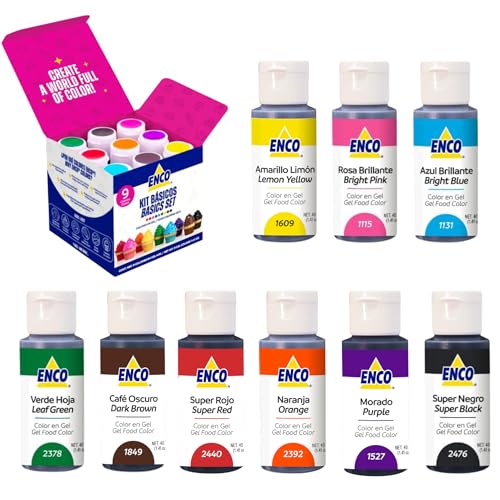
The ENCO set gives you nine 1.41 oz bottles of concentrated gel that feel thick and spreadable — exactly what you want for buttercream that refuses to thin out. A tiny drop delivers deep, saturated color, and the gel blends into royal icing and fondant without leaving streaks. The included color mixing guide transforms those nine basics into over sixty custom shades, from pastel pink to deep charcoal, which eliminates the need to buy individual specialty colors.
Users consistently report that a single drop is enough for a full batch of frosting, and the gel produces no bitter aftertaste. The volume per bottle is generous compared to the 0.25 oz and 0.45 oz competitors, making this the most cost-effective option over the long run for frequent bakers. Pigment retention after baking and freezing is excellent, so your cookies and cakes stay vibrant from oven to table.
The only real trade-off is the set size — nine colors is a focused palette, not a rainbow explosion. If you need a specific neon pink or a very particular macaron shade not covered by the nine basics, you will need to either mix it yourself or supplement with a specialty gel.
Why it’s great
- Incredibly concentrated gel — a single drop saturates a whole batch
- Blends seamlessly without altering buttercream or icing texture
- Includes a color mixing guide for 60+ custom shades
Good to know
- Limited to 9 basic colors — no neon or pastel pre-mixes included
- Premium price point reflects the large bottle size and professional-grade formula
2. Chefmaster Neon Liqua-Gel Food Coloring

Chefmaster’s neon formula delivers the kind of electric, highlighter-bright colors that standard gels cannot replicate. The six-pack includes neon pink, green, blue, orange, yellow, and purple, and the gel is lightweight enough to mix into buttercream without thinning it noticeably. Users who baked for themed parties and 90s-style cakes confirm that these colors stay bright after refrigeration and do not fade into pastel shades overnight.
Each 20 ml bottle is smaller than the ENCO bottles, but the pigment concentration is high enough that you still use only a few drops per batch. The easy-squeeze, no-drip bottle design gives you precise control — useful when you are chasing a specific neon shade and do not want to overshoot. The formula is tasteless and blends evenly, which eliminates the streaky patches that plague lower-quality neon gels.
The narrow use case is the main limitation: this set is all neon, all the time. If you need a basic brown for chocolate frosting or a standard white, you will not find it here. Stick to this set for projects where you want the frosting to scream, not whisper.
Why it’s great
- True neon saturation that stays bright after baking and refrigeration
- Lightweight gel formula does not thin buttercream or icing
- No-drip squeeze bottles provide precise drop control
Good to know
- Only 6 neon colors — no basic shades (brown, white, black)
- Smaller bottle volume compared to multi-purpose sets
3. Cherrysea 33-Color Food Coloring Liquid Set

The sheer breadth of the Cherrysea set — 33 colors in one box — is its strongest argument. From Christmas red to matcha green to peacock blue, you get shades that other sets force you to mix yourself. Each 0.25 oz bottle uses a dropper design that allows single-drop control, and the liquid is concentrated enough that a few drops produce vivid color in frosting batter and even resin. The set works surprisingly well for non-baking projects like Easter egg dyeing and slime making.
Users praise the color variety for themed baking and holiday decorating. The liquid formulation is slightly thinner than true gel, but it is still far thicker than standard grocery-store liquid dyes, so it does not ruin the consistency of buttercream the way watery dyes do. The dropper bottles reseal tightly and do not leak during storage. The set is also free of common allergens, which is helpful for families with dietary restrictions.
Because the bottles are small (0.25 oz each) and the set has so many colors, you will run out of individual shades faster than you would with a larger-bottle set. This is a breadth-over-depth choice — great for variety, less ideal if you use the same shade on every batch.
Why it’s great
- 33 unique colors — unmatched variety for themed decorating and holidays
- Dropper bottle design gives single-drop precision
- Free of eggs, dairy, nuts, and gluten
Good to know
- 0.25 oz bottles are small — individual shades run out quickly
- Liquid consistency is thicker than grocery dye but thinner than premium gel
4. ERCorArt Natural Food Coloring Gel
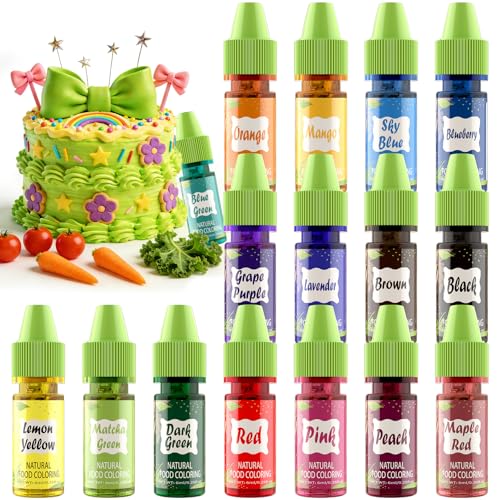
For those who refuse to put synthetic FD&C dyes into their food, the ERCorArt natural gel set offers a genuine plant-based alternative. The colors come from fruit vegetable and plant extracts, and the gel texture is smooth enough to blend into royal icing buttercream and fondant without clumping. Users report that the colors lean toward the softer pastel range — strawberry red instead of fire-engine red — which makes this set ideal for a natural aesthetic rather than high-impact neon.
The 16-color range includes a pleasing mix of macaron-inspired shades, from blush to lavender to sage green. The precision spout bottle allows you to control the flow precisely, and the gel resists heat decomposition during baking, so your cookies and cupcakes emerge from the oven with the same hue you mixed. Users also confirm that the gel is completely tasteless and odorless.
The trade-off is pigment concentration. To achieve a deep saturated shade you need more product than you would with a synthetic gel. For light pastel work the amount is negligible, but if you regularly bake deep red velvet cakes or very dark chocolate buttercream the cost per batch will be higher than with a synthetic competitor.
Why it’s great
- 100% plant-based extracts — no FD&C artificial dyes
- Heat-resistant formula maintains color after baking
- Completely tasteless and odorless in frosting and batter
Good to know
- Requires more product to achieve deep saturated hues
- Small 0.25 oz bottles with a premium cost per batch
5. Herbeklab 10-Color Gel Food Coloring Set
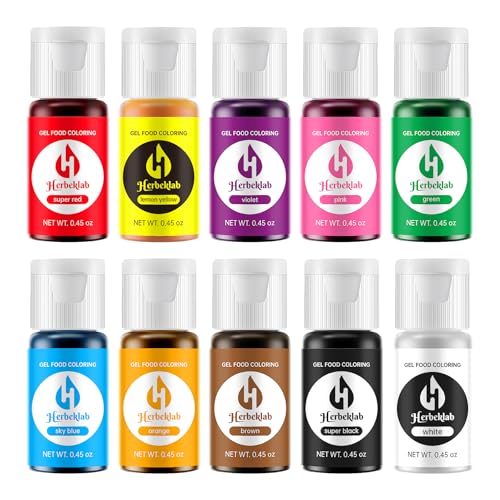
The Herbeklab set hits the sweet spot for a home baker who wants a solid baseline without spending premium money. Ten colors cover the essentials — super red sky blue violet orange green lemon yellow super black white and brown — and each 0.45 oz bottle holds enough gel for many batches. The squeeze bottle with a precise drop spout gives you the same control as more expensive sets, and the gel is thick enough to maintain the texture of buttercream and royal icing without thinning them out.
Most users find the colors bright and easy to work with. The gel blends evenly and does not leave streaks in fondant or batter. A few drops achieve a strong pastel or mid-tone, and building to a deep shade is straightforward with incremental additions. The set is MSDS approved, tasteless and free of common allergens, which makes it a reliable entry point for beginners and casual bakers.
The minor downside is batch consistency. A very small number of users reported a chemical aftertaste with one specific batch, though the manufacturer promptly refunded those orders. The 10-color selection omits some specialty shades like teal or burgundy, but the basics here cover 90 percent of home baking needs.
Why it’s great
- 0.45 oz bottles offer good volume for the entry-level price
- Precise drop spout for controlled coloring without mess
- Tasteless and odorless — blends without altering texture
Good to know
- Occasional batch inconsistency reported with chemical aftertaste
- Limited to 10 basic shades — no neon or specialty tones
FAQ
Does gel food coloring change the taste of my frosting?
How many drops of gel food coloring do I need for deep red frosting?
Can I use gel food coloring in royal icing for sugar cookies?
Final Thoughts: The Verdict
For most users, the best gel food coloring winner is the ENCO 9 Basic Gel Set because its large bottles, extreme concentration, and included color mixing guide cover the widest range of baking needs without thinning your frosting. If you want that electric neon pop for a themed party cake, grab the Chefmaster Neon Liqua-Gel set. And for a completely dye-free alternative that lets you color your desserts without synthetic ingredients, nothing beats the ERCorArt Natural Gel.