
Choosing a Gen 4 SSD feels straightforward until you realize that a 7,000 MB/s label can hide a drive that throttles after a few minutes of heavy writing. The real difference between a budget-friendly drive and a premium workhorse lies not just in peak read speed, but in sustained write performance, thermal design, and controller intelligence. This is the guide I wish I had before sorting through the dozens of PCIe 4.0 options on the market.
I’m Mohammad Maruf — the founder and writer behind Drink4Good. Over the past decade of analyzing hardware specifications and real-world storage benchmarks, I’ve learned that a drive’s endurance rating and thermal throttling point tell you more about its daily usability than any box-printed sequential read number ever will.
Whether you are upgrading a gaming rig, building a workstation, or expanding a PlayStation 5, the right drive balances speed, capacity, and thermal behavior for your specific workload. That is why I built this breakdown of the best gen 4 ssd options available, focusing on the specs that actually dictate long-term satisfaction.
How To Choose The Best Gen 4 SSD
The Gen 4 SSD market spans from entry-level drives that barely outpace good Gen 3 units to premium models that saturate the PCIe 4.0 interface. The key is identifying which performance traits align with how you use your computer. Gamers, content creators, and workstation users all need different priorities in a drive.
Prioritize Sustained Write Speed Over Peak Read Speed
Nearly every Gen 4 SSD advertises a sequential read speed near the interface ceiling, but the real separator is how fast the drive can write large files continuously. Once the SLC cache fills up — typically after writing 50 to 200 GB — write speeds can drop by 50% or more on budget-oriented models. Premium drives with larger dynamic caches or DRAM buffers maintain higher speeds for longer, which matters for video editing, large game installations, and cloning operations.
Match Endurance (TBW) to Your Expected Lifespan
The Terabytes Written (TBW) rating indicates how much total data you can write to the drive before it is likely to fail. For a typical home user writing 10-20 GB per day, a 600 TBW rating on a 1TB drive provides over 80 years of theoretical life. Heavy users who edit 4K video daily or run database workloads should consider drives with 1,200 TBW or more per 2TB of capacity. Higher TBW also correlates with better NAND quality and more robust over-provisioning.
Consider Thermal Management as a Core Spec
Gen 4 controllers generate significant heat, and many drives begin thermal throttling when temperatures exceed 75°C, dropping performance by 20-30% to cool down. A motherboard with a built-in heatsink is often sufficient, but some high-performance drives — particularly those without a pre-installed heatsink — require aftermarket cooling for sustained workloads. Drives with graphene labels or thin aluminum stickers offer marginal help; a thick finned heatsink or active fan cooling makes a measurable difference in long write sessions.
Quick Comparison
On smaller screens, swipe sideways to see the full table.
| Model | Category | Best For | Key Spec | Amazon |
|---|---|---|---|---|
| Samsung 990 PRO 2TB | Premium | High-End Workstations | 7,450 MB/s Read / 2TB | Amazon |
| WD_BLACK SN7100 2TB | Premium | LAPTOP & Handheld Gaming | 7,250 MB/s Read / 2TB | Amazon |
| BIWIN Black Opal NV7400 2TB | Premium | PS5 Expansion | 7,450 MB/s Read / 2TB | Amazon |
| Samsung 990 EVO Plus 1TB | Mid-Range | Laptop OS Drive | 7,150 MB/s Read / 1TB | Amazon |
| WD_BLACK SN850X 1TB | Premium | Elite Gaming Rigs | 7,300 MB/s Read / 1TB | Amazon |
| acer Predator GM7 1TB | Mid-Range | Enthusiast Gaming | 7,400 MB/s Read / 1TB | Amazon |
| Crucial P310 1TB | Mid-Range | Casual Gamers & Home Users | 7,100 MB/s Read / 1TB | Amazon |
| TEAMGROUP MP44L 1TB | Budget | Budget Builds | 5,000 MB/s Read / 1TB | Amazon |
| Kingston NV3 1TB | Budget | Simple Upgrades | 6,000 MB/s Read / 1TB | Amazon |
In‑Depth Reviews
1. Samsung 990 PRO 2TB

The Samsung 990 PRO remains the benchmark for Gen 4 performance, delivering sequential read speeds up to 7,450 MB/s and write speeds up to 6,900 MB/s. Its in-house controller and V-NAND technology provide a 55% improvement in random performance over the 980 PRO, which translates to faster boot times, quicker level loading, and snappier file operations in real-world use. The 2TB capacity offers ample room for a modern game library and creative projects alike.
Thermal management is handled through Samsung’s Dynamic Thermal Guard, but the drive runs warm under sustained loads — pairing it with a motherboard heatsink or an aftermarket solution is strongly recommended for workstation tasks. The inclusion of Samsung Magician software gives you firmware updates, drive health monitoring, and performance optimization tools that work seamlessly out of the box. The 2,400 TBW endurance rating on the 2TB model also signals exceptional longevity for heavy write cycles.
For users who demand the absolute fastest sustained performance from a Gen 4 interface, the 990 PRO justifies its position as the premium choice. The random IOPS advantage alone makes it noticeably quicker in day-to-day responsiveness than most competitors. If your budget allows for a flagship drive, this is the one to beat.
Why it’s great
- Class-leading random read/write IOPS for snappy application loading
- Included Samsung Magician software for drive management and firmware updates
- High 2,400 TBW endurance rating ensures long service life
Good to know
- Requires a separate heatsink for sustained heavy workloads
- Premium price point puts it above mid-range alternatives
2. WD_BLACK SN7100 2TB
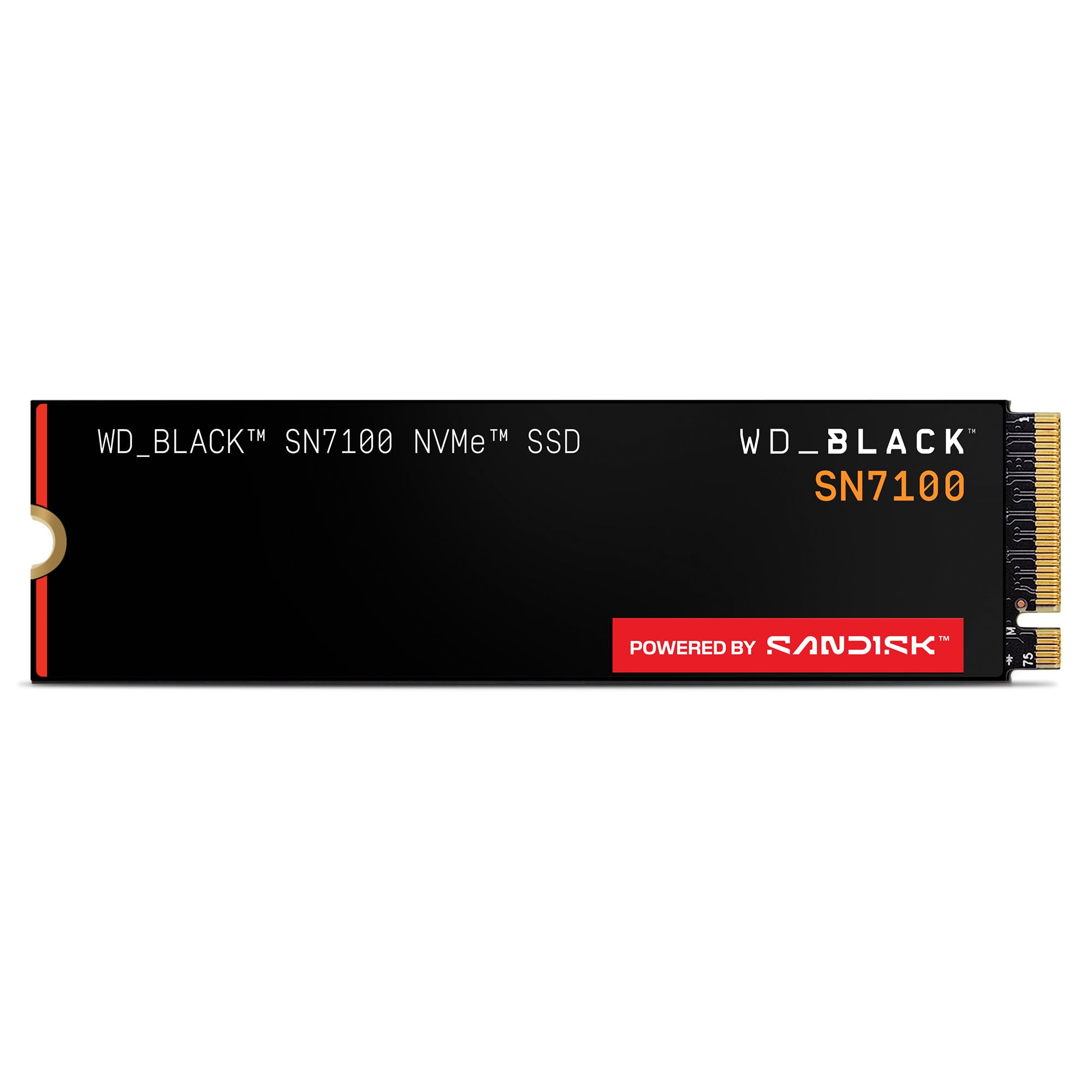
The WD_BLACK SN7100 is engineered specifically for laptops and handheld gaming devices, with a power efficiency improvement of up to 100% over the previous generation. Read speeds reach 7,250 MB/s while write speeds hit 6,900 MB/s on the 1TB and 2TB models, making it one of the fastest Gen 4 drives available while drawing less power. The next-generation TLC 3D NAND from SanDisk ensures consistent performance across the full capacity range.
Thermal behavior is controlled through Adaptive Thermal Management, and the drive idles around 30°C with peak temperatures hitting roughly 60°C under sustained load. Without a heatsink, it can throttle to around 4,500 MB/s at higher temperatures, but in most laptop and handheld scenarios the included thermal solution is sufficient. The WD_BLACK Dashboard software provides health monitoring and firmware updates, though the Game Mode 2.0 features from the SN850X are not present here.
This drive is a standout choice for users who need Gen 4 speed in thermally constrained environments like thin laptops or handheld consoles like the ROG Ally and Steam Deck. The combination of high throughput and low power draw means longer battery life during gaming sessions without sacrificing load times.
Why it’s great
- Exceptional power efficiency extends battery life in laptops
- Fast 7,250 MB/s read and 6,900 MB/s write speeds
- Designed to fit laptops and handheld gaming devices
Good to know
- Can throttle without a heatsink under prolonged heavy writing
- Lacks the advanced Game Mode features of the SN850X
3. BIWIN Black Opal NV7400 2TB

The BIWIN Black Opal NV7400 delivers flagship-tier read speeds of 7,450 MB/s and write speeds of 6,500 MB/s, placing it in the top tier of Gen 4 performance. It uses a PCIe Gen 4×4 interface with 3D TLC NAND and a PMIC (Power Management IC) that improves power distribution efficiency, helping the drive run cooler and last longer. The 2TB capacity is ideal for both high-end PC builds and PlayStation 5 expansion.
Thermal management is handled through a 0.5mm graphene aluminum heatsink label that keeps the drive at roughly 42°C under normal OS drive usage. Users report consistent performance without throttling during gaming sessions. The free Biwin Intelligence software includes performance testing, data migration, and firmware update tools, giving you a complete management suite. The 2TB model operates at impressively cool temperatures, which is a clear advantage for console and small-form-factor builds.
At this price-to-performance ratio, the NV7400 competes directly with more expensive drives, offering similar sustained speeds with better thermal behavior out of the box. It is a smart pick for budget-conscious enthusiasts who want near-flagship speed without the premium markup.
Why it’s great
- Near-flagship 7,450 MB/s read speed at a competitive price
- Graphene aluminum heatsink keeps temps low without a bulky cooler
- Fully compatible with PlayStation 5 expansion
Good to know
- Newer brand with less long-term track record than Samsung or WD
- Software suite is functional but feels less polished than competitors
4. Samsung 990 EVO Plus 1TB

The Samsung 990 EVO Plus strikes a balance between performance and affordability, offering sequential read speeds up to 7,150 MB/s and write speeds up to 6,300 MB/s. It uses HMB (Host Memory Buffer) technology instead of a dedicated DRAM cache, borrowing system RAM to manage the mapping table for faster random access. Intelligent TurboWrite 2.0 provides a larger SLC write buffer for handling large file transfers without slowing down prematurely.
A nickel-coated controller improves thermal efficiency, allowing the drive to maintain performance without aggressive throttling in most scenarios. The drive is backward compatible with PCIe 4.0 x4 and PCIe 5.0 x2 interfaces, future-proofing your purchase for newer platforms. The Samsung Magician software adds robust health monitoring, firmware updates, and encryption management. However, users should note this is a DRAM-less design — sustained write speeds after filling the TurboWrite buffer will drop compared to a DRAM-equipped drive like the 990 PRO.
This is an excellent choice for laptop upgrades where power efficiency and heat output matter more than absolute peak sustained writes. The combination of strong random performance and native backward compatibility makes it a versatile option for both new builds and older system refreshes.
Why it’s great
- Strong random read/write performance for a DRAM-less design
- Backward compatible with PCIe 5.0 x2 for future platform support
- Nickel-coated controller offers excellent thermal efficiency
Good to know
- No dedicated DRAM cache means slower sustained writes after cache fills
- Does not include a heatsink in the package
5. WD_BLACK SN850X 1TB
The WD_BLACK SN850X has been a staple for high-performance gaming builds, offering read speeds up to 7,300 MB/s and write speeds up to 6,300 MB/s on the 1TB model. It features Predictive Loading and Overhead Balancing technologies that pre-load frequently used game assets, reducing level load times and stuttering. The Game Mode 2.0 feature in the WD_BLACK Dashboard helps optimize the drive’s behavior specifically for gaming workloads.
Thermal performance is solid when paired with a motherboard heatsink, with sustained speeds remaining stable during extended sessions. The drive ships without a heatsink, so you will need to provide one or buy the optional heatsink version. The 1TB model includes a 5-year limited warranty with a 600 TBW endurance rating, which is standard for this tier of performance. The drive is also fully compatible with the PlayStation 5 for expansion storage.
For pure gaming performance, the SN850X delivers one of the best Gen 4 experiences available. The combination of high queue-depth performance and software-level game optimizations makes it a top pick for users building a system around AAA titles and competitive gaming scenarios.
Why it’s great
- Game Mode 2.0 optimizes performance specifically for gaming workloads
- Predictive Loading reduces stutter and level load times
- Excellent sustained performance with a motherboard heatsink
Good to know
- No heatsink included — requires motherboard or aftermarket cooling
- Price has increased since launch, making it less of a value pick
6. acer Predator GM7 1TB
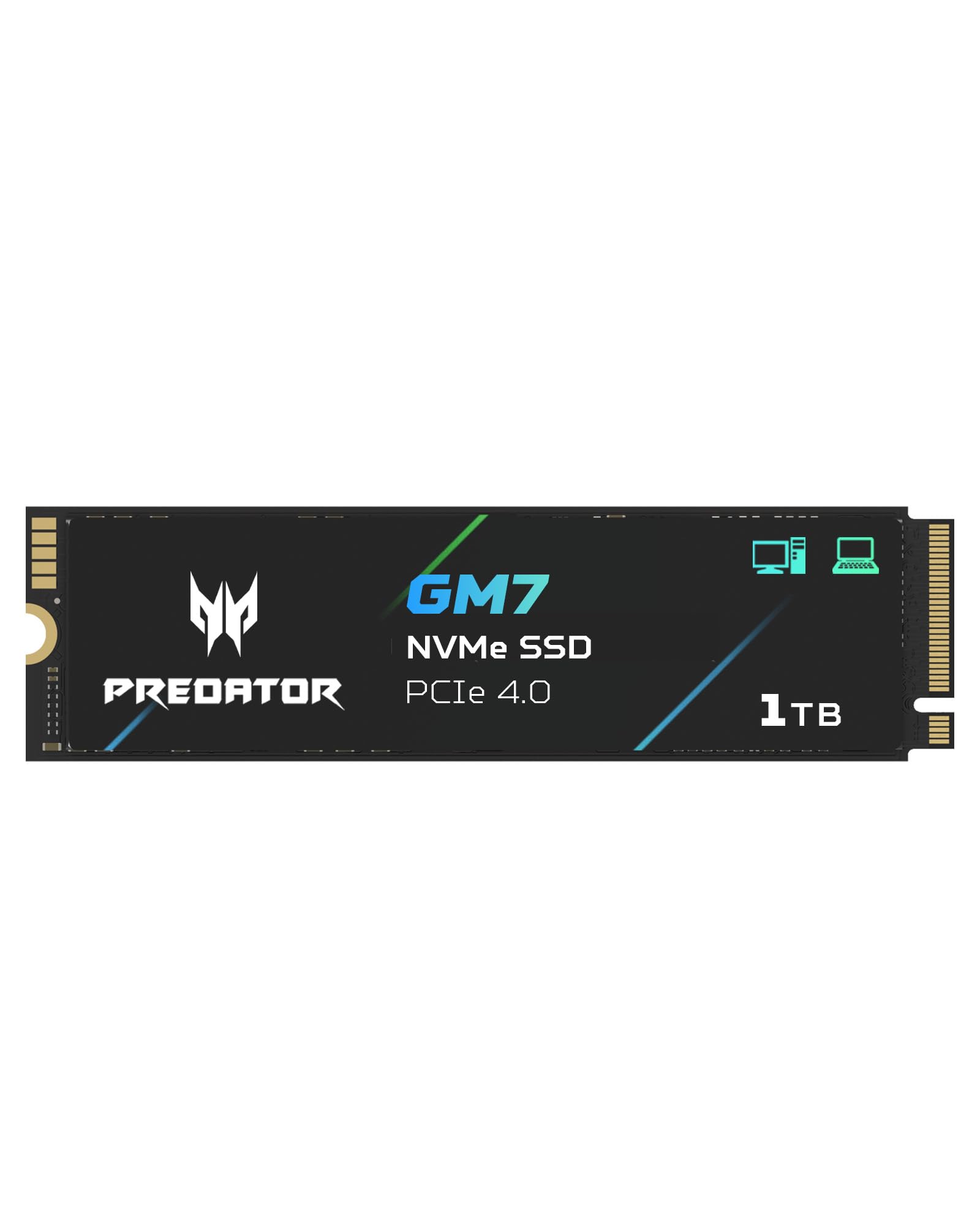
The acer Predator GM7 punches above its price bracket with read speeds of 7,400 MB/s and write speeds of 6,500 MB/s, putting it in contention with the fastest Gen 4 drives on the market. It uses the NVMe 2.0 protocol with HMB (Host Memory Buffer) and SLC Cache to accelerate random read and write operations, making it a strong performer for gaming and content creation. The 1TB model fits seamlessly into desktops, laptops, and PlayStation 5 consoles.
Thermal Throttling and Power Management systems automatically regulate temperature, and users report the drive maintains stable performance even during extended gaming sessions. The drive uses TLC NAND with Biwin Intelligence software for drive management, including performance testing, cloning, and firmware updates. It is worth noting that the included software is less polished than Samsung Magician or the WD Dashboard, but it covers the essential functions.
At this price point, the Predator GM7 offers speeds that rival drives costing significantly more. It is an excellent choice for gamers and enthusiasts who want near-flagship performance without stretching their budget too far. The support for PS5 expansion adds extra versatility for console owners.
Why it’s great
- Near-flagship 7,400 MB/s read speed at a mid-range price
- HMB and SLC Cache technology for faster random access
- Fully compatible with PlayStation 5 and PC platforms
Good to know
- Software suite lacks the polish of more established brands
- No dedicated DRAM cache limits sustained write performance
7. Crucial P310 1TB
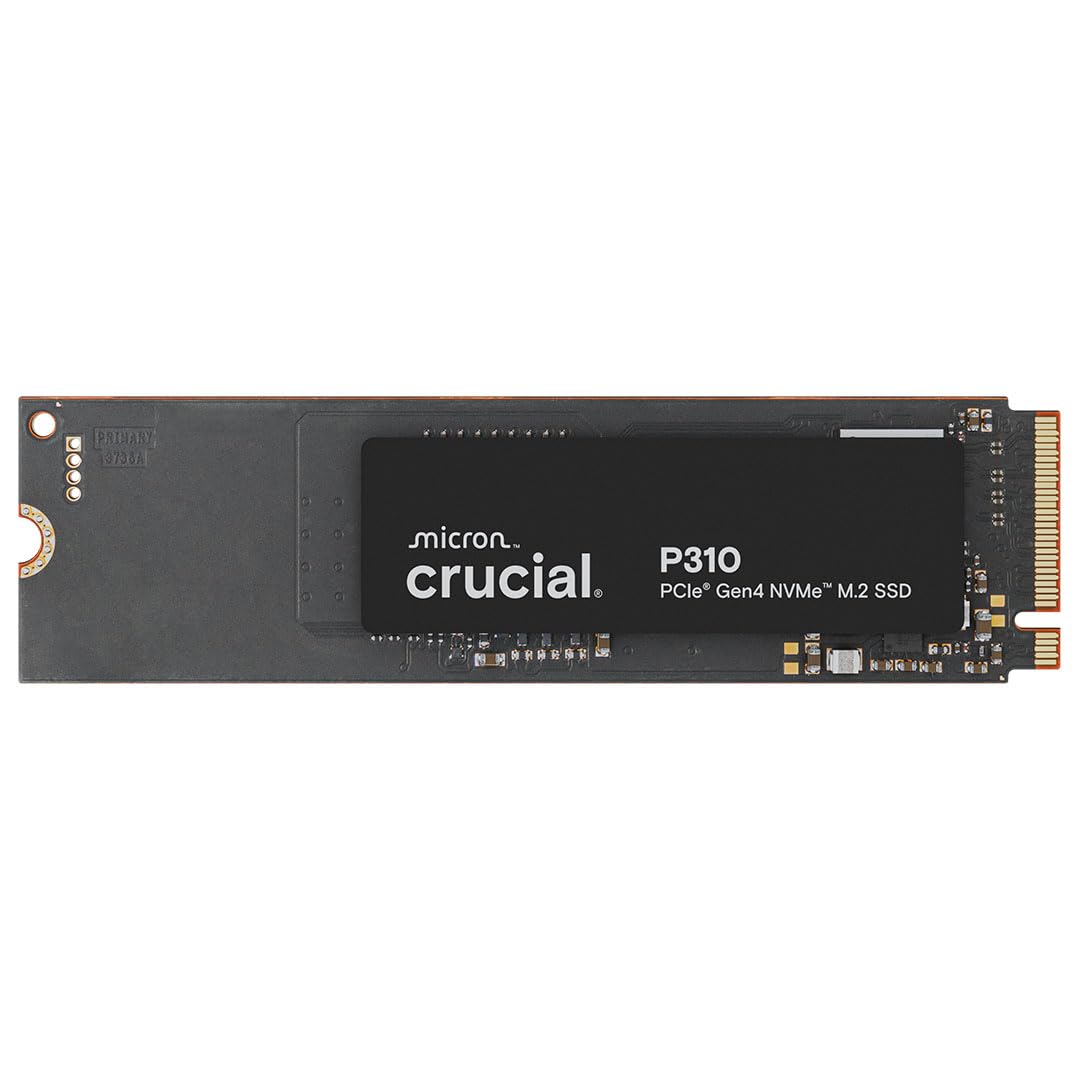
The Crucial P310 delivers Gen 4 performance that is well-suited for casual gamers and home users, with sequential read speeds up to 7,100 MB/s and write speeds up to 6,000 MB/s. It is built using Micron’s G8 NAND and includes thermal control to maintain consistent performance during typical workloads like loading Windows, launching Adobe applications, and transferring large files. The 1TB capacity provides room for several AAA games and everyday applications.
Broad compatibility is a key strength — the drive works with desktops, laptops, and select handheld gaming consoles including the ROG Ally X, Lenovo Legion Go, and AYANEO Kun. It is also backward compatible with PCIe Gen 3 systems, making it a versatile upgrade for older machines. The inclusion of Acronis data recovery software adds value for users migrating from an existing drive.
The P310 is a solid choice for users who want genuine Gen 4 speeds without paying for premium features they may never use. The thermal performance is adequate for typical home use, though heavy sustained writes may trigger mild throttling. It is also a strong option for installing in a handheld gaming console where power efficiency matters.
Why it’s great
- Genuine 7,100 MB/s Gen 4 speeds at an approachable price
- Includes Acronis data recovery software for easy migration
- Works with PC, laptops, and select handheld gaming consoles
Good to know
- Sustained write speeds drop after SLC cache fills up
- No heatsink included in the package
8. TEAMGROUP MP44L 1TB

The TEAMGROUP MP44L lands as a budget-friendly entry into the Gen 4 SSD market with sequential read speeds of 5,000 MB/s and write speeds of 4,500 MB/s. While these numbers are lower than the Gen 4 ceiling, they represent a meaningful improvement over Gen 3 SSDs and are perfectly adequate for boot drives, game storage, and general productivity. The SLC Caching technology helps maintain faster performance during lighter write operations.
A unique feature of the MP44L is its conductive graphene coating on the aluminum foil label, which provides passive heat dissipation less than 1mm thick — enough to prevent mechanical interference in tight M.2 slots. Combined with an onboard M.2 heatsink, thermal performance is respectable for a budget drive. The 5-year limited warranty with TBW coverage provides peace of mind, though the endurance rating is lower than premium drives.
This drive is best suited for budget-conscious builders and users upgrading from SATA SSDs. The performance delta between a 5,000 MB/s Gen 4 drive and a 7,000 MB/s one is negligible for most everyday tasks, making the MP44L a smart pick when every dollar counts. It runs cool and has proven reliable across multiple builds based on user feedback.
Why it’s great
- Great price-to-performance ratio for budget builds
- Graphene coating aids heat dissipation without adding bulk
- 5-year warranty provides solid long-term coverage
Good to know
- Read speeds capped at 5,000 MB/s — slower than top Gen 4 drives
- Lower endurance rating than premium alternatives
9. Kingston NV3 1TB
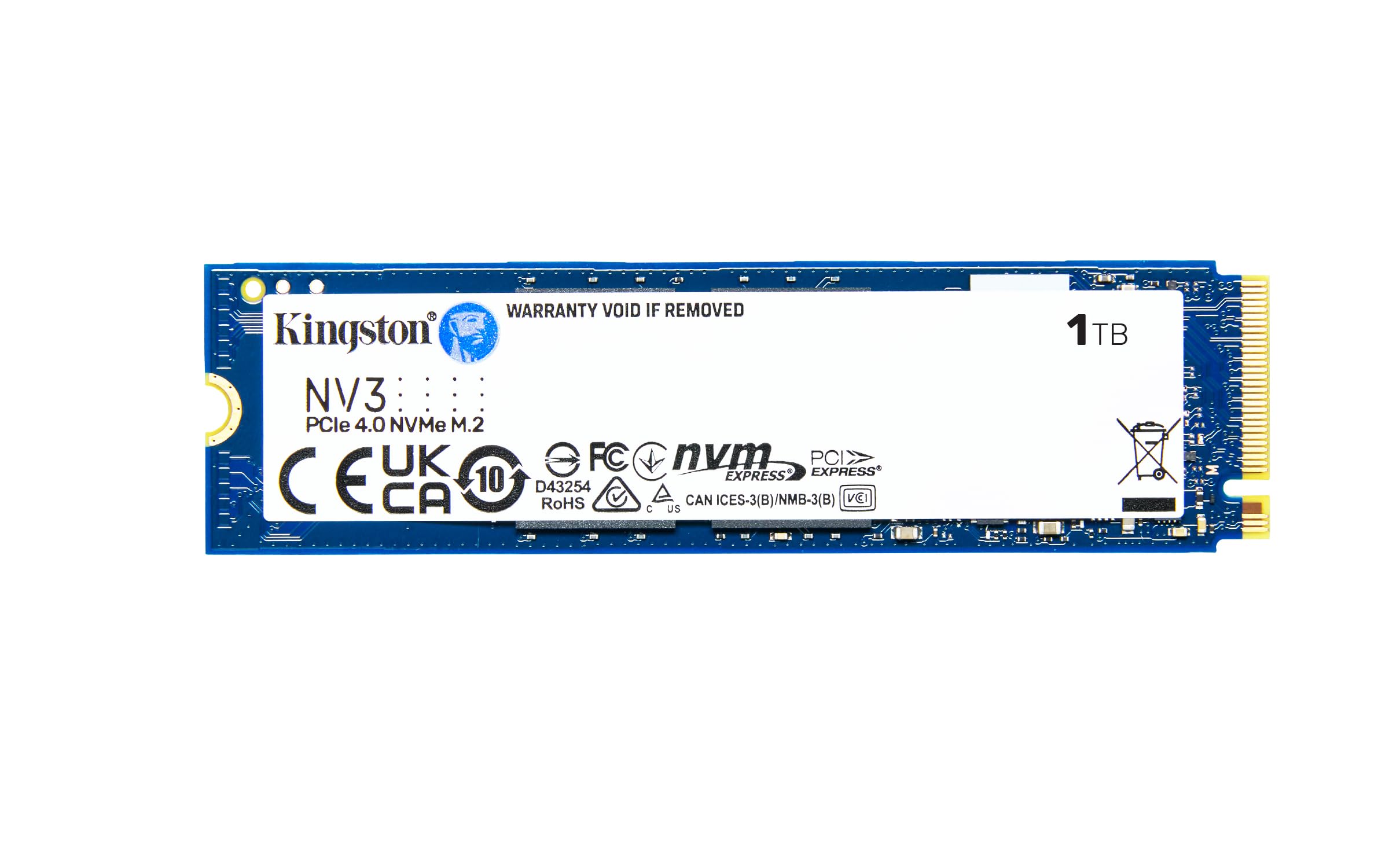
The Kingston NV3 is a straightforward Gen 4 SSD that delivers up to 6,000 MB/s read speeds, making it a capable performer for users looking for a reliable upgrade without complexity. It uses a PCIe Gen 4×4 interface and is available in capacities up to 4TB, offering plenty of room for expanding storage in desktops and laptops. The drive is shock-resistant, adding an extra layer of durability for portable systems.
Installation is simple and the drive is automatically recognized by most modern motherboards and laptops. User reports consistently note faster boot times and snappier application loading compared to SATA SSDs and HDDs. The NV3 does not include a heatsink, so you will need to rely on your motherboard’s built-in thermal solution for sustained workloads. It is also worth noting that while the drive works at Gen 4 speeds, it requires a compatible PCIe 4.0 slot to reach its full potential.
The NV3 is a solid entry-level Gen 4 option for users who want the speed of PCIe 4.0 without paying for premium controllers or fancy software suites. It is a great choice for a secondary game drive or as a simple system upgrade where reliability and ease of use matter more than raw benchmark numbers.
Why it’s great
- Reliable 6,000 MB/s Gen 4 performance for everyday tasks
- Shock-resistant design adds durability for portable systems
- Simple plug-and-play installation with broad compatibility
Good to know
- No dedicated DRAM cache — sustained writes slower than premium drives
- Heatsink is not included; relies on motherboard thermal solution
FAQ
Is a Gen 4 SSD worth it over a Gen 3 SSD for gaming?
Do I need a heatsink for my Gen 4 SSD?
What is the difference between 1TB and 2TB Gen 4 SSDs?
Can I use a Gen 4 SSD in a Gen 3 slot?
What does TBW mean on an SSD?
Final Thoughts: The Verdict
For most users, the best gen 4 ssd winner is the Samsung 990 PRO 2TB because it combines the highest sustained write speeds, exceptional random IOPS, and industry-leading endurance in a single package. If you want a power-efficient drive optimized for laptops and handheld gaming, grab the WD_BLACK SN7100 2TB. And for a near-flagship experience at the best value, nothing beats the BIWIN Black Opal NV7400 2TB.