
A power outage hits, and the first question isn’t about lights or entertainment—it’s about the refrigerator. Within a few hours, a silent fridge becomes a costly mess of spoiled groceries, thawed meat, and wasted medicine. The right generator for fridge backup isn’t a luxury; it’s the line between a temporary inconvenience and a full-blown household crisis. Finding a unit that can handle the compressor’s startup surge, run efficiently for hours, and fit within a sane budget requires sorting through wattage claims, fuel types, and noise ratings that don’t always tell the full story.
I’m Mohammad Maruf — the founder and writer behind Drink4Good. Every generator in this guide has been evaluated against the specific demands of refrigerator operation: starting wattage headroom, runtime at typical fridge loads, fuel efficiency, and the real-world portability that determines whether it actually gets used when the lights go out.
After sorting through hundreds of hours of customer data and spec comparisons, the following models stand out as the most reliable options for keeping your food cold and your family fed. This is the definitive guide to choosing a generator for fridge backup that balances power, runtime, and value without unnecessary complexity.
How To Choose The Best Generator For Fridge
Selecting the right generator to keep your refrigerator running means looking past marketing wattages and focusing on three core factors: surge capacity, clean power delivery, and usable runtime. A standard 18–22 cu. ft. fridge may require 600–800 running watts, but its compressor can draw 1,200–2,000 starting watts for a few seconds. A generator that can’t handle that instantaneous spike will trip its breaker or stall. Clean sine wave output (under 3% Total Harmonic Distortion) is equally critical to prevent the fridge’s control board from being fried by “dirty” power from conventional units. This guide prioritizes models with inverter technology or verified THD specs specifically for that purpose.
Starting Watts vs. Running Watts
This single distinction eliminates more generator candidates than any other spec. A fridge’s running wattage is the power it consumes to maintain temperature, but the startup surge — known as locked rotor amps — can be 2–3 times higher. A generator rated at 2,000 running watts with 2,500 starting watts is often marginal for a fridge plus a few lights. Always check the starting watts against the combined surge of all connected appliances. For a dedicated fridge backup, a minimum of 1,800 starting watts per typical fridge is a safe floor.
Inverter Technology and THD
Conventional generators produce power with up to 20% THD, which can damage the sensitive electronics in modern refrigerators, including digital displays, ice makers, and control boards. Inverter generators convert the raw AC to DC and back to clean AC, producing less than 3% THD. This cleaner waveform is identical to grid power and is safe for any appliance. Every model in this review either includes inverter technology or has been verified by customers to run refrigerators without issues. If noise matters — and during a blackout it does — inverter units also tend to run quieter by adjusting engine speed to load.
Runtime and Fuel Type
A generator that runs for 3 hours on a full tank is nearly useless for overnight outages. Runtime at 50% load is the most honest metric — that’s approximately what a fridge plus a few lights and a fan will draw. Gasoline generators typically offer 4–12 hours of runtime depending on tank size and load. Dual-fuel models (gasoline and propane) provide fuel flexibility: propane stores indefinitely and burns cleaner, though it delivers slightly less wattage. Solar-compatible power stations offer silent, fume-free operation but are limited by battery capacity — typically enough for 12–24 hours of fridge runtime before needing a recharge.
Quick Comparison
On smaller screens, swipe sideways to see the full table.
| Model | Category | Best For | Key Spec | Amazon |
|---|---|---|---|---|
| PowerSmart 3800W | Inverter | Best Overall Value | 59 dBA / 4.5h runtime | Amazon |
| BLUETTI Elite 100 V2 | Power Station | Quiet Indoor Use | 30 dB silent mode | Amazon |
| EF ECOFLOW Delta 3 Classic | Power Station | Ultra-Fast Recharge | 45 min to 80% charge | Amazon |
| WEN 4800W (56477i) | Inverter | RV + Home Backup | 4800 peak watts | Amazon |
| Westinghouse 2550W | Dual Fuel | Fuel Flexibility | 52 dBA / dual fuel | Amazon |
| Champion 2500W | Inverter | Lightest Portable | 39.7 lbs / 53 dBA | Amazon |
| PowerSmart 7000W | Inverter | High Capacity | 6000 rated watts | Amazon |
| WEN DF360iX | Dual Fuel | Quiet Dual Fuel | 49 lbs / digital display | Amazon |
| Generac GP3300i | Inverter | Brand Trust | PowerRush starting boost | Amazon |
| Jackery Explorer 2000 v2 | Power Station | Long Runtime | 2042 Wh capacity | Amazon |
| Anker SOLIX C2000 Gen 2 | Power Station | Expandable Capacity | 4000W peak / expandable | Amazon |
In‑Depth Reviews
1. PowerSmart 3800W Portable Inverter Generator
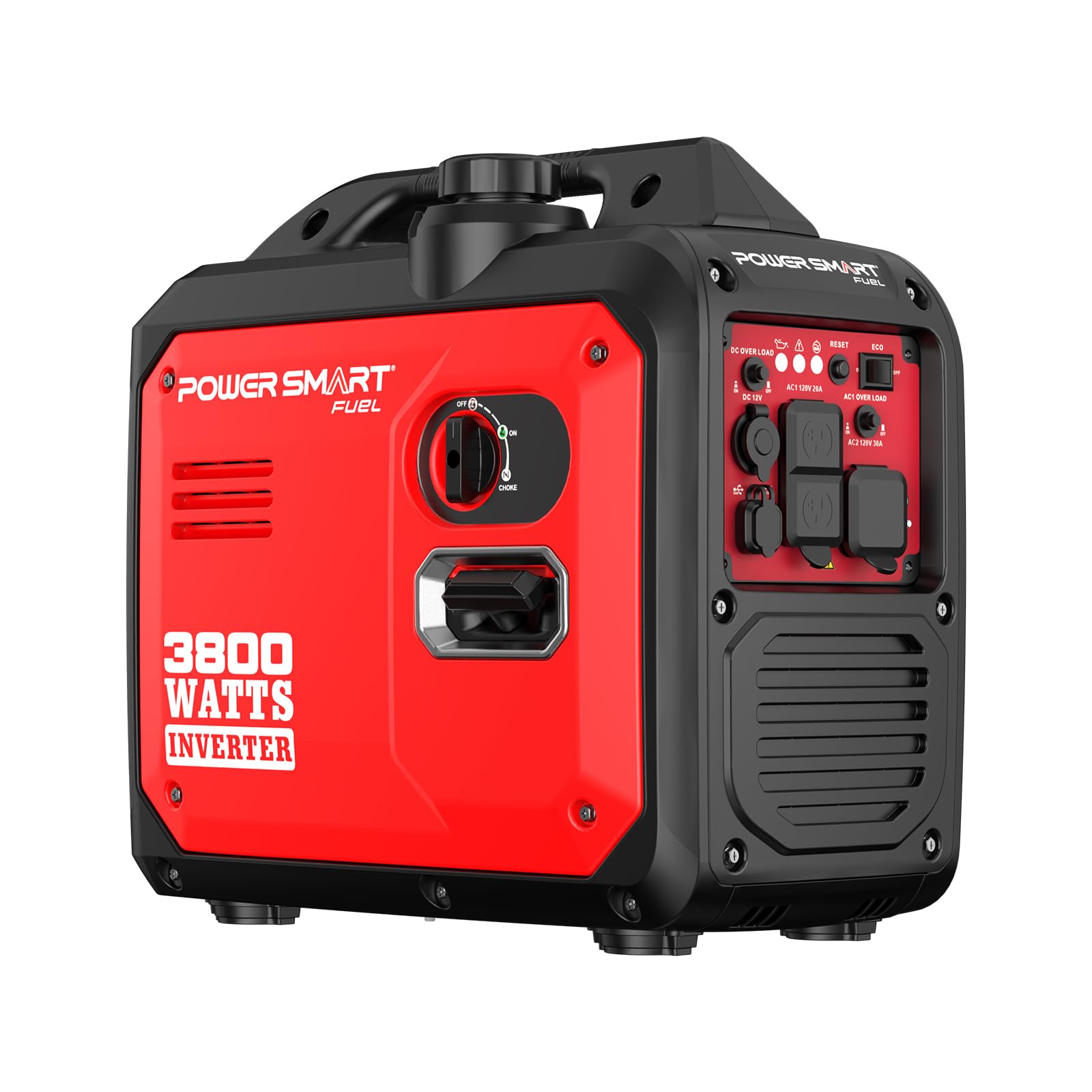
This is the quiet inverter king for the fridge duty cycle. At 59 dBA from 23 feet — quieter than a normal conversation — it won’t annoy the neighbors during an overnight outage. The 3800 starting watts and 3200 rated watts with less than 3% THD ensure your fridge’s compressor and control board receive grid-quality power, preventing the premature failure that conventional generators cause.
Real-world feedback confirms this unit handles a refrigerator, freezer, lights, and even small appliances without breaking a sweat. One reviewer ran 12 outlets including a fridge, water cooler, TV, and laptop at just one-third capacity. The 4.5-hour runtime at 50% load is standard for its 1.19-gallon tank, but the economy mode extends that significantly by automatically adjusting engine speed to match the load.
The folding handle and 52-pound weight make this genuinely portable — not a wheeled cart you still have to muscle. It starts on the first pull even after storage, thanks to the fuel shutoff that empties the carburetor. The parallel capability lets you double output with a second unit later, but for a single fridge setup, this is plenty of headroom.
Why it’s great
- Clean sine wave under 3% THD protects fridge electronics
- Quiet enough for residential neighborhoods at 59 dBA
- Starts easily without choke, even after storage
Good to know
- 1.19-gallon tank limits runtime to ~4.5h at 50% load
- No dual-fuel option — gasoline only
2. BLUETTI Elite 100 V2 Portable Power Station
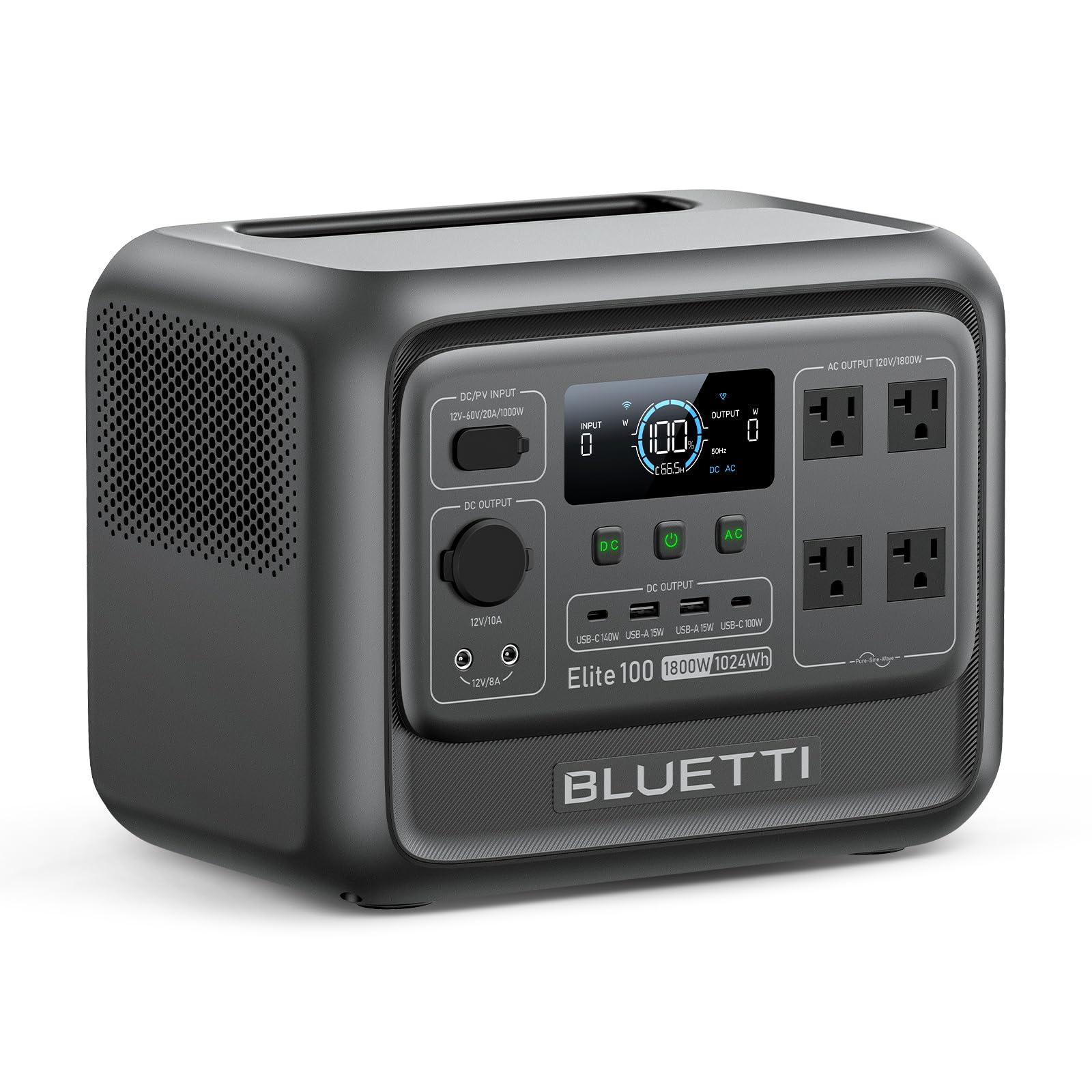
When silence is non-negotiable — think midnight outages near bedrooms or apartment living — this power station changes the game. At 30 dB in silent mode under 200W load, it is virtually inaudible. The 1024Wh LiFePO₄ battery delivers 1800W continuous (3600W surge) through four AC ports, which handles a standard fridge for 12–18 hours depending on cycling. The 10ms UPS switchover keeps the fridge running seamlessly if you’re already connected when the grid drops.
Charging speed is a standout feature: 0–80% in 45 minutes via AC, or 70 minutes to full with the 1200W TurboBoost input. Solar charging up to 1000W is also supported, making this a sustainable off-grid option. The 25-pound weight and hidden handle mean one person can move it from garage to campsite without breaking a sweat.
The smart app adds real utility — remote monitoring, power consumption tracking, and OTA updates. The LiFePO₄ cells are rated for over 4,000 cycles to 80% capacity, giving this unit a practical 10-year lifespan. It won’t run a fridge indefinitely like a gas generator will, but for short outages and quiet operation, it’s the best fume-free option in its class.
Why it’s great
- Near-silent operation at 30 dB for indoor use
- Ultra-fast 70-minute recharge via AC or solar
- LiFePO₄ battery lasts 10+ years with daily use
Good to know
- 1024Wh capacity provides ~12-18h fridge runtime maximum
- Heavy for its size despite 35% reduction from prior model
3. EF ECOFLOW Delta 3 Classic
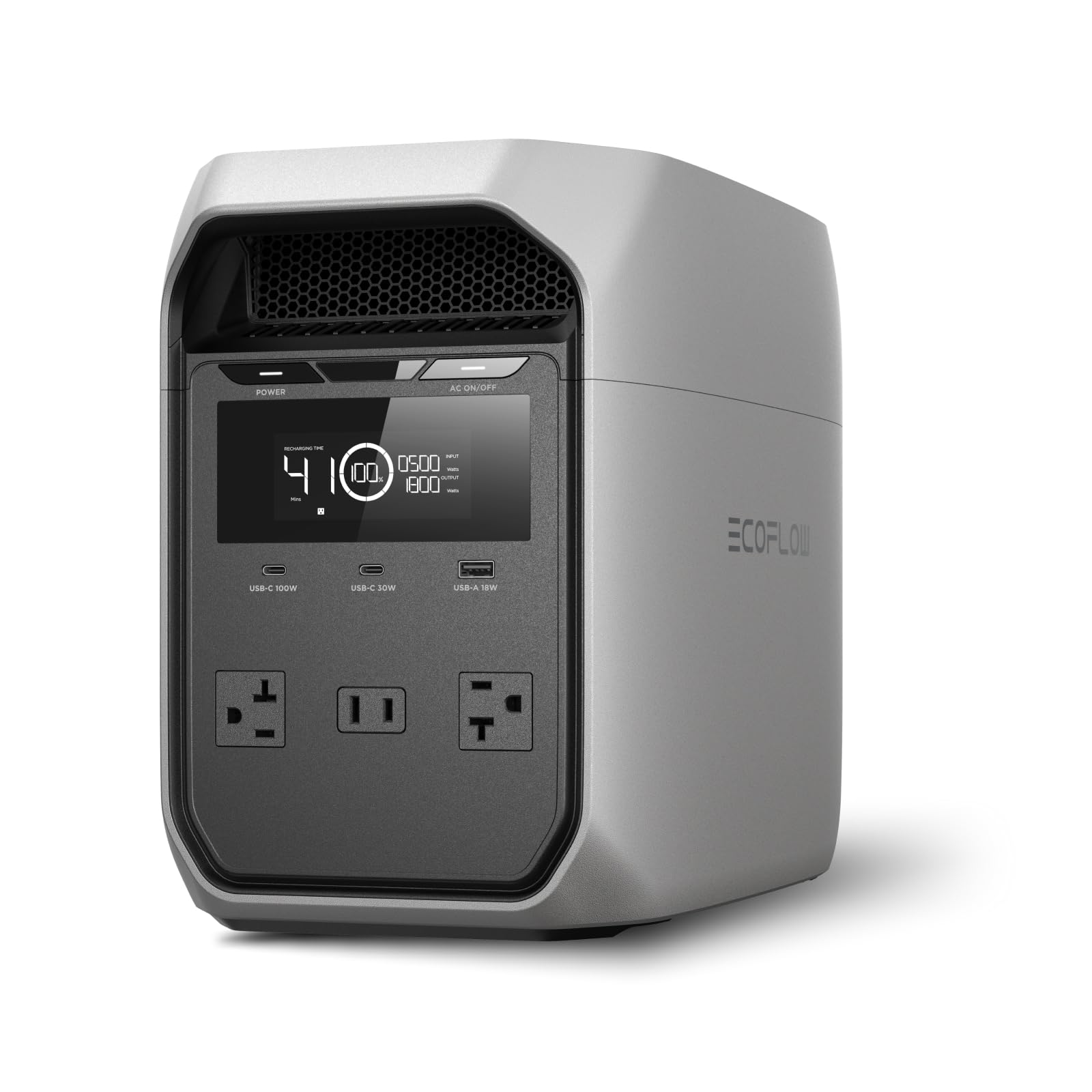
At 15 pounds, the Delta 3 Classic is the lightest fridge-capable power station on this list. Despite the featherweight frame, it packs a 1024Wh LiFePO₄ battery capable of 1800W continuous output (3600W surge) with X-Boost technology that lets it handle loads up to 2600W. A standard fridge with a startup surge of 1500W is no challenge, and the 10ms UPS switchover protects against data loss on connected computers or routers in addition to keeping the fridge running.
Recharging is where this unit shines — 0–80% in just 45 minutes via AC using X-Stream technology, and full charge in about an hour. Solar input up to 500W can recharge in 2.5 hours with an optional panel. The smart app offers scheduling, Storm Alert mode for impending outages, and Self-Powered Mode that automatically discharges stored solar energy. The metal frame and EV-grade CTC battery design add durability that matches the premium feel.
Real-world reports confirm it runs a mini fridge plus fan for 5 hours while only consuming half the battery, or powers a 65-inch TV for 4–5 hours. The dual handles and non-skid base make transport easy despite the dense internals. For anyone who needs a portable power station that can also serve as a home UPS, this is a top contender.
Why it’s great
- Remarkably light at 15 lbs for a 1kWh battery
- Fastest AC recharge in class — 45 min to 80%
- Metal frame construction for durability
Good to know
- Not compatible with Delta 2 or Delta 3 Max expansion batteries
- No wireless charging pad included
4. WEN 4800W Quiet Inverter Generator (56477i)

WEN’s 4800-watt inverter is built for the family that needs more than just a fridge. With 4800 surge watts and 4000 rated watts from a 224cc engine, it easily handles a refrigerator, chest freezer, lights, and a small window AC simultaneously. The inverter technology delivers clean power (under 3% THD) that is safe for the fridge’s digital controls and any other sensitive electronics plugged into the four three-prong 120V receptacles or the TT-30R RV port.
The integrated Watchdog CO Shutdown Sensor is a standout safety feature — it automatically kills the engine if dangerous carbon monoxide levels build up, which is critical when operating near living spaces during a prolonged outage. The fuel shutoff maximizes engine life by running the carburetor dry before shutdown, preventing gumming and varnish buildup that plagues stored generators. At 72.7 pounds, it’s heavier than smaller inverters, but the onboard wheels and telescoping pull handle make it manageable for one person to roll across a yard or driveway.
Customers consistently report 8+ hours of runtime per tank when running a fridge, freezer, and lights. The quiet operation is frequently praised — it’s conversational-level noise rather than the deafening roar of conventional open-frame generators. This is the model to choose when you need to power multiple fridge/freezer units simultaneously.
Why it’s great
- High 4800W surge handles fridge + freezer + lights together
- CO Shutdown Sensor adds critical safety margin
- Wheels and telescoping handle for easy transport
Good to know
- 73 lbs is heavy for a portable despite the wheel kit
- Gasoline-only — no dual fuel capability
5. Westinghouse 2550W Dual Fuel Inverter Generator

The dual-fuel capability of the Westinghouse 2550W is its defining feature — run on gasoline (2550 peak watts, 1900 rated) or propane (slightly less power but cleaner burning and longer shelf life). This flexibility is invaluable during extended outages when gasoline may be scarce or when storing fuel for months is necessary. The propane hose is included, so there’s no additional purchase needed to switch fuels.
At 52 dBA, this is one of the quietest inverter generators in its power class — significantly quieter than a normal conversation. The 1.16-gallon fuel tank delivers up to 12 hours of runtime on economy mode, which is excellent for overnight fridge protection. The TT-30R RV outlet is perfect for direct connection to an RV’s electrical system or for powering a fridge through a heavy-duty extension cord setup.
Customer experiences highlight the lightweight 43-pound design as a major advantage — one person can easily lift it into a truck bed or carry it to a campsite. The CO sensor provides automatic shutdown if carbon monoxide accumulates, and the three-year warranty adds peace of mind. Note that some users report the included oil quantity is slightly insufficient, so buying an extra quart of 10W-30 is recommended before first startup.
Why it’s great
- Dual fuel (gas/propane) offers flexible fuel storage options
- Ultra-quiet 52 dBA — among the quietest in class
- 12-hour runtime on economy mode for overnight coverage
Good to know
- 1900 rated watts is marginal for a fridge plus other devices
- Some units arrive with defects; check return policy
6. Champion 2500W Ultra-Light Inverter Generator

At 39.7 pounds, the Champion 2500W is the lightest gasoline inverter generator that can still reliably start and run a standard refrigerator. The 2500 starting watts (1850 running watts) provide enough headroom for a fridge’s startup surge, and the clean power output (under 3% THD) protects the compressor and control board. The 53 dBA noise level is remarkably quiet — you can hold a conversation right next to it without raising your voice.
This unit is designed for one-person portability. The compact dimensions and integrated handle allow easy carrying from garage to campsite to tailgate. The parallel capability means you can connect two Champions to double output if you ever need more power for a larger fridge or additional appliances. The CO Shield carbon monoxide auto shutoff system adds a critical safety layer, particularly important when operating in partially enclosed spaces like a garage with the door open.
Real-world reports confirm it runs a fridge, chest freezer, lamps, and electronics for 26–30 hours on a single 1.5-gallon tank during outage situations. The three-year warranty and free lifetime technical support from Champion are industry-leading. One nuance: the carbon monoxide sensor has been reported to cause occasional nuisance shutdowns in dusty or snowy conditions, so outdoor placement with good airflow is essential.
Why it’s great
- Industry-leading light weight at 39.7 lbs
- 53 dBA is quiet enough for residential use
- 3-year warranty with free lifetime technical support
Good to know
- 1850 running watts limits extra appliance capacity
- CO sensor may occasionally trigger false shutdowns
7. PowerSmart 7000W Open Frame Inverter Generator
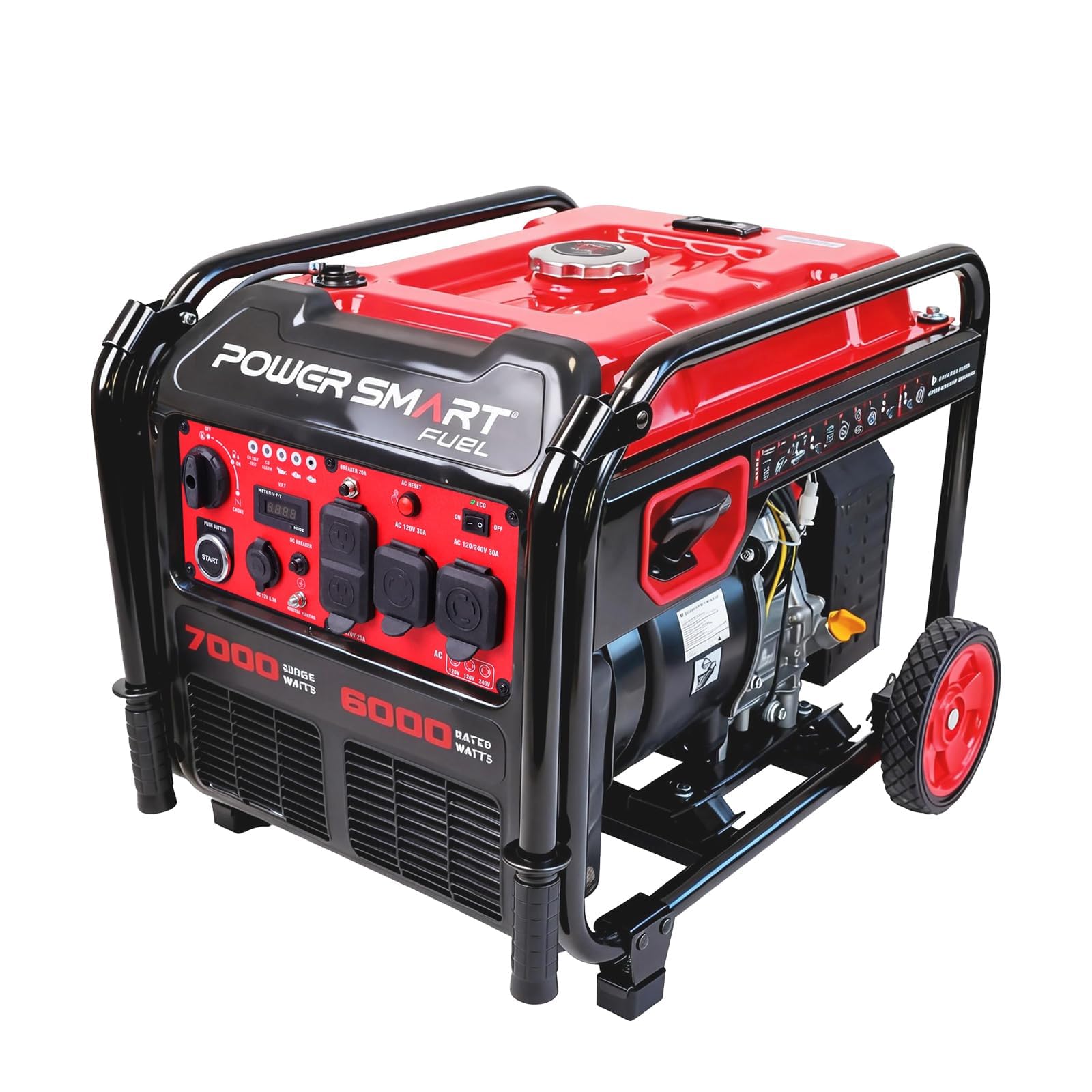
For whole-house fridge backup plus all the essentials, the PowerSmart 7000W delivers serious capacity. With 7000 surge watts and 6000 rated watts from a 322cc engine, this generator can simultaneously power a refrigerator, chest freezer, well pump, furnace blower, and a window AC unit without breaking a sweat. The inverter technology produces clean sine wave power (under 3% THD), which is safe for sensitive electronics — a rarity at this power level where most high-output units rely on conventional alternators.
The 120/240V dual voltage output makes it ready for transfer switch connection, enabling whole-house backup through a professional installation. The electric push-button start with battery included eliminates the frustration of pull-starting a large engine, though a recoil backup is present. At 113.5 pounds, it’s not portable in the traditional sense, but the open-frame design provides superior cooling and the wheels make rolling it into position manageable. The 6-hour runtime at 50% load on the 3.2-gallon tank is decent, and the economy mode extends that in lighter use.
Customer reports highlight its ability to run an entire house’s critical loads — one user powers everything except the 240V dryer and water heater through a 30A inlet box. The 70 dBA noise level is louder than smaller inverters but still quieter than conventional open-frame generators of similar output. This is the right choice for those who need serious power without the fuel-hungry, dirty-power compromises of traditional generators.
Why it’s great
- 6000W rated with clean inverter power for whole-house use
- 120/240V output for direct transfer switch connection
- Electric start eliminates pull-start hassle
Good to know
- 113.5 lbs is heavy — requires wheel dolly for serious transport
- No dual-fuel option; gasoline only
8. WEN DF360iX Dual Fuel Inverter Generator

The DF360iX brings dual-fuel capability to a quiet, lightweight package that weighs just 49 pounds. Running on gasoline, it delivers 3600 surge watts and 2900 rated watts — enough headroom for a fridge plus a freezer, lights, and a sump pump. On propane, output drops slightly to 3500 surge / 2600 rated, but the fuel stores indefinitely and burns cleaner, making it ideal for emergency kits that might sit unused for months.
The inverter technology ensures clean power safe for sensitive electronics, and the digital display shows voltage, frequency, runtime, and load percentage in real time — a feature usually found on pricier models. The tool-free LPG quick-connector makes switching between gas and propane effortless, and the fuel shutoff extends engine life by carburetor draining before storage. The CO Watchdog sensor provides automatic shutdown if carbon monoxide reaches dangerous levels, which is particularly important when operating near living spaces.
Customer feedback highlights the quiet operation — comparable to a normal conversation — and the reliable first-pull starts on both fuels. One user ran a 1500W heater plus a fan at half load, burning less than half a gallon of gas per hour. The TT-30R RV port is a bonus for RV owners who want a single generator for both home backup and camping. The three-year warranty provides solid coverage, though the 149cc engine is on the smaller side for extended high-load use.
Why it’s great
- Dual fuel with included propane hose and tool-free switch
- Digital display with runtime, load, and voltage monitoring
- Lightweight at 49 lbs with good power output
Good to know
- Propane output drops to 2600W rated — marginal for heavy loads
- Some units ship with broken propane regulators
9. Generac GP3300i Inverter Generator

Generac’s GP3300i brings the brand’s generator engineering expertise into a portable inverter package designed for home backup. The PowerRush Advance Technology delivers over 50% more starting capacity than the rated 3300 watts, meaning this unit can handle the spike from a refrigerator compressor plus a deep well pump or furnace motor simultaneously. The TruePower Technology ensures clean, stable power with less than 3% THD, safe for any modern fridge’s control board.
The COsense Technology actively monitors carbon monoxide levels and shuts the generator down before dangerous concentrations build up, a smart safety system that adjusts based on enclosure and airflow conditions. The Economy Mode automatically adjusts engine speed to match the load, reducing fuel consumption significantly during light-load fridge cycling. Two USB ports provide convenient device charging without needing separate adapters, and the parallel-ready capability allows doubling output with a second GP3300i.
The 59.5-pound weight is manageable for one person with the built-in handle, though it’s not as lightweight as the Champion or Westinghouse options. Some high-altitude users note power derating — expect about 2500W continuous at 5,000 feet elevation. The five-year warranty on the engine is industry-leading for portable generators.
Why it’s great
- PowerRush technology boosts starting capacity by 50%
- COsense smart monitoring for automatic safety shutdown
- Excellent fuel efficiency on Economy Mode
Good to know
- Power output drops significantly at high altitudes
- No dual-fuel option for fuel flexibility
10. Jackery Explorer 2000 v2

With 2042Wh of LiFePO₄ battery capacity, the Jackery Explorer 2000 v2 can run a standard refrigerator for over 21 hours on a single charge — confirmed by customer data. The 2200W rated output (4400W surge) handles the fridge’s startup surge easily, and the silent operation at under 30 dB in quiet mode means zero noise pollution during a blackout. This is the ultimate choice for those who want gas-free, fume-free, quiet fridge backup indoors without any ventilation concerns.
The 39.5-pound weight is remarkably light for a 2kWh power station, thanks to the CTB (Cell-to-Body) technology derived from electric vehicles. AC fast charging reaches 0–80% in 66 minutes, or full charge in 102 minutes using Emergency Super Charging mode through the app. Solar charging with 400W panels takes about 6 hours. The 20ms UPS switchover keeps the fridge running through the transition, and the UL1778 certification confirms reliable uninterruptible power supply capability.
The LCD display provides clear readouts of remaining capacity, input/output wattage, and estimated runtime. Three AC outlets, two USB-C PD 100W ports, and a USB-A port cover all device charging needs. The smart app enables remote monitoring and control, including mode switching and charging scheduling. At this price point, it’s a significant investment, but the 10-year battery lifespan and zero maintenance make it cost-competitive with gas generators over the long term.
Why it’s great
- 21+ hours of fridge runtime on a single charge
- Silent operation — no fumes, no noise, indoor-safe
- UL1778 UPS certified for seamless outage backup
Good to know
- Limited to ~1 day of fridge runtime before recharge needed
- Solar panels are an additional cost for off-grid recharging
11. Anker SOLIX C2000 Gen 2

The Anker SOLIX C2000 Gen 2 is built for those who want gas-free power with room to grow. The base unit offers 2048Wh of LiFePO₄ battery with 2400W rated output and 4000W peak — enough to handle even a large fridge plus a window AC or sump pump simultaneously. But the killer feature is expandability: adding the optional expansion battery doubles the capacity to 4kWh, enabling a dual-door fridge to run for up to 64 hours. That’s over two and a half days of continuous refrigeration without fuel or noise.
Charging is blazing fast — full recharge in just 58 minutes via AC, or 3 hours via 800W alternator charging (8x faster than a standard car socket). The ultra-low 9W standby consumption means it sips power when plugged in, acting as a true UPS that’s always ready. The 41.7-pound weight is reasonable for a 2kWh unit, and the compact 18.1 x 9.8 x 10.1-inch footprint slides into tight spaces in a garage or under a counter.
Customer reports confirm it powers a 12V car fridge for 5–7 days on a single charge during camping trips, and a full-size fridge, TV, and Wi-Fi router for over 10 hours during outages. The companion app provides usage tracking and remote control. The metal and plastic construction feels solid, though the lack of an included paper manual (app-based only) may frustrate some users. This is the most future-proof power station for fridge backup, especially if you plan to add solar panels later.
Why it’s great
- Expandable to 4kWh for up to 64 hours of fridge runtime
- Full charge in 58 minutes — fastest in its class
- 4000W peak output handles large appliances
Good to know
- No paper manual included — relies on smartphone app
- Expansion battery is an additional purchase
FAQ
How many watts do I need to run a refrigerator during a power outage?
Can I run a refrigerator on a portable power station instead of a gas generator?
Is inverter technology really necessary for a refrigerator generator?
How long can a generator run continuously to keep a fridge cold?
Can I use an extension cord with a generator for my refrigerator?
Final Thoughts: The Verdict
For most users, the generator for fridge winner is the PowerSmart 3800W Inverter because it delivers the best balance of quiet operation, clean power for sensitive electronics, easy portability, and reliable starting — all at a price that undercuts most competitors. If you want fume-free silent indoor operation, grab the Jackery Explorer 2000 v2 — it runs a fridge for over 21 hours and works as a UPS. And for multi-appliance whole-house backup with inverter-grade power, nothing beats the PowerSmart 7000W Open Frame for sheer capacity and transfer switch readiness.