
A dull chef knife is a kitchen hazard, turning a simple onion dice into a frustrating, uneven mess that ruins your prep flow. The difference between a frustrating chopping session and a fluid, rhythmic one often comes down to the steel in your hand—specifically, the robust, edge-holding character of a well-forged German blade. You want a tool that feels substantial, resists corrosion, and holds a working edge through a week of heavy use without constant honing.
I’m Mohammad Maruf — the founder and writer behind Drink4Good. I’ve spent years analyzing market trends and metallurgy specs for kitchen cutlery, comparing Rockwell hardness figures, blade geometries, and handle ergonomics from the major Solingen and cutting-edge manufacturers to separate true performance from marketing claims.
After evaluating over a dozen models based on edge retention, balance, and handle comfort, this guide breaks down the top contenders to help you find the perfect german chef knives for your kitchen and your budget.
How To Choose The Best German Chef Knives
The best German chef knives balance a durable, corrosion-resistant steel alloy with a comfortable, secure handle and a blade geometry that suits your cutting style. While many brands boast about their heritage, the real differentiators are the specific steel composition, the construction method, and the Rockwell hardness that dictates how the knife performs and how easily it can be maintained.
Steel Composition and Hardness
German knives typically use X50CrMoV15 or similar high-carbon stainless steel, which offers excellent stain resistance and toughness. The Rockwell hardness (HRC) for this steel usually falls between 55 and 58. A rating around 56-58 provides a good balance: the edge is hard enough to hold for reasonable periods but soft enough to be sharpened on a standard steel or whetstone without chipping. Japanese knives often go harder (60+ HRC) but are more brittle and difficult to maintain for the average home cook.
Forged vs. Stamped Construction
Forged knives are heated, hammered, and shaped from a single piece of steel, resulting in a thicker blade with a visible bolster (the thick metal band between the blade and handle). This process creates a heavier, better-balanced knife with a seamless transition from blade to tang. Stamped knives are laser-cut from a sheet of steel, making them lighter, thinner, and generally more affordable. While a high-quality stamped knife from a reputable brand can perform well, a forged knife typically offers superior heft, balance, and durability over a lifetime of use.
Handle Material and Ergonomics
The handle is your point of contact for hours of prep work. Synthetic materials like polyoxymethylene (POM) and composite polymers are common in mid-range and premium German knives. They are durable, fade-resistant, and unaffected by moisture or heat. More exotic materials like stabilized olive wood provide a natural, warm grip but require occasional oiling to prevent drying. The handle shape should allow for a secure pinch grip and feel balanced in your hand, not too heavy in the handle or too blade-heavy in the tip. Decide based on your preference for maintenance and feel.
Edge Angle and Blade Geometry
A standard German chef knife edge angle is 20 degrees per side, which creates a robust, durable edge ideal for heavy chopping and dense ingredients. Some modern German lines use a 15-degree angle for increased sharpness, mimicking a Japanese-style edge. A blade with a high spine (about 2 inches at the heel) provides better knuckle clearance and a taller cutting surface. The profile—whether it has a pronounced belly for rocking or a flatter edge for push-cutting—dictates which tasks the knife excels at, from mincing herbs to precise dicing.
Quick Comparison
On smaller screens, swipe sideways to see the full table.
| Model | Category | Best For | Key Spec | Amazon |
|---|---|---|---|---|
| Messermeister Oliva Elite Stealth | Premium | Natural grip & artisan build | 1.4116 steel, 15° edge | Amazon |
| WÜSTHOF Classic 8″ Chef | Premium | Forged durability & pro balance | PEtec 20% sharper edge | Amazon |
| ZWILLING PROFESSIONAL S | Premium | Full tang ergonomic control | FRIODUR ice-hardened blade | Amazon |
| ZWILLING Four Star | Mid-Range | Lightweight precision cutting | 57 HRC, 15° edge angle | Amazon |
| Dalstrong Kiritsuke | Mid-Range | Unique profile & modern design | 56+ HRC, G10 handle | Amazon |
| WÜSTHOF Gourmet | Mid-Range | Lightweight value with pro steel | 8-inch, 240 grams weight | Amazon |
| HENCKELS Classic | Entry-Level | Budget-friendly forged knife | 4.48 oz lightweight build | Amazon |
In‑Depth Reviews
1. ZWILLING PROFESSIONAL S 8-Inch Chef’s Knife

The ZWILLING PROFESSIONAL S is a forged, full-tang knife from the company’s own German factory, using their proprietary Sigmaforge process that hammers the blade from a single piece of solid steel. This results in a dense, well-balanced blade with a full bolster that provides a secure finger guard. The FRIODUR ice-hardening process makes the edge start sharper and stay sharp noticeably longer, handling heavy daily prep without quickly losing its bite.
Users consistently praise its ergonomic polymer handle, which is perfectly bonded to the tang and features a three-rivet design. The thumb-forefinger pinch grip feels natural, and the 8-inch blade offers a nice balance between control and leverage. Reviewers with professional kitchen experience note it performs at a level suitable for Michelin-star environments, yet remains approachable for serious home cooks.
While it comes with a higher price tag, the durability and edge retention justify the long-term investment. The knife is dishwasher safe, though hand washing will extend the life of the handle and edge. For cooks who want a genuine workhorse forged in Solingen that will outlast most kitchen tools, this is the top choice.
Why it’s great
- Sigmaforge construction delivers exceptional balance
- FRIODUR blade holds edge through heavy use
- Ergonomic full-tang handle provides precise control
Good to know
- Premium price point may be a stretch for casual cooks
- Full bolster can make sharpening slightly more involved
2. Messermeister Oliva Elite Stealth 8” Chef’s Knife

The Messermeister Oliva Elite Stealth stands out with its natural Mediterranean olive wood handle, which is not only visually striking but provides a naturally warm, secure grip even in a busy kitchen. The blade, bolster, and tang are forged as one piece in Solingen, Germany, using 1.4116 steel alloy. This knife is about 25% thinner and 10% lighter than traditional German chef knives, offering a more nimble feel while retaining the robust edge geometry users expect from German steel.
With a smooth 15-degree edge per side, this knife is designed for precision slicing, dicing, and chopping. Reviews from professional users highlight its elegant balance and control, making it ideal for tasks that require both power and finesse, from breaking down chuck roasts to executing fine Brunoise cuts. The bosterless heel allows the user to use the entire blade length for cutting and simplifies sharpening compared to a full-bolstered knife.
The olive wood handle requires occasional conditioning with a mineral oil like Boos Block cream, but its natural antimicrobial properties are a bonus. At this price point, the combination of premium materials, handcrafted feel, and thinner profile makes it a compelling choice for the cook who values both art and function.
Why it’s great
- Beautiful, ergonomic olive wood handle with natural grip
- Thinner and lighter profile for agile cutting
- Bosterless heel makes sharpening and cleaning easy
Good to know
- Olive wood handle requires periodic oiling
- Higher cost reflects artisan materials and construction
3. WÜSTHOF Classic 8″ Chef’s Knife

The WÜSTHOF Classic is the brand’s best-selling series for generations, and for good reason. It is forged from a single block of high-carbon stainless steel, tempered to a 58-degree Rockwell hardness, and features the Precision Edge Technology (PEtec) which yields a blade that is 20% sharper with twice the edge retention of previous models. The full tang, triple-riveted handle offers a classic, substantial feel, and the full bolster and finger guard add a level of safety and balance that professional chefs value.
At 8.5 ounces, it carries a satisfying heft that powers through thick vegetables and tougher cuts of meat without causing hand fatigue. Users consistently describe it as exceptionally sharp out of the box, capable of sliding through carrots and onions like butter. The ergonomic synthetic handle is designed to resist fading and discoloration, making it a resilient choice for a lifetime of daily use.
One trade-off is the full bolster, which can make sharpening on a whetstone slightly less straightforward than a bosterless design. However, for those who prioritize a classic, heavy-duty, balanced blade that serves as a true kitchen workhorse, the WÜSTHOF Classic is a benchmark.
Why it’s great
- PEtec edge is 20% sharper with twice the retention
- Forged high-carbon steel at 58 HRC provides durable edge
- Classic triple-riveted handle is extremely durable
Good to know
- Full bolster complicates sharpening slightly
- Premium price, though justified by build quality
4. ZWILLING Four Star 8-inch Chef’s Knife
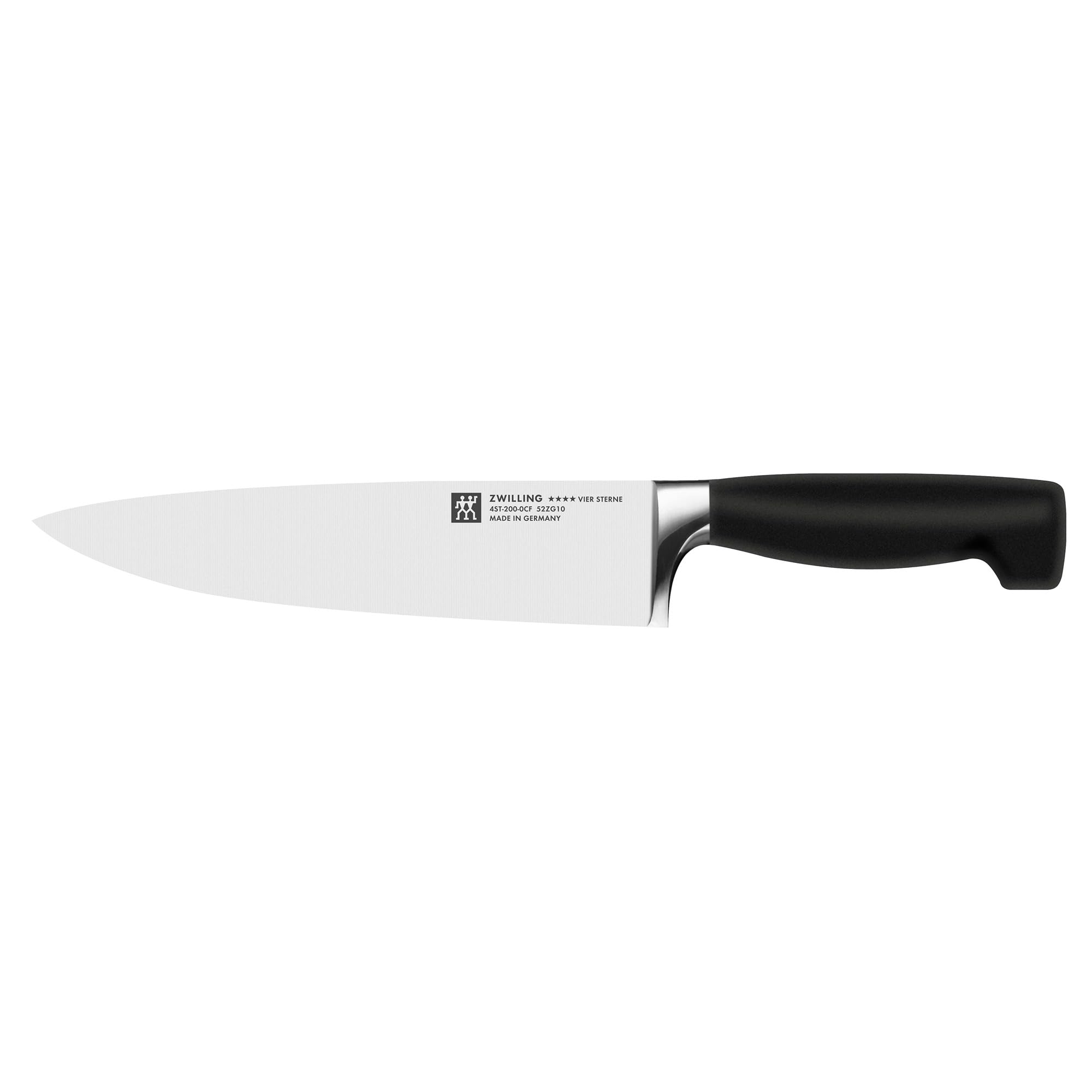
The ZWILLING Four Star is often described as a budget version of the Premium line, but that undersells its own performance. It is expertly crafted in Germany using the same special formula high-carbon NO STAIN steel, but with a non-riveted molded synthetic handle. This reduces cost while maintaining the core blade quality. The FRIODUR ice-hardened blade stays sharp, and the laser-controlled edge angle at 15 degrees per side delivers impressive precision out of the box.
Weighing only 0.54 pounds, it is noticeably lighter than the WÜSTHOF Classic or the PROFESSIONAL S, making it an excellent choice for cooks with smaller hands or those who prefer a more agile feel. Reviews highlight the comfortable, lightweight handle and the razor-sharp edge that makes quick work of vegetables and general prep. The bolsters are less pronounced, making honing on a steel rod notably easier than with full-bolstered models.
While it lacks the heft of heavier forged knives, the Four Star excels in controlled, precise cutting and represents a strong mid-range option. It is dishwasher safe, though hand washing is recommended to preserve the handle. For the price, you get a genuine ZWILLING forged blade and the company’s near 300-year heritage in steelmaking.
Why it’s great
- Lightweight and agile for precision cutting
- German high-carbon steel with FRIODUR hardening
- Dishwasher safe and easy to maintain
Good to know
- Molded handle lacks the premium feel of full tang rivets
- Lighter weight may not suit fans of heavy blades
5. Dalstrong Kiritsuke Chef Knife – 8.5 inch – Gladiator Series

The Dalstrong Gladiator Series Kiritsuke brings a Japanese-inspired blade profile to German steel construction. Forged from high-carbon German steel and hardened to 56+ HRC, it features a distinct, flat belly with a sharp, angled tip ideal for push-cutting and precise slicing. The 8.5-inch blade is paired with a luxurious black G10 handle (a high-pressure fiberglass laminate) that is triple-riveted for a secure, comfortable grip, even in wet conditions.
This knife is noticeably heavier and thicker than many traditional German chef knives, which some users describe as feeling like a hatchet. This heft provides substantial power for breaking down proteins and dense vegetables, but the flat profile means it is not suited for the rocking motion used for mincing herbs. Reviews from culinary professionals praise the build quality and steel, noting that with regular honing it holds a functional edge well.
The included protective sheath is a welcome addition, though the weight and unique profile mean it is best suited for experienced cooks comfortable with push-cut techniques. If you want a distinctive, modern knife that performs well on protein and bulk chopping, the Dalstrong Kiritsuke delivers solid value for its mid-range price.
Why it’s great
- Unique Kiritsuke profile for push-cutting and slicing
- High-quality G10 handle is durable and grippy
- Solid construction with good heft for heavy prep
Good to know
- Flat belly is not designed for rocking/mincing
- Heavier and thicker than standard German chef knives
6. WÜSTHOF Gourmet 8″ Chef’s Knife

The WÜSTHOF Gourmet series offers the brand’s renowned high-carbon stainless steel in a precise, laser-cut stamped design, making it an excellent entry point into German quality without the forged price. Weighing only 240 grams, this knife is light and nimble, making it ideal for extended prep sessions where wrist fatigue is a concern. The synthetic polypropylene (POM) handle is resistant to fading, discoloration, and impact, providing a durable, low-maintenance grip.
Reviews consistently note that it arrives exceptionally sharp, and users report that the edge holds well under regular home use. The lightweight nature makes it perfect for slicing soft fruits, vegetables, and boneless meats with precision. The lack of a full bolster makes honing and sharpening straightforward, and the weight is well-centered, not tip-heavy. For a home cook who wants WÜSTHOF steel quality but prefers a lighter tool, this is a perfect fit.
The trade-off is that stamped construction does not offer the same heft or balance as the fully forged Classic line. However, for the price, you get WÜSTHOF’s Solingen steel and a comfortable, durable handle. It is a smart, budget-conscious choice that does not sacrifice blade quality.
Why it’s great
- Lightweight design reduces wrist fatigue
- High-carbon German steel holds a great edge
- Durable, fade-resistant POM handle
Good to know
- Stamped construction lacks heft of forged models
- Not suitable for heavy chopping or breaking down bones
7. HENCKELS Classic Razor-Sharp 8-inch Chef Knife
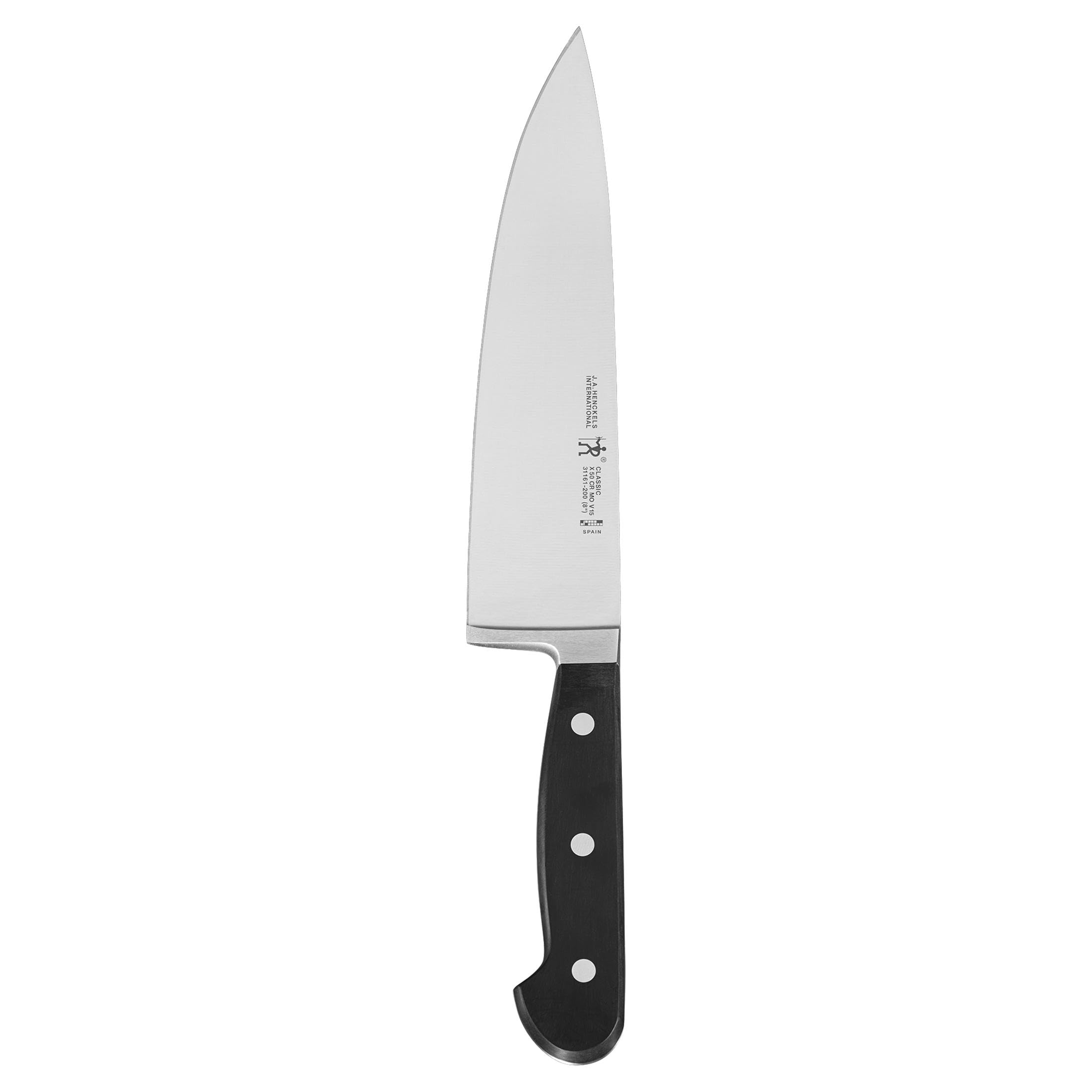
The HENCKELS Classic is an entry-level forged knife that brings German engineering to a more accessible price point. Fully forged from stainless steel with a satin-finished blade, it offers a seamless transition from blade to handle. At only 4.48 ounces, it is one of the lightest forged knives on the market, making it exceptionally easy to maneuver for quick, everyday tasks like slicing vegetables, herbs, and even disjointing small bones.
Reviews from long-term users are impressive—some report daily use for over 14 years with the knife still performing well. The curved blade is praised for its chopping and mincing action, and the comfortable composite handle provides a secure grip. While the edge is very sharp out of the box, some users note that the overall edge retention is not as high as premium models, so regular honing is beneficial. The knife is dishwasher safe, but hand washing is recommended to preserve the edge.
For those stepping into the world of forged German knives, the HENCKELS Classic is an excellent starting point. It offers genuine forging and a light, balanced feel at a budget-conscious price, though experienced cooks may eventually crave the heavier, more substantial balance of a higher-end forged knife.
Why it’s great
- Genuine forged construction at a budget-friendly price
- Extremely lightweight and easy to handle
- Proven long-term durability with good care
Good to know
- Edge retention is decent but not top-tier
- Lightweight feel may not satisfy lovers of heavy knives
FAQ
What is the difference between German and Japanese chef knives?
How often should I sharpen my German chef knife?
Is a forged knife always better than a stamped one?
Can German chef knives go in the dishwasher?
What is the ideal blade length for a German chef knife?
Final Thoughts: The Verdict
For most users, the german chef knives winner is the ZWILLING PROFESSIONAL S because its Sigmaforge construction, FRIODUR edge, and ergonomic full-tang handle offer the best overall balance of sharpness, durability, and control for the serious home cook. If you want a natural, artisan feel with a thinner profile, grab the Messermeister Oliva Elite Stealth. And for a classic, heavy-duty forged workhorse that is a true lifetime investment, nothing beats the WÜSTHOF Classic.