
The first bite tells the story: a gluten-free cookie that crumbles into dust in your hand, or one that holds together with a tender, chewy center and a slightly crisp edge. That difference comes down to flour choice, not grit or graininess, and finding the right blend means the difference between a batch that disappears and one that gets left on the plate. Every gluten-free flour behaves differently in cookies — some absorb more liquid, some add a gummy texture, and some bring a distinct bean or rice flavor that can clash with chocolate or vanilla.
I’m Mohammad Maruf — the founder and writer behind Drink4Good. I focus on market analysis and spec-level comparisons within the gluten-free baking space, tracking how different flour blends perform in classic cookie recipes like chocolate chip, shortbread, and sugar cookies.
After reviewing dozens of options and analyzing hundreds of verified buyer experiences, I’ve narrowed down the top performers that deliver the texture, flavor, and structural integrity home bakers expect. This guide to the best gf flour for cookies covers five standout blends, from premium cup-for-cup options to allergen-friendly alternatives designed specifically for tender, flavorful cookies.
How To Choose The Best GF Flour For Cookies
Cookie dough is less forgiving than cake batter or quick bread. The flour-to-fat ratio is tighter, the mixing time shorter, and the margin for spread and rise is narrow. Choosing the wrong gluten-free blend can yield cookies that spread into flat, greasy discs or stay in stiff, domed mounds. The most reliable cookie flours share three characteristics: fine milling, balanced starch-to-protein ratio, and a 1:1 substitution capability.
1:1 Substitution
A flour labeled “cup for cup” or “1:1” is designed to replace all-purpose wheat flour by volume without requiring recipe adjustments. This is non-negotiable for cookies because ingredient ratios are already precise. If a flour blend requires extra liquid, eggs, or fat to hydrate, the sugar-to-butter balance shifts and the cookie chemistry breaks. Every product in this guide offers a true 1:1 substitution rate.
Xanthan Gum or a Built-In Binder
Xanthan gum mimics the elastic structure that gluten provides. Without it, cookies turn crumbly and sand-like. Many premium blends already include xanthan gum in the mix, which simplifies measuring. If a flour lacks a binder, you will need to add ¼ to ½ teaspoon per cup of flour. Check the ingredient list before you bake.
Grit Level and Grind
Coarse rice flours or unrefined bean flours leave a sandy texture that is especially noticeable in a thin, baked cookie. You want a finely milled white rice flour or a blend that uses potato starch and tapioca starch to create a smooth, neutral base. Cookie dough baked with a gritty flour will never fully recover, even with extra butter or sugar.
Quick Comparison
On smaller screens, swipe sideways to see the full table.
| Model | Category | Best For | Key Spec | Amazon |
|---|---|---|---|---|
| gfJules All Purpose Flour | Premium | Allergen-free cookie dough | Top 9 Allergen-Free | Amazon |
| Cup4Cup Multipurpose Flour | Premium | Buttery, tender cookies | Dairy-containing formula | Amazon |
| Bob’s Red Mill All Purpose GF Flour | Mid-Range | Savory and heartier cookies | Bean and sorghum base | Amazon |
| Great River Milling GF All Purpose Flour | Value | Everyday cookie testing | Glyphosate-free | Amazon |
| Anthony’s Premium White Rice Flour | Budget | Thinner, crisper cookies | Single ingredient flour | Amazon |
In‑Depth Reviews
1. gfJules Certified Gluten Free All Purpose Flour

gfJules has been voted number one by consumers in the Gluten Free Awards eight times, and the reason is clear when you bake a batch of chocolate chip cookies. The blend uses a finely milled white rice flour, modified tapioca starch, potato starch, corn starch, and corn flour plus xanthan gum to create a smooth, light-textured dough that spreads evenly and bakes with a tender crumb. Unlike mixes that rely on brown rice flour or bean flours, gfJules avoids the gritty texture and heavy aftertaste that can overpower delicate cookie flavors.
This flour works as a true 1:1 cup-for-cup replacement, so you can pull out your standard cookie recipe and measure exactly the same volume without recalculating liquid ratios. The 1.5-pound pouch yields approximately 5 cups of flour. Multiple reviewers report that the dough handles similarly to wheat dough — it does not feel stiff or overly sticky — and cookies come out with a soft interior and lightly browned edges rather than a flat, greasy spread or a dense, domed top.
One major advantage is the allergen profile. gfJules is certified free from the top nine food allergens — wheat, milk, eggs, peanuts, tree nuts, soy, fish, sesame, and crustaceans. This makes it a safe choice for households managing multiple food sensitivities. The ingredient list shows modified tapioca starches rather than simple starch fillers, which contributes to a structure that holds together without crumbling. A few reviewers note the dough felt too stiff for drop biscuits, but for standard rolled or scooped cookie dough, stiffness is actually a benefit during shaping.
Why it’s great
- Certified Top 9 allergen-free, safe for multiple sensitivities
- Fine white flour blend produces tender, non-gritty cookies
- True 1:1 substitution works with any standard cookie recipe
Good to know
- Higher price point per pound than many blends
- Contains corn flour and corn starch, avoid if corn-sensitive
- Smaller pouch size; frequent bakers may need multi-packs
2. Cup4Cup Multipurpose Flour, 3 Pounds

Cup4Cup was the first gluten-free flour designed as a true one-to-one substitution for all-purpose wheat flour, and it remains the benchmark for dairy-inclusive blends in cookie applications. The formula includes milk powder, which contributes to browning and a richer flavor profile that mimics the Maillard reaction you get from wheat-based cookies. For shortbread, sugar cookies, and butter-heavy dough, Cup4Cup delivers a flaky, tender texture that rivals conventional flour.
The milling is exceptionally fine — noticeably finer than many other blends — which eliminates the chalky or sandy mouthfeel that plagues budget flours. It contains a binding agent, so you do not need to add xanthan gum separately. Reviewers consistently mention that Cup4Cup is undetectable as gluten-free in cookies, cakes, and pie crusts, with no aftertaste. The 3-pound bag provides 48 ounces of flour, making it a practical volume for weekly baking without constant repurchasing.
The catch is the dairy content. If you are baking for someone with a milk allergy or lactose intolerance, Cup4Cup is not suitable. Some buyers were surprised that milk powder was not obvious from the front label. Additionally, availability has been inconsistent, especially during high-demand periods. For households that tolerate dairy well, however, this flour is one of the most reliable options for achieving a bakery-style cookie crumb at home.
Why it’s great
- Exceptional fine grind eliminates all grit in baked cookies
- Milk powder enhances browning and buttery flavor
- Large 3-pound bag suits regular baking volumes
Good to know
- Contains dairy — not safe for milk allergies
- Higher price per bag; not the most budget-friendly option
- Availability can be spotty during peak demand
3. Bob’s Red Mill All Purpose Gluten Free Flour (2-Pack)

Bob’s Red Mill takes a different approach to gluten-free baking by using a bean-based blend rather than a rice-based one. The ingredient list includes garbanzo bean flour, potato starch, tapioca flour, whole grain sorghum flour, and fava bean flour. This composition produces a denser, heartier crumb that works well in savory applications like cheese crackers or herb biscuits, and it can also succeed in cookies that feature strong flavors like peanut butter, oatmeal, or spice-based doughs.
In terms of cookie performance, this flour is not a 1:1 replacement for wheat in delicate cookies. The bean and sorghum base absorbs more moisture, so dough may feel stiff and cookies may not spread as much as rice-based blends. Reviewers note that the flavor, while not unpleasant, has an earthier note that can clash with vanilla or white chocolate. If you are baking a strongly flavored cookie like ginger molasses or double chocolate, however, that earthy undertone becomes negligible.
The two-pack provides 44 ounces total, which is a solid value for the price. This flour is also casein-free and kosher, and it avoids rice entirely, making it a good option for individuals who cannot tolerate rice or who want to reduce starch-based flours in their diet. The manufacturer advises that this blend is better suited for savory breads, fried foods, and pancakes than for sweet cakes or desserts — they explicitly recommend their 1-to-1 rice-based flour for cookies and sweets.
Why it’s great
- Rice-free formula suits grain-sensitive diets
- Bean and sorghum base adds protein and fiber
- Two-pack provides good volume for multi-purpose use
Good to know
- Earthy flavor may not work with delicate cookies
- Not a true 1:1 substitution; dough absorbs more moisture
- Better for savory baking than sweet cookie recipes
4. Great River Milling Gluten Free All Purpose Flour, 2 Lb
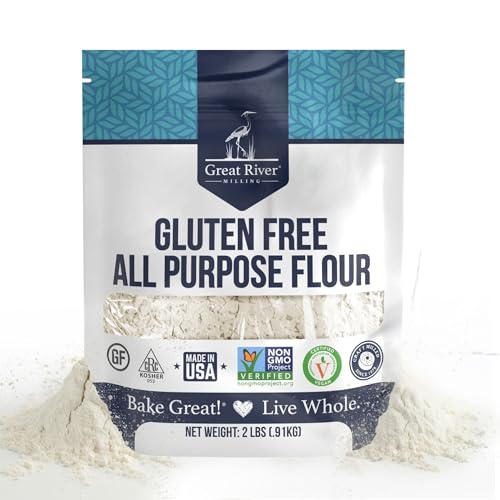
Great River Milling offers a balanced cup-for-cup alternative that aims to perform well across yeast breads, cakes, and cookies. The blend combines gluten-free grains and starches to create a smooth texture that delivers improved crumb and structure compared to single-ingredient flours. In cookie applications, the flour produces a dough that holds together well and bakes with moderate spread and a soft interior, though it does not quite reach the same tender crumb as the premium blends.
The certification list is strong: non-GMO, glyphosate-free, vegan, and kosher. This makes it an attractive option for bakers who prioritize clean sourcing and certified labels. The 2-pound bag is a smaller size suitable for occasional cookie baking or for testing a new flour before committing to a larger volume. Several reviewers praise the flavor and texture for cakes and breads, describing it as indistinguishable from wheat flour.
There is a caveat specific to cookies: one reviewer noted an unusual smell from the dry flour, and another found that baked goods came out dense and heavy, which can be an issue for light, airy cookies. For sturdier cookie types like oatmeal or peanut butter, the density is less noticeable. If your goal is a thin, crispy chocolate chip cookie, this blend may lean too heavy, but for soft, cakey cookies it performs respectably.
Why it’s great
- Glyphosate-free and non-GMO certified for clean sourcing
- Vegan and kosher friendly for many diet types
- True 1:1 substitution for standard cookie recipes
Good to know
- Small 2-pound bag may not suit heavy bakers
- Some users report a dense or heavy texture
- Can produce an odd smell when dry
5. Anthony’s Premium White Rice Flour, 3 lb
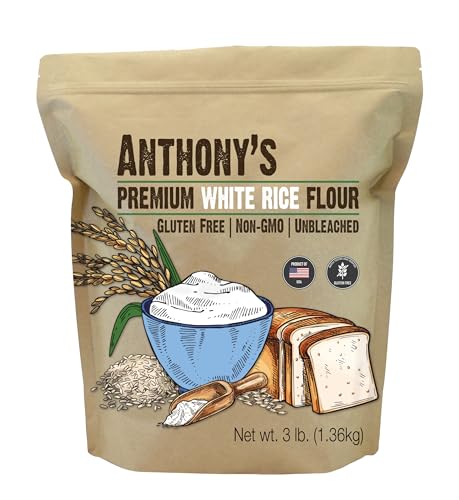
Anthony’s Premium White Rice Flour is a single-ingredient flour, not a blend. It contains only finely milled white rice that is batch-tested and verified gluten-free. In a cookie recipe, this means you are starting from a blank slate — white rice flour on its own has limited binding ability and no structure. It can work well for very thin, crispy cookies like tuiles or lace cookies, but for standard chocolate chip or drop cookies, you will need to add a binder such as xanthan gum or a starch like tapioca or potato starch.
The fine grind is a strong point. Unlike coarse rice flours that produce a gritty texture, Anthony’s grinds to a powder that blends smoothly into batters and doughs. It is useful as a thickener for sauces and gravies, and it mixes well with brown rice flour or protein powder for denser baked goods. The 3-pound bag offers 48 ounces, which is a substantial volume for a budget-friendly price that undercuts most blended flours.
For cookie baking specifically, Anthony’s White Rice Flour is best used as a component in a custom blend rather than as a standalone replacement. Several reviewers with dietary restrictions such as MCAS (Mast Cell Activation Syndrome) report that this flour is well-tolerated and works in waffles, muffins, and crepes when combined with other starches. If you are willing to experiment with ratios, this flour gives you total control over the final texture, but it requires more trial and error than a pre-blended option.
Why it’s great
- Only one ingredient — no additives or fillers
- Fine powder grind minimizes gritty texture
- Large 3-pound bag at a budget-friendly per-ounce cost
Good to know
- No binder included; requires xanthan gum for structure
- Cookies may turn out thin and fragile without added starch
- Best used as a component in a custom blend
FAQ
Why do my gluten-free cookies always come out crumbly and dry?
Can I substitute almond or coconut flour for gluten-free flour in cookie recipes?
How do I store gluten-free cookie dough or flour to keep it fresh?
Final Thoughts: The Verdict
For most home bakers, the best gf flour for cookies is the gfJules All Purpose Flour because it delivers a tender, non-gritty crumb with a true 1:1 substitution rate and carries zero major allergens. If you want a richer, buttery cookie texture and you tolerate dairy well, grab the Cup4Cup Multipurpose Flour for exceptional browning and flavor. And for savory-style cookies or rice-free baking, nothing beats the Bob’s Red Mill All Purpose Flour for its hearty bean-and-sorghum base.