
Finding a present for someone who thinks in systems, tolerances, and efficiency can feel like a thankless task—most trinkets get a polite nod and a one-way ticket to a drawer. The secret is to lean into the logic: the best options either solve a genuine measuring or alignment problem or demonstrate a mechanical principle in action. Whether it’s a tool that makes workshop work more precise or a desktop model that turns thermodynamics into a conversation piece, the right choice earns a permanent spot on the desk, not in the junk pile.
I’m Mohammad Maruf — the founder and writer behind Drink4Good. For this guide, I’ve spent hours digging into the hardware specs, material quality, and real-world user feedback across measurement tools and engineering models to separate the genuinely useful from the merely amusing.
After cross-referencing accuracy ratings, build materials, power systems, and dozens of verified reviews, I’ve settled on a focused selection that meets the standard of an actual gift for engineers — objects that perform a real function or teach a real principle.
How To Choose The Best Gift For Engineers
An engineering-minded person values function, tolerance, and efficiency. The gift must either improve a real workflow or clearly illustrate a physical principle. Avoid generic trinkets; focus on items with genuine utility.
Accuracy and Precision Matter Most
A measurement tool is only useful if it delivers reliable readings. Look for digital calipers with a resolution of 0.0005 inches or better and angle gauges that offer a zero-calibration feature. A tool that drifts or reads inconsistently is worse than no tool at all.
Build Quality and Material Integrity
Stainless steel calipers resist wear and feel solid in hand compared to plastic or copper-scale models. For desktop engines, metal components such as brass struts and anodized aluminum housings signal durability and thoughtful manufacturing. Cheap plastic undermines both function and display value.
Real Utility vs. Novelty Obscurity
A gadget that sits unused after the first day is a failed gift. The best options are tools that get pulled out regularly—digital calipers for 3D printing, an angle gauge for sharpening blades, or a Stirling engine that visibly demonstrates a heat-to-motion cycle. If it looks cool but does nothing useful, skip it.
Quick Comparison
On smaller screens, swipe sideways to see the full table.
| Model | Category | Best For | Key Spec | Amazon |
|---|---|---|---|---|
| Klein Tools 935DAG | Digital Angle Gauge | Workshop alignment & knife sharpening | ±0.1° accuracy, IP42 rating | Amazon |
| HARDELL Digital Caliper | Digital Caliper | 3D printing & precision measurement | ±0.001″ accuracy, USB-C rechargeable | Amazon |
| Jet Engine Desk Fan | Desk Fan | Desktop cooling with aviation style | 8000mAh battery, 18-hour runtime | Amazon |
| PFCKE Stirling Engine Kit | Heat Engine Model | Physics demonstration & desk display | Brass & aluminum, borosilicate cylinder | Amazon |
| Engineer Cutting Board | Kitchen Decor | Fun kitchen display for cooking engineers | 13.75″ x 9.75″, laser-engraved bamboo | Amazon |
In‑Depth Reviews
1. Klein Tools 935DAG Digital Electronic Level and Angle Gauge

This digital angle gauge is a favorite among machinists, woodworkers, and knife-sharpening enthusiasts because it delivers real precision without complexity. The 0–90 and 0–180 degree ranges cover most alignment tasks, and the zero-calibration feature lets you set a reference point before measuring relative angles. It reads consistently within 0.1 degrees across multiple units, which is tighter than most bubble levels can manage.
The strong magnetic base attaches securely to ferromagnetic surfaces like miter saw blades, conduit, and ductwork, freeing both hands for adjustments. V-groove edges help it sit squarely on pipes and tubing for bending alignment. The IP42 rating provides basic dust and splash resistance, which matters in a workshop environment where debris is constant.
Users consistently note that it survives drops from ladders that would destroy a traditional bubble level. The reverse-contrast display auto-rotates when the gauge is upside-down, improving visibility in awkward positions. It runs on two AAA batteries, which some reviewers wish were USB-rechargeable, but battery life is good enough that carrying spares isn’t necessary.
Why it’s great
- Accurate to within 0.1° with zero-calibration for relative readings
- Strong magnetic base and V-groove edges for hands-free use on pipes
- Rugged enough to survive workshop drops
Good to know
- Runs on AAA batteries rather than being rechargeable
- Small display can be hard to read in very low light
2. HARDELL Digital Caliper with USB-C Rechargeable Battery

Digital calipers are a staple in any engineer’s toolkit, and this model stands out by replacing disposable batteries with a built-in rechargeable cell charged via USB-C. A 20-minute charge delivers about three months of continuous use, which eliminates the annoyance of dead batteries mid-project. The stainless steel construction feels solid and slides smoothly, unlike copper-scale alternatives that wear faster.
The 0–6 inch measuring range with ±0.001-inch accuracy covers most household, automotive, and 3D-printing tasks. Four measurement modes—inner diameter, outer diameter, depth, and step—allow one tool to handle multiple jobs. The large LCD screen is legible in both low-light garages and bright construction sites, and the auto-off function kicks in after five minutes to preserve power.
Users appreciate the fraction mode for quick readings in fractional inches, which is handy for woodworking and conduit sizing. Some reviewers note the absence of an auto-power-off feature in earlier firmware, but recent units include it. The hard plastic case and included USB-C cable add convenience. For the price, the accuracy and rechargeable convenience make it a smart budget-friendly choice for daily use.
Why it’s great
- USB-C rechargeable with 3-month battery life per charge
- Stainless steel build with smooth thumb roller adjustment
- Inch, mm, and fraction display modes for versatility
Good to know
- Requires a 5V adapter—do not use high-voltage chargers
- Some users report no auto-off on earlier production models
3. LAMJIE Jet Engine Desk Fan
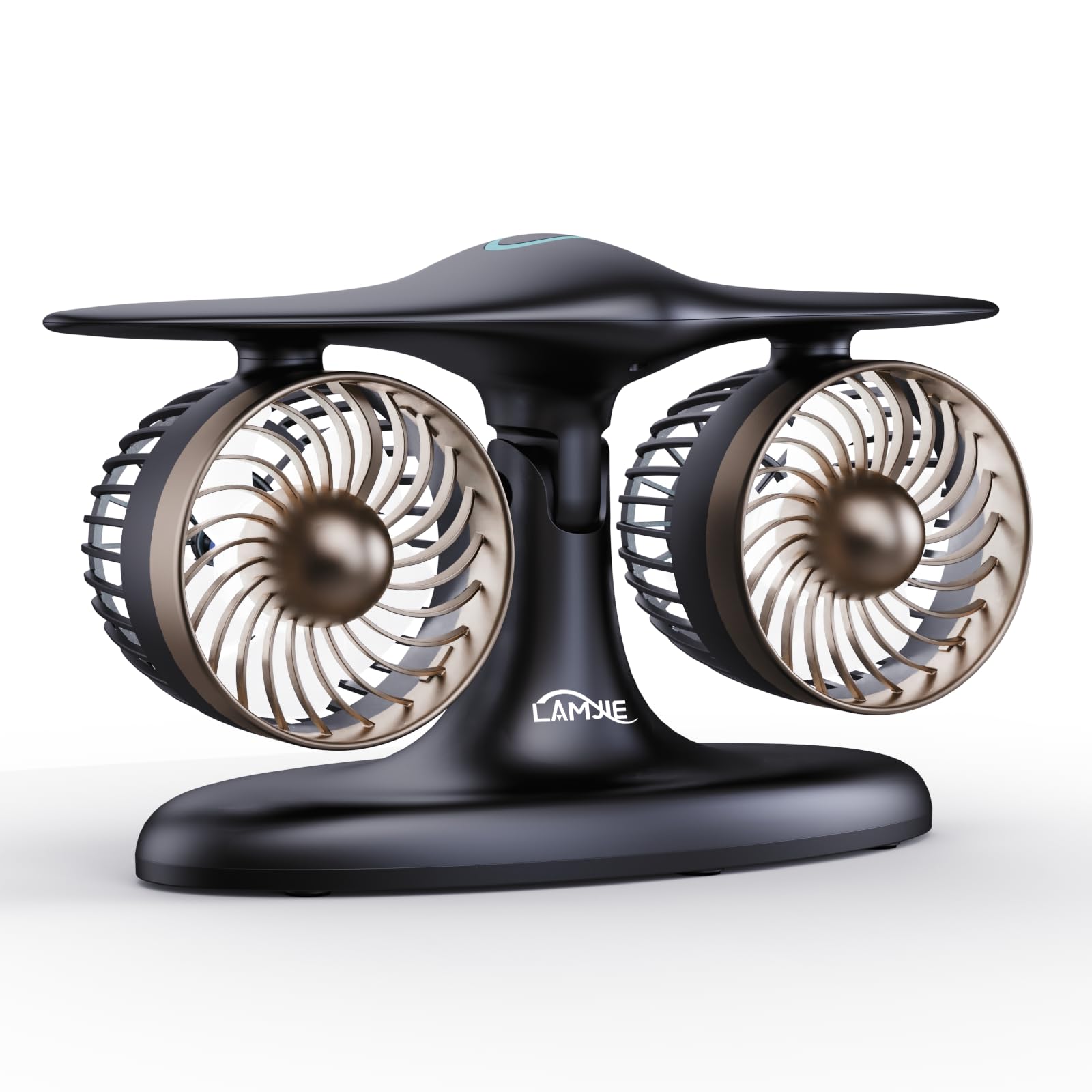
This desk fan takes its visual cues from a jet turbine, blending industrial design with functional personal cooling. The RGB LED lights mimic the glow of a real engine startup, which adds a visual layer that tech lovers appreciate.
Three speed settings are controlled via a touch button, and the fan head tilts through about 65 degrees total range (roughly 20 degrees down and 45 degrees up). The tilt mechanism uses a hex bolt that can be adjusted if it becomes loose. Airflow is wider than vertical tower fans of similar size, and users consistently describe the operation as whisper-quiet—quiet enough for focused work without distraction.
The build is solid with a matte black finish and no cheap-feeling plastic wobble. It comes in a premium presentation box, which makes it feel appropriate as a retirement, groomsmen, or housewarming gift. A few reviewers note the stiff tilt joint, but that also means it doesn’t sag over time. One trade-off: no oscillation, so the airflow is directional.
Why it’s great
- Long 18-hour battery life with USB-C charging
- Quiet operation suitable for office or study
- Aviation-inspired design with interactive RGB lighting
Good to know
- Tilt angle is stiff and may need hex bolt adjustment
- No oscillation—airflow is fixed in one direction
4. PFCKE Low Temperature Stirling Engine Kit HZZ92 PRO Blue
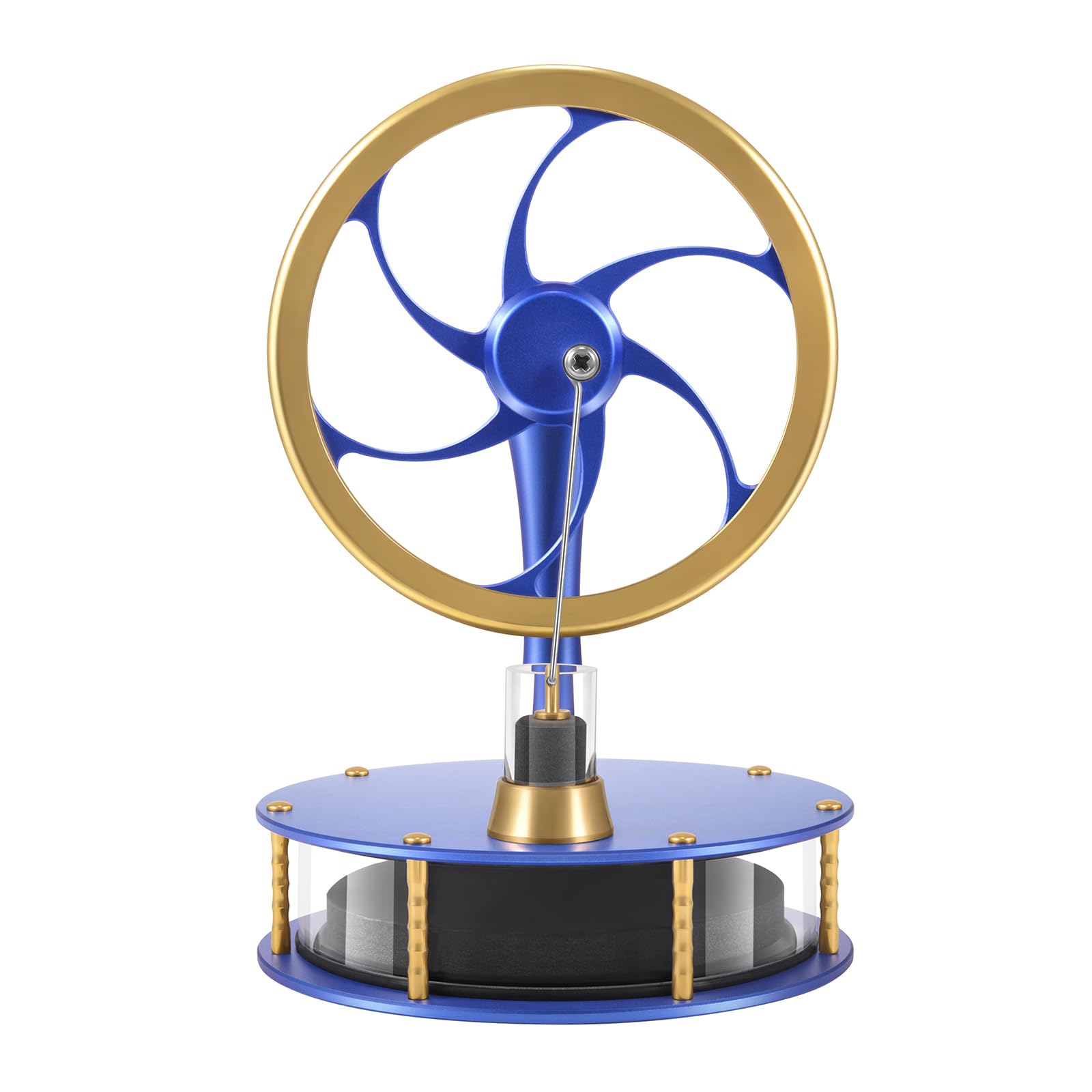
This Stirling engine model turns a simple temperature difference into visible rotary motion, making it one of the most effective physics demonstration tools you can put on a desk. It comes fully assembled—no soldering or gluing required. Just place the bottom plate on a hot mug of coffee or a cup of hot water, wait 20 seconds, give the flywheel a gentle spin, and it runs smoothly for about 30 minutes. The cylinder is micron-precision borosilicate glass, and the graphite power piston moves with ultra-low friction.
The visual quality is high: brass struts with hollow cores for heat insulation, a skeleton-design brass flywheel rim, and anodized aluminum parts with no protruding screws. It looks deliberate and well-finished rather than like a hobby kit. Users who own competing models note that this one uses ball bearings on the crankshaft instead of simple cone-and-cup bearings, which makes it run quieter and more reliably over time.
It also works in reverse—if you heat the top plate or cool the bottom plate with ice, the engine spins the opposite direction. This opens up a simple experiment that demonstrates thermodynamic reversibility. The 12-month warranty adds peace of mind. Some users report the glass cylinder can shift slightly during shipping, but it presses back into place easily. It is not a toy—it runs at low speed with faint piston sounds quieter than a ticking clock.
Why it’s great
- Fully assembled and runs on any warm surface in 20 seconds
- Ball-bearing crankshaft for quiet, smooth operation
- Demonstrates thermodynamic principles with visible motion
Good to know
- Glass cylinder may shift during shipping but is easily reseated
- Requires a hot beverage or warm surface to run—not self-powered
5. Gifts For Value Engineer Cutting Board

This bamboo cutting board takes a lighthearted approach to the “engineer by day, chef by night” identity. The laser-engraved text on the decorative side is bold and fade-resistant, while the blank reverse side functions as a standard cutting surface. The board measures 13.75 by 9.75 inches with a half-inch thickness, giving enough area for vegetables and light prep work without being cumbersome.
The routed slot at the top can hold the board upright for display, which is where most recipients leave it. Reviews consistently mention that the engineer in question loves it as a decoration piece in the kitchen—it works as a conversation starter rather than a daily-use tool. The 100% natural bamboo is pre-oiled for durability, but the care instructions specify hand wash only, so it is not dishwasher-safe.
The design is designed and laser-engraved in the USA, and the engraving color varies slightly between boards because of natural wood grain differences. Some users note the board feels lightweight at 30 ounces, which is fine for display but less stable for heavy chopping. It is a fun gift for an engineer who already cooks, but it is primarily a decorative accessory rather than a serious kitchen tool.
Why it’s great
- Personalized humor that resonates with engineering professionals
- Pre-oiled bamboo with a durable laser-engraved design
- Functional as a display piece or a light-use cutting surface
Good to know
- Hand wash only—not dishwasher or soaking safe
- Lightweight feel may not suit heavy chopping tasks
FAQ
What accuracy spec should I look for in a digital caliper for 3D printing?
Can a Stirling engine run on any heat source?
Is the Klein angle gauge suitable for sharpening knives?
Final Thoughts: The Verdict
For most users, the gift for engineers winner is the Klein Tools 935DAG Digital Angle Gauge because it delivers genuine workshop utility with high precision and rugged build quality that an engineer will actually reach for regularly. If you want a desktop object that demonstrates a physical principle in motion, grab the PFCKE Stirling Engine Kit. And for a budget-friendly tool that solves the battery-drain frustration of standard calipers, nothing beats the HARDELL Digital Caliper.