
Finding a present that sparks genuine curiosity can be a challenge, especially for someone who already has a deep passion for discovery. The right gift for a science lover doesn’t just sit on a shelf—it invites exploration, experimentation, and a deeper understanding of the world. Whether it’s for a budding chemist, a classroom teacher, or an adult who still marvels at the periodic table, the key is to find an item that feels both personal and intellectually engaging.
I’m Mohammad Maruf — the founder and writer behind Drink4Good. I’ve spent years analyzing market trends and researching the specific hardware and materials that define the best educational and hobbyist products in the science space.
This guide cuts through the noise to present a curated selection of gifts for science lovers that range from hands-on experiment kits to elegant desk displays, each chosen for its ability to educate, inspire, and delight a scientifically minded recipient.
How To Choose The Best Gift For A Science Lover
Selecting a science gift isn’t just about picking the flashiest box on the shelf. You need to match the complexity of the activity with the recipient’s age, attention span, and prior knowledge. A kit that overwhelms a beginner or underwhelms an advanced user will end up collecting dust. Consider whether the gift is meant for a child who needs guided exploration, a teen who can follow multi-step experiments, or an adult who appreciates the aesthetic of scientific knowledge on display.
Age and Safety First
The most important filter is the manufacturer’s recommended age range. For children under 8, prioritize kits with non-toxic, food-grade chemicals and large, easy-to-handle tools like plastic beakers and test tubes. For older kids and teens, you can introduce glassware, real chemical compounds, and experiments requiring more precise measurement. For adult science lovers, safety concerns shift toward materials quality—lead-free glass in drinkware, for example, or durable acrylic in display items that won’t shatter.
Hands-On vs. Display Value
Some science lovers want to build, mix, and observe reactions. Others prefer a static but intellectually rich focal point for their home or office. A chemistry set with 135 experiments serves the active learner, while a periodic table display with real element samples satisfies the collector. Before buying, ask yourself: does this person want to do science, or simply surround themselves with its beauty? The answer will steer you toward the right category.
Quick Comparison
On smaller screens, swipe sideways to see the full table.
| Model | Category | Best For | Key Spec | Amazon |
|---|---|---|---|---|
| Doctor Jupiter Ultimate Science Kit | Chemistry Kit | Kids 8+ ready for a deep dive | 135+ experiments with leak-proof bottles | Amazon |
| Periodic Table with Real Elements | Display / Decor | All ages who love chemistry trivia | 83 real element samples in acrylic | Amazon |
| Greenline Goods Whiskey Glasses | Drinkware | Adult science enthusiasts who enjoy spirits | Sand etched whiskey molecule diagram | Amazon |
| Thames & Kosmos Chem C500 | Chemistry Kit | Absolute beginners ages 8-12 | 28 guided experiments with 48-page manual | Amazon |
| National Geographic Junior Chemistry Set | Chemistry Kit | Young children aged 4-6 | 50 experiments with 20+ kid-safe lab tools | Amazon |
In‑Depth Reviews
1. Doctor Jupiter Ultimate Science Kit
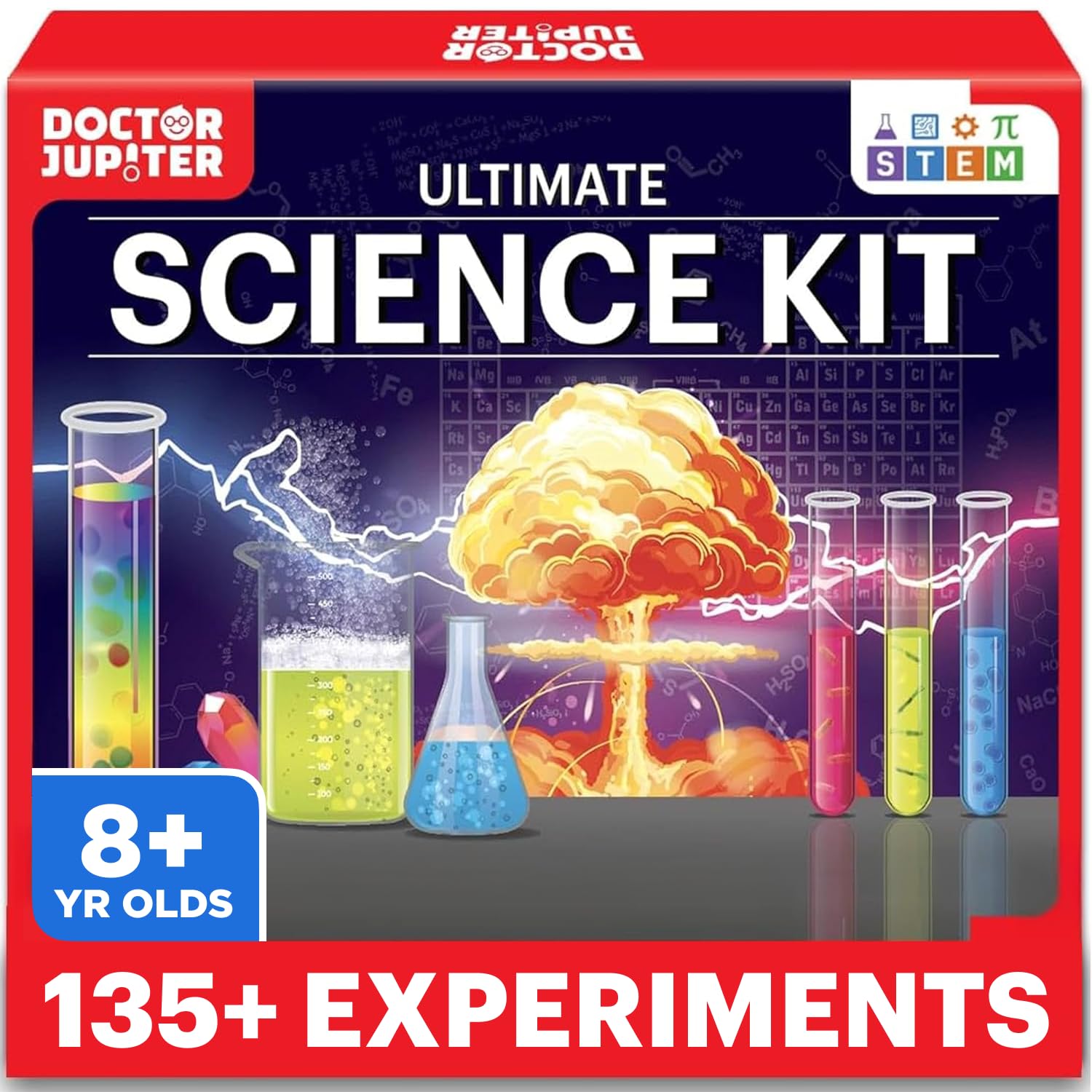
This kit offers the most experiments per dollar in this lineup, with over 135 activities packed into a surprisingly compact box. The chemical materials come in separate leak-proof bottles, which is a real-world advantage when kids are eager to repeat a favorite reaction without creating a mess. The included instruction manual provides clear step-by-step guidance with time estimates, helping both parents and kids plan their lab sessions without frustration.
The age range of 8 to 14 is honest—the experiments range from simple color-changing liquids to more complex projects like making soap with molds and food essences. A 10-year-old reviewer particularly appreciated the organized packaging and the variety of unique reactions not found in cheaper kits. The bonus experiment booklet adds another 90 activities using common household items, extending the value long after the supplied chemicals are exhausted.
One trade-off is that some experiments require purchasing additional ingredients like vinegar or baking soda beyond the small amounts supplied. For a STEM enthusiast who loves hands-on learning, this kit delivers hours of engaging, educational fun that rivals more expensive sets in depth and variety.
Why it’s great
- Huge variety of 135+ experiments keeps boredom at bay
- Leak-proof chemical bottles make setup and cleanup easy
- Includes bonus experiments using common household items
Good to know
- Some experiments need extra household ingredients not included
- Supplied chemical quantities are modest for repeat attempts
2. Periodic Table with Real Elements Inside

This acrylic periodic table display is a conversation piece that also serves as a legitimate educational tool. Encased within a crystal-clear 6×4.5-inch frame are 83 real element samples, ranging from carbon (pencil lead is close enough) to more exotic samples like gallium and tungsten. The acrylic is polished smooth on all edges, making it safe to handle and easy to place on a desk, shelf, or even mount against a backlit wall for dramatic effect.
Students and teachers alike benefit from seeing the actual physical form of each element—a silver chunk of tin looks profoundly different from the soft, yellowish sulfur sample. The acrylic is strong, non-toxic, and transparent, allowing clear 3D viewing of the specimens inside. It does not include any radioactive elements (polonium, radon, etc.), which is a practical safety choice for a product aimed at kids and classroom use.
A potential letdown for serious collectors is that some element samples are not pure elements but stable compounds, a necessary compromise for elements that are volatile or expensive in pure form. Still, as a gift for a chemistry lover or a teacher, this display offers a unique way to spark curiosity and reinforce the tangible reality of the periodic table.
Why it’s great
- 83 real element samples provide tangible connection to chemistry
- Crystal-clear acrylic frame is durable and display-friendly
- Compact size fits easily on any desk or shelf
Good to know
- Some samples are stable compounds, not pure elements
- No radioactive elements included for safety reasons
3. Greenline Goods Whiskey Glasses

These 10-ounce old-fashioned tumblers are sand-etched with the molecular structures of compounds found in whiskey, including ethanol, vanillin, and tannins, with a short explanation of each molecule’s role in the drink. The etching is permanent—it won’t wash off in the dishwasher or fade over time—and wraps around the entire glass for a 360-degree view of the chemistry at play. Each tumbler has a heavy base that feels substantial in the hand, similar to premium barware.
Packed in an elegant gift box with foam inserts, this set of two glasses arrives ready for wrapping. The design is classy enough for a formal bar setting but playful enough for a science-themed party. An adult reviewer who is a chemical engineer specifically praised the “ethanol snark” (a small joke in the etching) and noted the glasses are a refreshing change from standard crystal patterns.
The only catch is that the set contains only two glasses, so for a larger gathering you may want to order two sets. They are dishwasher safe, though hand washing is recommended to preserve the clarity of the etching over many years. This gift is ideal for the adult science enthusiast who enjoys a good pour and a bit of molecular appreciation.
Why it’s great
- Permanent sand-etched molecule designs won’t degrade or wash off
- Heavy base and lead-free glass feel premium
- Elegant gift box presentation
Good to know
- Only two glasses per box; may need multiple sets
- Hand washing recommended to preserve etching clarity
4. Thames & Kosmos Chemistry Chem C500 Science Kit

As the granddaddy of introductory chemistry kits, the C500 from Thames & Kosmos has been a classroom staple for years. It features 28 classic experiments that teach core concepts like acids and bases, chemical reactions between solids and liquids, and the science behind invisible ink. The 48-page full-color manual is written in clear, kid-friendly language and explains the “why” behind each reaction, not just the “how.”
The set includes real glass beakers, test tubes, and a few basic chemicals that are all food-grade and safe for supervised use. An 8-year-old reviewer called it the “best present ever,” while a parent noted it effectively teaches lab protocols and following directions when used with adult supervision. The kit requires a few common household items like vinegar, a 9V battery, and distilled water that aren’t included, so be prepared to gather those before the first experiment.
Some users report the chemical quantities are only sufficient for one run through each experiment, which means you’ll need to buy refills if you want to repeat a favorite reaction. However, the educational depth and the quality of the manual make this an excellent starting point for a budding chemist who is ready for real lab techniques.
Why it’s great
- Classic, time-tested experiments with a high-quality manual
- Real glass beakers and test tubes teach proper lab handling
- Clear explanations of the scientific principles behind each reaction
Good to know
- Requires several household items not included in the box
- Chemical quantities are small; refills needed for repeats
5. National Geographic Junior Chemistry Set

This kit from Blue Marble under the National Geographic brand is purpose-built for the youngest scientists, ages 4 to 6. It comes with 20+ durable, child-safe lab tools including test tubes, goggles, and a tray, all sized for small hands. The 50 experiments are designed to use common household items like baking soda and vinegar, so you won’t need to hunt for obscure chemicals to get started.
The illustrated instruction guide is a standout feature—each step shows a picture rather than relying on text, which allows pre-literate children to follow along with minimal adult help. One grandparent reviewer noted that her great-granddaughter loved it, and the materials felt durable and not cheap. However, a 5-year-old reviewer found some of the experiments required more dexterity and patience than he had, suggesting the kit may be better suited for ages 6-7 when fine motor skills are more developed.
Most parents found the experiments engaging and easy to set up, with minimal mess when using the included tray. The kit won the Toy of the Year Award, and the U.S.-based support team is available if any tools break. For a preschooler who loves cause-and-effect reactions, this is a fantastic entry point into STEM learning.
Why it’s great
- Designed specifically for ages 4-6 with large, safe tools
- 50 experiments using common household items
- Illustrated instructions help pre-literate kids follow along
Good to know
- Some experiments may be too complex for a 5-year-old
- Adult supervision and hand-holding required for many steps
FAQ
How do I know if a chemistry kit is safe for my child?
Can I buy just the refill chemicals for a used science kit?
Final Thoughts: The Verdict
For most users, the gifts for science lovers winner is the Doctor Jupiter Ultimate Science Kit because it combines an extraordinary experiment count with organized, leak-proof packaging that minimizes mess and frustration. If you want a display piece that sparks daily conversation, grab the Periodic Table with Real Elements. And for adult science enthusiasts who enjoy a fine pour, nothing beats the Greenline Goods Whiskey Glasses with their permanent molecular etchings and premium bar-quality feel.