
Landing a jump wrong because your shoes slid on the court isn’t just frustrating — it’s how ankles get rolled and confidence takes a hit. A pair meant for the hardwood floor changes everything about the way you move, cut, and stop during a match. The difference comes down to a gum rubber outsole, lateral support built into the upper, and a toe cap that survives repeated drag from serves and dives.
I’m Mohammad Maruf — the founder and writer behind Drink4Good. I’ve spent hours analyzing the traction patterns, midsole foams, and weight distributions that separate a true court shoe from a gym sneaker that just happens to be worn on a court.
This guide breaks down the top options across different fit profiles, price tiers, and playing styles so you can confidently choose from the best girls volleyball shoes available right now.
How To Choose The Best Girls Volleyball Shoes
Walking into a shoe aisle designed for volleyball means looking past the colorways and focusing on the way the shoe wraps your heel, the stiffness of the midfoot shank, and the tread pattern under the toe. A generic cross-trainer lacks the lateral lockdown that keeps your foot from sliding inside the shoe during a hard plant. Here’s what matters most.
Outsole Compound and Traction Pattern
Indoor courts demand a non-marking gum rubber outsole. The compound must be soft enough to grip polished wood without leaving black streaks, yet dense enough to resist wearing flat after a season of hard pivots. A herringbone or multidirectional tread pattern offers the best bite for sudden stops and explosive forward movements.
Midsole Cushioning and Court Feel
Too much cushioning dampens your ability to feel the floor, which reduces stability during lateral cuts. Too little cushioning transfers impact straight to your heels and knees. Look for a responsive foam layer — EVA or polyurethane-based — that sits thin enough in the forefoot for quick transitions but plush enough in the heel to absorb repeated landings.
Upper Construction and Lateral Support
A mesh upper alone stretches out under side-to-side stress. Better volleyball shoes use fused overlays, internal heel counters, or synthetic leather panels that lock the midfoot down without creating hot spots. The toe cap needs extra reinforcement because players drag their toes on serves and defensive slides.
Quick Comparison
On smaller screens, swipe sideways to see the full table.
| Model | Category | Best For | Key Spec | Amazon |
|---|---|---|---|---|
| ASICS Gel-Rocket 12 | Mid-Range | All-around indoor play | Rearfoot gel cushioning | Amazon |
| Mizuno Wave Dimension | Premium | Competitive club & varsity | Wave plate + D-Flex Groove | Amazon |
| Nike Zoom HyperAce 2 | Premium | High-impact jumping | Zoom Air heel unit | Amazon |
| Under Armour Flow Ace Low | Mid-Range | Multi-sport versatility | Flow foam midsole | Amazon |
| Mizuno Cyclone Speed 3 | Mid-Range | Lightweight speed play | Slip-resistant outsole | Amazon |
| ASICS Upcourt 6 | Budget | School/rec leagues | Durable toe cap | Amazon |
| adidas Ligra 8 | Budget | First-time court players | Lightweight mesh | Amazon |
In‑Depth Reviews
1. ASICS Women’s Gel-Rocket 12 Volleyball Shoes
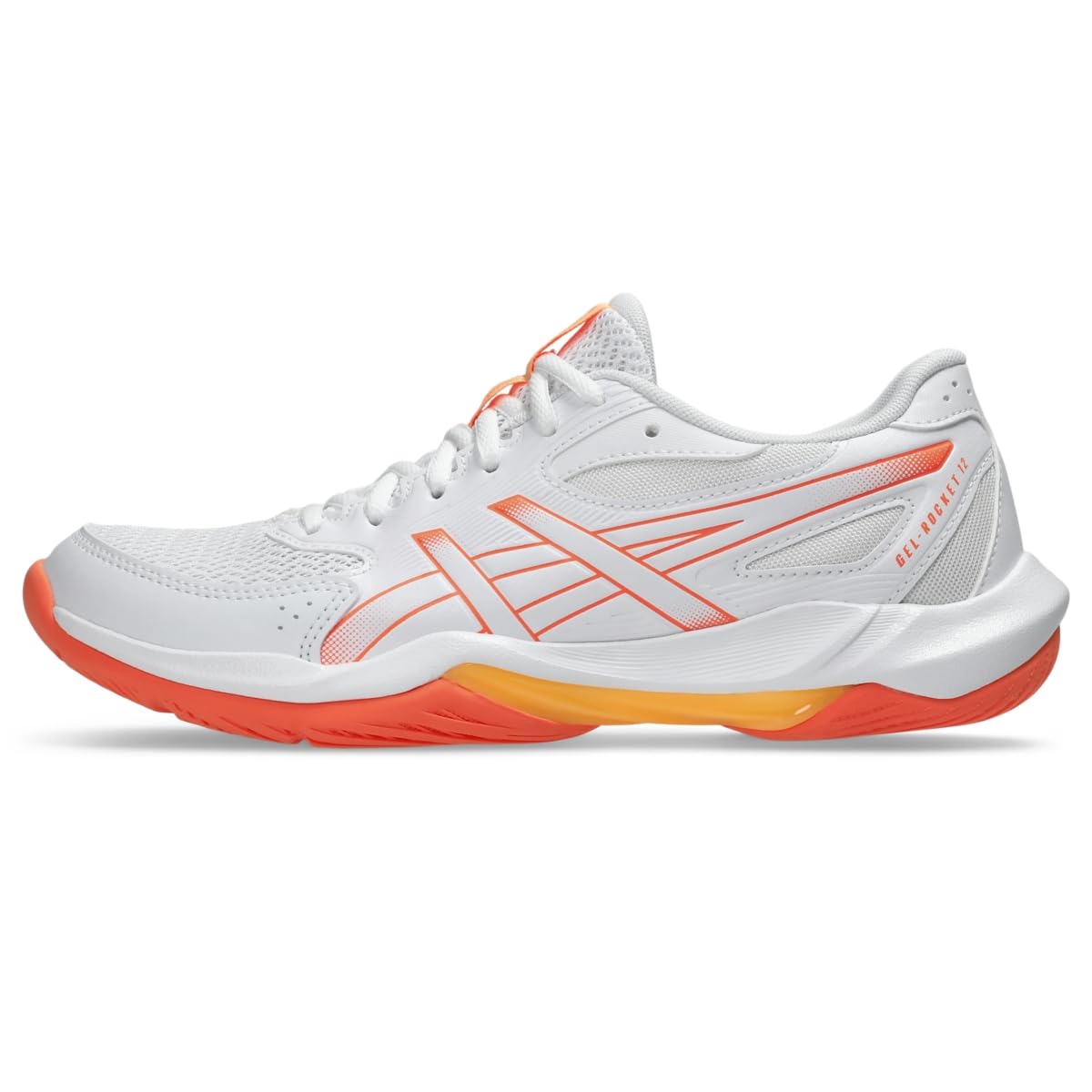
The Gel-Rocket 12 strikes the hardest balance between price and real volleyball-specific engineering. A rearfoot gel capsule sits inside the heel to absorb impact from repeated jumps, while the mesh upper breathes well during multi-hour tournaments. The outsole uses a traditional herringbone pattern that holds tight on polished hardwood without squeaking.
Multiple reviewers confirmed the fit matches standard ASICS sizing, though the toe box leans slightly narrow — loosening the mid-laces helps create a bit more room across the forefoot. One athlete noted the shoe felt slippery when a thin layer of moisture developed on the court surface, so keep them off dusty or damp floors.
Durability reports are strong across the board: the outsole shows minimal wear after a full season, and the forefoot flex grooves don’t crack under repeated loading. For a parent looking for a shoe that covers practice, games, and tryouts without needing a second pair, this is the most reliable mid-range option.
Why it’s great
- Rearfoot gel absorbs hard landings well
- True-to-size fit with good arch support
- Lightweight with a low profile for court feel
Good to know
- Toe box is narrow for wider feet
- Traction can slip on slightly damp courts
2. Mizuno Unisex Adult Wave Dimension

The Wave Dimension represents Mizuno’s premium-tier court engineering, designed for players who log five-plus days of practice per week. The signature Wave plate runs through the midsole and distributes impact forces across the entire footbed rather than concentrating them in the heel or forefoot. A D-Flex Groove under the ball of the foot allows the shoe to bend naturally during the loading phase of a jump.
Club and college-level athletes consistently report that the ankle support locks the heel down without feeling restrictive, and the outsole remains tacky even after months of hard court use. The unisex sizing fits true to length, but the fit is slightly snugger than ASICS equivalents in the same labeled size.
One reviewer who tested five different volleyball shoe brands across a full season ranked the Wave Dimension as the most comfortable and durable of the group, with the upper showing no tearing after five months of play. If your daughter is playing varsity or traveling with a club team, this shoe justifies the investment through longevity alone.
Why it’s great
- Wave plate distributes landing impact evenly
- Superior ankle heel lockdown for cuts
- Outsole grip lasts through heavy weekly use
Good to know
- Snugger fit than typical ASICS sizing
- Higher price point for casual use
3. Nike Women’s Zoom HyperAce 2 Volleyball Shoes
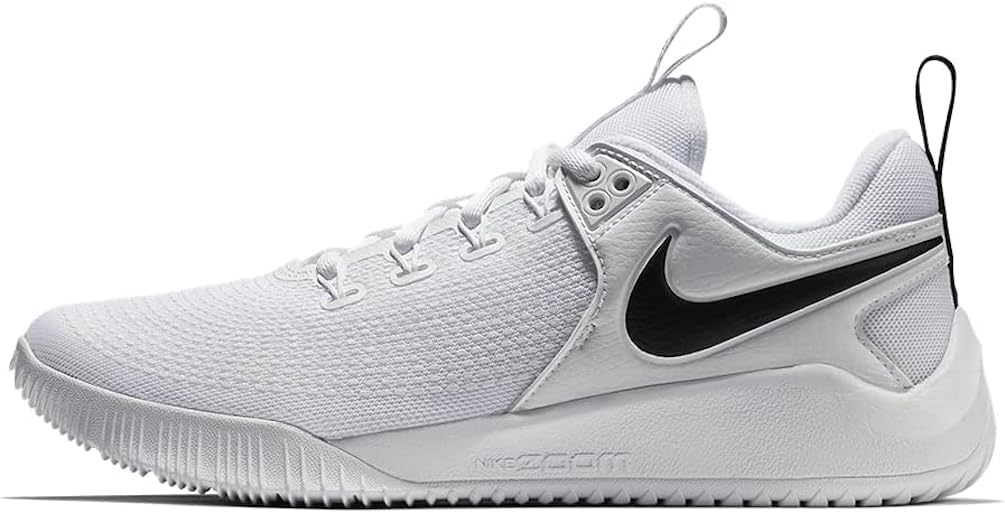
The Zoom HyperAce 2 is built around a Zoom Air unit embedded in the heel, which gives a responsive spring-like feel on takeoff and cushions hard landings with minimal bottom-out sensation. The full-length rubber outsole wraps slightly up the sides of the shoe to provide extra durability for players who slide their feet on defense.
Nike’s fit tends to run a half-size long for some wearers, but customers who ordered their usual size reported a snug, supportive feel through the midfoot with no heel slip. The synthetic upper uses fused overlays rather than stitched panels, reducing the risk of seams blowing out during aggressive lateral movements.
Multiple verified buyers noted that their daughters wore these five days a week for both practice and games without any sole separation or upper tearing. The grip is especially reliable on clean indoor courts, though the outsole can pick up dust faster than softer gum rubber compounds — a quick wipe keeps the bite sharp.
Why it’s great
- Zoom Air heel unit adds responsive cushioning
- Outsole wrap protects side edges
- Fused overlays prevent seam failure
Good to know
- Some users needed to size up
- Outsole picks up dust on less-maintained floors
4. Under Armour Women’s Flow Ace Low Volleyball Shoes

The Flow Ace Low takes an unusual approach by using UA Flow foam as the entire midsole and outsole in one piece — no separate rubber layer. This keeps the shoe extremely lightweight and gives a direct ground feel that helps volleyball players sense the court surface during quick direction changes. The foam compound is tacky enough on clean indoor courts to hold without slipping.
Owners note that the shoe runs significantly small: multiple parents reported needing to order two full sizes above their daughter’s usual measurement to get a proper fit. Once sized correctly, the upper offers a comfortable wrap with good arch support, and several buyers confirmed the shoe held up across both volleyball and basketball seasons without delamination.
The single-piece foam construction does mean the outsole will wear faster than a traditional rubber outsole on gritty or outdoor surfaces — keep these exclusively on indoor courts for the best lifespan. The red colorway photographed lighter than expected, showing as a neon orange tone in person.
Why it’s great
- Very lightweight single-piece foam design
- Direct ground feel for court awareness
- Works well for both volleyball and basketball
Good to know
- Runs small — size up significantly
- Foam outsole wears faster on rough surfaces
5. Mizuno Womens Cyclone Speed 3 Volleyball Shoe
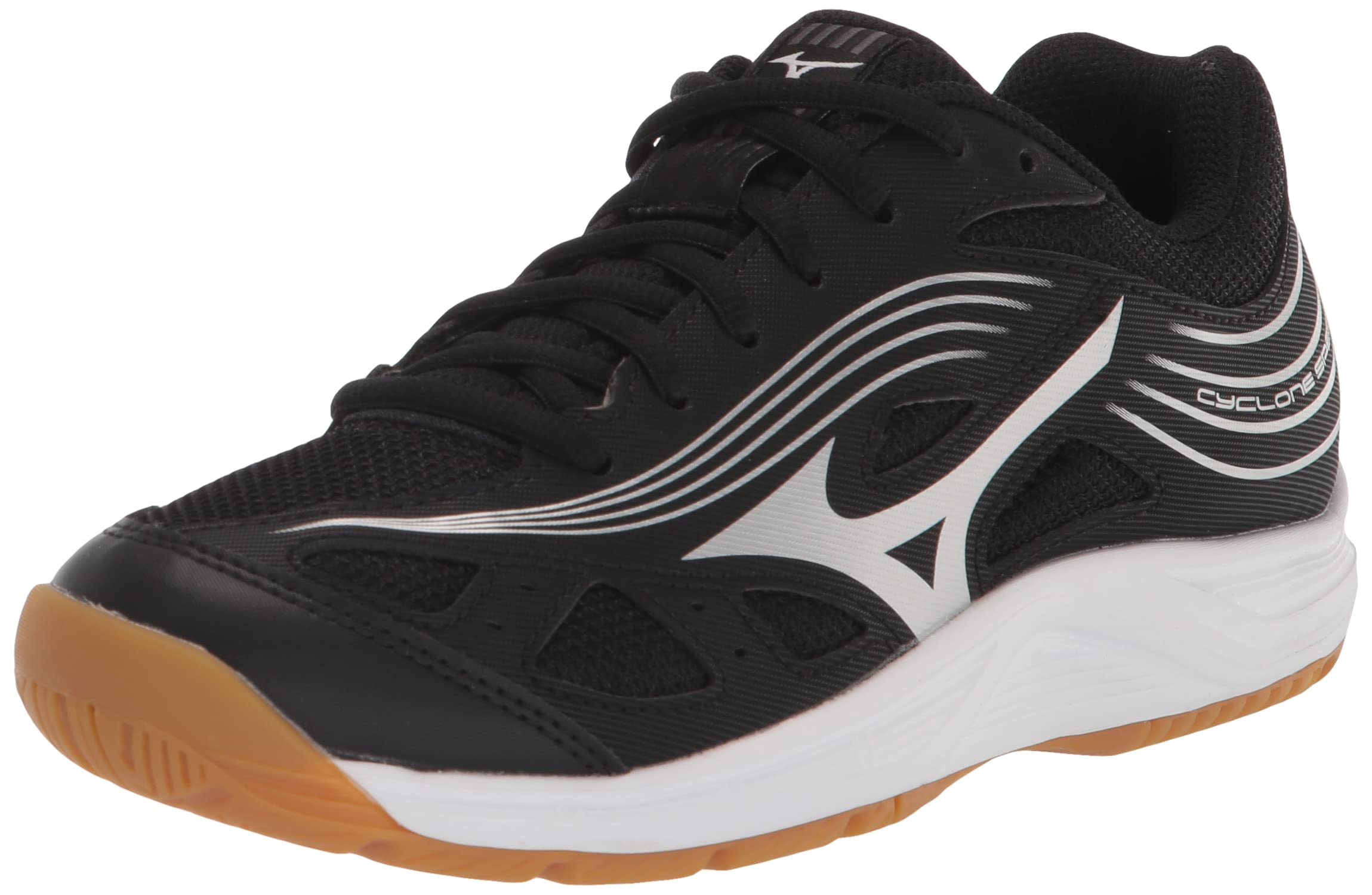
The Cyclone Speed 3 prioritizes a low-to-the-ground platform for players who rely on explosive first steps. The outsole rubber has been formulated specifically for slip resistance on indoor surfaces, and the flat heel geometry keeps the foot stable during the transition from backpedal to sprint. A lightweight synthetic upper reduces the overall shoe weight without making the shoe feel flimsy.
Several buyers mentioned that ordering a half-size up from their normal measurement gave the best fit, particularly for athletes with wider forefeet. The shoe works well for both indoor volleyball and pickleball, which suggests the traction pattern and sole compound perform consistently across different court sports.
The midsole cushioning prioritizes court feel over plushness — players who want a soft landing in the heel may find this model firmer than the Gel-Rocket or Wave Dimension. However, for a libero or defensive specialist who moves laterally more than they jump, the Cyclone Speed 3 offers the responsiveness and grip needed to read and react quickly.
Why it’s great
- Low platform improves lateral reaction speed
- Outsole grip works well on clean indoor floors
- Lightweight synthetic upper reduces drag
Good to know
- Firmer heel cushion than other options
- Order up a half-size for wider feet
6. ASICS Kid’s Upcourt 6 Grade School Volleyball Shoes
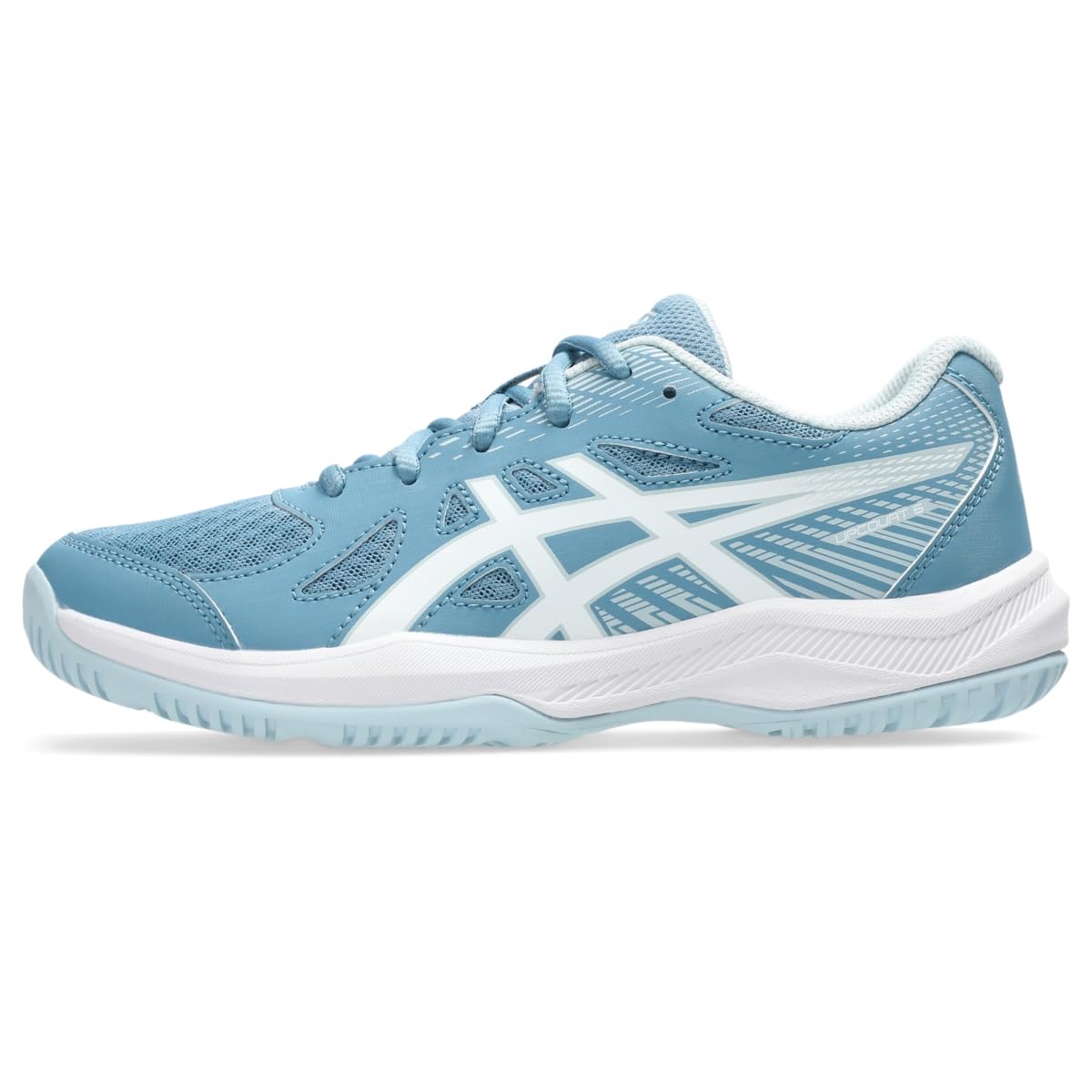
The Upcourt 6 is the entry-level volleyball shoe from ASICS, built specifically for grade-school athletes who are still growing. A reinforced toe cap resists the abrasion from serve practice, while the outsole uses a basic herringbone pattern that provides sufficient grip for rec leagues and middle school tryouts. The EVA midsole is firmer than higher-tier ASICS models but still absorbs the impact from basic jump landings.
Parents consistently report that the shoe fits true to size with a roomier toe box than the Gel-Rocket line, making it a better choice for kids with wider feet or those who need a little extra growing room. The all-white colorway gets dirty quickly, but the synthetic leather upper wipes down easily between matches.
Multiple reviews from both boys and girls confirmed the shoe held up through a full season without the outsole peeling or the upper tearing. For a parent buying for a child who is still in a growth spurt, the Upcourt 6 delivers solid court performance at a price that doesn’t hurt as much when the shoes are outgrown in six months.
Why it’s great
- Reinforced toe cap survives serve drag
- Roomier toe box fits wider feet
- Good grip for rec-level play
Good to know
- Firmer midsole than premium ASICS models
- White upper shows dirt quickly
7. adidas Womens Ligra 8 Indoor Shoes
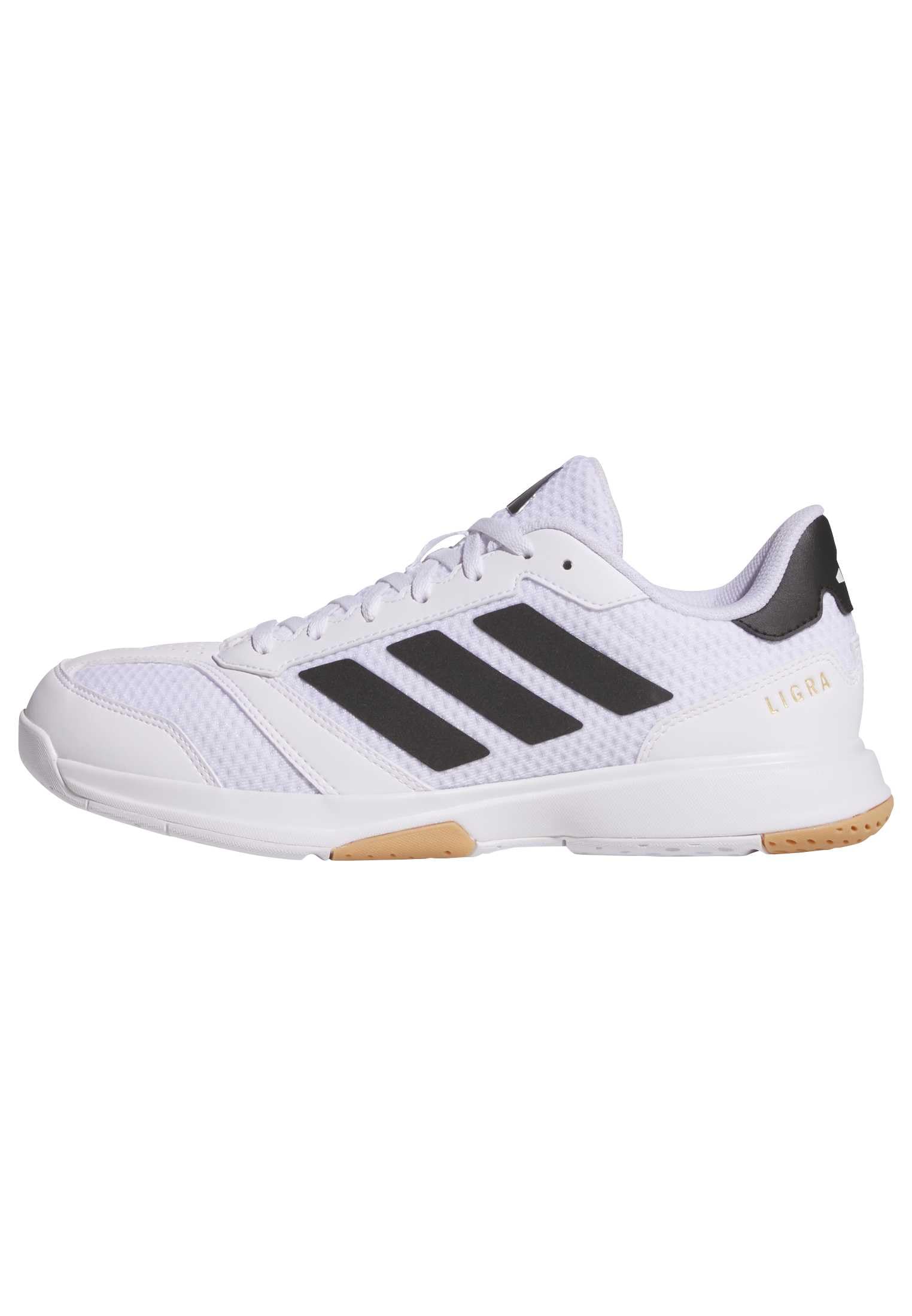
The Ligra 8 enters the conversation as a cross-trainer that happens to work extremely well for volleyball, especially for younger players or those just starting the sport. The lightweight mesh upper keeps feet cool during long sessions, and the rubber outsole provides reliable traction on indoor courts without the bulk of a dedicated volleyball model. The EVA midsole offers decent shock absorption for light jumping.
Customers consistently note that the shoe feels true to size and requires no break-in period — it’s comfortable straight out of the box. One parent of a 12-year-old reported that the Ligra 8 outperformed the dedicated volleyball shoes her daughter had tried before, offering better lateral support at a more accessible price point.
The trade-off comes in durability: the mesh upper lacks the reinforced panels found in premium shoes, so aggressive players who drag their feet during slides may wear through the material faster. However, for recreational play, summer camps, or as a backup pair, the Ligra 8 delivers surprisingly solid performance for the investment.
Why it’s great
- Comfortable straight out of the box
- Breathable mesh upper for warm gyms
- Versatile for other indoor court sports
Good to know
- Mesh upper lacks lateral reinforcement panels
- Less durable for aggressive toe-dragging players
FAQ
Can my daughter wear running shoes for volleyball practice?
How much toe room should there be in a volleyball shoe?
Do volleyball shoes stretch out over time?
Why does my daughter’s volleyball shoe squeak on the court?
How often should girls replace their volleyball shoes?
Final Thoughts: The Verdict
For most players, the best girls volleyball shoes overall are the ASICS Gel-Rocket 12 because they deliver reliable grip, good impact protection, and a true-to-size fit at a fair price point. If your daughter needs premium support for club or varsity competition, the Mizuno Wave Dimension offers the best long-term durability and ankle lockdown. And for a growing player who needs a solid shoe for rec leagues, the ASICS Upcourt 6 gets the job done without the premium price tag.