
Scrubbing the dried crust from a wine glass after a party or struggling to rinse the last of a smoothie from a narrow bottle is a chore that steals time. A dedicated glass rinser transforms that struggle into a one-second press-and-release motion, using high-pressure jets to blast away residue inside any cup, mug, or bottle without you ever touching the interior.
I’m Mohammad Maruf — the founder and writer behind Drink4Good. I analyze kitchen efficiency tools by cross-referencing customer long-term reviews with critical hardware specifications like flow rate, body materials, and activation mechanisms to separate real upgrades from countertop clutter.
This guide breaks down the specs that actually matter — material durability, jet pressure, installation ease, and safety features — so you can buy the best glass rinser for your sink without second-guessing the hidden details.
How To Choose The Best Glass Rinser
A glass rinser is a small mechanical device that lives in a sink hole and relies on water pressure alone — no moving pump or electrical power. That simplicity means three specs define whether it becomes a daily hero or a frustrating leak risk: the body material, the flow rate and jet design, and the activation mechanism.
Body Material: Stainless Steel vs. ABS Plastic
The rinser body is constantly exposed to standing water, soap residue, and physical compression when you push a glass down. Full 304 stainless steel bodies resist corrosion indefinitely and hold up under continuous commercial use. ABS plastic bodies are lighter and less expensive, but they can feel wobbly under pressure and may crack after repeated use, especially in cold climates where water expands within the housing. Some premium models combine a stainless steel basin with plastic internal components — check for metal at the contact points to ensure long-term rigidity.
Flow Rate and Jet Configuration
A flow rate between 1.0 and 1.8 GPM (gallons per minute) delivers enough force to dislodge dried dairy, pulp, or wine residue without creating aggressive splash-back. Pay attention to the number and arrangement of jets: nine small jets offer more even coverage for wide-mouth glasses, while a single central jet creates concentrated pressure for narrower bottles. The best rinsers also angle the jets or tilt the basin to drain water directly into the sink rather than pooling on the surface.
Activation Mechanism and Safety Features
Most rinsers activate by pushing a glass downward to depress a central plunger. Straight push-to-activate models are simple and require less force, but they can be triggered accidentally if something bumps the unit. Push-and-twist mechanisms add a safety lock that prevents accidental sprays inside the sink cabinet. For households with children, the twist-lock design provides an essential safety layer. Also examine the prongs — look for soft silicone coating on the prongs to prevent scratching delicate glass or ceramic drinkware.
Quick Comparison
On smaller screens, swipe sideways to see the full table.
| Model | Category | Best For | Key Spec | Amazon |
|---|---|---|---|---|
| KRAUS CleanMate | Mid-Range | At-home family kitchens | 1.2 GPM, 9 jets, with safety lock | Amazon |
| Delta Faucet GR150 | Premium | Spot-resistant build quality | 1.2 GPM with Touch-Clean | Amazon |
| AquaDuo Combo | Premium | Built-in pull-out sprayer | Stainless steel basin, 2-in-1 sprayer | Amazon |
| 2-in-1 AquatiQ | Mid-Range | Commercial counter space | 304 stainless body, 120cm pull-out | Amazon |
| DIBTSA Pitcher Rinser | Mid-Range | Countertop coffee trailer | 304 stainless, drip tray included | Amazon |
| Homewerks GR001SS | Entry-Level | Quick easy DIY install | 1.8 GPM, polished stainless steel | Amazon |
| Zjyufy Pull-Out | Budget | Bar sink or occasional use | 80cm pull-out nozzle, ABS body | Amazon |
In‑Depth Reviews
1. KRAUS CleanMate Glass Rinser (KGR-500MB)
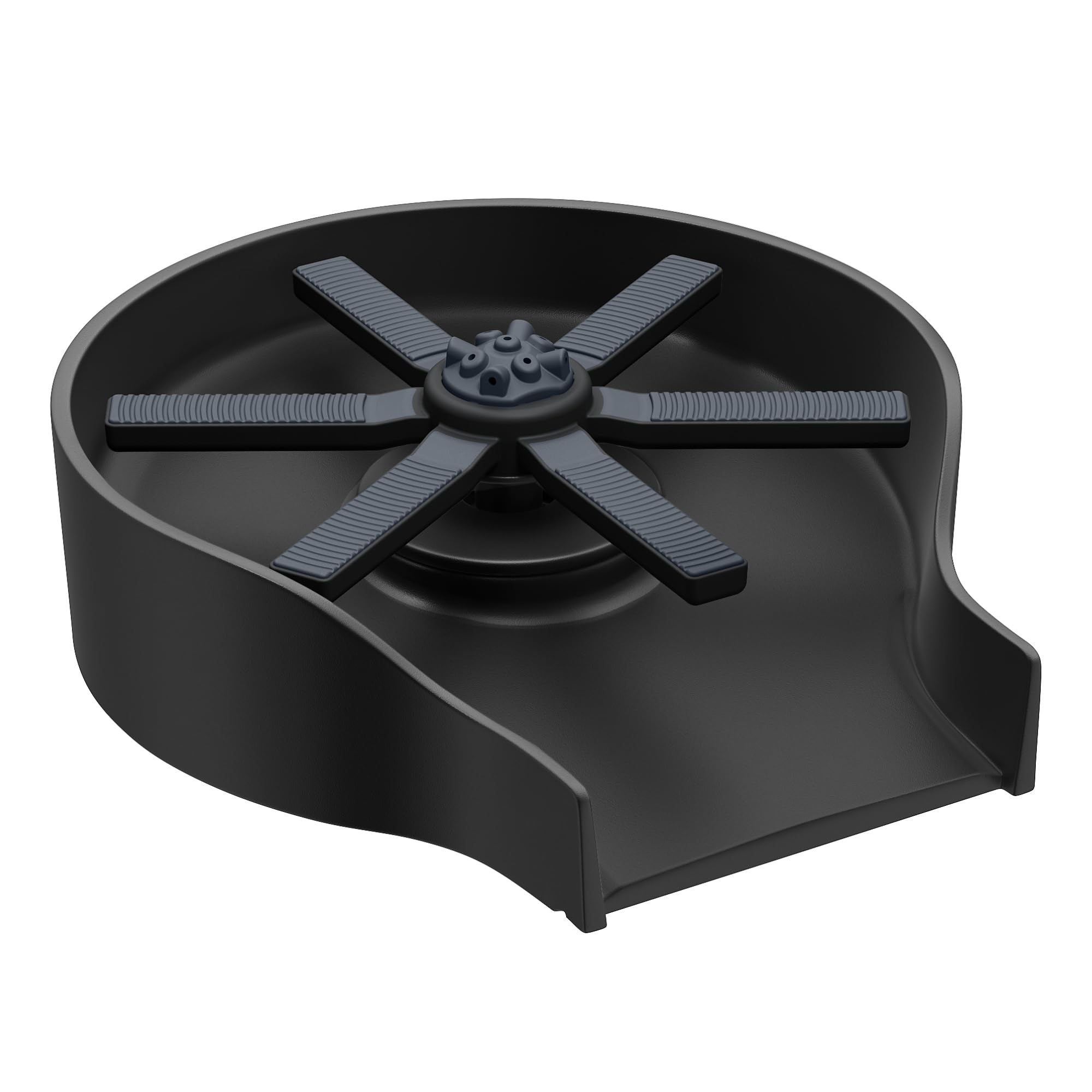
The KRAUS CleanMate uses a push-and-twist safety lock that prevents accidental activation, making it the safest option for busy kitchens where glasses, bottles, and even small bowls are being rinsed constantly. The 9 jets deliver a 360-degree targeted spray that reaches into narrow tumblers and wide water bottles alike, while the sloped basin drains directly into the sink without pooling.
Despite the premium feature set, the body is built from high-impact ABS plastic rather than metal. The plastic is thick and feels solid under hand pressure, but long-term exposure to hot water through cold supply lines may eventually cause fatigue. The soft silicone coating on the six prongs protects glassware from scratches during repeated pressing.
Installation is straightforward: the quick-connect water line and included tee connector make swapping out a soap dispenser a 15-minute DIY project. The wide 5-inch opening accommodates everything from espresso cups to 64-ounce growlers, and the integrated safety lock gives parents peace of mind. The only notable compromise is the plastic supply tee — several users recommend replacing it with a brass tee immediately for leak-free performance.
Why it’s great
- Safety lock prevents accidental sprays
- 9 jets provide thorough 360-degree coverage
- Wide 5-inch opening fits large drinkware
Good to know
- Plastic body may feel less premium than metal
- Included plastic tee should be replaced with brass
2. Delta Faucet Glass Rinser (GR150-SP)

The Delta GR150 delivers the most polished user experience among the premium tier. Its SpotShield finish resists water spots and fingerprints, keeping the surface clean-looking between uses, and the Touch-Clean silicone nozzles allow you to wipe away calcium buildup with a single finger. The 1.2 GPM flow rate is tuned for effective residue removal without excessive splash, and the subtle overhang directs water back into the sink basin rather than onto the counter.
The unit is engineered as a simple DIY replacement for a soap dispenser or sink hole cover, and the included supply line connects to either hot or cold water. The housing, despite its metal-like appearance, is actually a durable composite plastic that feels solid but lacks the weight of full stainless steel. Some users note that the 4-inch diameter is slightly smaller than older rinsers, which may limit compatibility with very wide tumblers or large travel mugs.
Where the Delta really shines is in long-term maintainability. The Touch-Clean spray holes are a genuine convenience for hard-water households, and the brand’s reputation for replacement part availability means you can keep this unit running for years. The plastic lever handle feels less robust than the rest of the design, but the overall construction quality justifies its premium position.
Why it’s great
- SpotShield resists fingerprints and water spots
- Touch-Clean nozzles simplify descaling
- Comprehensive DIY install kit included
Good to know
- 4-inch diameter may not fit oversize tumblers
- Composite plastic body, not full metal
3. AquaDuo Glass Rinser and Sink Sprayer Combo
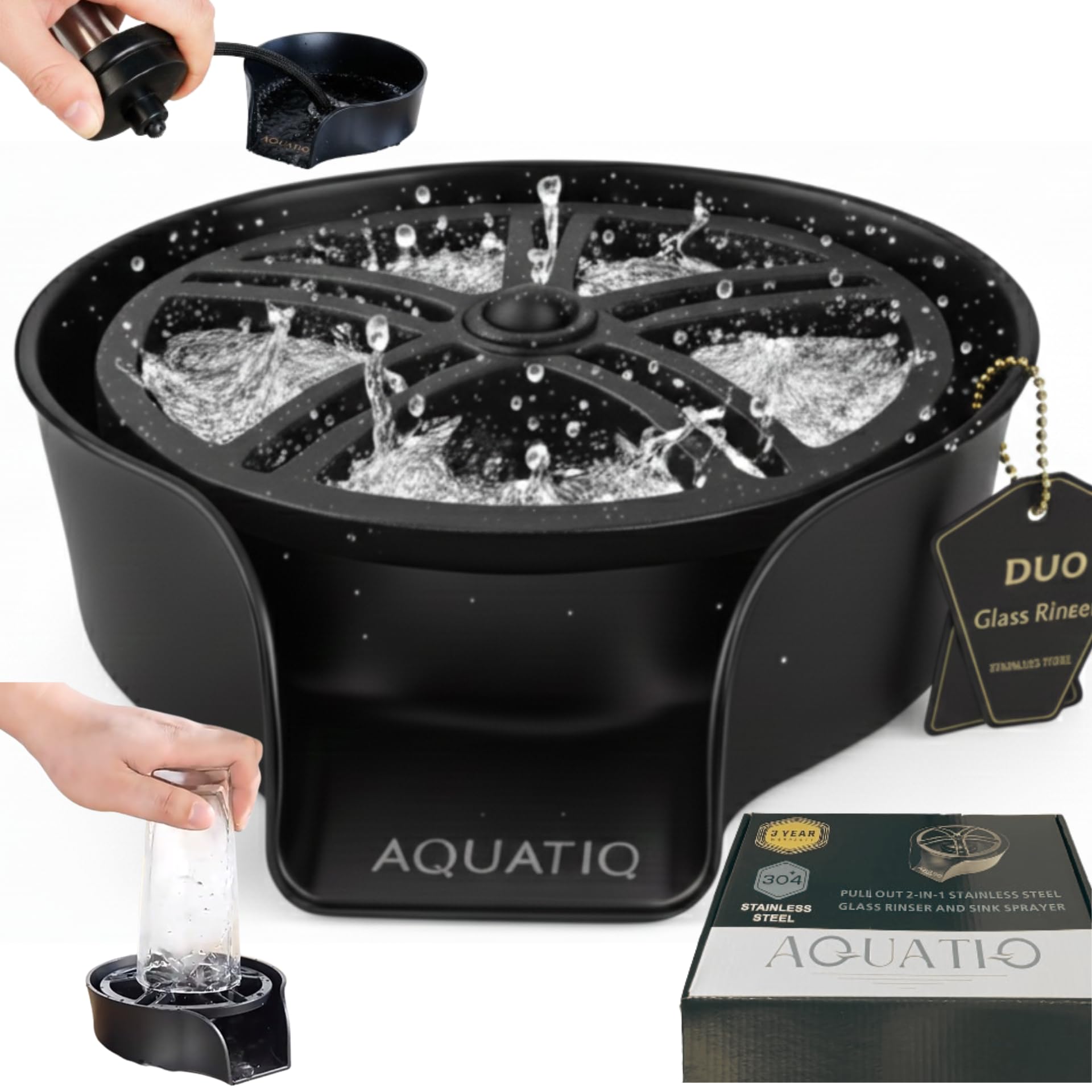
The AquaDuo solves a common complaint about glass rinsers — they occupy a sink hole and remove a sprayer. This unit integrates both functions into one footprint: a central rinser for glassware and a pull-out sprayer nozzle that extends for rinsing dishes or the sink itself. The stainless steel basin and gold-plated finish (included in the matte black model) give it a durable, commercial-grade feel that resists corrosion.
Two plastic grates are included to hold glasses at the correct height, and the basin slopes to drain fully after each use. The separate sprayer hose runs on a 120 cm retractable tether, giving you flexible reach without cluttering the counter. The dual-handle lever system controls whether the spray head or the rinser jet is active.
The main compromise is activation force: some users find the central rinser plunger requires more downward pressure than average, which can be awkward with one hand. The plastic grates also introduce a potential failure point over time, though replacement grates are inexpensive. This is the best option for anyone who needs to preserve a sink sprayer hole while adding glass-rinsing capability.
Why it’s great
- Combines rinser and sprayer in one unit
- Stainless steel basin resists rust
- Long retractable hose for flexible reach
Good to know
- Requires firm downward pressure to activate
- Plastic grates may need eventual replacement
4. 2-in-1 Glass Rinser by AquatiQ (Nickel)
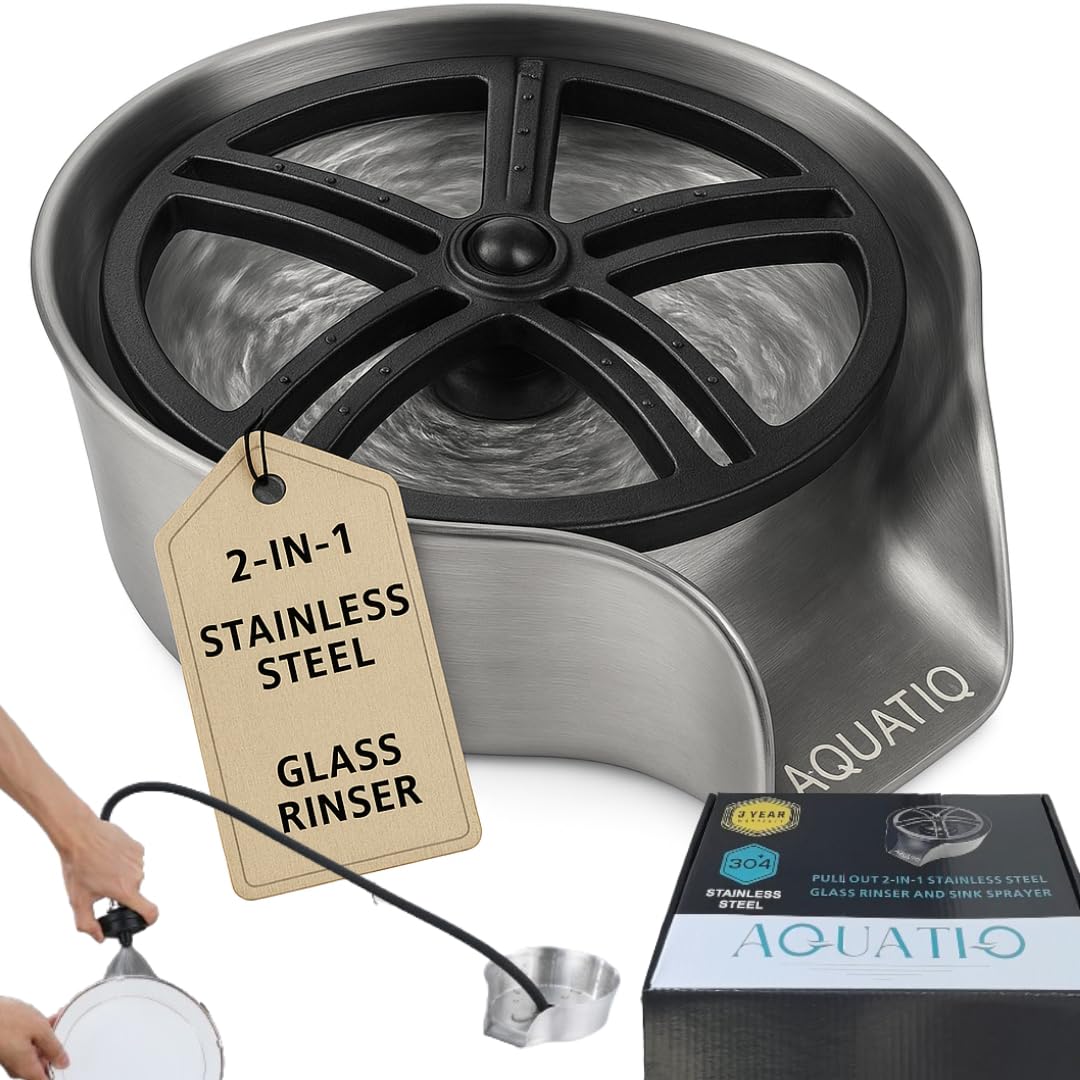
This AquatiQ model stands apart with a 304 stainless steel body that lasts 3 to 5 times longer than ABS plastic alternatives, making it a smart choice for high-volume bar sinks and commercial countertops. The tilted base is specifically designed to drain water directly into the sink, and the taller sidewalls prevent splash-back — a genuine frustration with flat-bottom rinsers.
A 120 cm retractable pull-out hose converts the unit into a handheld sprayer, making it dual-purpose for washing dishes or filling pots. Installation requires 20 to 30 minutes and includes all necessary gaskets, a brass tee adapter, and a braided hose. The center pressing plate is removable for cleaning, which helps prevent biofilm buildup in hard-to-reach areas.
The unit has a notable vulnerability: the plastic internal insert that the glass presses against can feel wobbly and may degrade faster than the metal basin. Some users also report leaks at the hose connection point if the rubber gaskets are not installed perfectly. Despite these design compromises, the core stainless basin delivers corrosion-free performance that most plastic-bodied units cannot match.
Why it’s great
- Full 304 stainless body resists rust and damage
- Tilted base prevents splash and standing water
- Removable center plate makes interior cleaning easy
Good to know
- Plastic inner insert feels wobbly under pressure
- Rubber gaskets can leak if not aligned correctly
5. DIBTSA Automatic Cup Washer (304 Stainless)

The DIBTSA rinser takes a countertop-friendly approach with a compact 6.9 x 6.3 x 2.6-inch footprint that sits flush on a drip tray, making it ideal for portable setups like coffee carts, mobile bars, or trailers where drilling into a sink is not an option. The 304 stainless steel construction and brushed finish give it a professional look that stands up to regular use without rusting.
The unit includes separate water inlet and outlet braided hoses plus a 3-way tee connector adapter. The outlet hose ensures dirty water drains away quickly rather than pooling on the drip tray. The activation mechanism uses a simple push-to-spray action with lower required force than many plastic competitors, which makes it accessible for staff with smaller hands or frequent use throughout a shift.
The rinser head is a combination of stainless steel and ABS plastic, meaning the internal spray mechanism is still exposed to potential plastic fatigue over time. The drip tray, while functional, is not sealed to the countertop, so spills can run off the edges if not monitored. For home kitchens with a dedicated countertop spot, this is a solid mid-range investment; for rough commercial environments, the plastic components are a long-term risk.
Why it’s great
- Includes a stainless drip tray for drying
- Low activation force for frequent use
- 304 stainless body resists corrosion
Good to know
- Rinser head uses ABS plastic internally
- Drip tray is not sealed to the countertop
6. Homewerks GR001SS Glass Rinser
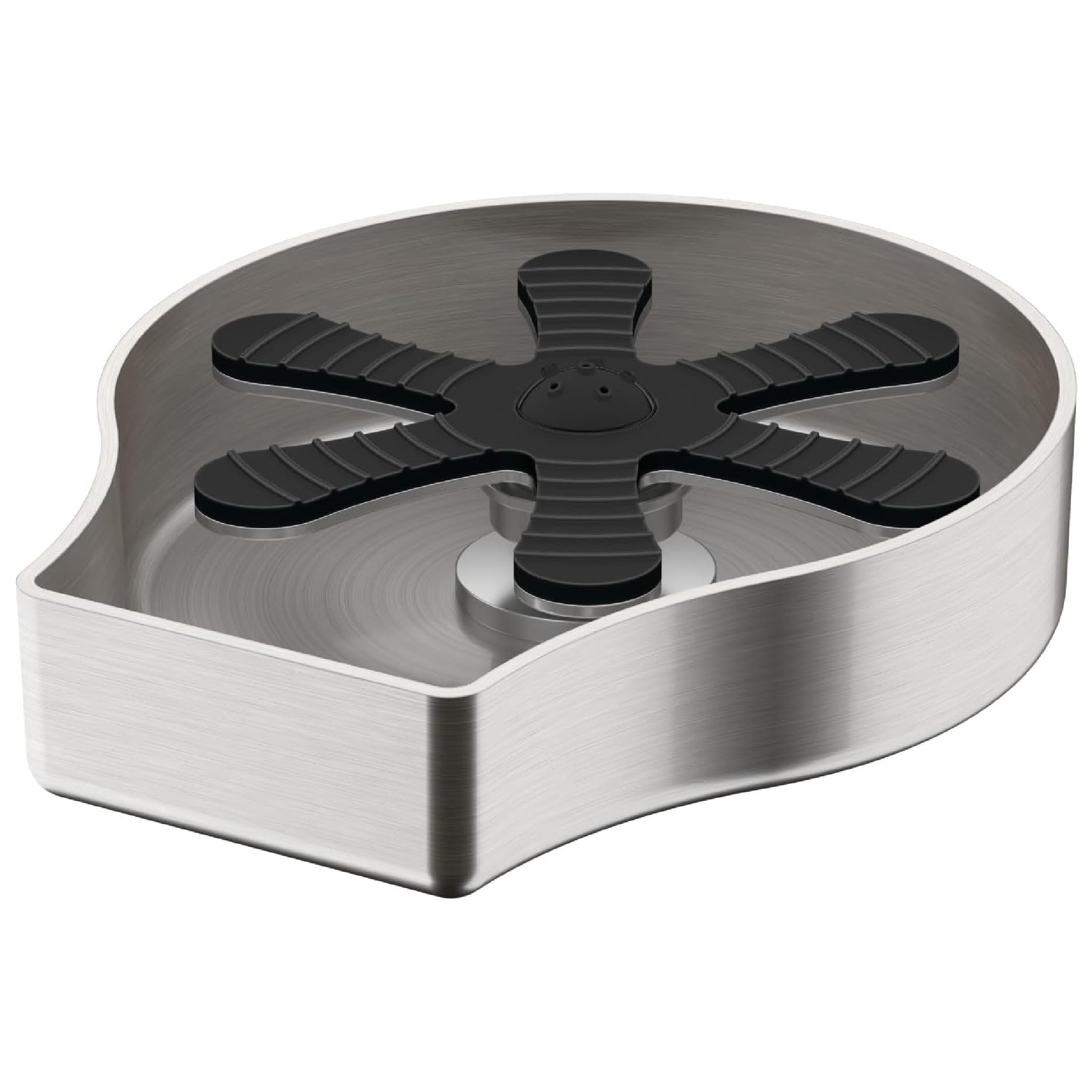
The Homewerks GR001SS offers the highest flow rate in this lineup at 1.8 GPM, producing a powerful water blast that quickly clears caked-on residue from baby bottles and travel mugs. The polished stainless finish coordinates cleanly with most modern kitchen fixtures, and the unit is designed to install into standard sink holes or countertop holes in place of a soap dispenser or plug.
The included supply line and extender tee make hookup fast, and the installation is genuinely simple for a DIY beginner — installers report completing it in about 10 minutes. The connector fits both hot and cold water supply lines, giving flexibility for connecting to whichever is more accessible under the sink.
Two practical issues stand out. First, the unit does not include a gasket between the top of the sprayer body and the sink surface, so plumber’s putty or a separate gasket is required to prevent water from leaking down into the cabinet. Second, the 1.8 GPM flow, while powerful, may exceed local water conservation limits in some jurisdictions and can cause significant splashing with lightweight plastic cups if the pressure is not dialed back.
Why it’s great
- Highest flow rate for tough residue removal
- Quick DIY installation with included parts
- Polished stainless finish matches modern fixtures
Good to know
- No included gasket for leak-free installation
- High flow may cause splashing with light cups
7. Zjyufy Pull-Out Glass Rinser
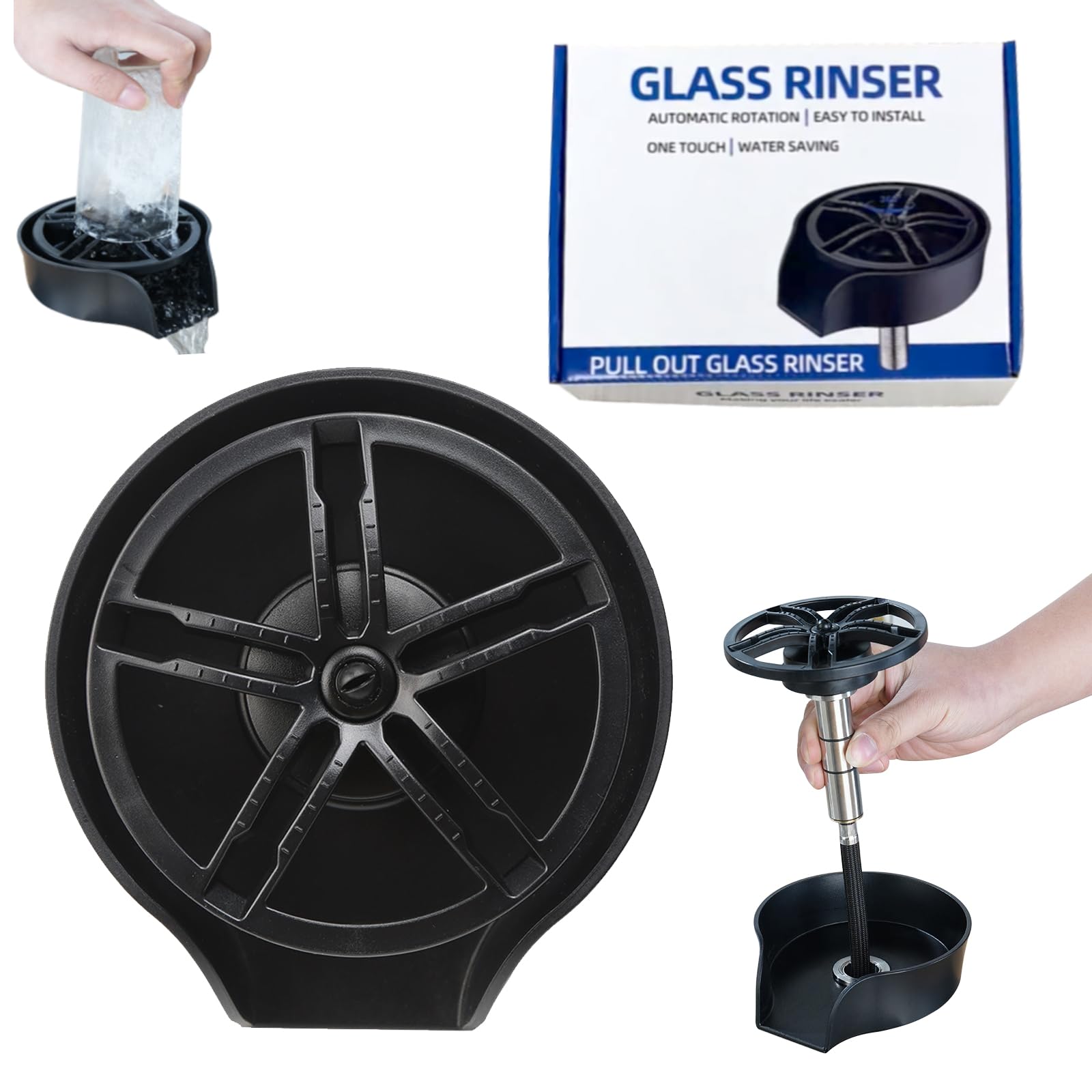
The Zjyufy rinser hits an entry-level price point while including a retractable 80 cm pull-out nozzle that extends to reach the corners of large sinks — a feature usually reserved for mid-range units. The 360-degree rotating head provides coverage from all angles, and the high-pressure jet is designed to clean a glass in seconds with a simple press of the cup bottom against the spray plate.
The body is constructed from ABS plastic with a chrome finish over a stainless steel spray component, keeping weight low at 1.28 pounds. The 5-minute installation process uses basic tools and mounts directly to the existing sink hole without specialized plumbing. Users consistently praise the ease of setup and the price-to-performance ratio for occasional home use.
The ABS body is the primary compromise here: repeated exposure to hot water and detergent may cause the plastic to feel less rigid over time, and the chrome finish can show wear faster than brushed stainless or matte coatings. The water pressure also needs careful adjustment — too high and pressing a glass down requires uncomfortable effort; too low and the cleaning effect diminishes. This is a solid pick for a bar sink or weekend-use scenario where premium durability is less critical.
Why it’s great
- Affordable entry point with pull-out nozzle
- 360-degree rotary head for complete coverage
- Simple 5-minute DIY installation
Good to know
- ABS plastic body less durable than metal
- Chrome finish may show wear over time
FAQ
Can a glass rinser damage delicate wine glasses or crystal?
Does a glass rinser replace a dishwasher for cleaning baby bottles?
Will a glass rinser work if my sink does not have a sprayer hole?
Final Thoughts: The Verdict
For most users, the best glass rinser winner is the KRAUS CleanMate because its push-and-twist safety lock, nine-jet array, and wide 5-inch opening offer the best balance of family-friendly safety and effective cleaning. If you want a metal body that eliminates corrosion risk, grab the AquatiQ 2-in-1. And for a no-drill countertop setup in a coffee cart or trailer, nothing beats the DIBTSA Pitcher Rinser.