
Tap water runs through plastic pitchers, picks up a faint chemical note, and leaves you wondering what else is lurking. A glass body eliminates that plastic taste entirely, but the filter inside still needs to pull out chlorine, lead, and PFAS without turning your counter into a science lab. Finding a glass water filter that balances filtration power with a pour-friendly design is the real challenge.
I’m Mohammad Maruf — the founder and writer behind Drink4Good. I’ve spent years analyzing water filtration hardware, comparing filter certifications, and breaking down the real-world performance of pitchers that promise clean water without the plastic waste.
After reviewing dozens of models, I’ve built a focused guide to the best glass water filter options that deliver genuine contaminant reduction, durable glass construction, and practical daily use for your home.
How To Choose The Best Glass Water Filter
Switching from plastic to glass is a solid move for taste and environmental reasons, but not every glass pitcher houses a capable filter. You need to match the filtration technology to your tap water’s specific contaminants while ensuring the glass body is durable enough for daily handling. Here are the critical factors to evaluate.
Filter Certification vs. Marketing Claims
Look for independent testing standards like NSF/ANSI 42 (chlorine, taste, odor) and NSF/ANSI 53 (heavy metals, cysts). A filter that lists “reduces lead” without certification is making an unverified promise. Premium models often include NSF/ANSI 401 for emerging contaminants like pharmaceuticals and PFOA/PFOS. Always check the fine print on what the filter actually removes — not just what the label implies.
Glass Thickness and Handle Design
Thin-walled glass pitchers can shatter from a light bump against a sink edge or refrigerator shelf. Look for borosilicate glass or reinforced glass bodies, and pay attention to the handle shape — a narrow neck forces two-handed pouring when the pitcher is full, while an ergonomic handle with good clearance allows one-handed operation. The lid and filter housing should seal tightly to prevent dust ingress.
Filtration Speed and Flow Rate
Standard pitchers take 8-12 minutes to fully filter a fill. Some models with advanced membrane technology or large carbon blocks can take even longer. If you refill multiple times a day, a faster flow rate (measured in ounces per minute) saves significant waiting time. However, faster filtration often means less contact time with the filter media, so balance speed with the level of contaminant reduction you need.
Quick Comparison
On smaller screens, swipe sideways to see the full table.
| Model | Category | Best For | Key Spec | Amazon |
|---|---|---|---|---|
| Aarke Purifier | Premium | Design-conscious buyers | Refillable stainless steel filter | Amazon |
| Waterdrop PT-09W | Premium | Fast flow & NSF certification | 8.5 oz/min flow rate | Amazon |
| LifeStraw Home | Premium | Bacteria & parasite reduction | Hollow fiber membrane filter | Amazon |
| LARQ Water Filter Pitcher | Mid-Range | PFAS & pharmaceutical removal | Nano Zero filter technology | Amazon |
| GLACIER FRESH Purela | Mid-Range | Ultrafiltration & coliform reduction | 0.2 micron membrane filter | Amazon |
| Puro Glass Pitcher | Budget-Friendly | Simple chlorine & odor removal | 1.3 liter capacity | Amazon |
| Hydros 64 oz Pitcher | Budget-Friendly | Fast flow at a low price | Fast Flo filter technology | Amazon |
In‑Depth Reviews
1. Aarke Purifier

The Aarke Purifier stands apart with its patented refillable stainless steel filter cartridge — no plastic filter housings to replace. You pour loose granules into the cartridge, customizing your filtration between the included Pure refill (for clean, crisp water) and separately sold Enriched granules that add essential minerals. The 2.4L glass carafe holds 1.18L of filtered water, and the entire pitcher is dishwasher-safe, eliminating the odor retention that plagues plastic pitchers.
Designed and engineered in Sweden, the Aarke prioritizes aesthetics without sacrificing function. The glass body is thick, the stainless steel construction feels premium, and the pour is controlled with no drips. Each refill bag filters up to 120 liters — roughly 8 weeks of use — which replaces hundreds of single-use bottles. The 5-cup capacity is modest, but the refill cycle is fast enough for daily hydration.
Users praise the clean taste and the absence of plastic contact, though the 4.4-gram weight of the carafe requires two hands when full. The initial investment is higher than standard pitchers, but the refillable cartridge cuts long-term filter costs significantly. If you value sustainability and design, this is the benchmark.
Why it’s great
- Refillable stainless steel cartridge eliminates plastic waste
- Customizable mineral enrichment options available
- Dishwasher-safe glass and components for easy cleaning
Good to know
- Small 5-cup filtered capacity requires frequent refills
- Heavy carafe when full needs two-handed handling
2. Waterdrop PT-09W

The Waterdrop PT-09W delivers a 10-cup capacity with an 8.5 oz/min flow rate — roughly 10 times faster than standard pitchers. Its 5-stage filtration uses advanced carbon fiber, ion exchange resin, and an activated carbon block to reduce chlorine, mercury, copper, cadmium, and PFOA/PFOS. The filter is NSF/ANSI 42, 53, and 372 certified, giving you third-party verification for contaminant reduction and lead-free materials.
The glass body is thick and non-toxic, though a sturdy plastic inner liner reinforces the structure. A filter lifespan reminder dial on the lid tracks the 100-gallon or 2-month cycle. The 10-cup capacity fits nicely in the fridge after minor shelf reorganization, and the pour spout is designed to minimize dripping. The flow rate means you can fill an 8 oz glass in under a minute — a significant daily convenience.
Some users note the pitcher is top-heavy when fully filled, and the plastic inner liner (while durable) is not glass. The filtration does not reduce TDS or microplastics. But for fast, certified reduction of common tap water contaminants, the Waterdrop is a strong mid-range contender that justifies its premium price.
Why it’s great
- Super-fast 8.5 oz/min flow rate saves daily waiting time
- NSF/ANSI 42, 53, and 372 certified performance
- 10-cup capacity fits average refrigerator shelves
Good to know
- Plastic inner liner is not full glass construction
- Does not filter microplastics or reduce TDS
3. LifeStraw Home

LifeStray brings its trusted hollow fiber membrane technology from outdoor survival to the kitchen counter. This 7-cup glass pitcher removes bacteria, parasites, microplastics, lead, mercury, PFAS, chlorine, herbicides, and pesticides — while retaining beneficial minerals like magnesium and potassium. It is the only pitcher in this lineup that targets biological contaminants, making it ideal for well water or areas with questionable municipal treatment.
The filtration is thorough but slow — expect 10 minutes per full fill, especially when the membrane filter is new. The dual-filter system includes a membrane microfilter lasting 264 gallons (1 year) and an activated carbon + ion exchange filter lasting 40 gallons (2 months). A silicone base protects the glass from minor bumps, and the leak-proof design keeps your counter dry.
Users consistently report dramatically improved taste and smell, even when starting from heavily chlorinated or sulfur-heavy tap water. The slow flow is the primary trade-off, and some buy a secondary holding pitcher to avoid waiting. For peace of mind against biological contaminants, the LifeStraw is unmatched in this category.
Why it’s great
- Hollow fiber membrane removes bacteria and parasites
- Long-lasting membrane filter at 264 gallons
- Retains essential minerals while removing toxins
Good to know
- Slow filtration speed (~10 minutes per fill)
- 7-cup capacity is modest for larger households
4. LARQ Water Filter Pitcher
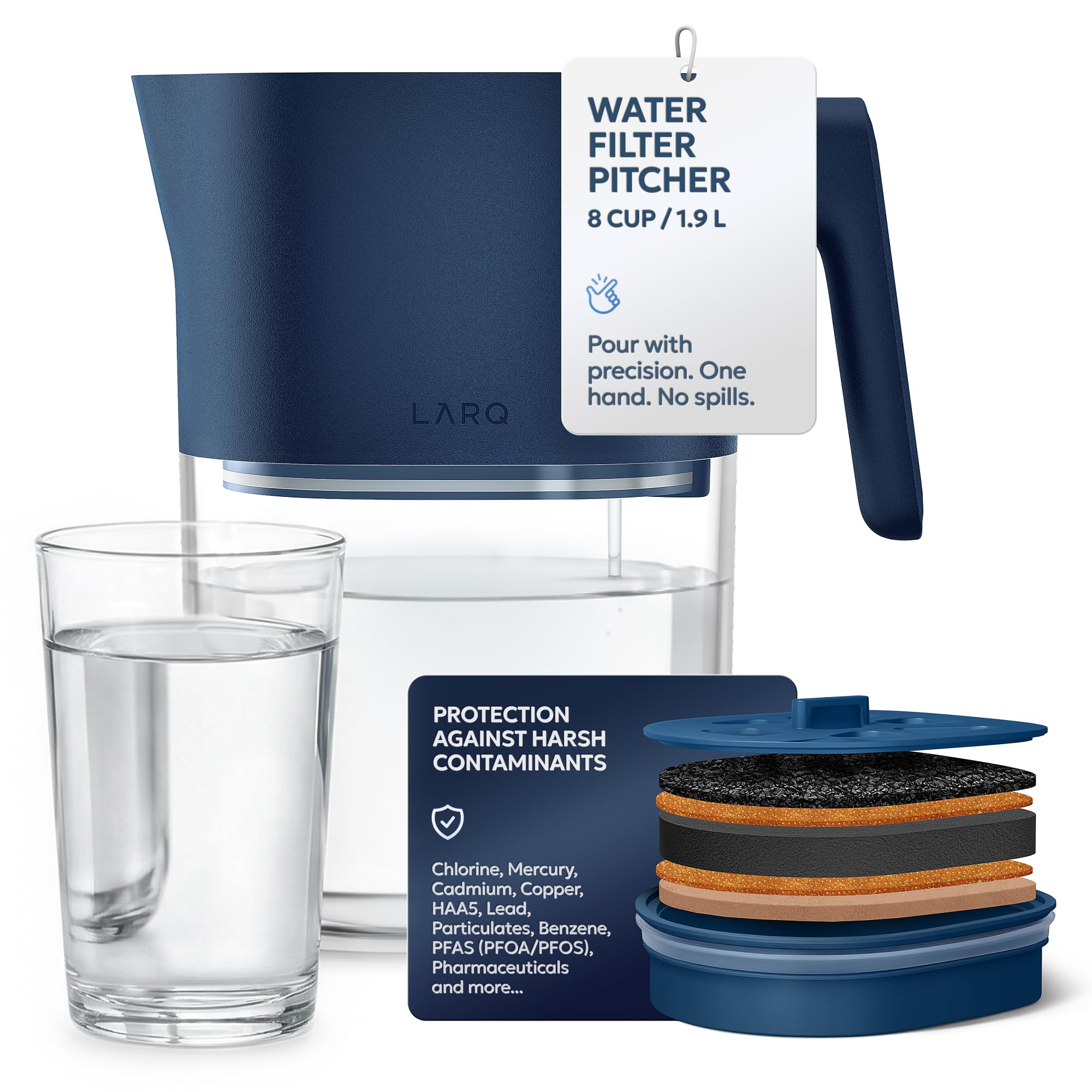
LARQ’s Nano Zero filter technology is independently tested to NSF/ANSI 42, 53, and 401 standards, targeting chlorine, lead, mercury, PFAS (PFOA/PFOS), benzene, VOCs, HAA5, pharmaceuticals, and microplastics down to 40 µm. The Monaco Blue glass carafe holds 1.9 liters (8 cups) and fits easily in the fridge or on the counter. The ergonomic handle and spout lid keep dust out and make pouring effortless.
The filter lasts 60 gallons (~3 months) and replaces over 450 single-use bottles. The BPA/BPS-free construction and dishwasher-safe parts simplify maintenance. While the pitcher itself is glass, the filter housing and top cap are plastic — but the water only contacts the filter media, not the plastic housing during storage. The aesthetic is clean and modern, blending into any kitchen decor.
Users love the improved taste and the sleek design, though some report difficulty finding replacement cartridges from the original seller. The filter is effective enough for daily hydration but does not address biological contaminants like bacteria or cysts. For the price, the LARQ delivers broad chemical reduction with a premium look.
Why it’s great
- NSF/ANSI 401 certified for pharmaceuticals and PFAS
- 1.9L capacity fits family hydration needs
- Dishwasher-safe glass and parts for easy cleaning
Good to know
- Filter housing is plastic, not full glass construction
- Replacement filters can be hard to source consistently
5. GLACIER FRESH Purela
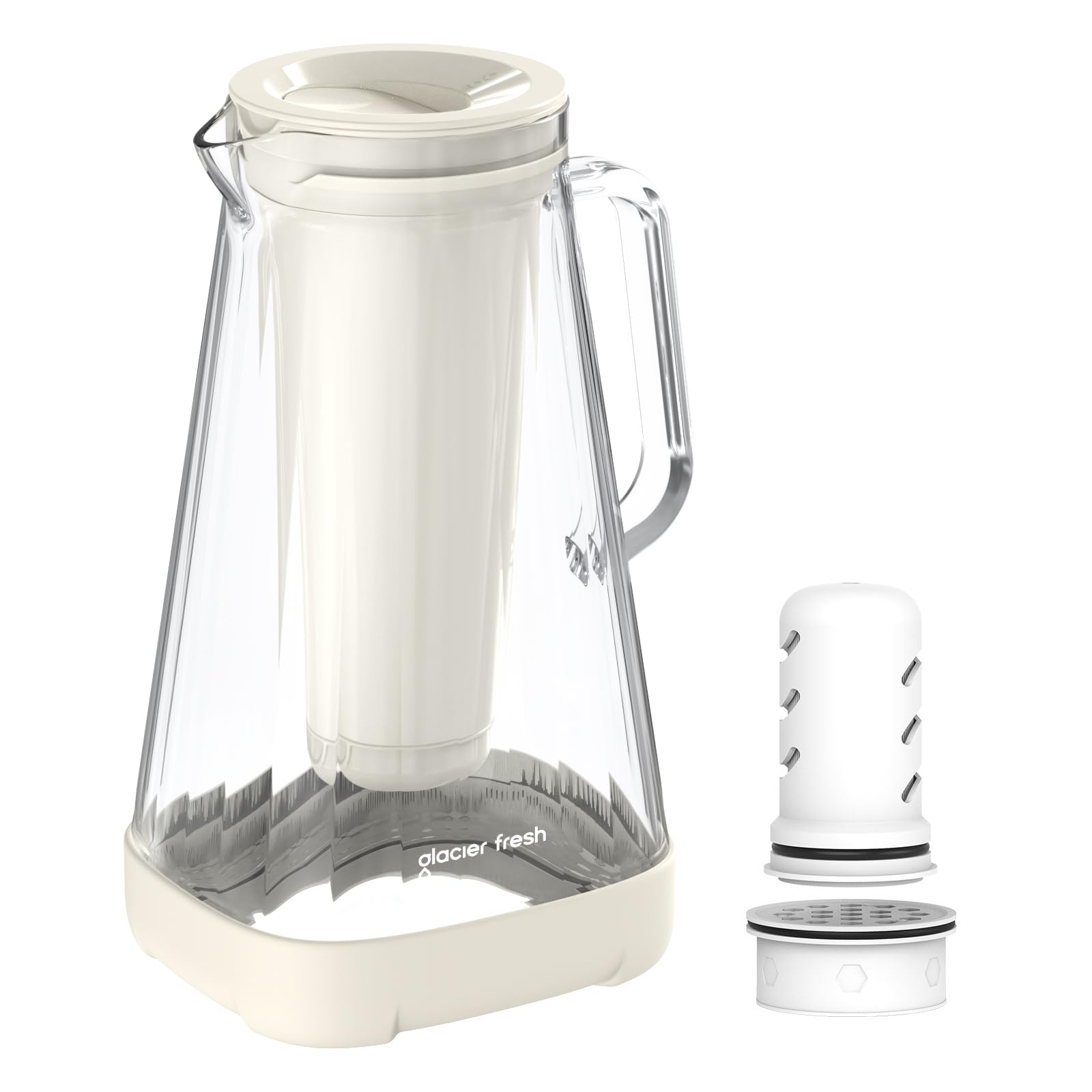
The GLACIER FRESH Purela uses an ultrafiltration membrane with 0.2-micron pores plus activated carbon fiber cotton to reduce 99% of chlorine, 96% of PFOA and PFOS, and coliform bacteria. The borosilicate glass body is handblown and shatter-resistant, a step up from standard soda-lime glass. The 10-cup capacity is generous, and the ergonomic handle allows one-handed pouring even when full.
Independent lab testing backs the performance claims, and the dual-filter system includes a membrane microfilter lasting 264 gallons (6-12 months) and an activated carbon filter lasting 40 gallons (2 months). The easy-fill top removes the need to lift the lid, and the slim profile fits refrigerator doors. The initial drip rate is slow but speeds up after the first few uses as the filter primes.
Users report fresh, clean taste and appreciate the reduced plastic waste. The pitcher is heavy due to the thick glass, and some find the slow initial flow frustrating. For the price, the Purela offers exceptional filtration depth — especially for those concerned with coliform bacteria and PFAS — in a durable glass body that feels substantial.
Why it’s great
- 0.2-micron ultrafiltration reduces coliform bacteria
- Borosilicate glass is shatter-resistant and durable
- 10-cup capacity and slim fridge-friendly design
Good to know
- Heavy when full, requires stable placement
- Initial filtration speed is slow before priming
6. Puro Glass Pitcher

The Puro Glass Pitcher offers a straightforward activated carbon filter that removes chlorine, lead, odors, and impurities with each pour. The 1.3L capacity is compact, fitting easily on a countertop or fridge shelf. The design emphasizes quick filtration — water runs through the filter as you pour, so you get clean water in seconds without waiting for a full reservoir to drain.
The lightweight glass body and controlled pour spout make daily use simple, though the narrow diameter makes one-handed pouring tricky. One filter replaces up to 1,600 water bottles, and the manual operation means no batteries or electricity needed. The filter life depends on usage, but the replacement cost is reasonable.
Users praise the clean taste and the reduction in plastic waste, though some report the plastic closing cap can fail over time. The filter replacement frequency and cost can add up if you filter heavily. For its price point, the Puro is a solid entry-level glass water filter that focuses on the basics: removing chlorine and improving taste.
Why it’s great
- Filters water on pour, no waiting for reservoir to drain
- Lightweight glass body is easy to handle
- Compact size fits well in small kitchens and fridges
Good to know
- Plastic closing cap may wear out over time
- Narrow diameter makes one-handed pouring difficult
7. Hydros 64 oz Pitcher
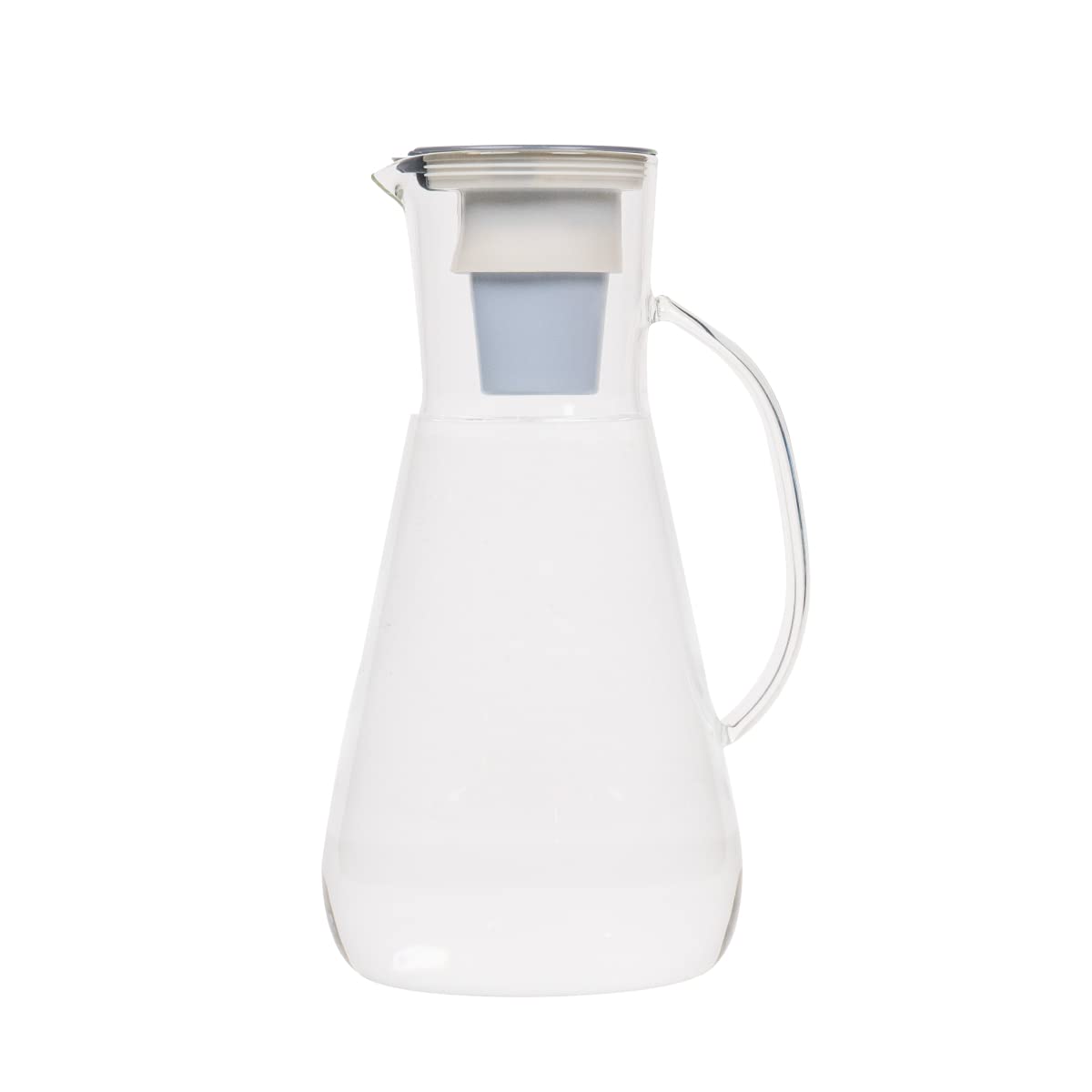
The Hydros 64 oz Pitcher uses patented Fast Flo Filter technology that works five times faster than standard pitchers, filtering a full 64 ounces in about 60 seconds. The natural coconut shell carbon filter is NSF 42/Class 1 rated, removing 99% of sediment and 90% of chlorine, along with fluorine and other chemicals that cause bad taste. The high-quality glass body holds 8 cups, and the modular system means all Hydros filters fit the entire product line.
The design is sleek and minimalist, with a BPA-free lining and a compact footprint. The fast flow is a genuine time-saver, and the water taste is notably improved, especially for those dealing with sulfur or iron-tasting well water. However, the glass is thin — multiple user reports mention shattering from light bumps against sink edges or countertops.
The pitcher is not dishwasher-safe, which is a maintenance downside. The lack of a reservoir means you must fill at a precise angle under the faucet, which can be awkward with low faucets. For budget-conscious buyers who prioritize speed and taste over durability, the Hydros delivers impressive filtration speed at a low entry point.
Why it’s great
- Five times faster filtration than standard pitchers
- NSF 42/Class 1 certified for chlorine and sediment removal
- Large 64 oz capacity for family use
Good to know
- Thin glass prone to shattering from minor impacts
- Not dishwasher-safe and requires careful filling angle
FAQ
Can glass water filter pitchers remove bacteria from tap water?
How often should I replace the filter in my glass water pitcher?
Is borosilicate glass better than standard glass for water pitchers?
Final Thoughts: The Verdict
For most users, the best glass water filter winner is the Waterdrop PT-09W because it combines fast 8.5 oz/min flow, NSF/ANSI 42, 53, and 372 certification, and a practical 10-cup capacity in a durable glass body. If you need bacteria and parasite reduction for well water, grab the LifeStraw Home. And for sustainable design enthusiasts who want zero plastic contact, nothing beats the Aarke Purifier.