
For those navigating the world with low vision or total blindness, the right pair of glasses isn’t about style — it’s about functional access to reading, mobility, and daily independence. From magnifying tiny print to filtering blinding glare, the technology inside these frames can transform a frustrating task into a manageable one.
I’m Mohammad Maruf — the founder and writer behind Drink4Good. I’ve spent countless hours analyzing optical specifications, user reports from low-vision communities, and the real-world durability claims of assistive eyewear to separate what actually works from what just sounds good on a box.
Whether you need hands-free magnification for a book, anti-glare lenses for night driving, or a smart camera that describes the world aloud, this guide cuts through the noise to find the best glasses for blind people across four distinct need categories.
How To Choose The Best Glasses For Blind People
Not all low-vision eyewear is created equal. The first mistake buyers make is assuming one pair solves everything. The key is matching the specific impairment to the correct optical intervention.
Match the Lens to the Condition
Macular degeneration requires yellow or amber-tinted lenses to boost contrast and reduce scattered blue light. Glaucoma and retinitis pigmentosa often benefit from side shields that block peripheral glare. Cataract patients typically need anti-glare coatings rather than magnification. A single pair cannot address all of these — choose the technology that targets your specific diagnosis.
Magnification vs. Field of View
High-powered magnifiers (10x and above) shrink your field of view dramatically. For reading a full book page, a lower magnification with a larger lens area — like the 10.6 x 7.8 inch neck-worn magnifiers — lets you scan without constantly repositioning the lens. For inspecting tiny labels or print, a compact high-power loupe may be better.
Fit-Over Compatibility Matters
If you already wear prescription glasses, a fit-over design is essential. These oversized frames sit directly over existing eyewear, adding tint, magnification, or glare reduction without requiring a new prescription. Check the internal dimensions (typically 6.9 x 3.3 inches for the frame) to ensure they won’t pinch or press your primary glasses into your face.
Quick Comparison
On smaller screens, swipe sideways to see the full table.
| Model | Category | Best For | Key Spec | Amazon |
|---|---|---|---|---|
| EarlySincere AI Smart Glasses | Smart Glasses | AI-powered scene description & translation | 4K camera, ChatGPT, 7h battery | Amazon |
| Macular Degeneration Fit-Over Glasses | Therapeutic Tint | Glare & UV protection over Rx glasses | Fit-over frame, yellow/amber tint | Amazon |
| NZQXJXZ Large 10X Magnifier | Hands-Free Magnifier | Reading full pages with low vision | 10X mag, 50 LEDs, neck-worn | Amazon |
| CatXQ Smart Glasses | Audio Smart Glasses | Hands-free calls & audio navigation | Bluetooth 5.0, 6h playback, UV400 | Amazon |
| Bircen Night Vision Glasses | Anti-Glare | Reducing headlight glare while driving | Yellow tint, aluminum-metal frame | Amazon |
In‑Depth Reviews
1. EarlySincere AI Smart Glasses
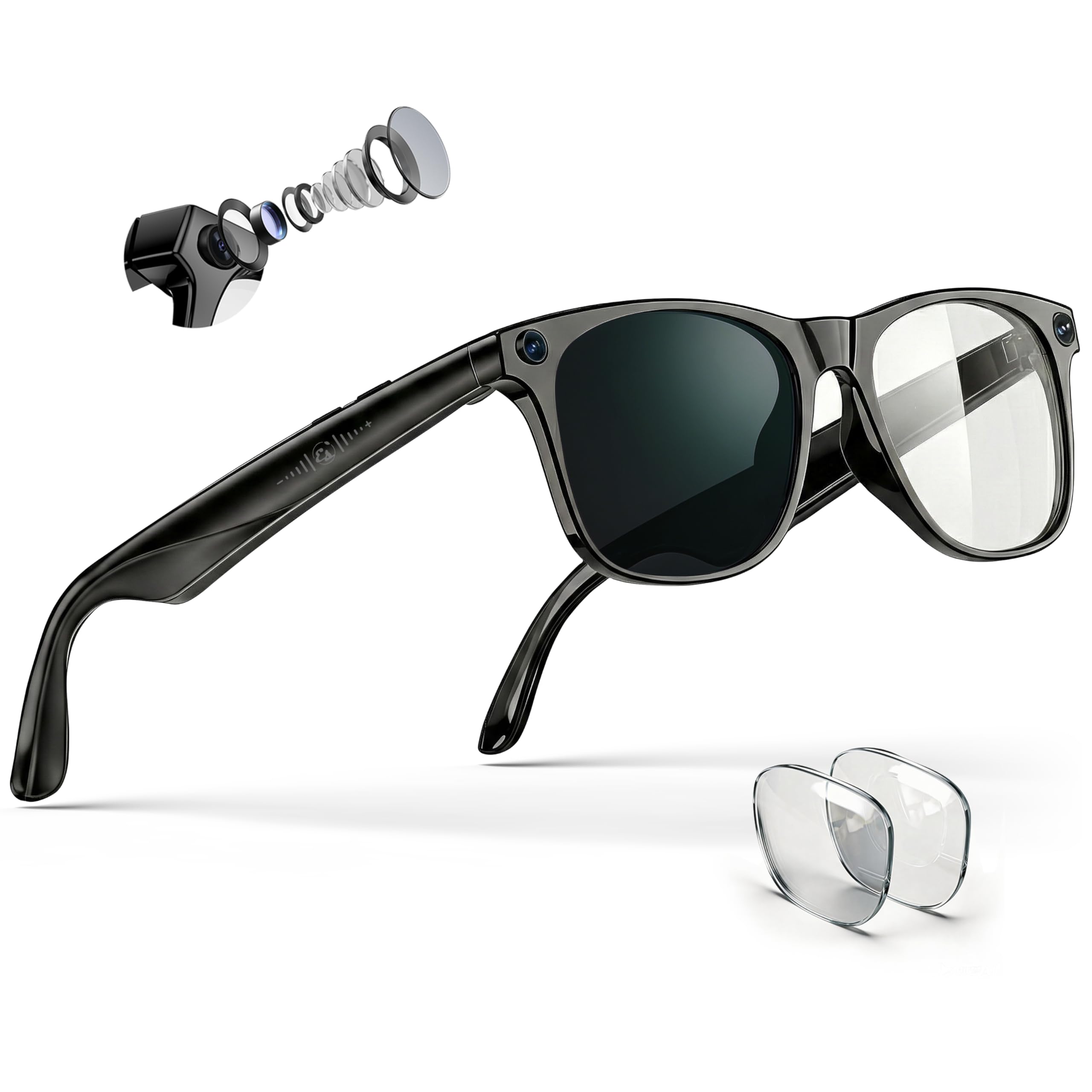
If you have total blindness or severe low vision that makes traditional magnification useless, the EarlySincere AI glasses are the most capable tool in this list. The integrated 4K camera and ChatGPT-powered assistant can describe objects, read text aloud, and even translate speech into 100+ languages — turning the glasses into a wearable seeing-eye companion.
The audio quality is genuinely HiFi, with F0 280 speakers that deliver deep bass and clear vocals without blocking ear canal sounds. The photochromic lenses automatically darken outdoors, and the frame comes with a second pair of blue-light blocking lenses for indoor use. The 290mAh battery offers 7 hours of music playback or 4 hours of call time.
There are real privacy concerns: the camera can capture images and audio without apparent user confirmation, and the storage system is opaque. For a sighted user, this is a minor oversight — for a user relying on the AI for daily assistance, it’s a trust issue that needs a firmware fix.
Why it’s great
- Camera + AI can describe surroundings and read text aloud
- Interchangeable lenses: photochromic and blue-light included
- Strong battery life and fast magnetic charging
Good to know
- Voice assistant and camera may activate without explicit command
- Audio quality is excellent but sound leaks in quiet rooms
- Requires smartphone for full translation features
2. Macular Degeneration Fit-Over Glasses

These fit-over glasses are engineered specifically for macular degeneration, glaucoma, cataracts, and retinitis pigmentosa. The amber-yellow tint blocks high-energy blue light and enhances contrast, which is the primary intervention for conditions that degrade central vision. Users report seeing “more clearly now” and a significant reduction in daytime glare.
The frame is sized to fit directly over existing prescription glasses — a critical feature for anyone who cannot afford a separate prescription lens set. The overall weight is just under 5 ounces, which is light enough for extended wear without causing pressure marks on the nose bridge.
Durability is a concern: several buyers reported the frame breaking after roughly a month of use. For the price, it’s a disposable tool rather than a long-term investment. If you need a reliable daily-wear option, consider reinforcing the hinge area or buying a backup pair.
Why it’s great
- Specifically formulated tint for macular degeneration and glaucoma
- Slides comfortably over prescription glasses
- Lightweight frame for all-day wear
Good to know
- Frame is fragile — hinge may break within a few weeks
- Not suitable for night driving despite claims
- Lens tint cannot be customized for severity
3. NZQXJXZ Large 10X Rechargeable Magnifier
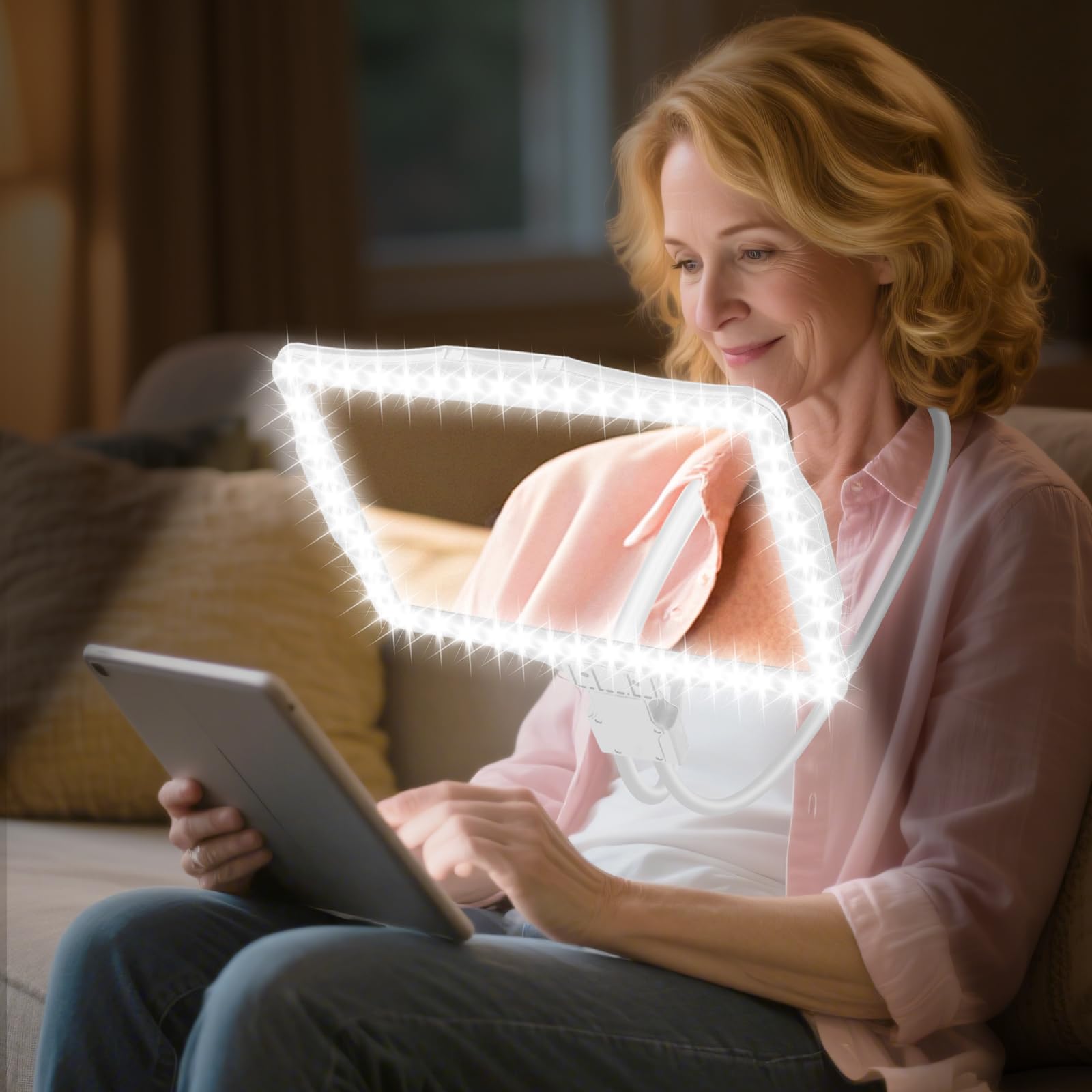
For low-vision readers who struggle with standard handheld magnifiers, this neck-worn design delivers the largest viewing area in the category — 10.6 x 7.8 inches — letting you see an entire book page without moving the lens. The 10x acrylic lens offers 1000% magnification, and the 50 built-in LEDs have a dimmer switch so you can dial in the perfect light level for your condition.
The gooseneck arm flexes to any angle, making it ideal for cross-stitch, sewing, crafts, or any hands-free detailed task. It charges via USB and runs 5-8 hours per charge depending on brightness setting. During charging, it still works, so there’s no downtime.
Some users with limited lifting ability found it awkward to put on, and the acrylic surface has a subtle texture that becomes visible at close distances — if you need absolute optical clarity, a glass lens magnifier may be better. Also, page turning is difficult while wearing it, so it’s best for stationary reading on a flat surface.
Why it’s great
- Huge viewing area — full book page at once
- Adjustable LED brightness with dimmer control
- USB rechargeable; works while charging
Good to know
- Acrylic texture visible at close distances
- Awkward to lift and put on for people with limited mobility
- Page turning is difficult without removing the magnifier
4. CatXQ Bluetooth Smart Glasses

These aren’t for visual enhancement — they’re for audio-based independence. The open-ear air conduction speakers let you take calls, listen to GPS navigation, or play music without blocking ambient sound, which is critical for blind users who rely on hearing to navigate safely. The UV400 polarized lens blocks 99% of UVA and UVB rays and can be replaced with prescription lenses.
The bluetooth 5.0 connection is stable up to 10 meters, and a 30-minute charge powers the rest of a work shift. The frame is lightweight polycarbonate and has an IPX5 waterproof rating, so sweat and rain won’t damage the electronics. For a device under many traditional smart glasses, the audio clarity is surprising, though bass is virtually nonexistent.
The major drawback is the fragile arm design — if folded, the arms can snap, so you must store them fully extended. The proprietary magnetic charging cable means losing it renders the glasses useless. And the single button sensor is easily triggered by adjusting the frames, which can accidentally pause audio or end calls.
Why it’s great
- Open-ear audio keeps you aware of surroundings
- UV400 polarized lenses with prescription replacement option
- IPX5 waterproof rating for outdoor use
Good to know
- Arms are fragile — avoid folding them
- Proprietary charging cable; if lost, unit is dead
- Single button sensor triggers accidentally when adjusting frames
5. Bircen Night Vision Glasses for Driving
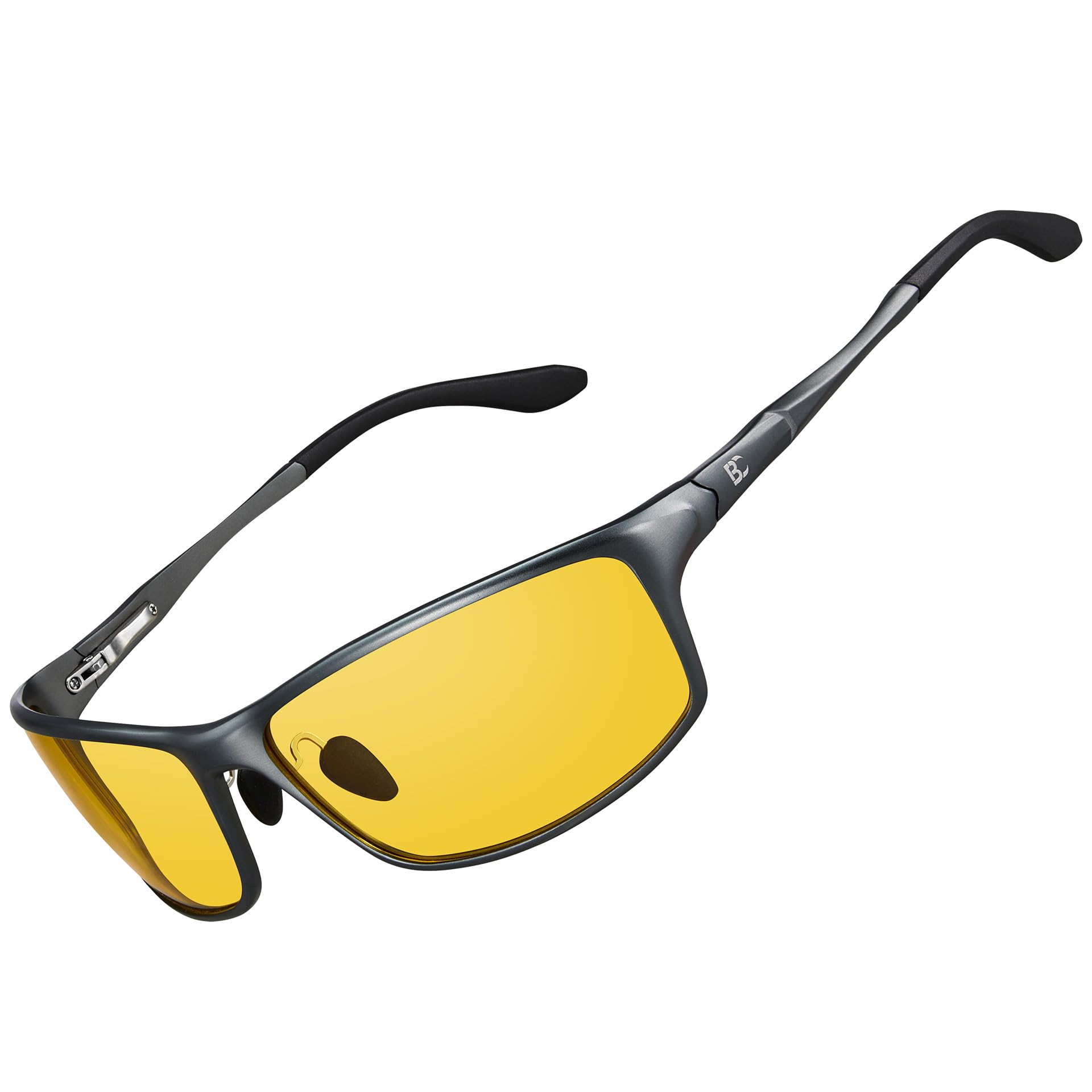
For people with low vision who still drive, the biggest nighttime hazard is the blinding glare from modern LED headlights. These Bircen glasses use a yellow-tinted lens that works by filtering the blue-heavy spectrum of LED light, reducing the starburst effect and improving contrast. Multiple users report that the glasses “turn night into day” and dramatically reduce dangerous glare.
The frame is aluminum-magnesium metal, not cheap plastic, giving it a premium feel and better durability than the fit-over model. It’s styled like a classic sunglass, so you won’t look like you’re wearing a medical device. The lenses are not prescription, but they can be replaced with custom lenses at an optician.
It takes about 10 minutes for your eyes to adjust to the yellow tint. During the first few minutes, the sunburst effect may still be visible, but after the adjustment period, most users report significantly improved night clarity. They are not a replacement for proper low-vision medical aids, but for nighttime glare reduction, they are effective and inexpensive.
Why it’s great
- Dramatically reduces LED headlight glare for night driving
- Metal frame feels premium and durable
- Low cost with high user satisfaction for glare reduction
Good to know
- Yellow tint requires 10-minute adjustment period
- Not a vision aid — only reduces glare, does not magnify
- Best for moderate low vision with light sensitivity — not for total blindness
FAQ
What is the difference between glasses for the blind and low-vision magnifiers?
Can I get prescription lenses put into these glasses?
Do AI smart glasses work for people with total blindness?
Final Thoughts: The Verdict
For most users, the best glasses for blind people winner is the EarlySincere AI Smart Glasses because it combines a powerful AI assistant, 4K camera, and interchangeable lenses into a single device that addresses both visual and non-visual needs. If you want therapeutic tint for macular degeneration or glaucoma that fits over your existing glasses, grab the Macular Degeneration Fit-Over Glasses. And for the best budget entry to hands-free reading with a full-page viewing area, nothing beats the NZQXJXZ Large 10X Rechargeable Magnifier.