
Driving at night with modern LED headlights can feel like a hazard. The intense blue-white glare, halos around street lamps, and sudden bursts of light from oncoming traffic force your eyes to work overtime, leading to fatigue and slower reaction times. A properly designed pair of yellow-tinted or anti-reflective lenses can cut that harsh glare, restore contrast, and make your evening commute noticeably safer.
I’m Mohammad Maruf — the founder and writer behind Drink4Good. I spend my time digging into the optical specs and real-world user feedback behind glasses designed for low-light driving, separating the marketing claims from the lenses that actually work.
Whether you have astigmatism, post-surgery light sensitivity, or just struggle with the blinding glare of modern headlights, finding the right pair of glasses for night driving comes down to understanding lens tint, frame comfort, and how well they handle starburst effects without cutting too much overall visibility.
How To Choose The Best Glasses For Night Driving
Not every yellow lens works the same. Some block too much light, creating a hazard in dark rural roads, while others have a tint so light they barely touch the glare from bright LED headlights. The key is balancing contrast enhancement with overall light transmission.
Lens Tint And Light Transmission
Yellow or amber lenses are the standard for night driving because they filter out blue light, which scatters most in low-light conditions and causes the worst glare. A good night-driving lens should improve contrast without dropping light transmission below 80 percent. Lenses that are too dark can make it harder to see pedestrians, animals, or road debris.
Frame Design And Fit
A wrap-around frame prevents stray light from entering through the sides, which is critical when oncoming headlights hit your peripheral vision. Lightweight metal frames are more comfortable for extended wear than thick plastic ones, but they need secure nose pads to stay in place. The frame should not pinch your temples or slide down your nose when you check mirrors.
Polarization Considerations
Full polarization can cause strange visual artifacts with modern LCD dash displays and can actually reduce the visibility of wet roads or ice patches at night. Semi-polarized lenses (like the BLUPOND Knight Visor) offer a middle ground — cutting horizontal glare from headlights while preserving natural depth perception and overall brightness.
Quick Comparison
On smaller screens, swipe sideways to see the full table.
| Model | Category | Best For | Key Spec | Amazon |
|---|---|---|---|---|
| BLUPOND Knight Visor | Premium | All-night comfort and durability | Aluminum frame, polycarbonate lenses | Amazon |
| Illumin VECTOR | Mid-Range | Balanced glare control for all weather | Low yellow tint, scratch-resistant | Amazon |
| Bircen Al-Mg Metal | Mid-Range | Reducing LED headlight bursts | Aluminum-magnesium metal frames | Amazon |
| ZENOTTIC Aviator | Premium | Daytime polarized glare cutting | Polarized UV400 mirrored lens | Amazon |
| FEISEDY B2548 | Budget-Friendly | Affordable entry-level glare reduction | Wrap-around yellow tint | Amazon |
In‑Depth Reviews
1. BLUPOND Night Driving Glasses Knight Visor

The BLUPOND Knight Visor stands out for its build quality and thoughtful lens design. The aluminum frame is noticeably sturdier than the plastic or thin-metal alternatives, and the polycarbonate yellow-amber lenses offer a semi-polarized finish that cuts headlight glare without washing out your dashboard or creating the wavy artifacts that full polarization can cause at night.
User feedback consistently highlights the reduction in eye strain from street lamps and oncoming LED headlights. The tight fit can feel snug on wider heads, but it prevents light leakage around the edges, which is exactly what you want in a night-driving frame. The included hard case and lens holder add practical value.
Some users note that it does not completely eliminate the brightest headlights, but no glasses in this category do. The trade-off is that you retain better overall visibility of the road and peripheral details, making it the safest compromise for extended highway driving.
Why it’s great
- Robust aluminum frame resists bending and breaking
- Semi-polarized lenses balance glare control and natural depth perception
Good to know
- Fit is tight and may feel snug on larger head sizes
- Does not fully remove the brightest LED bursts
2. Illumin Night Driving Glasses VECTOR

The Illumin VECTOR is engineered specifically for poor weather conditions — rain, mist, fog, and smog. Its low yellow tint is designed to let more light through than traditional yellow night-driving lenses, which helps maintain visibility on darker roads while still filtering the blue-light scatter that causes glare.
Users with chronic dry eyes or astigmatism report an immediate reduction in eye strain and a sharpening of halos around lights. The frames are well-constructed and come with a non-slip design, though the rubber nose bridge can become irritating after extended wear. The scratch-resistant frames and included gift box add to the premium feel.
Several reviewers mention that this is the best pair they have used among several attempts, citing the precise balance between glare reduction and usable light transmission. It is less effective at blocking the very brightest LED headlights than some competitors, but the improvement in overall visual clarity is consistently praised.
Why it’s great
- Low yellow tint preserves visibility in dark rural conditions
- Designed for rain, fog, and mist driving scenarios
Good to know
- Rubber nose bridge can feel annoying after long drives
- Does not completely eliminate the brightest LED bursts
3. Bircen Night Vision Glasses Al-Mg Metal
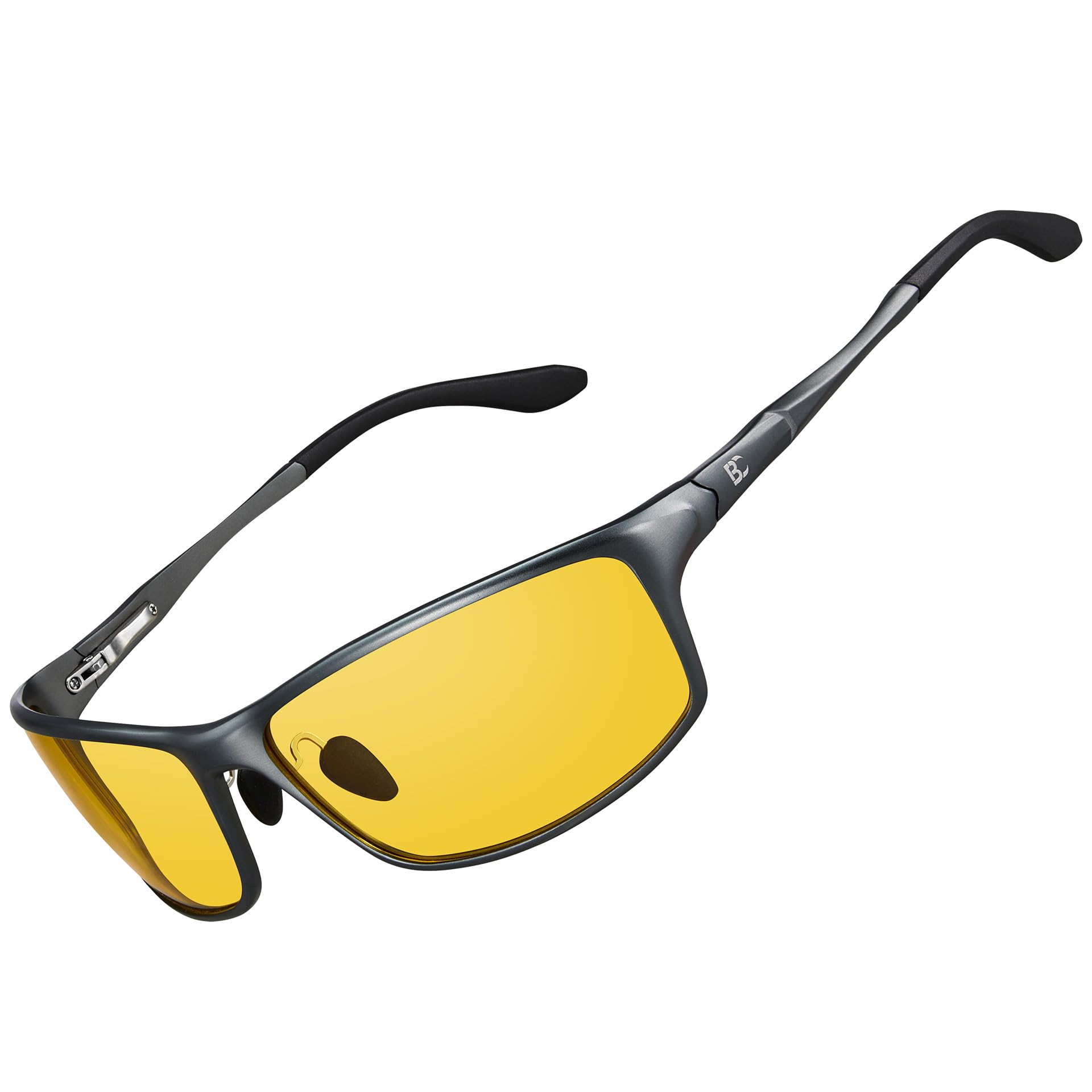
The Bircen Al-Mg Metal glasses offer a rare combination in the mid-range: lightweight aluminum-magnesium frames paired with effective yellow anti-glare lenses. Multiple users report that these glasses “turn night into day” by dramatically reducing the starburst effect from modern LED headlights, which is the biggest complaint among night drivers.
There is a brief adaptation period — about ten minutes — during which your eyes adjust to the tint. After that, users consistently note improved road detail visibility and reduced squinting. The frames look like everyday sunglasses, avoiding the cheap or medical-appliance aesthetic of some night-driving glasses.
A minority of users find the glare reduction modest rather than transformative, but given the construction quality and the price point, it represents a strong value proposition for anyone new to night-driving glasses. The metal frame is far more durable than the all-plastic alternatives at similar price levels.
Why it’s great
- Aluminum-magnesium frame offers durability without weight
- Strong reduction of headlight starburst effects
Good to know
- Requires a brief adaptation period for best effect
- Results vary — not a complete glare eliminator for everyone
4. ZENOTTIC Polarized Aviator Sunglasses
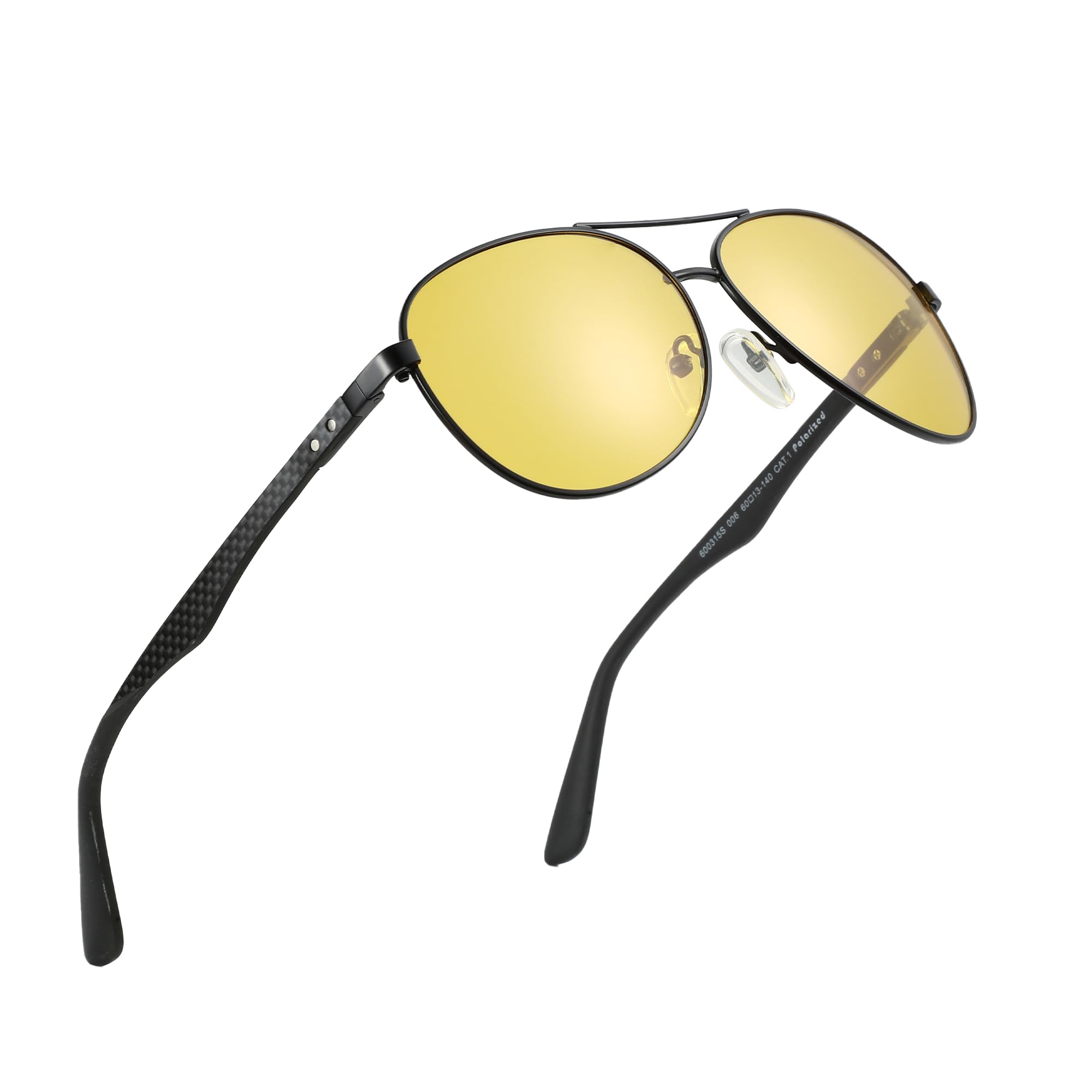
The ZENOTTIC Aviator is a polarized daytime sunglass, not a dedicated night-driving lens. It earns a spot here because many drivers want a single pair that handles both bright sun and twilight glare. The polarized UV400 lens cuts reflected glare from wet roads and other car surfaces with crisp clarity and natural color — perfect for dusk and dawn driving.
The lightweight metal frame with secure nose pads is comfortable for long drives, and the classic aviator look is genuinely stylish. Users praise the distortion-free optics and the overall build quality, though some report that the mirrored coating can begin to wear off after a month of regular use.
This is not the right tool for pitch-black night driving — the polarization reduces too much light. But if your commute spans the golden hour, heavy overcast days, or rain, these glasses outperform the yellow-tinted options for daytime glare and are a solid dedicated sunglass for drivers who also need nighttime solutions.
Why it’s great
- Polarized UV400 eliminates daytime road glare and reflections
- Lightweight metal frame with comfortable nose pads
Good to know
- Not suitable for full night driving — too dark
- Mirrored coating may show wear over time
5. FEISEDY Classic Womens Night Glasses B2548
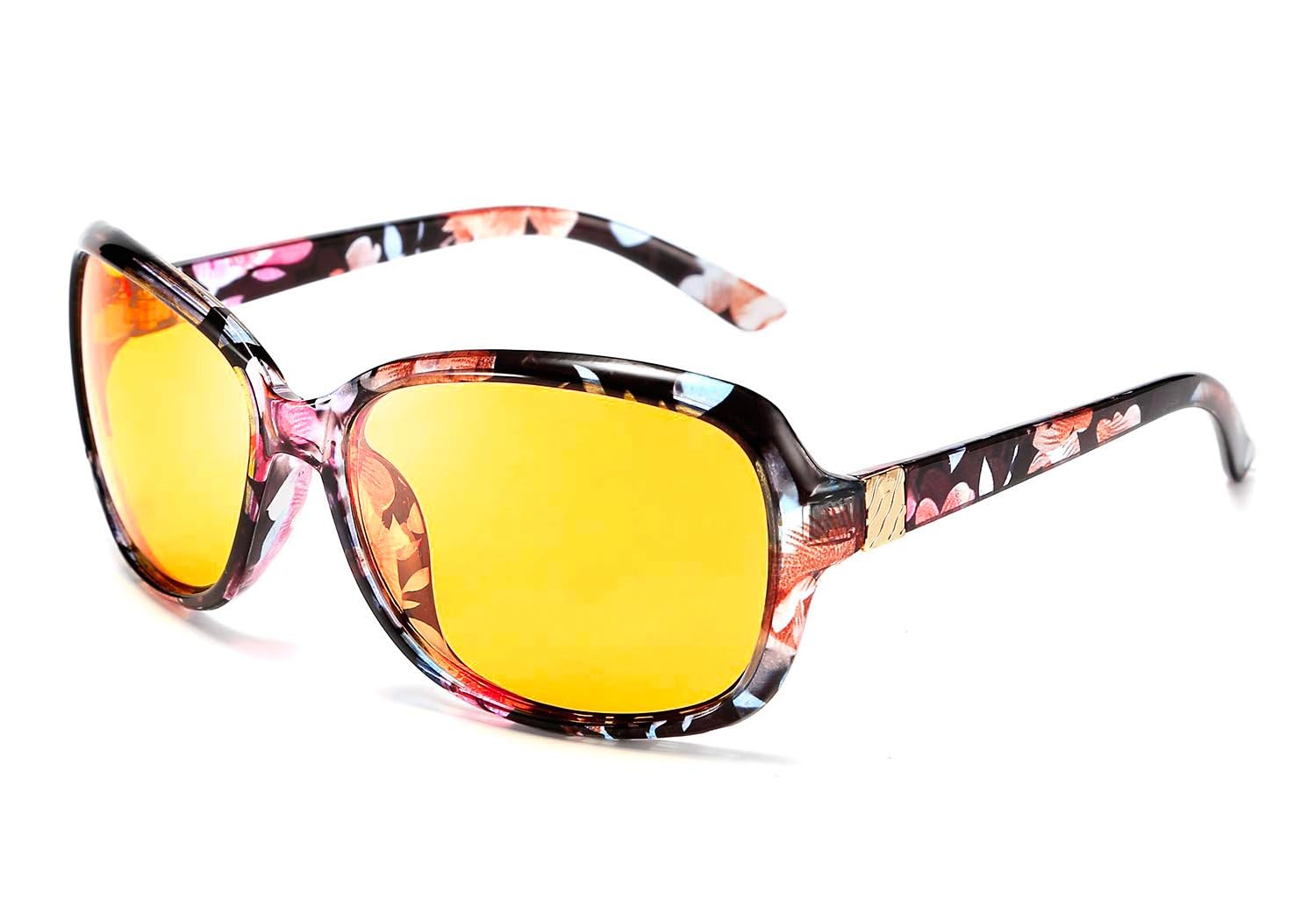
The FEISEDY B2548 is a budget-friendly entry point for anyone wanting to test whether yellow-tinted lenses help their night vision. The wrap-around design blocks peripheral light effectively, and the yellow tint does reduce glare from oncoming headlights and street lamps for most users. The frames are lightweight and available in several color options.
User reviews are mixed in a revealing way. Drivers with astigmatism or post-cataract light sensitivity report significant relief. Others find that the glasses make no meaningful difference for night driving, although some of those same users note that they work well for reducing glare when driving directly into the sun. The frames are described as slightly flimsy, which is expected at this tier.
This is an honest trial pair. If you are unsure whether night-driving glasses will help your specific vision issues, the FEISEDY is a low-risk way to find out. If it works, you will be motivated to invest in a sturdier option. If it does not, you have not spent much to learn that tinted lenses are not your solution.
Why it’s great
- Low-cost way to test if yellow lenses help your night vision
- Wrap-around design blocks peripheral light leakage
Good to know
- Frames feel flimsy compared to metal alternatives
- Effectiveness varies — does not help all users
FAQ
Can yellow night driving glasses help with astigmatism halos?
Are polarized sunglasses safe for night driving?
How long does it take to adjust to wearing night driving glasses?
Final Thoughts: The Verdict
For most users, the glasses for night driving winner is the BLUPOND Knight Visor because it combines a durable aluminum frame with semi-polarized yellow lenses that cut glare without sacrificing too much light. If you drive regularly in rain or fog, grab the Illumin VECTOR for its low-tint design optimized for poor weather. And for a value-conscious entry into night driving glasses, nothing beats the Bircen Al-Mg Metal for its lightweight frame and strong glare reduction.