
A dry, stiff glove that won’t close on a catch is frustrating — and a cracked palm that splits mid-season is a heartbreak no player should endure. The right treatment restores the oil balance inside the hide, turning brittle leather into a supple, game-ready tool that forms to your hand and holds its shape through a full season of play.
I’m Mohammad Maruf — the founder and writer behind Drink4Good. I’ve spent years analyzing leather-care formulations, from lanolin-based glove oils to neatsfoot balms, tracking how each compound affects fiber pliability and long-term moisture retention in high-use sports equipment.
Whether you are breaking in a new mitt or reviving a legacy glove that has sat in the garage, the right formula makes the difference between a stiff wall and a flexible pocket. This guide covers the top contenders to help you find the best glove conditioner for your specific leather and playing style.
How To Choose The Best Glove Conditioner
Not all leather treatments are created equal. A heavy-duty boot balm can leave your glove feeling greasy and weighing it down, while a thin oil may evaporate too quickly during summer heat. The right conditioner depends on the leather weight, the glove’s age, and whether you need break-in speed or long-term preservation.
Oil Base Matters
Lanolin-based formulas penetrate fast and soften evenly without darkening the leather as aggressively as mink oil. Neatsfoot oil blends, often mixed with beeswax, create a durable water barrier but take longer to absorb. For modern glove leather, a lanolin-heavy oil reduces the risk of over-saturation that can loosen the lacing.
Application and Residue
A good conditioner should sink into the hide, not sit on the surface. Rub a dime-sized amount into the palm and hinge points with a clean cloth — if the leather feels tacky after 20 minutes, you used too much. Premium formulas leave a matte finish, not a slick sheen, so the glove remains controllable during a catch.
Multi-Use Flexibility
Some conditioners work equally well on baseball gloves, work gloves, boots, jackets, and saddles. If you own multiple leather items, a versatile balm saves money and shelf space. Others are formulated specifically for sports gloves and include added waxes that support pocket memory without stiffening the web.
Quick Comparison
On smaller screens, swipe sideways to see the full table.
| Model | Category | Best For | Key Spec | Amazon |
|---|---|---|---|---|
| Sarna Baseball Glove Oil | Lanolin Formula | Fast absorption, game-day feel | Lanolin base, 8 oz bottle | Amazon |
| Eagle Heavy-Duty Leather Restorer | Neatsfoot & Beeswax | Dry, cracked leather restoration | 4 oz balm, waterproof barrier | Amazon |
| Hot Glove Break-In Kit | Complete Bundle | 5-minute break-in + maintenance | Heat treatment + cream + ball | Amazon |
| Wilson Football Prep Conditioner | Leather Restorer | Reviving old footballs | 8 oz tube, NFHS/NCAA approved | Amazon |
| Rhino Wax Baseball Glove Oil | Natural Oil | Budget-friendly break-in | Cold-pressed castor oil, 8 oz | Amazon |
In‑Depth Reviews
1. Sarna Baseball Glove Oil

The Sarna formula relies on lanolin — a natural wax from sheep wool that closely mimics the oils in tanned leather. It penetrates the fiber structure quickly without sitting on the surface, which means your mitt softens evenly across the palm, web, and finger stalls. Users report a noticeable increase in flexibility after a single application, especially on stiff gloves like the Mizuno Pro Select that need careful break-in without gumming the laces.
Unlike heavy mink oils that darken leather aggressively, Sarna’s lanolin blend preserves the natural color while adding a light water barrier. It handles sweat, dew, and light rain during practice without leaving a greasy feel. The 8-ounce bottle is sized for multiple applications across a full season, and the formula avoids the thick buildup that can weigh down a catcher’s mitt.
Several reviews highlight its effectiveness on 15-year-old gloves that looked new again, as well as on newer models needing a softer pocket. The lanolin absorbs within minutes, and players can test feel with a game of catch before deciding whether to apply more.
Why it’s great
- Fast-absorbing lanolin avoids heavy surface residue
- Works on both new break-in and old leather restoration
- Preserves leather color better than mink oil
Good to know
- Requires multiple coats for very dry, cracked leather
- Not suited for suede or nubuck gloves
2. Eagle Heavy-Duty Leather Restorer & Preservative Balm
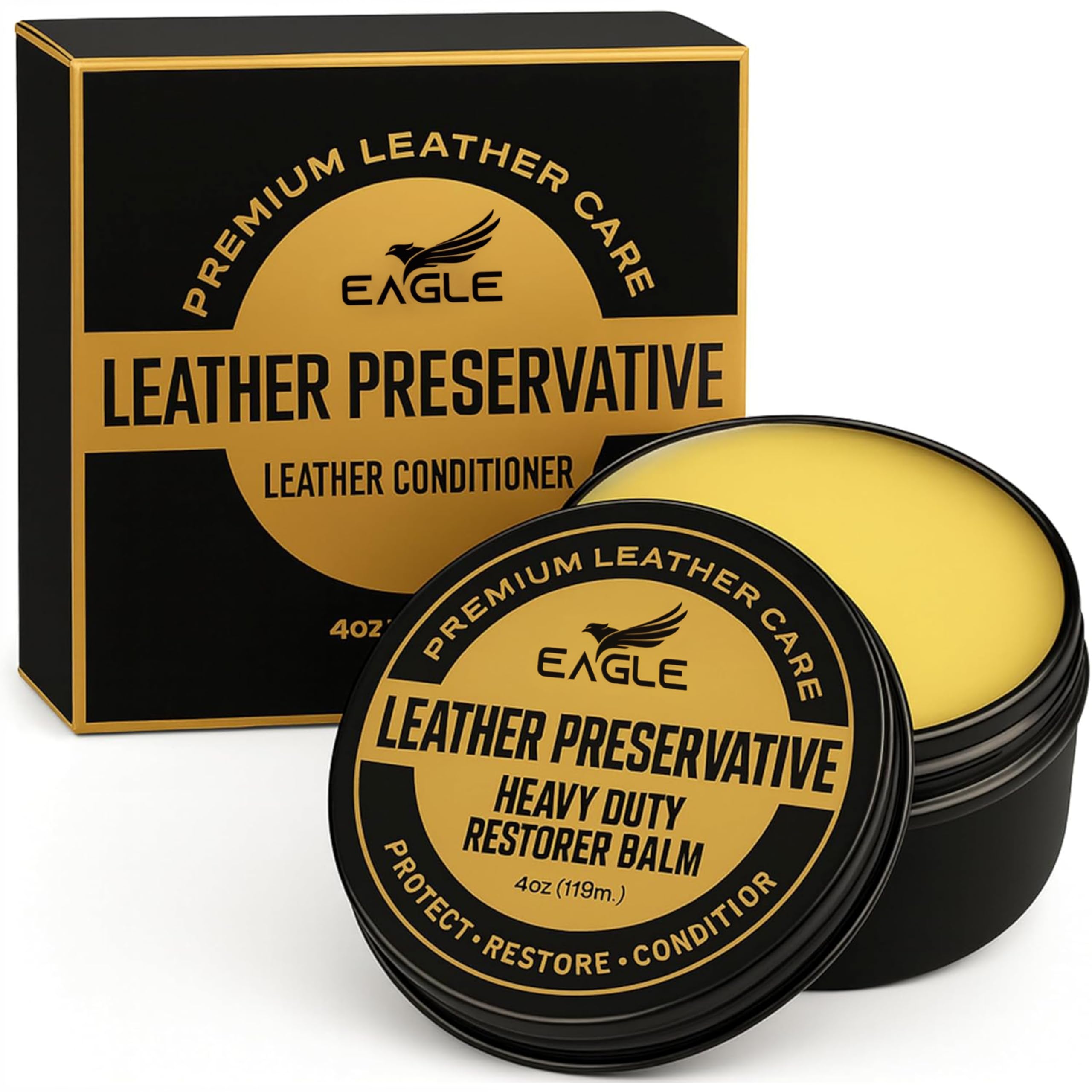
Eagle’s balm blends neatsfoot oil — a deep conditioner derived from cattle fat — with beeswax to create a waterproof seal that holds up against rain, snow, and abrasion. This is not a fast-absorbing glove oil; it is a heavy-duty restoration treatment for leather that has already dried, cracked, or faded. The 4-ounce tin is small but potent — a dime-sized amount covers a whole palm and the beeswax locks moisture in for weeks.
Users apply it on cowboy boots, work boots, leather jackets, and even leather chairs with consistent results. For gloves, the balm works best on older mitts that have lost their natural oils after years in storage. The neatsfoot penetrates deep into the fiber matrix, while the beeswax sits slightly on the surface to repel water. The formula contains no silicones or petroleum, so it won’t clog the leather pores.
Multiple reviews mention a noticeable improvement in softness and a restored color richness after one coat. Because it is so concentrated, you will need to warm the balm in your hands before applying, then let it absorb overnight. The finish is a low-luster sheen, not a glossy coat — exactly what you want for a game glove that needs to stay flexible in wet conditions.
Why it’s great
- Creates a genuine waterproof barrier for wet-field play
- Restores flexibility in severely dried-out leather
- All-natural ingredients, no petroleum or silicones
Good to know
- Needs overnight absorption — not a quick break-in option
- Balm consistency requires hand-warming before application
3. Hot Glove Break-In Kit Value Bundle

This bundle is a complete system: a heat-treatment aerosol that softens new gloves in about five minutes, a cream conditioner for ongoing maintenance, a practice softball, and two wrap bands to set the pocket. The heat treatment uses warm air to relax the leather fibers, making it ideal for players who need a game-ready mitt immediately — especially useful when a new glove arrives the night before the first practice.
After the heat treatment, the cream conditioner (infused with lanolin and vitamin E) restores moisture and adds a water-resistant layer. Users wrap the glove around the included ball and secure it with the bands, which impresses the pocket into the leather’s memory. The brand has sold millions of units over the last decade, and reviews consistently note that even 20-year-old vinyl gloves softened after a single treatment cycle.
One customer accidentally received a grip lotion instead of the heat treatment, but the company overnighted the correct product at no charge — a sign of solid after-sale support. The kit is best for players who want a fast, controlled break-in process rather than relying on oil applications and long games of catch.
Why it’s great
- Breaks in a new glove in roughly 5 minutes with heat
- Includes cream conditioner, ball, and wrap bands
- Proven system — millions of cans sold over a decade
Good to know
- Heat treatment requires careful timing to avoid damage
- Cream conditioner may need reapplication after heavy use
4. Wilson Football Prep Conditioner

Wilson’s Prep Conditioner is formulated specifically for football leather, but it works just as well on baseball and softball gloves. The tube dispenses a creamy paste that you spread across each panel with a dime-sized amount, then allow 20 minutes to dry before brushing with a Wilson-approved brush. The formula conditions the hide to extend the ball’s life while restoring grip and feel on older, slick leather footballs.
Reviewers praise its ability to revive leather that has been sitting for years — one user brought a 15-year-old football back to life by applying the conditioner followed by a coat of tack wax. The result was a tacky, broken-in feel that made the ball game-ready. The product is approved by both the NFHS and NCAA, so it meets the standards for high school and college play.
Because it is a thicker paste, it takes a little more effort to rub in evenly compared to liquid oils. Multiple coats may be needed for very dry leather, and the recommended drying time of 20 minutes per coat means you need to plan ahead. However, for football players who want to maintain a specific grip profile, this is a reliable, sport-specific option.
Why it’s great
- NFHS and NCAA approved for regulated play
- Restores grip on old, slick football leather
- Easy tube application — no mess
Good to know
- Requires 20-minute drying time between coats
- Thicker paste may need multiple applications for very dry leather
5. Rhino Wax Baseball Glove Oil
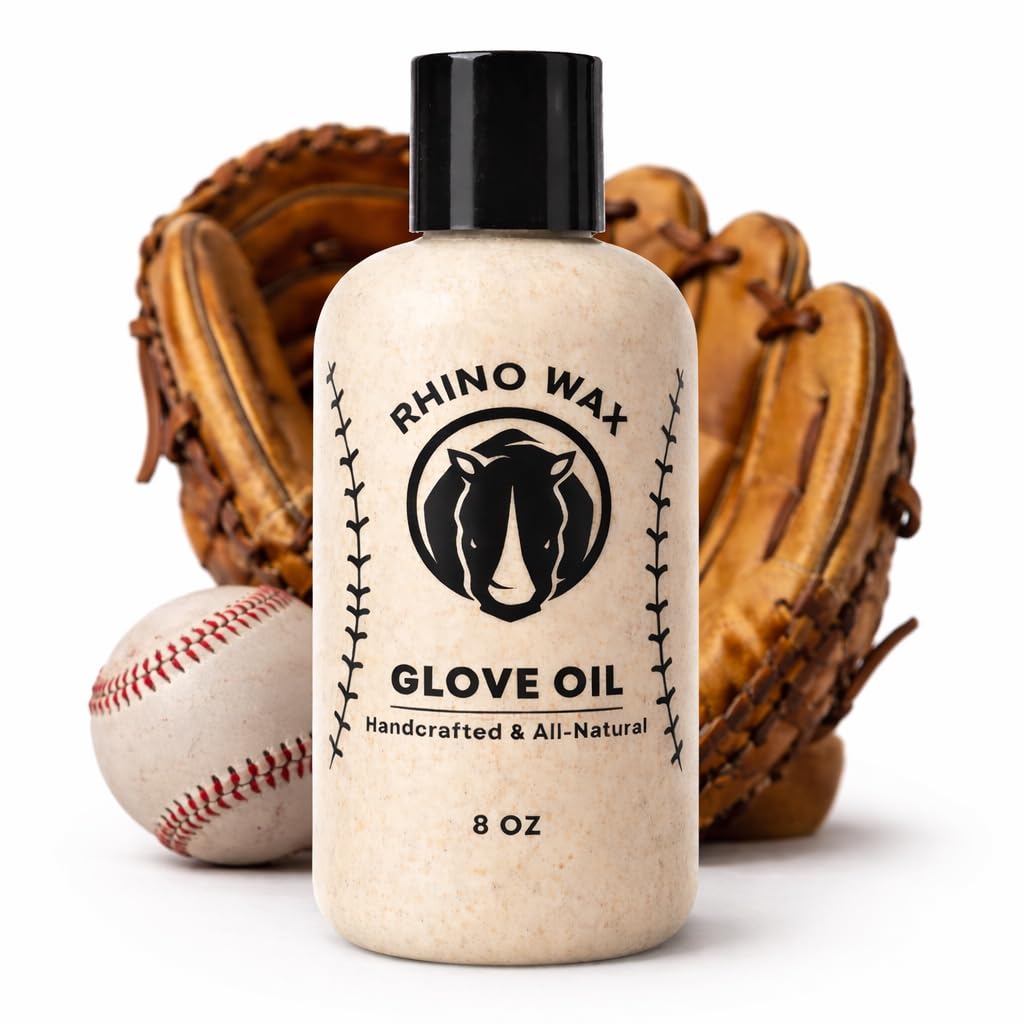
Rhino Wax uses a cold-pressed castor oil base mixed with Vitamin E, making it one of the few truly natural options on the market. The oil is thin and flows easily, so you won’t struggle to spread it across the leather surface. Users report that it does not darken the glove as aggressively as some heavier oils, which is a major plus for lighter-colored mitts.
The formula absorbs quickly but requires multiple coats to fully break in a stiff new glove — several reviews note that a single application only softens the outer layer, and you will need to reapply over several sessions to reach the leather core. For an older, very dry glove, the castor oil does a solid job of rehydrating the fibers without leaving a sticky film.
Because it is a pure oil with no wax or thickeners, it won’t create a waterproof barrier. It is best used as a break-in aid or general moisture maintenance rather than a heavy-duty restoration balm. The 8-ounce bottle is generous for the price, making it a good entry-level choice for players who want to experiment with a natural conditioner before committing to a premium formula.
Why it’s great
- Pure cold-pressed castor oil with Vitamin E
- Does not darken leather as much as mink oil
- Generous 8-ounce bottle at an accessible price point
Good to know
- Needs many coats for full break-in on stiff gloves
- No waterproofing barrier — not ideal for wet conditions
FAQ
How often should I condition my baseball glove?
Will a glove conditioner darken my light-colored mitt?
Final Thoughts: The Verdict
For most users, the best glove conditioner winner is the Sarna Baseball Glove Oil because its lanolin base absorbs fast, preserves leather color, and works for both new break-in and old restoration. If you want heavy-duty waterproofing for dry, cracked leather, grab the Eagle Heavy-Duty Leather Restorer Balm. And for a complete system that breaks in a glove in minutes, nothing beats the Hot Glove Break-In Kit Value Bundle.