
Optimizing your metabolic health isn’t just for those managing diabetes anymore. A growing number of health-conscious individuals are now tracking their glucose levels to understand how food, stress, and sleep impact their energy, focus, and long-term well-being. This guide cuts through the noise to find the most effective tools for this specific goal.
I’m Mohammad Maruf — the founder and writer behind Drink4Good. I’ve spent the last three years analyzing the emerging market of consumer health monitors, focusing on the accuracy, usability, and data integration of glucose and ketone tracking hardware and its companion apps.
Whether you’re on a keto diet, curious about metabolic flexibility, or simply want to prevent energy crashes, finding the right glucose monitor for non diabetics means choosing between finger-prick meters and advanced continuous biosensors that deliver real-time insights without a prescription.
How To Choose The Best Glucose Monitor For Non Diabetics
For a non-diabetic, the goal isn’t emergency management but pattern recognition. You want a device that helps you see how your body responds to a high-carb meal, an intense workout, or a restless night. The right monitor should be comfortable enough for daily use and precise enough to show meaningful trends.
Continuous vs. Single-Point Monitoring
The biggest decision is whether you want a Continuous Glucose Monitor (CGM) that provides automatic readings every few minutes, or a traditional blood meter that requires a finger prick for each test. A CGM is ideal for uncovering patterns throughout your day without active effort, while a blood meter offers lower upfront cost and is perfect for spot-checking after specific meals or workouts.
Meter Accuracy and Validation
Not all monitors are created equal. Look for devices that are clinically validated against lab-grade equipment. Devices used in clinical trials, such as the Keto-Mojo series, offer a higher confidence level in their readings. For a CGM, accuracy is often measured by MARD (Mean Absolute Relative Difference), with lower percentages being better.
Integrated Metrics: The GKI Factor
For non-diabetics, especially those on a low-carb or ketogenic diet, the Glucose Ketone Index (GKI) is a powerful combined metric. This requires a meter that can test both blood glucose and blood ketones (beta-hydroxybutyrate). A dedicated dual meter simplifies this process, providing a single number that reflects your metabolic state more completely than glucose alone.
App Ecosystem and Data Export
Data is useless if you can’t act on it. A strong companion app is crucial. Look for apps that automatically log readings, allow you to tag meals and activities, and provide clear trend charts. Integration with Apple Health or Google Health Connect is a major plus, as it allows you to correlate glucose data with other health metrics like sleep and activity.
Wearability and Comfort
If you choose a CGM, the physical design matters. Consider the size of the sensor, the strength of the adhesive, and whether it is waterproof. A sensor that is comfortable, discreet, and stays on during exercise and showering will dramatically increase your compliance and the quality of the data you collect.
Quick Comparison
On smaller screens, swipe sideways to see the full table.
| Model | Category | Best For | Key Spec | Amazon |
|---|---|---|---|---|
| Stelo Biosensor | CGM | Long-term trend analysis | 15-day wear per biosensor | Amazon |
| Keto-Mojo GK+ | Blood Meter | Precise GKI tracking | 140 strips: 70 glucose + 70 ketone | Amazon |
| Lingo CGM | CGM | Nutrition optimization | 14-day biosensor lifespan | Amazon |
| Accu-Chek FastClix | Blood Meter | Reliable spot-checking | Bluetooth-enabled meter | Amazon |
| Choose Health 7-in-1 | Lab Test Kit | Comprehensive metabolic panel | CLIA & CAP accredited lab | Amazon |
| Upgraded Breath Ketone | Breath Analyzer | Non-invasive ketone tracking | 5-second acetone reading | Amazon |
| Ketone Breath Monitor | Breath Analyzer | On-the-go ketosis check | 30-day battery life | Amazon |
In‑Depth Reviews
1. Stelo Glucose Biosensor by Dexcom

The Stelo biosensor, built by Dexcom, is the most advanced consumer-grade CGM available without a prescription. Each sensor delivers continuous glucose data for up to 15 days, with a 12-hour grace period, and is waterproof to 8 feet. This makes it the premier choice for a non-diabetic who wants to build a detailed, long-term picture of their metabolic health without the hassle of daily finger pricks.
The companion app is excellent for pattern recognition, detecting spikes, dips, and the impact of specific meals or activities. It syncs with Apple Health and Google Health Connect, allowing you to correlate glucose data with sleep and exercise. The app provides personalized insights and a 180-day history view, enabling you to see how your habits evolve over time.
Users report that the sensor is comfortable and easy to apply, though accuracy can vary in the first day of wear and may drift in the final days. Customer support is primarily through chat, but the free replacement policy for failed sensors is a strong safety net. For the non-diabetic user who wants the gold standard of data without being tied to a prescription, this is the top recommendation.
Why it’s great
- Longest wear time of any OTC CGM at 15 days.
- Fully waterproof, allowing for swimming and showering.
- Excellent app with deep trend analysis and third-party sync.
Good to know
- Accuracy can be variable in the first and last days of wear.
- Customer support is digital-only via chatbot and email.
- Reads interstitial fluid, which lags behind actual blood glucose.
2. Keto-Mojo GK+ Glucose & Ketone Testing Kit

The Keto-Mojo GK+ is the definitive meter for anyone serious about tracking both glucose and blood ketones. It ships with 70 glucose strips and 70 ketone strips, allowing you to calculate your Glucose Ketone Index (GKI) — a powerful metric for metabolic health that diabetes-only meters can’t provide. The GK+ is trusted in over 100 clinical trials, which speaks to its rigorous accuracy standards.
The Bluetooth connectivity pairs seamlessly with the MyMojoHealth app to log every reading automatically. This eliminates the need for manual note-taking and provides clean trend charts. It also integrates with Cronometer and Carb Manager, making it a central hub for dietary and metabolic data. The device comes with a lifetime warranty for registered owners, a testament to its build quality.
The primary trade-off is the cost-per-test, as ketone strips are more expensive than standard glucose strips. However, for the non-diabetic who is fully engaged in nutritional optimization, the GKI data is invaluable and justifies the expense. This is a no-compromise device for those who demand clinical-grade precision.
Why it’s great
- Clinically validated accuracy, used in over 100 trials.
- Dual testing for glucose and ketones enables GKI tracking.
- Lifetime warranty and US-based customer support.
Good to know
- Ketone test strips are more expensive than standard ones.
- Requires a finger prick for each test.
- App is functional but does not offer predictive insights like a CGM.
3. Lingo Continuous Glucose Monitor by Abbott
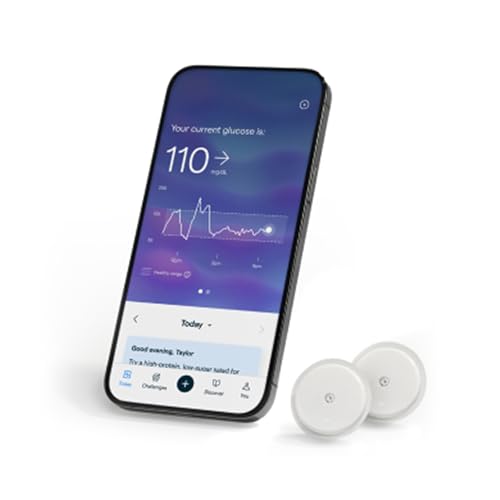
Lingo, made by Abbott, is a consumer-focused CGM designed specifically for people who are not on insulin. The 14-day biosensor is painless to apply and provides minute-by-minute glucose tracking, all synced to a dedicated Lingo app that gives you “Lingo Counts” — a score based on how much time you spend in a healthy 70-140 mg/dL range. This gamification makes metabolic health engaging rather than clinical.
It is an excellent tool for nutritional optimization. The app helps you identify exactly how different foods impact your glucose, even showing subtle responses to specific meals. The pack of two biosensors covers a full month of tracking, and Abbott’s free replacement policy provides peace of mind. It is also HSA/FSA eligible, making it a financially accessible entry point into the CGM world.
The primary drawbacks revolve around initial setup. Some users report sensor pairing failures with specific phone models, and the app requires a registration process that demands significant personal information. Accuracy is generally good for trend analysis, though it can read slightly low compared to a finger-prick test. For the user who wants a turnkey CGM experience with strong educational features, this is a compelling choice.
Why it’s great
- Gamified scoring system makes health tracking intuitive.
- Easy, painless sensor application with no finger pricks.
- HSA/FSA eligible and no prescription needed.
Good to know
- Sensor pairing can be problematic with some devices.
- Accuracy may be ~10 points low compared to blood tests.
- Replacement process can be slow if a sensor fails.
4. Accu-Chek FastClix Glucose Monitor Kit

The Accu-Chek FastClix kit is a complete starter bundle that punches far above its cost class. You get a Bluetooth-enabled meter, 100 test strips, a multi-lancet drum with 108 needles, and control solution — everything you need for months of spot-checking. The FastClix lancing device is a standout, featuring 11 depth settings and a pre-loaded drum that eliminates the need to handle individual lancets.
The Guide Me meter is intuitive and requires only a tiny drop of blood. The Bluetooth sync to the mySugr app is excellent for automatically logging results and generating reports that can be shared with a healthcare provider. For the non-diabetic, this is an ideal device for targeted testing — for instance, checking your glucose 30 minutes after a specific meal to see its impact.
The biggest limitation is that it does not measure ketones, so you cannot calculate your GKI with this device. Some users report occasional error codes that can waste a test strip. However, for reliable, affordable, and proven blood glucose monitoring, this Swiss-engineered kit is a benchmark of quality.
Why it’s great
- Complete kit with everything needed for immediate use.
- Painless lancing drum with 6 pre-loaded needles.
- Bluetooth sync to mySugr app for automatic logging.
Good to know
- Does not measure blood ketones for GKI calculation.
- Occasional error codes can waste test strips.
- Requires a finger prick for each reading.
5. Choose Health 7-in-1 Metabolic Health Test

For the non-diabetic who wants the complete metabolic picture, this at-home lab test is the gold standard. Unlike a finger-prick meter that gives you a snapshot of current glucose, the Choose Health 7-in-1 analyzes your HbA1c (average blood sugar over months), fasting glucose, insulin resistance, cholesterol (LDL, HDL, triglycerides), inflammation (hsCRP), oxidative stress, and visceral fat. This is a diagnostic-grade assessment.
The process is simple: register the kit online, collect a small blood sample from a painless finger prick, and mail it to a CLIA and CAP accredited lab in the prepaid envelope. Within 5-10 days, you receive a detailed report via the Choose Health app. The results come with personalized, evidence-based recommendations tailored to your diet and lifestyle habits. It answers the “why” behind your glucose levels.
The limitation is clear: this is a one-time snapshot, not a real-time tool. You can’t use it for day-to-day tracking or to see the immediate effect of your lunch. But for a foundational health assessment, it is unparalleled. If you are serious about validating the impact of a new diet or understanding your baseline risks, this test is an essential first step.
Why it’s great
- Comprehensive 7-biomarker analysis from a single sample.
- Accredited lab provides clinical-grade accuracy.
- Detailed, personalized recommendations based on results.
Good to know
- Provides a one-time snapshot, not continuous data.
- Results take 5-10 days to arrive.
- Not available for purchase in New York or Rhode Island.
6. Upgraded Breath Ketone Meter
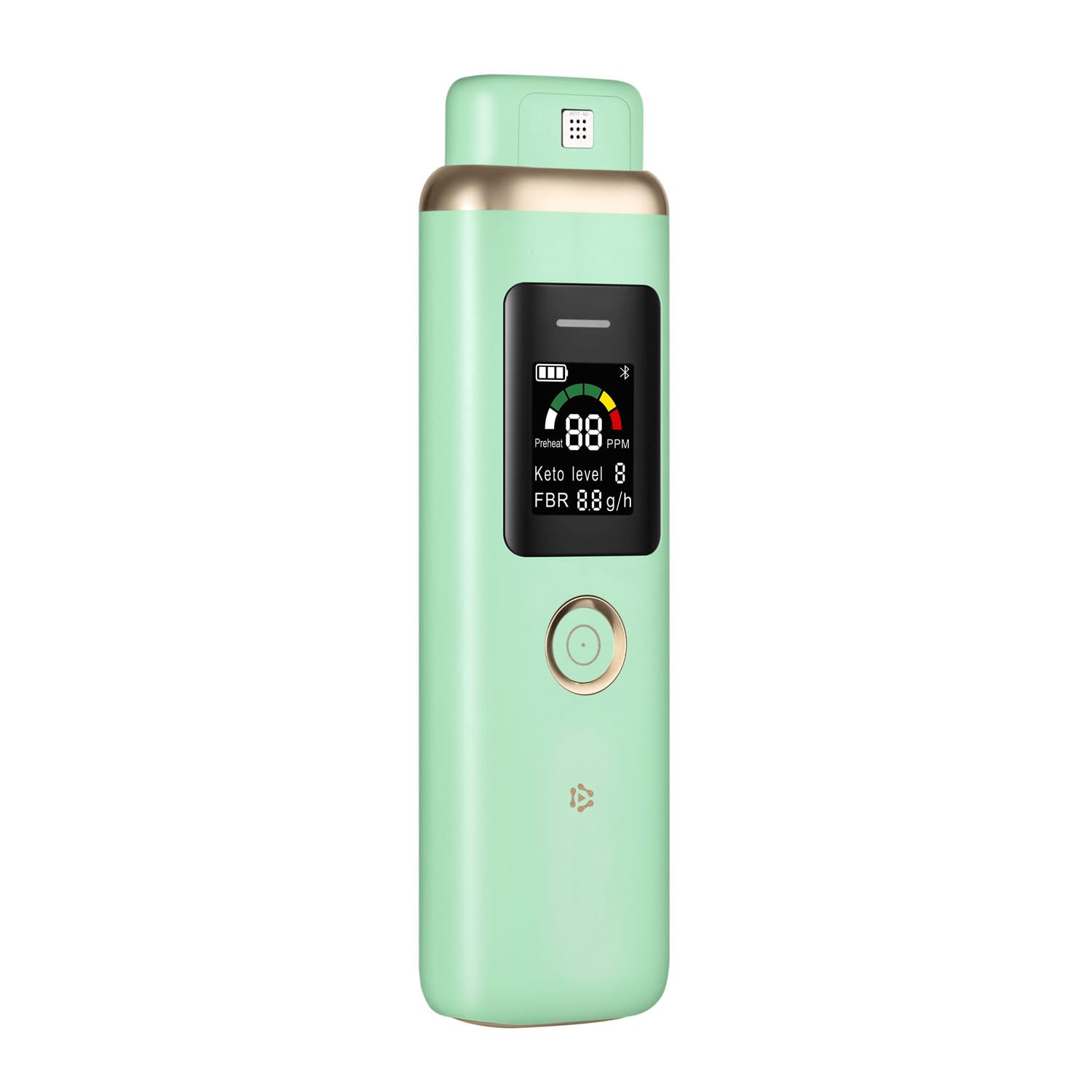
This breath analyzer offers a zero-blood approach for tracking ketosis, making it ideal for the non-diabetic on a low-carb or intermittent fasting protocol. Instead of pricking your finger, you simply exhale slowly into the device for 3-5 seconds after a 90-second warm-up. It uses a 32-bit chip to detect acetone in your breath, providing a ketone reading in just five seconds.
The device is remarkably user-friendly with one-button operation and a hidden cartridge that maintains hygiene. Its rechargeable battery lasts up to 30 days on a single charge via USB-C, making it a highly portable option. It’s a clean, consumable-free alternative to blood ketone strips, saving money and reducing waste over the long term.
However, breath-based ketone analysis is generally less precise than blood testing. Factors like hydration, recent alcohol consumption, and the time of day can influence results more significantly. It is best used as a directional tool to confirm you are in ketosis, rather than for exact GKI calculations. For a painless, daily check of your metabolic state, it’s a solid and convenient tool.
Why it’s great
- Completely non-invasive with no lancets or blood.
- Fast results in 5 seconds with a simple exhale.
- No recurring cost for test strips or consumables.
Good to know
- Breath analysis is less precise than blood testing.
- Requires a 90-second warm-up before each test.
- Results can be affected by hydration and oral hygiene.
7. Ketone Breath Monitor for Ketosis Tracking
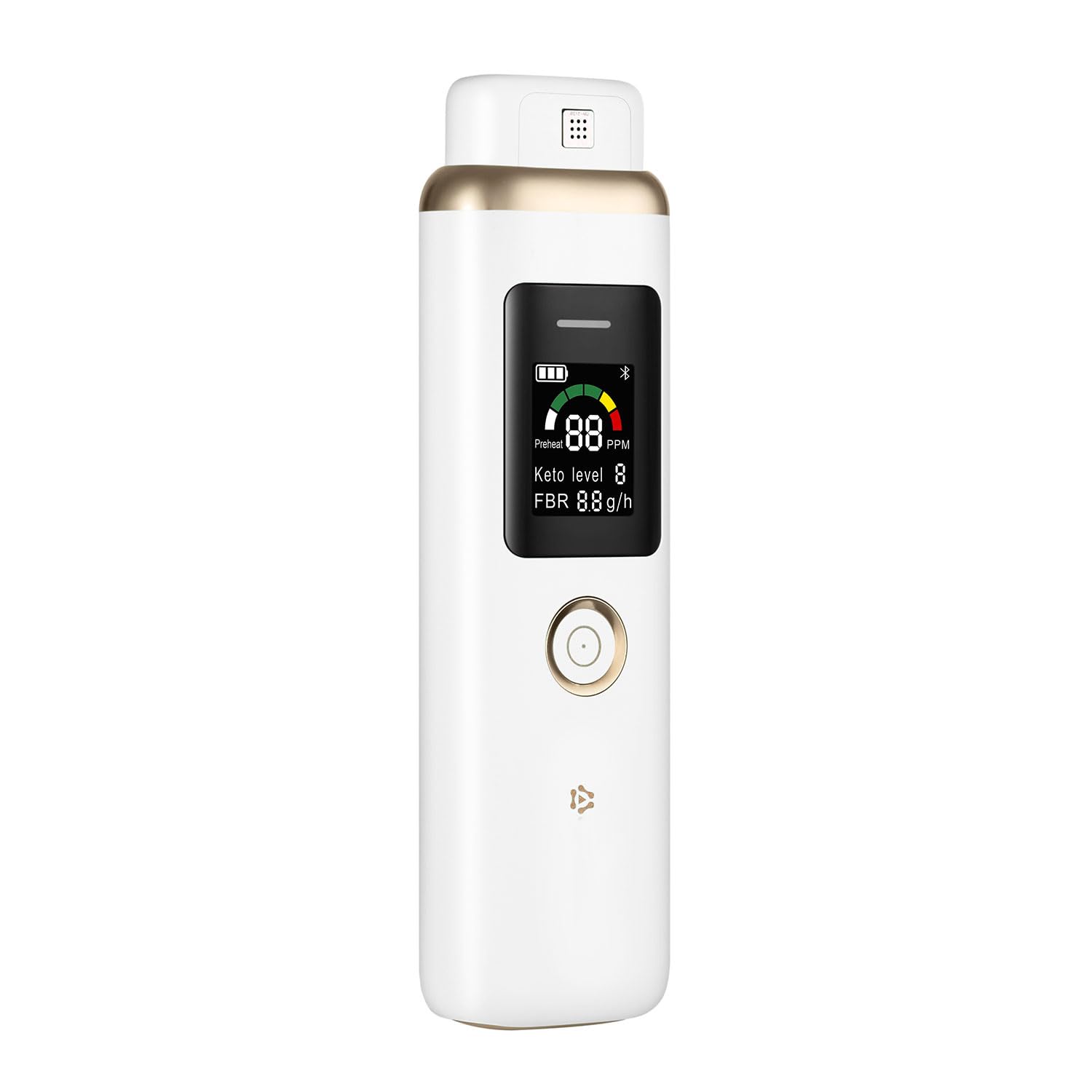
This is a budget-friendly, entry-level breath analyzer designed for the casual health tracker. It functions identically to other ketone breath meters, measuring acetone levels after a short warm-up. A key differentiator is its 6-level ketosis display, using a color-coded system from white (no ketosis) through green (safe) to red (danger), making the results easily interpretable at a glance.
It shares the same core architecture as the Premium breath meter, including a 32-bit chip, one-button operation, and a 30-day rechargeable battery. It also uses a hidden cartridge for hygiene and requires no consumables. It is a very cost-effective way for someone new to the keto or fasting lifestyle to get daily confirmation they are on the right track.
The primary concerns are around consistency. Some users report that the device stops working after the first use, and the raw data is less granular than what a blood meter provides. Without the ability to produce a precise numerical value, it is less useful for scientific tracking. But for a low-cost, no-fuss daily check-in, it fulfills its basic role.
Why it’s great
- Very intuitive 6-level color-coded display.
- Rechargeable battery with long 30-day run time.
- No consumable costs, making it very cheap to run.
Good to know
- Reliability issues, with some units failing early.
- Provides qualitative range, not a precise numeric value.
- Less accurate than dedicated blood glucose/ketone meters.
FAQ
Is it normal for my glucose to spike after eating if I am not diabetic?
Do I need a prescription to buy a glucose monitor as a non-diabetic?
Final Thoughts: The Verdict
For most users, the glucose monitor for non diabetics winner is the Stelo Glucose Biosensor because it provides the best balance of data depth and convenience with its 15-day wear and excellent app. If you want clinical precision and the ability to track your GKI, grab the Keto-Mojo GK+. And for the most complete metabolic health picture, nothing beats the Choose Health 7-in-1 lab test to establish your baseline.