
That loose flap of carpet near your heel well or the sagging headliner above your visor instantly drags down the entire cabin experience. Whether it’s a worn driver’s side footwell or a lifted section from a spilled drink, the frustration of the material not laying flat is a constant reminder that your interior needs attention. Finding the right adhesive to permanently bond that automotive textile back to its backing is the only way to restore that factory-fresh feel.
I’m Mohammad Maruf — the founder and writer behind Drink4Good. I’ve spent countless hours researching and analyzing the bonding chemistry, heat resistance, and application methods behind the top adhesives, specifically for the unique demands of automotive carpet and upholstery repair.
The challenge is that a standard craft glue won’t stand up to the summer heat or the daily pressure of your feet. To avoid a failed repair that leaves you with a sticky mess, you need a formula engineered for the job. This guide cuts through the noise to deliver the definitive verdict on the glue for car carpet that actually holds.
How To Choose The Best Glue For Car Carpet
Car carpet repair is not the same as a craft project. The adhesive you choose has to survive extreme temperature swings, constant foot traffic, and the occasional moisture from wet shoes. Focus on three key areas when making your selection.
Bond Type: Contact vs. Multi-Purpose Spray
Contact adhesives form an instant, permanent bond the moment two coated surfaces touch. This is the gold standard for carpet because it prevents the material from creeping or shifting later. Multi-purpose sprays offer repositionability at first, which can help with tricky curves, but they rarely match the long-term heat and stress resistance of a true contact cement formula.
Heat and Moisture Resistance
A car parked in the sun can easily exceed 150 degrees Fahrenheit on the floorboard. An adhesive with low heat resistance will soften, causing the carpet to bubble or peel loose. Look for products explicitly rated for high heat and moisture resistance to ensure the bond holds through summer heat and wet weather.
Open Time and Application Method
“Open time” refers to how long the glue stays tacky before the parts must be joined. A longer open time (10-60 minutes) gives you the flexibility to position large carpet sections without rushing. A spray nozzle offers even coverage over broad areas, while a tube or brush-on formula is better for tight edges and spot repairs.
Quick Comparison
On smaller screens, swipe sideways to see the full table.
| Model | Category | Best For | Key Spec | Amazon |
|---|---|---|---|---|
| 3M Hi-Strength 94 ET | Premium Spray | Full carpet replacement & large panels | 60-minute open time | Amazon |
| 3M Max Strength 90 | Premium Contact | High-heat & marine environments | 10-minute cure time | Amazon |
| Gorilla Ultimate Spray | Mid-Range Web Spray | Upholstery & general headliner repair | 2-minute cure time | Amazon |
| Gorilla Heavy Duty Spray | Mid-Range Mist Spray | Small patches & door panel upholstery | 10-minute cure time | Amazon |
| RH Adhesives S-18 | Budget Liquid | Rubber-to-metal & small marine repairs | 24-hour full cure | Amazon |
In‑Depth Reviews
1. 3M Hi-Strength 94 ET Spray Adhesive
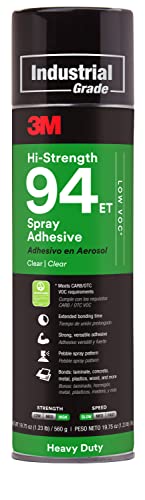
This is the industrial-grade workhorse for anyone tackling a full carpet replacement or large headliner project. The formulation provides an aggressive tack right away, but the standout spec is the 60-minute open time—the longest in this roundup. That generous window allows you to position a full section of carpet across complex transmission tunnels or door sills without the panic of the glue skinning over before you get it right.
The GREENGUARD certification and low VOC formula are major advantages when working inside a confined car cabin. You still want ventilation, but the fumes are far less overwhelming than older contact cements. Users consistently report it bonds foam, carpet, rubber, and metal effectively, even in freezing temperatures, and the aerosol spray pattern delivers consistent coverage without sputtering.
The primary tradeoff is the full 24-hour cure time. You will need to keep the vehicle off the road for a full day to achieve maximum strength. While the tack is immediate, the final bond to resist peeling requires patience. For professional results on a full carpet install, this is the formula to beat.
Why it’s great
- Generous 60-minute open time for large panel positioning
- Low VOC and GREENGUARD certified for lower cabin fumes
Good to know
- Requires a full 24-hour cure before stressing the bond
- Higher initial cost than standard spray adhesives
2. 3M Max Strength 90 Multi-Surface Contact Adhesive
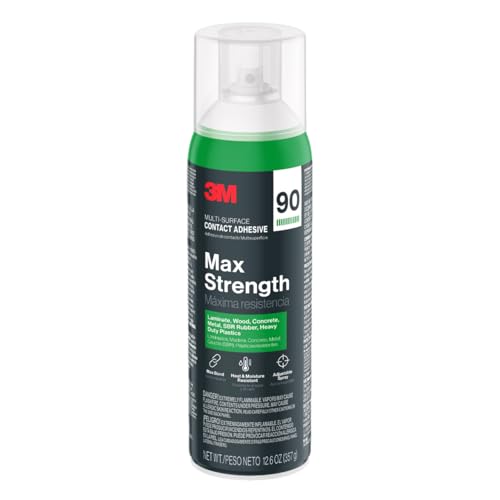
When your car carpet repair faces the brutal heat of a summer dashboard or the moisture of a wet climate, the 3M 90 is the clear choice. This product is specifically formulated to be heat and water resistant, making it ideal for vehicles that live outdoors or in humid coastal areas. The contact adhesive bond reaches full strength in just 10 minutes, which is drastically faster than the 94 ET.
The adjustable nozzle is a practical feature allowing you to dial in a wider web spray for large carpet sections or a narrower stream for precise spots. Users who have applied it in marine environments confirm it holds up where other adhesives delaminate, and the max-strength bond is aggressive enough to bond heavy floor liners to factory carpet without any lift.
The fast cure time is a double-edged sword. While it means your floor is ready for light use sooner, the working window is shorter. If you need to make large, complex adjustments after the initial tack, you may find the material has already bonded. For quick, high-strength repairs in hot environments, this is the premium pick.
Why it’s great
- Excellent heat and moisture resistance for extreme car interiors
- Fast 10-minute cure time for quick repairs
Good to know
- Shorter repositioning window than the 94 ET formula
- Strong odor requires good ventilation during use
3. Gorilla Ultimate Spray Adhesive
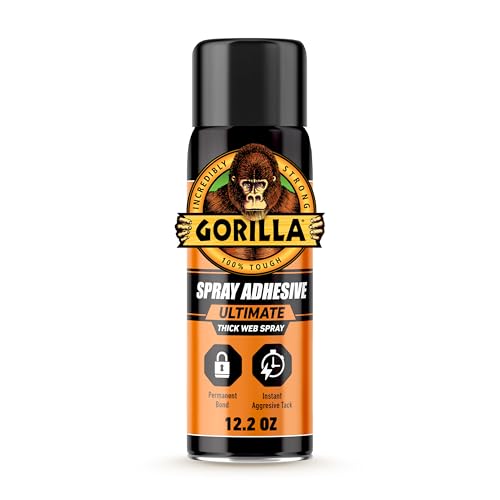
The Gorilla Ultimate Spray Adhesive fills the middle ground nicely for DIYers who need a reliable contact cement but aren’t ready to step up to the premium 3M pricing. The “instant aggressive tack” is not an exaggeration—this web spray grabs on contact, which it makes ideal for lighter upholstery tasks like attaching foam to a headliner board or bonding a loose section of door panel carpet.
The three-way adjustable anti-clog nozzle lets you switch between low, medium, and high settings, giving you decent control over how much adhesive you lay down. It resists heat and moisture well enough for most interior repairs, and the bond is permanent—users report it is nearly impossible to remove from skin, which is a good indicator of its strength. The 2-minute cure time is remarkably fast, allowing you to move on to the next section quickly.
The limitation for heavy-duty carpet work is the cure time. Two minutes is extremely short, and the film dries so fast that you cannot reposition the material after contact. If you misalign a large carpet panel, you are committed. This is best reserved for smaller repairs and upholstery projects where precision is possible on the first try.
Why it’s great
- Three-way adjustable nozzle for versatile spray patterns
- Ultra-fast 2-minute cure speeds up project time
Good to know
- Almost no repositioning time after contact is made
- Strong chemical smell requires proper ventilation
4. Gorilla Heavy Duty Spray Adhesive

Unlike the permanent-contact formulas above, this Gorilla Heavy Duty Spray is designed as a repositionable adhesive that eventually dries permanent. This makes it uniquely suited for small repairs where you need to slide the fabric into place before committing. If you are fixing a section of door sill carpet or reattaching a corner of the trunk liner, the ability to press and lift until the alignment is perfect is a real advantage.
The comfortable wide-pad nozzle and the controlled fine mist allow for even application without soaking the material. It is photo-safe and non-yellowing, which is relevant if you are working on lighter-colored interior fabrics. Users have successfully used it for reattaching door upholstery and headliner material, reporting a solid hold that lasts weeks in normal use.
The tradeoff is that the final permanent bond does not match the shear strength of a contact cement like the 3M 90. For a full carpet replacement where the material is under constant tension from foot traffic, this formula may not provide the same long-term security. It excels as a precision tool for patches, but it is not the primary choice for a full floor installation.
Why it’s great
- Repositionable during application for precise patch alignment
- Non-yellowing formula safe for light-colored car interiors
Good to know
- Final bond strength is lower than contact cement options
- Not ideal for high-stress areas like driver footwells
5. RH Adhesives S-18 All-Purpose Adhesive
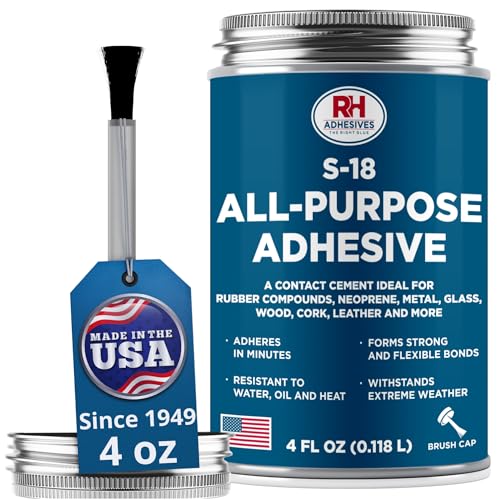
The RH Adhesives S-18 is a classic neoprene-based contact adhesive that comes in a liquid can rather than an aerosol spray. This is an entry-level option for those who want a versatile rubber cement to bond neoprene mats, rubber trim, or felt to metal surfaces inside the car. It creates a strong, flexible film that resists oil and water, which is useful for damp floor areas.
The application is more manual—you will need a brush or applicator stick to spread the liquid—but it allows for very controlled placement on small seams. The formula is American-made and has a reputation for excellent peel strength. It bonds SBR rubber and neoprene to metal exceptionally well, making it a good candidate for attaching rubber floor mats or sound deadening foam.
The critical downside is that the bond has shown weakness in high-heat and wet conditions over time. Several users reported failures in summer heat and rain, causing the bonded materials to separate. The 24-hour full cure time is also long for a repair that needs quick turnaround. This is best reserved for interior, low-heat applications where precise application with a brush is preferred over a spray.
Why it’s great
- Excellent peel strength and oil resistance for rubber bonding
- Liquid form allows perfectly controlled brush-on application
Good to know
- Bond can weaken under sustained high heat and moisture
- Long 24-hour cure time delays vehicle use
FAQ
Can I use a repositionable spray for a full car carpet replacement?
How do I prep the car carpet before applying the adhesive?
Does the glue smell stay in the car after it cures?
Final Thoughts: The Verdict
For most users, the glue for car carpet winner is the 3M Hi-Strength 94 ET because its 60-minute open time and versatile bond strength make full panel installations manageable for both DIYers and professionals. If you prioritize heat and moisture resistance for a harsh climate, grab the 3M Max Strength 90. And for precise patch repairs where repositioning is critical, nothing beats the Gorilla Heavy Duty Spray Adhesive.